-
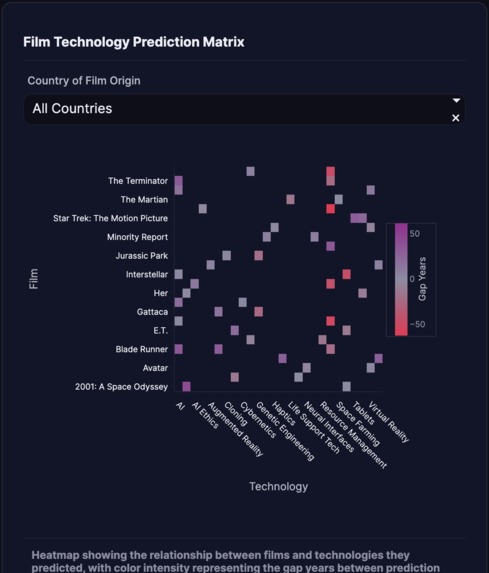
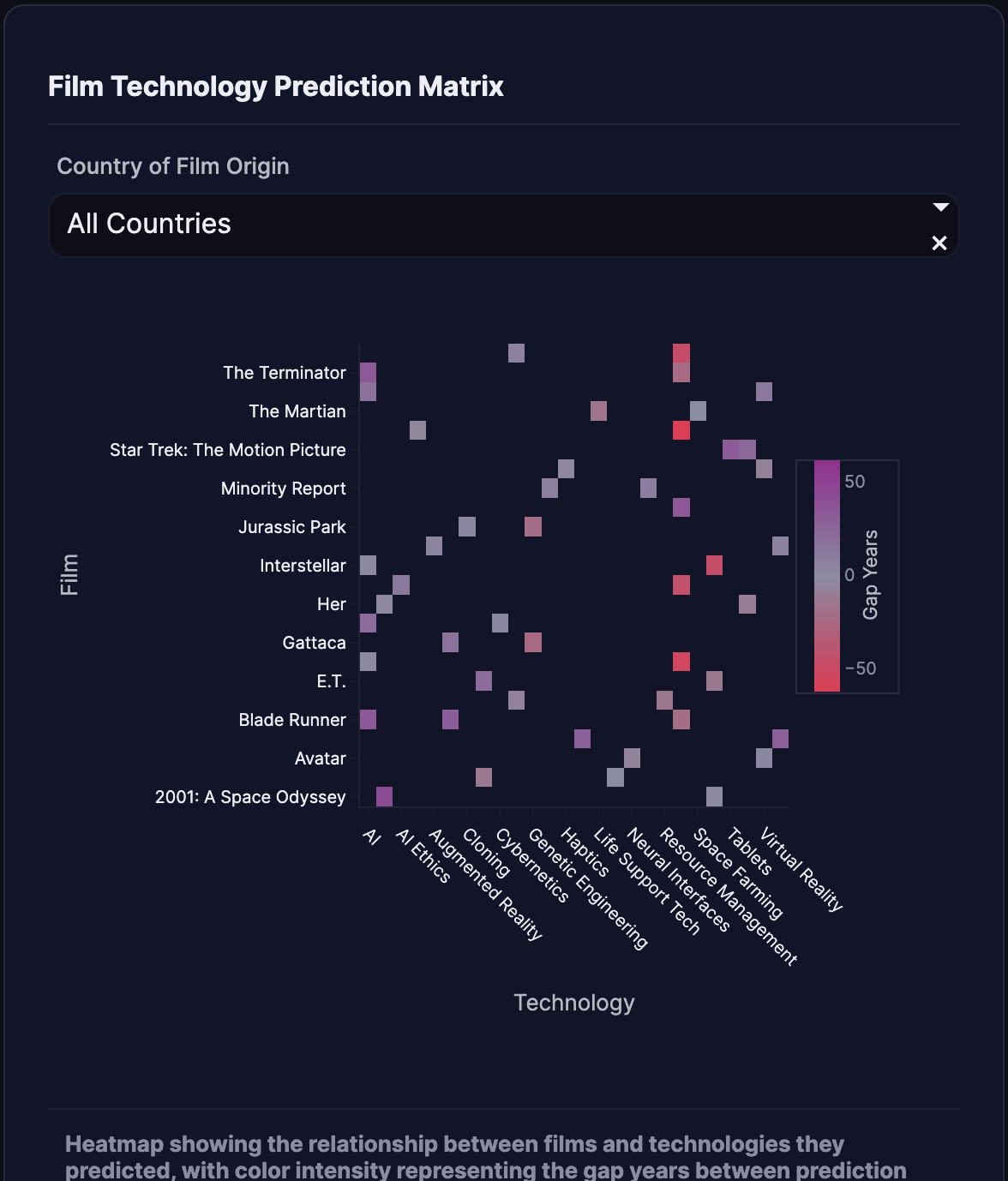
Film Technology Prediction Matrix
-
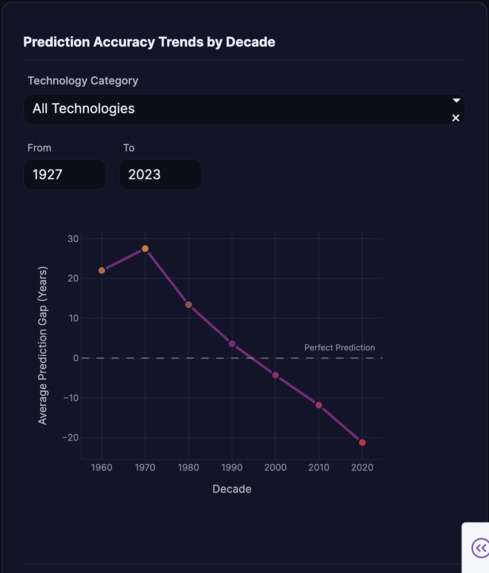
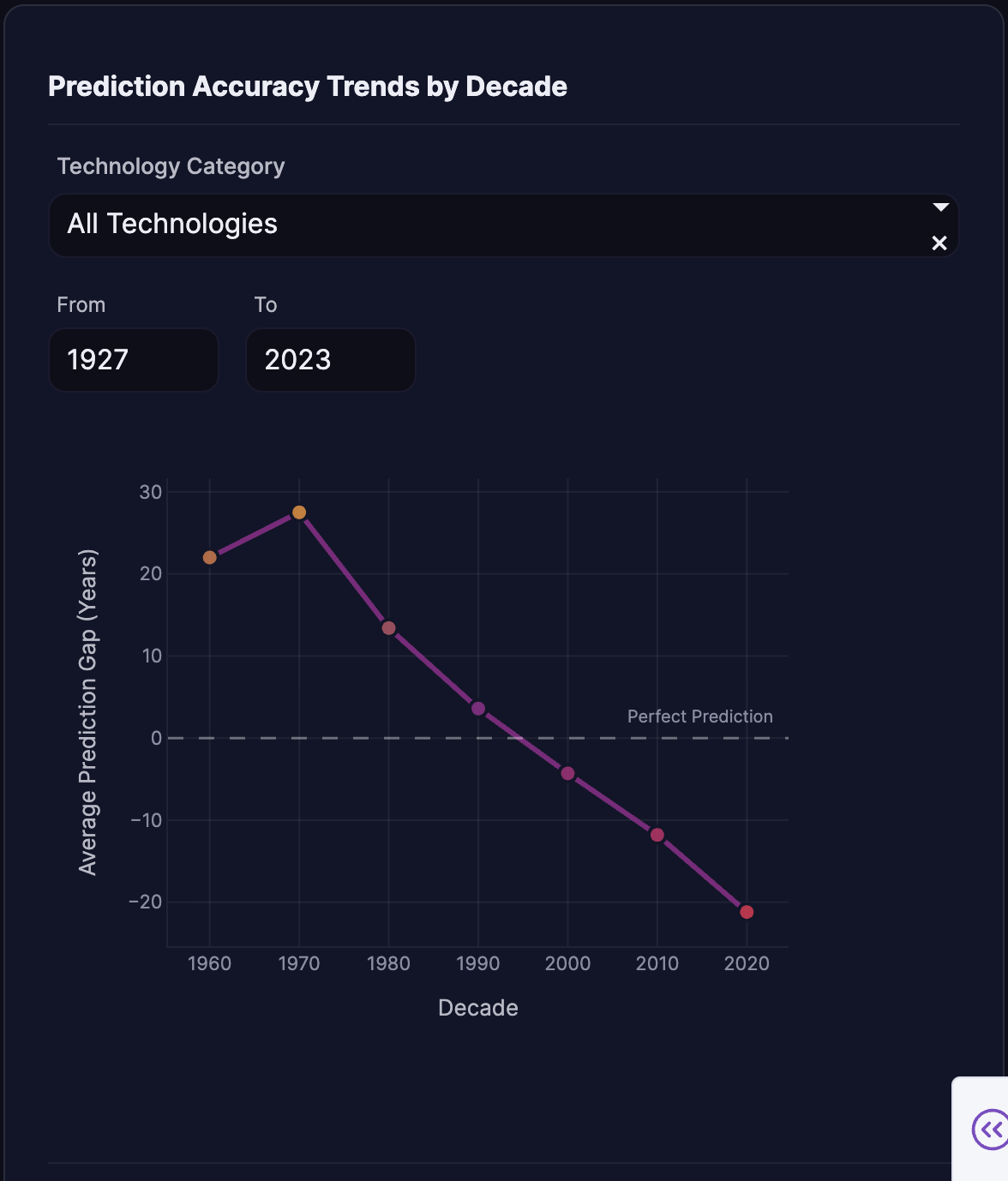
Prediction Accuracy Trends by Decade
-

Title
-
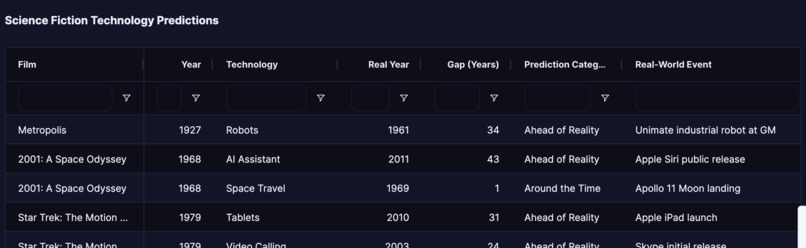
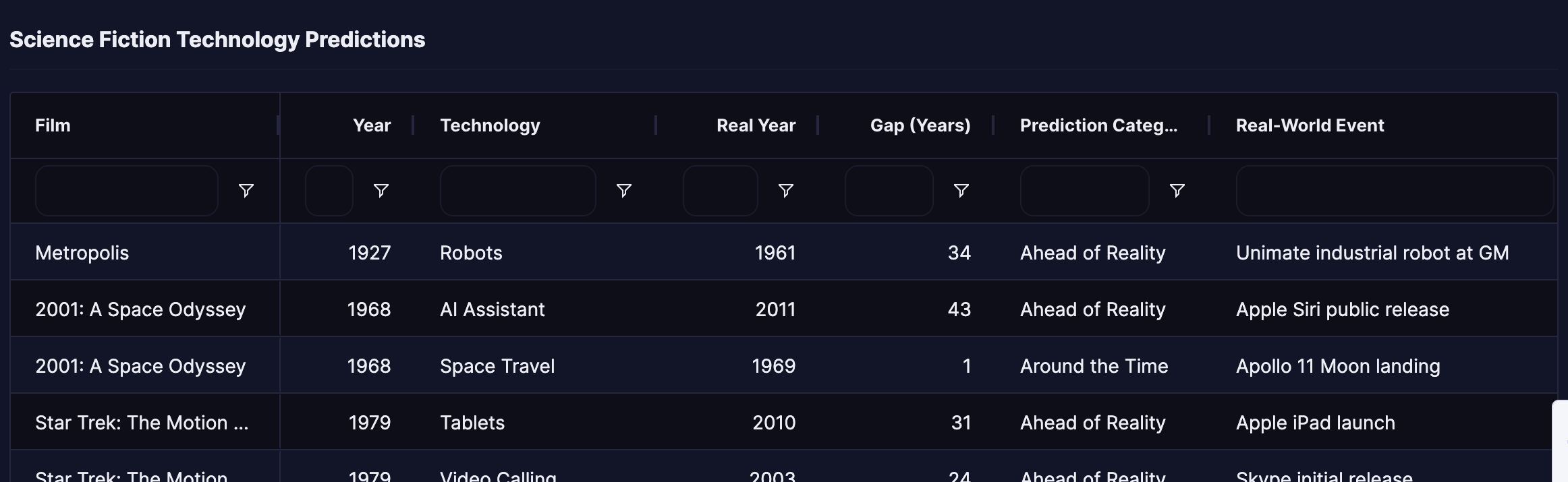
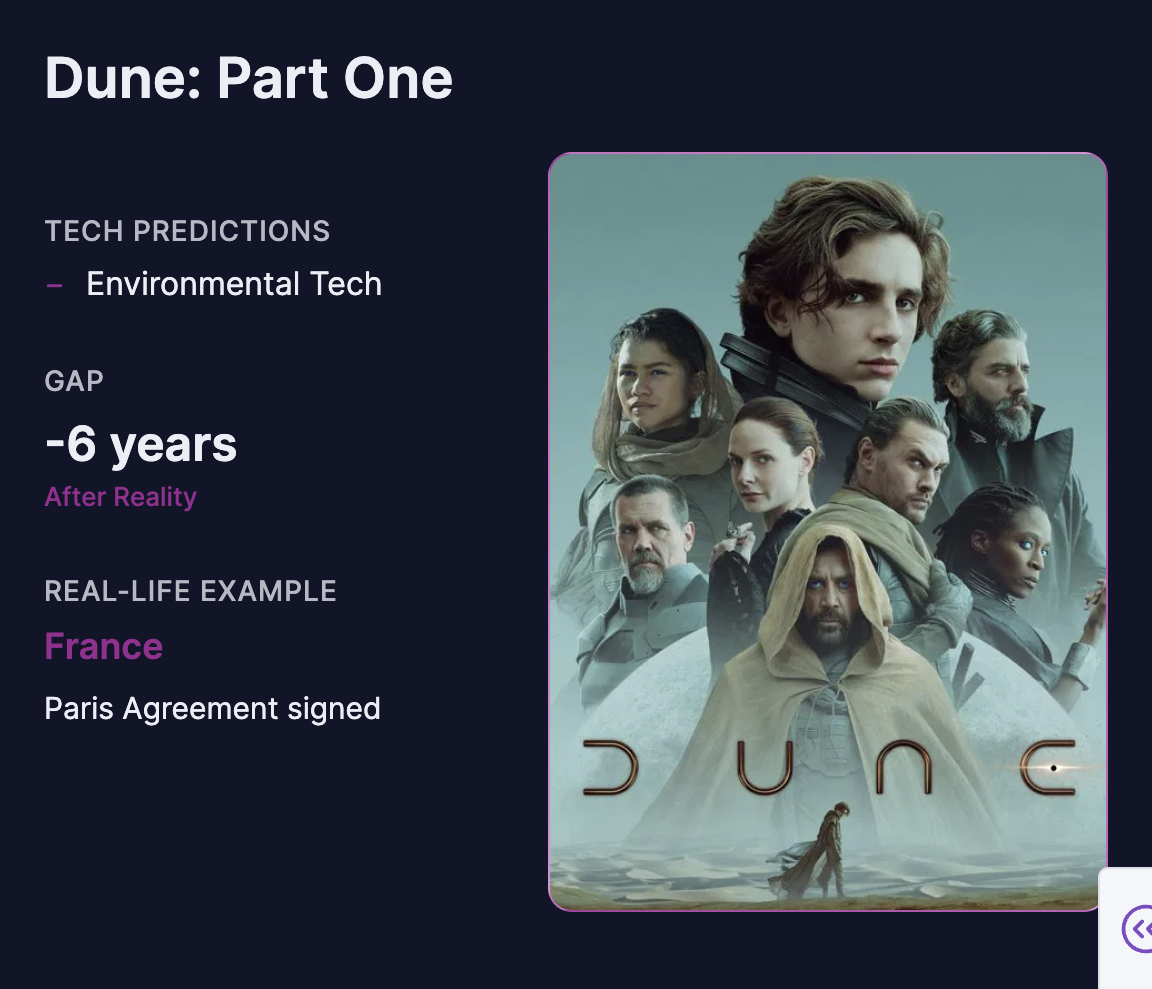
Science Fiction Technology Predictions
-
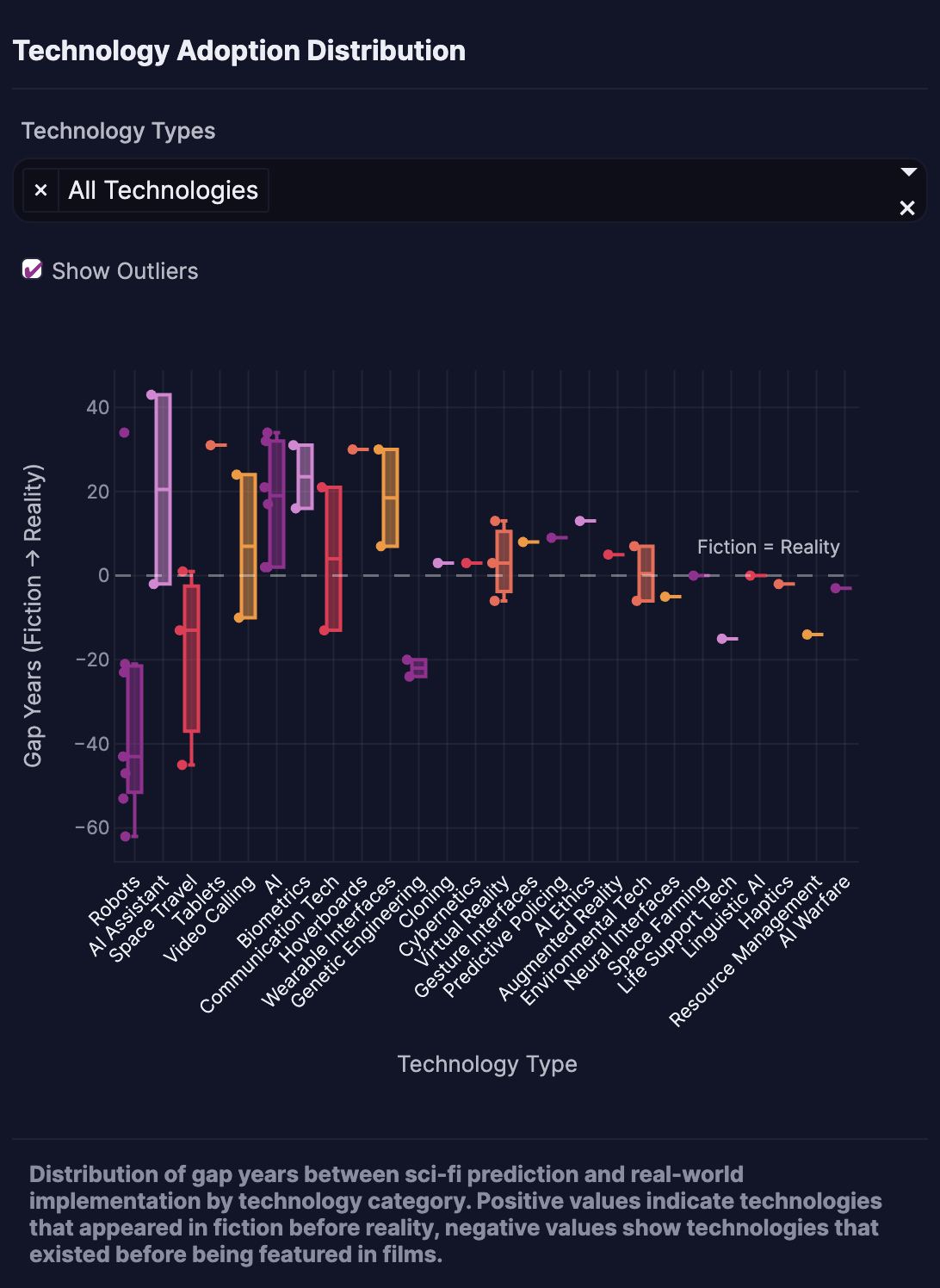
Technology Adoption Distribution
-
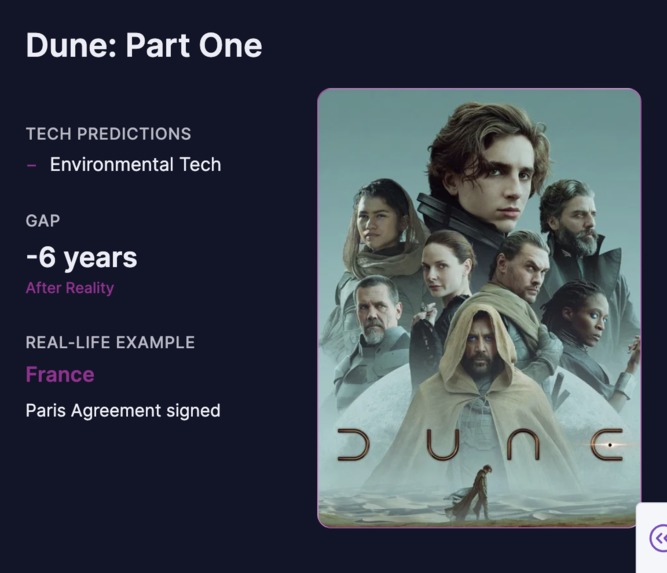
Movie Slide
-
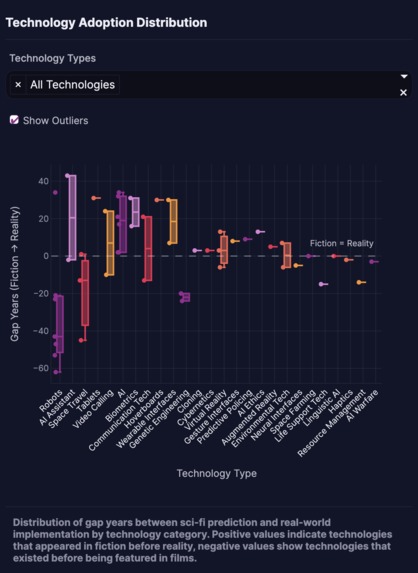
Technology Adoption Distribution
-
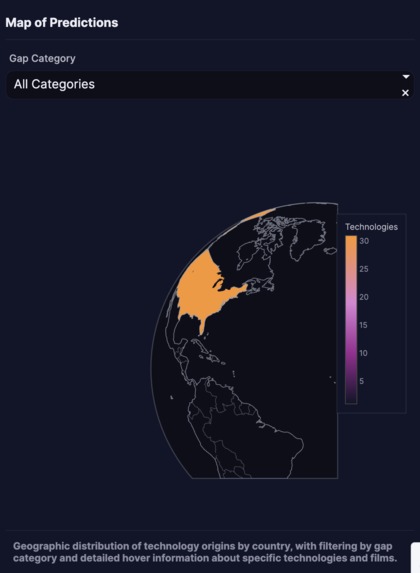
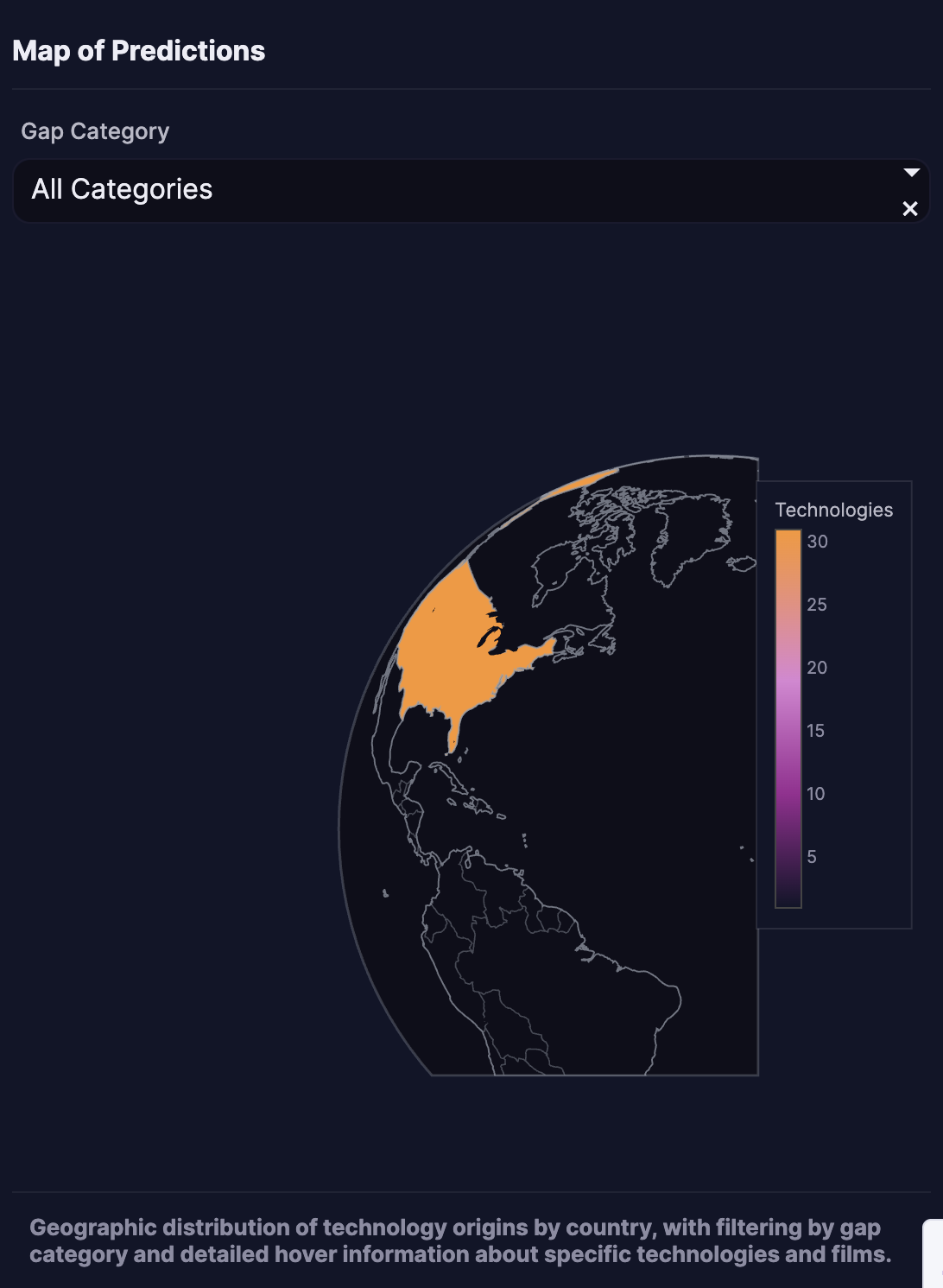
World Map
-
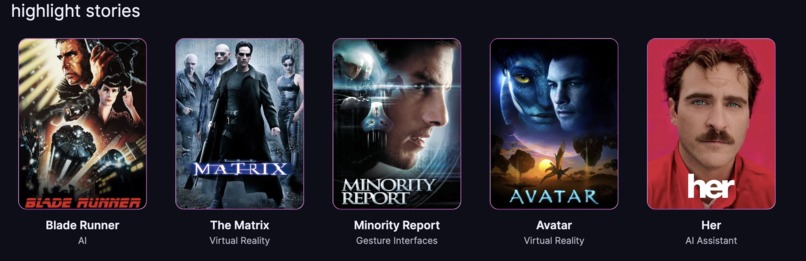
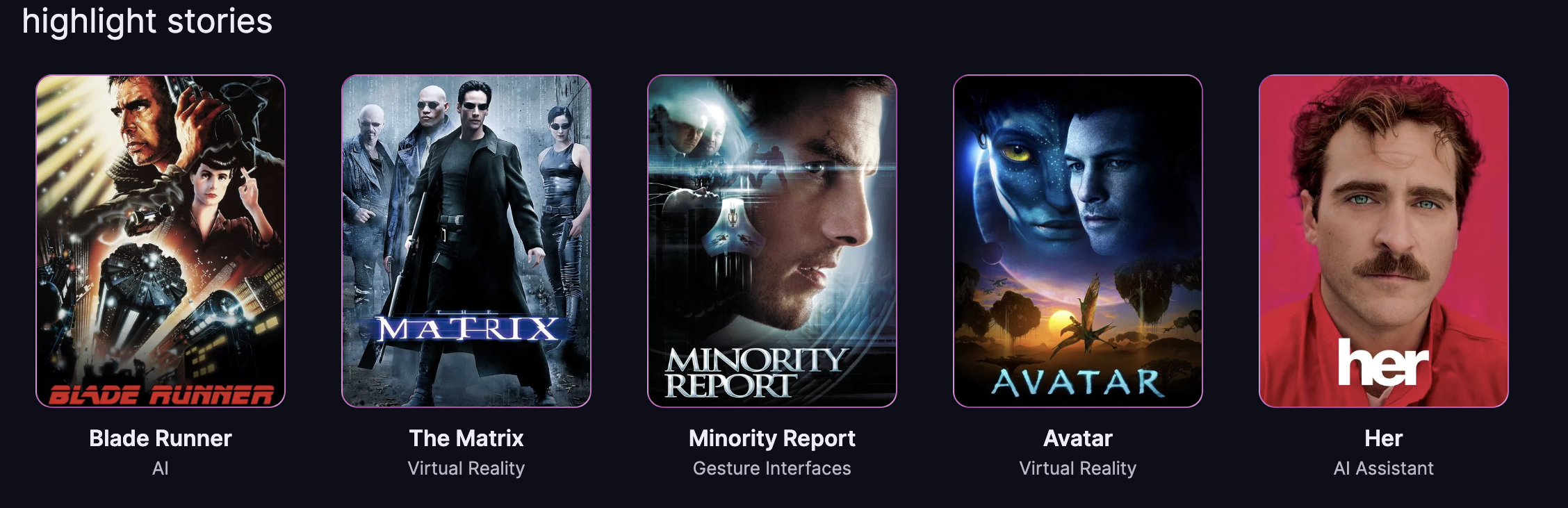
Highlights

Inspiration
I’ve always been fascinated by how science fiction somehow manages to predict real life from AI assistants that sound like HAL 9000 to video calls that once seemed futuristic. During the hackathon, I wanted to visualize this connection between imagination and innovation, and show how creative storytelling can actually shape real technology.
The idea for FutureFrames came from asking a simple question: What if we could measure how close movies came to reality?
What it does
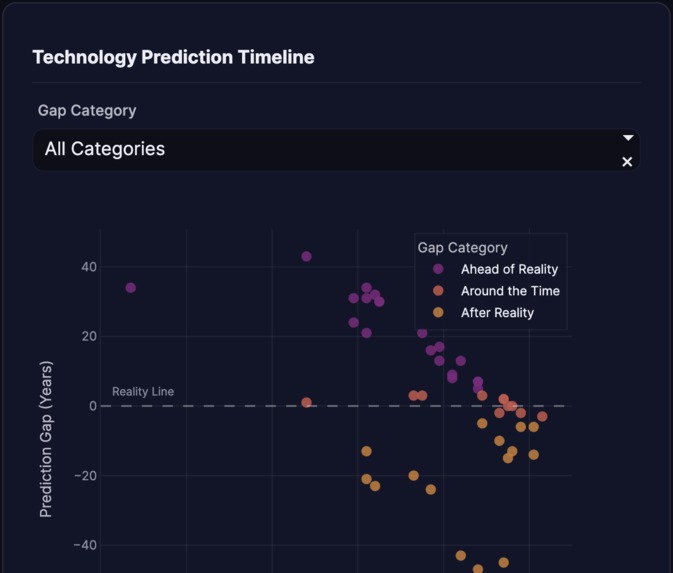
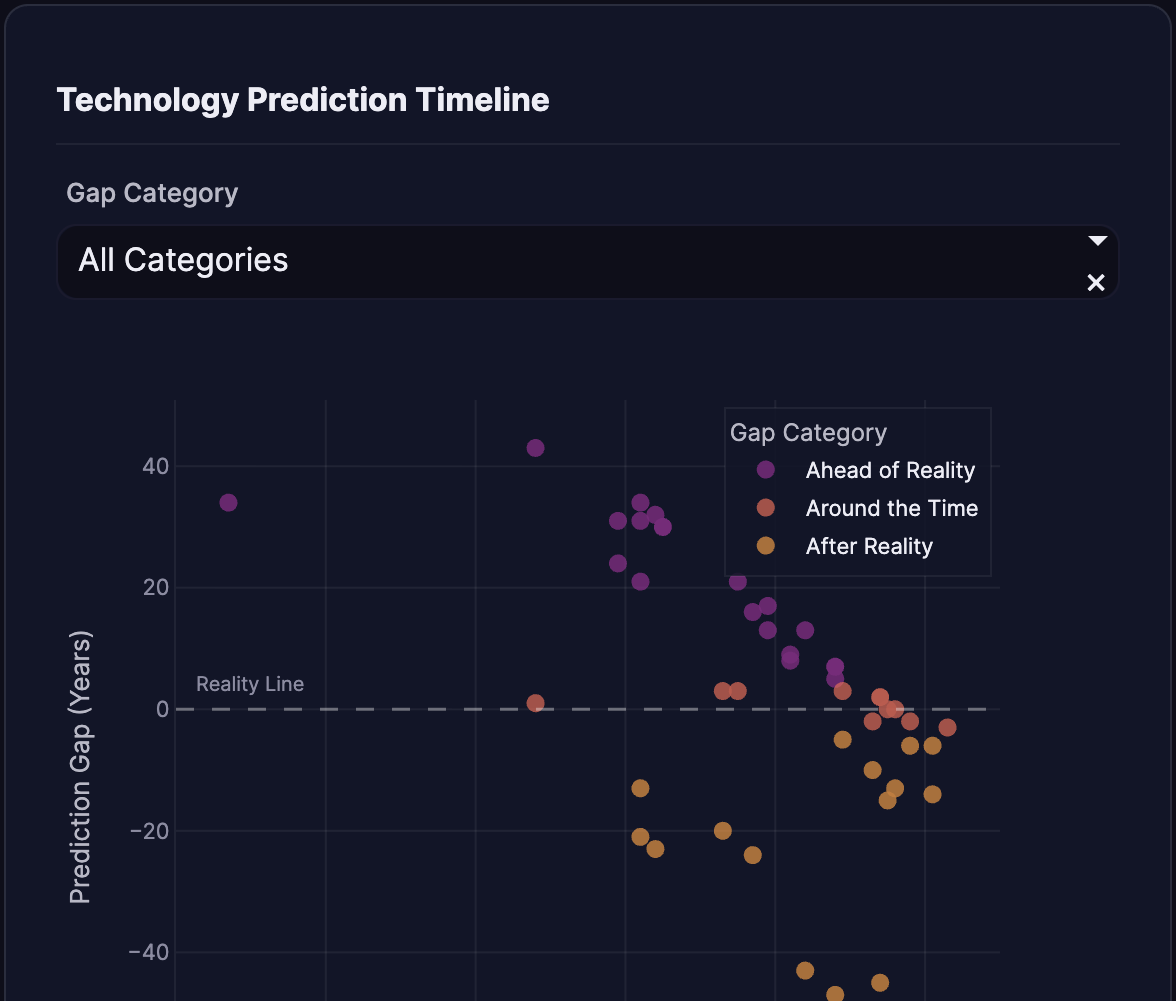
FutureFrames is an interactive data dashboard that explores how sci-fi films predicted real technologies. It compares the film’s release year with the year a similar technology appeared in real life and calculates a “prediction gap.” You can filter by film, technology, or country and explore which movies were ahead of their time, right on time or still in the future.
How I built it
I built FutureFrames using Plotly Studio. The dataset was created from scratch using film metadata and real-world tech adoption years, with additional poster data from the TMDB API.
Challenges I ran into
The hardest part was balancing data accuracy and storytelling. Not every film prediction maps perfectly to one technology, so I had to define consistent “real events” and classify gaps (ahead, on time, behind).
Accomplishments that I am proud of
That I built a custom dataset combining film data, technology milestones and real-world adoption years.
What I have learned
I learned how powerful visualization can be when it tells a story not just numbers and graphs, but emotion and context. Also, how important good data structure is when designing interactive dashboards.
What's next for FutureFrames
Right now, the dataset covers some of the most iconic sci-fi films but I’d love to expand it even more. My plan is to include a wider range of movies from different countries and decades and also newer releases that keep pushing the limits of imagination.
I also want to add more detailed data about real-world technologies not just when they appeared, but how they evolved over time and which companies or scientists made them real. That could make the “Film vs. Reality” timeline even more dynamic.
And of course, I want to improve the visual storytelling maybe turn parts of the dashboard into an interactive journey through film history, where users can explore how science fiction shaped the future we’re living in today.


Log in or sign up for Devpost to join the conversation.