-
-
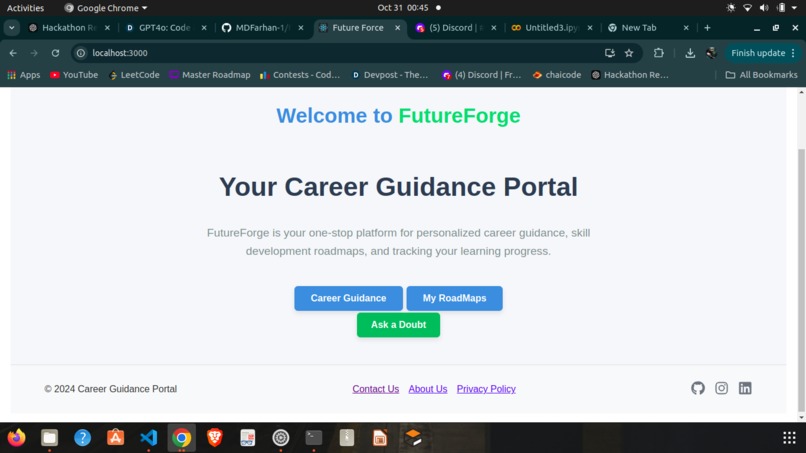
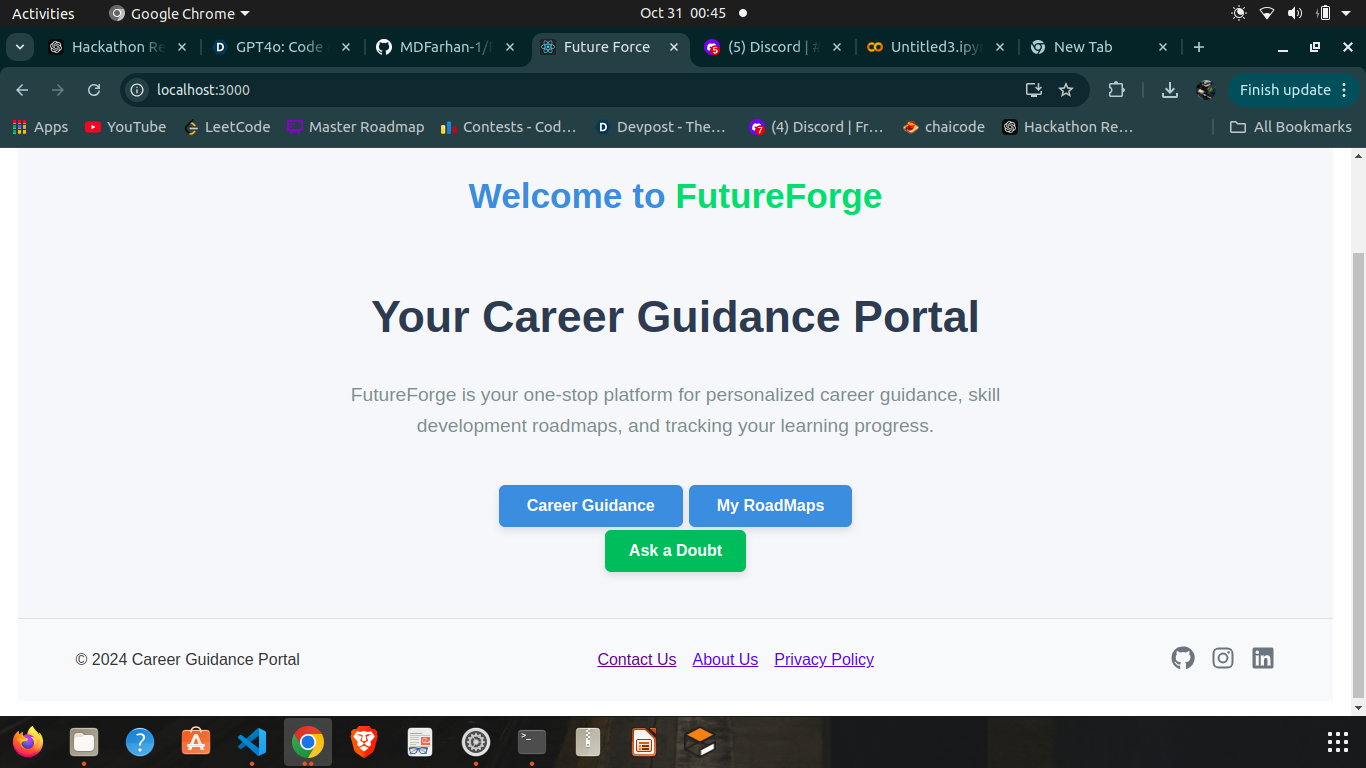
Home Page
-
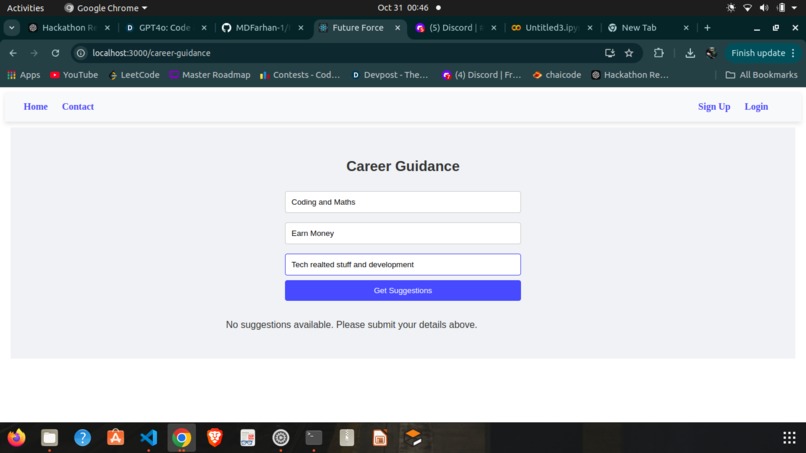
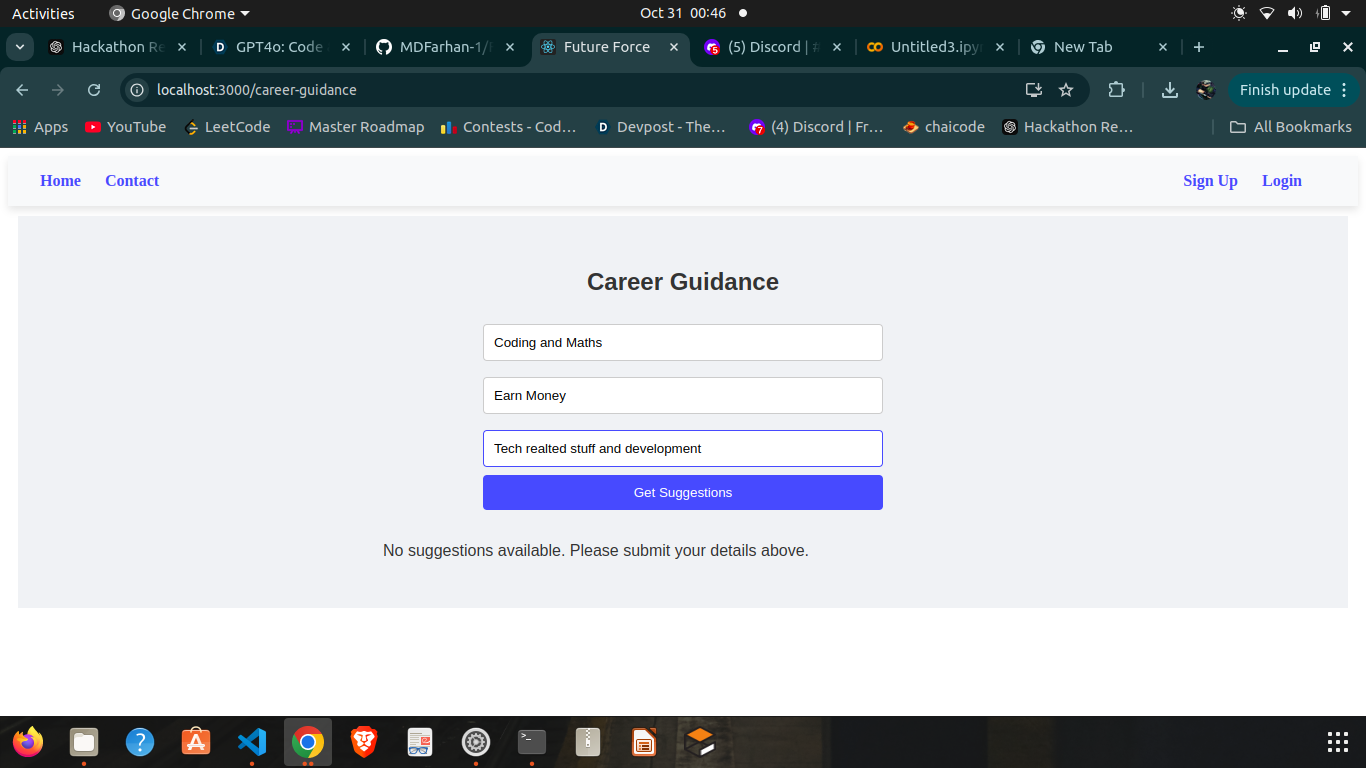
Career Guidance Paqe
-
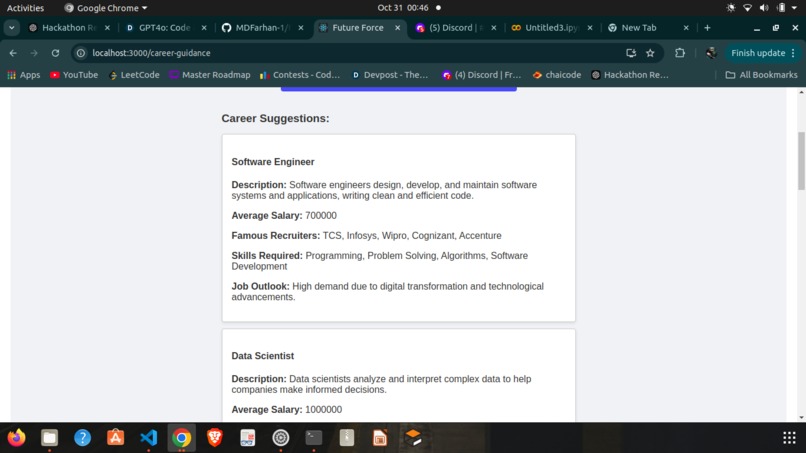
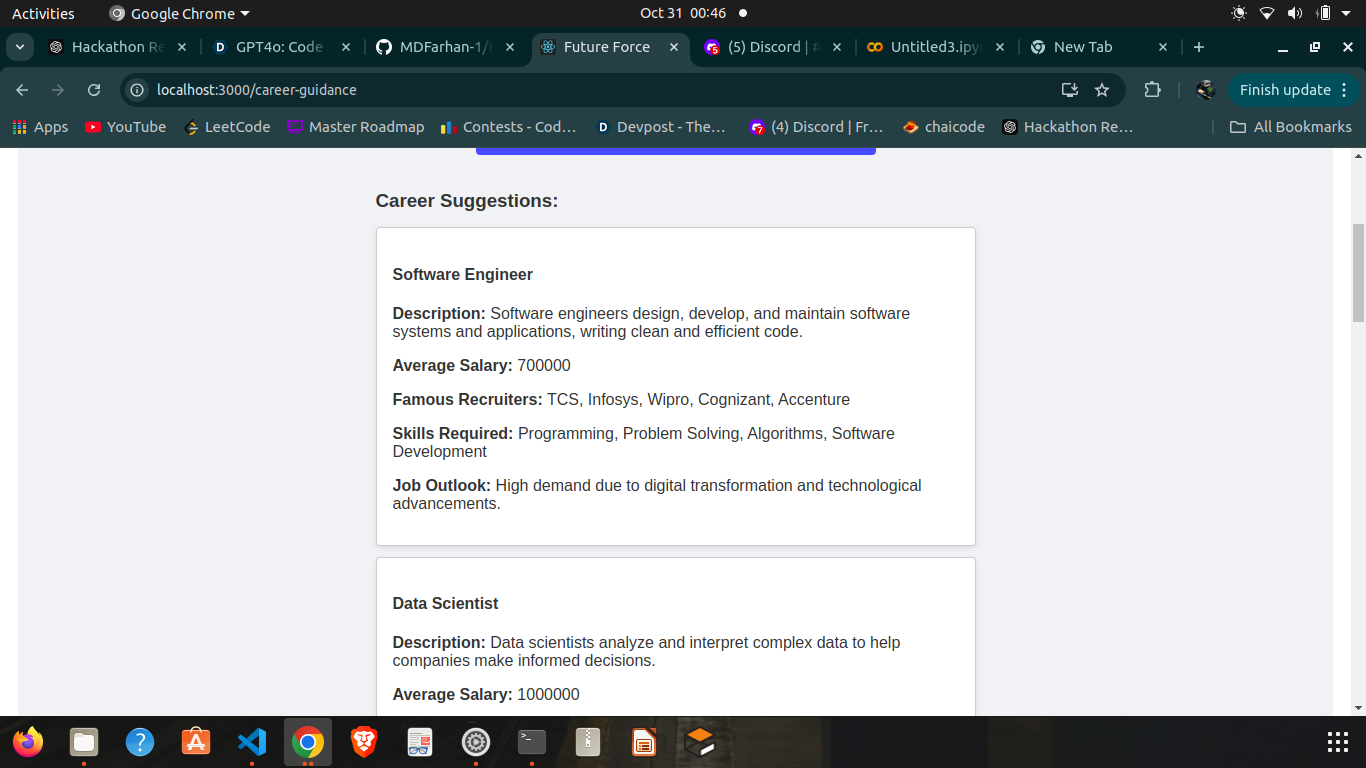
Career Guidance Result
-
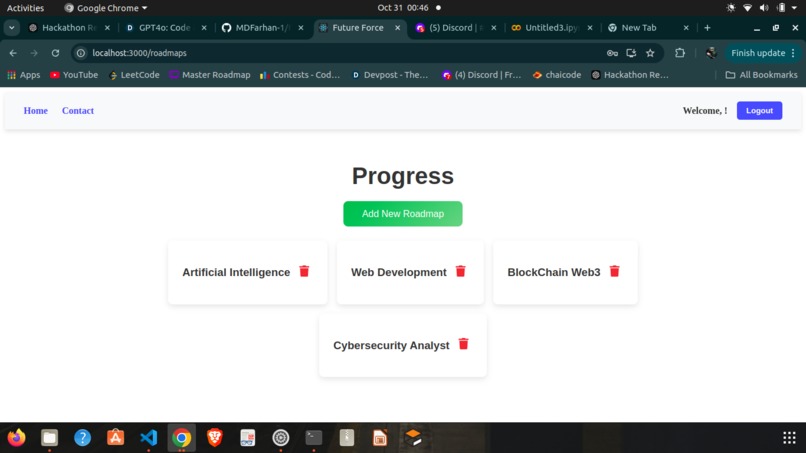
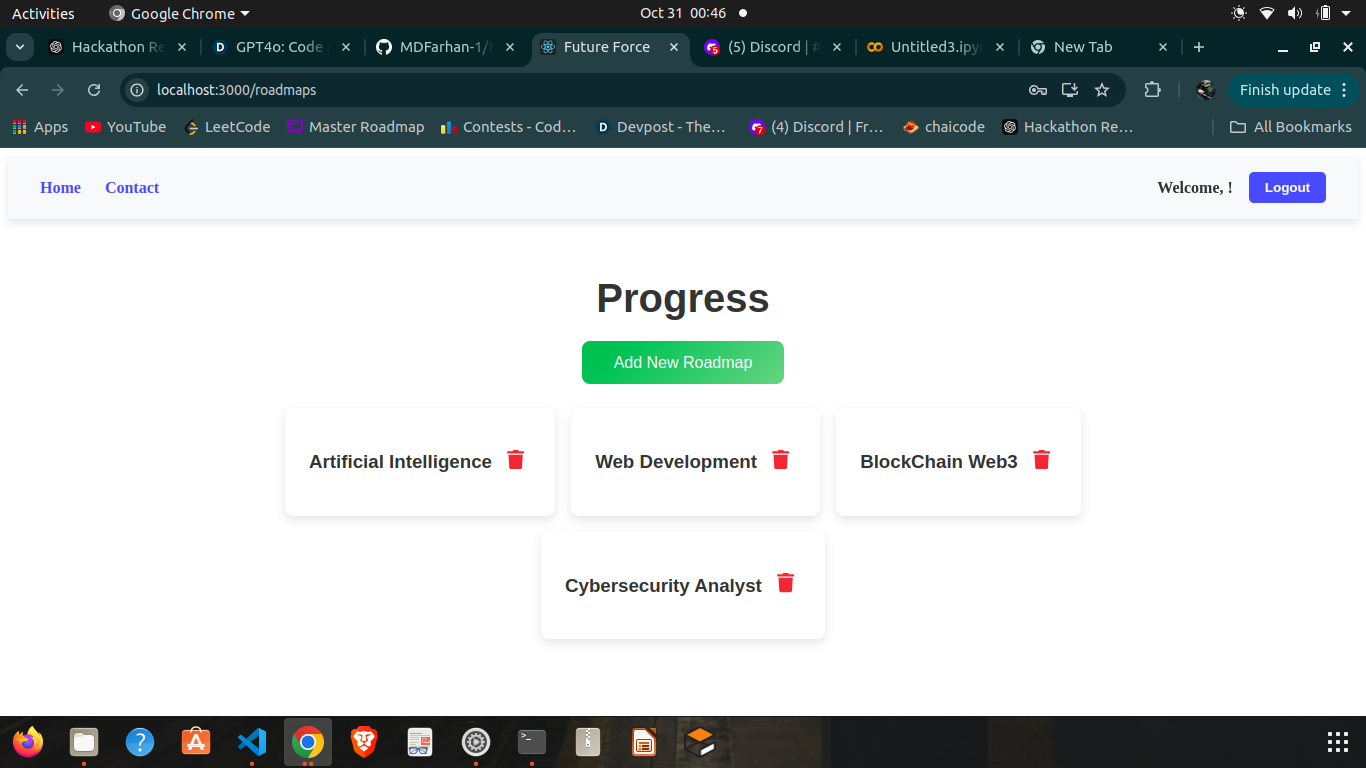
Roadmap Page
-
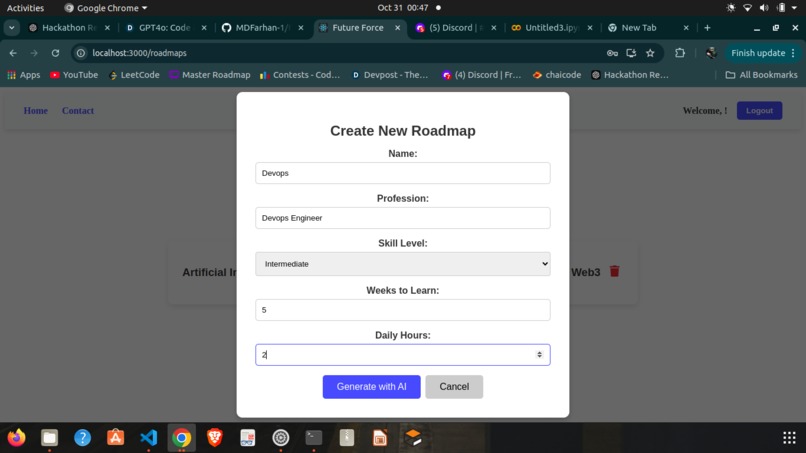
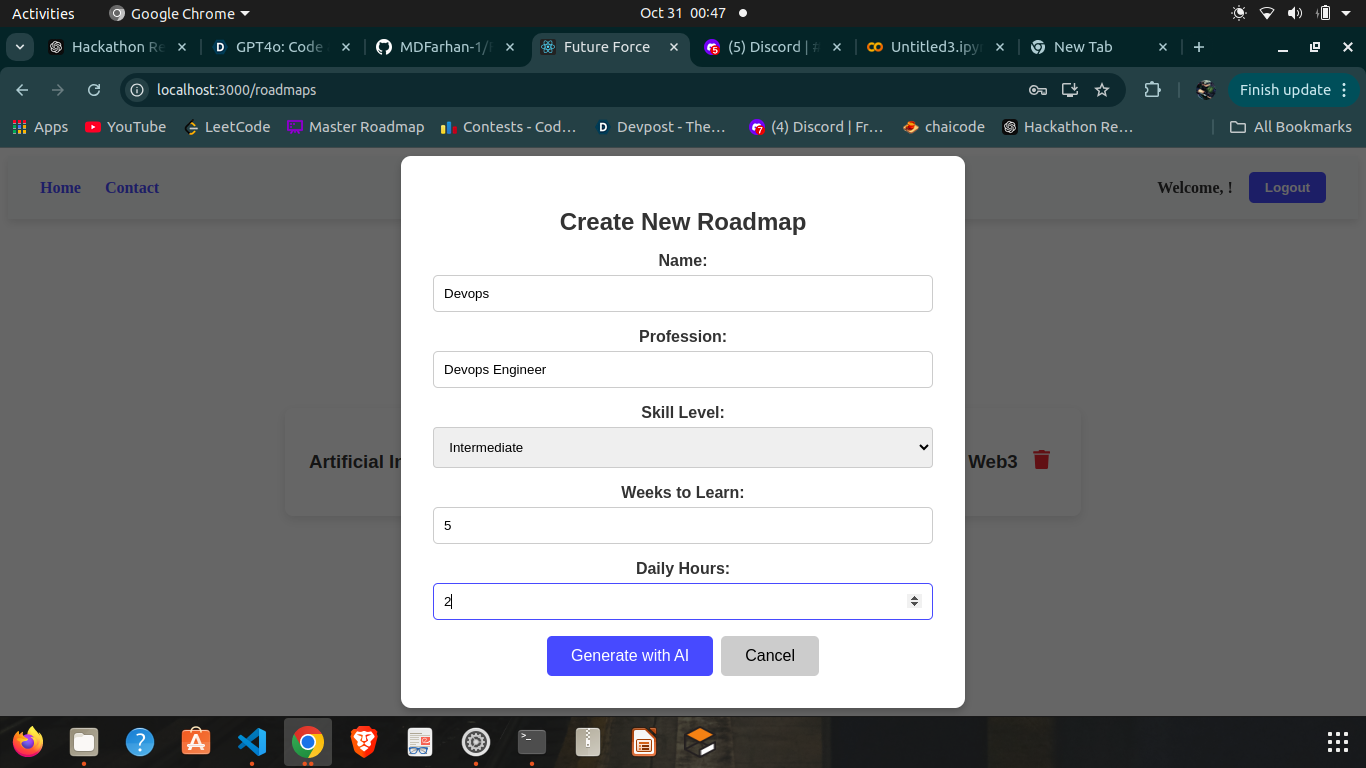
Raodmap Creation Page
-
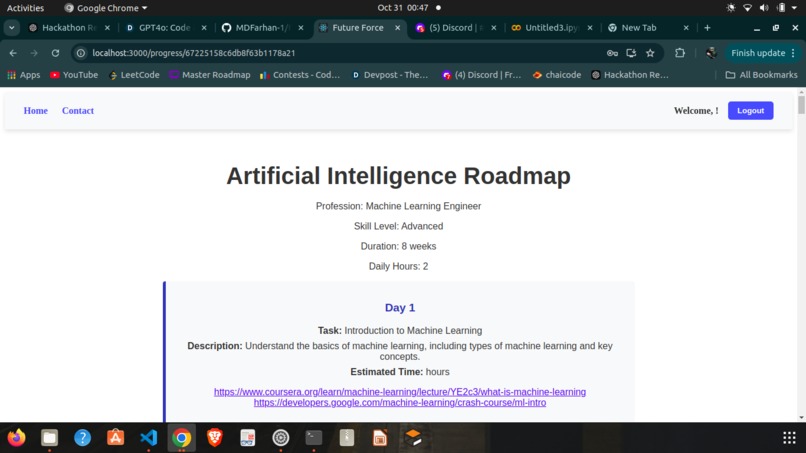
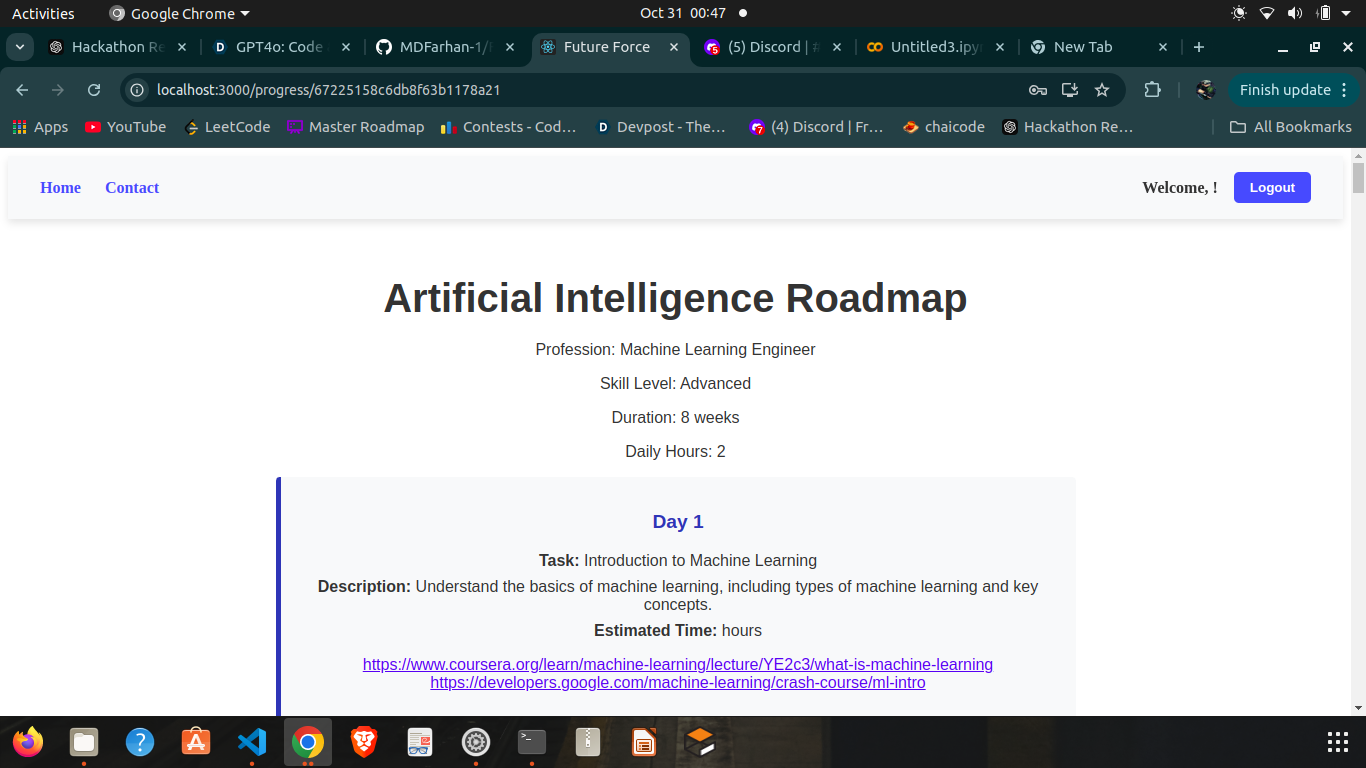
Roadmap view page
-
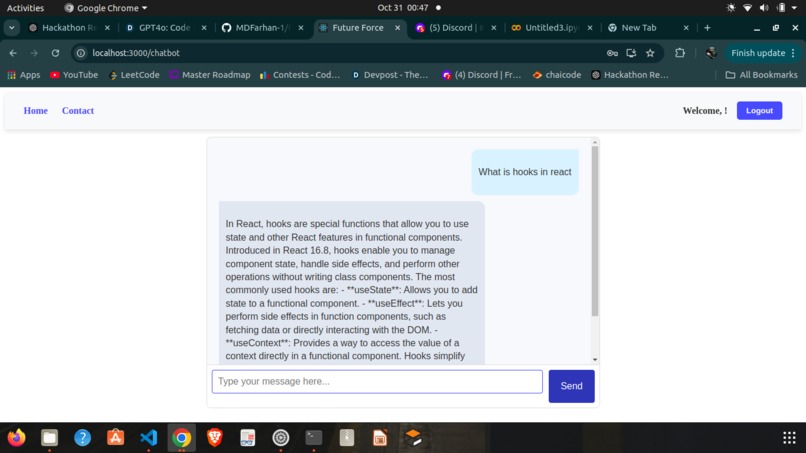
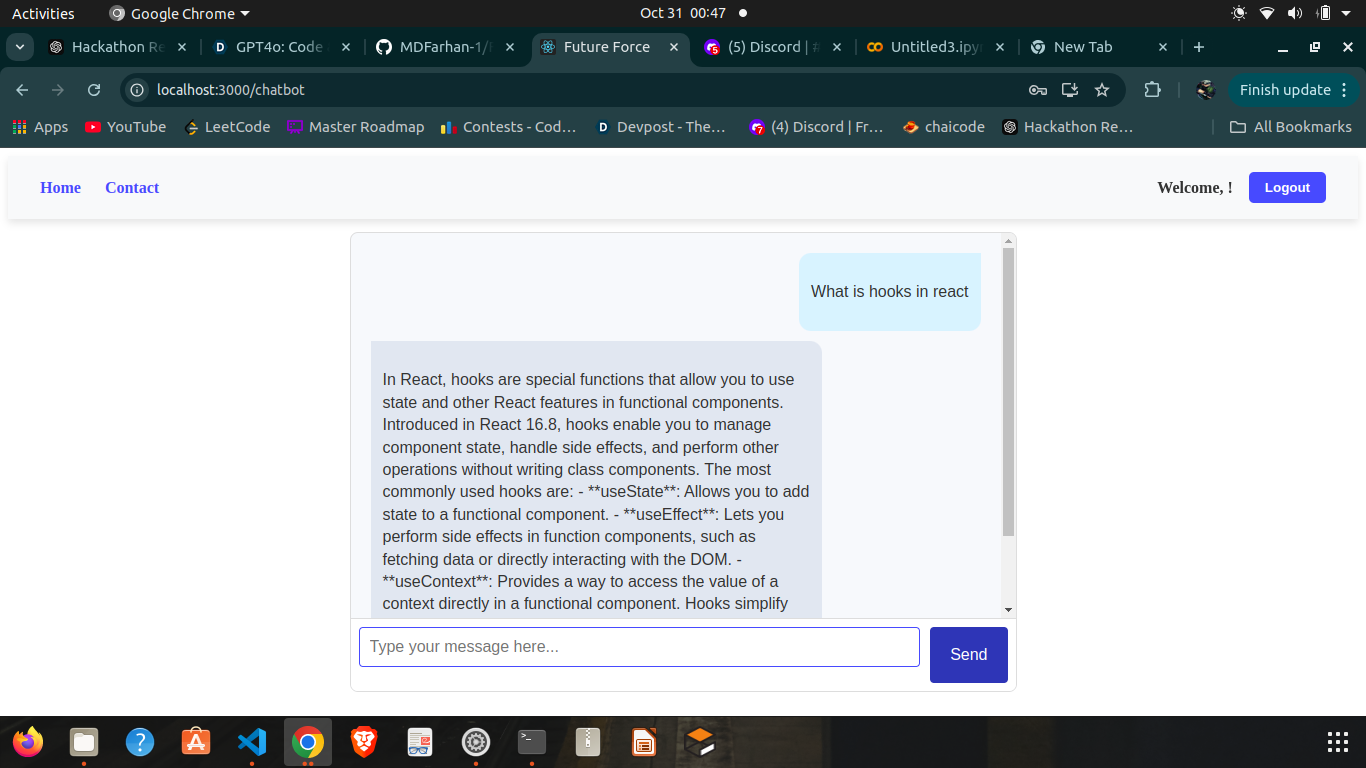
Chatbot for doubts solving page
Inspiration
The idea for FutureForge came from my own experience as a first-year B.Tech student, struggling to find the right path. Like many others, I felt overwhelmed by all the options and uncertain about which skills would be most valuable for my future. This confusion led me to fall behind my peers, wasting precious time. FutureForge is inspired by the need to prevent others from facing similar challenges, offering a structured and personalized way to approach career planning.
What it does
FutureForge is designed to be a one-stop platform for career guidance. It provides personalized learning roadmaps to help users acquire the skills they need for their desired careers. Through AI-powered recommendations and a structured roadmap, users can see exactly what they need to learn to achieve their goals. Additionally, FutureForge includes an interactive chatbot feature, which allows users to ask questions and receive guidance, making it easier for them to find answers and stay on track.
How we built it
FutureForge is built using the MERN stack—MongoDB, Express, React, and Node.js—which allows for a full-stack, responsive web application. For AI capabilities, we integrated OpenAI’s GPT API on the backend. This setup allows us to make API calls from the frontend, providing AI-driven responses directly within the app. The architecture leverages asynchronous communication between the front and back end to ensure smooth user experiences. We also focused on developing a user-friendly UI with intuitive navigation to make the platform accessible to users of all technical levels.
Challenges we ran into
Developing FutureForge came with its fair share of challenges. At times, our API keys became invalidated due to frequent usage from multiple participants, which disrupted the AI functionalities temporarily. We also encountered several issues while integrating the frontend and backend, especially in managing user data securely and efficiently. Debugging errors and ensuring seamless API calls were also significant obstacles, which required persistent troubleshooting.
Accomplishments that we're proud of
One of my biggest achievements was building a fully functional website within a very tight timeline—just two days. This project required collaboration, quick learning, and efficient coding practices. I'm proud that FutureForge is now a functional, reliable tool that addresses a real-world need. Additionally, our integration of GPT-4 for personalized guidance showcases the power of AI in making career decisions more accessible.
What we learned
The development of FutureForge was an invaluable learning experience. I gained practical experience in web development and learned how to efficiently integrate external APIs into a project. Handling errors and debugging across the stack deepened my understanding of both frontend and backend systems. Additionally, I learned about prompt engineering, crafting effective prompts for the GPT API to provide the most relevant guidance for users.
What's next for FutureForge
Looking ahead, I plan to refine FutureForge by fixing any existing bugs and improving the current features for a smoother user experience. Additionally, I aim to introduce new functionalities, such as advanced career analytics and detailed progress reports, to offer more comprehensive insights for users. These features will help users better understand their progress and make more informed career decisions. In the near future, I intend to deploy FutureForge in a live environment to make it accessible to a larger audience, empowering even more users to take control of their career paths and skill development with tailored guidance.


Log in or sign up for Devpost to join the conversation.