
Inspiration
Every day, we make choices that alter our trajectory, yet humans are notoriously prone to cognitive biases, short-term thinking, and an inability to weigh complex, multi-variable future scenarios simultaneously. We built FutureYou to bridge the gap between human intuition and data-driven foresight. We wanted to create a personal "flight simulator" for life and business decisions giving users the power to map out choices, ground them in real data, and see simulated outcomes before making a real-world commitment
What it does
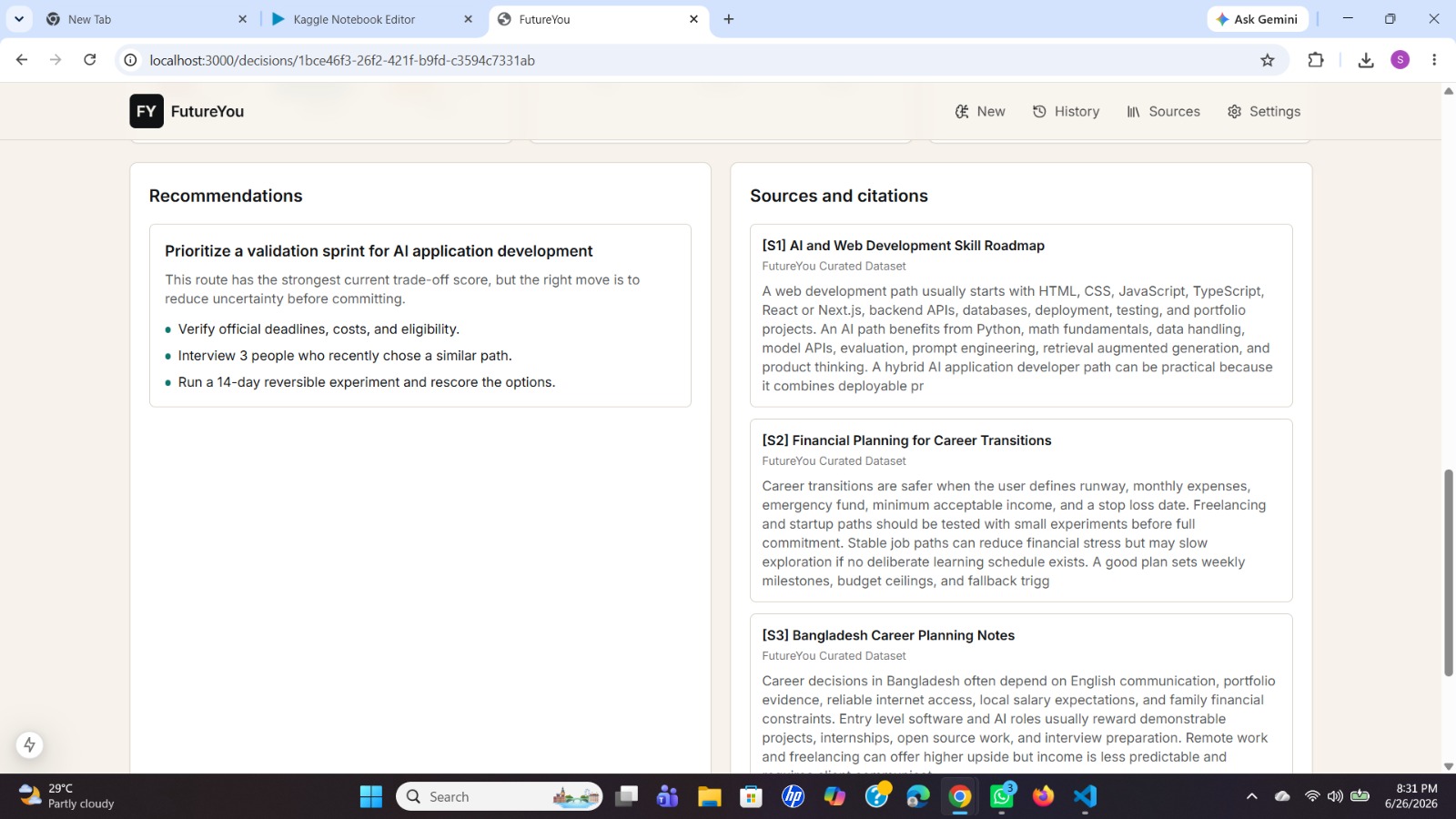
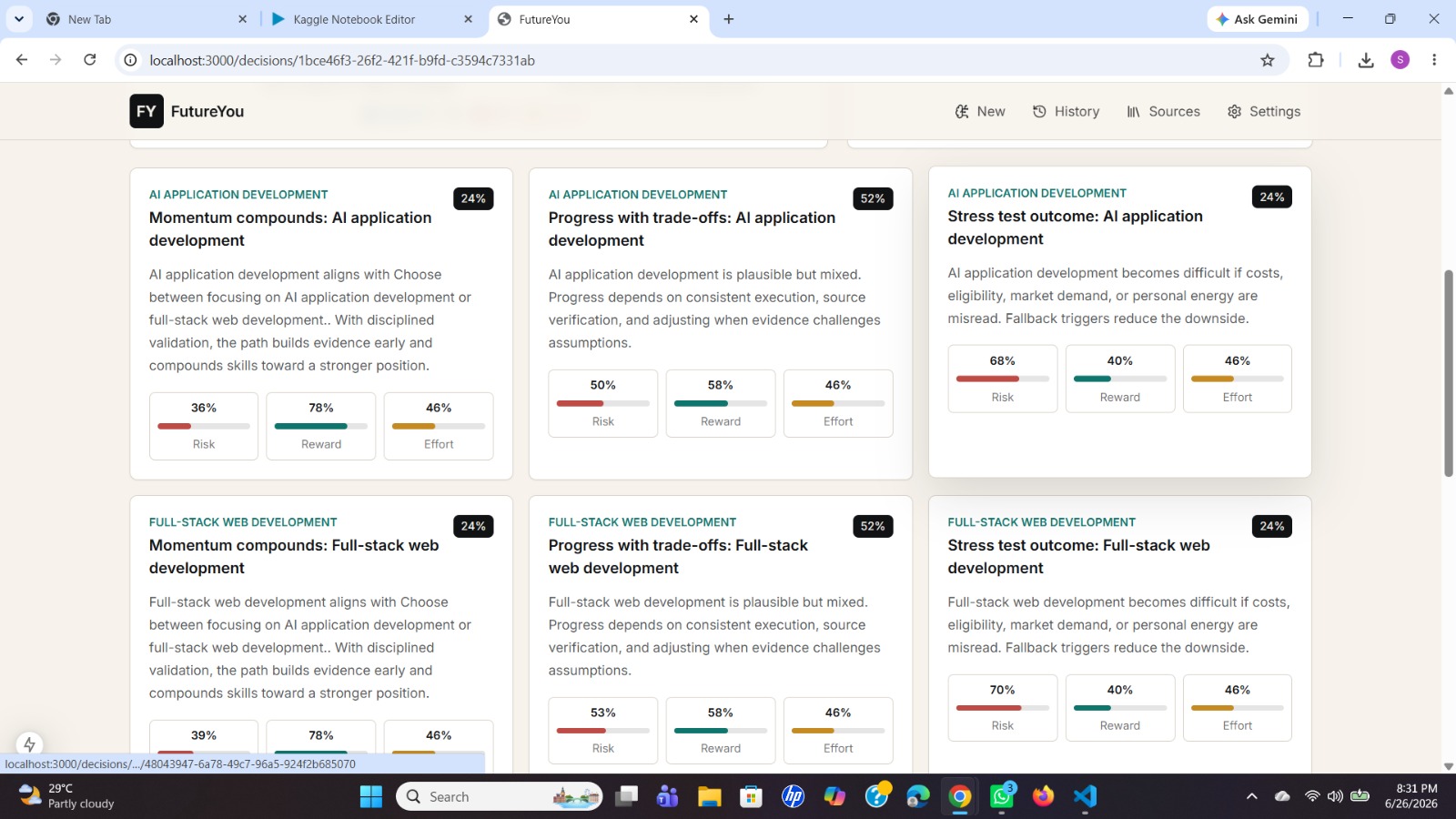
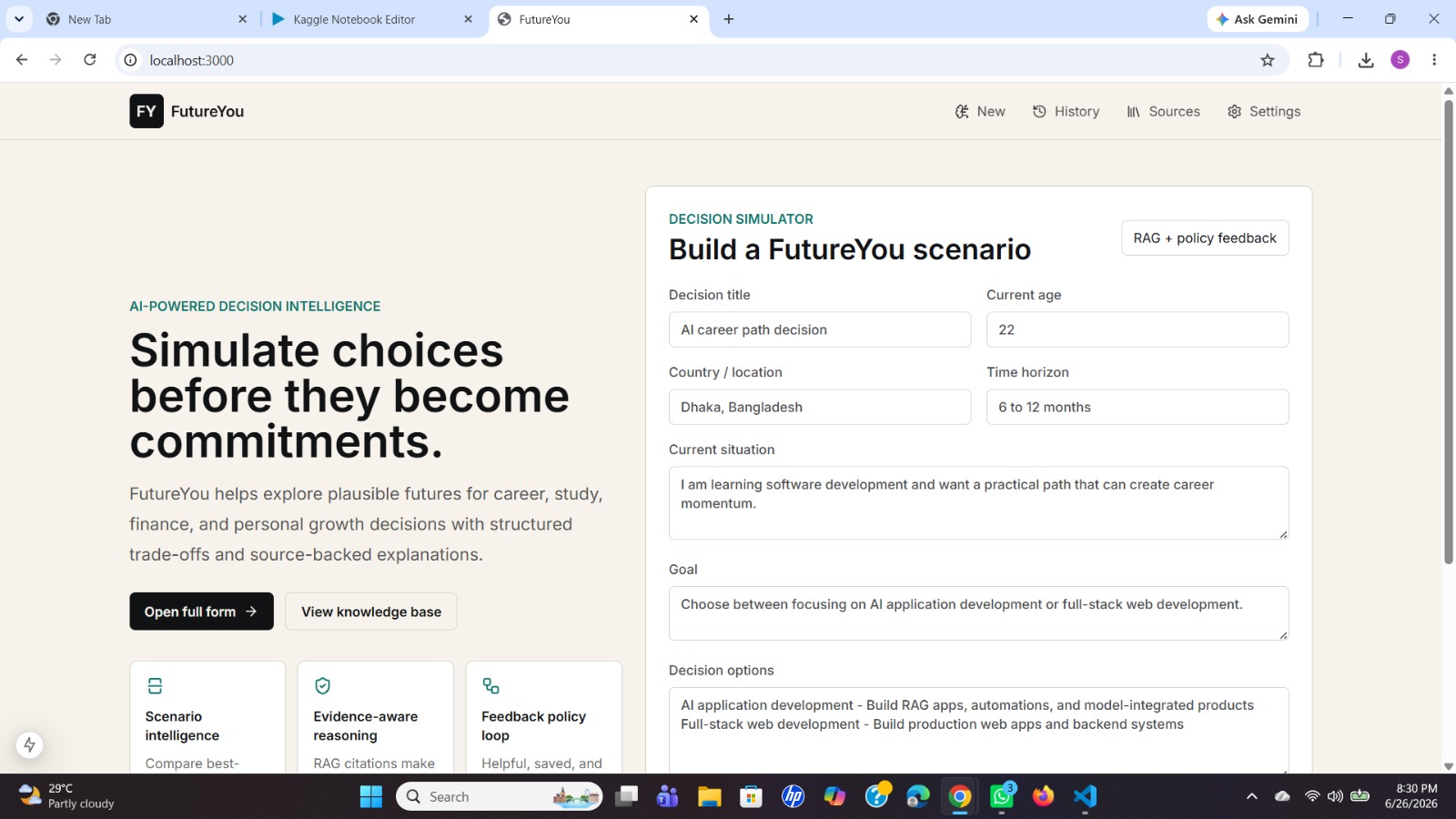
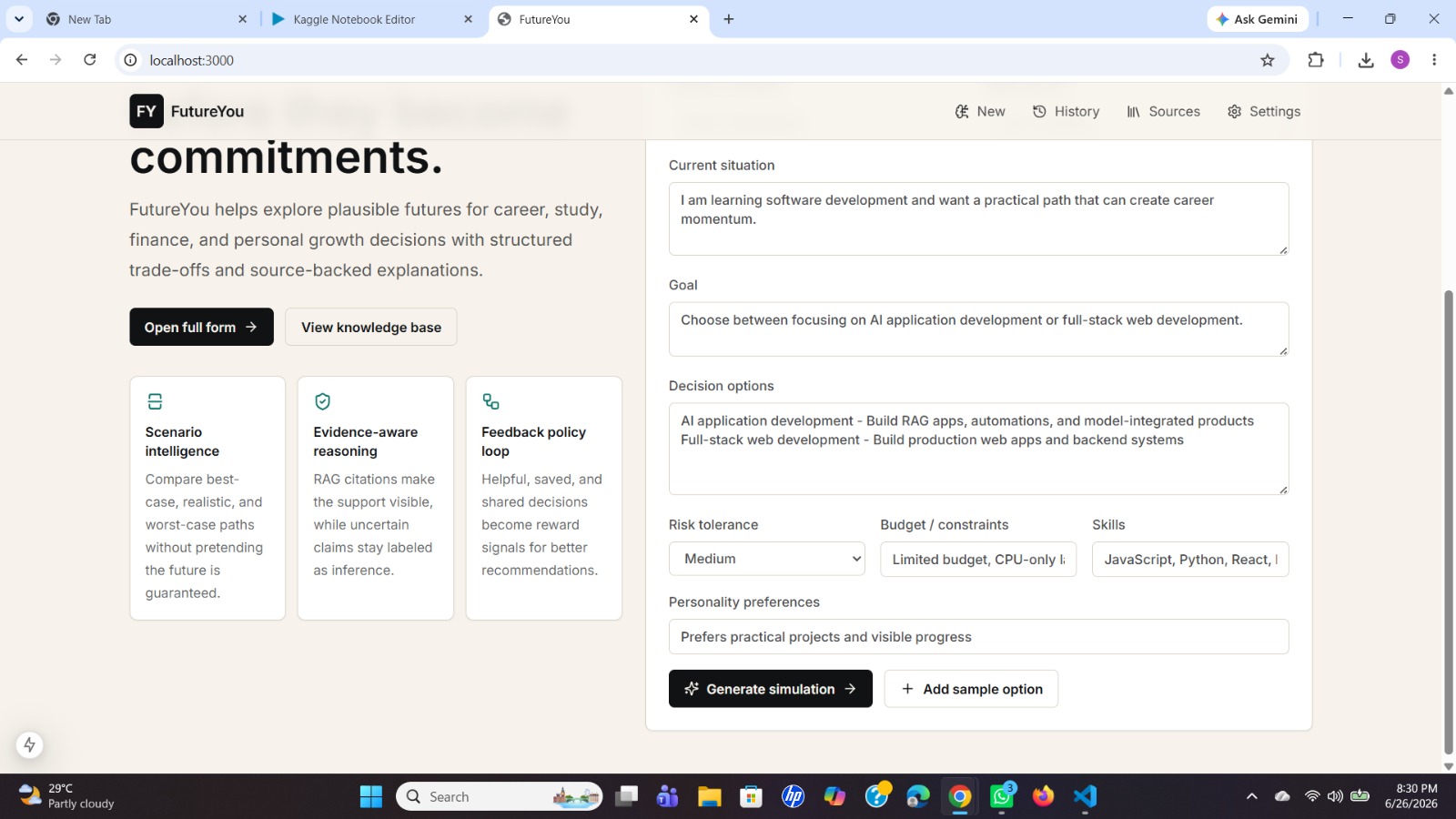
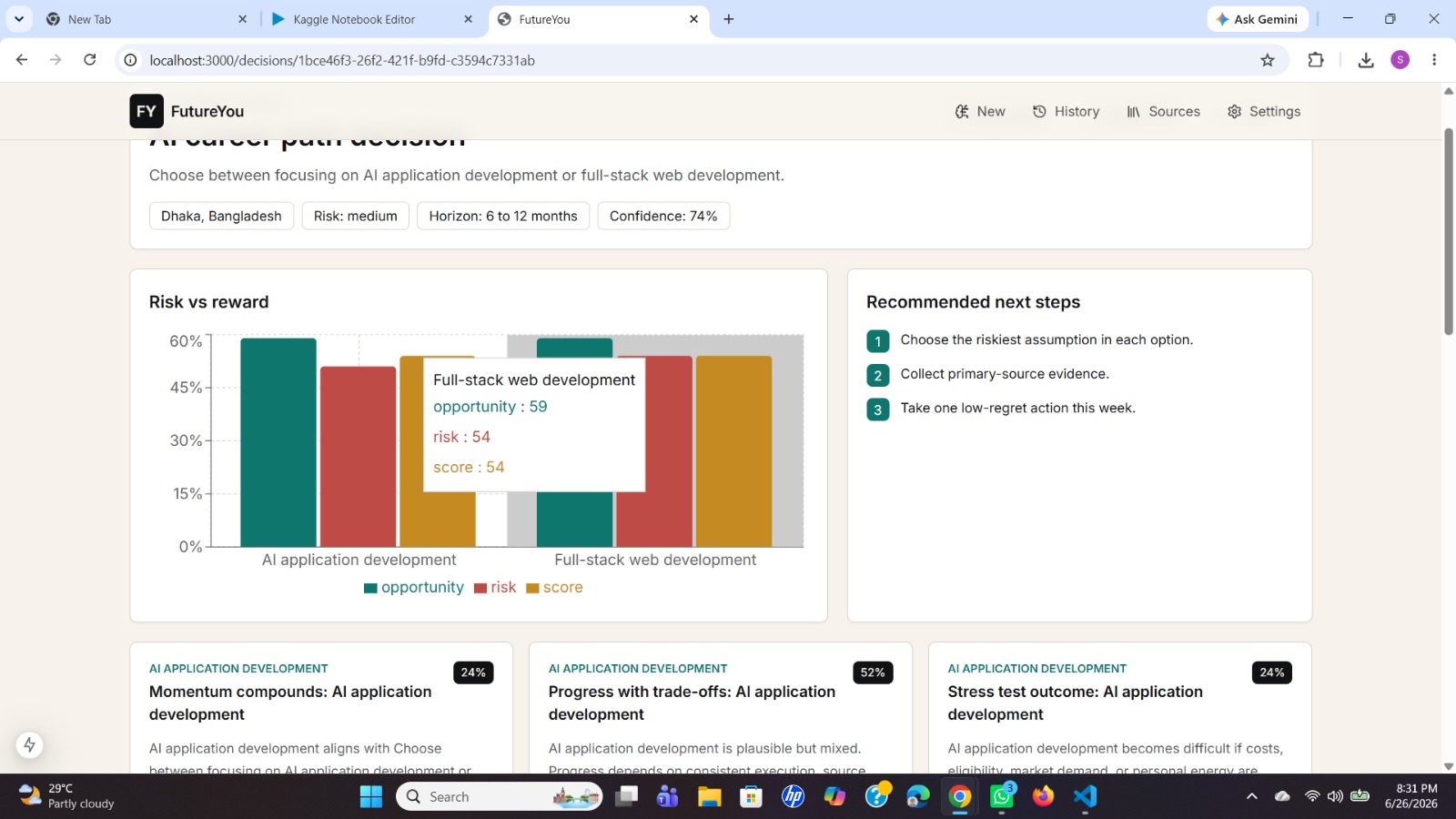
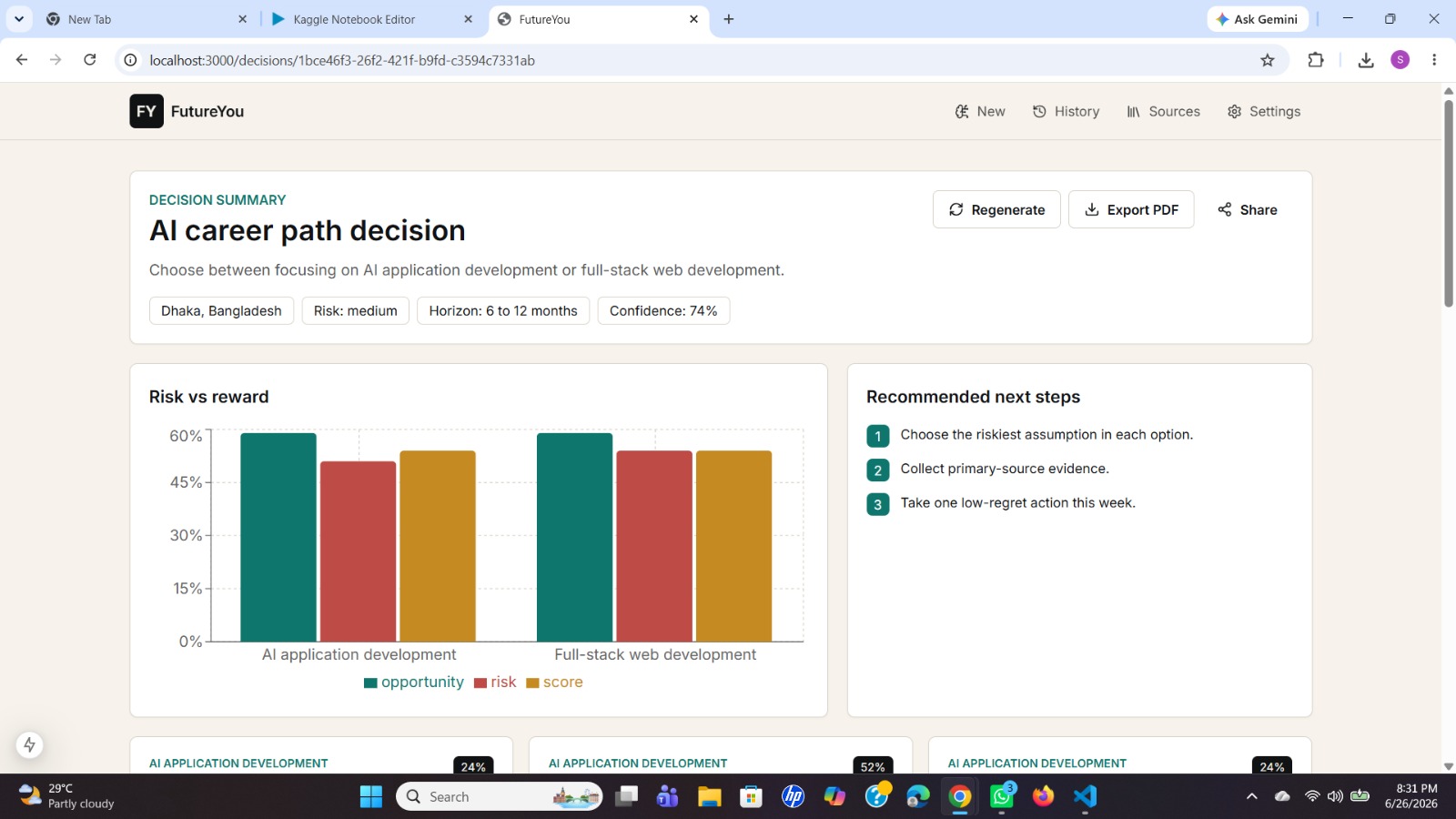
FutureYou is an interactive decision intelligence and scenario simulation application. It provides users with a comprehensive dashboard to model complex paths and explore recommended outcomes:Decision Management: Outline major strategic dilemmas, paths, and overriding objectives.Scenario Simulation: Run multi-variable simulations under each decision tree to explore risks, rewards, and downstream effects.Data Source Management: Ingest and manage custom files or contextual knowledge bases.Context-Aware Recommendations: Leverage an intelligence layer to get data-backed insights on which path yields the optimal outcome based on your inputs.
How we built it
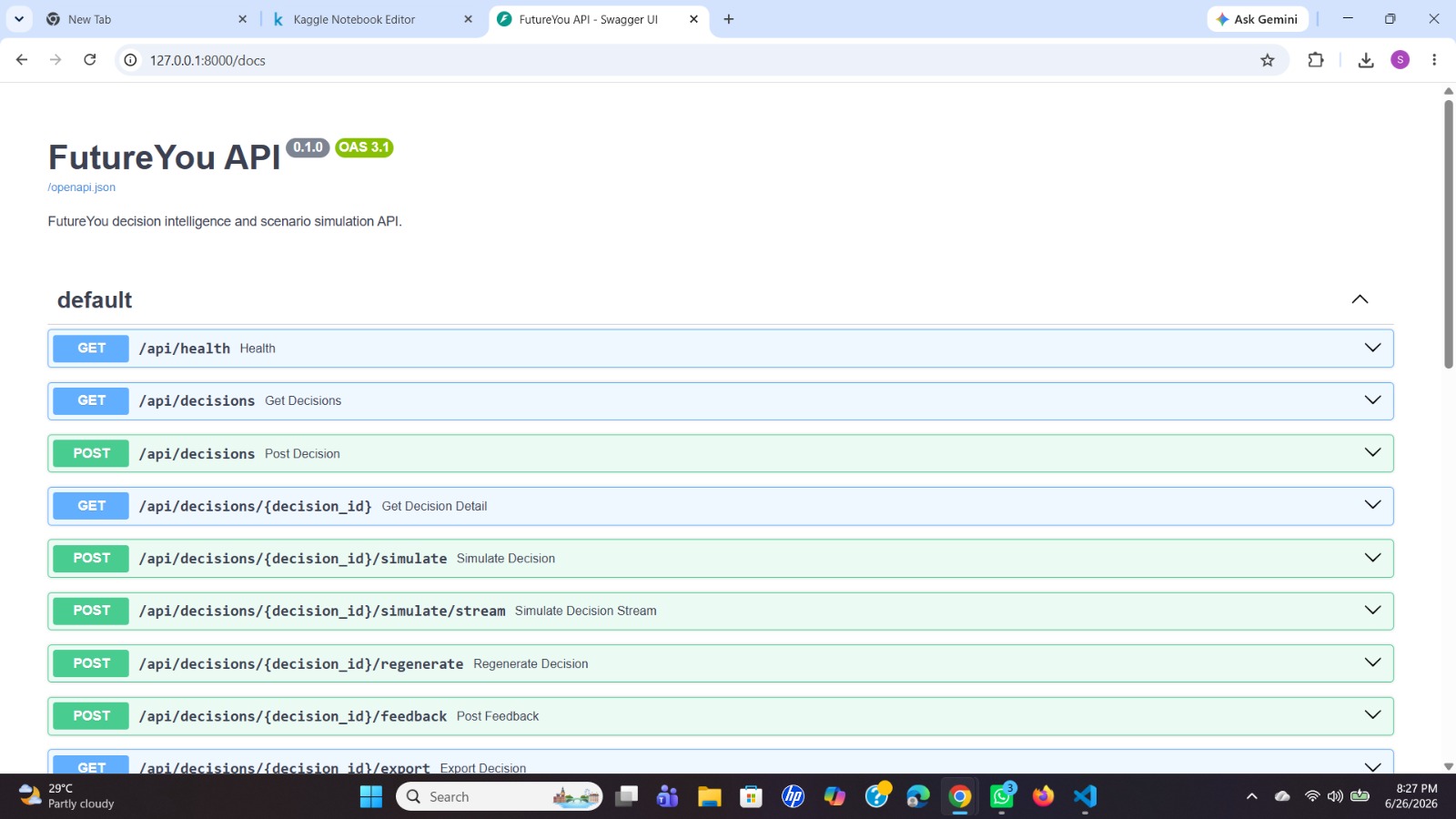
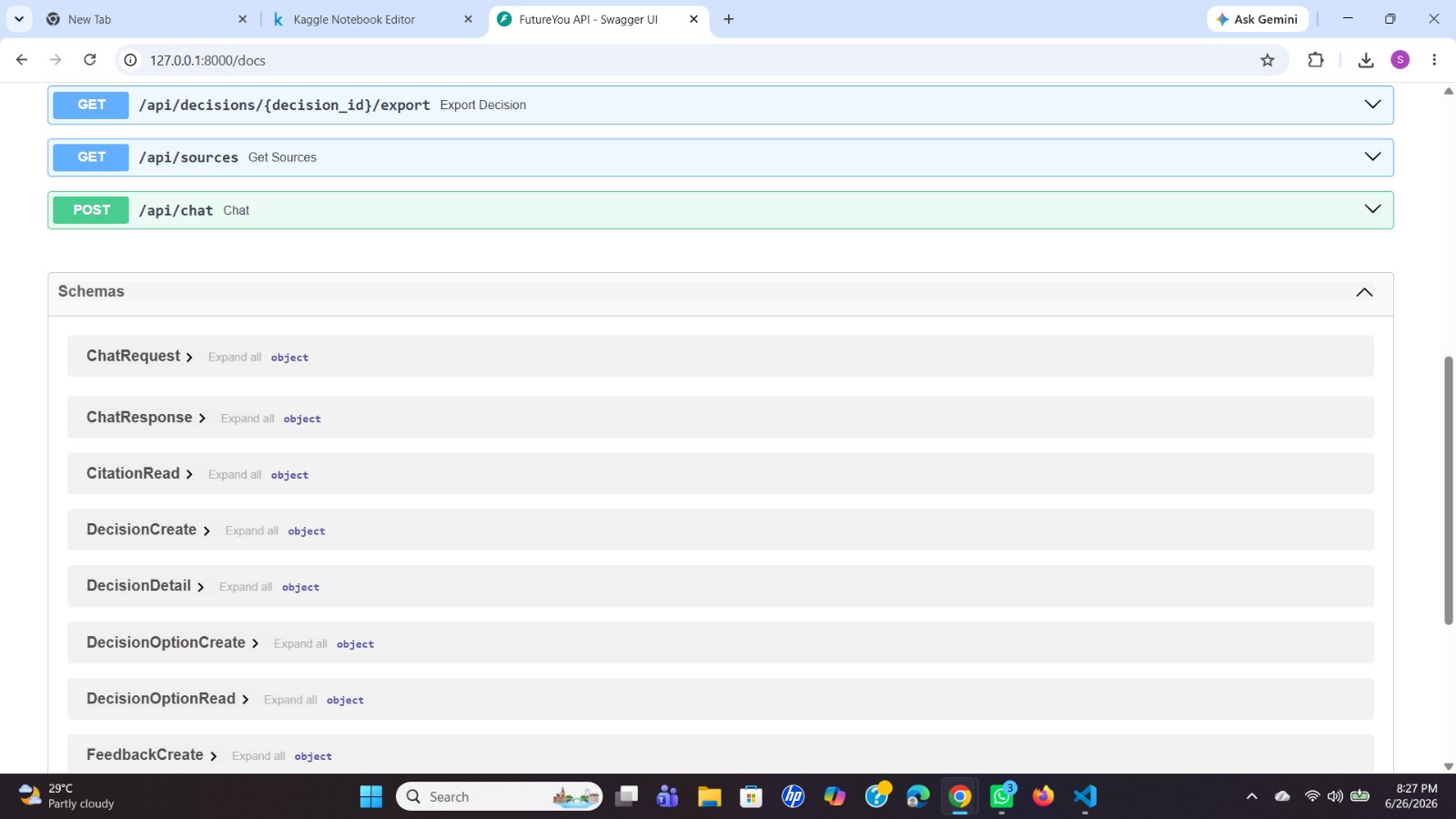
We engineered FutureYou using a clean, decoupled full-stack architecture built for high performance and type safety: Backend: Powered by Python and FastAPI, creating an asynchronous, high-throughput API gateway. It handles core business logic services, database session management, and request/response validation via Pydantic schemas. It also includes a custom RAG (Retrieval-Augmented Generation) support pipeline to ground scenario outputs directly in user-provided data sources.Frontend: Built with React, Next.js, and TypeScript to maintain strict structural alignment across the stack. We utilized Tailwind CSS to design a fluid, responsive interface that makes interpreting multi-layered simulation metrics effortless.Database & Initialization: Configured with an automatic routine (app.db.init_db) that dynamically seeds baseline source data on startup, ensuring an immediate out-of-the-box testing experience.
Challenges we ran into
Asynchronous State Synchronization: Managing heavy multi-variable simulations on the backend while maintaining a snappy, non-blocking UI on the frontend was tough. We resolved this by optimizing FastAPI's lightweight concurrency models and structuring clean async endpoint responses.RAG Context Guardrails: Ensuring the simulation engine stayed strictly grounded in the ingested data sources without hallucinating far-fetched future outcomes required meticulous prompt engineering, explicit boundary setting, and tight data schema validations.
Accomplishments that we're proud of
Modular Monorepo Architecture: Architecting a clean repository split (backend/ and frontend/) that enables both ecosystems to be developed, scaled, and deployed completely independently (e.g., Vercel for the frontend and Render for the backend).Instant Seeding Pipeline: Designing a robust database initializer that provisions baseline source data seamlessly on startup, meaning a developer or judge can spin up the project and test simulations instantly.
What we learned
We realized the immense value of strict contract mirroring between backend and frontend. Mapping our FastAPI Pydantic schemas directly to TypeScript interfaces on the frontend saved us hours of debugging runtime data-type mismatches and dramatically accelerated our integration velocity.
What's next for Future You
Advanced Predictive Analytics: Evolving from heuristic business logic services to deeper machine learning and predictive trend forecasting models.Production Infrastructure: Migrating the lightweight local database setup to a robust, fully hosted production-grade PostgreSQL instance.Collaborative Decision Canvas: Introducing real-time collaborative rooms where teams or stakeholders can jump into the same canvas to simulate and analyze enterprise-level scenarios together.
Built With
- fastapi
- next.js
- pydantic
- python
- rag
- react
- render
- sqlite
- tailwindcss
- typescript
- vercel


Log in or sign up for Devpost to join the conversation.