-
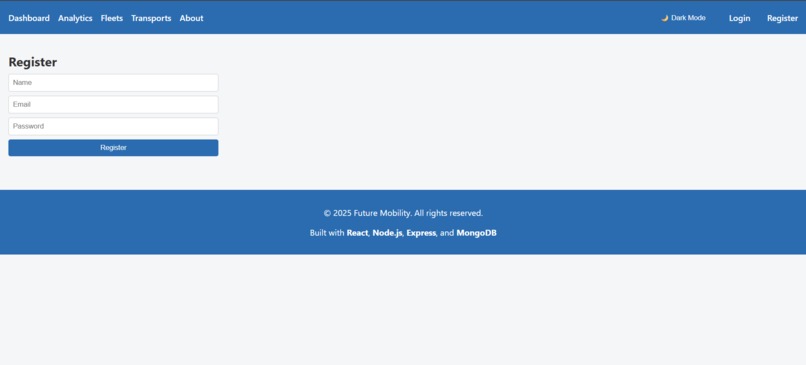
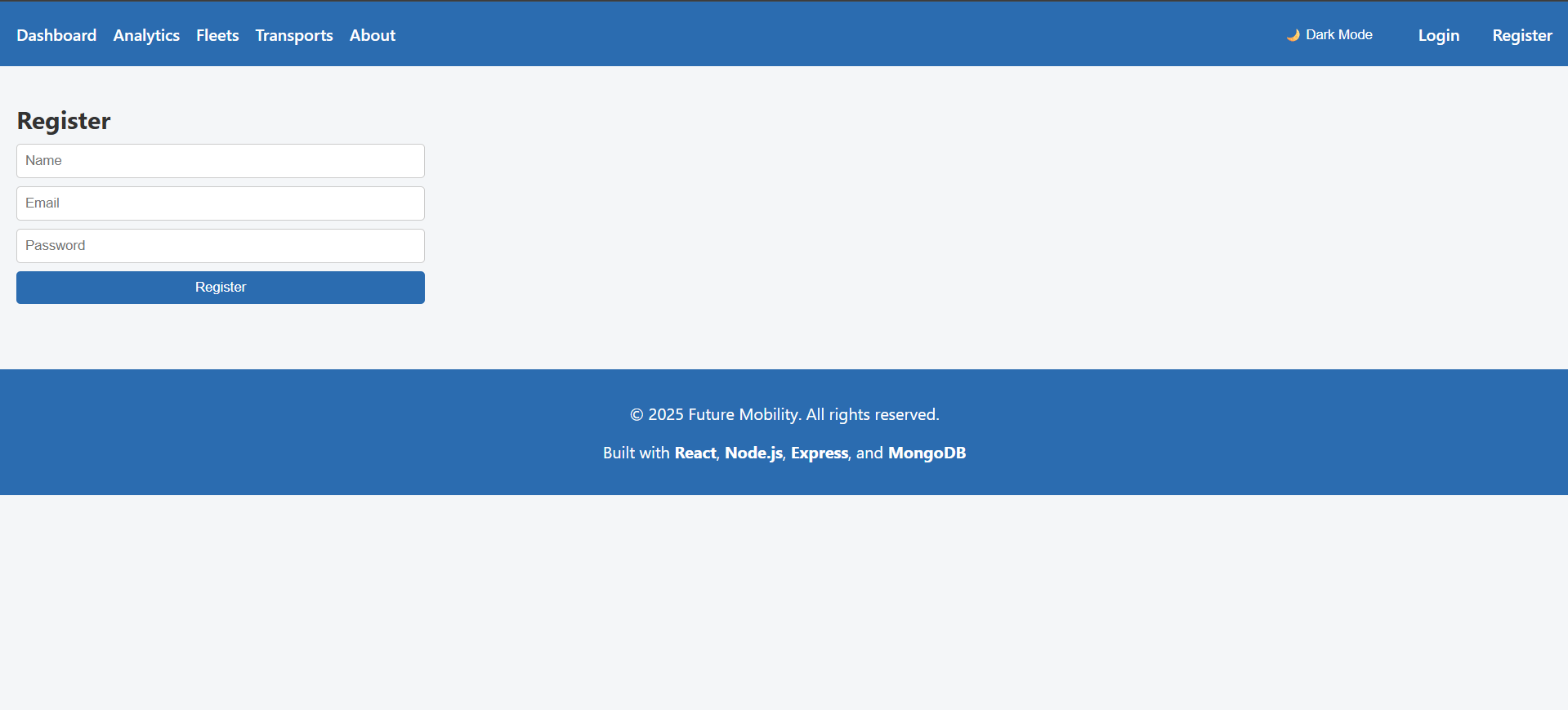
Register Page
-
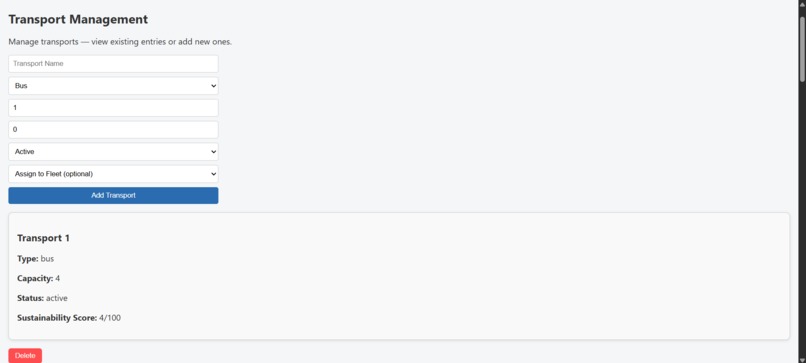
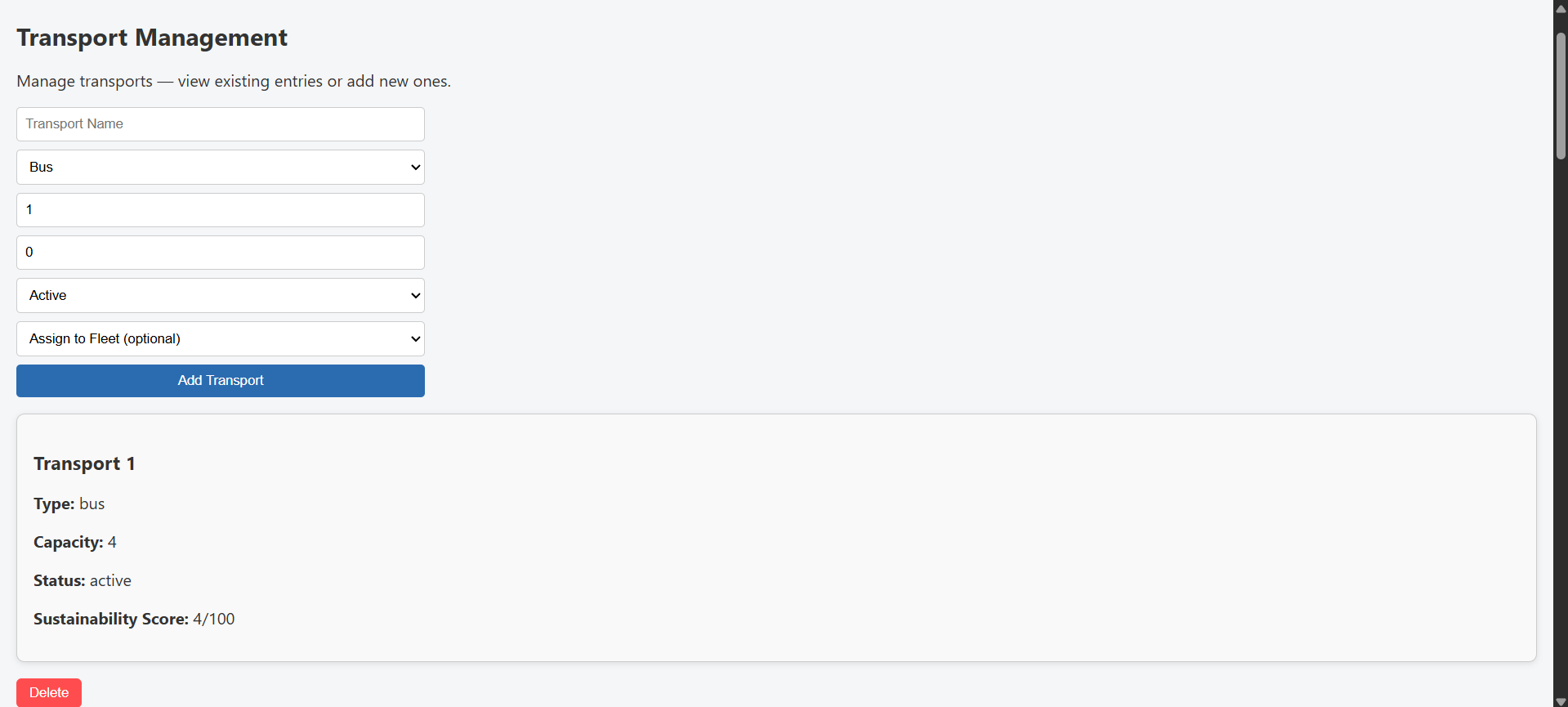
Transport Management
-
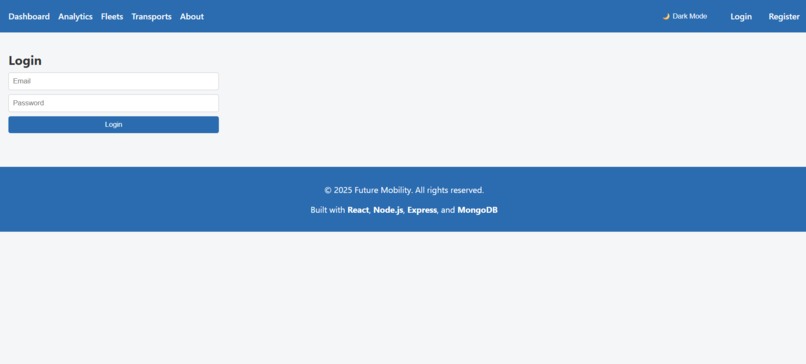
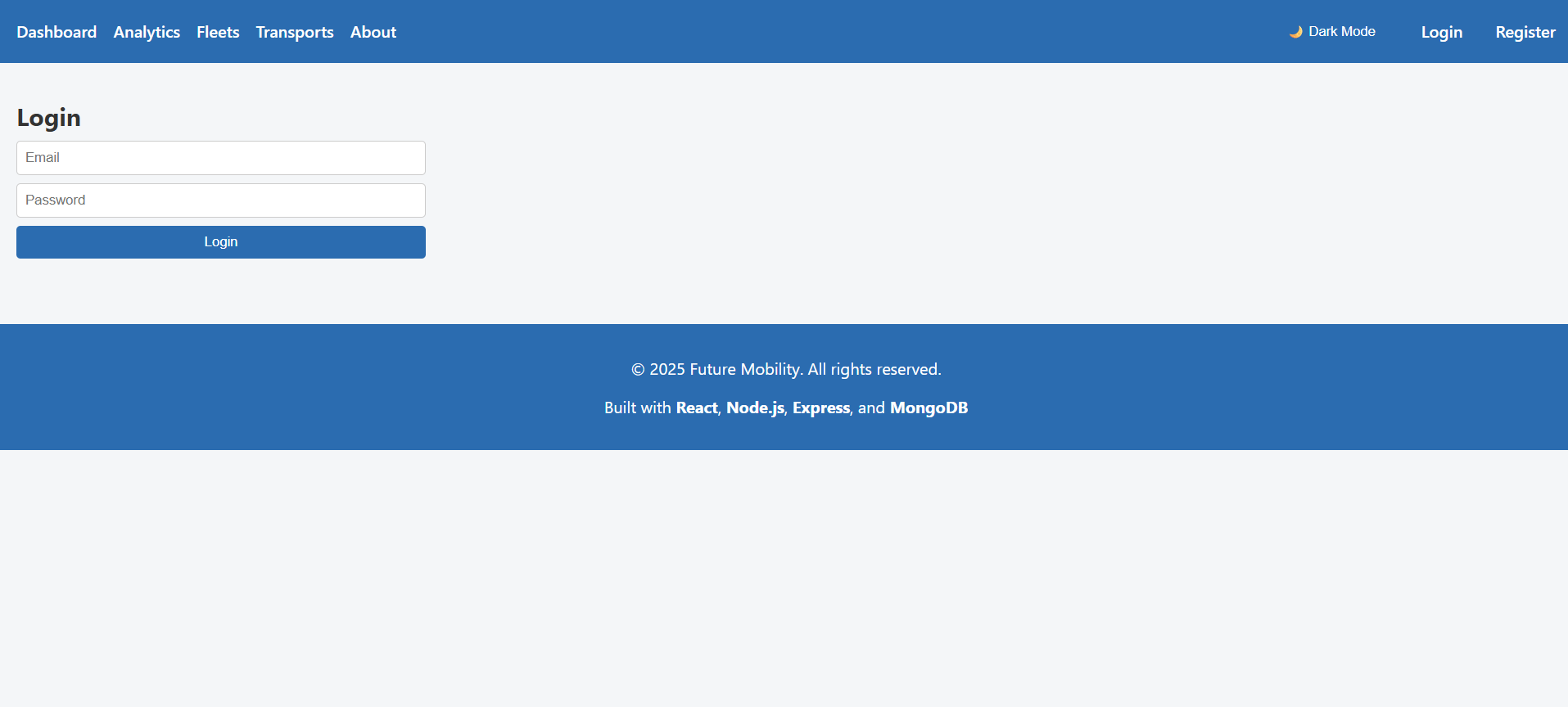
Login Page
-
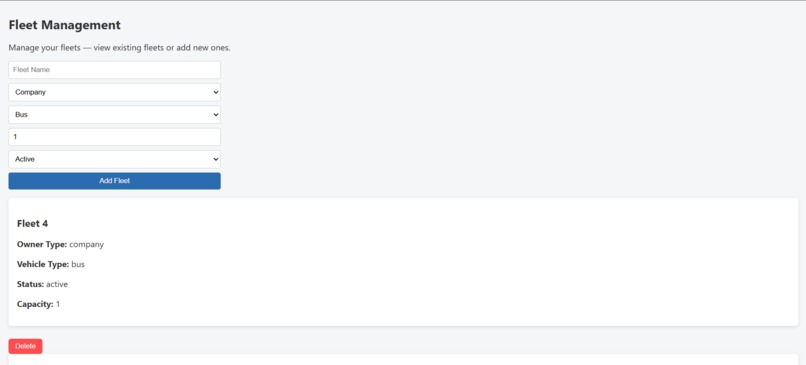
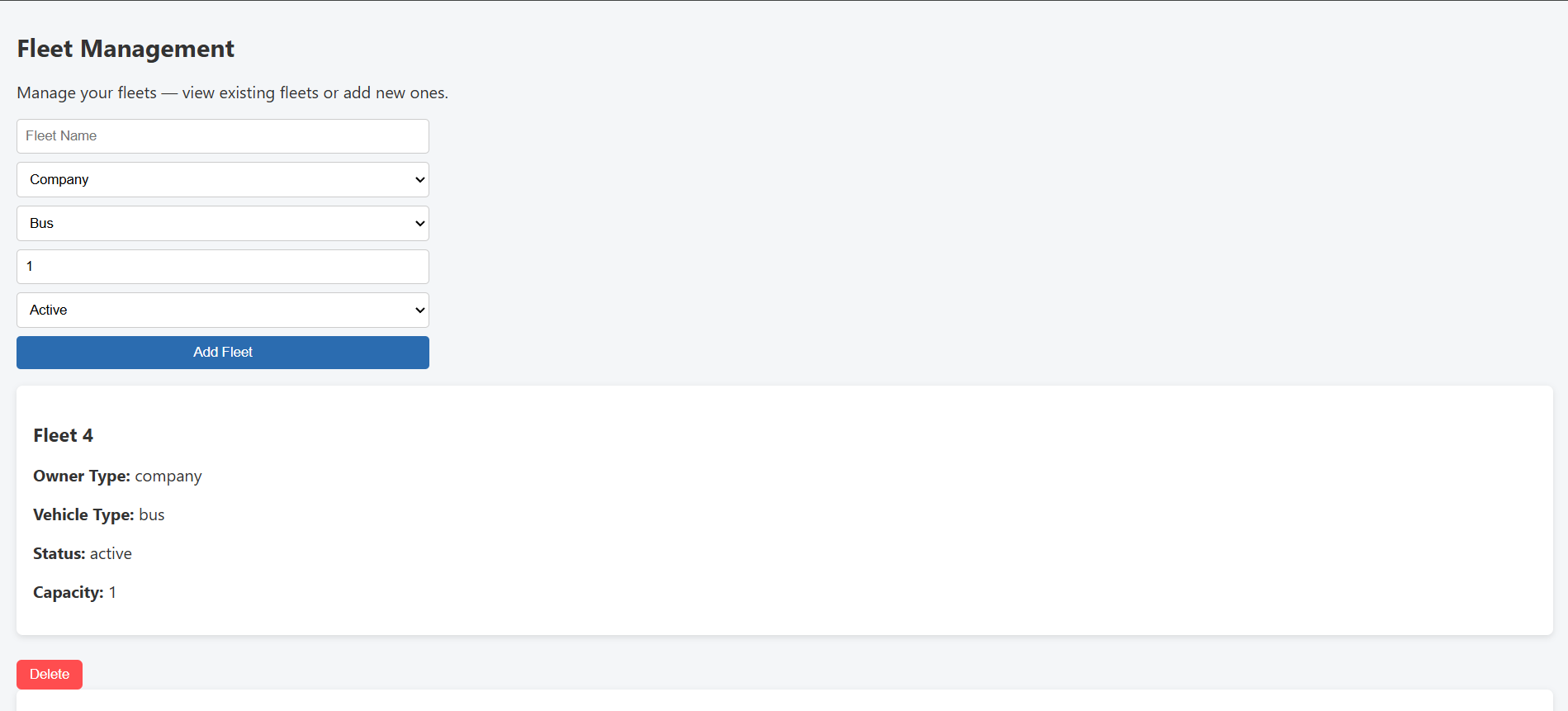
Fleet Management
-
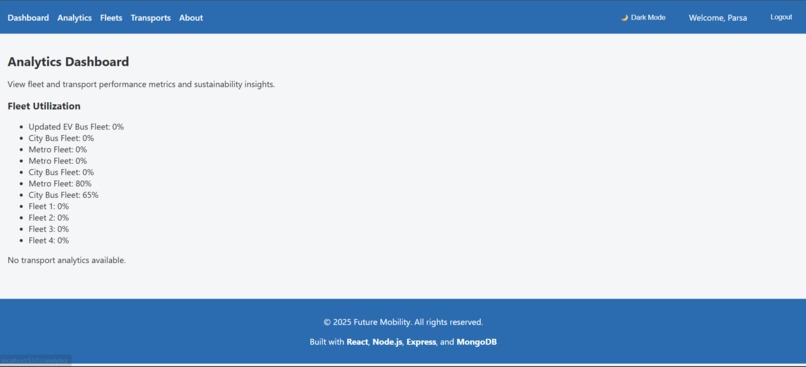
About Page
-
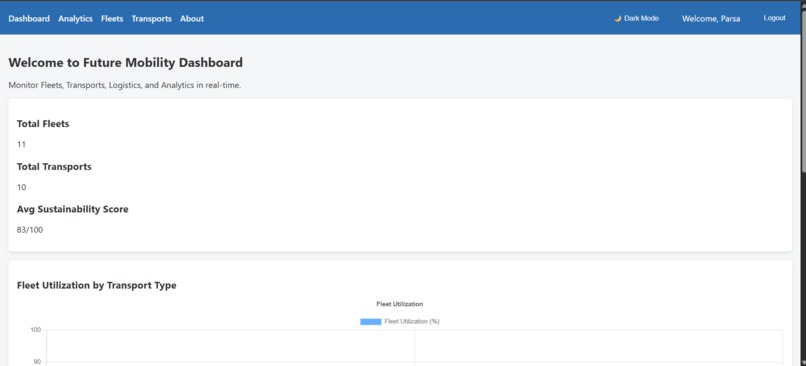
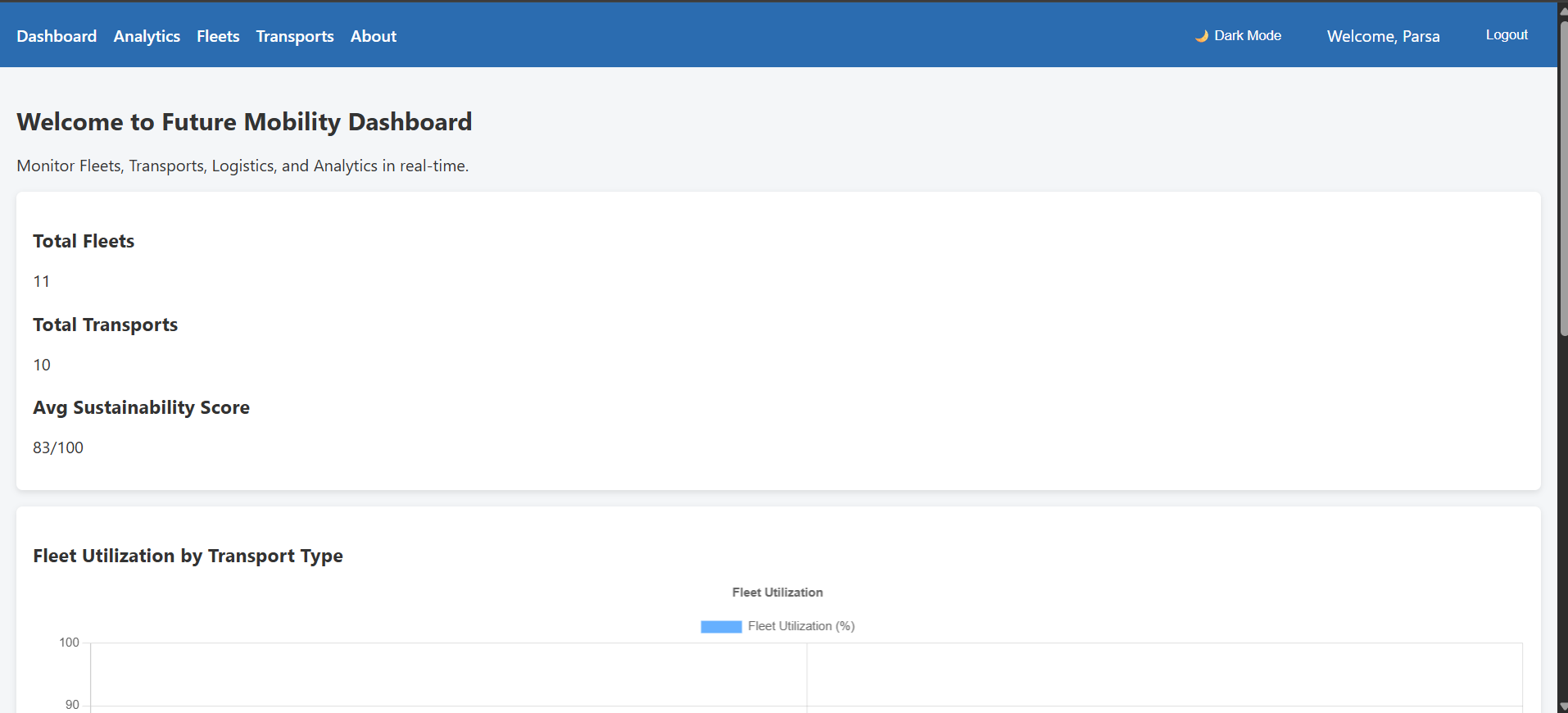
Dashboard Page
Inspiration
I was inspired by the growing need for smarter, greener transportation systems. From electric fleets to shared mobility services, cities and organizations need tools to optimize resources, reduce emissions, and improve efficiency.
What it does
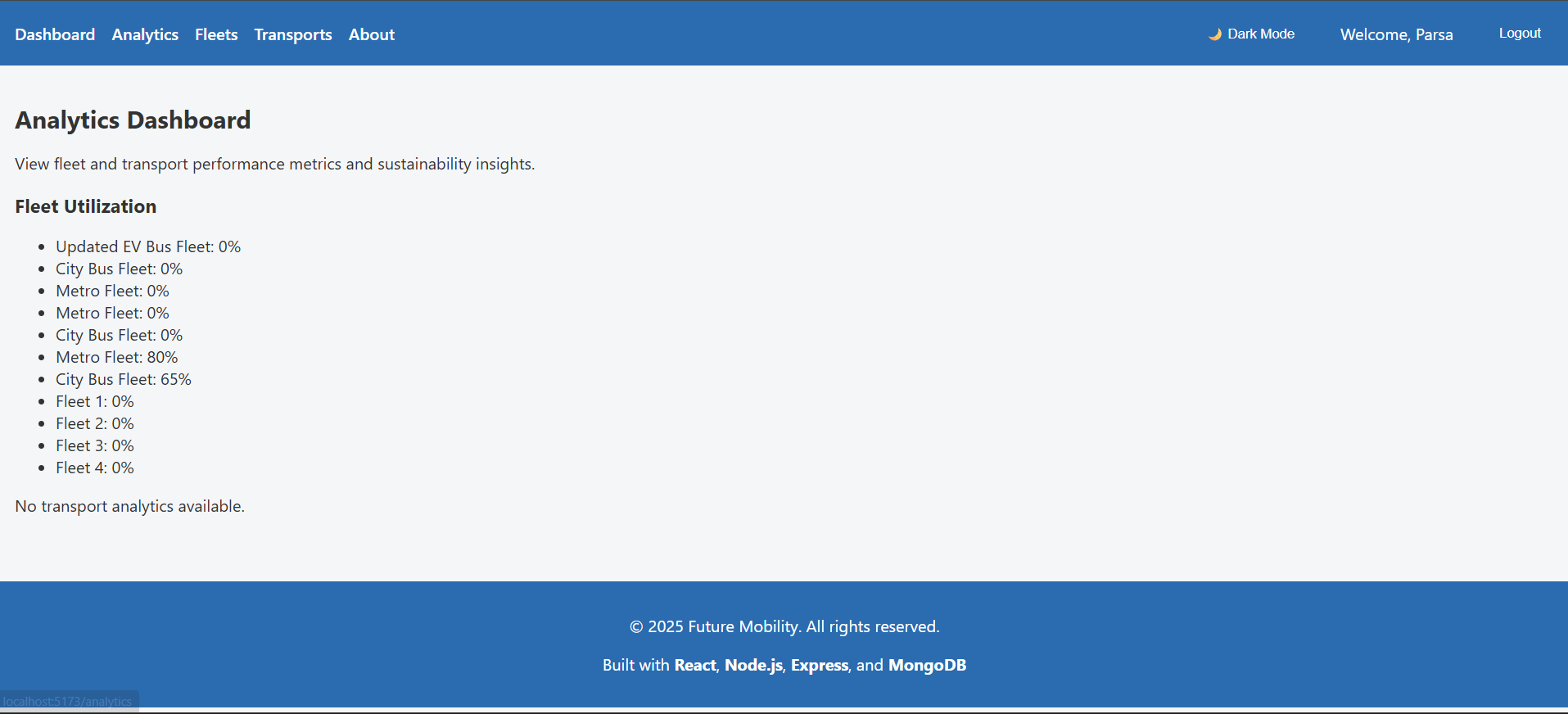
Future Mobility Manager helps organizations manage fleets and transports while providing real-time analytics and utilization insights. It enables users to add, update, and track vehicles, monitor usage, and visualize sustainability metrics through interactive dashboards.
How I built it
I developed a full-stack MERN application:
- Frontend: React with Context API for state management, React Bootstrap for UI, and Chart.js for data visualization.
- Backend: Node.js with Express and MongoDB Atlas, secured with JWT authentication and validation middleware.
- Integration: RESTful APIs connect the backend to the frontend, providing live data for fleet management and analytics dashboards.
- Deployment: Hosted on cloud platforms (Render for backend, Vercel/Netlify for frontend).
Challenges I ran into
- Designing robust API responses that handle malformed or paginated data safely.
- Ensuring real-time updates across forms and lists after create/delete operations.
- Balancing validation (required fields, type checks) without limiting usability.
- Integrating Chart.js with dynamic data from MongoDB in a clean, reactive way.
Accomplishments that I'm proud of
- A fully functional, secure MERN stack application from scratch.
- Clean integration of live analytics and visualization dashboards.
- Robust error handling and validation on both frontend and backend.
- Building a platform that supports real-world use cases for mobility and sustainability.
What I learned
- Best practices for structuring large-scale React applications with context and hooks.
- How to design resilient Express APIs with validation and error handling.
- Deployment workflows for MERN apps using modern cloud services.
- The importance of UX-driven validation and seamless refresh mechanisms.
What's next for Future Mobility Manager
- Adding real-time IoT data integration (GPS, sensors, live telemetry).
- Implementing role-based access control (admin, operator, user).
- Expanding analytics with predictive modeling for utilization trends.
- Integrating third-party APIs for sustainability scoring and route optimization.
- Scaling deployment with Kubernetes/Docker for enterprise use cases.


Log in or sign up for Devpost to join the conversation.