Inspiration
this is the whole story of how the idea orginated in my life- The sound of my freshly implanted mechanical valve i hear was way smoother than the clicking noise of my wall clock.The way it maintains its rhythm was a sort of assurance to me,not only that I was alive but also that I was ok after a long period of time until I didn’t know it was the night its all going to be disrupted.Before my second heart surgery and after demise of my father we were living from paycheck to paycheck. My mother was between jobs, juggling bills and hope, trying to make ends meet,while I trying to raise the fund for my surgery whose amount equated to the cost of buying two cars.That was a drag when your biggest worry should’ve been homework, not hospital bills. Since we could’nt afford the surgery, I raised donations online from friends, neighbors, even strangers. But afterward, I noticed how easily that kind of trust could be broken. Many donation platforms kept pushing endless fundraising goals long after the need was met. That bothered me. It almost cost me my faith in people.As I recovered, stuck in bed with the quiet rhythm of my valve echoing through the room, I tried to reconnect with my classmates. I texted for school notes, joking that I’d soon be back to annoy them again. Their replies, though, weren’t what I expected. They weren’t proud of my recovery; they mocked it. That moment hit harder than any scar. I realized survival doesn’t automatically earn understanding.But I also realized something else: I didn’t want to stay angry. I wanted to build something that fixed what had hurt me — the unfairness, the lack of trust. A light-bulb moment struck: what if fundraising stopped exactly when the verified goal was reached? No endless appeals, no emotional manipulation, just honesty. So I built it,a small prototype website called "FUTURE FOUNDATION" that shuts down donations once the goal is met and everything is verified.It wasn’t perfect, but it worked.I submitted it to this online hackathon.For the first time, I wasn’t just the boy who needed help; I was the one creating a better way to give help.That project changed me.It taught me that resilience isn’t about fighting pain — it’s about repurposing it.I stopped measuring strength by how much I could endure and started measuring it by how much I could improve.I’m not defined by the surgery, or by the people who mocked me, or by the sound of the clock competing with my heartbeat. I’m defined by what I built from that noise,a clearer rhythm of purpose.I am a flower that bloomed from bad soil. The roots still remember the darkness, but the petals face forward. And now, each tick of my valve isn’t just a reminder that I survived,it’s a metronome for everything I’m determined to build next.
What it does
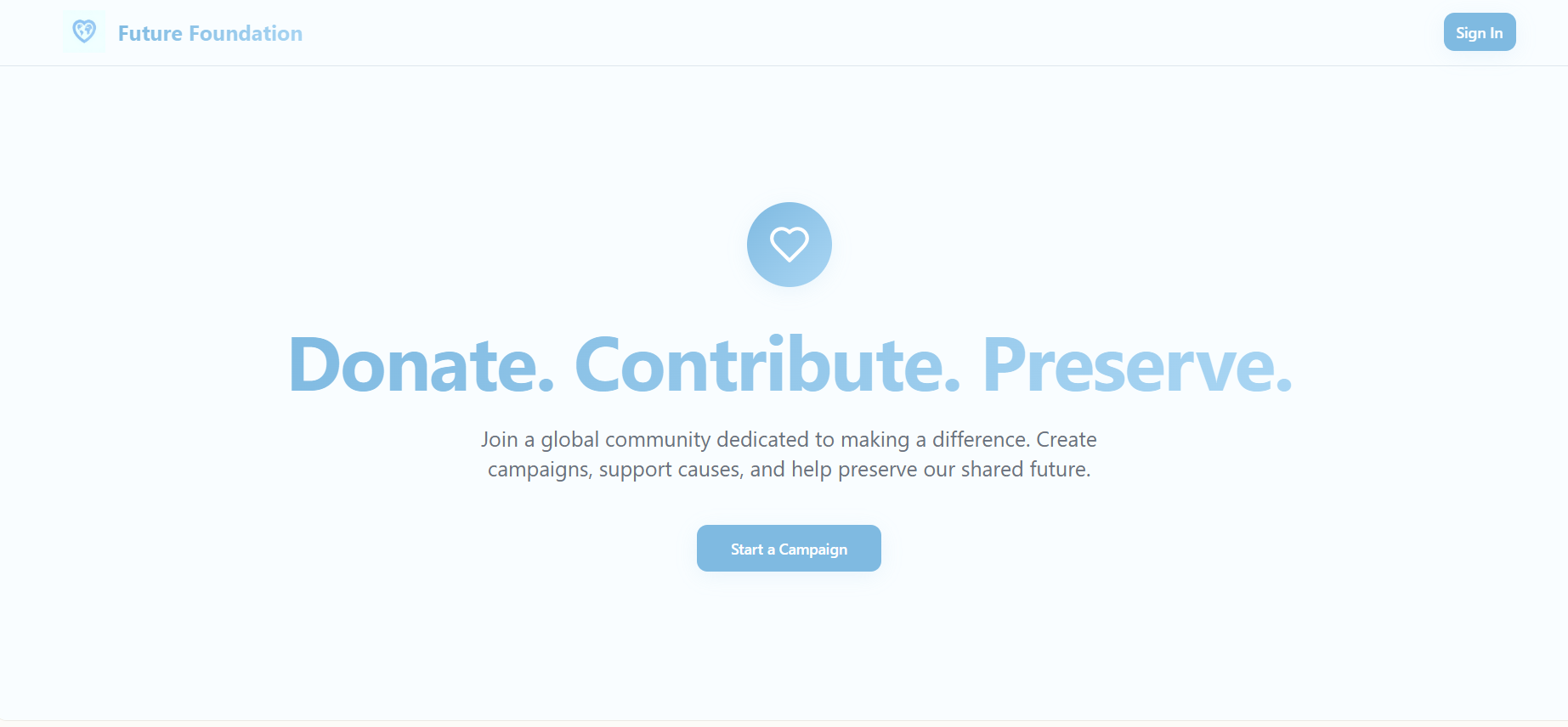
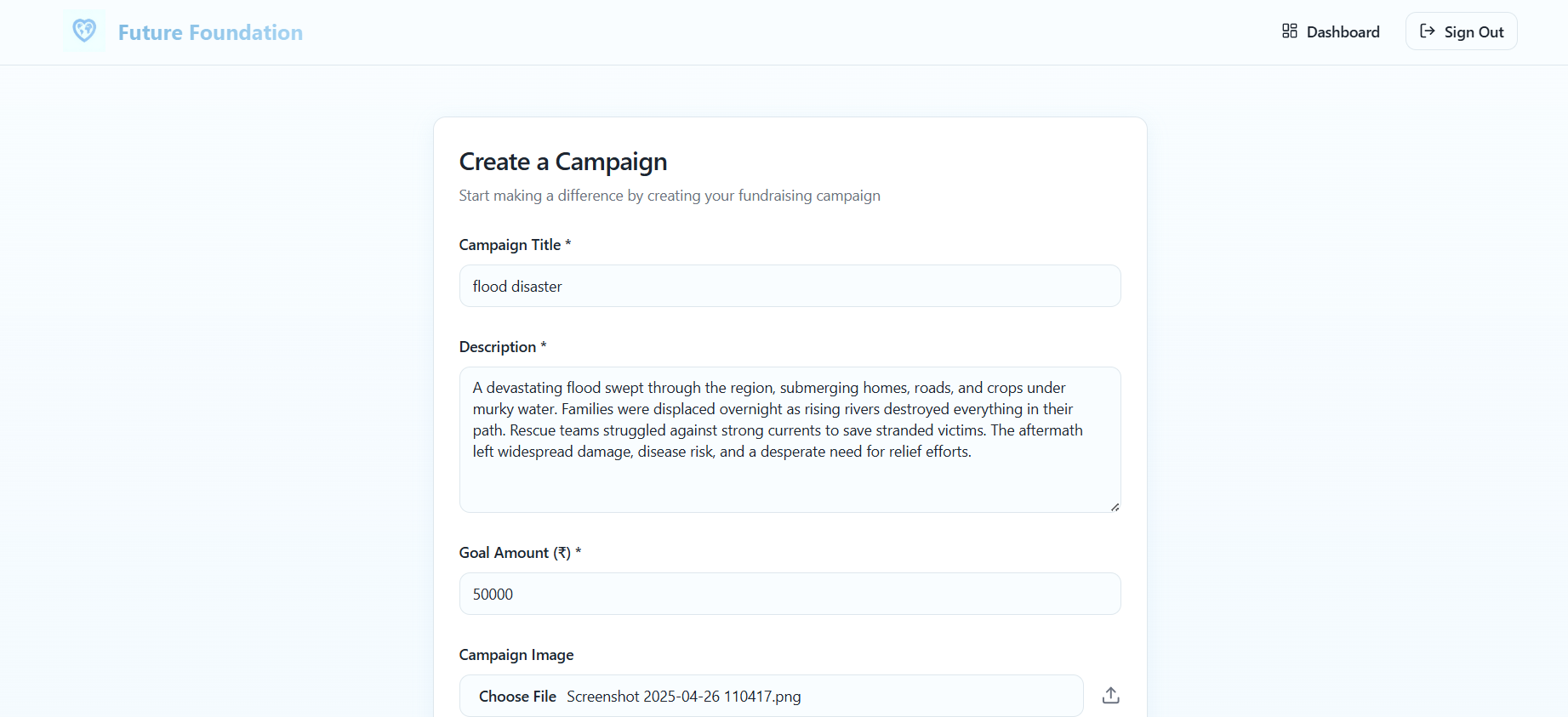
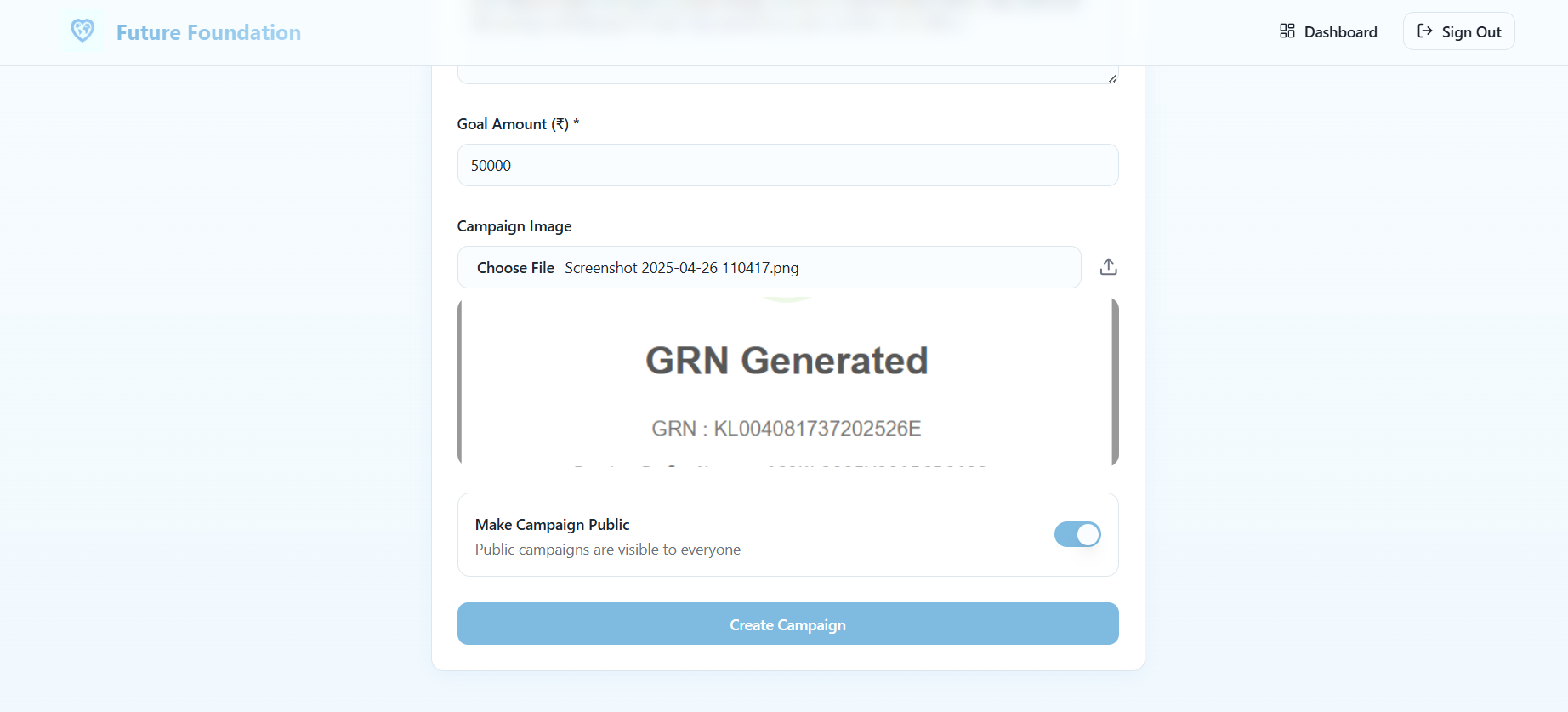
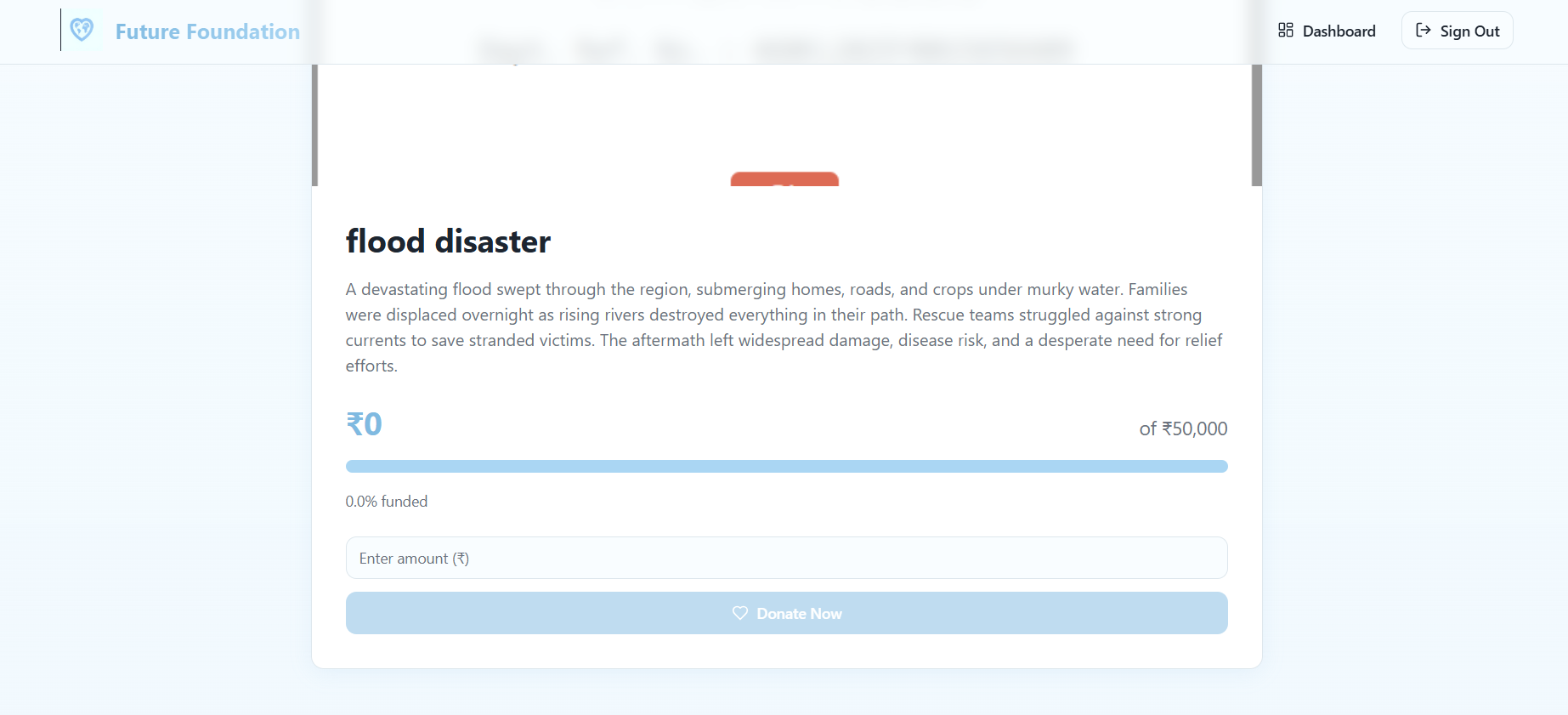
Future Foundation is a trust first donation platform designed for emergency and personal fundraising where it allows individuals or groups to create campaigns with a fixed target amount, live progress tracking, and controlled visibility. Once the target amount is reached, donations automatically stop, preventing overfunding.If additional help is genuinely required,a transparent extension (“Thanks” option) can be requested. Payments use UPI as a reference example,but the system is designed to support any major payment method globally.
How we built it
This project was developed as a concept first system redesign,not a coding sprint. We focused on: identifying friction points in existing fundraising platforms mapping user journeys for both donors and fundraisers defining a feasible MVP with real world payment logic and designing ethical safeguards such as auto-stop limits and privacy modes UPI was used as a reference model to demonstrate real-time,accessible payments,while keeping the architecture adaptable to other global gateways.
Challenges we ran into
One of the biggest challenge was balancing simplicity with realism. At first, ideas like “direct UPI detection” sounded intuitive but were not technically or legally valid. This forced us to rethink the payment flow using verified gateways rather than idealized assumptions. Another challenge was avoiding “yet another crowdfunding platform.” We had to clearly define what system failure we were fixing, not just what features we were adding.
Accomplishments that we're proud of
Clearly identifying trust failure as the core problem, not donations themselves Designing an automatic donation cut-off system, which most platforms lack Building privacy-first fundraising into the core design Creating a realistic MVP plan that could actually be implemented Aligning the solution tightly with ethical and inclusion concerns
What we learned
We learned that innovation doesn’t always mean building something entirely new — it often means fixing what already exists but doesn’t serve people well. We also learned the importance of understanding the real world constraints like payment compliance,fraud prevention,and user trust.Designing responsibly requires knowing not just what should work,but what can work.
What's next for FUTURE FOUNDATION
to hold interviews with donors and fundraisers to validate assumptions. build a low-fidelity prototype and test usability. launch a limited MVP with one payment gateway. and if possible explore AI-assisted verification for campaigns. For the long-term,Future Foundation aims to become a global,trust-driven standard for ethical digital fundraising where helping others is simple,transparent,and dignified.
Built With
- ai
- lovable.ai
- python

Log in or sign up for Devpost to join the conversation.