-
-
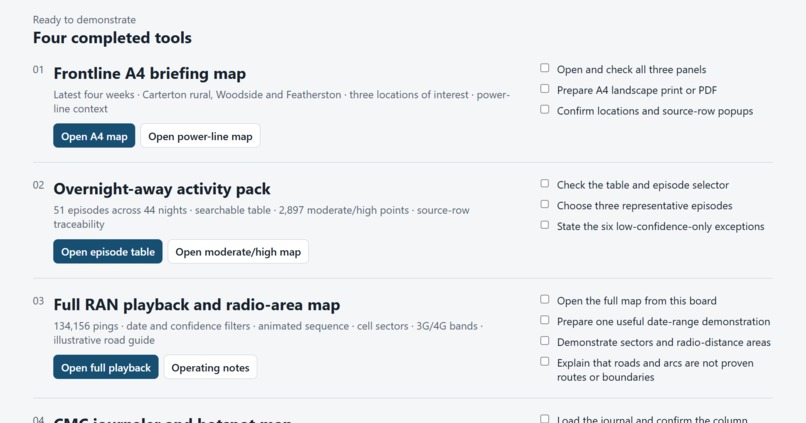
Home Page
-
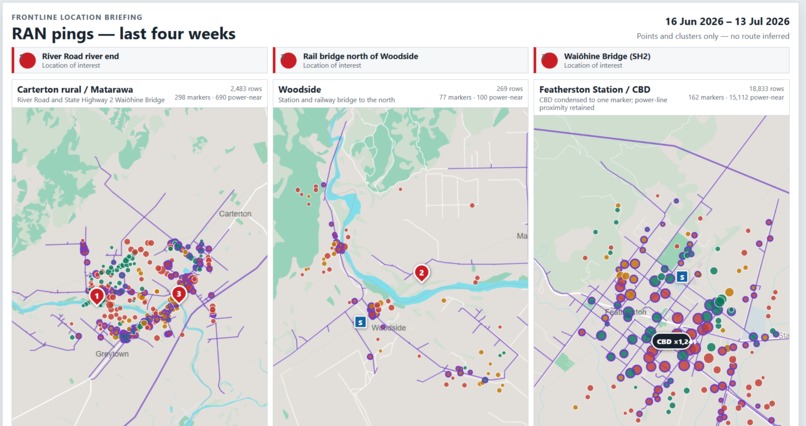
Frontline Interactive Maps
-
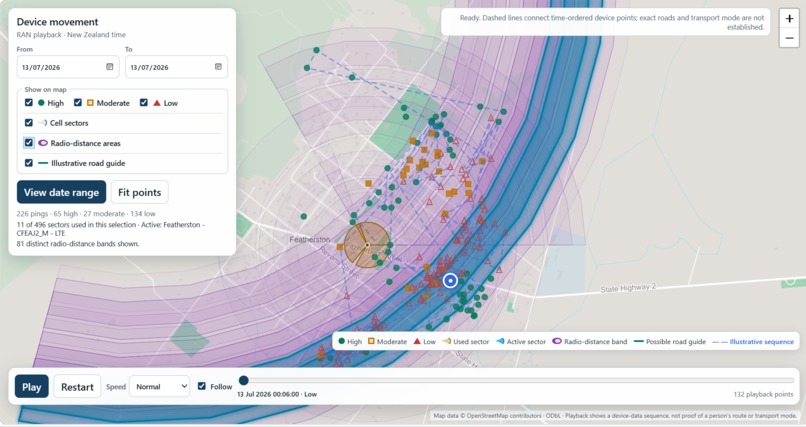
Key Map
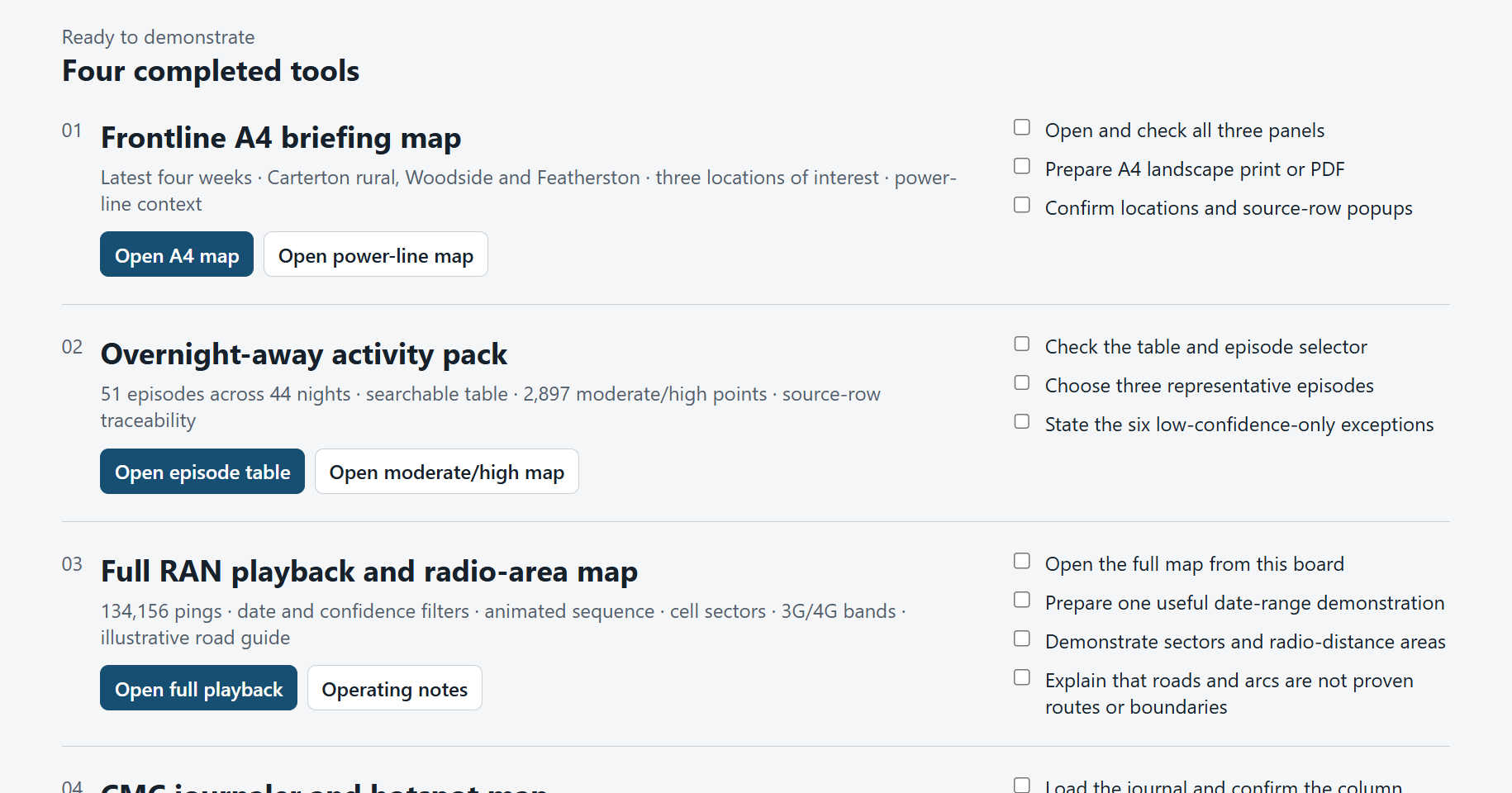
Future Board – RAN Data Viewer
Inspiration
Telecommunications providers can supply large volumes of Radio Access Network (RAN) data during investigations, but the information is often highly technical, fragmented, and difficult to interpret. Investigators may receive spreadsheets containing over 150,000 rows of cell-site records, sector information, and network metadata, with limited ability to quickly understand what the data means in a real-world context.
The idea for the RAN Data Viewer was born from a real investigation into copper theft, where the ability to rapidly interpret telecommunications data could have significantly accelerated investigative leads. We identified a gap between the availability of data and the ability of investigators, prosecutors, and courts to effectively understand and use it.
What It Does
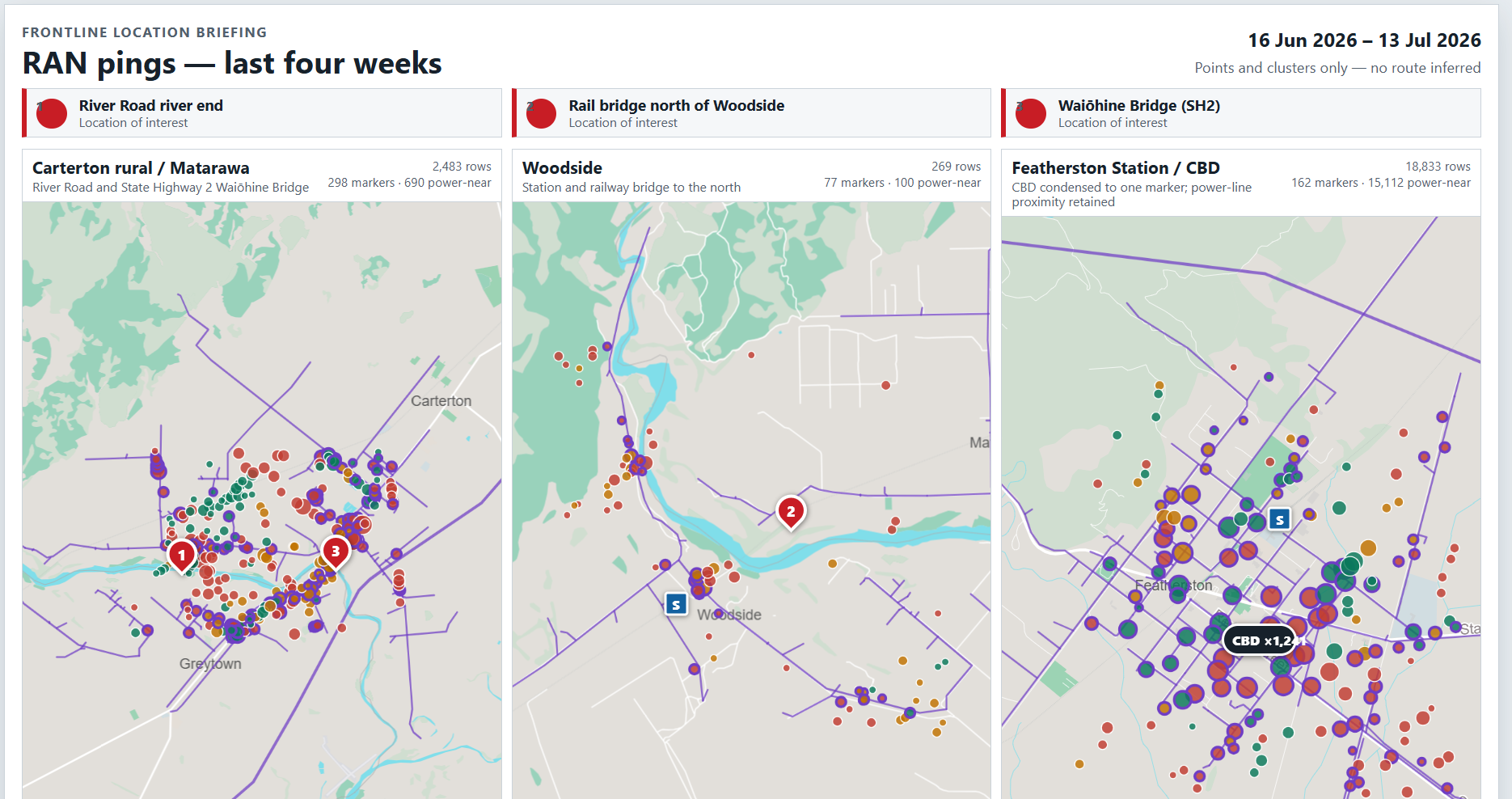
The RAN Data Viewer transforms telecommunications network data into a visual intelligence platform.
Instead of forcing investigators to manually review massive spreadsheets, the system:
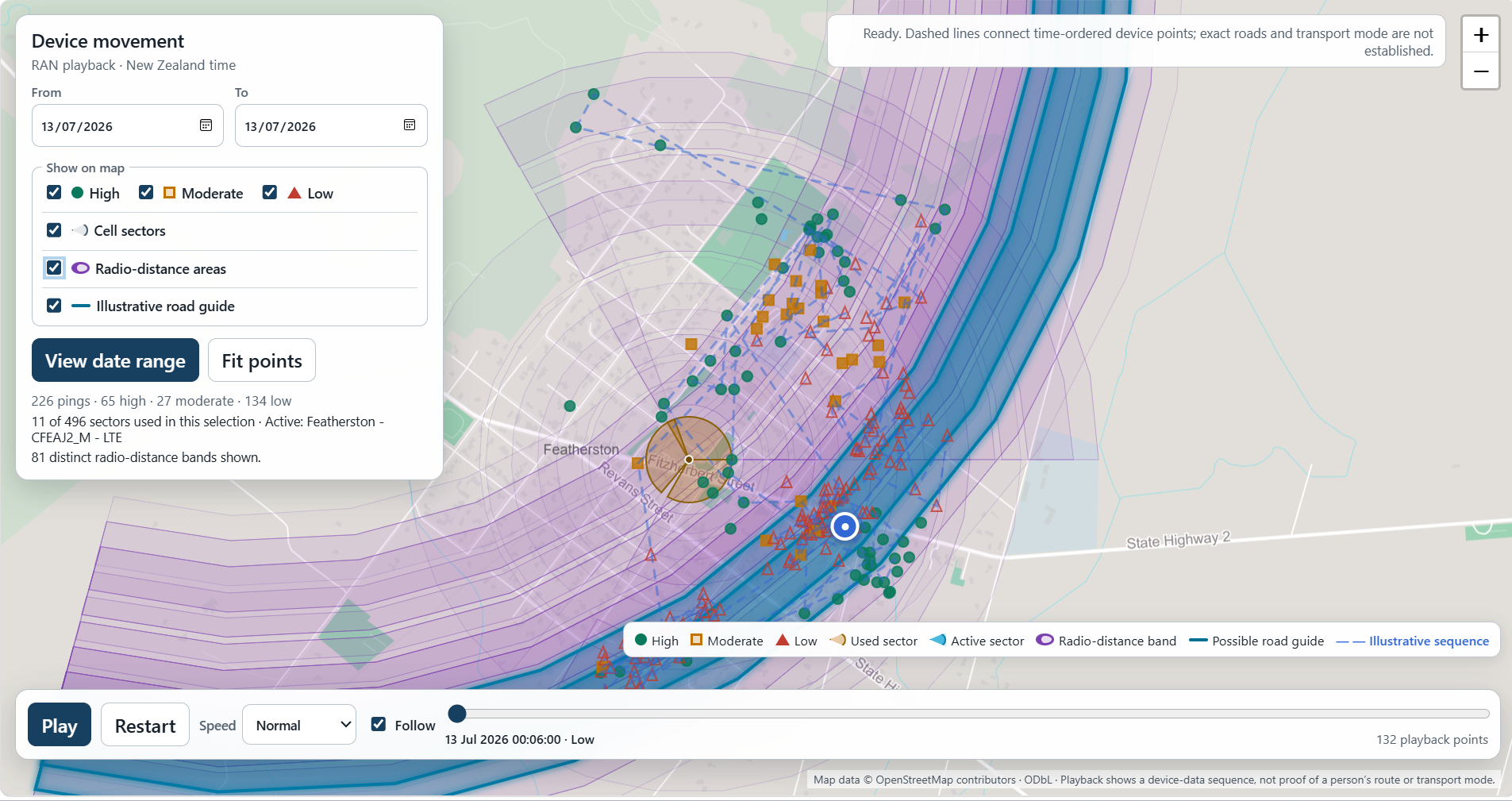
Ingests raw RAN and cell-site data from telecommunications providers. Automatically maps cell towers, sectors, and azimuths. Displays device activity visually on an interactive map. Shows likely coverage areas and sector directions. Converts hundreds of thousands of rows of technical data into understandable visual representations within seconds. Provides clear lines of enquiry for investigators. Produces evidentially defensible outputs suitable for case files and court proceedings.
By converting raw network records into visual intelligence, the platform helps investigators better understand where a device may have been located and how it interacted with the telecommunications network at a specific point in time.
How We Built It
The project went through multiple technical iterations before reaching its current form.
Early attempts relied heavily on GeoJSON visualisation; however, this approach struggled to effectively display the volume and complexity of information required for investigations. I needed a method that could simultaneously present:
Cell tower locations. Sector orientations. Azimuth data. Coverage information. Device interaction records. Investigative context.
To overcome these limitations, I developed a new visualisation model that presents all relevant network information in a format that can be understood by both technical and non-technical users alike. The result is a platform that makes complex telecommunications data accessible to investigators, analysts, supervisors, lawyers, and juries.
Challenges We Ran Into
Developing the solution presented several significant challenges:
Security and Privacy
Telecommunications data is highly sensitive and subject to strict legal and privacy requirements. As a result, the platform needed to operate within a secure environment and ultimately evolved toward an offline-first architecture to prevent unnecessary exposure of data.
Evidential Integrity
Any data used for criminal investigations must maintain evidential integrity. The system was designed to ensure original data remains unchanged and auditable throughout the analysis process. This allows investigators to clearly demonstrate how conclusions were reached without altering source material.
Scale and Complexity
Processing and visualising datasets containing hundreds of thousands of records while maintaining performance and usability required careful design and optimisation.
Accomplishments That We're Proud Of
The most significant achievement of the project is its real-world impact.
The concept originated from an investigation into copper theft and ultimately contributed to identifying and arresting the offender. What began as an attempt to solve a specific investigative problem evolved into a broader capability that has the potential to assist law enforcement and justice agencies in numerous future investigations.
Additional achievements include:
Reducing analysis time from hours to seconds. Making highly technical telecommunications data accessible to non-specialists. Improving investigative decision-making. Providing clearer evidential material for court proceedings. Demonstrating how visual intelligence can enhance public safety outcomes. What We Learned
Through the development process, we learned that there is a significant capability gap in the telecommunications analysis space.
Many of the tools required by investigators either do not exist or are not designed for operational law enforcement use. The project highlighted the need for:
Better telecommunications intelligence tools. Enhanced visual analytics capabilities. Court-focused evidential reporting solutions. Secure offline investigative platforms. Greater integration between telecommunications data and investigative workflows.
The experience has reinforced the importance of building practical tools around real operational problems rather than adapting generic solutions.
What's Next for Future Board and the RAN Data Viewer
The RAN Data Viewer is only the beginning.
Our vision is to build a wider suite of investigative support tools under the Future Board initiative, focused on solving operational challenges faced by law enforcement and justice sector agencies.
Future developments include:
Advanced telecommunications analytics. Automated investigative lead generation. Enhanced evidential reporting capabilities. Additional offline intelligence tools. Integration with broader investigative workflows. Collaborative development with police and justice sector partners.
By continuing to develop these capabilities, we aim to transform complex technical data into actionable intelligence, helping investigators work more effectively while supporting stronger evidential outcomes across the justice system.
Future Board's mission is simple: turn complex data into clear, defensible intelligence that helps investigators find answers faster and deliver better outcomes for victims, communities, and the justice system.

Log in or sign up for Devpost to join the conversation.