-
-
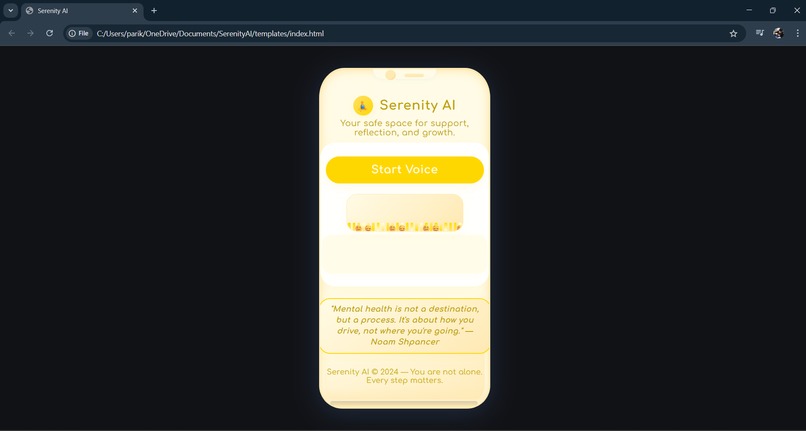
Web App
-
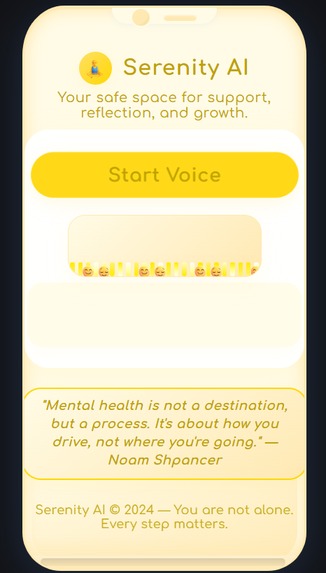
Closer Look To The App
-
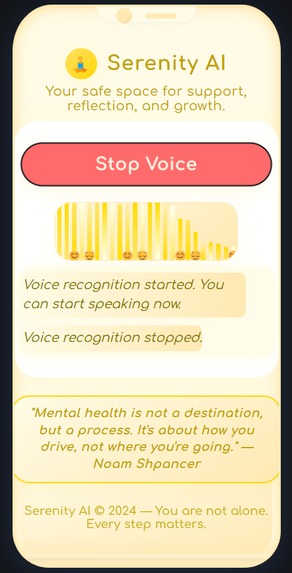
Working Of The App
Inspiration
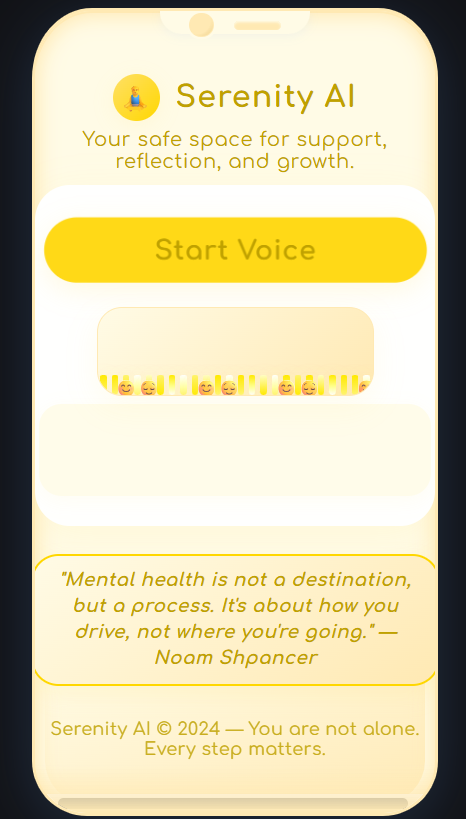
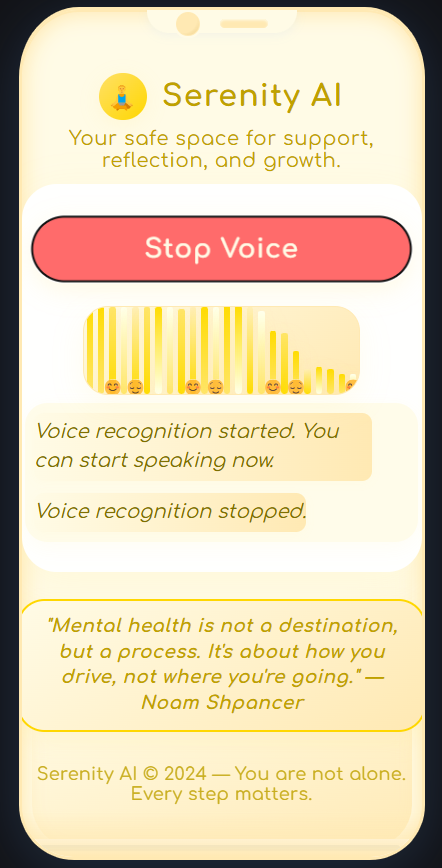
Our inspiration for SerenityAI came from the need to create a more peaceful, intuitive, and helpful AI companion that enhances mental wellness and productivity. We noticed many people struggling with stress and information overload, and we wanted to build an AI that could offer calm, clear guidance and support in everyday life. Additionally, we observed a concerning trend in today's world where teenagers are increasingly shifting towards a more personal life, often distancing themselves from their families. This shift can lead to feelings of isolation, depression, and, in some tragic cases, even suicide. SerenityAI aims to address these challenges by providing a supportive presence that encourages open communication, emotional well-being, and a sense of community for young individuals navigating these difficult times.
What it does
Serenity AI is a companion AI designed to engage users by asking at least five thoughtful questions, detecting and understanding their mood after each response. Through this process, it offers personalized guidance, insightful suggestions, and emotional support tailored to the person's current state. It also includes an anonymous mode for those who prefer privacy, ensuring a safe space for open sharing. Additionally, Serenity AI features an enthusiast AI section aimed at uplifting users by providing motivation and encouragement, helping to keep their hopes high and spirits positive.
How we built it
We built SerenityAI using a combination of HumeAI's natural language processing models (eLLM's), HumeAI's EVI Model, sentiment analysis, and user behavior tracking. The AI backend was developed with Python and C++, while the user-friendly frontend interface was created using HTML, CSS and JavaScript to ensure seamless cross-platform mobile accessibility.
Challenges we ran into
One of the biggest challenges we encountered was ensuring that SerenityAI could understand and respond empathetically to a wide range of emotional cues without sounding robotic. Achieving a natural and compassionate tone was essential for fostering a supportive environment. Another hurdle was balancing the AI’s helpfulness with privacy concerns; we needed to ensure that user data is secure while still delivering personalized experiences. Additionally, we faced technical difficulties in optimizing the app for low latency on mobile devices, which was crucial for providing a smooth and responsive user experience.
Accomplishments that we're proud of
We’re proud that SerenityAI successfully passed multiple rounds of user testing, receiving positive feedback for its calming influence and ease of use. A significant milestone was our AI's ability to adapt its responses based on emotional context, enhancing the user experience. We also managed to prioritize data privacy as a core feature without compromising functionality. This achievement was made possible by utilizing the HumeAI API key, which granted us access to its eLLM and EVI models powerful tools that greatly benefited our project. Moreover, the models available on their website enabled our AI to discover over 25 patterns of tone, rhythm, and timbre, enhancing its emotional responsiveness.
What we learned
Through this project, we learned the importance of human-centered AI design, especially the subtle ways AI can impact mental health. We deepened our skills in NLP, machine learning, and cross-platform app development. Most importantly, we realized how crucial user trust and transparency are in AI applications. We also gained valuable insights into creating empathetic AI that can detect and respond to a wide range of emotional cues without sounding robotic, ensuring a natural and supportive user experience. Balancing AI helpfulness with privacy concerns taught us the significance of data security when delivering personalized interactions. Additionally, optimizing for low latency on mobile devices reinforced the importance of smooth, responsive design in engaging users effectively. Overall, this project highlighted how combining advanced AI technologies like HumeAI’s models with thoughtful design can create meaningful tools that support mental wellness and foster positive emotional connections.
What's next for SerenityAI
Next, we plan to expand SerenityAI’s capabilities by integrating voice recognition for hands-free interaction and adding multilingual support. We also aim to partner with mental health professionals to incorporate evidence-based therapy techniques and to launch a community feature for peer support. Our goal is to make SerenityAI an indispensable companion for emotional well-being worldwide, continually evolving to meet the diverse needs of our users.


Log in or sign up for Devpost to join the conversation.