Inspiration
Every data team has the same scar: a small schema change ships, CI passes, and something
downstream is quietly wrong for days. The blast radius is knowable, since it sits in the
lineage graph, but nobody has time to walk it by hand, and the ML half is the part
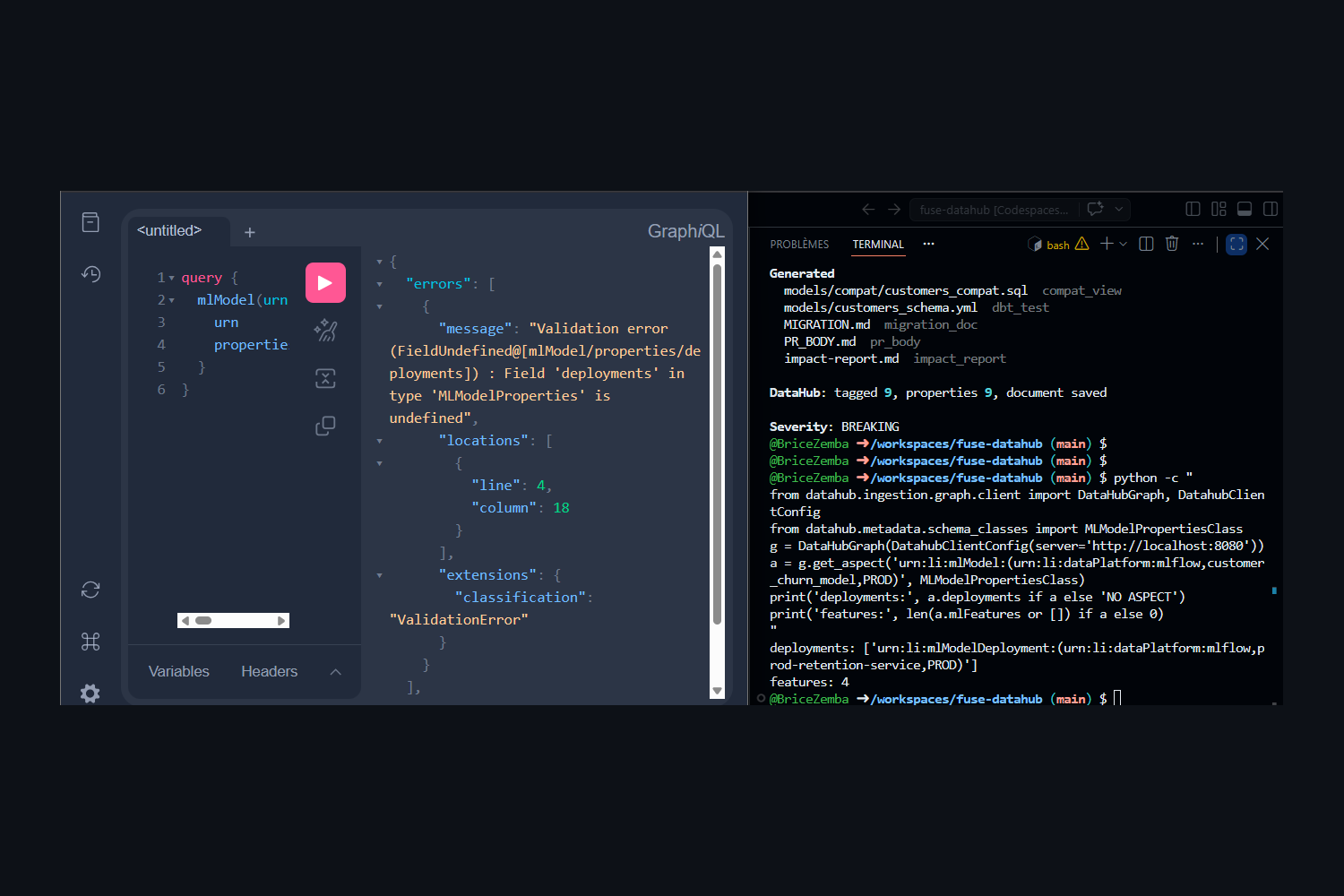
everyone forgets. While building this we measured something worse: DataHub's
get_lineage returns the model downstream of a dataset, but not the deployment
serving traffic, and it can't tell you which feature broke. It returns the same four
features whether you dropped one of them or none.
What it does
Fuse turns a diff into a decision and a fix. It parses the schema change out of your data
repo with sqlglot, resolves it to DataHub entities, walks downstream lineage, and then
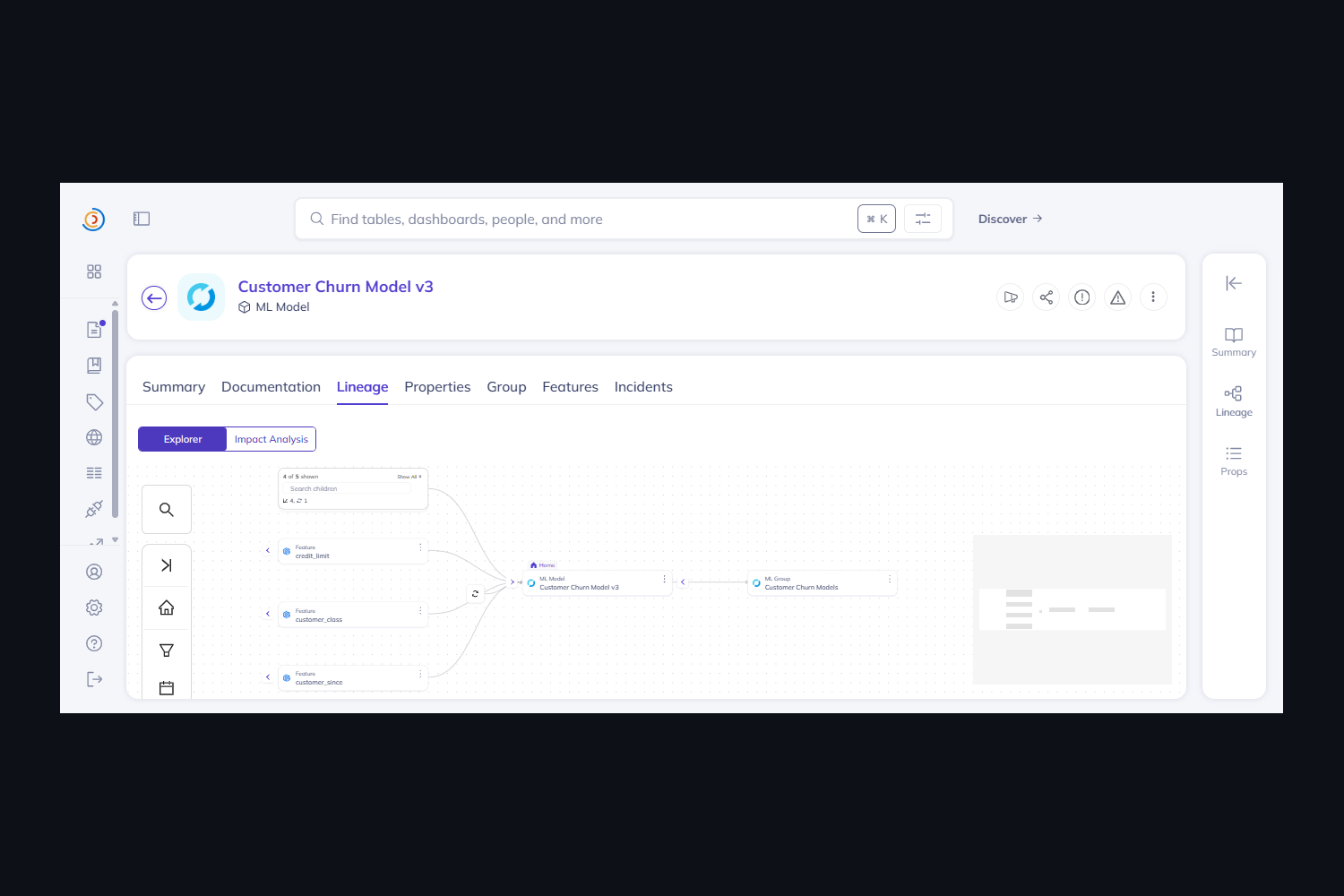
reads the ML aspects directly, following MLFeature.sources → MLFeatureTable →
MLModel → deployments, because generic lineage doesn't cover that path. It scores the
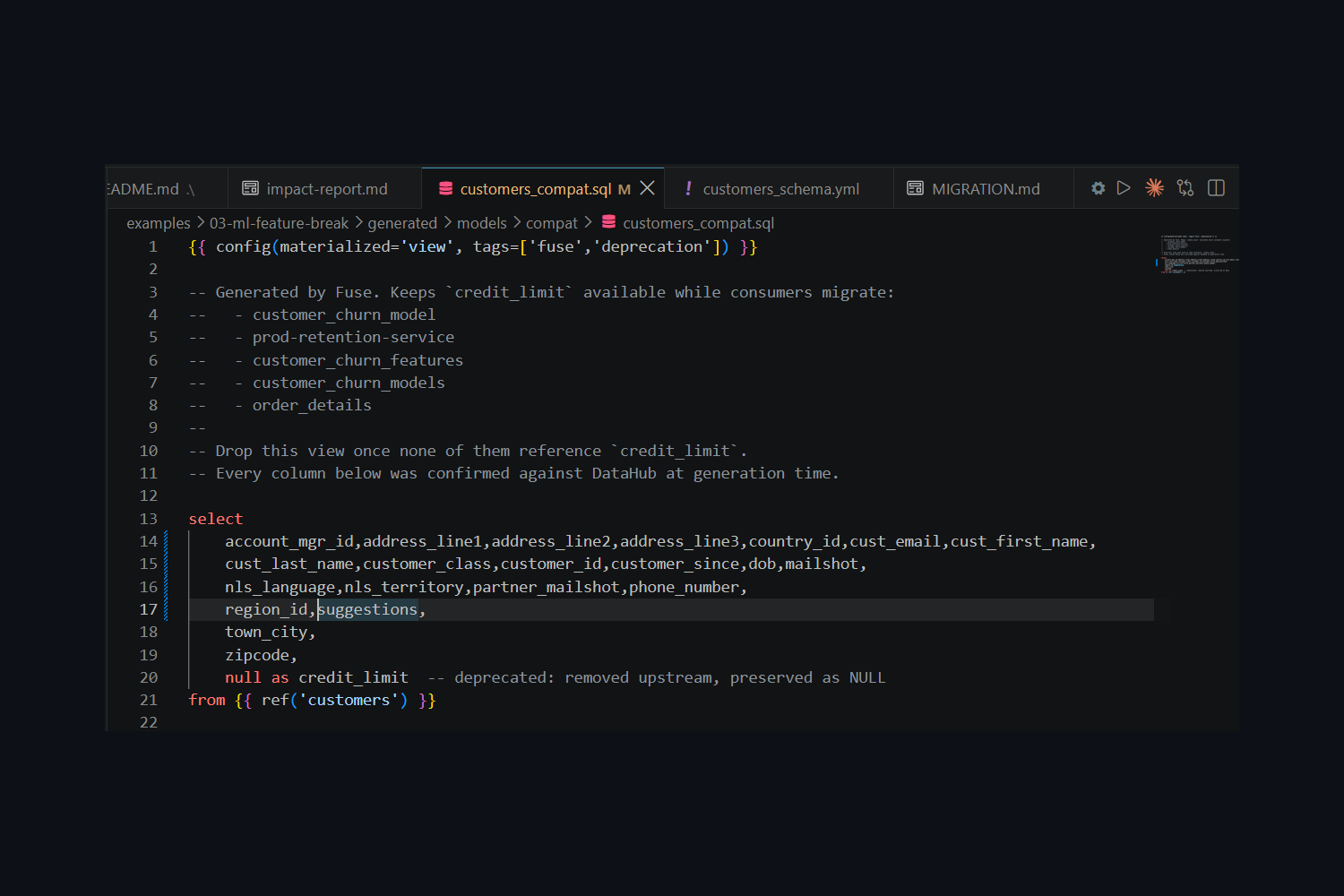
blast radius with a deterministic rule engine, generates the remediation (rewritten
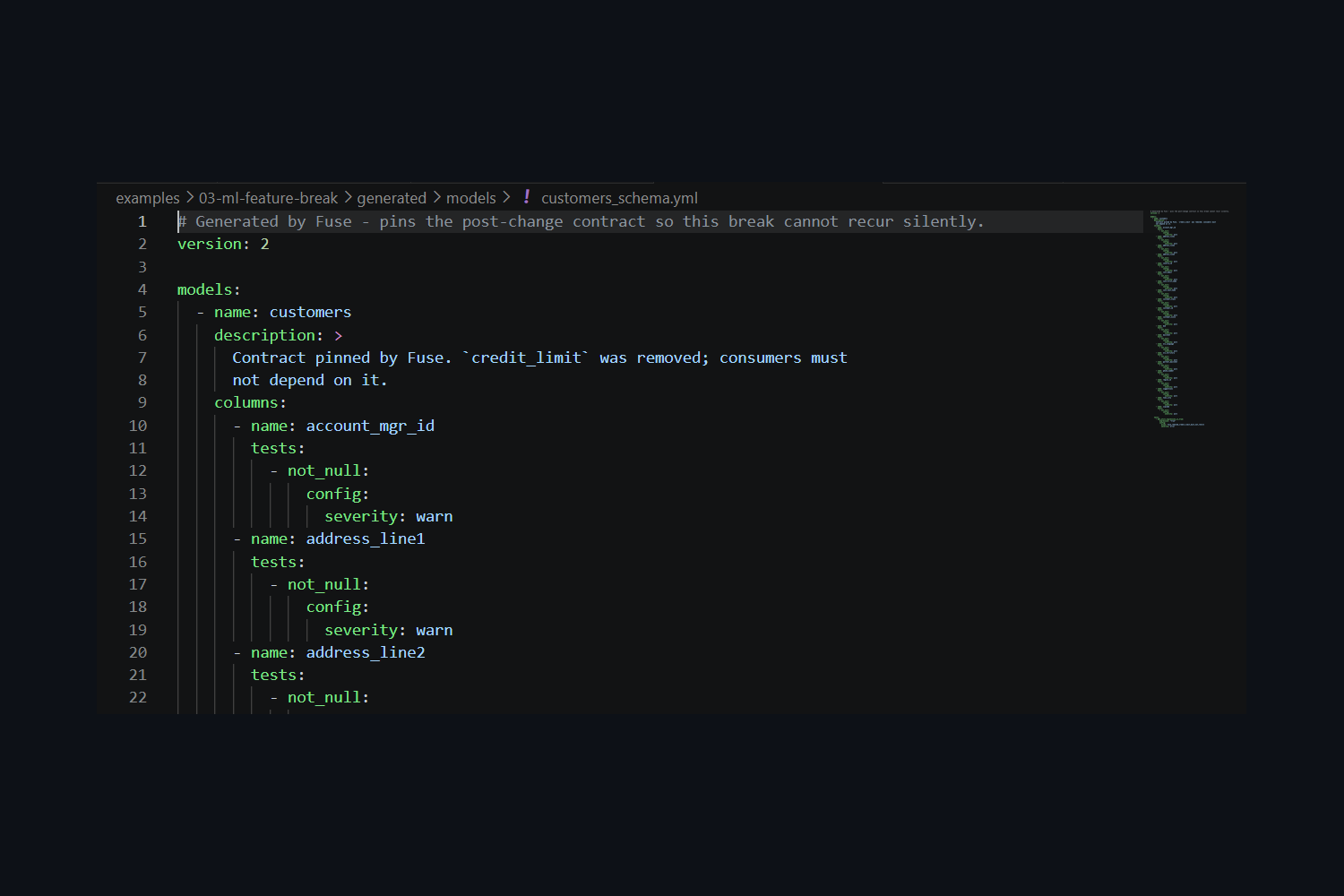
models, a compatibility view, contract tests, a migration plan), opens a PR with an
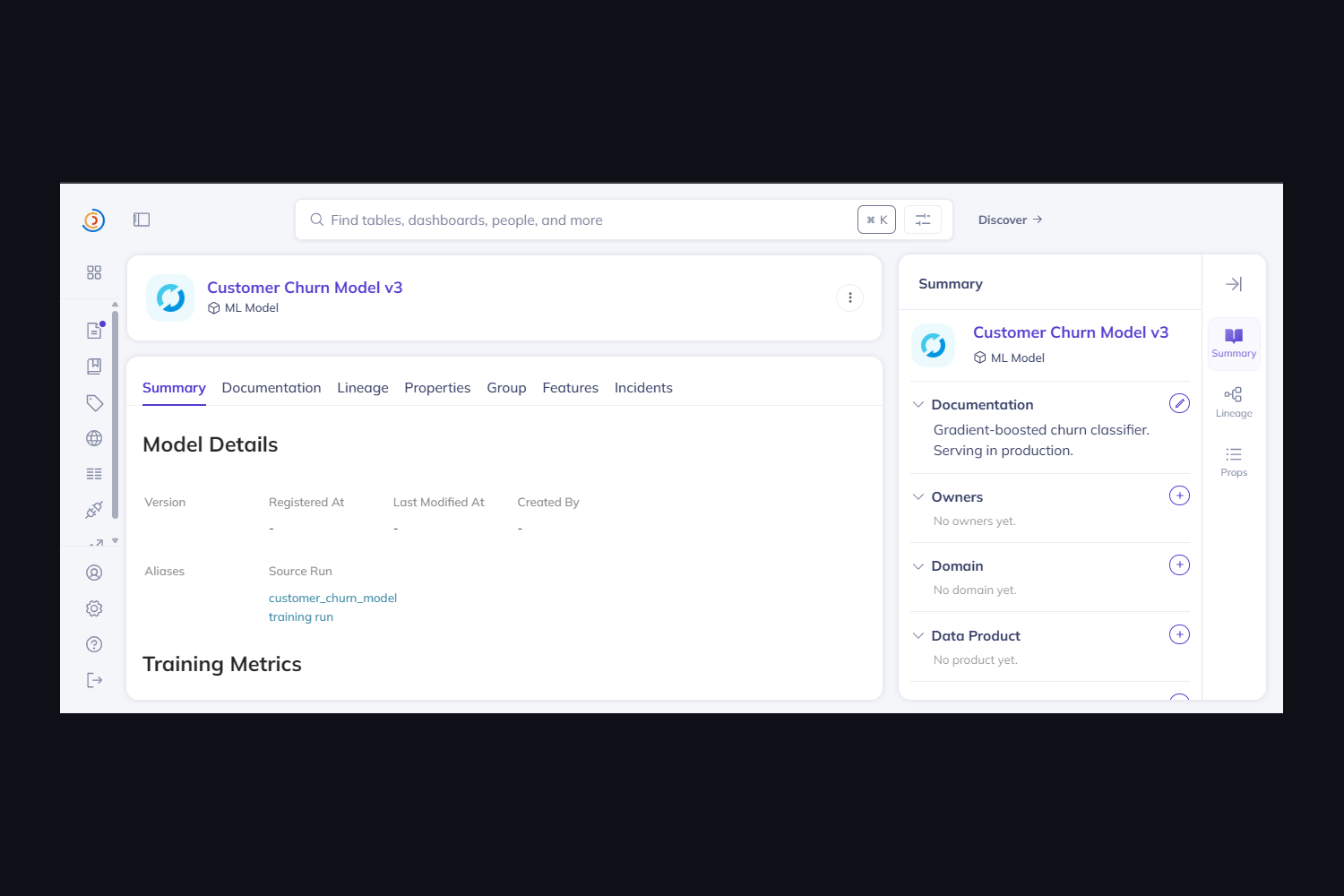
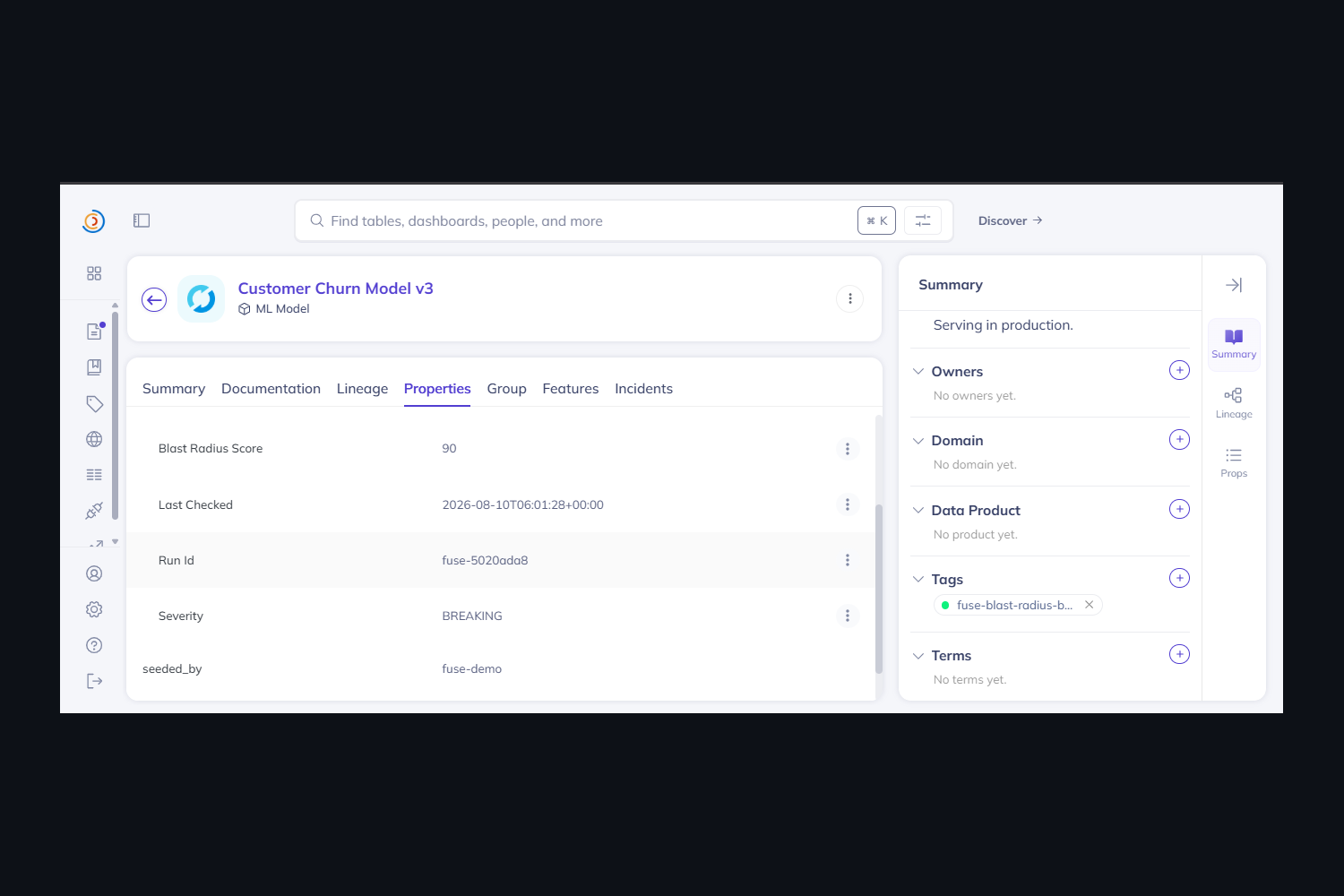
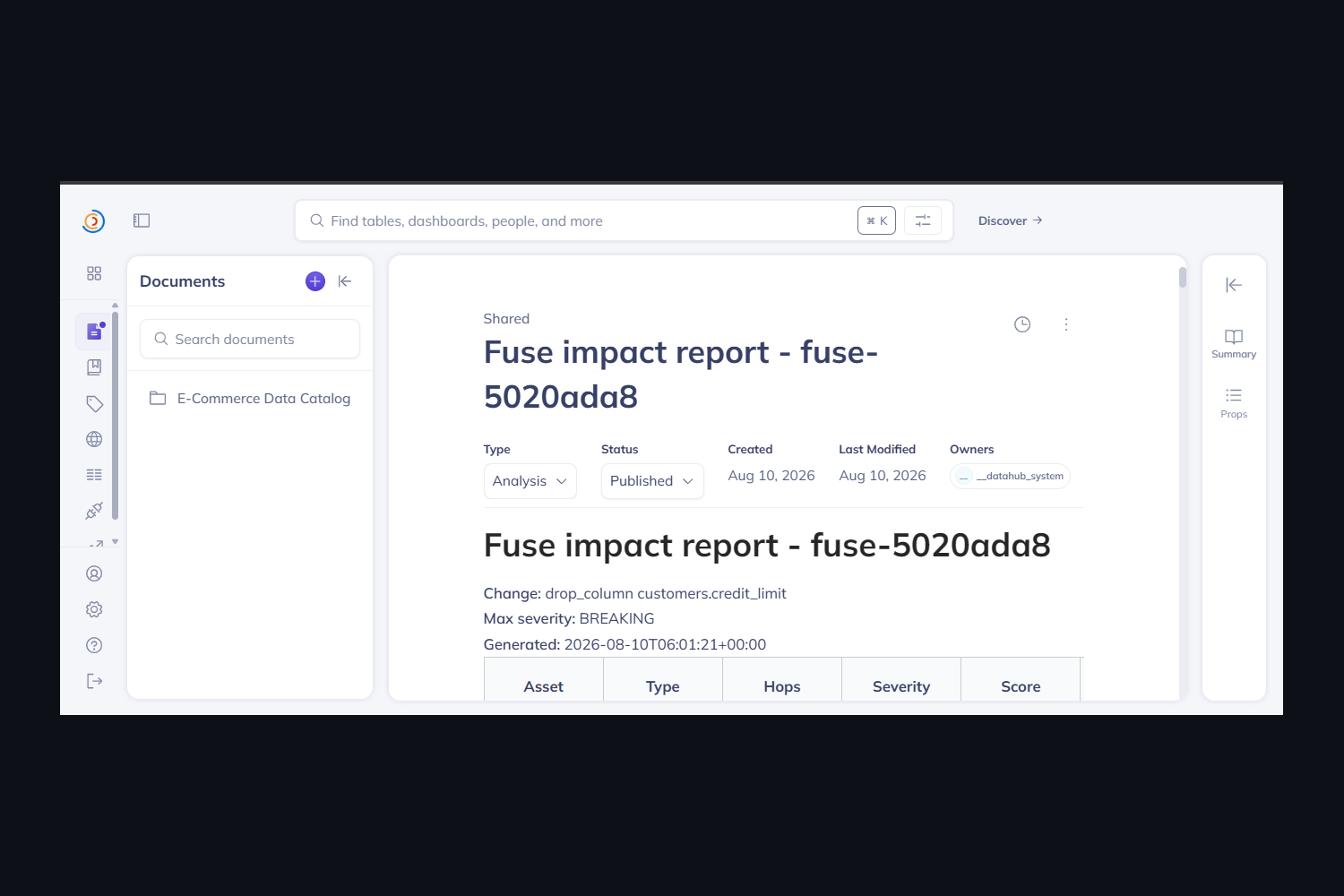
owner-tagged impact report, and writes the verdict back into DataHub as tags, structured
properties and a saved document.
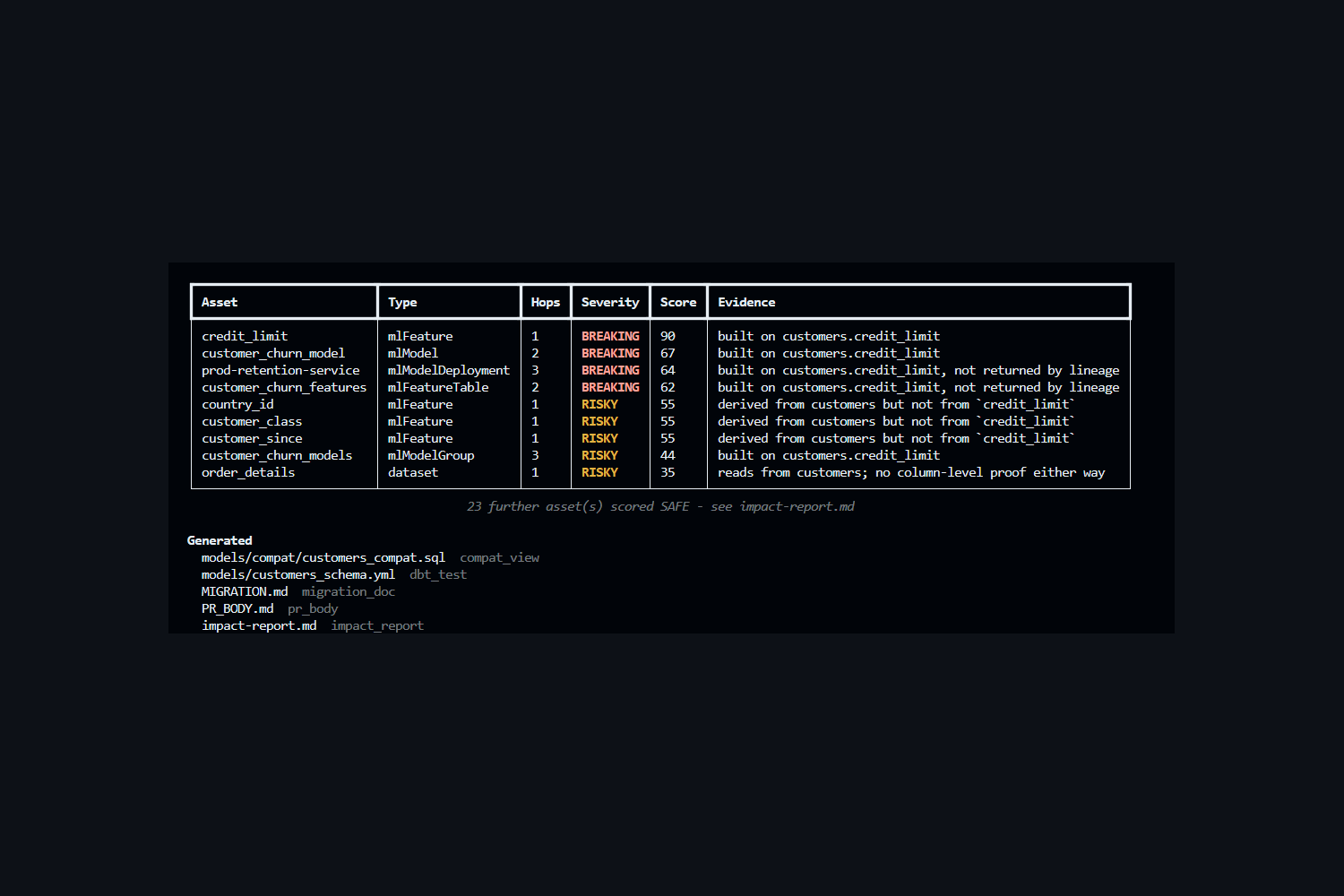
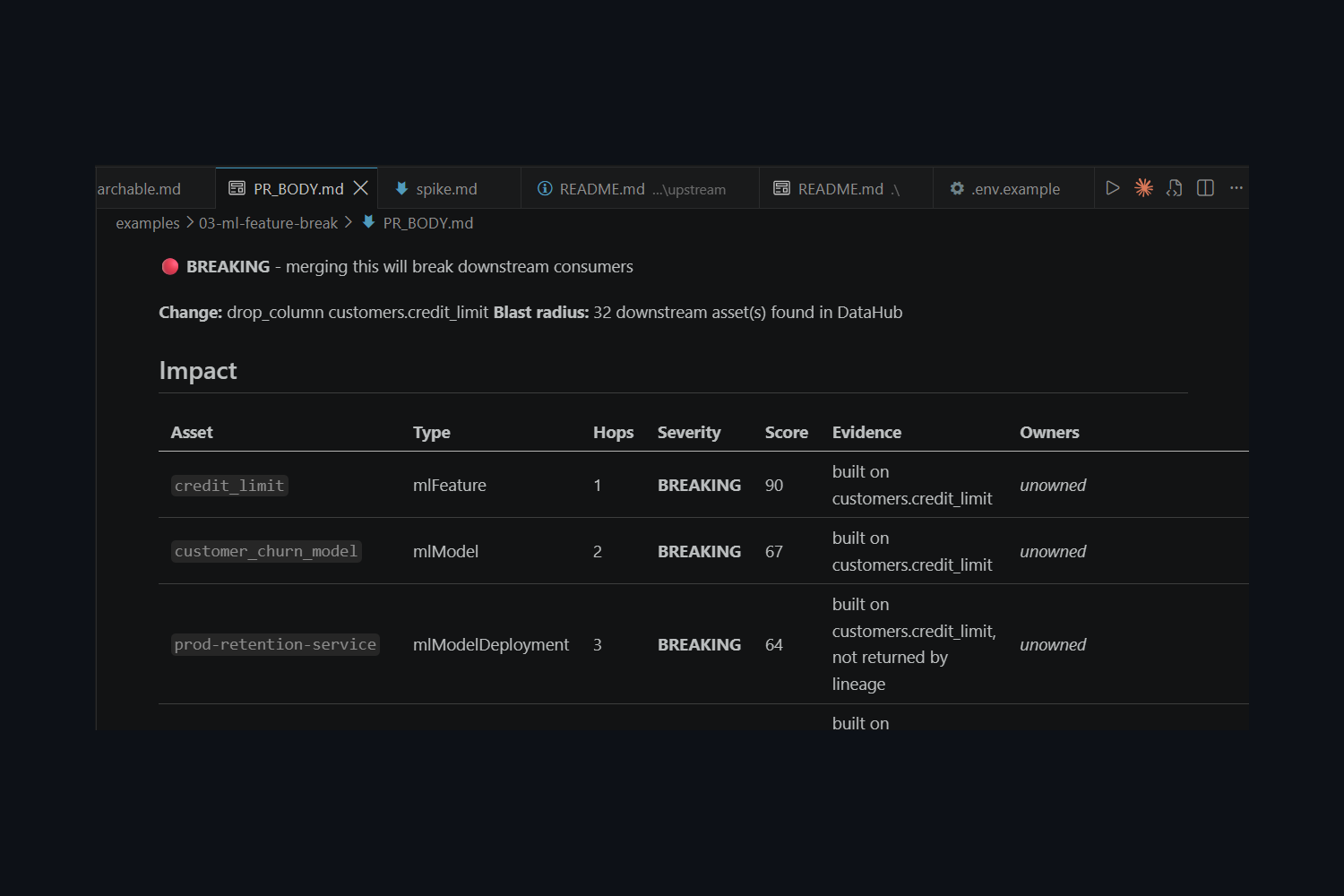
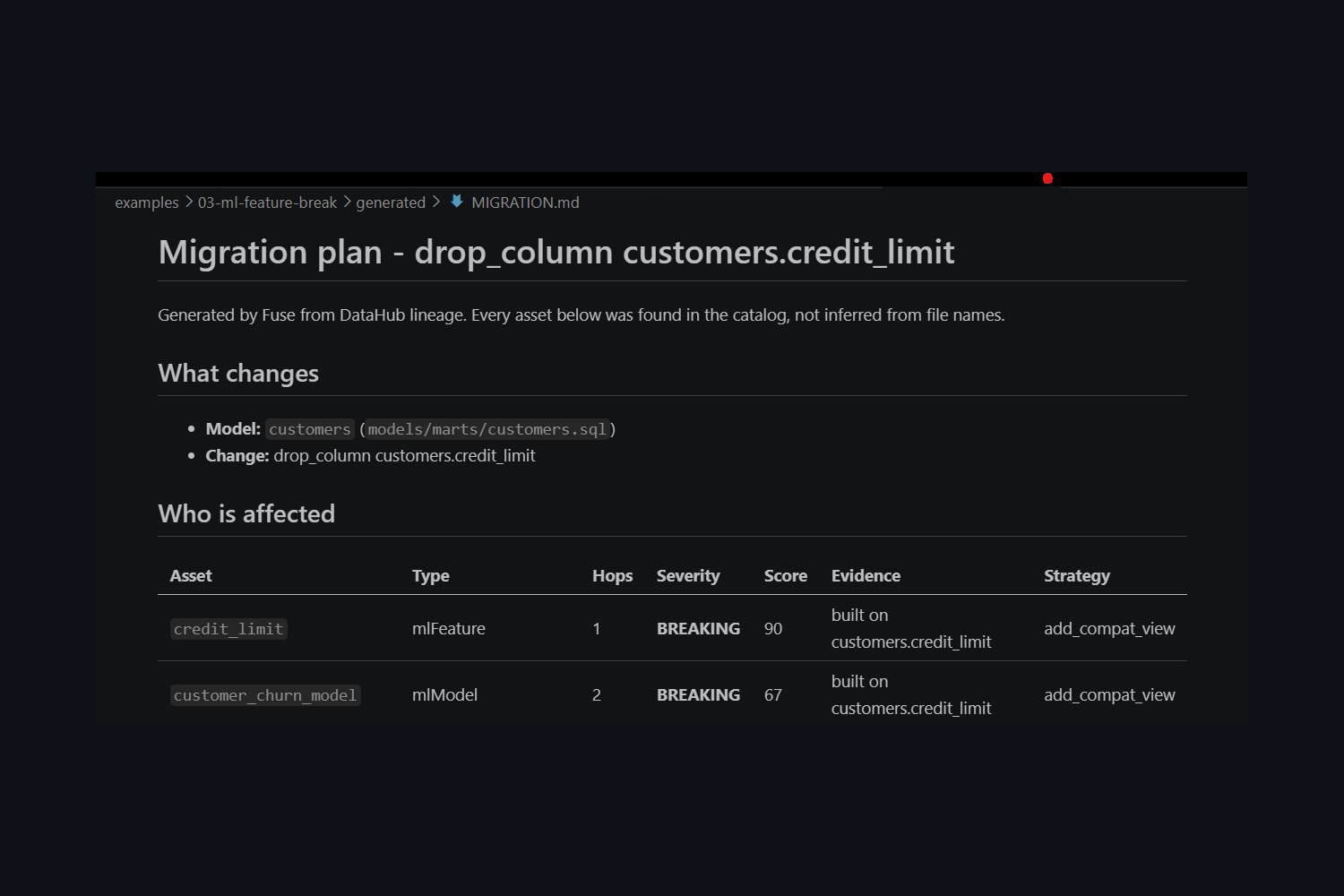
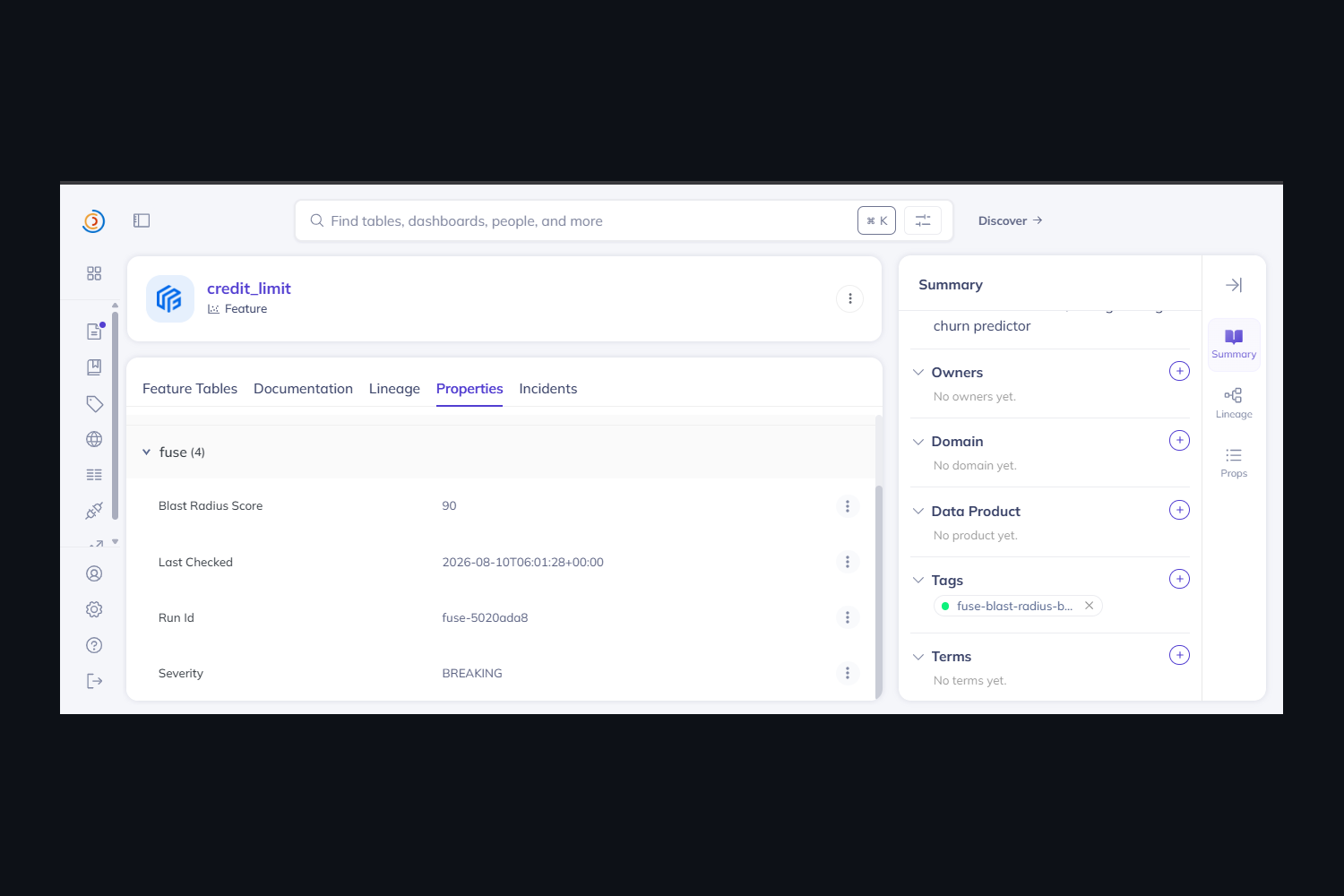
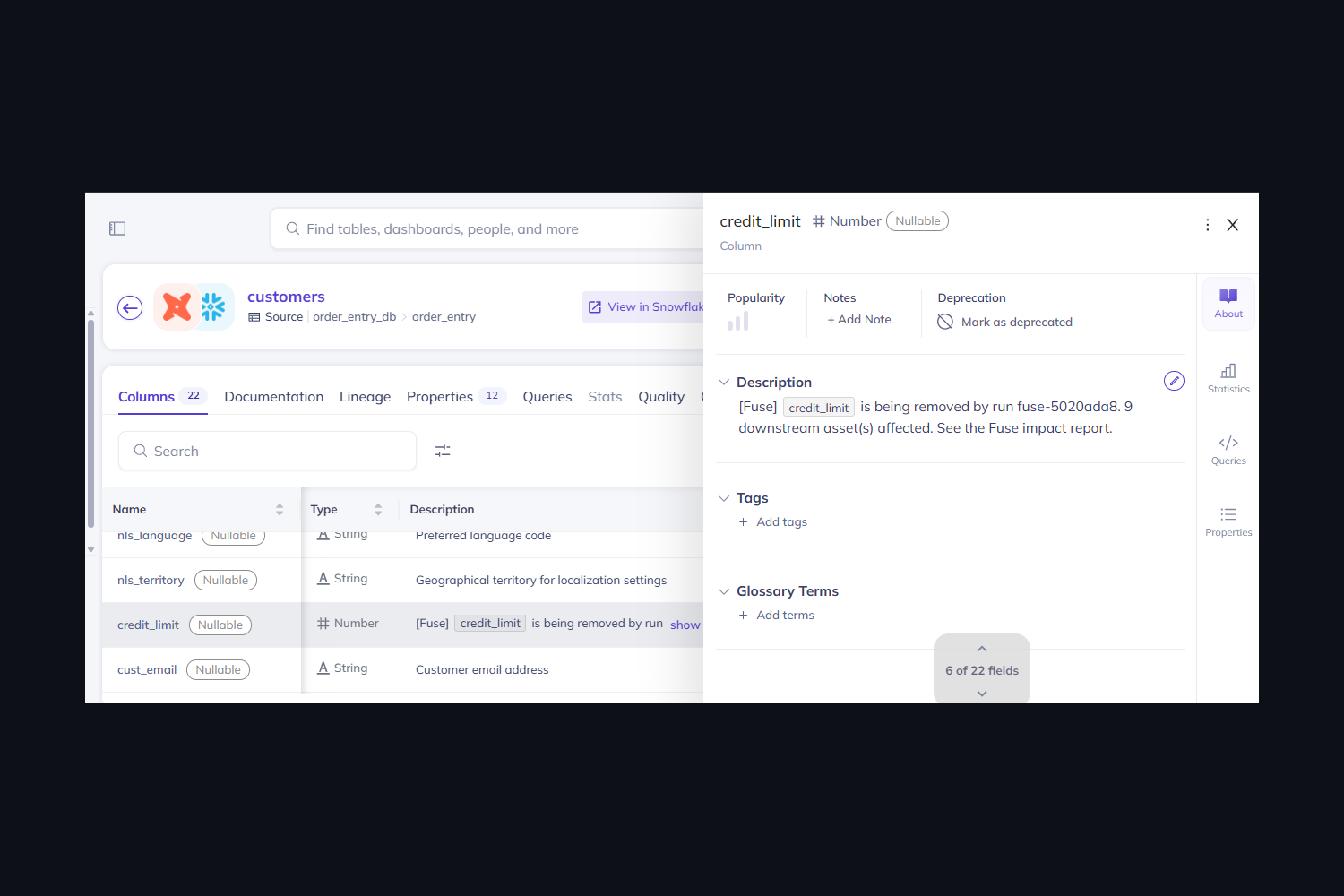
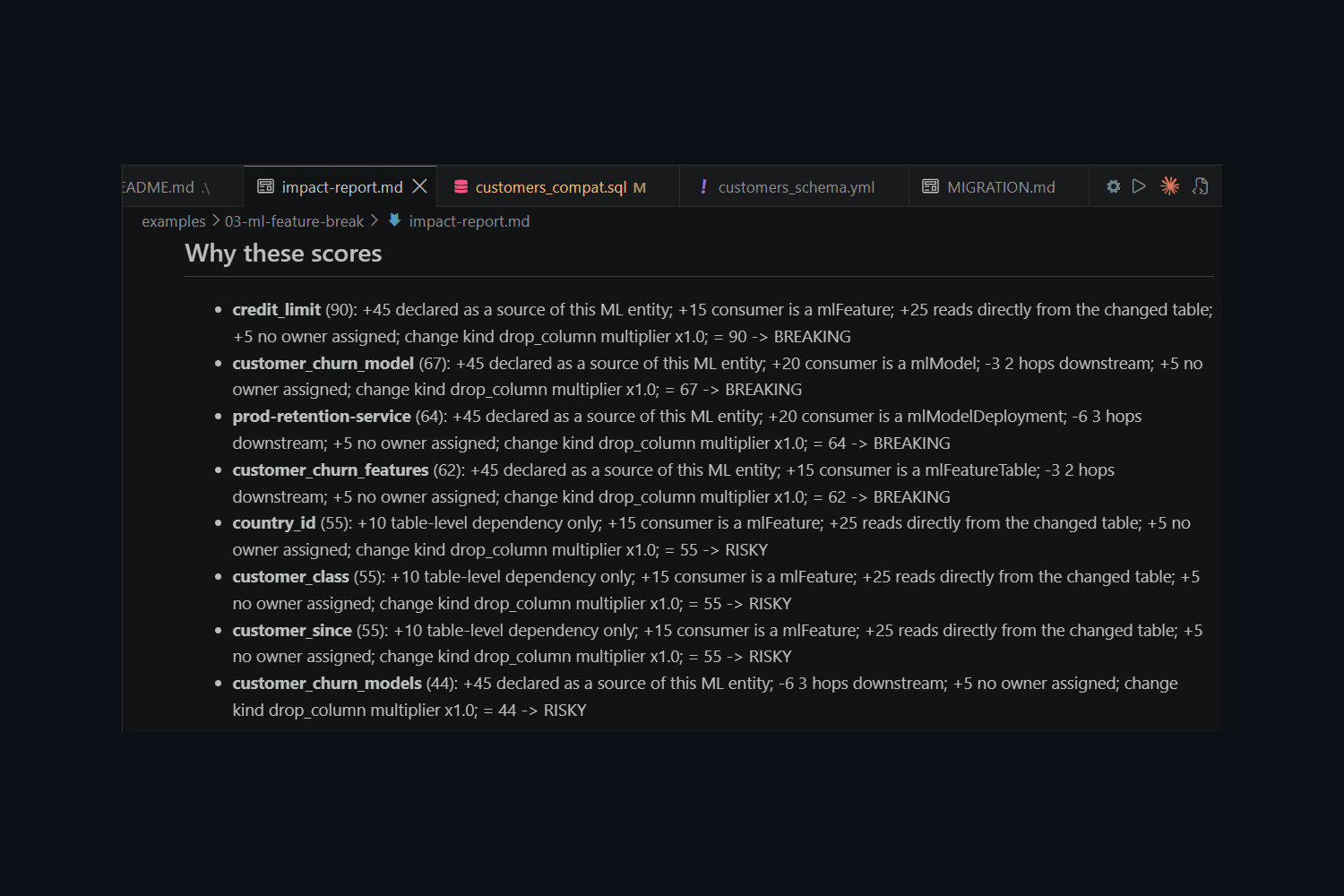
On our test catalog, dropping credit_limit from a dbt model surfaces the feature built
on it (BREAKING, 90), the churn model consuming it (67), and the production deployment
(64). Lineage alone does not connect the last two to that column.
Evaluate it in two minutes, without installing DataHub
There is nothing to host, by design. Every DataHub response and every model response is recorded, so the whole pipeline runs from a clean clone with no Docker, no catalog and no API key:
pip install -e . && fuse replay examples/03-ml-feature-break
It regenerates the committed artifacts byte for byte. To judge output quality without
running anything, read examples/03-ml-feature-break
in this order: impact-report.md for the verdict and the arithmetic behind every score,
generated/models/compat/customers_compat.sql for the remediation, then run.log and
generated/writeback.json for the node-by-node trace and exactly which urns were written
back to the catalog.
Two CI workflows keep this honest. ci runs 171 tests on Python 3.10-3.12. selftest
installs the project from a clean checkout on a runner, replays the ML scenario with no
catalog and no key, and asserts the regenerated report still reaches
prod-retention-service, so the exact path a judge takes is itself covered by CI.
How we built it
LangGraph orchestrates nine nodes over typed state. Reads and writes go through the
DataHub MCP Server via langchain-mcp-adapters; ML entity discovery uses GMS GraphQL and
ML aspects the typed Python SDK, because the MCP surface exposes neither. Change parsing
and validation use sqlglot. Scoring is deterministic and configured in rules.yaml:
nothing a language model says ever becomes a number. Every DataHub call and every model
response is recorded, so the committed examples replay byte-for-byte offline.
Challenges
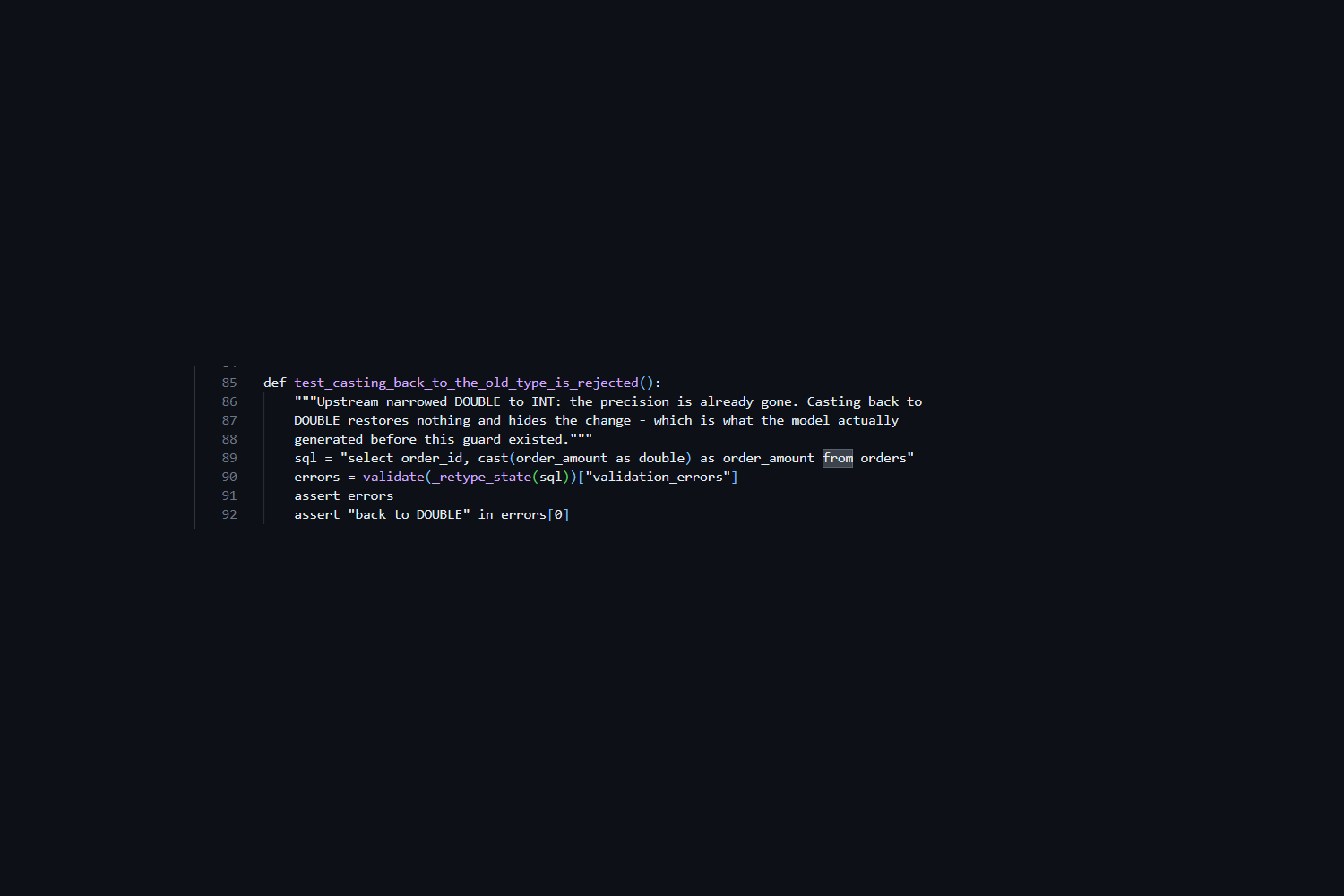
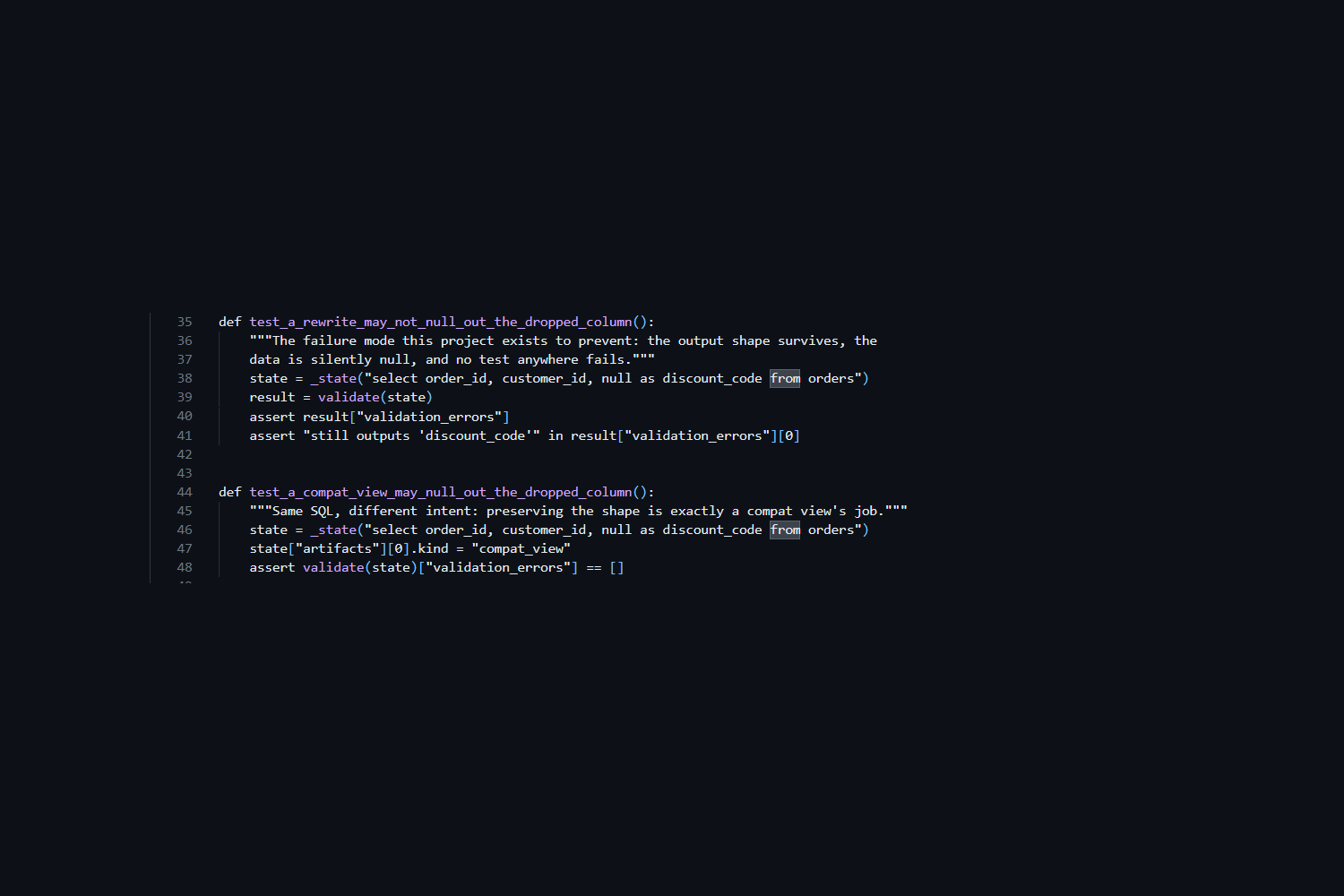
Keeping generated SQL trustworthy. The generator found a new way to be subtly wrong at almost every step: nulling out a dropped column in a rewritten model, so the shape survives and the data silently doesn't; casting a narrowed column back to its old type, hiding the truncation; emitting a column twice; deleting a column that had only been retyped. Each one now has a deterministic guard and a test, and each guard had to learn where it does not apply, because a compatibility view preserves that same shape on purpose. The interesting part is that the validator originally caught only wrong content, never missing content. It had been built entirely from prohibitions.
Accomplishments
An end-to-end read → act → write loop that produces merge-ready code; ML impact analysis that reaches a production deployment through a path lineage doesn't expose; and a demo that reproduces exactly, offline, with no API key. 171 tests, including replays of every committed example.
What we learned
Metadata is only worth what you do with it, and a catalog's API surface is not the same thing as its data model. Three of the gaps we hit are filed upstream. Also: with the schema grounding and guards in place, a free 9B open-weight model produced the same correct output as a 120B one. The deterministic layer does the correctness work, so the model doesn't have to be large or expensive.
What's next
More dialects, semantic diffing for logic rather than schema changes, and a policy layer so teams can encode their own migration standards.
Built With
- datahub
- github-jobs
- gms
- graphql
- jinja
- langgraph
- mcp
- openrouter
- sdk
- server
- sqlglot

Log in or sign up for Devpost to join the conversation.