Inspiration
I always thought I am pretty good at interior design and home decorating, until we purchased our first house.
We went to a furniture store, and instantly liked the sofa in the showroom, and purchased it. When it arrived home, even though it fit, it looked too large for our living room, and that was only the beginning.
I had to spend hours, days or even weeks on figuring out where to buy furniture, finding the pieces that matched my style, checking their dimensions to make sure they fit our space, checking the material and durability of the product, finding the best deals or even tracking the prices, and reading the customer reviews to make sure there is nothing seriously wrong with the product.
Finally, I desperately wanted to imagine how all these pieces will look together once they are in our space, but there was no such tool for that.
I had a few hundred pins saved across half a dozen Pinterest boards and I still bought furniture by opening twenty tabs and guessing.
All I wanted was to feel confident before making an expensive purchase decision.
That's why I created FUSE.
What it does
Fuse is an all-in-one platform that handles the entire journey in one place so people don't have to switch between apps, and tabs.
Today, we've built the very first step: AI-powered visualization.
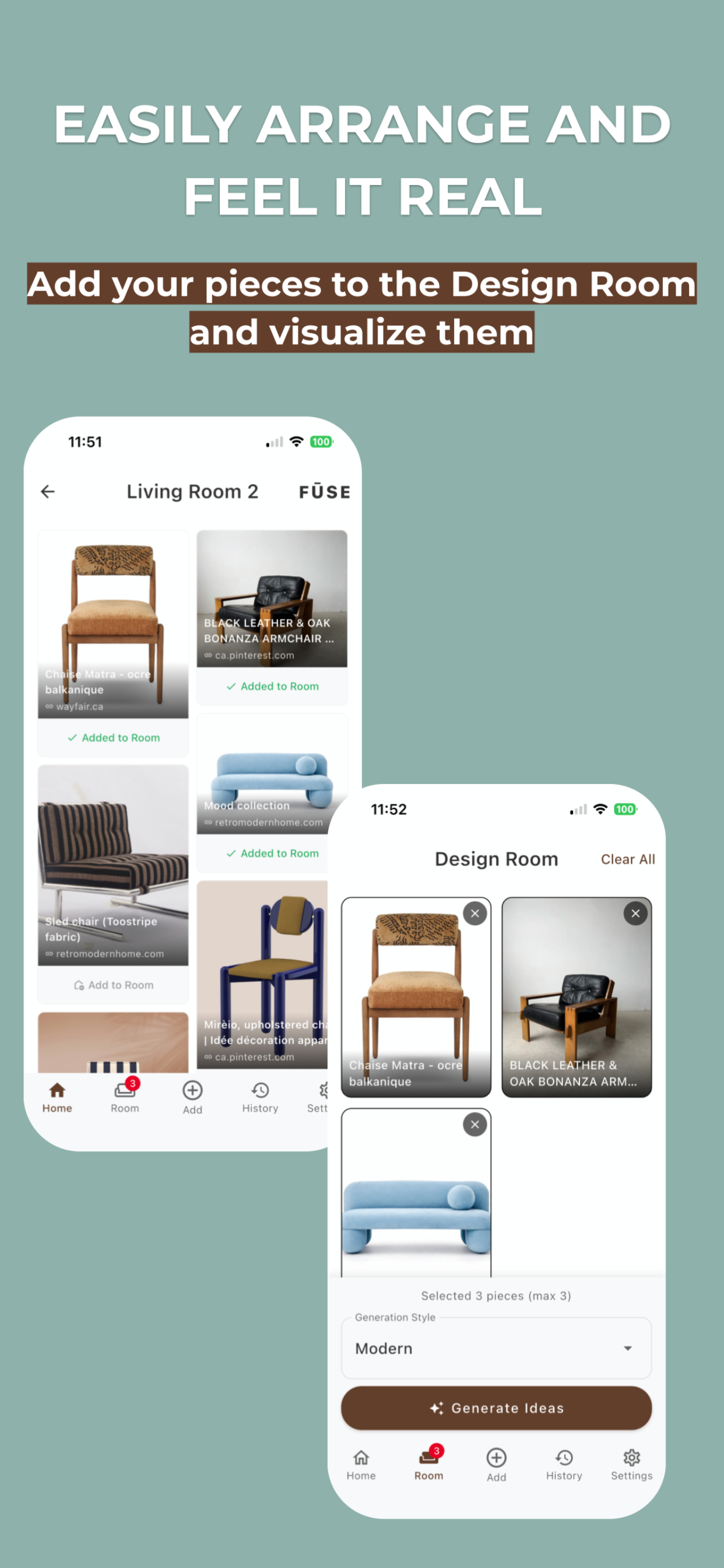
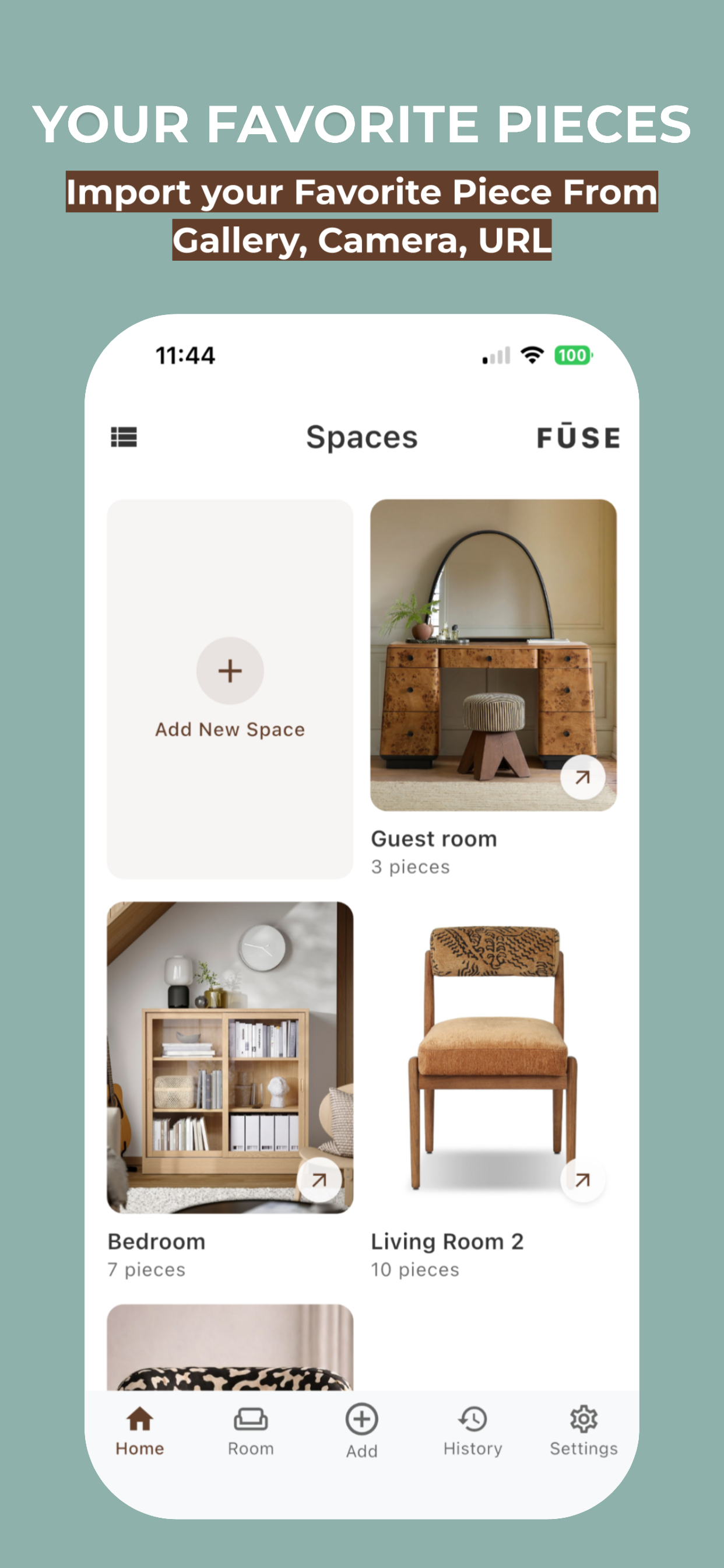
Users can save furniture they're considering from their Pinterest, retailer websites, and or their camera roll and bring those pieces into their design room.
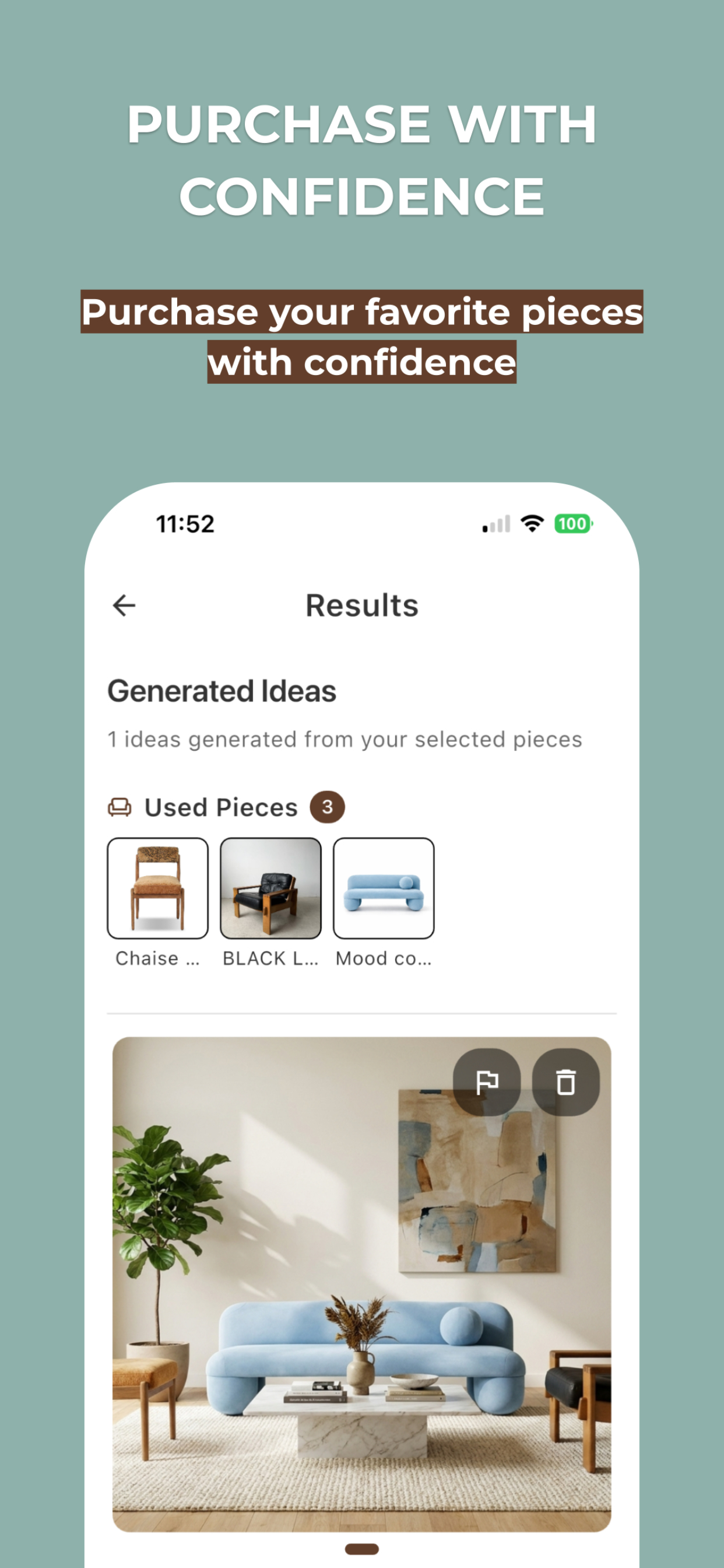
They can generate realistic interiors using the exact furniture they are considering.
How we built it
AI is at the centre of FUSE, and Gemini plays a major role in how we understand the user's intent and turn it into a visual design.
We built FUSE as a cross platform app using Flutter. The main experience is built around something we call a Design Room, where users can collect the furniture and decor pieces they are considering and bring them together into one design.
From there, we use Gemini as part of our AI pipeline to reason about the information the user gives us: the room and the selected furniture, and other details such as dimensions.
We also built computer vision into the experience. One of our goals is to make adding furniture as tapping on an object in an image, the app can identify the piece the user is interested in, isolate the relevant object, and prepare it for the rest of the AI pipeline.
The overall goal was not just to call an AI API to display the results, or build what people these days call an "AI wrapper". We wanted to build a product with Gemini as its core where AI feels like a natural part of shopping and design experience.
Challenges we ran into
One of our biggest challenges was actually caused by something generative AI is really good at: being creative.
If we give the model a particular chair, we don't want to design a nicer version of chair, we want that chair.
Generative models can subtly change the shape, color, material, proportions and dimensions, and other details of a product. The output might still look great, but it becomes much less useful is someone is trying to decide whether to spend money on the actual product.
Things get harder when several pieces need to appear together in the same room.
Another major challenge was latency. Gemini is great at understanding rich multimodal context, while tasks like quickly detecting an object after a user taps an image have very different requirements. For those kind of interactions, latency and model size really matter.
And finally, there was the UX challenge. There is a surprising amount of AI and image processing happening behind a simple action like "Add this chair to my room". We didn't want the user to have to understand any of that.
Accomplishments that we're proud of
We're really proud that FUSE became more than a Gemini image generation demo.
We built an actual workflow around the AI. A user can bring in real furniture, organize the pieces they are considering, and use AI to see those choice in context.
In the first few weeks of building fuse, we gained more than 60 organic users, without any marketing or advertising, and it is just the beginning.
What we learned
One of the biggest takeaways is that using AI in a product that people actually pay for, is very different from making an impressive AI demo.
Users need consistency, they need control, and most importantly, they need to trust that when they select something, the AI understands what matters about that selection.
We also learned that one model doesn't need to do everything. Some tasks make sense for Gemini, while other lightweight tasks are better handled with a simpler computer vision model.
Most importantly, users shouldn't have to think about any of this. They should be able to figure out what the app does, how to get started with the app, how to tap a piece of furniture, add it to their design, and see what it looks like in their room.
What's next for Fuse
Visualization is only the beginning.
Our immediate focus is growing our user community and improving the visualization results. We also want to improve how faithfully we can preserve real products in generated scenes and make it easier to replace individual pieces without changing the rest of the design.
Fuse could understand information about a room with product information and help narrow down furniture based on dimensions, materials, style, budget, customer reviews, and user preferences.
Over time, we want to connect more of the process: discovering furniture, understanding whether it works for your space, comparing different options, visualizations and eventually purchasing it.
Intimately, we want to build an AI-powered interior design copilot!


Log in or sign up for Devpost to join the conversation.