-
-
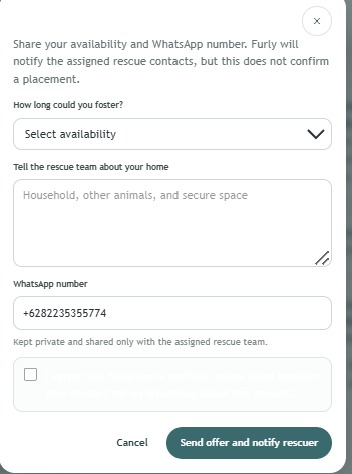
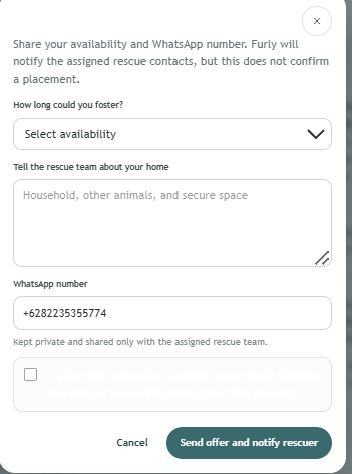
offer to foster form
-
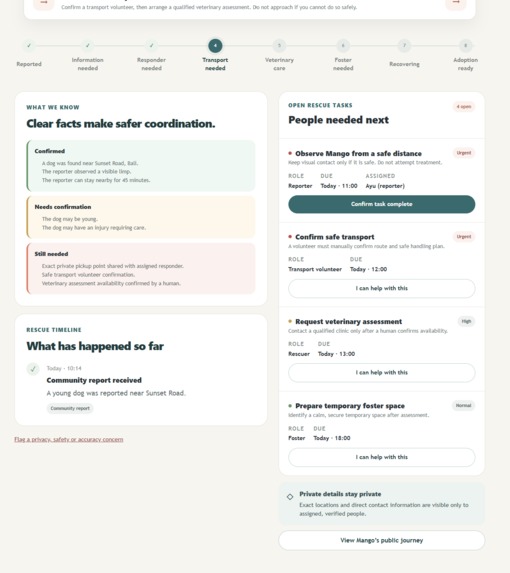
help report for pet
-
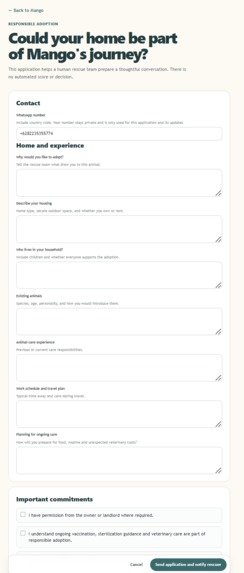
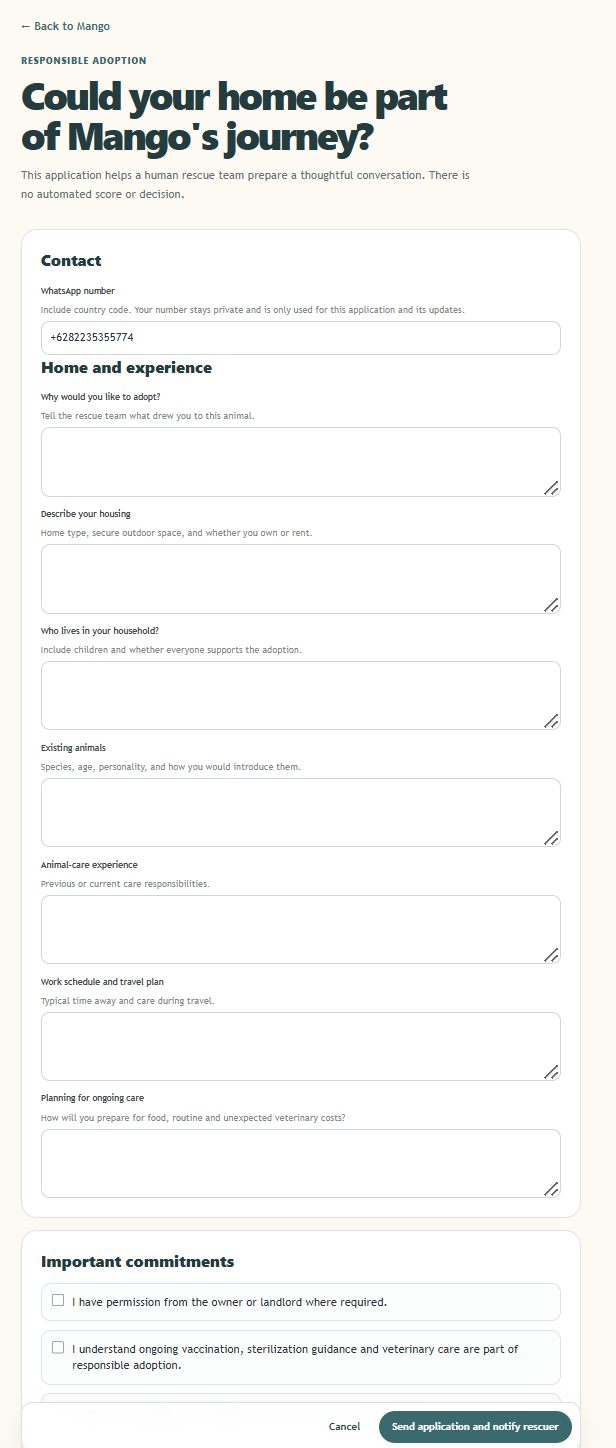
apply to adopt form
-
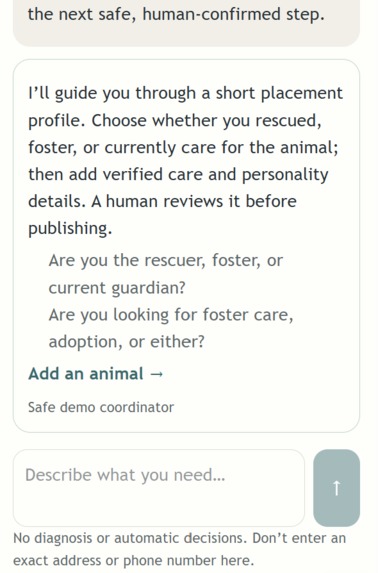
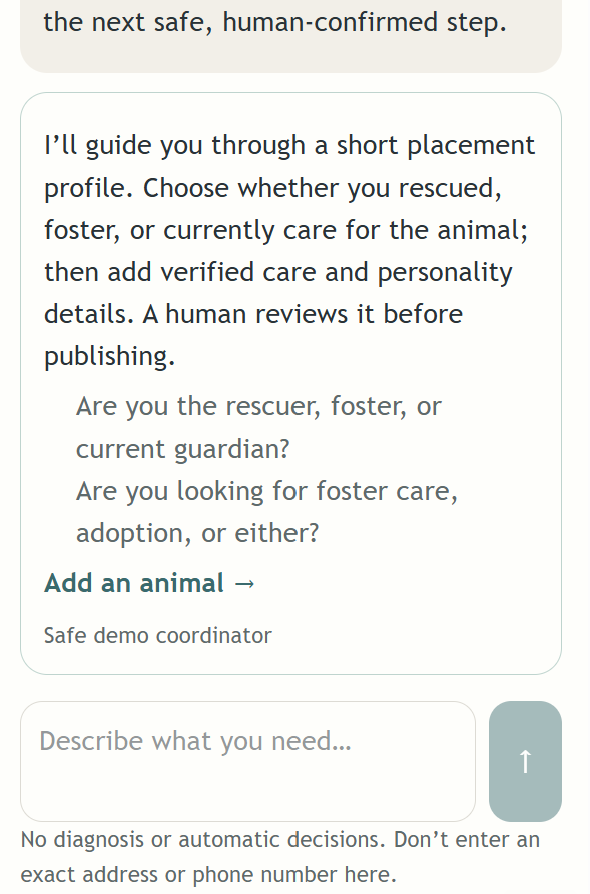
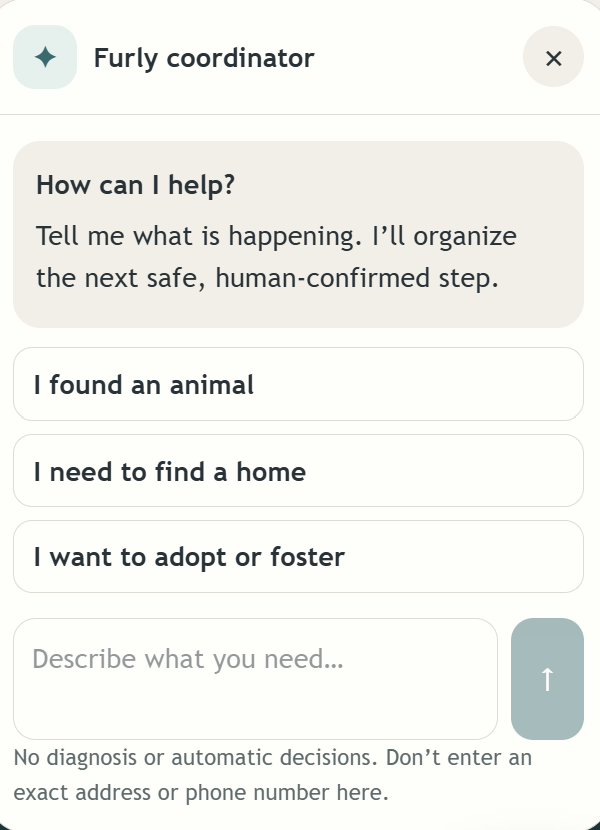
Furly helps user by chatting and show guidance
-
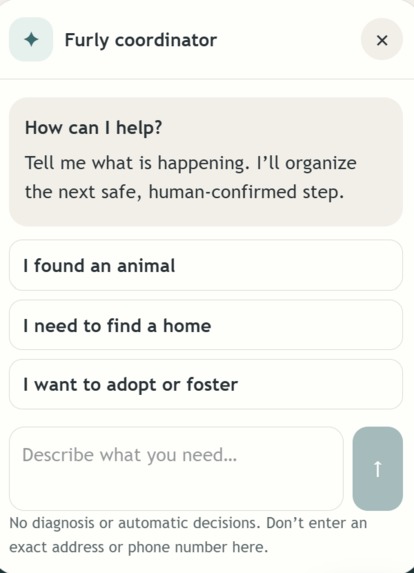
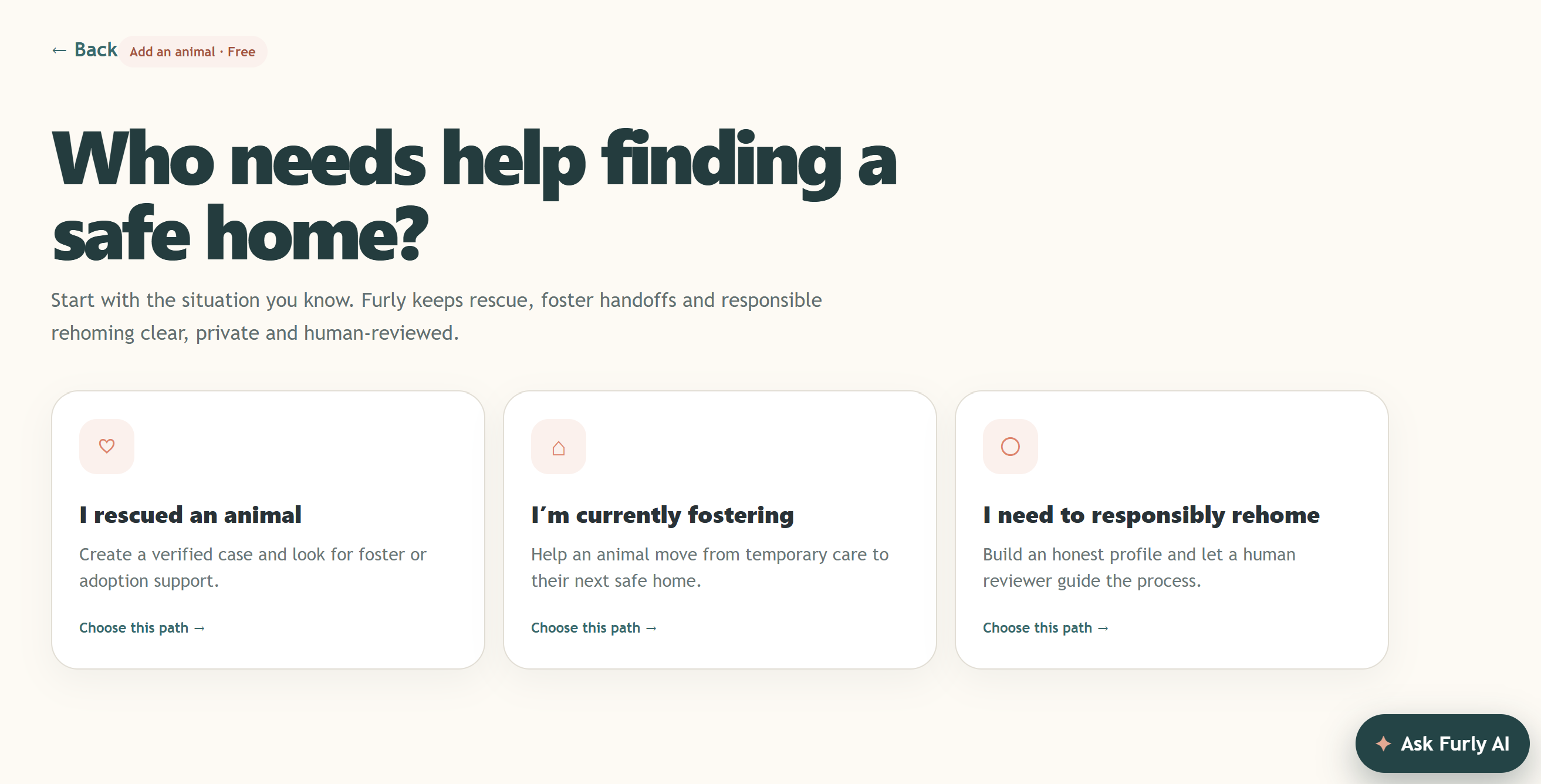
Furly AI helps user to onboard
-
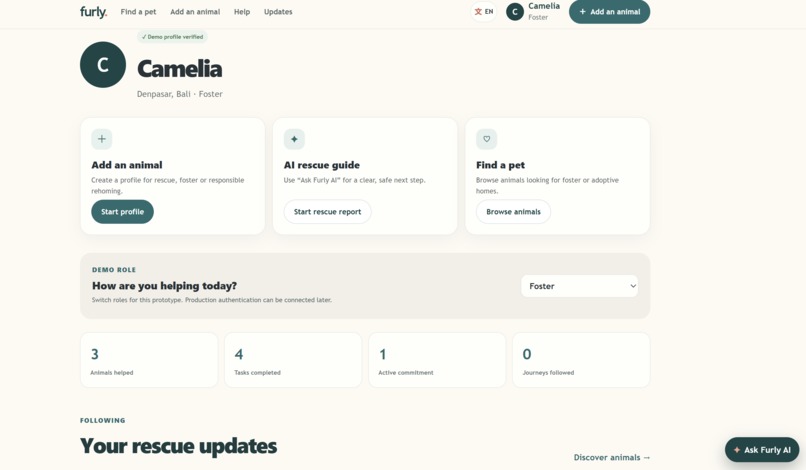
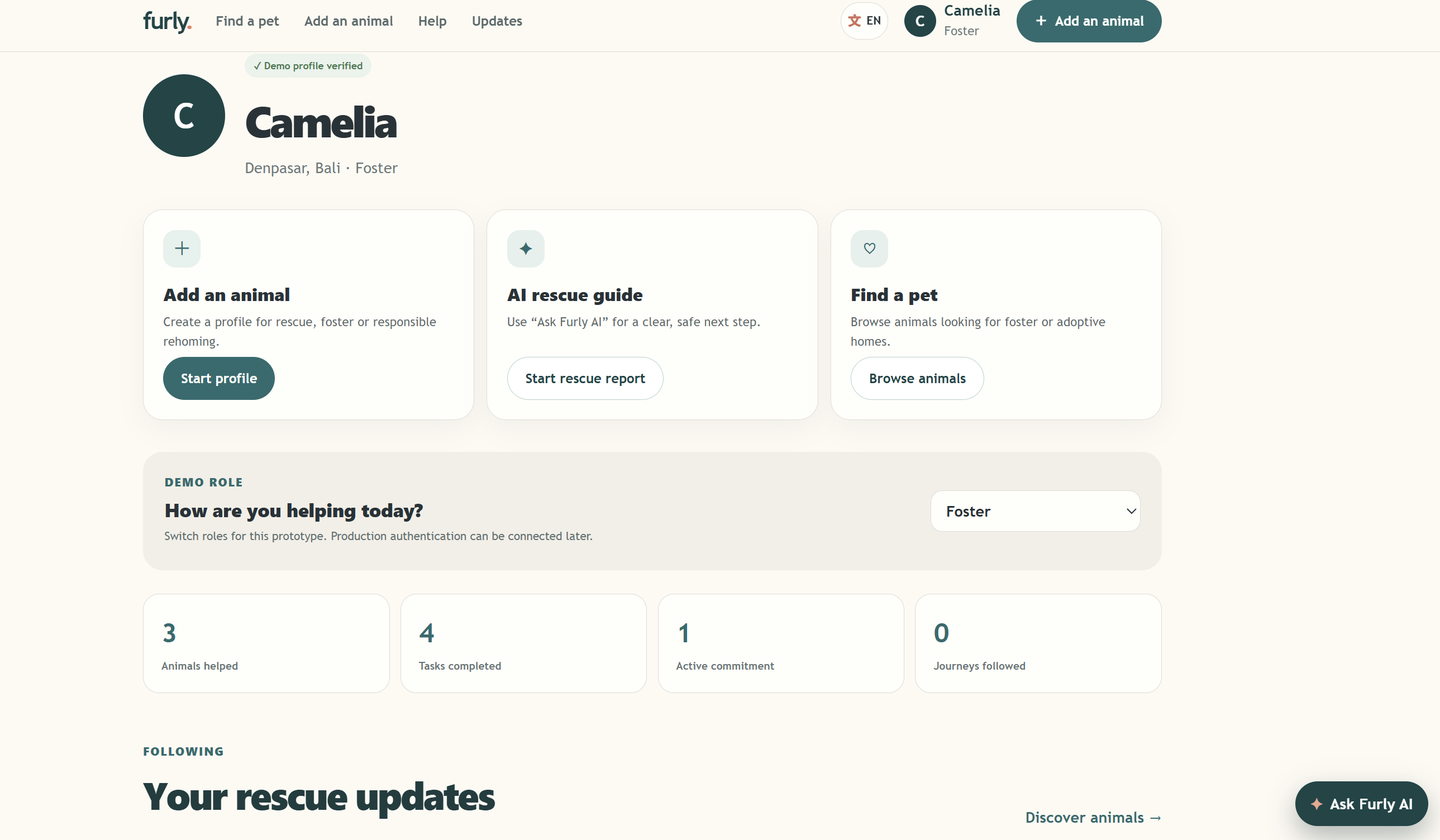
User profiles
-
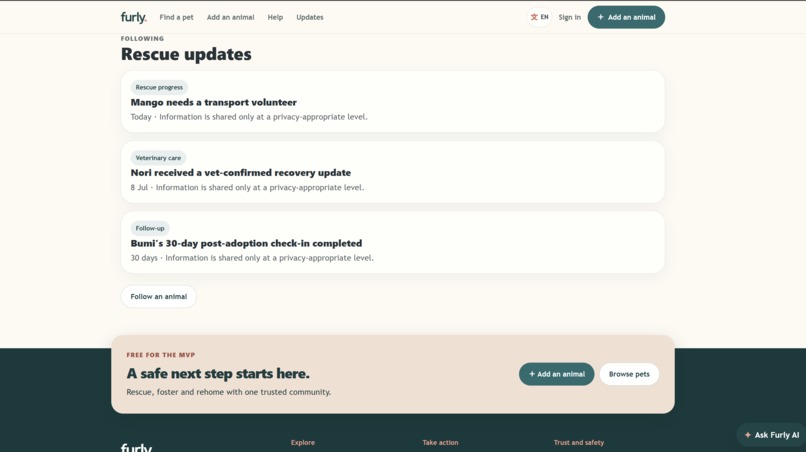
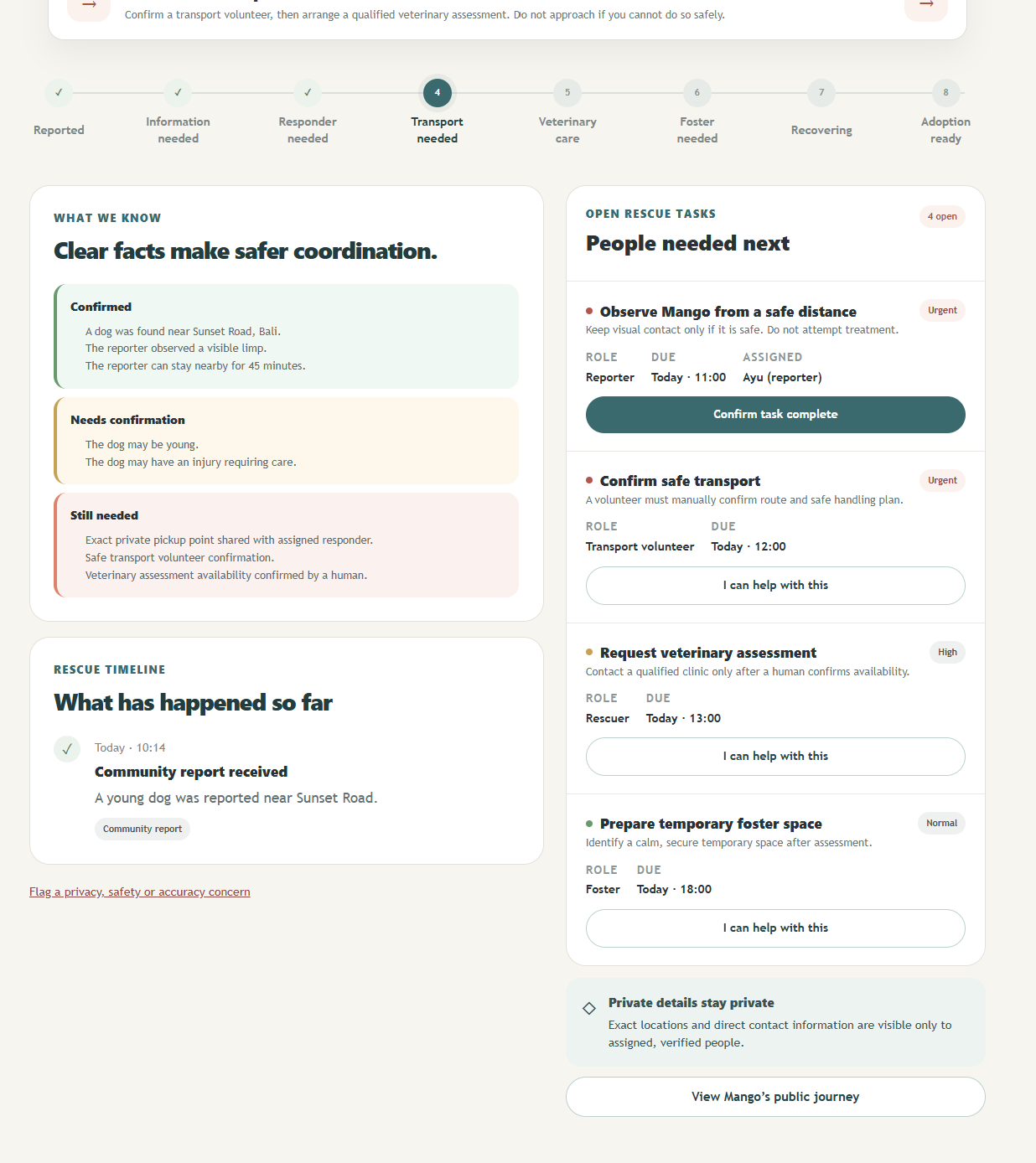
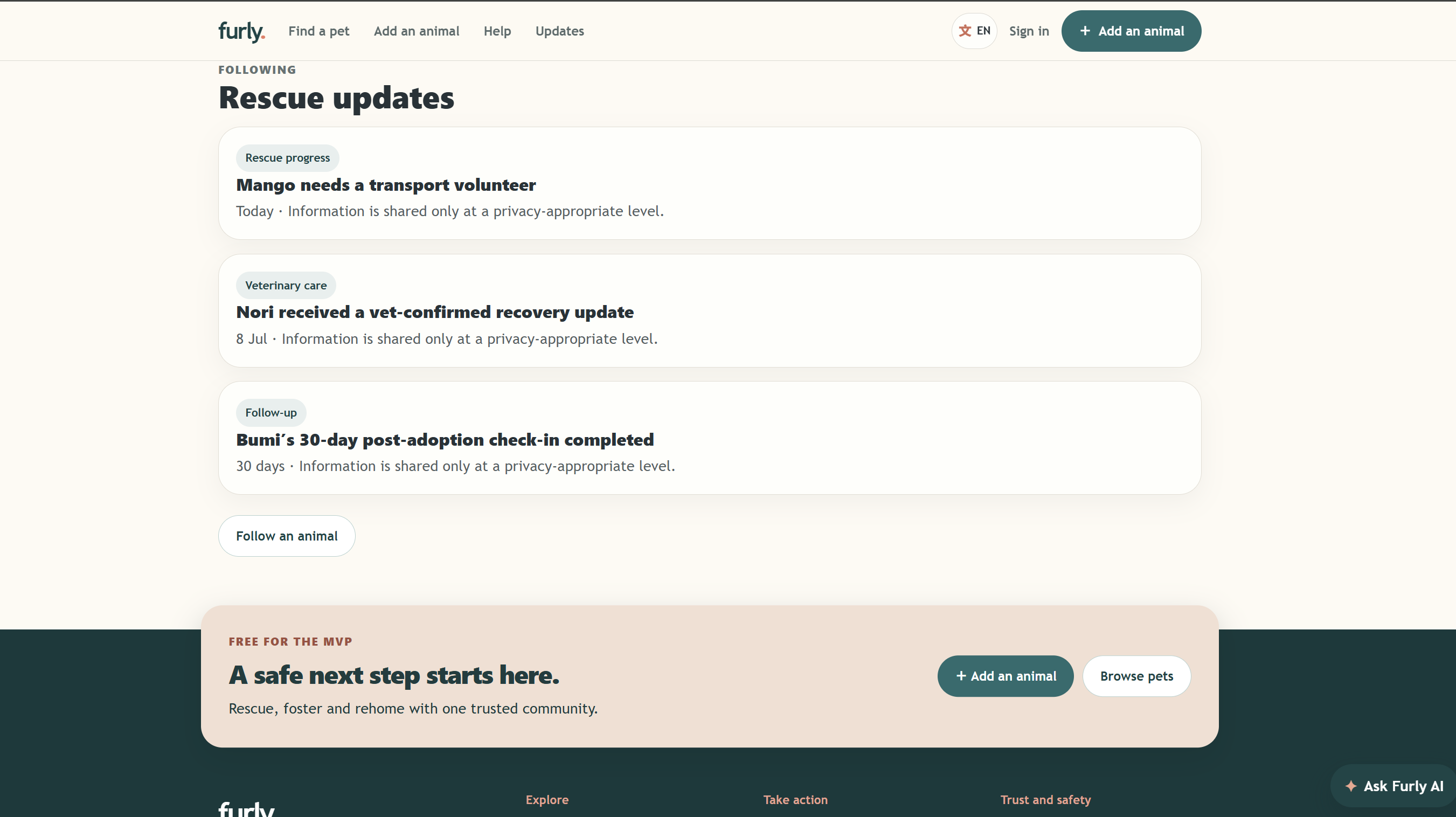
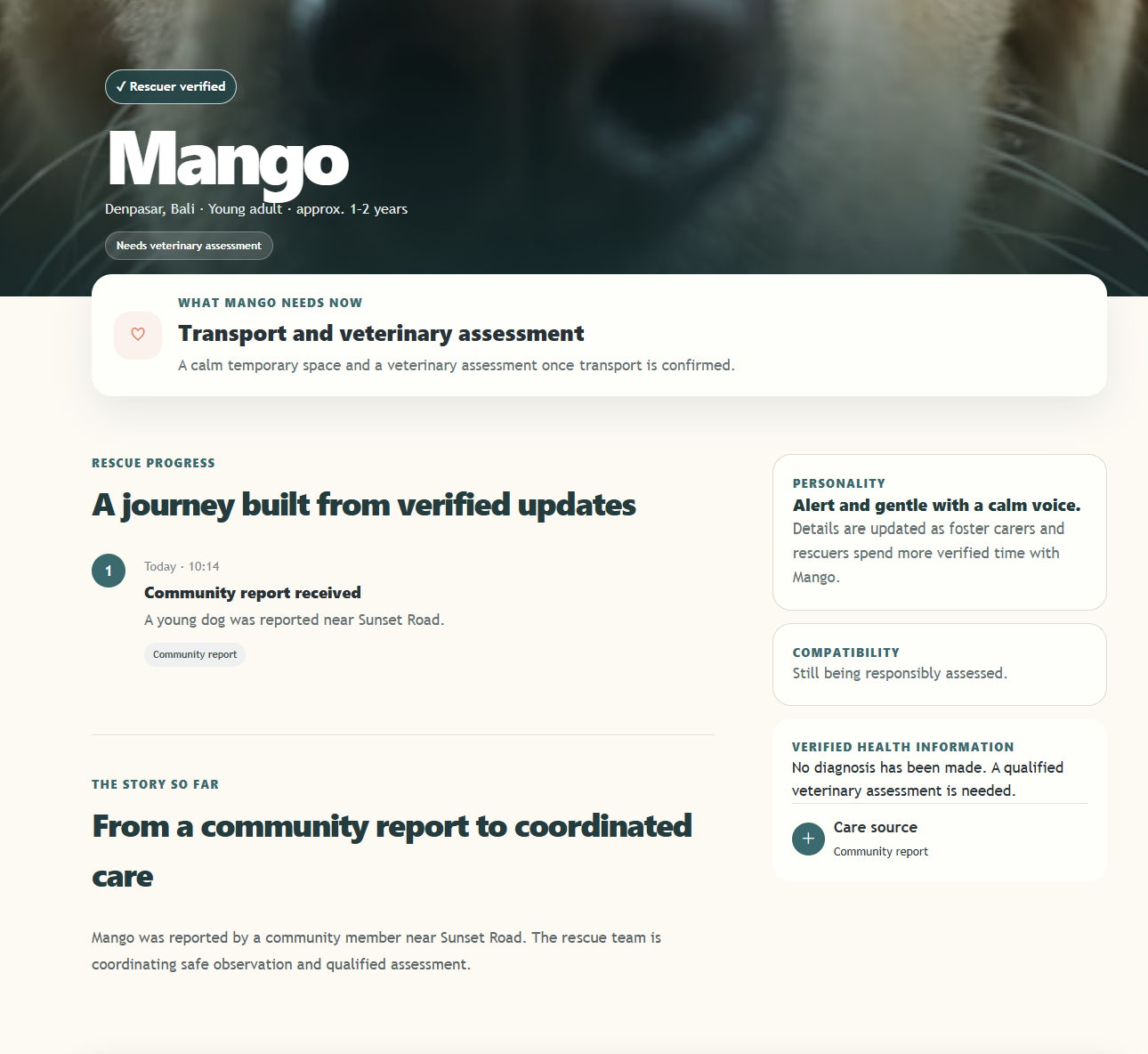
Journey of pets
-
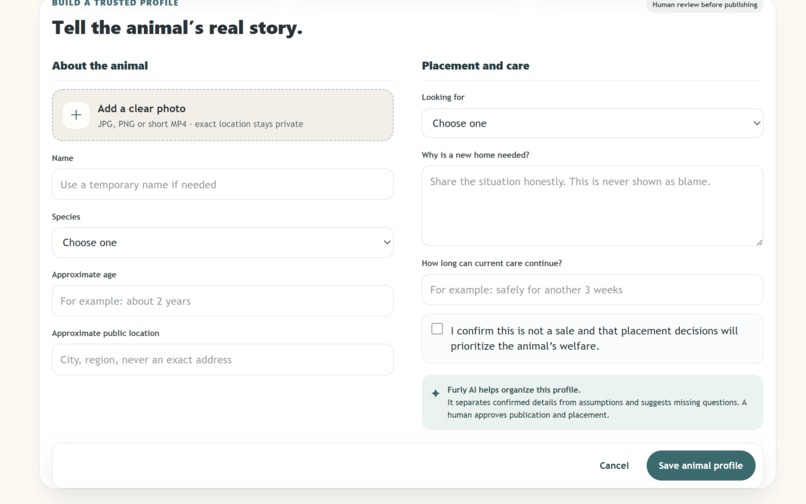
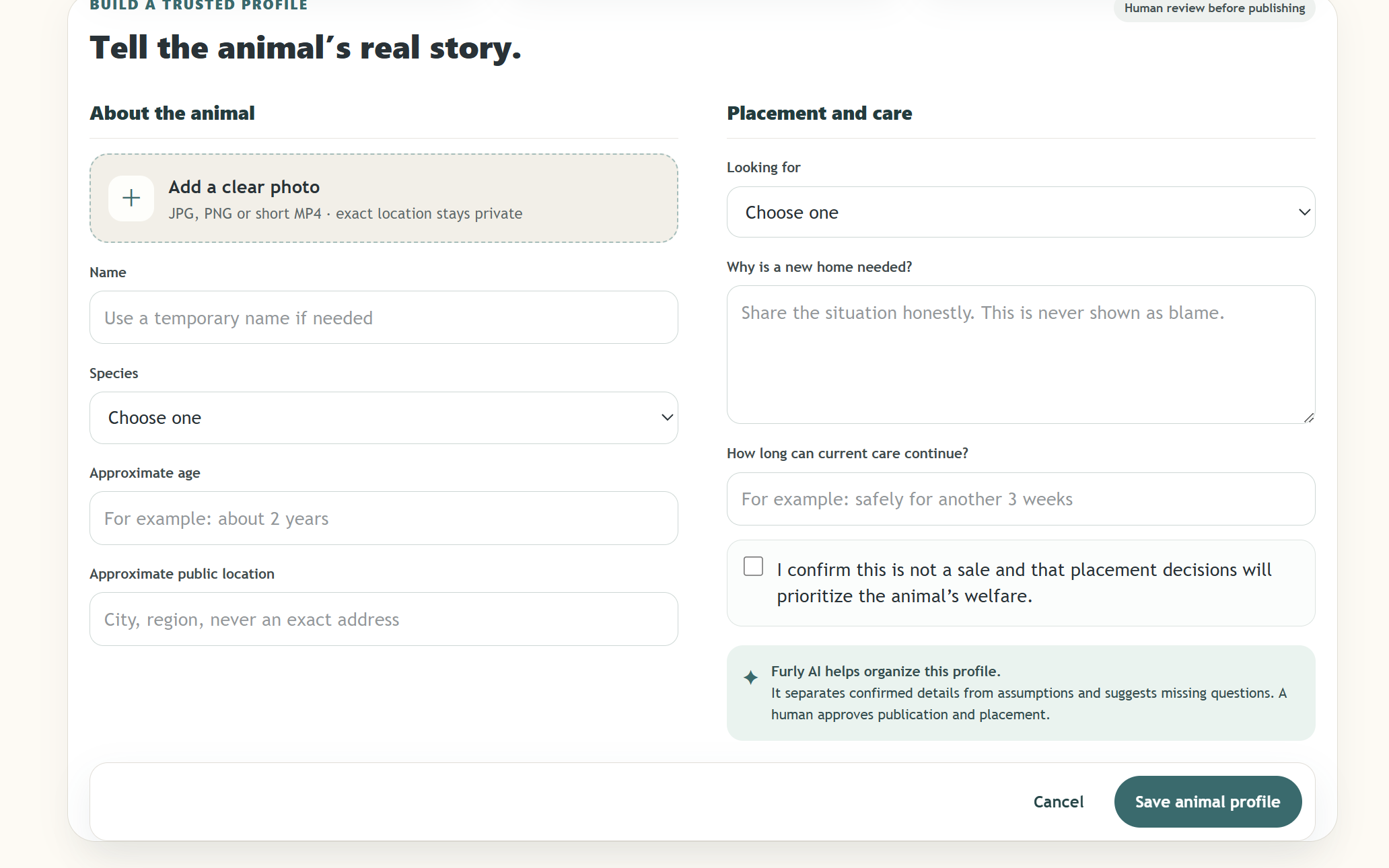
UI to onboard every pets looking for home
-
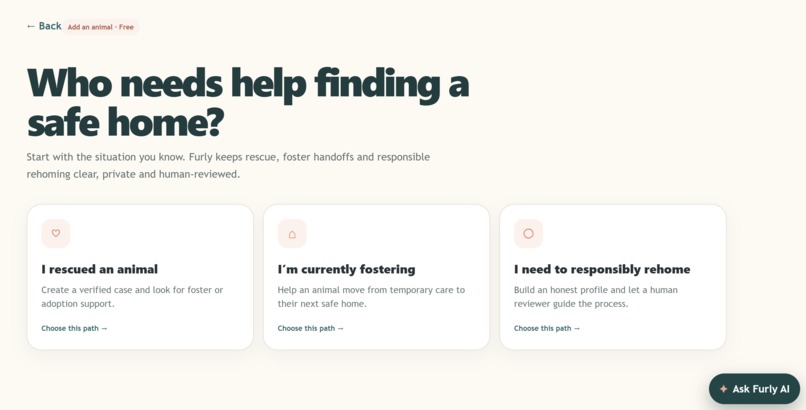
UI to explain users
-
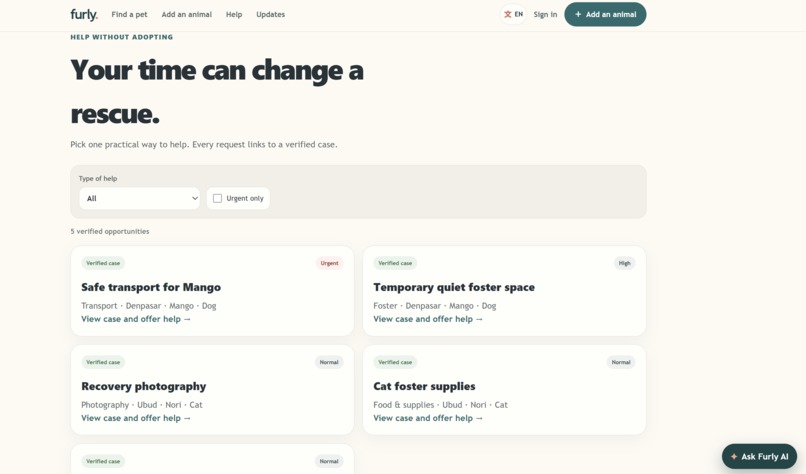
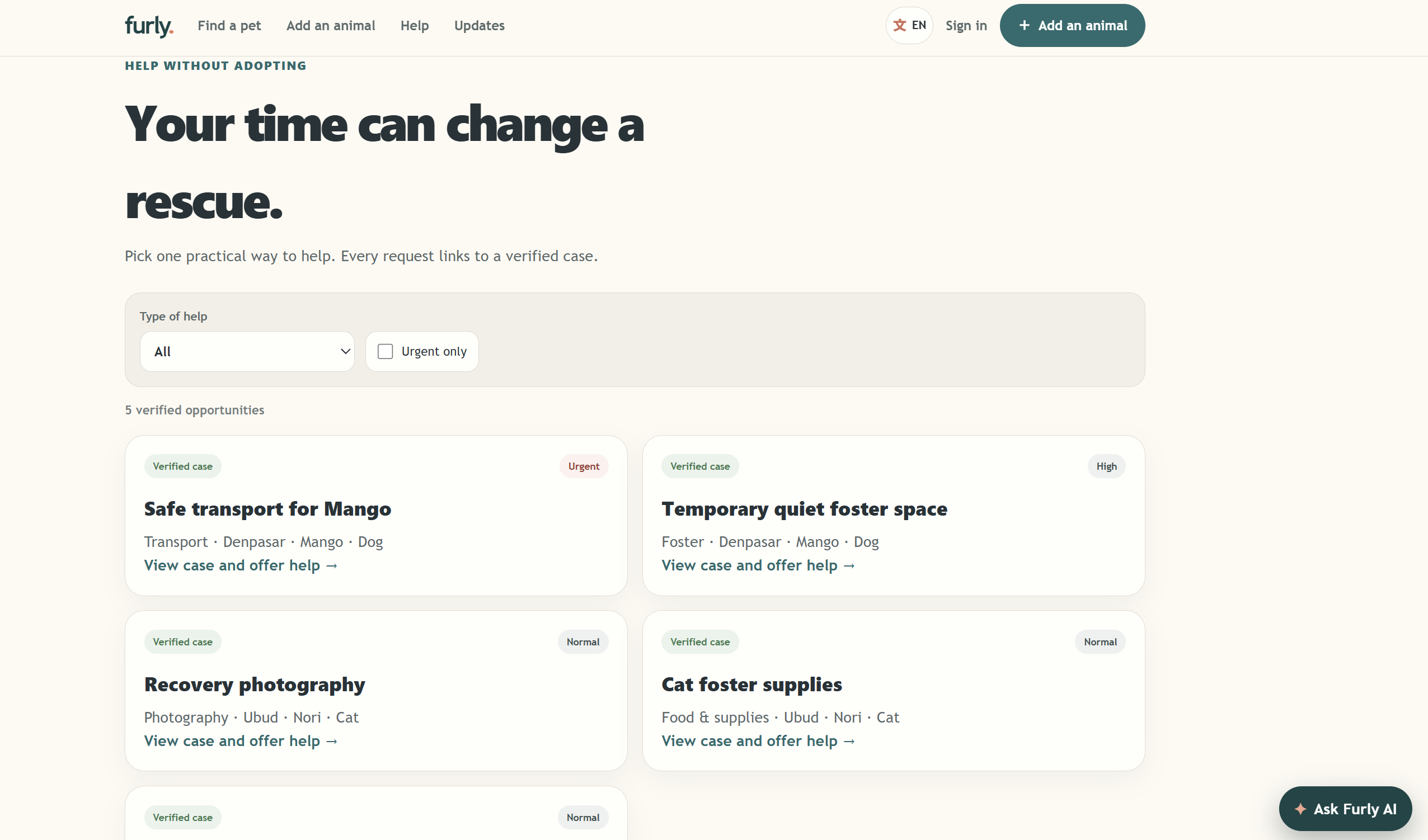
Help page
-
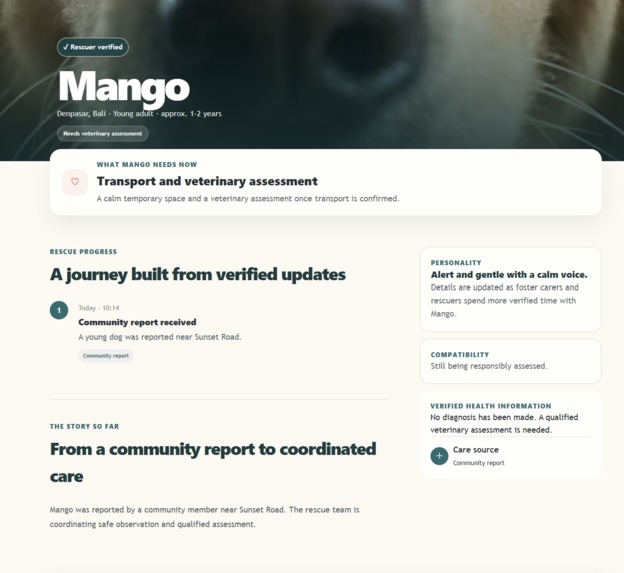
UI for every pet
-
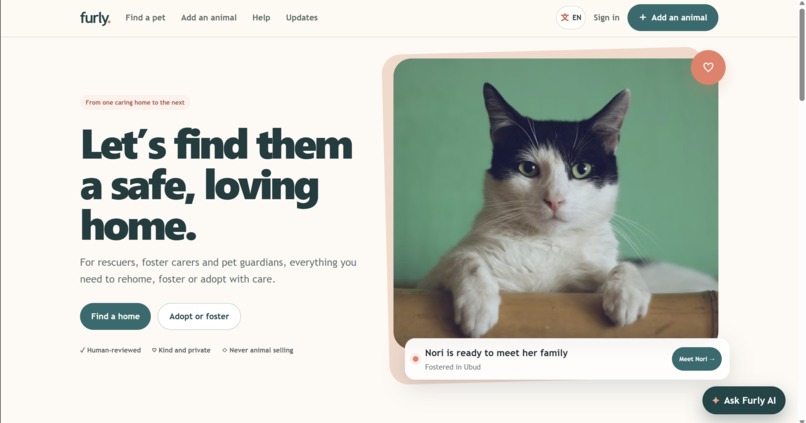
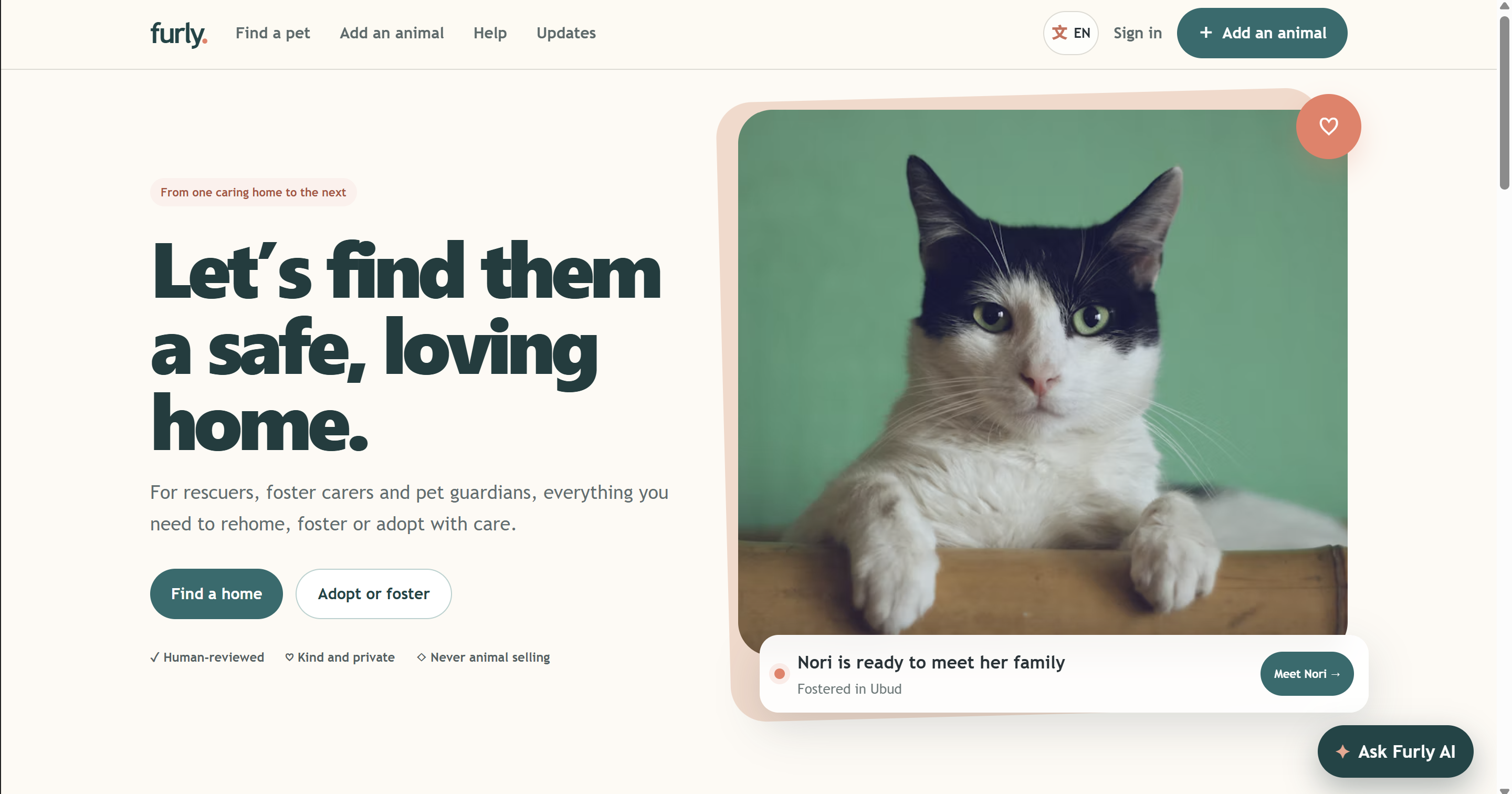
Home page
-
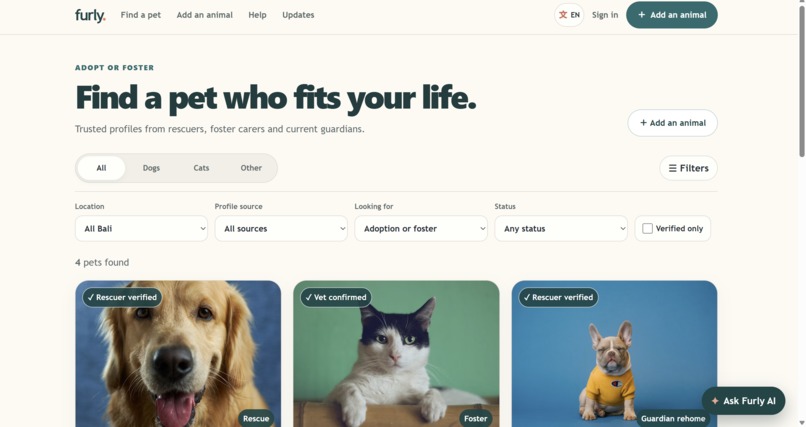
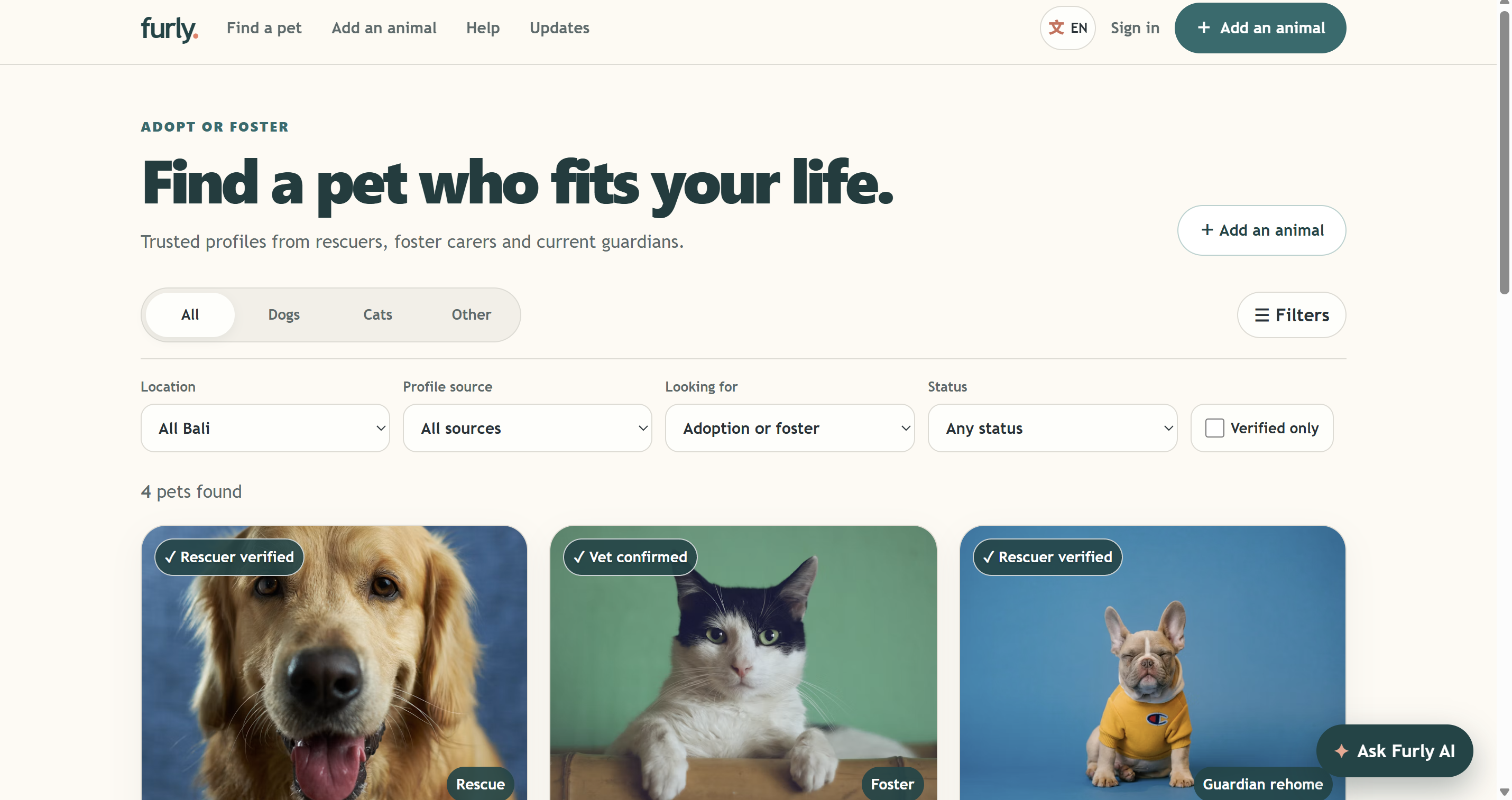
Find a pet section
-
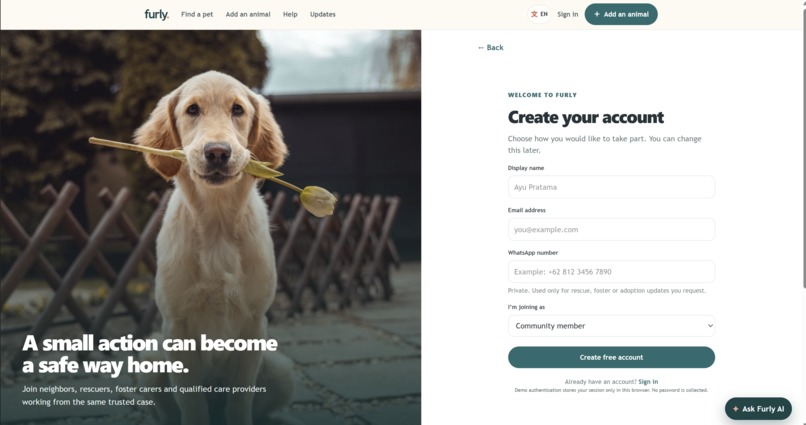
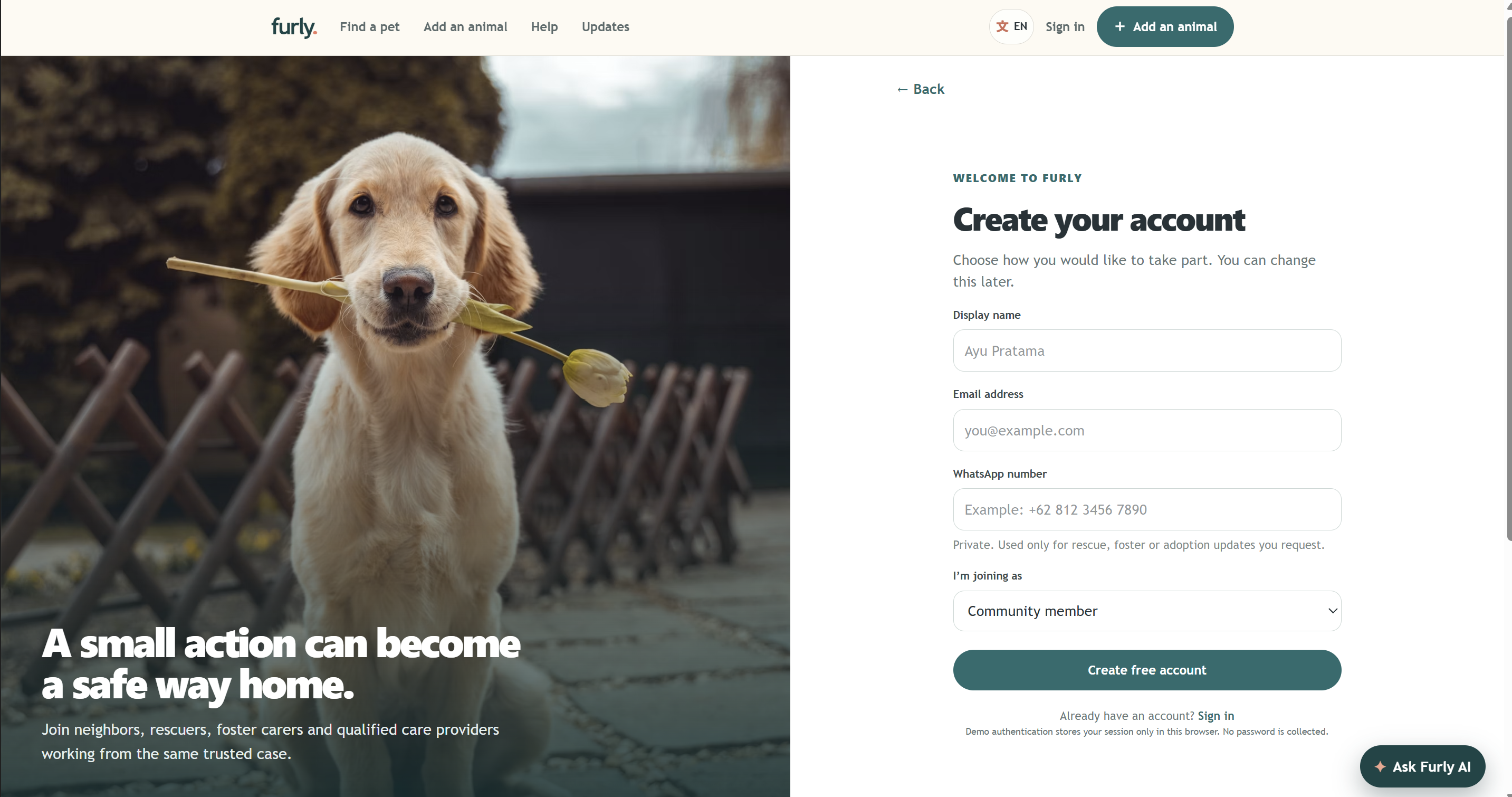
Signup/Signin for users
Inspiration
In Bali, animal rescue is often coordinated through scattered social media posts, group chats, and private messages. Rescuers may receive incomplete information, potential adopters can be difficult to verify, and urgent cases can disappear beneath newer posts.
I wanted to explore a safer and more organized alternative. Furly is not a marketplace, and animals are never treated as products. It is a rescue coordination network designed to help rescued animals move from first report to verified care, foster support, and a responsible home.
Every rescue deserves a safe way home.
What Furly does
Furly connects rescued animals with rescuers, adopters, foster homes, volunteers, and veterinary partners.
The prototype includes:
- Discovery for dogs, cats, and other companion animals
- Animal profiles with photos, rescue stories, health information, compatibility details, and current needs
- Approximate public locations without exposing private home addresses
- Clear rescuer and veterinary verification information
- Structured adoption applications
- Rescue timelines and follow-up information
- Requests for foster care, medical help, transport, supplies, photography, and home checks
- Success stories showing an animal's journey from rescue to home
How AI helps
Furly uses AI as a rescue coordination assistant.
A rescuer can enter rough or incomplete notes from the field. The assistant organizes them into:
- Confirmed information
- Unconfirmed information
- Missing details
- Follow-up questions
- A clearer public description
- Suggested next actions
The rescuer must review and edit the result before publishing it.
AI can also summarize adoption applications, identify missing information, highlight positive compatibility signals, and suggest interview questions. It does not generate a numeric adopter score, approve applications automatically, or replace human judgment.
How I built it
I built Furly with Codex and GPT-5.6, using Next.js, TypeScript, and Tailwind CSS.
Codex helped me turn the initial social-impact idea into a structured product, plan the user journeys, create reusable components, implement the responsive interface, connect the prototype's interactions, and troubleshoot development and deployment problems.
GPT-5.6 was used to develop and demonstrate the intelligence behind Furly's rescue-note assistant and application-review workflow. It helps transform unstructured information into useful, reviewable actions while keeping humans responsible for every important decision.
The current version uses realistic local mock data so judges can explore the complete experience without creating accounts or supplying credentials. The data layer is structured so a future version can connect authentication, media, and persistent records through Supabase.
Challenges I faced
The biggest challenge was balancing automation with safety.
Animal rescue contains incomplete information and emotional, time-sensitive decisions. I did not want AI to create false certainty or silently make adoption decisions. I designed the assistant to clearly separate known facts from assumptions and to ask for clarification when information is missing.
Another challenge was creating a useful prototype within a short build period. I focused on demonstrating one connected rescue journey instead of building production infrastructure prematurely. I also had to resolve development and preview issues while making sure the important controls produced meaningful outcomes.
What I learned
I learned that responsible AI is not only about generating better answers. It is also about showing uncertainty, requesting missing context, preserving accountability, and knowing when a human must decide.
I also learned how Codex can support an entire product workflow—from architecture and interface development to testing, debugging, and iteration—rather than being used only to generate isolated pieces of code.
What's next
Furly would begin with a pilot in Bali involving a small group of rescuers and veterinary partners.
The next steps would include:
- Secure authentication and role-based access
- Persistent rescue and adoption records
- Media uploads and moderation
- Stronger identity and veterinary verification
- Private messaging with anti-scam protections
- Follow-up reminders after adoption
- Transparent veterinary discounts and legitimate care costs
- Multilingual and multi-country support
- Feedback from real rescuers before expanding the AI workflows
Furly's long-term goal is to become trusted coordination infrastructure for animal rescue—helping more people act safely, helping rescuers spend less time organizing fragmented information, and helping more animals find the right home.
From rescue to home.
Built With
- chatgpt
- codex
- css
- css3
- gpt-5.6
- html5
- javascript
- next.js
- openai
- react
- sites
- supabase
- tailwind
- typescript


Log in or sign up for Devpost to join the conversation.