-
-
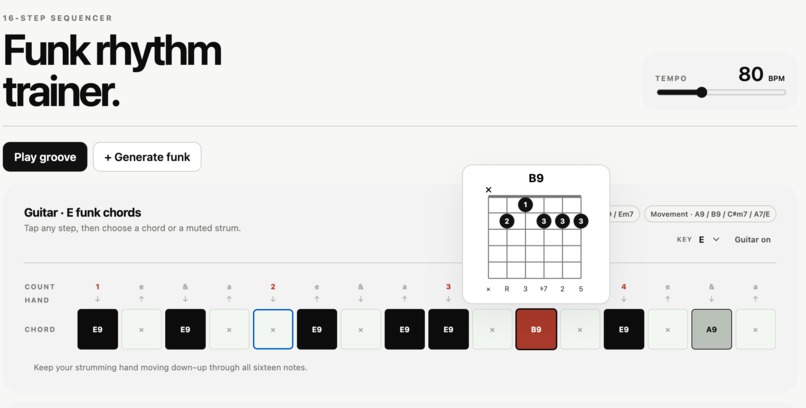
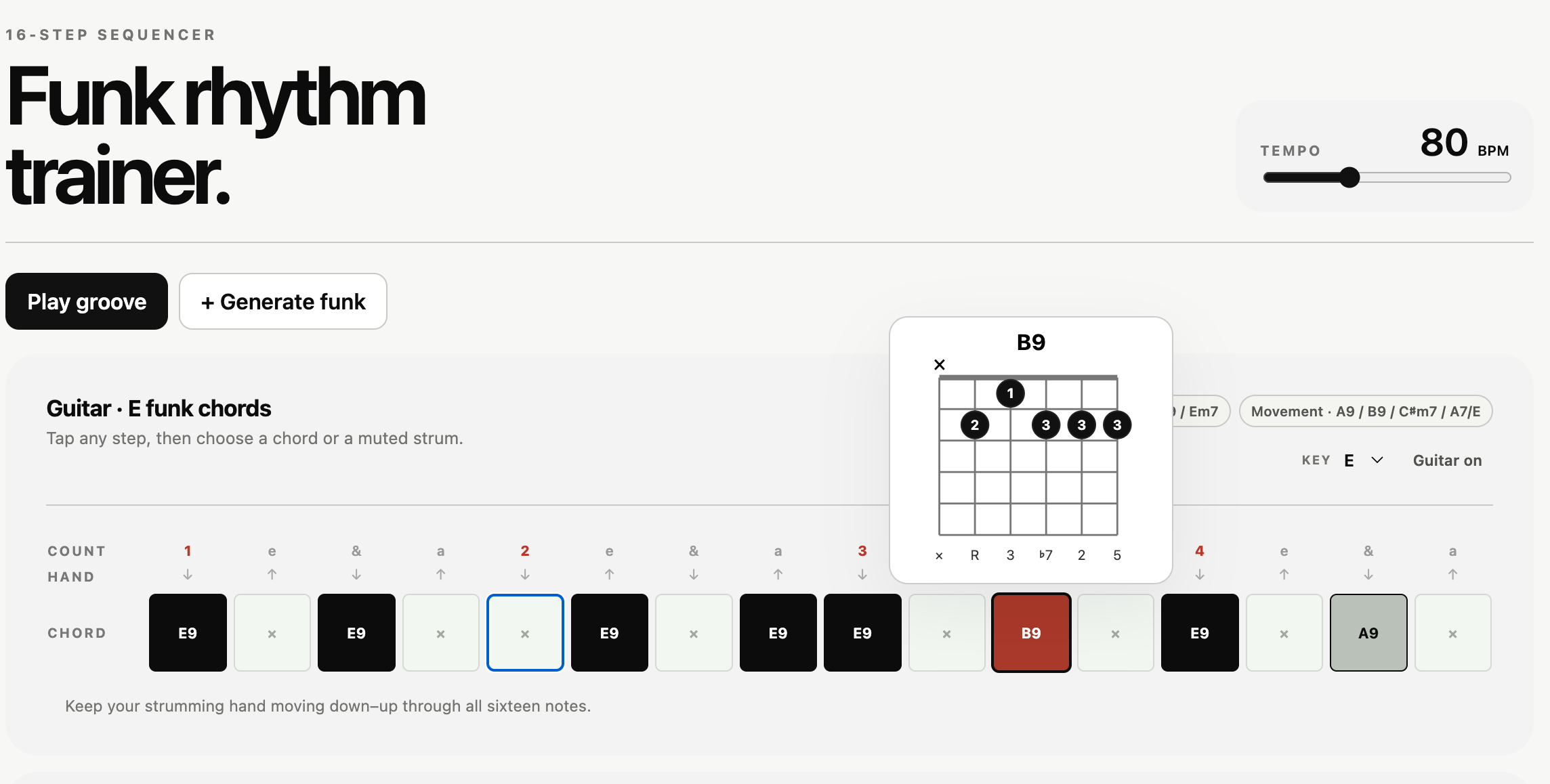
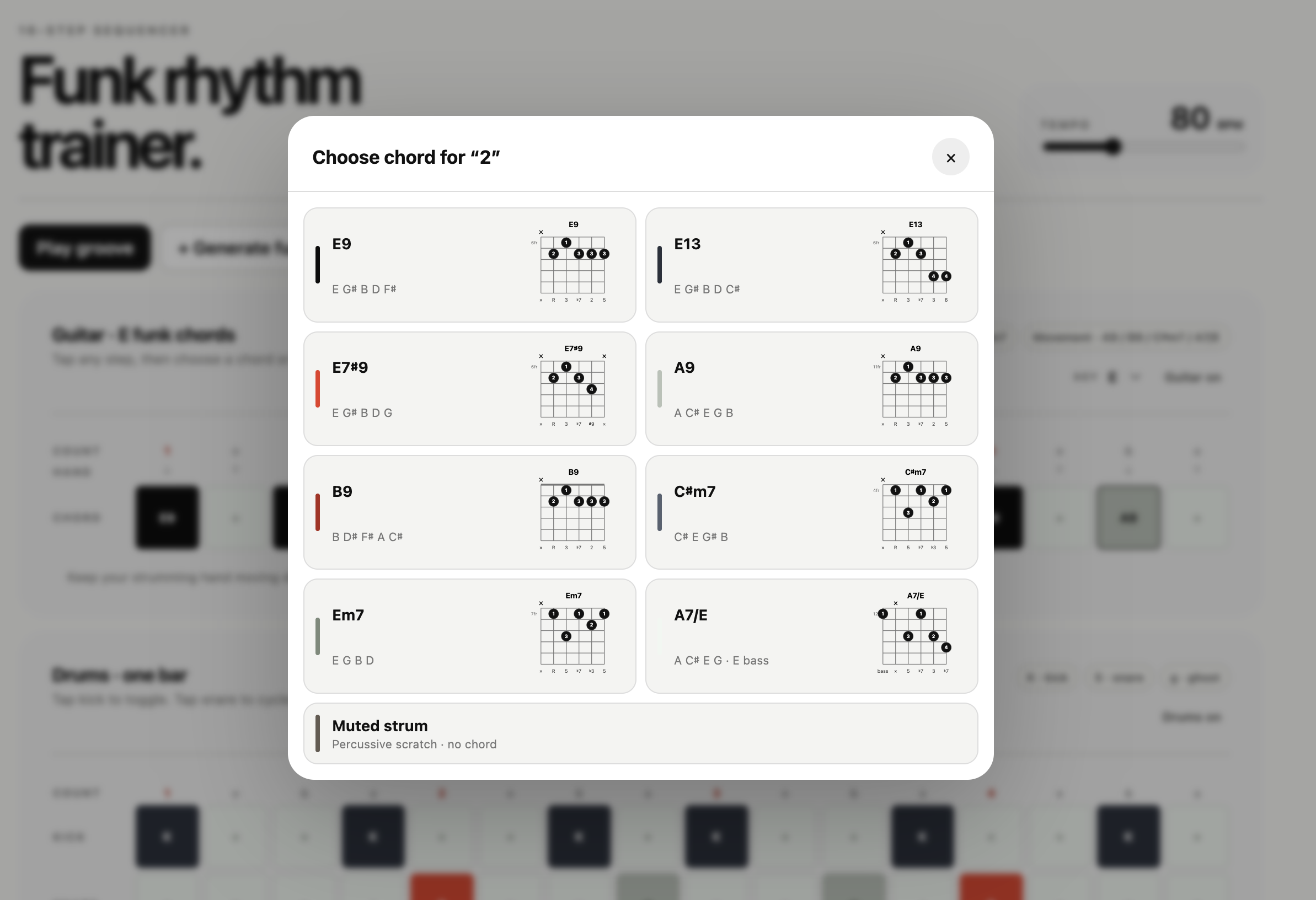
Hover to easily see the chord in a guitar
-
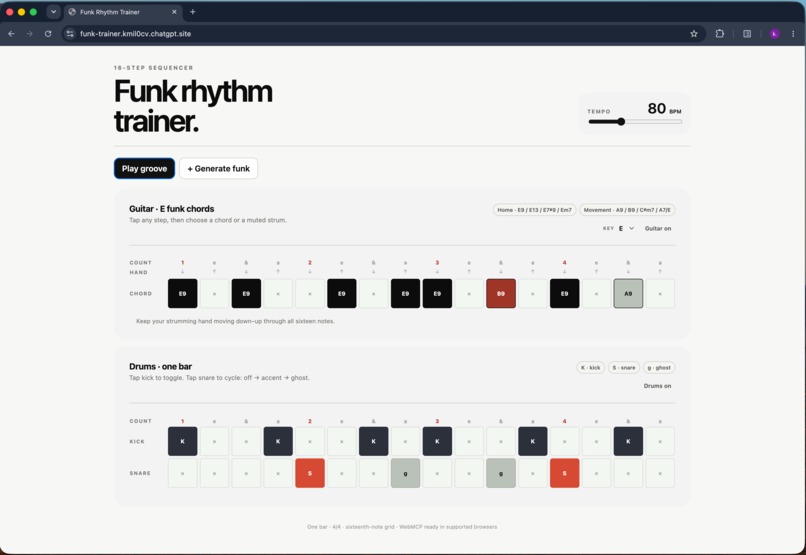
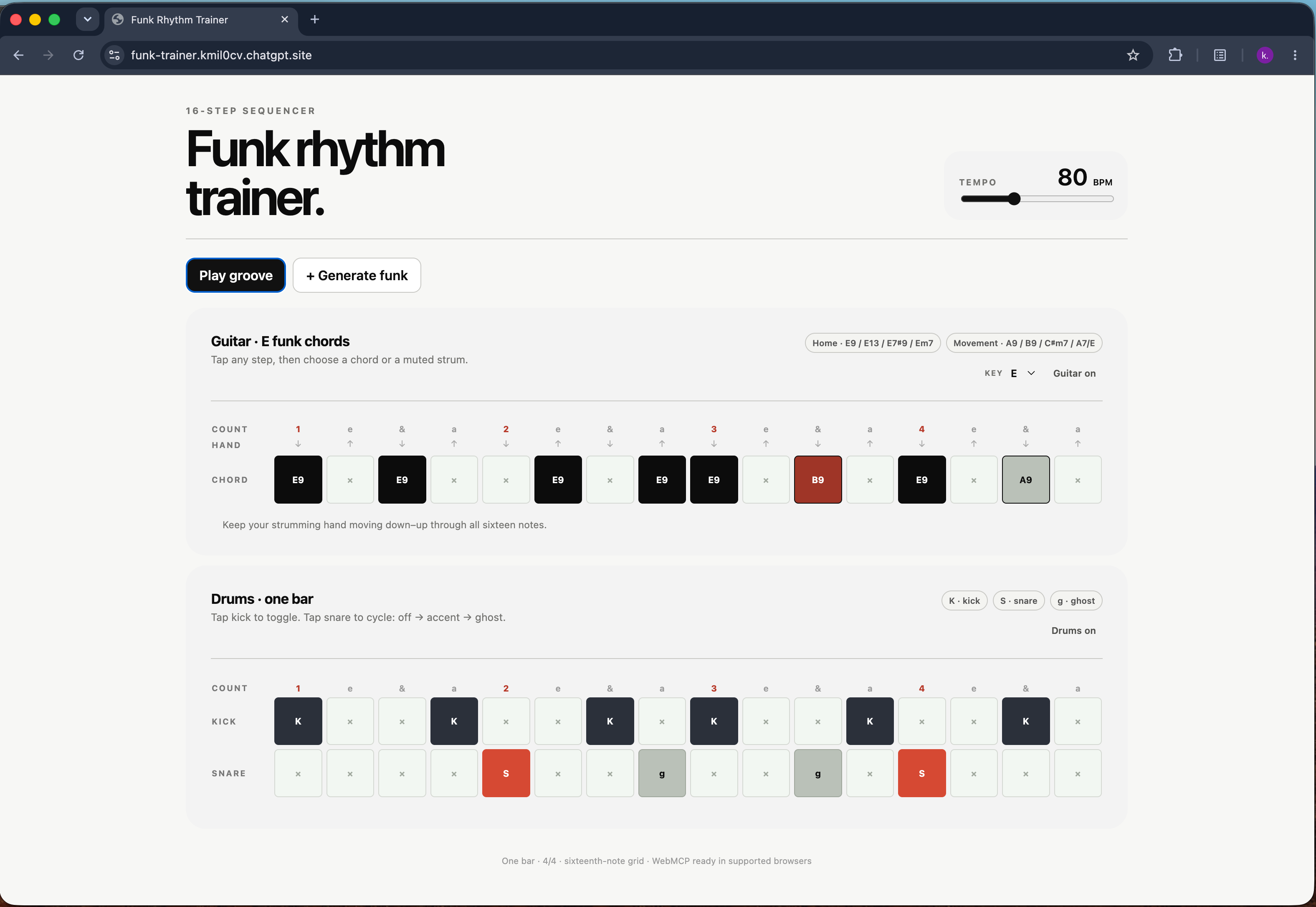
Main screen
-
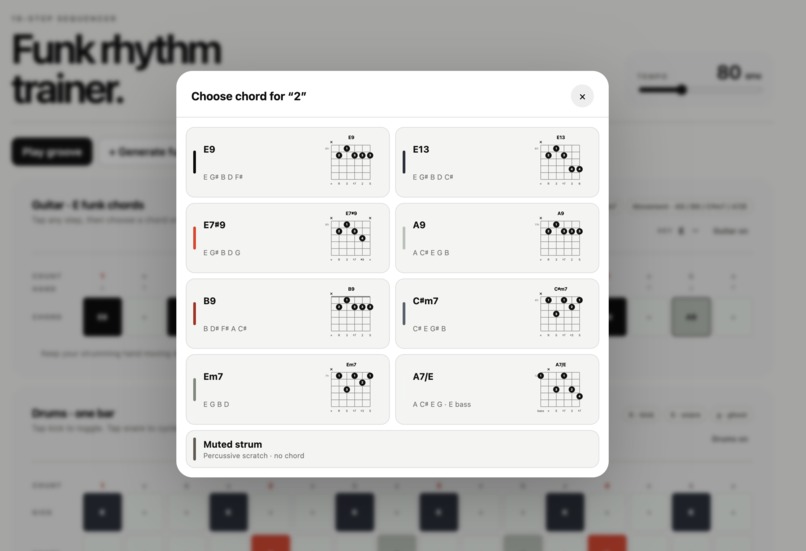
Chord selection
Inspiration
I built Funk Trainer because learning funk rhythm has always been difficult for me. I wanted one place where I could see where chords land in the beat, hear the groove, find useful funk chords, and practice against drums instead of jumping between different tools.
What it does
Funk Trainer is a visual sequencer for practicing funk guitar. You can place chords on rhythmic subdivisions, change keys, explore funk chord voicings, generate grooves, and play along with drums. The goal is to make where you play as clear as what you play.
How we built it
is an interactive web-based sequencer that keeps the visual grid, guitar, and drums synchronized.
also added WebMCP, exposing the trainer's controls as tools that an AI agent can use. An agent can change the key, generate a groove, select chords, and place beats in the sequencer.
This means you can ask something like "Show me a groove using the chords from Superstition" and let the agent translate its musical knowledge into the UI.
Challenges we ran into
The main challenge was timing: keeping the sequencer, drums, guitar, and visual feedback synchronized while keeping the interface simple enough for practice.
Another challenge was designing useful WebMCP tools that let an agent control the application without needing to understand its internal implementation.
Accomplishments that we're proud of
Turning something I personally struggle with into a tool I can actually practice with.
I am also excited about making the application agent-controllable through WebMCP. Instead of AI only explaining a rhythm, it can actually build that rhythm inside the trainer.
What we learned
Building the trainer reinforced that funk isn't just about which chords you play. The placement, subdivisions, silence, and relationship with the drums are what create the groove.
I also learned that WebMCP creates an interesting bridge between an AI's musical knowledge and an interactive application.
What's next for funk-trainer
The next step is connecting the agent to real song data.
For example, the agent could retrieve the chords and structure of a song from a platform such as Ultimate Guitar and then automatically plot those chords and their timing into Funk Trainer. this would speed up the process as Codex does not have to look on the internet but already has a reliable source.
From there, Funk Trainer could become a way to go from "I want to learn this song" to an interactive, playable rhythm exercise generated directly from the song.
The immediate change will be to add a an acoustic sound instead of a machine like one.
Built With
- html5
- javascript
- webmcp

Log in or sign up for Devpost to join the conversation.