-
-
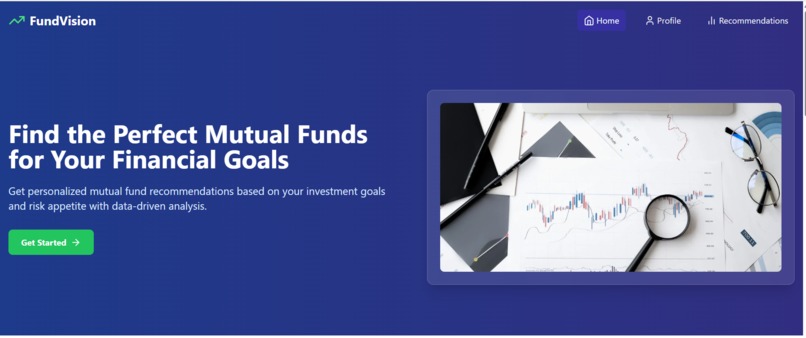
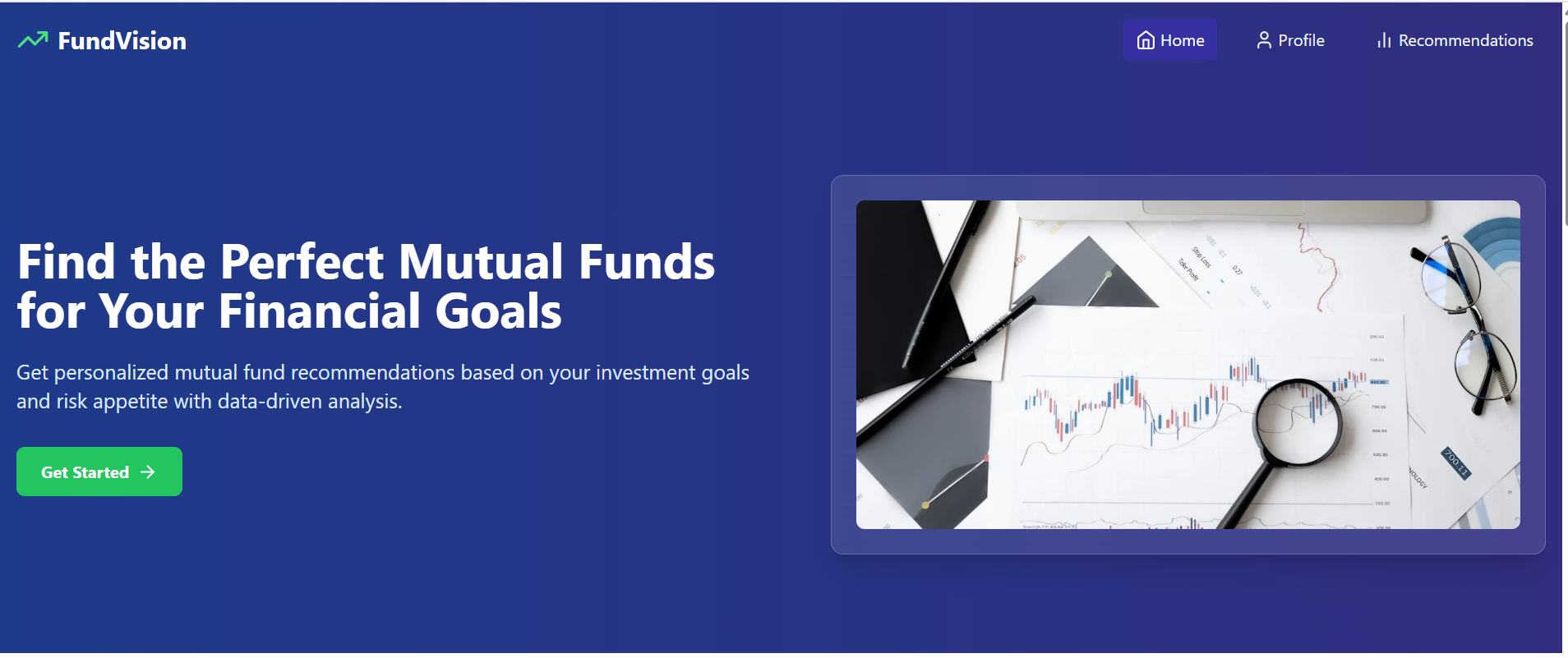
HomePage
-
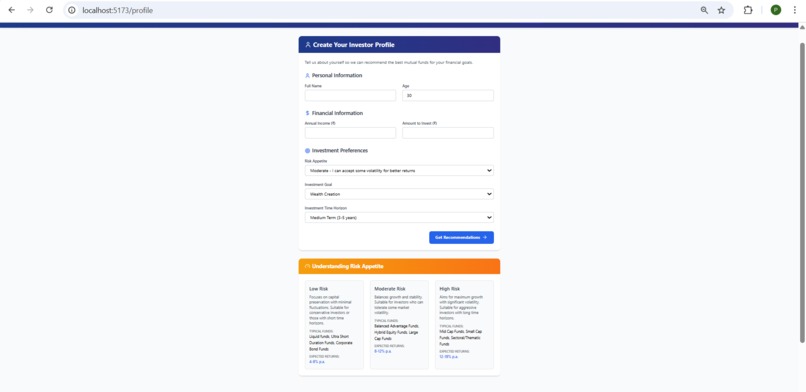
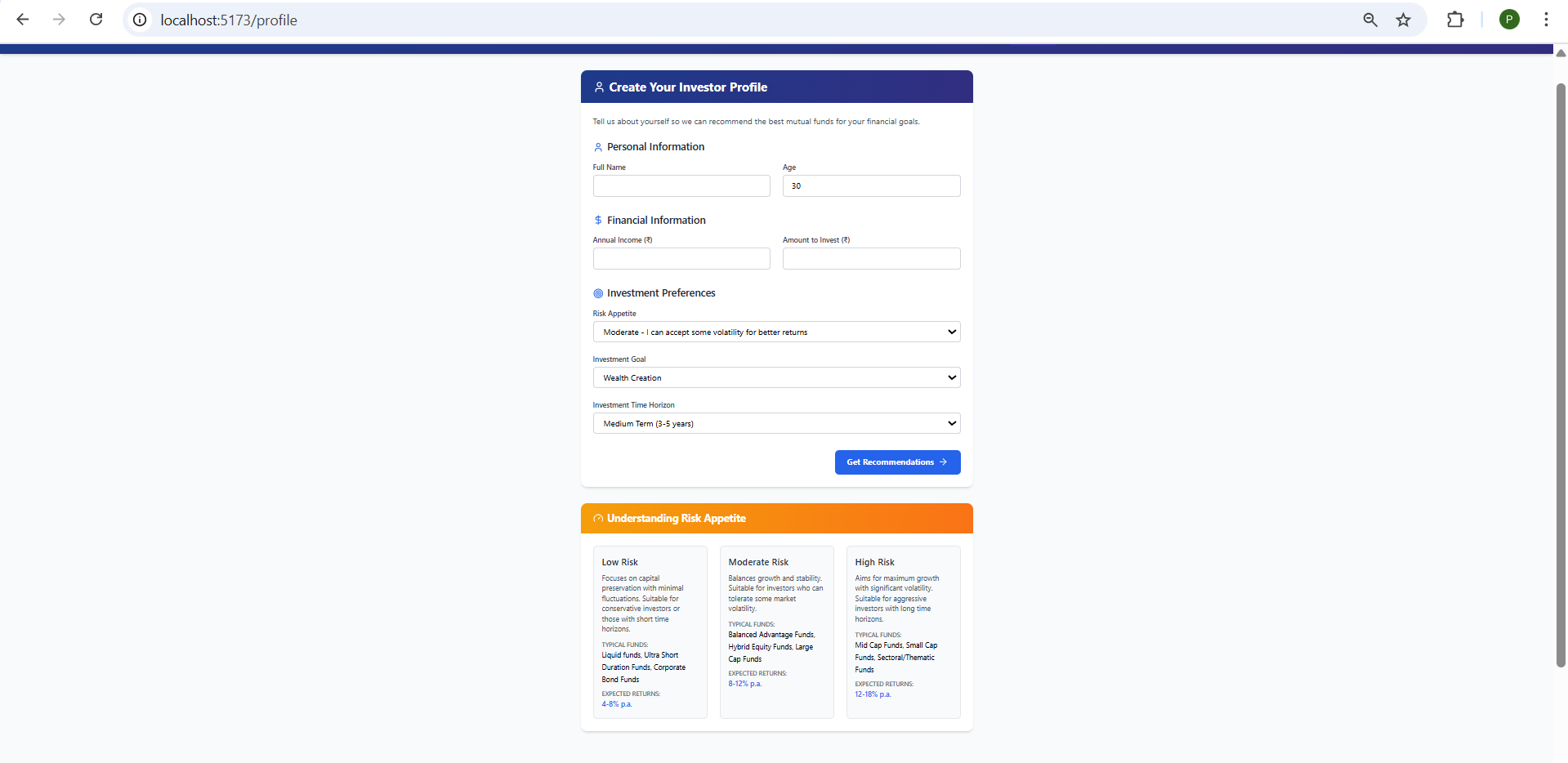
Investor data
-
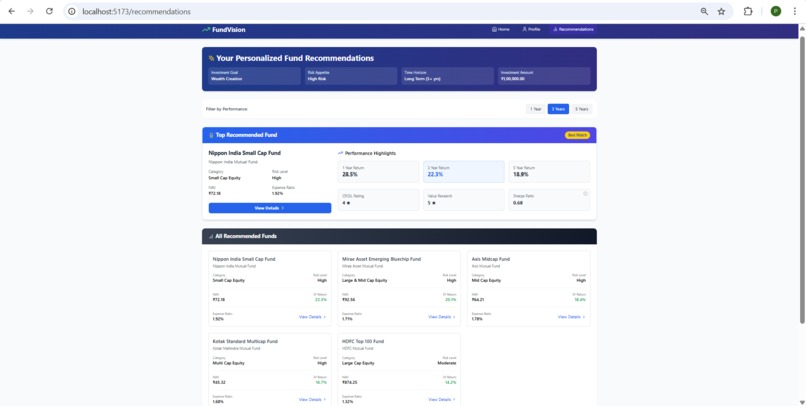
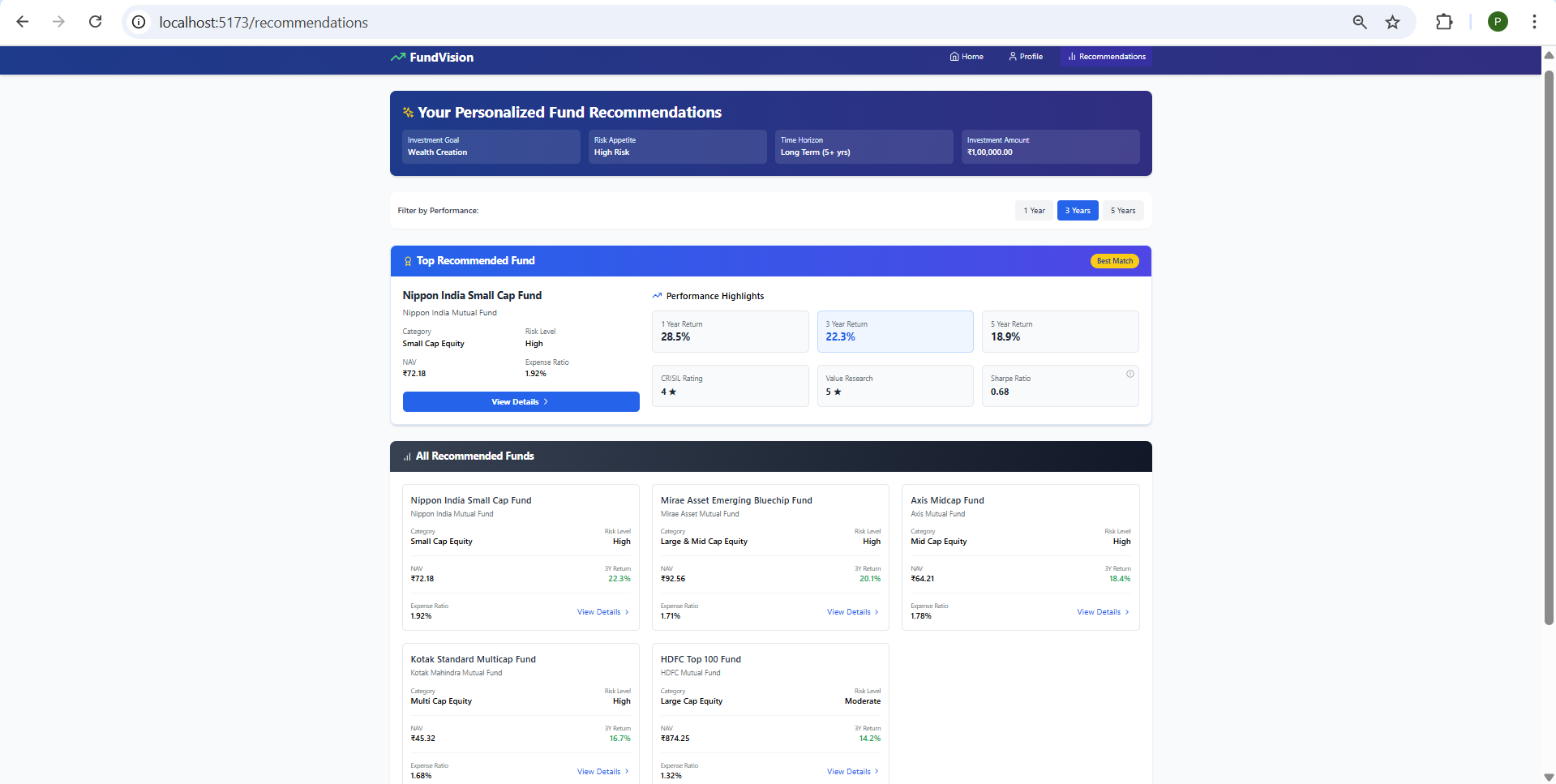
Fund Recommendations
-
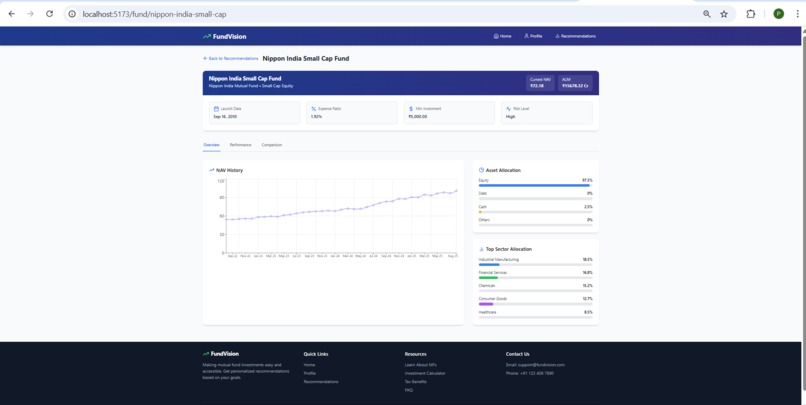
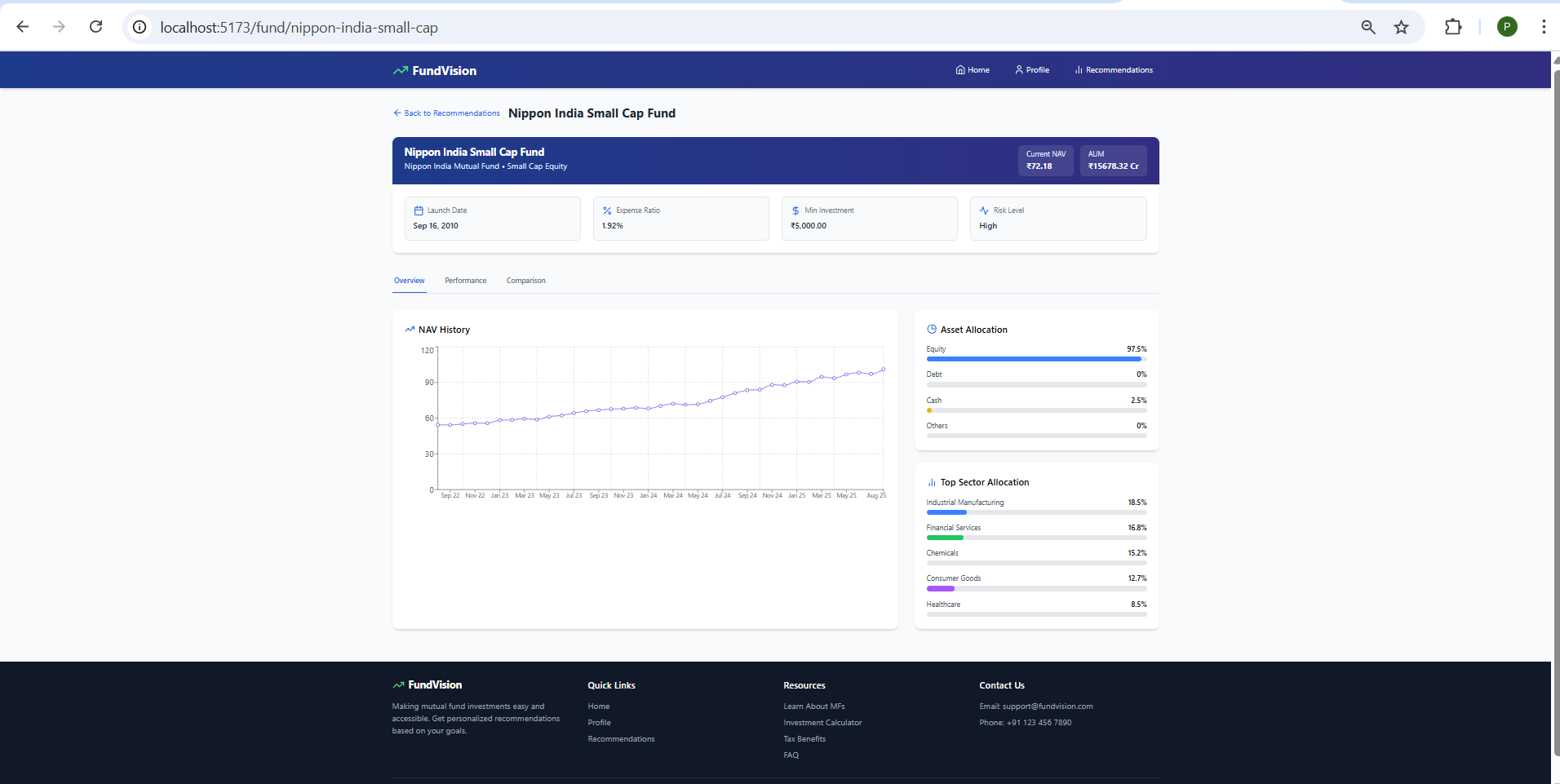
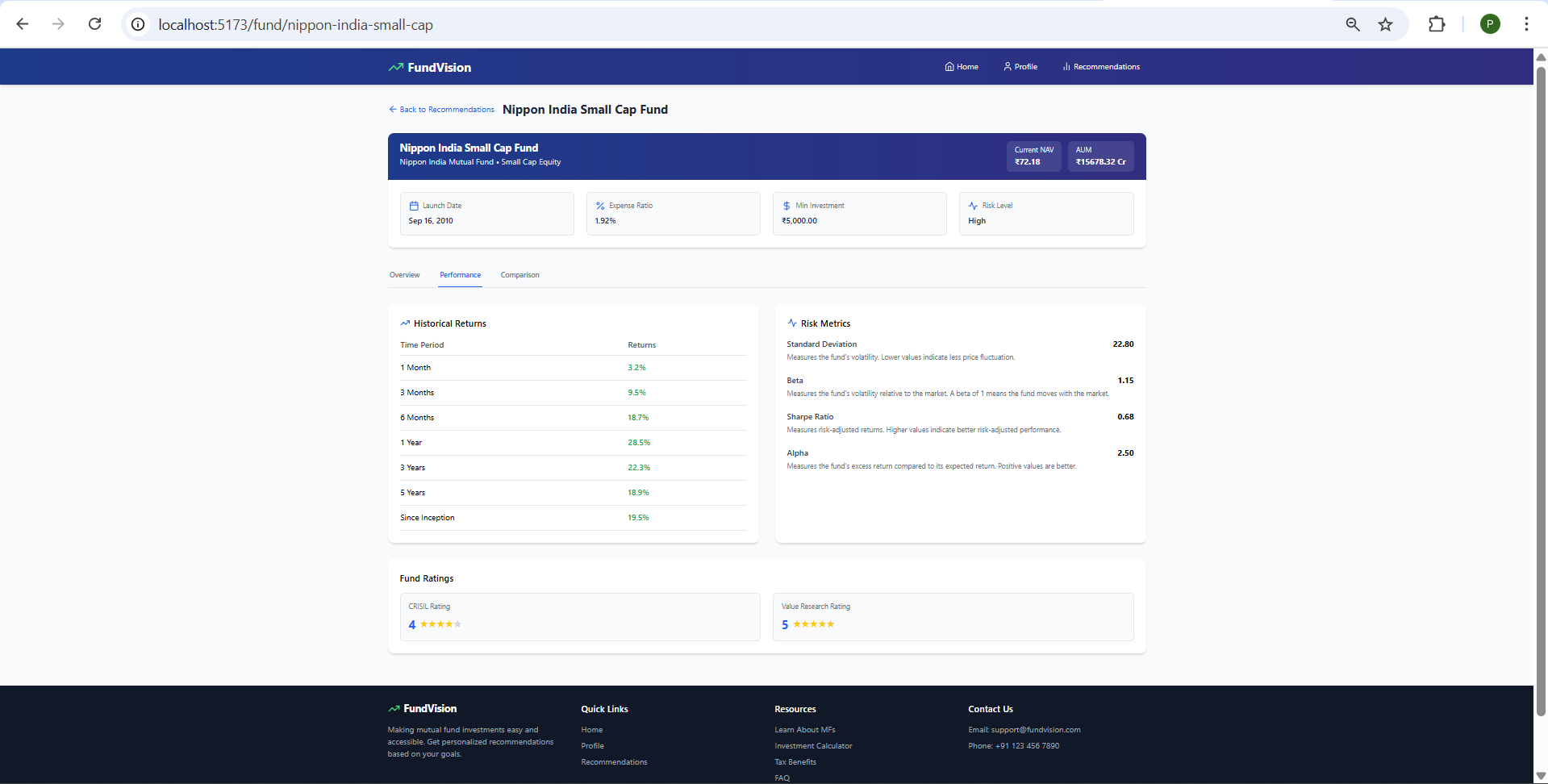
Mutual Fund details including NAV history, returns, risk level and sector allocation
-
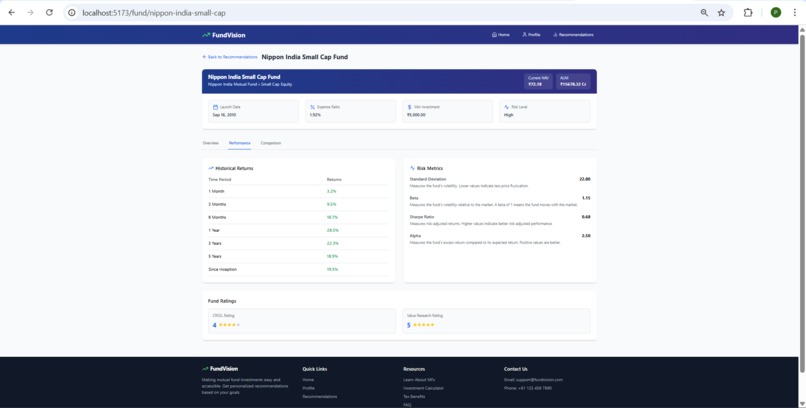
Shows Historial returns from fund inception to last month
-
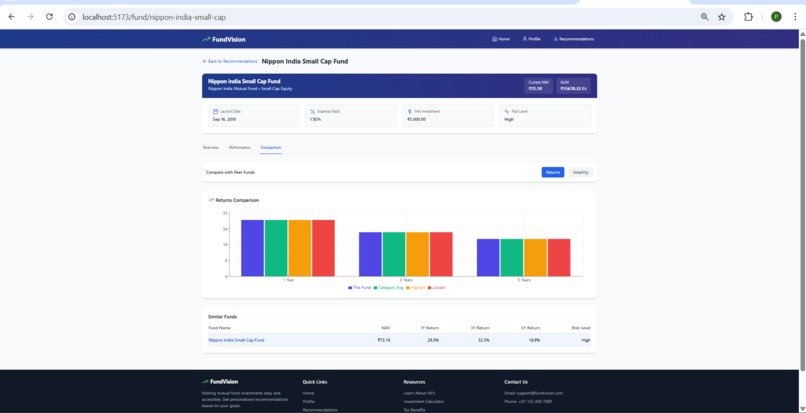
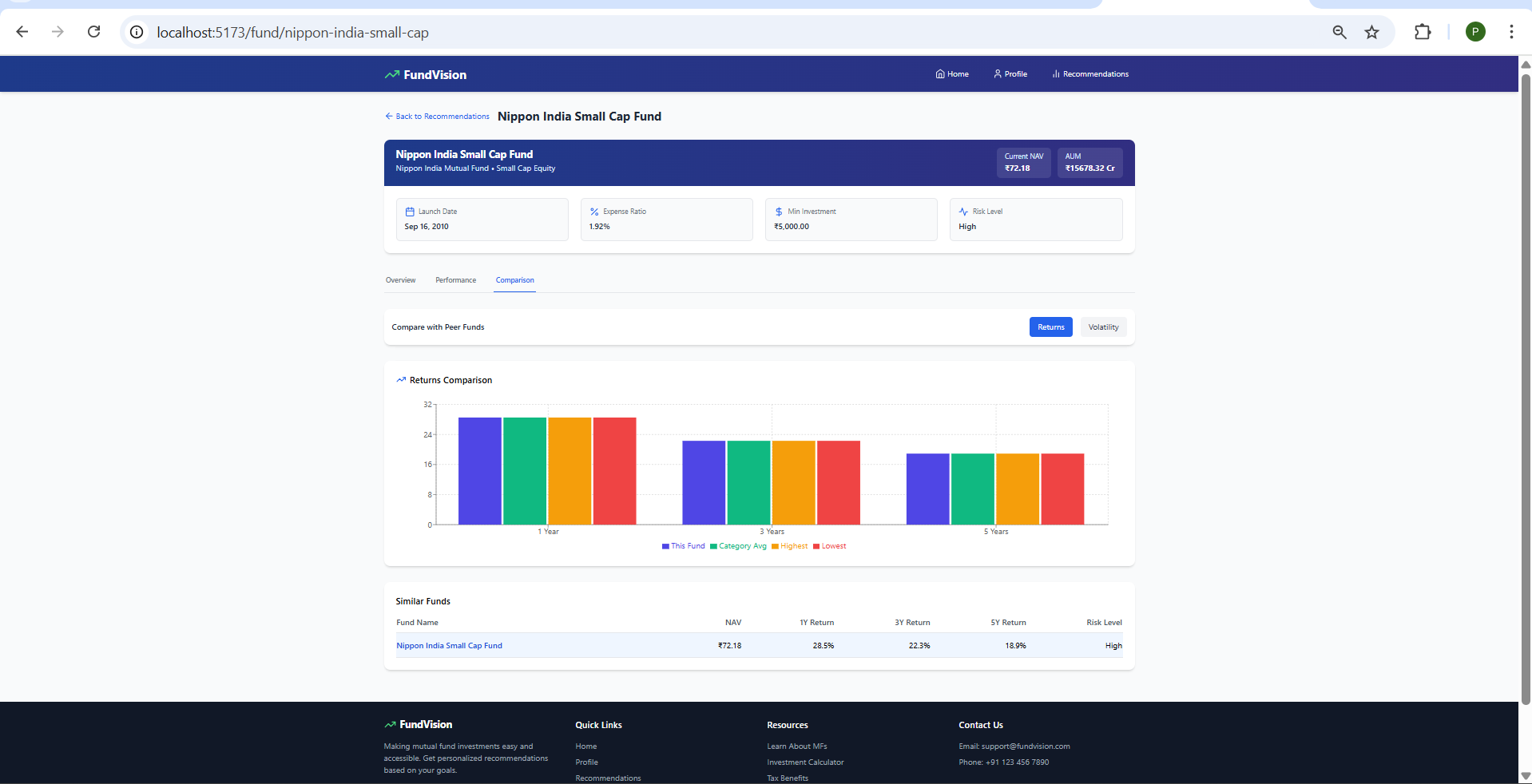
Funds Comparision in the Category based on Returns and Volatality
-
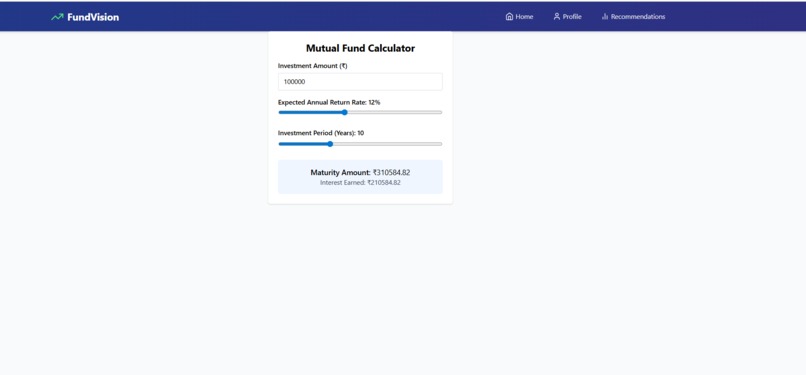
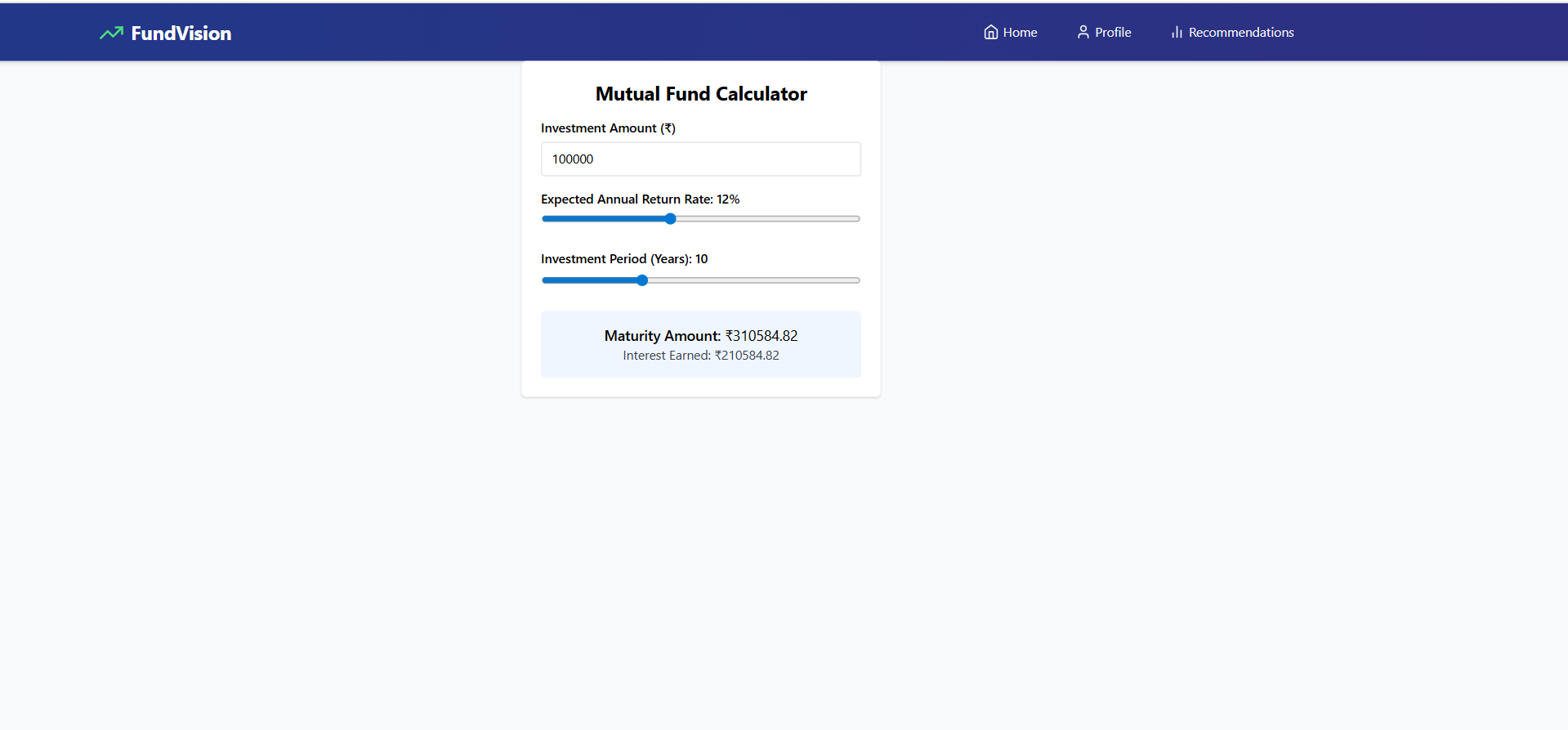
Mutual Funds Investment Calculator with built in calculate feature
-
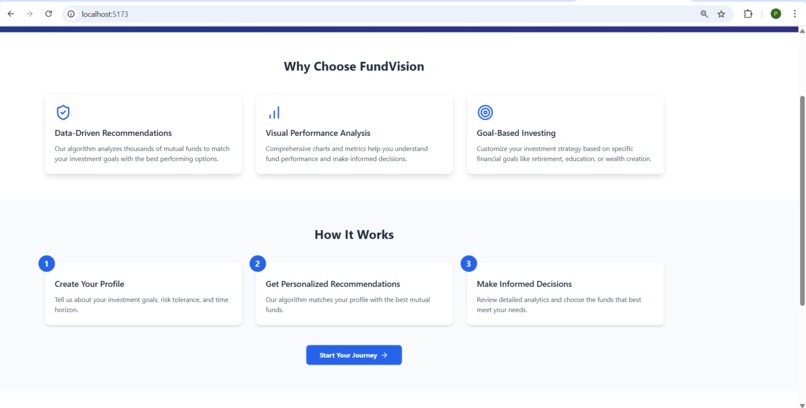
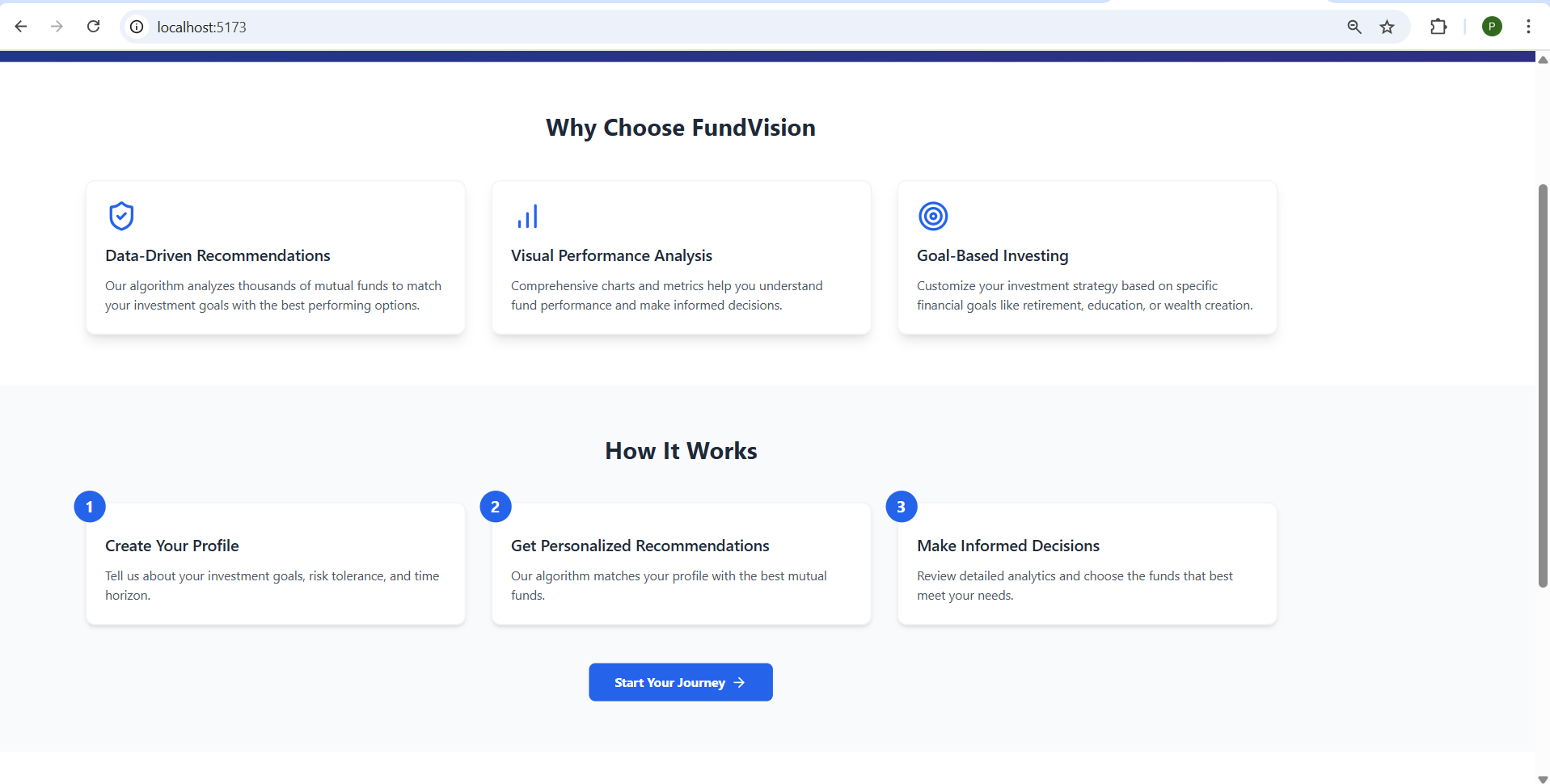
Description of our website
Inspiration
- Identified the lack of intelligent tools for fund performance tracking and sustainability analysis.
- Recognized the rising importance of ESG factors and circular economy metrics in investment decisions.
- Wanted to bridge AI/ML with real-world financial and environmental data.
- Aspired to build a unified dashboard combining analytics, prediction, and visual insights.
- Motivated by the potential of creating impact-driven solutions in the clean-tech and fintech domains.
What it does
- Tracks and visualizes fund performance through an interactive, real-time dashboard.
- Predicts future trends using machine learning models trained on historical data.
- Integrates degradation metrics for sustainability-linked funds.
- Provides circular economy insights for cleaner investment strategies.
- Offers a seamless experience using a scalable backend, smart UI, and API-driven interactions.
How we built it
- Developed backend services using Spring Boot and structured RESTful APIs.
- Designed the frontend using React.js with responsive components and data charts.
- Trained ML models in Python using Scikit-learn for fund prediction tasks.
- Connected the ML layer to the backend through REST APIs for prediction integration.
- Used MySQL for structured data storage and GitHub for collaboration and version control.
Challenges we ran into
- Data cleaning and normalization across inconsistent datasets took significant time.
- Integrating Python ML code with the Java backend required cross-language coordination.
- Creating a performant and user-friendly dashboard with real-time data was technically demanding.
- Ensuring consistent API communication between backend and frontend during frequent updates.
- Managing time efficiently alongside academic schedules and team coordination.
Accomplishments that we're proud of
- Built a complete, end-to-end platform from scratch with real functionality.
- Successfully integrated ML models into a production-ready backend.
- Developed a responsive and visually appealing dashboard for users.
- Maintained clean, modular code across backend, frontend, and ML modules.
- Aligned the platform with real-world sustainability goals and intelligent fund tracking.
What we learned
- Full-stack development using Spring Boot, React, and REST APIs.
- Building, training, and integrating ML models using Python and Scikit-learn.
- Designing scalable, secure, and modular software architectures.
- Handling real-world data preprocessing and performance tuning.
- Effective team collaboration using Git, GitHub, and project planning tools.
What's next for FundVision – Smart Financial Health Dashboard
- Add user authentication, roles, and session-based access control.
- Integrate real-time financial APIs and expand ML model complexity.
- Deploy the entire platform on a cloud service like AWS or GCP.
- Introduce notification features and data export capabilities.
- Conduct user testing and refine the UI/UX for better usability.

Log in or sign up for Devpost to join the conversation.