About the Project
Inspiration
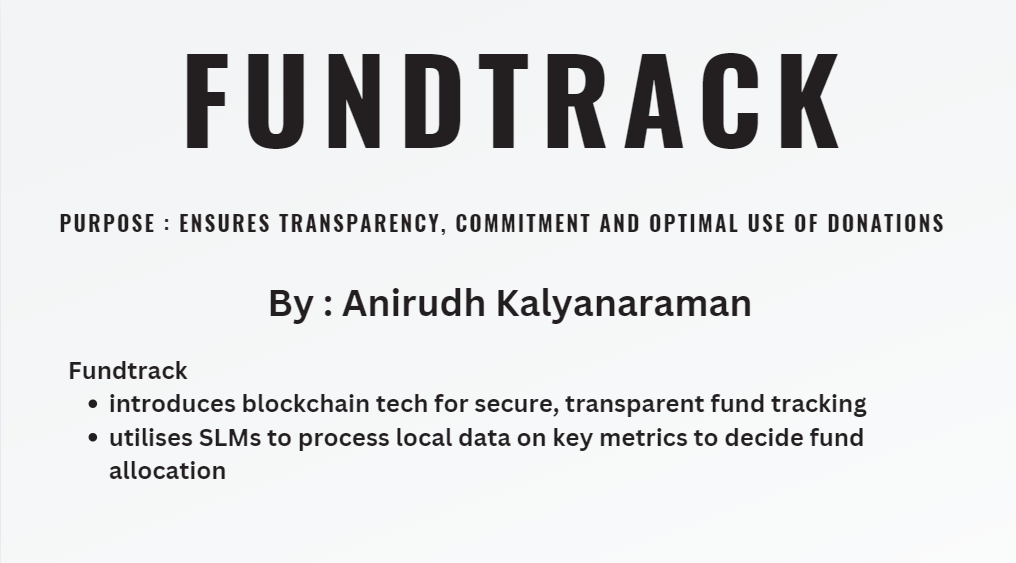
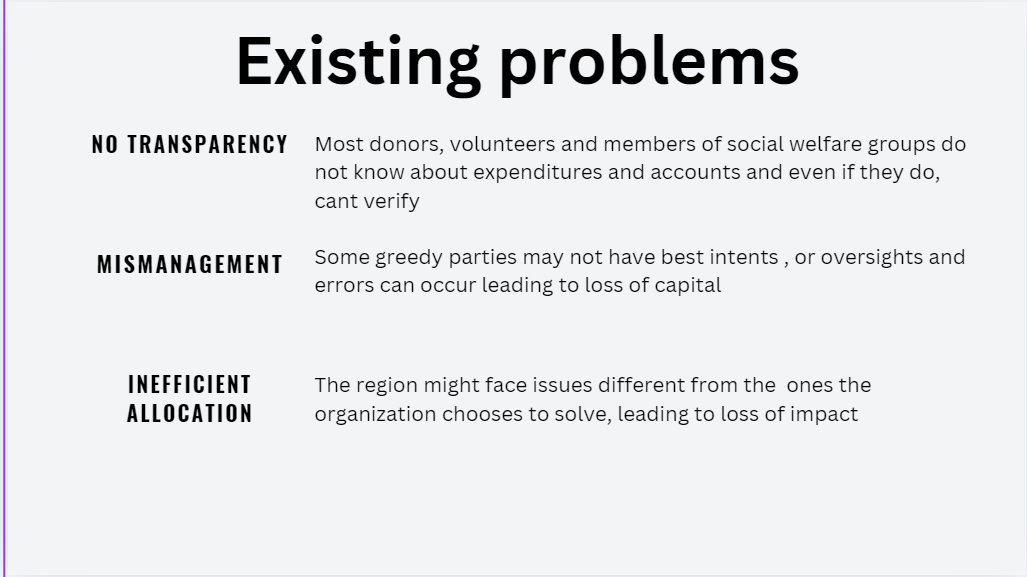
The idea for FundTrack was inspired by the need for greater transparency and accountability in how funds are allocated and spent by nonprofit and social welfare organizations. Many organizations struggle with tracking donations effectively, leading to mistrust among donors and inefficiencies in fund usage. This problem, combined with the growing global challenges in socio-economic development, motivated me to create a solution that leverages blockchain and AI to drive transparent and efficient fund allocation.
What I Learned
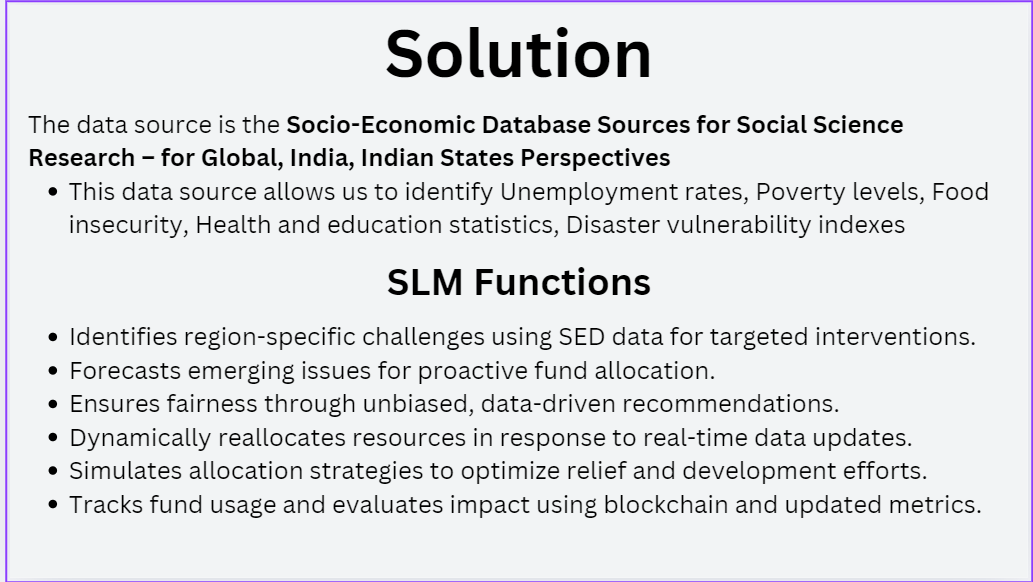
Through this project, I gained a deeper understanding of blockchain technology, particularly Ethereum's smart contracts, and its application in real-world scenarios. I also expanded my knowledge of AI and machine learning by using these technologies to analyze socio-economic data for optimized resource distribution. Furthermore, I enhanced my skills in backend development, using Go and containerized architectures, and learned how to integrate these technologies seamlessly for a scalable and adaptable solution.
How I Will Build the Project
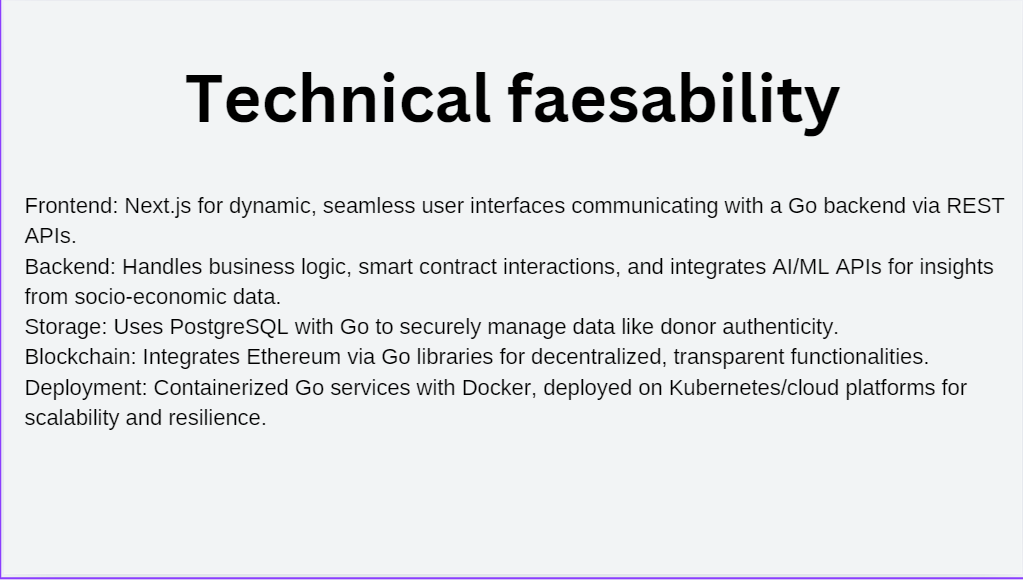
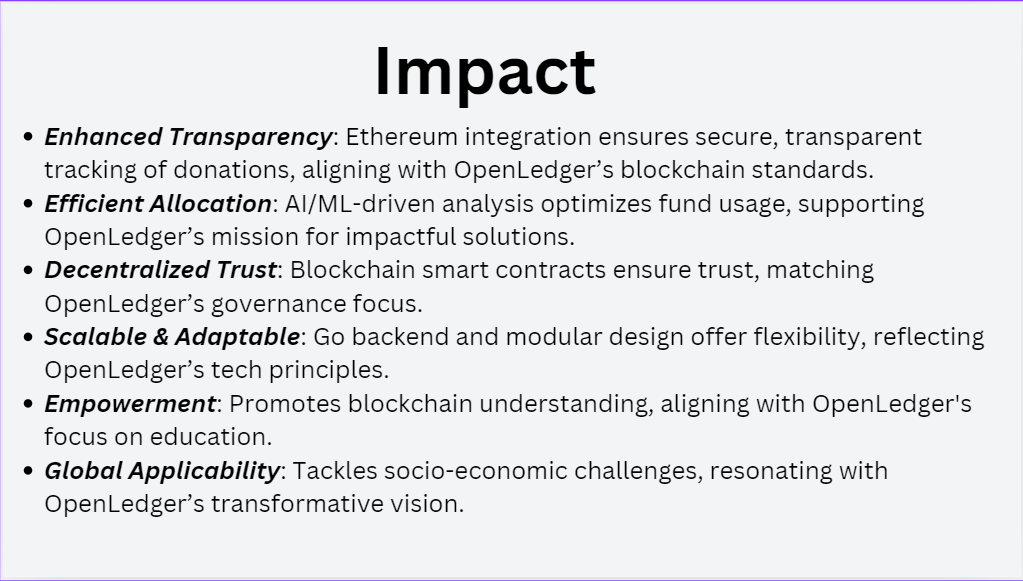
The solution will be built using Ethereum for secure and transparent tracking of donations, ensuring that all transactions are immutable and verifiable. I will integrate AI/ML algorithms to analyze socio-economic data and optimize the allocation of funds to the most pressing areas. The backend will be developed using Go, allowing for flexibility and scalability. The solution will be designed to be modular, with containerized components that can easily be adapted to different environments. A focus will be placed on ensuring that the architecture can scale globally, addressing issues in diverse socio-economic contexts.
Challenges Faced
- Blockchain Complexity: Integrating Ethereum and smart contracts into the project presented initial challenges in understanding the intricacies of gas fees, transaction limits, and ensuring a smooth interaction between blockchain and traditional systems.
- AI/ML Integration: Building AI models that could effectively process and analyze socio-economic data for resource optimization required significant data preparation and fine-tuning of algorithms for accuracy.
- Scalability: Ensuring that the solution could scale to handle large amounts of data and transactions across different regions was a technical challenge, which I overcame by adopting a modular and containerized approach.
- User Adoption: Educating potential users, including nonprofit organizations and donors, about the benefits of blockchain and AI in this context was a challenge, requiring clear communication of the transparency and efficiency offered by the solution.
Despite these challenges, the project will successfully demonstrate how blockchain and AI can be harnessed to create a transparent, efficient, and scalable solution for social impact.
Built With
- docker
- ethereum
- go
- kubernetes
- nextjs
- solidity
- tailwind
- tailwindcss

Log in or sign up for Devpost to join the conversation.