-
-

Starting of Website
-
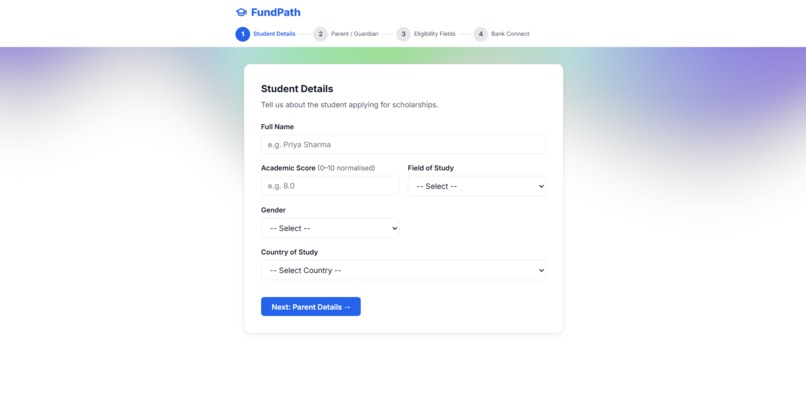
Entering Student Details
-
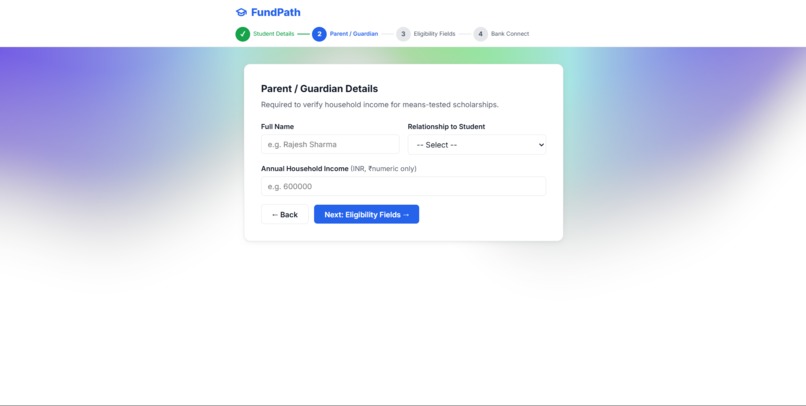
Enter Parents/Guardians Details
-
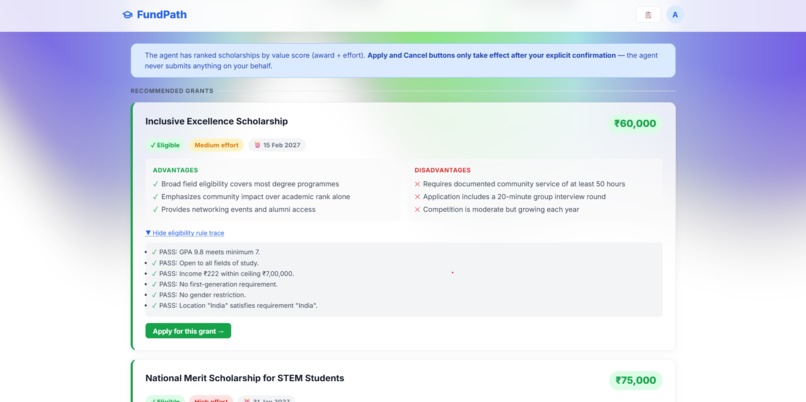
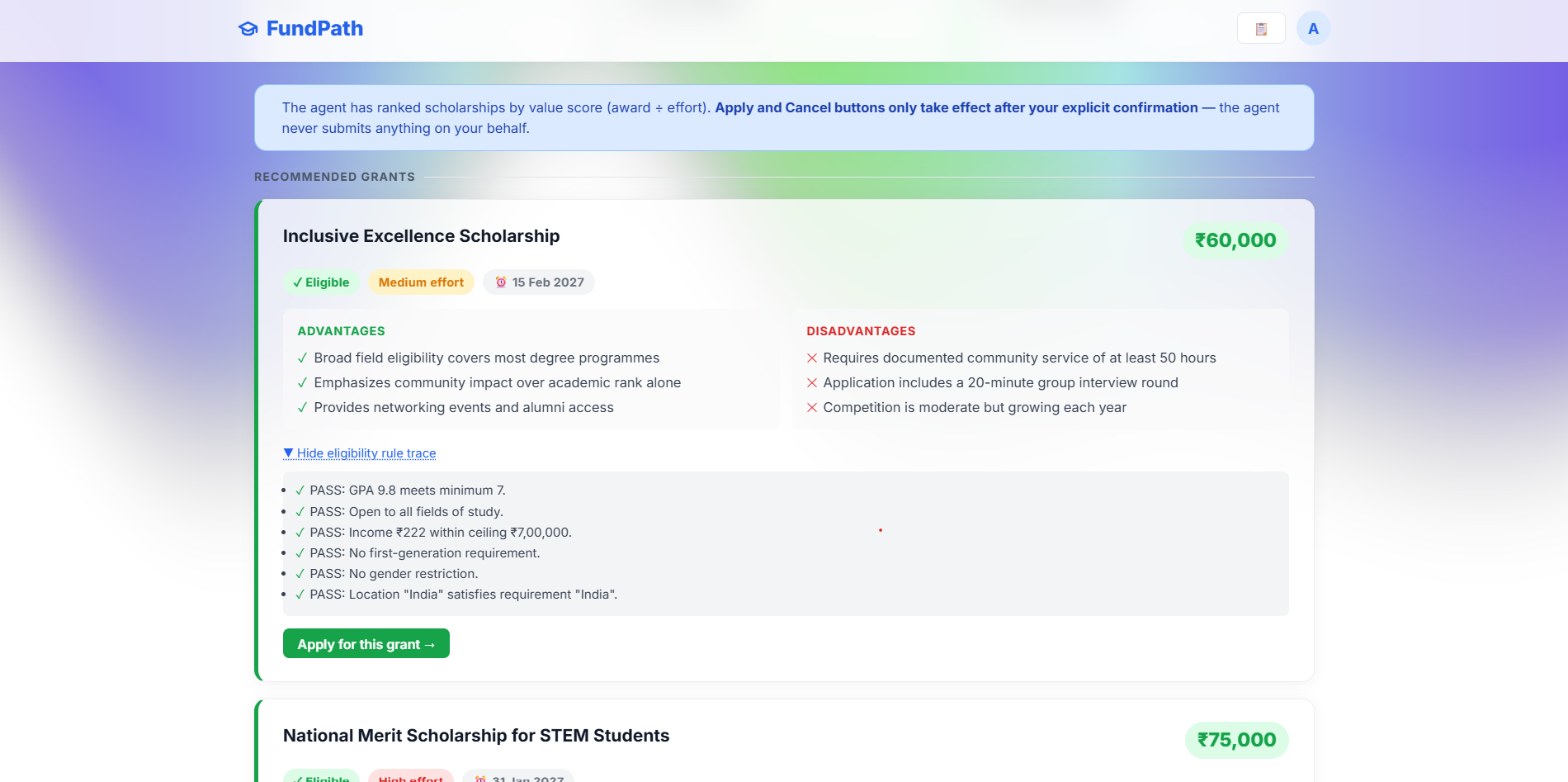
Scholarship Details
-
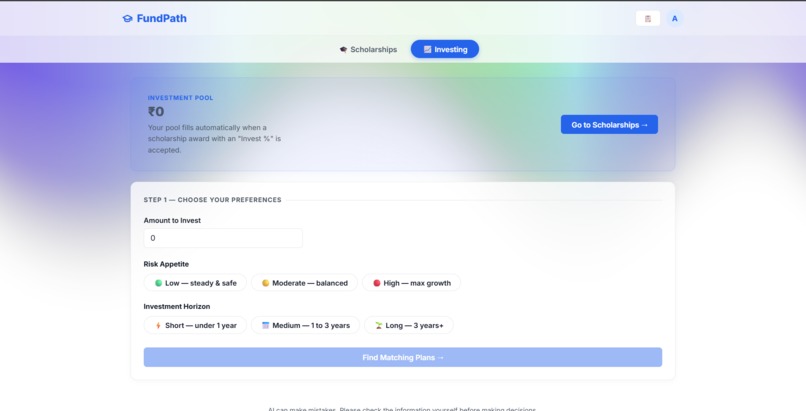
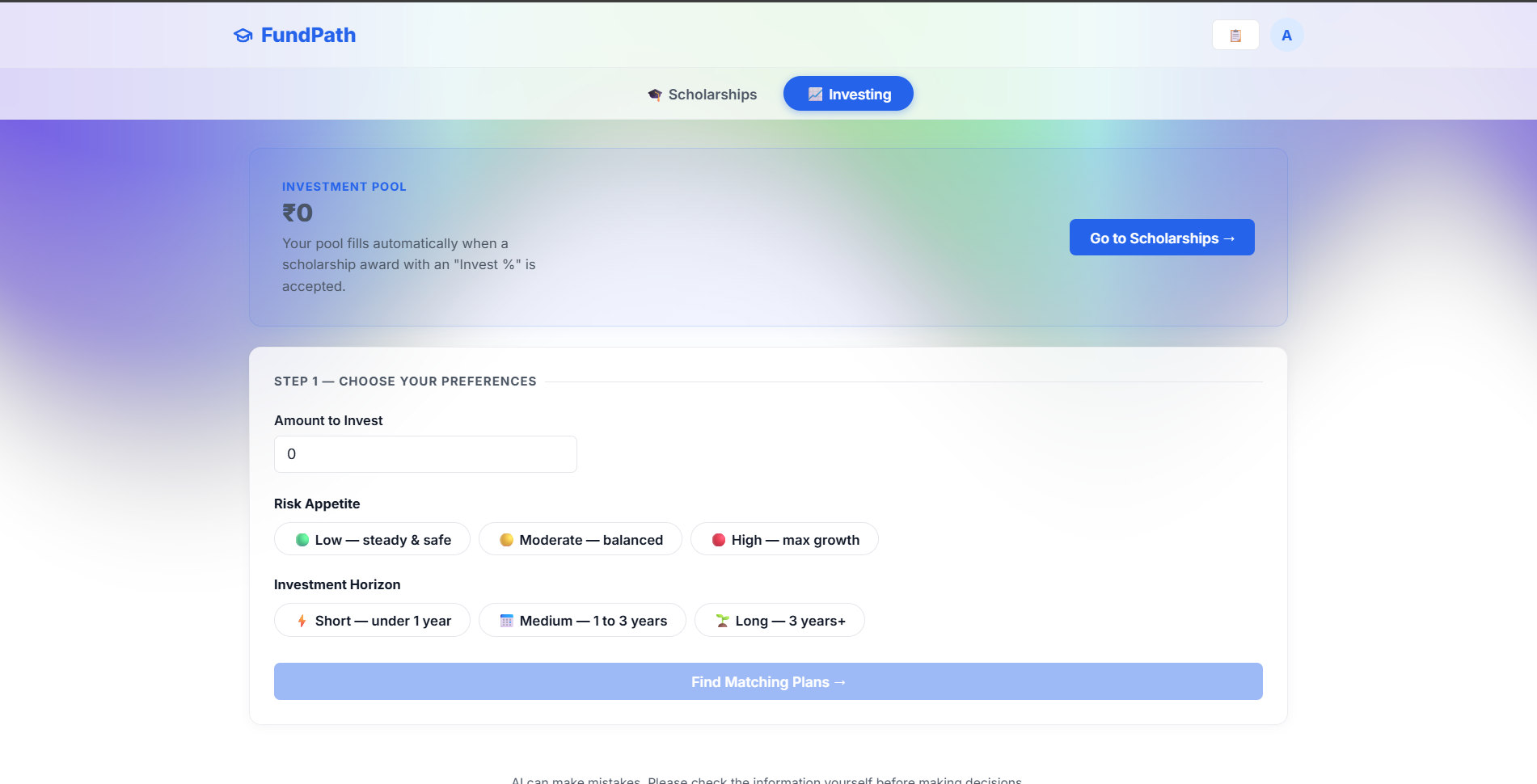
Investment
-
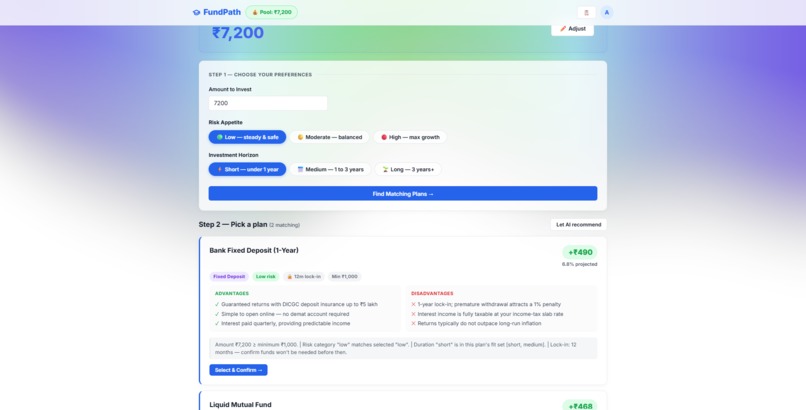
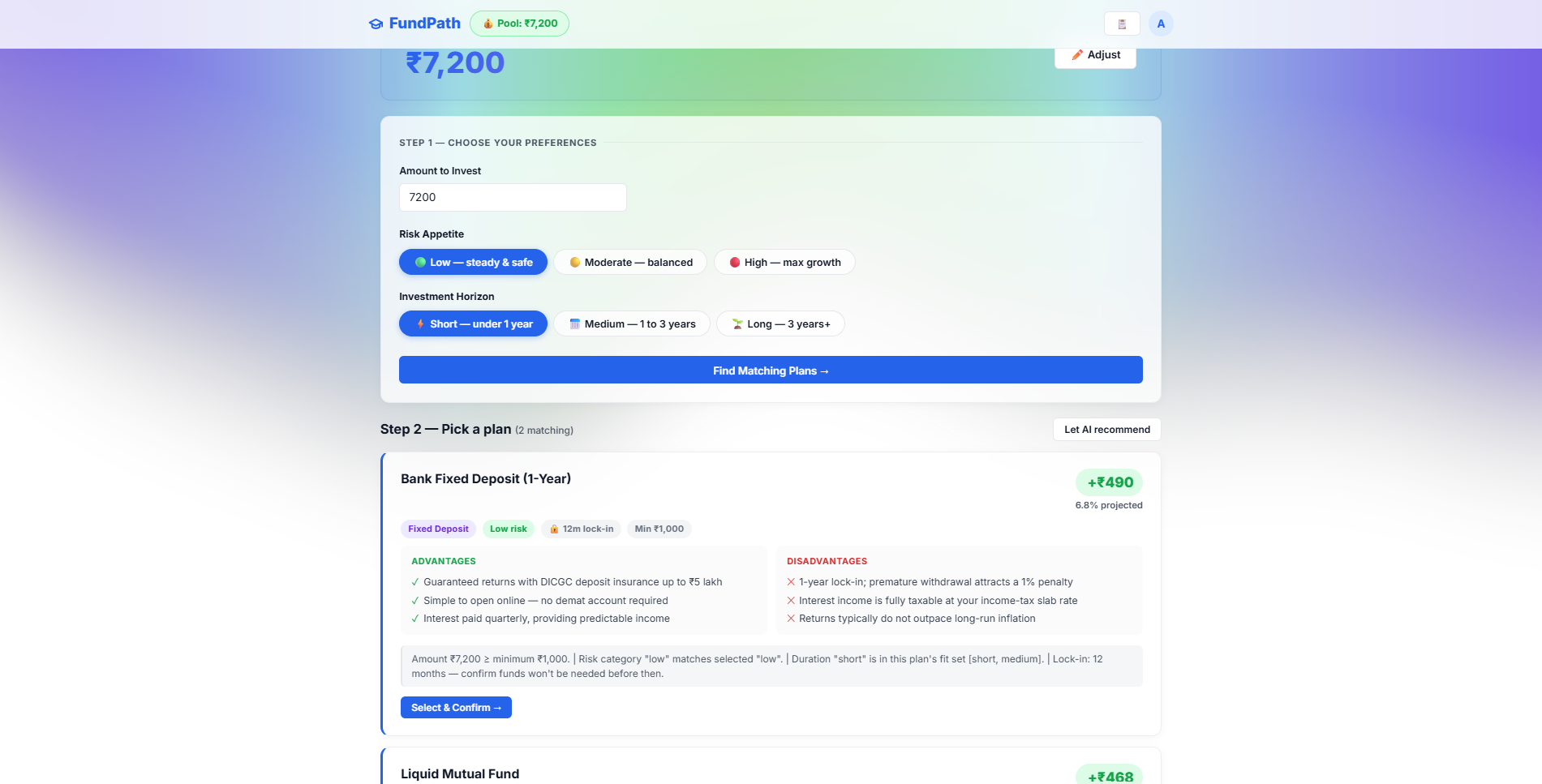
Investment Details according to the scholarship

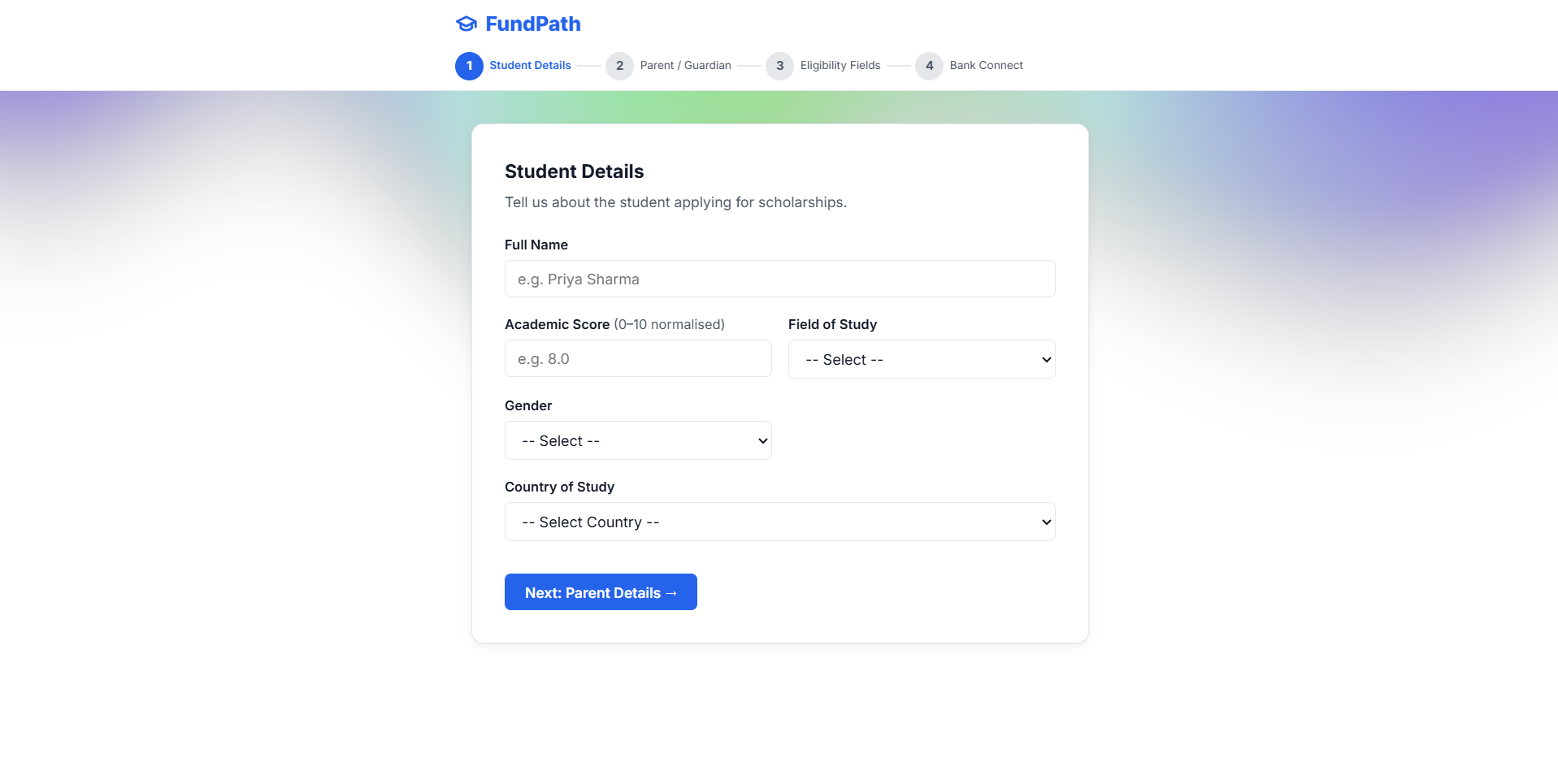
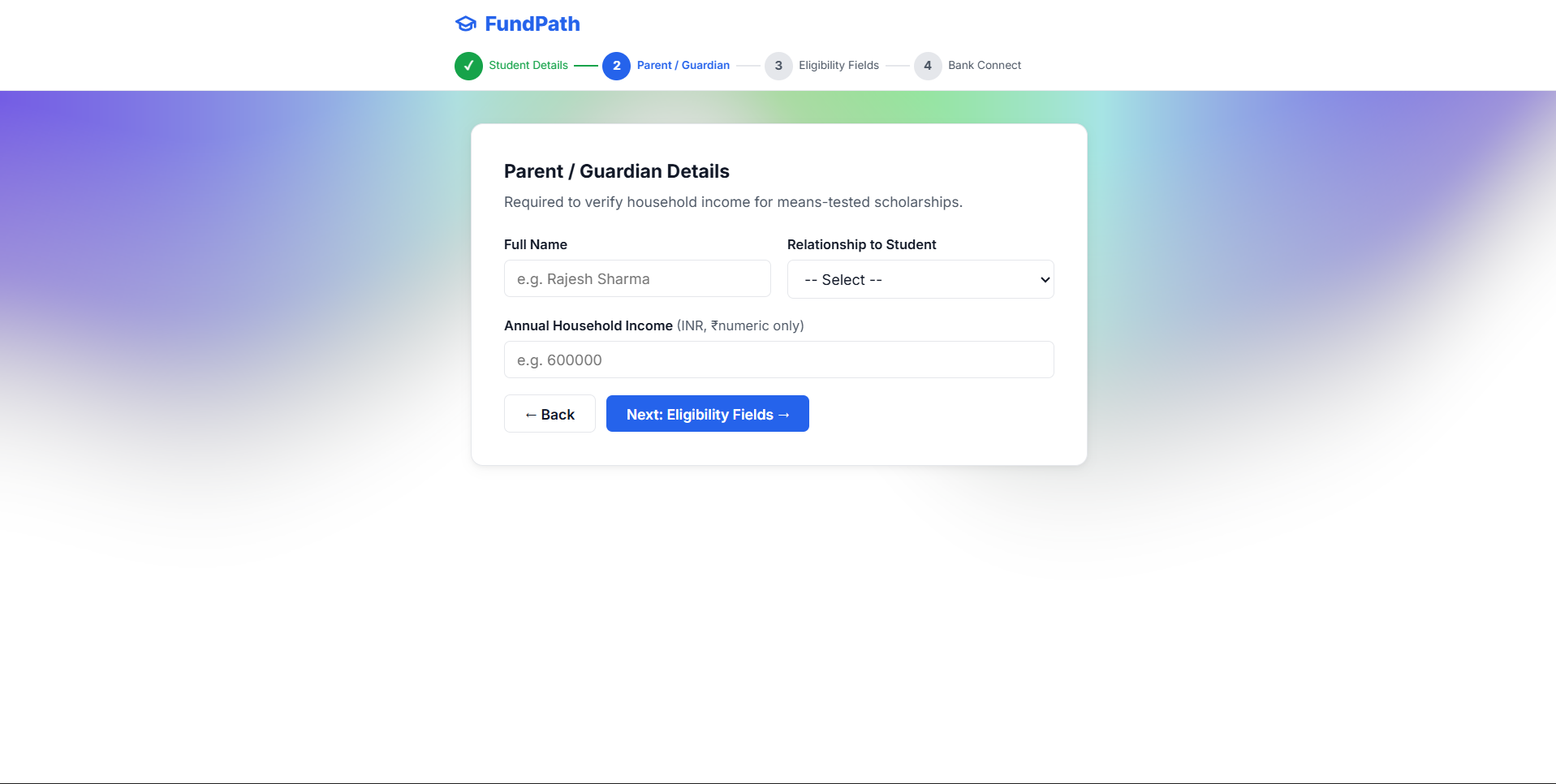
Inspiration For many students, the financial journey doesn't end when they win a scholarship. It's actually just beginning. I noticed that while there are tools to help students find money, there is a massive gap in helping them manage, allocate, and grow that money responsibly. I wanted to build a platform that bridges the gap between educational funding and long-term financial literacy, empowering families to turn short-term scholarship wins into long-term wealth.
What it does FundPath is a dual-engine financial companion for students:
The Scholarship Engine: It takes a student's profile and uses AI to match them with targeted scholarships. Instead of just listing them, the AI ranks them by a calculated Value Score, guiding the family through a strict 3-step application checklist.
The Investment Engine: Once a scholarship is secured, the student allocates the funds between loan repayment, an emergency buffer and an investment pool. The app then uses an AI agent to recommend personalized investment plans based on the student's risk appetite.
Crucially, FundPath operates on a strict Human-in-the-Loop philosophy. The AI searches and recommends, but it never moves money on its own. Every major action requires explicit human confirmation, recorded transparently in a global Decision Log.
How I built it Frontend: I built a blazing-fast Single Page Application (SPA) using Vanilla JavaScript, HTML5, and CSS3. I designed a premium "frosted glass" UI layered over a custom WebGL2 Aurora background. Backend: A Node.js and Express server handles the core business logic, routing, and simulated data persistence. AI Integration: I integrated the Groq API (llama-3.3-70b-versatile) to power the investment recommendation engine. Onboarding Integration: I built a simulated DigiLocker integration for Indian users to fetch verified government records instantly. To rank scholarships, our engine uses a custom algorithmic Value Score. Idefine the true value of a grant as:
ValueScore= AwardAmount / EstimatedEffortHours × CompetitionIndex This ensures students apply for high-yield opportunities rather than wasting time on low-probability micro-grants.
Challenges I ran into Our biggest challenge was AI trust and safety. When dealing with financial decisions, users are naturally skeptical of AI. I had to architect the entire application around "Confirm Gates." To solve this, I implemented a strict logging interceptor on our backend that captures the delta between AI suggestions and human actions.
Accomplishments that I am proud of The Decision Log: The transparency engine i built logs exactly what the AI recommended versus what the human actually chose, establishing total trust.
The Seamless Pipeline: I successfully merged two completely different user flows (applying for grants and investing capital) into one cohesive, logical journey.
The UI/UX: The combination of glassmorphism, step-by-step progress bars, and the animated WebGL background makes financial planning feel premium.
What I learned I learned that when building AI tools for finance, friction can actually be a feature. Adding explicit confirmation steps and bank notification reminders (rather than one-click automation) drastically increases user confidence. Technically, I also leveled up our skills in pure WebGL shader programming and managing complex global state without relying on heavy frontend frameworks.
What's next for FundPath Real Banking Integrations: Replacing our simulated bank notifications with real Open Banking APIs (like Plaid) to execute investment allocations.
Live Scholarship Scraping: Expanding our static dataset into a live web-scraping engine that constantly updates with new global grants.
Portfolio Tracking: Building out a third dashboard tab that tracks the long-term compound growth of the student's invested scholarship pool over their college career.
Built With
- artificial-intelligence
- css3
- education
- edufintech
- express.js
- fintech
- groq
- html5
- javascript
- llama-3
- node.js
- rest-api
- webgl

Log in or sign up for Devpost to join the conversation.