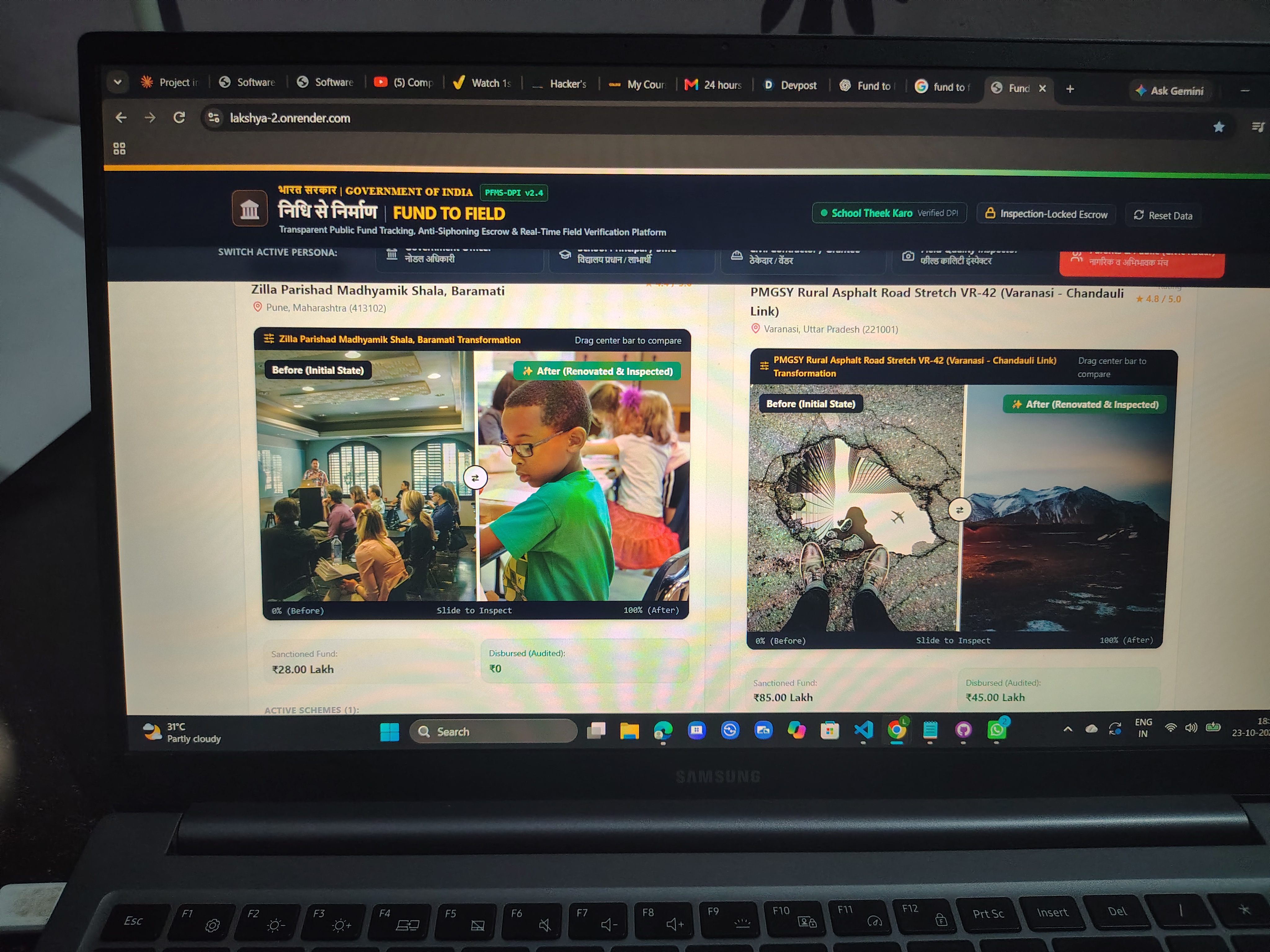
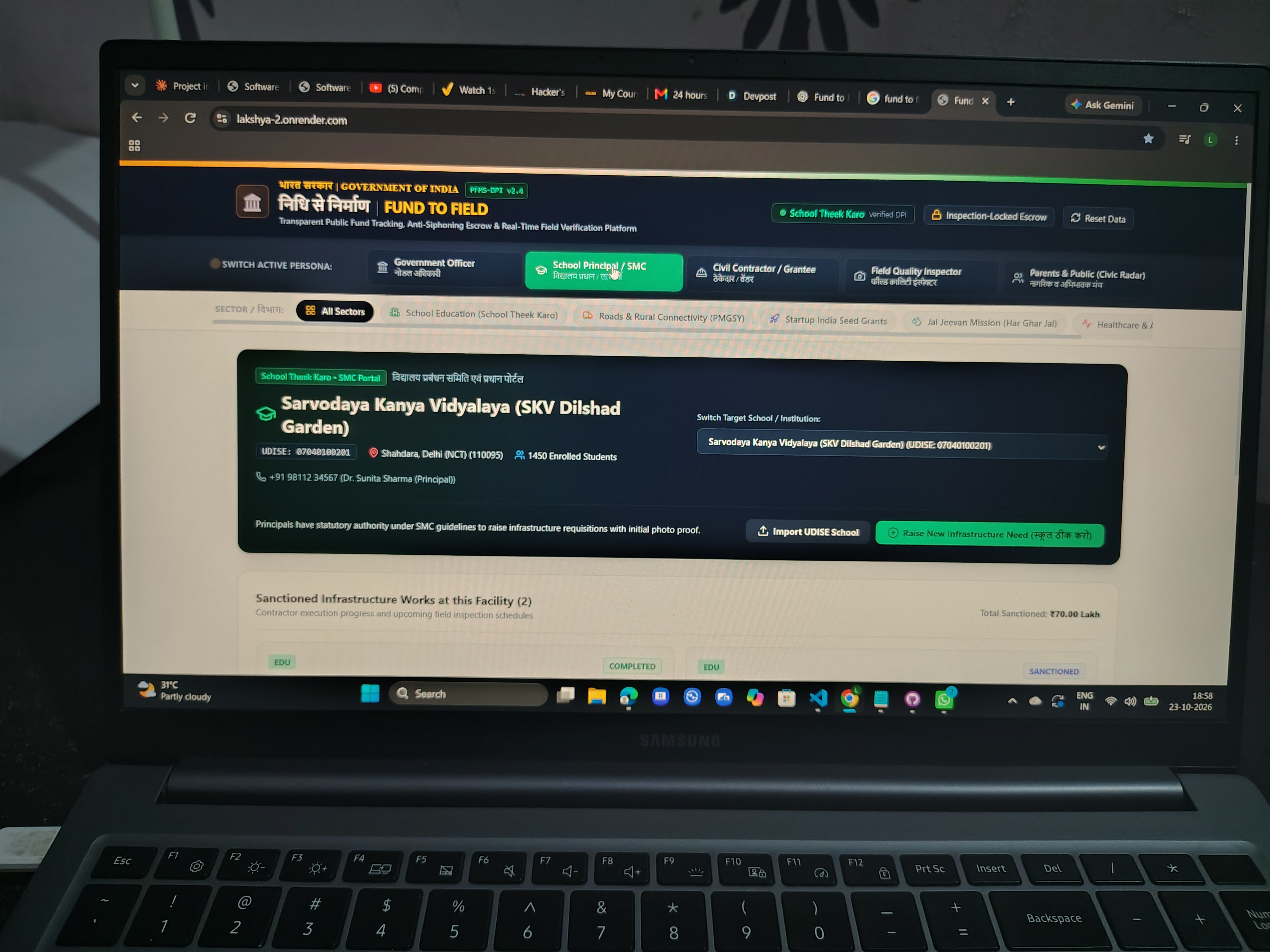
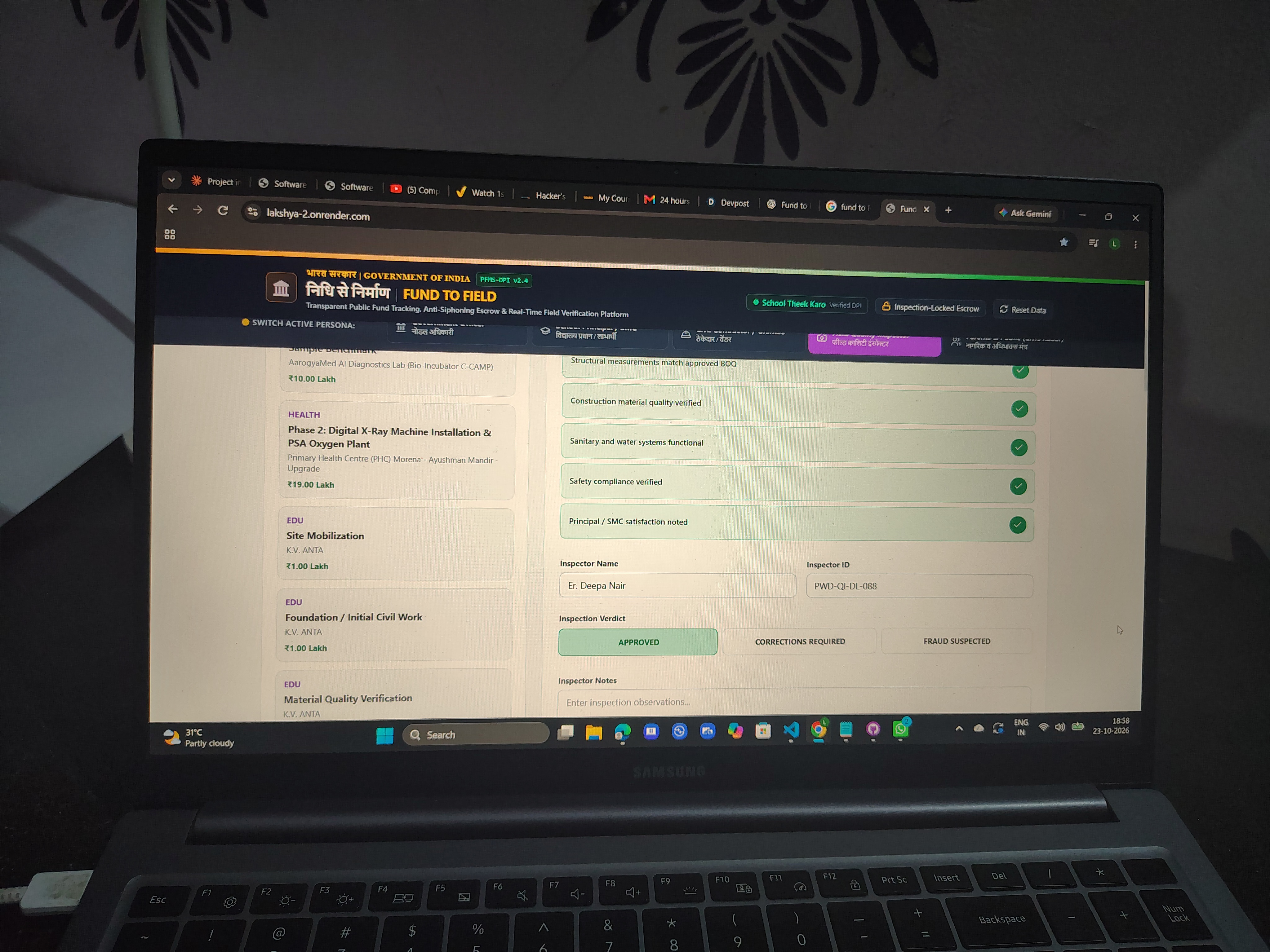
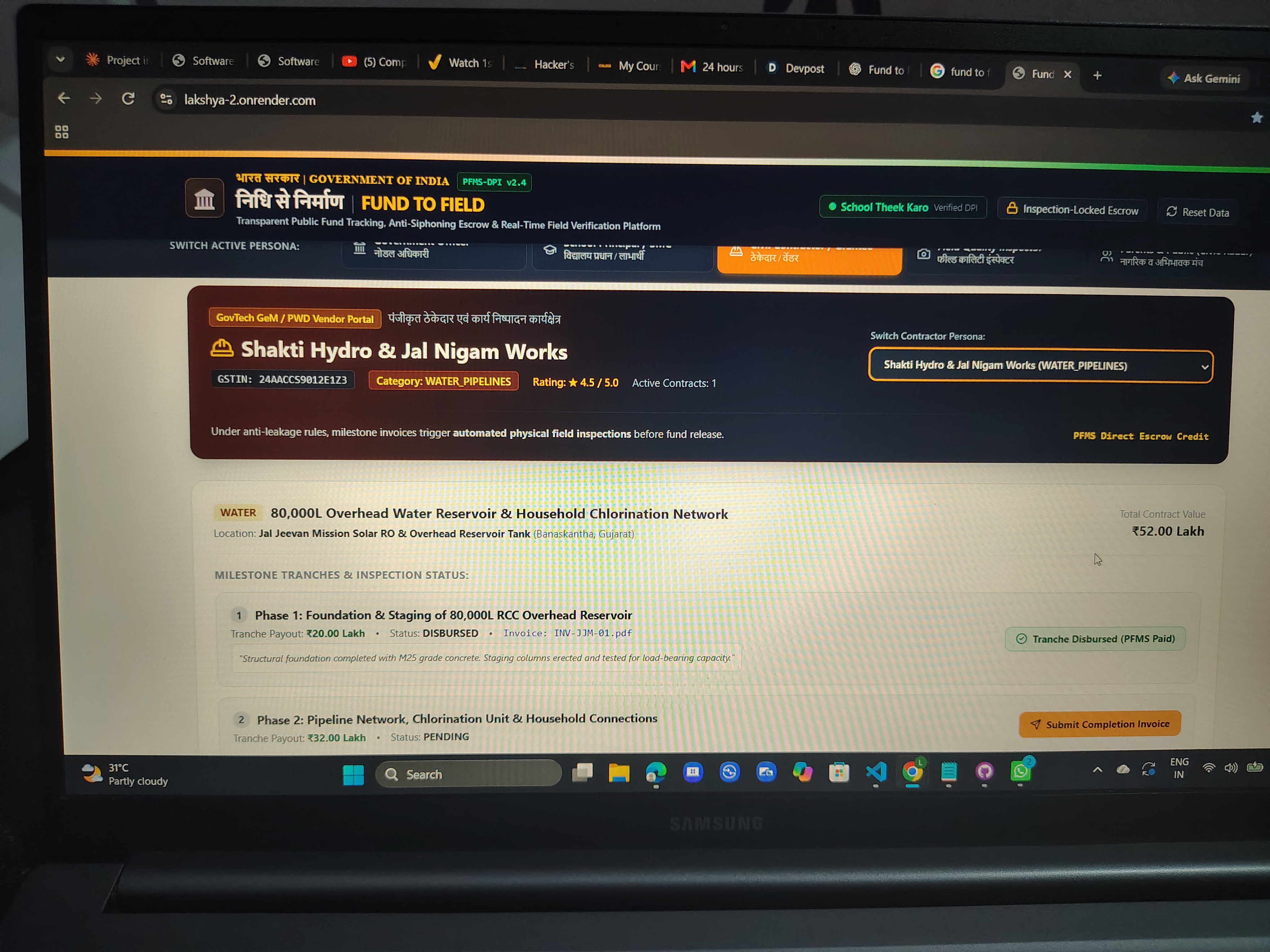
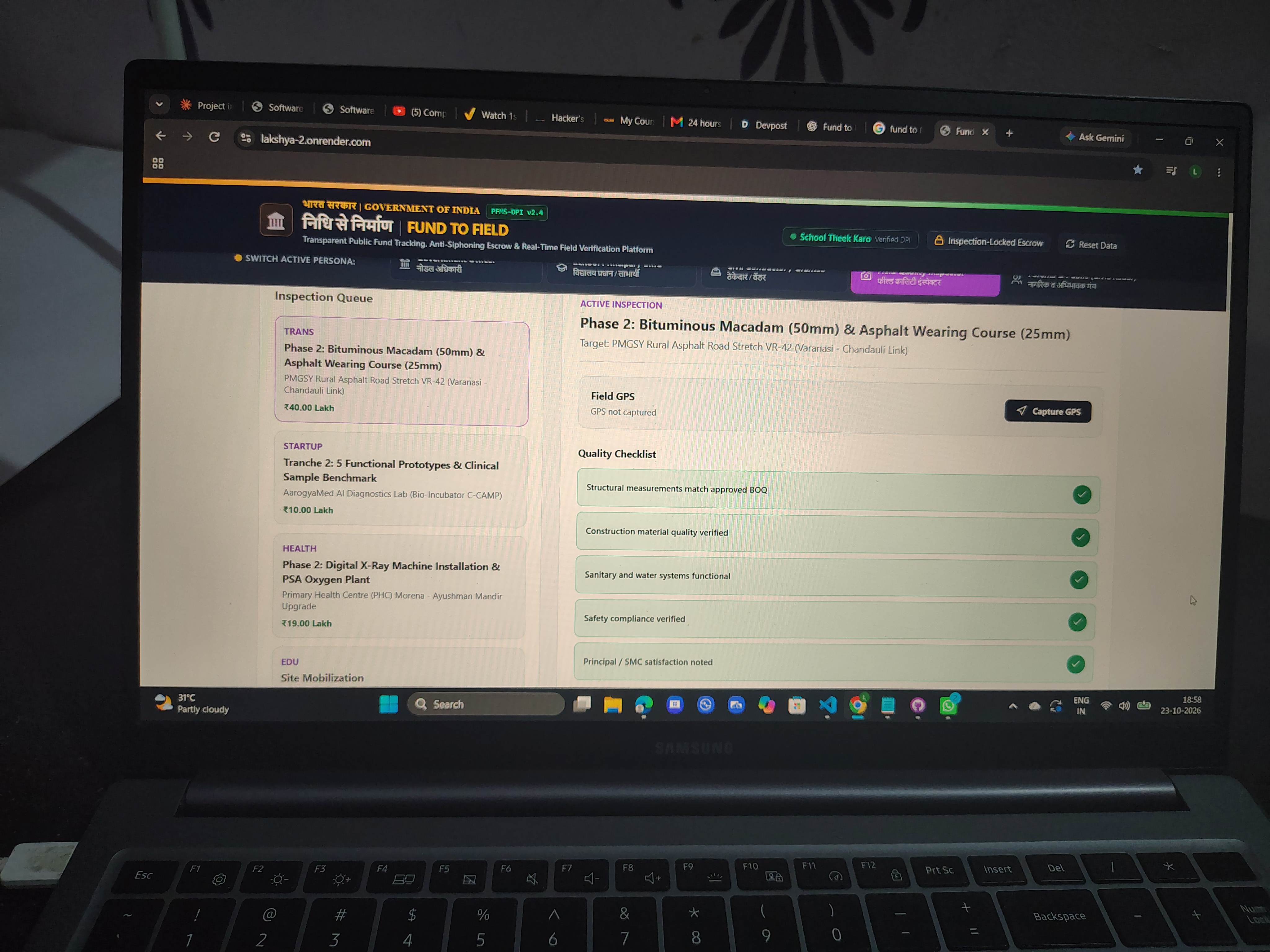
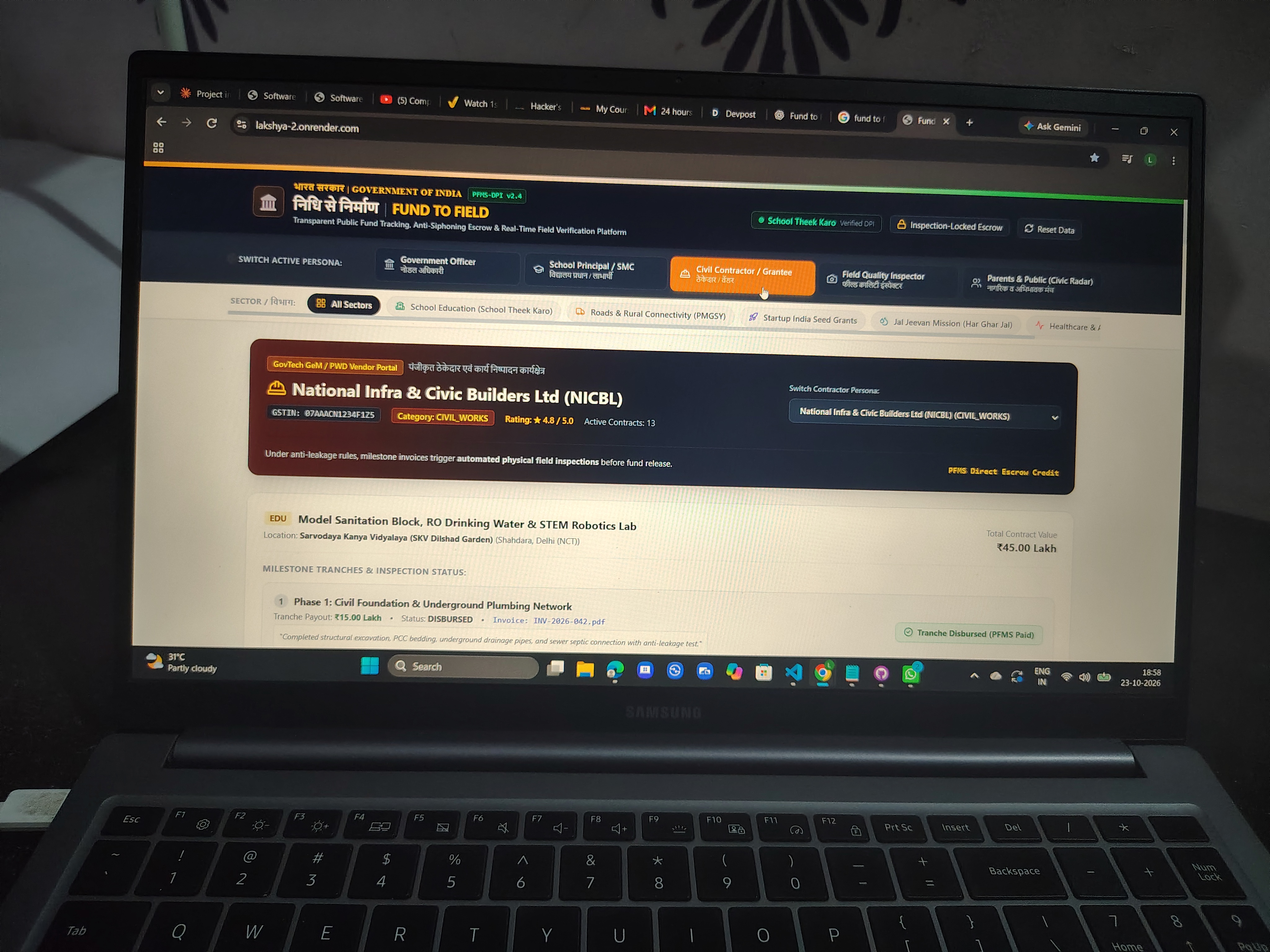
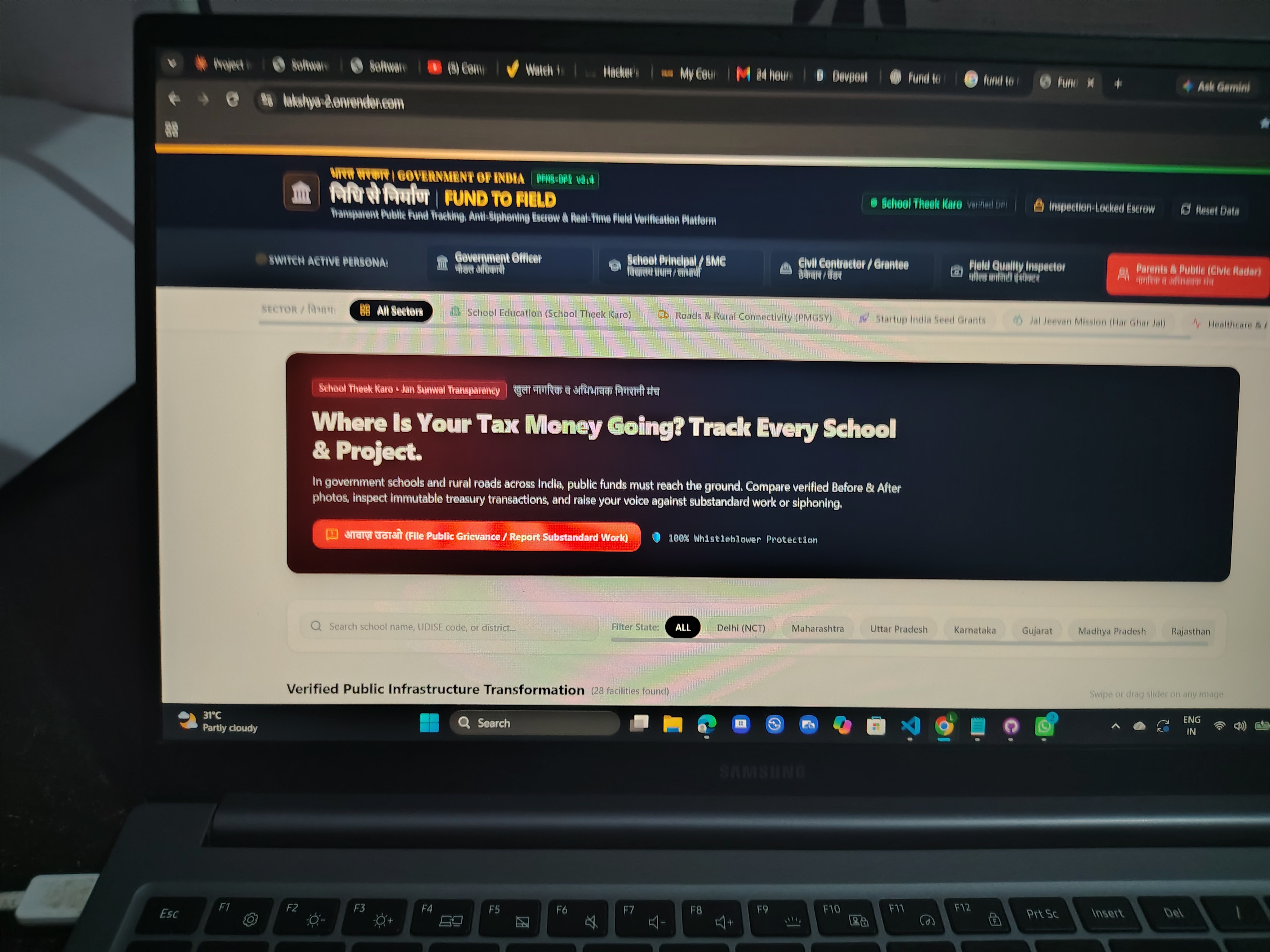
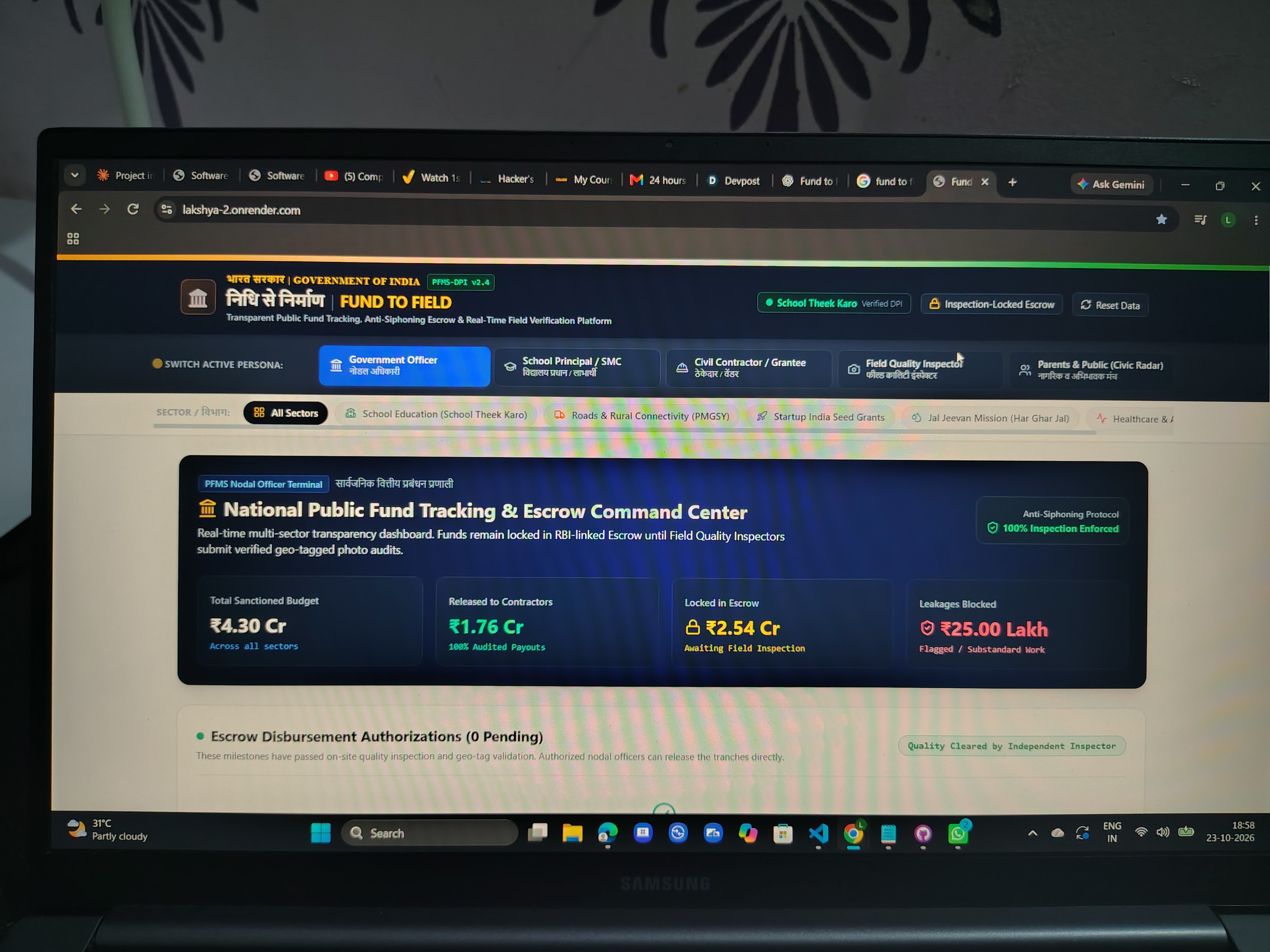
Inspiration -Government funds are allocated every year for public development, but tracking whether the money actually reaches the ground is difficult. We were inspired by this gap between fund allocation and real-world impact. We wanted to build a system that makes public funding more transparent, traceable, and accountable.
What it does-Fund to Field tracks government-funded projects from fund allocation to ground execution. It monitors sanctioned and released funds, contractor progress, project milestones, and utilization. Field inspections help verify reported progress against actual ground conditions. The platform can flag potential delays or fund leakage and allows the public to view project information and raise grievances. Schools are one practical use case, where infrastructure needs such as toilets, drinking water, classrooms, and roofing can be tracked against available funds.
How we built it-We built the platform using React, Vite, JavaScript, Node.js, Express.js, and PostgreSQL. We developed role-based dashboards for government officials, school representatives, contractors, inspectors, and the public. REST APIs connect the frontend with project, fund, inspection, contractor, grievance, and analytics data. The application is containerized with Docker and deployed
Challenges we ran into-Our biggest challenges were designing a reliable fund-tracking workflow, maintaining consistency between project progress and inspection data, implementing role-based access, handling database persistence, and creating a simple interface that could present complex government project information clearly.
Accomplishments that we're proud of-We are proud of building a working end-to-end prototype rather than a static concept. The platform connects fund tracking, project monitoring, contractor management, field inspection, public grievances, and transparency in one system.
What we learned-Through this project, we learned how to design a real-world full-stack application, connect frontend and backend APIs, manage persistent database data, implement role-based workflows, and convert a public-sector problem into a practical technology solution.
What's next for Fund to field -### What's Next?
Our next goal is to expand Fund to Field from a project prototype into a scalable public infrastructure monitoring platform. We plan to add real-time notifications for delayed projects, stronger anomaly and leakage detection, geospatial project mapping, and improved field-verification workflows.
We also want to expand beyond schools to roads, hospitals, water infrastructure, sanitation, and other government-funded projects. In the future, citizens will be able to easily discover nearby projects, track their progress, and report issues directly through the platform.
We aim to make Fund to Field a system where every public project has a transparent digital trail — from fund allocation to verified ground-level impact.
Built With
- analytics
- and
- and-postgresql.-we-developed-role-based-dashboards-for-government-officials
- and-the-public.-rest-apis-connect-the-frontend-with-project
- application
- containerized
- contractor
- contractors
- data.
- docker
- express.js
- fund
- grievance
- inspection
- inspectors
- is
- javascript
- node.js
- school-representatives
- the
- vite
- we-built-the-platform-using-react
- with

Log in or sign up for Devpost to join the conversation.