-
-
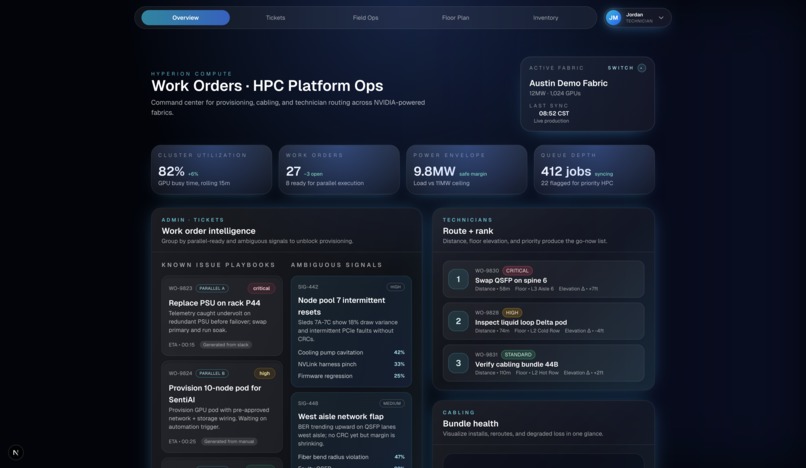
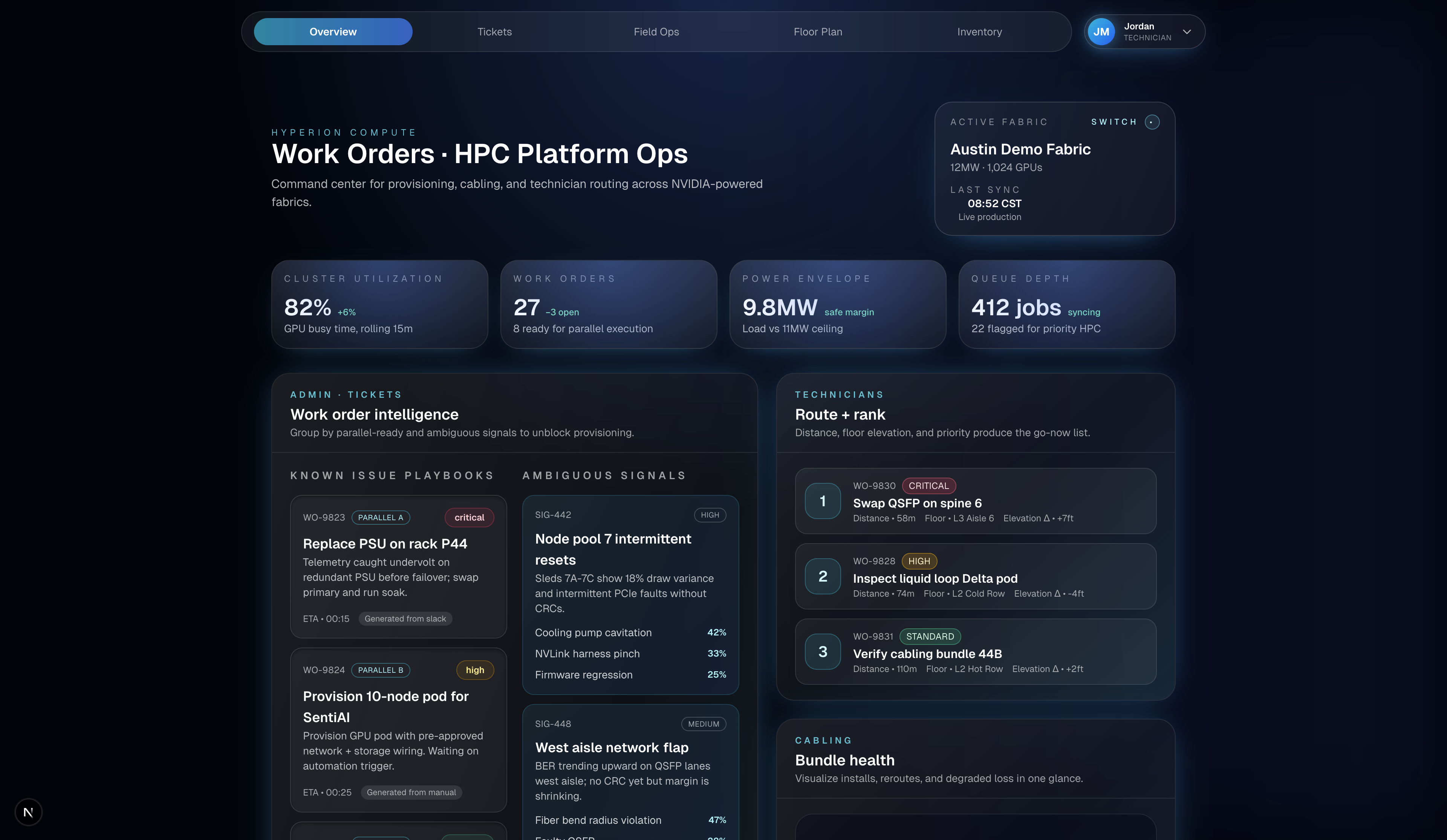
Home Dashboard
-
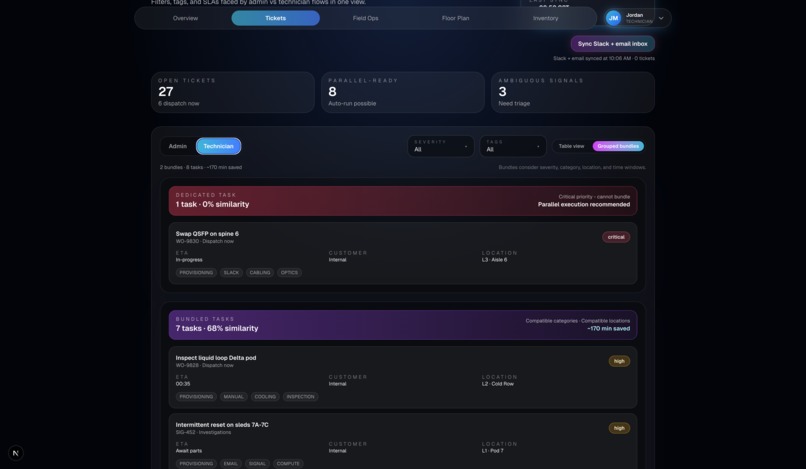
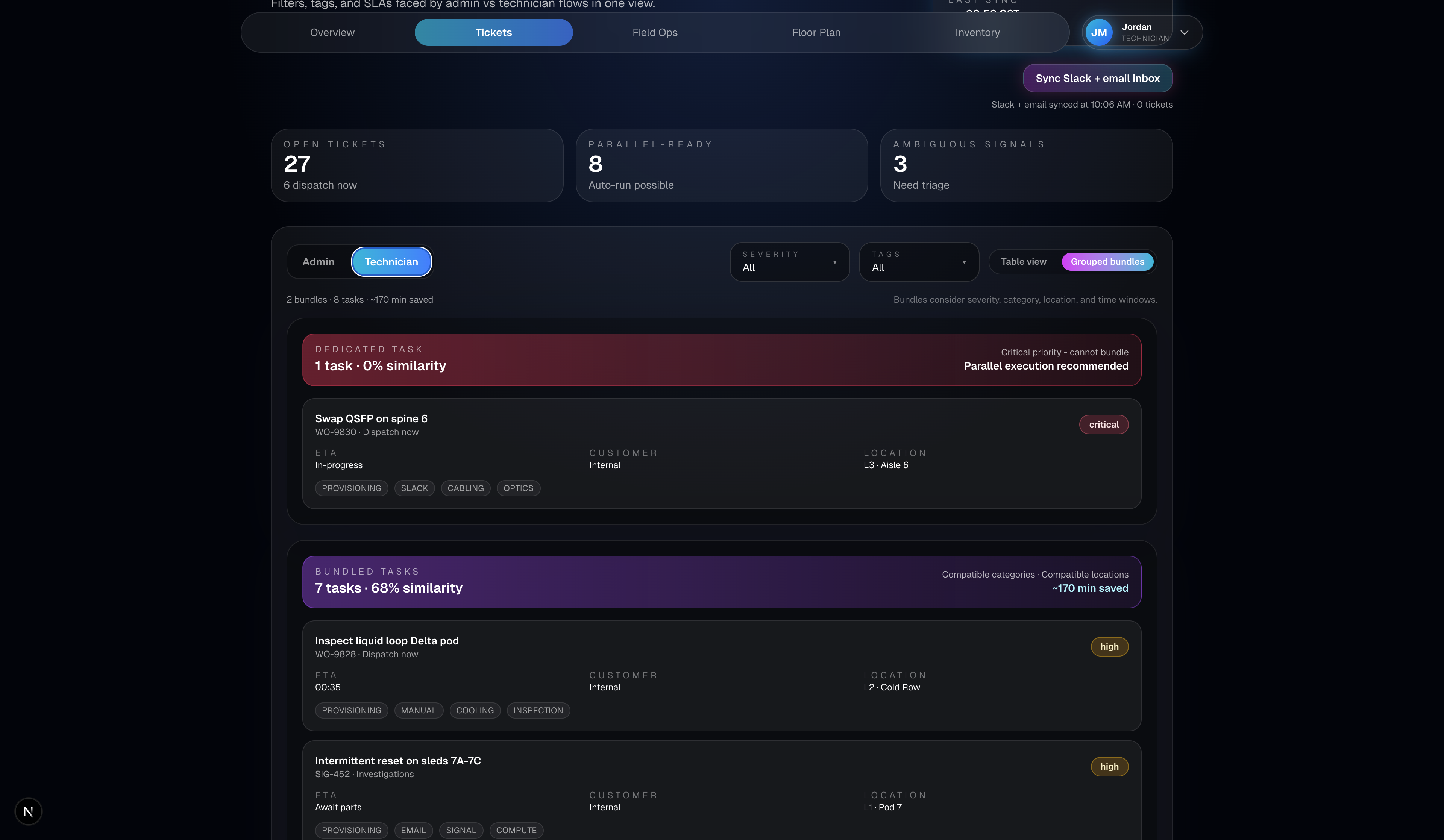
Tickets and Groupings
-
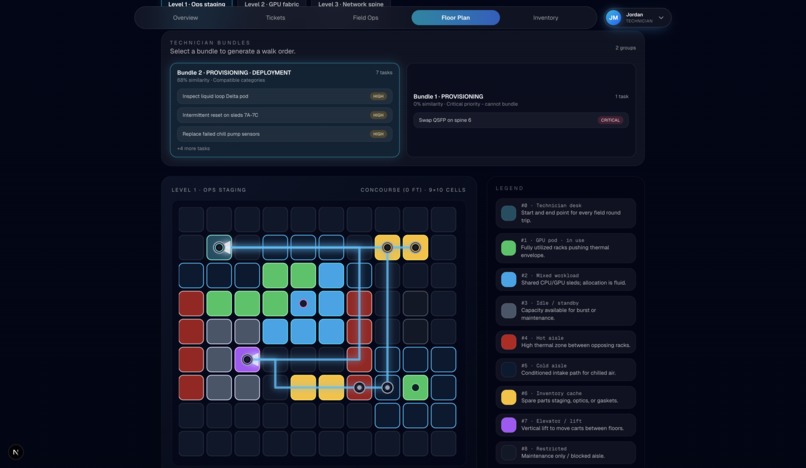
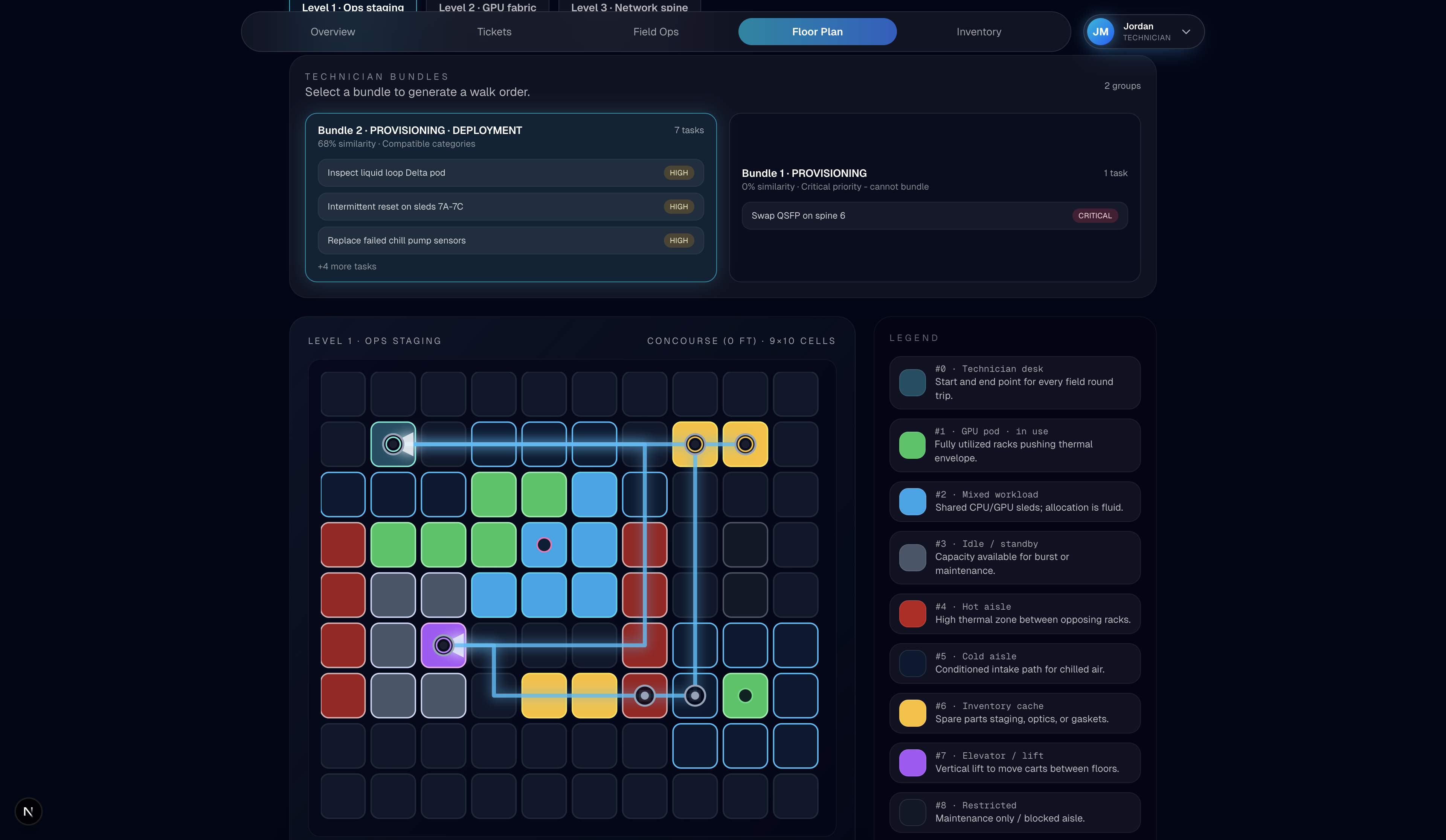
Floor Plan and Optimal Route
-
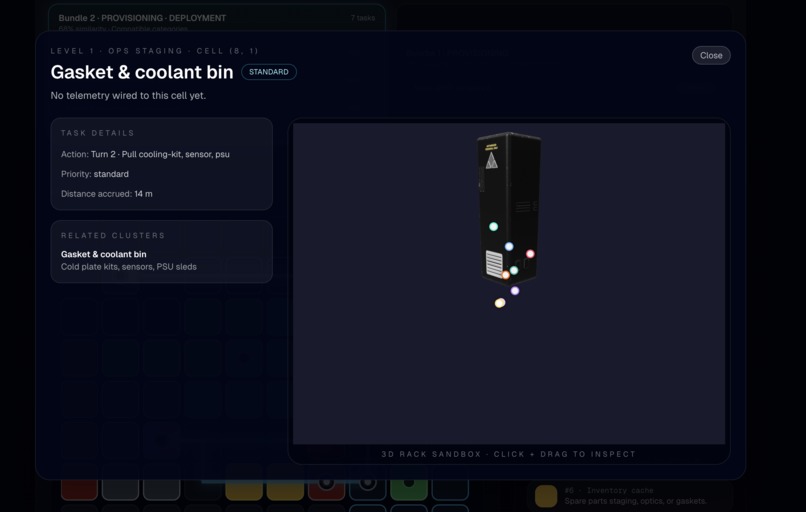
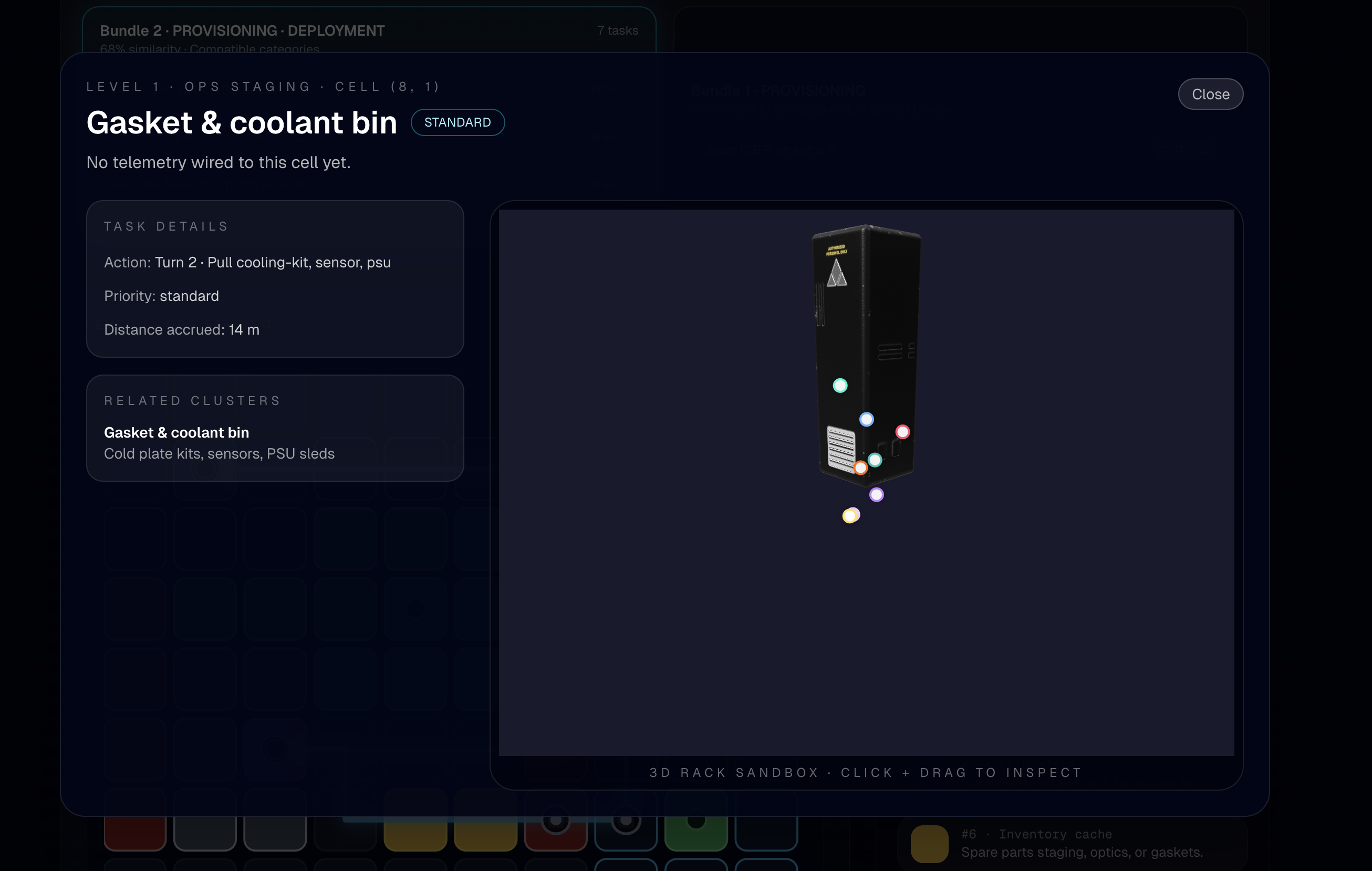
3D Model of Server
-
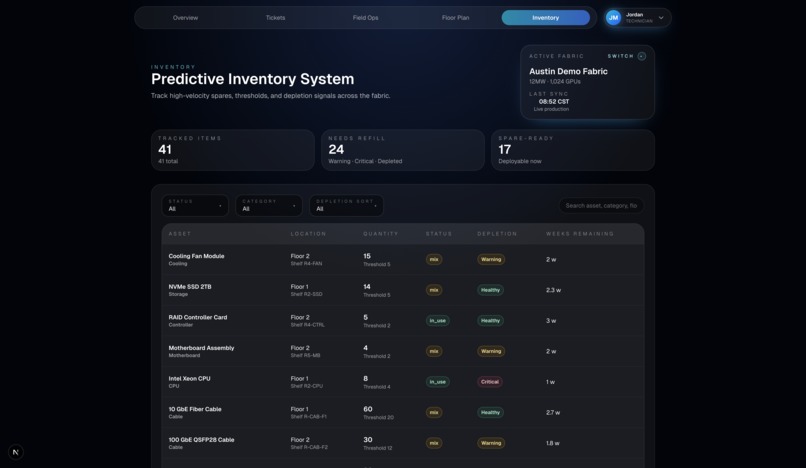
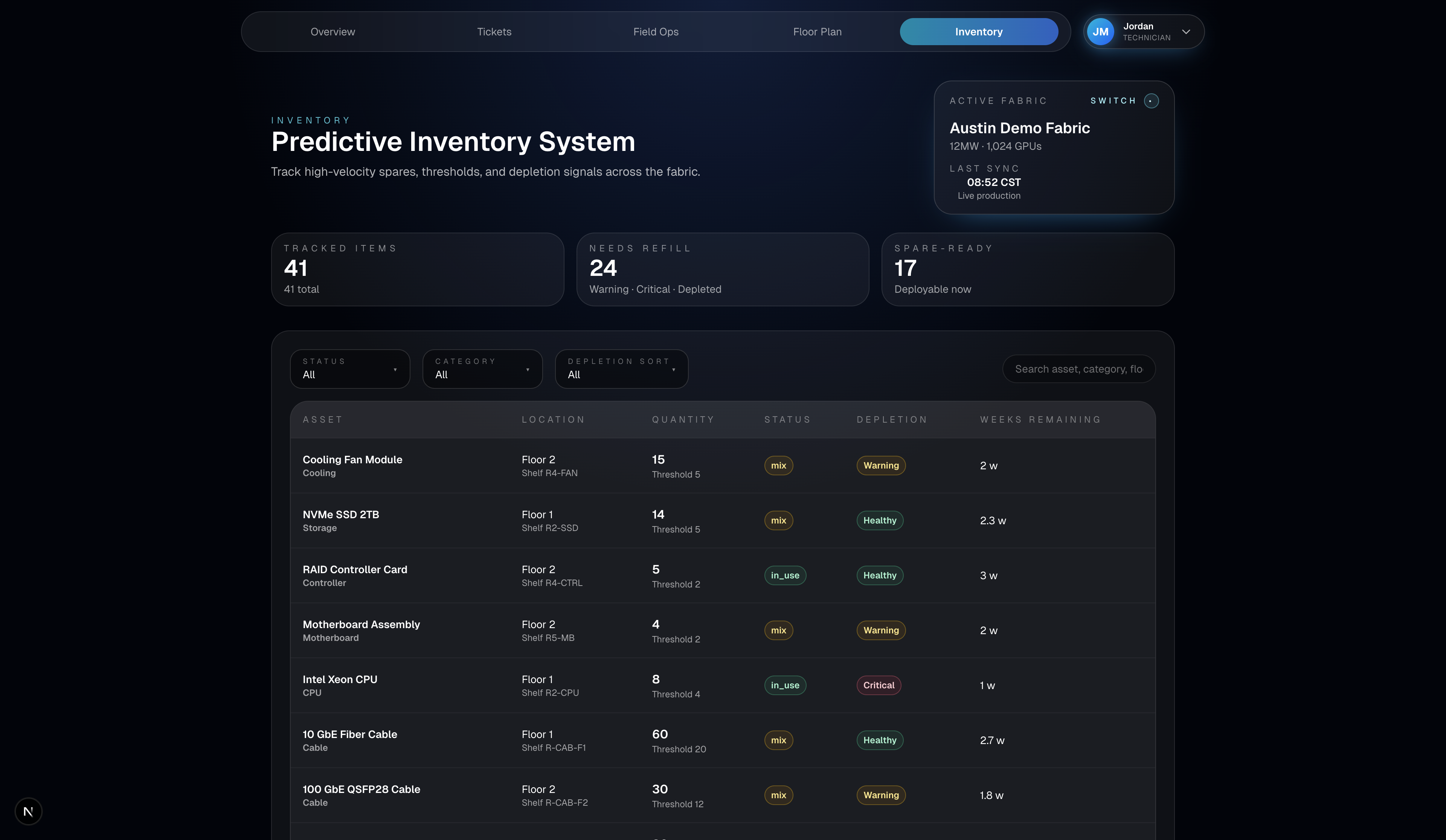
Inventory
DC Daddy - NMC DataCenter Command Center
Inspiration
Data centers are the backbone of modern computing, yet technicians managing $2.8 billion facilities powering 400MW of compute still rely on fragmented tools and manual processes. We were inspired by NMC's challenge of reducing human error and operational inefficiency in environments where a single mistake can cost millions. We saw an opportunity to build an integrated command center that transforms how data center operations work, making technicians' jobs smarter, not harder, while prioritizing their health and safety.
What it does
DC Daddy is a comprehensive data center operations platform that solves five critical pain points through an integrated ecosystem:
1. Intelligent Work Order Management
- Multi-Channel Integration: Automatically creates tickets from emails, Slack messages, and manual input using AI-powered parsing
- Dual-Mode Views:
- Admin Mode: Focus on customer impact, severity, and one-click automation (provisioning, permissions)
- Technician Mode: Optimized task routing with distance, floor elevation, and priority
- Smart Bundling: Groups parallelizable tickets to save time and reduce travel
- Health-Based Task Assignment: Automatically flags physically demanding tasks (L2/L3 floors) for technicians with health conditions (knee pain, arthritis, etc.)
2. AI-Powered Communication Hub
- Unstructured Text Parsing: Extracts structured ticket information from emails and Slack
- Automatic Categorization: Identifies severity, type, customer impact, and routing details
- Zero Manual Entry: Tickets are auto-generated and routed to correct teams
- Real-time Updates: Communication feed shows auto-generated updates across channels
3. Optimized Technician Routing
- Smart Pathfinding: Groups tasks by proximity, floor, and priority
- Hot/Cold Zone Rotation: Alternates between server zones to prevent technician fatigue
- Elevation-Aware: Considers floor changes in route optimization
- Visual Floor Plans: Interactive maps showing task locations and optimal routes
- Health Considerations: Routes avoid excessive physical strain for technicians with health conditions
4. Predictive Inventory Management
- Real-time Tracking: Monitor stock levels across all data center locations
- Predictive Depletion: Calculates weeks remaining based on usage trends with mathematical forecasting
- Color-Coded Alerts: Visual status indicators (Healthy, Warning, Critical, Depleted)
- Advanced Filtering: Search by name, category, site; filter by status (in-use, spare, idle, drained)
- Usage Trend Analysis: Tracks rising, steady, or cooling consumption patterns
- Threshold Warnings: Alerts before stockouts occur
5. Human Error Prevention
- Health & Safety Integration: Profile system tracks technician health conditions and flags inappropriate task assignments
- 3D Models of Servers: Technicians can view 3D models of the server shelves and click on hotspots on the server containing common concerns
- Task Difficulty Evaluation: Warns technicians about physically demanding assignments
- AI-Powered Device Assistant (
/field-ops): Context-aware equipment guidance using Google Gemini 2.0 Flash API- 10+ device database (NVIDIA H100, QSFP-DD 400G, NVSwitch, etc.)
- Predefined and custom questions
- Brief, actionable responses (max 300 tokens)
- Visual Cabling Health: Bundle health visualization to prevent installation errors
How we built it
Tech Stack
- Frontend & Styling: Next.js 16.0.1 with React 19.2.0, TypeScript, and Tailwind CSS 4.0 with custom dark theme
- Backend & Database: Next.js API routes with server-side rendering and MongoDB Atlas for scalable, global data replication
- AI Integration: Google Gemini 2.0 Flash API for device assistant and ticket parsing, Gmail API for email ingestion
- State Management: React Context API with localStorage persistence
- Algorithms: Custom pathfinding with mathematical optimization
Architecture
We built a fully integrated ecosystem where every module communicates:
- Inventory system feeds into work order generation
- Health profiles inform task routing and warnings
- Communication hub auto-updates tickets across all systems
- AI assistant provides context-aware equipment guidance
- Floor plans visualize optimized technician routes
Mathematical Models
Predictive Depletion Calculation:
$$\text{Weeks Remaining} = \frac{\text{Current Quantity} - \text{Threshold}}{\text{Adjusted Weekly Usage}}$$
Where adjusted usage accounts for trend:
$$\text{Adjusted Usage} = \text{Avg Weekly Usage} \times \left(1 + \frac{\text{Usage Trend}}{n \times 10}\right)$$
Depletion Status Classification:
$$\text{Status} = \begin{cases} \text{Depleted} & \text{if } w \leq 0 \ \text{Critical} & \text{if } 0 < w \leq 1 \ \text{Warning} & \text{if } 1 < w \leq 2 \ \text{Healthy} & \text{if } w > 2 \end{cases}$$
where w = weeks remaining
Key Design Principles
- Health & Safety First: Technician well-being integrated into every task assignment
- Dark Theme UI: Consistent cyan/blue aesthetic for data center environments
- Mathematical Determinism: Explainable algorithms, not black-box AI
- Real-time Sync: Live data across all modules
- Smooth Animations: Fade-in, slide-in transitions for polished UX
Challenges we ran into
Multi-Constraint Pathfinding: Balancing distance, elevation, priority, temperature zones, AND health conditions required extensive algorithm iteration and weight tuning.
AI Integration Complexity: Integrating Google Gemini API while maintaining brief, actionable responses (300 token limit) required careful prompt engineering.
Real-time Multi-System Sync: Ensuring inventory, work orders, health profiles, and communication all stayed synchronized without lag required careful MongoDB schema design and efficient API routing.
Health Data Sensitivity: Building a health tracking system that's useful for task assignment while respecting privacy and avoiding discrimination required thoughtful UI/UX design.
Email/Slack Parsing: Extracting structured ticket data from unstructured communications with varying formats required robust AI parsing logic.
UI Complexity Balance: Creating an interface powerful enough for complex data center operations but simple enough for technicians in high-pressure situations.
Accomplishments that we're proud of
- Complete Ecosystem Integration: All five NMC challenge areas work together seamlessly in one platform
- Health-First Design: Unique integration of technician health data prevents injuries and ensures appropriate task assignment
- Production-Ready Code: Clean TypeScript with proper error handling, type safety, and responsive design
- AI-Powered Intelligence:
- Device assistant with 10+ equipment database
- Automatic email/Slack ticket parsing
- Context-aware responses optimized for field work
- Mathematical Optimization: Novel pathfinding algorithm considering factors rarely seen together (elevation + zones + health + priority)
- Predictive Analytics: Trend-based inventory forecasting prevents stockouts
- Zero Manual Entry: Fully automated ticket creation from multiple channels
What we learned
- Human-Centered Automation: The most powerful automation still requires human well-being at its core
- System Thinking: Interconnected systems multiply their value when properly integrated—inventory informs routing, health profiles inform assignments
- Algorithm Design: Balancing five constraints (distance, elevation, priority, zones, health) in optimization requires careful mathematical weighting
- AI Prompt Engineering: Crafting prompts that produce brief, actionable responses (300 tokens) while maintaining context and accuracy
- Next.js Architecture: Deep understanding of server vs. client components, API routes, SSR, and real-time data patterns
- MongoDB Best Practices: Global client management, connection pooling, schema design for real-time sync
- Health Data Design: Building useful health tracking that respects privacy and avoids bias
- Real-World Impact: Designing for actual technician workflows in $2.8B facilities, not theoretical scenarios
What's next for DC Daddy
Immediate Enhancements
- Mobile App: Native iOS/Android app for on-the-go access
- Voice Commands: Hands-free operation for device assistant
- QR/Barcode Scanning: IoT sensor integration for real-time equipment monitoring
- Advanced Analytics: Machine learning for predictive maintenance
Goal: Deploy to all NMC facilities globally, preventing downtime and saving millions while keeping technicians safe and healthy.
Business Impact
- Significant Cost Reduction across all facilities through automation and prevention
- Enhanced Uptime and Reduced Emergency Procurement through predictive inventory management, accurate forecasting, and faster incident response
- Increased Technician Productivity via optimized routing and reduced manual work
- Improved Worker Safety by preventing injuries through health-aware task assignment
- Smarter Operations for massive compute infrastructure at a global scale
Technical Novelty
Integrated Intelligence Layer
- Unified data ecosystem connecting work orders, inventory, routing, and health profiles
- Real-time + predictive analytics fusion
- Multi-channel communication ingestion
Algorithm-Driven Optimization
- Custom pathfinding with 5-constraint optimization
- Mathematical clustering (deterministic, explainable)
- Trend-based forecasting without black-box ML
Health-First Design
- Proactive task evaluation based on physical requirements
- Automatic warnings prevent injuries
- Context-aware assignment system
Production-Ready Architecture
- Globally scalable with distributed data replication
- High-performance API with minimal latency
- Type-safe development with modern responsive UI
Project Status
- Production Ready: All core features implemented, tested, and fully integrated (tickets, inventory, routing, health, AI)
- AI Assistant: Fully functional with Gemini 2.0 Flash API for device guidance and ticket parsing
- Health Integration: Profile system with automatic task warnings for worker safety
- UI/UX: Polished dark theme with smooth animations, responsive across all screen sizes
Built With
- amazon-web-services
- gemini
- javascript
- mongodb
- next.js
- react
- tailwind
- typescript


Log in or sign up for Devpost to join the conversation.