-
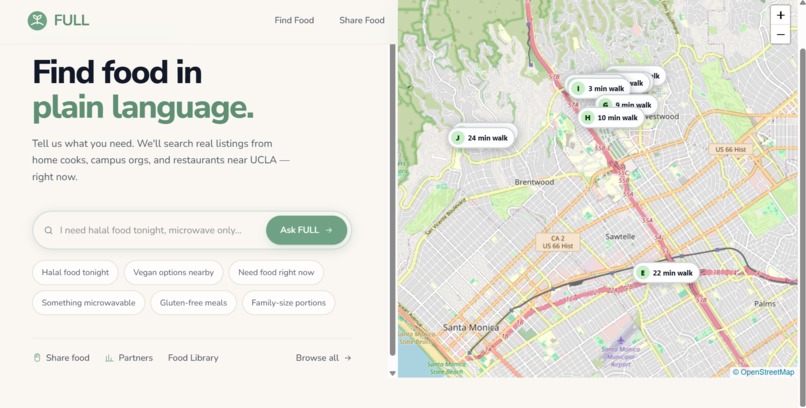
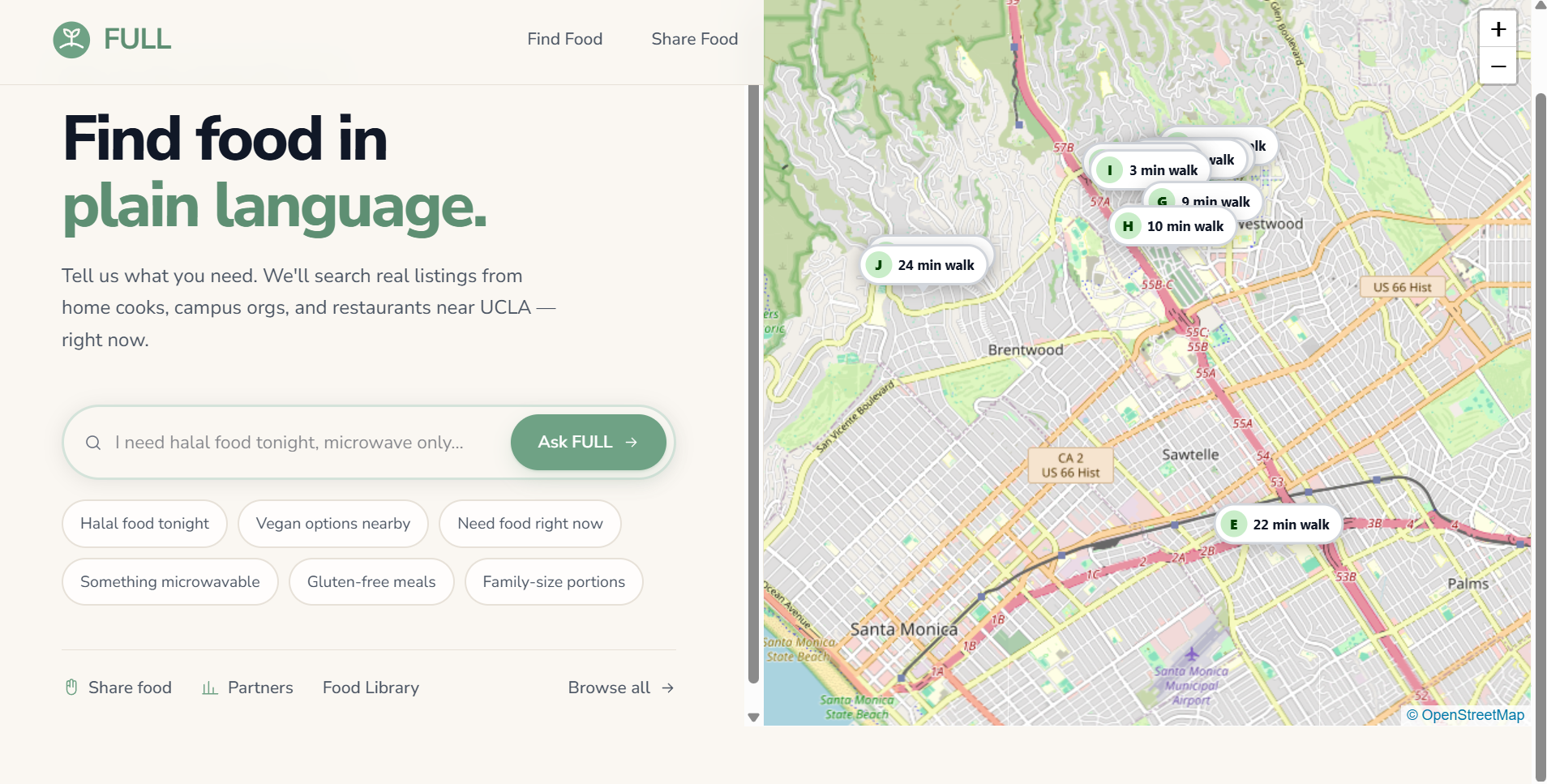
Landing Page
-
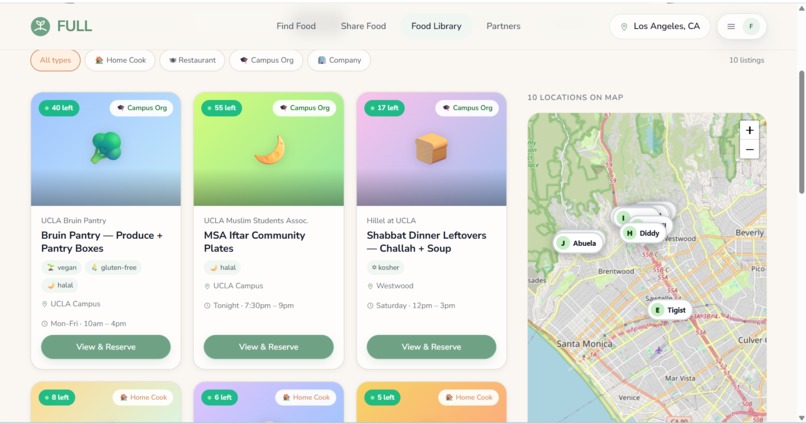
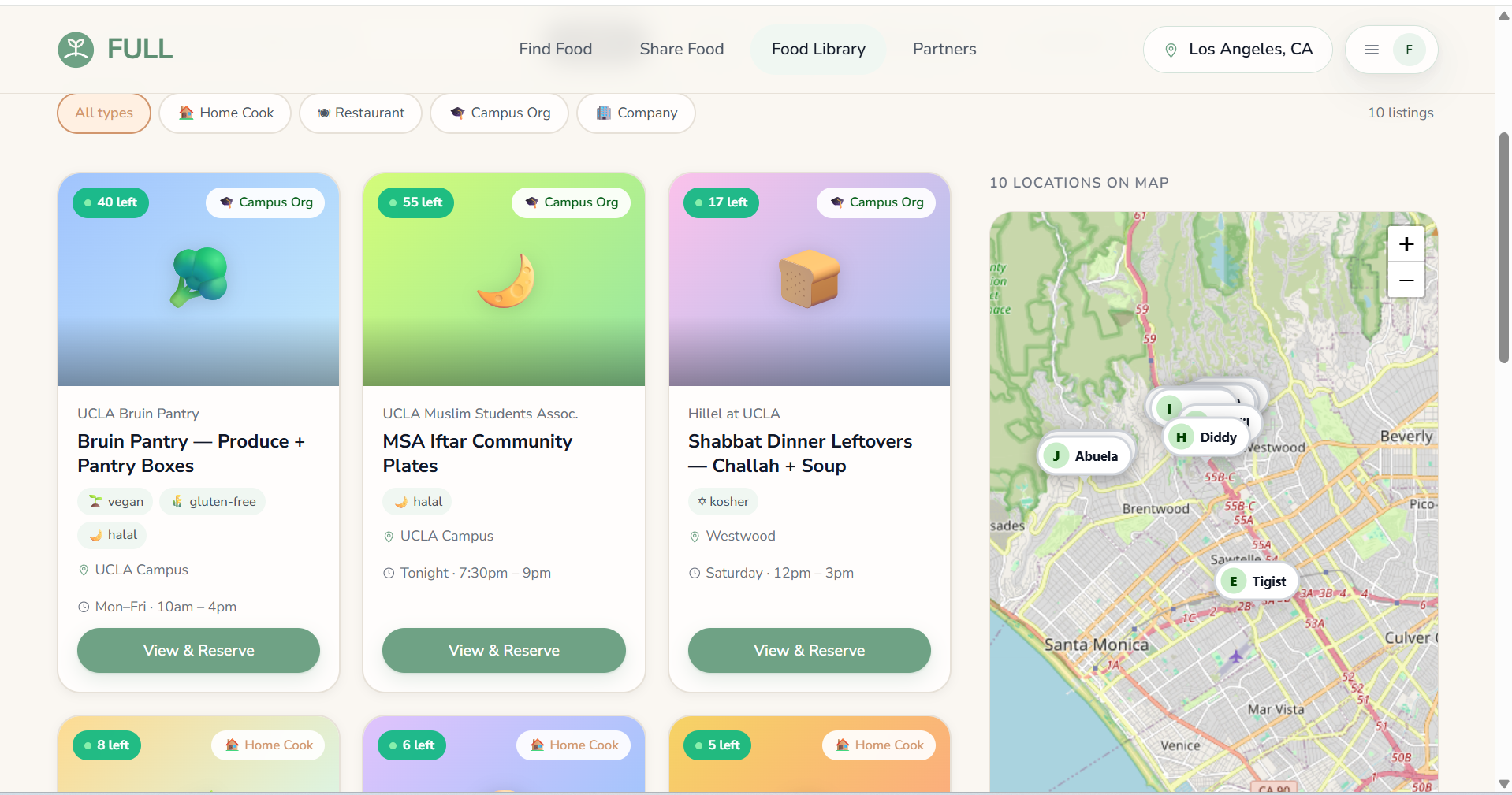
Food Library
-
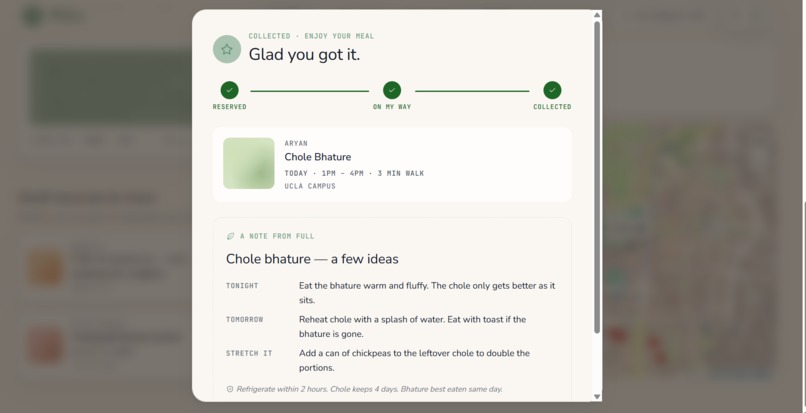
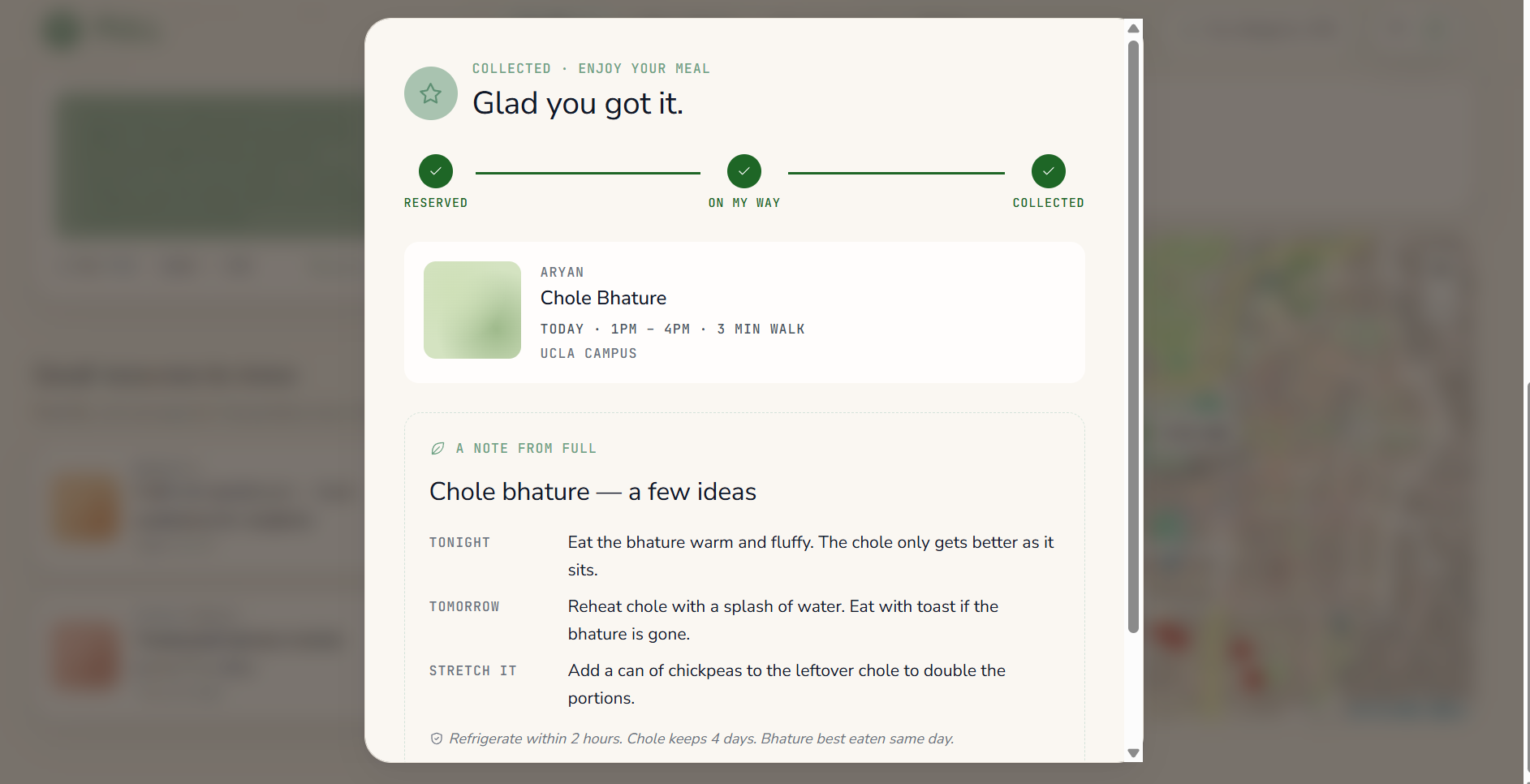
Confirmation Page
-
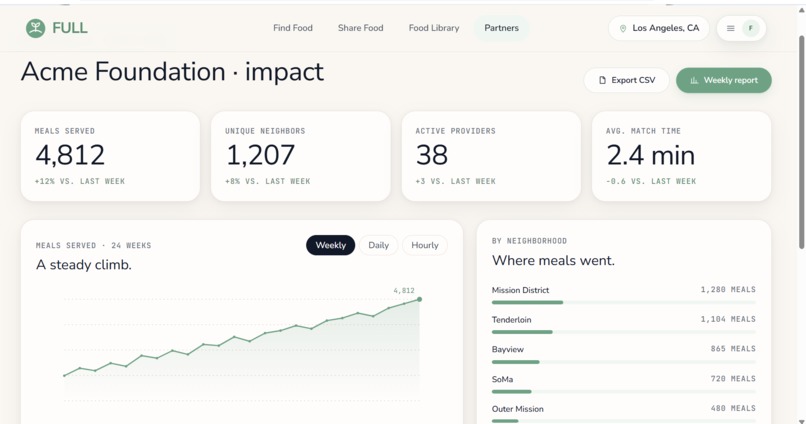
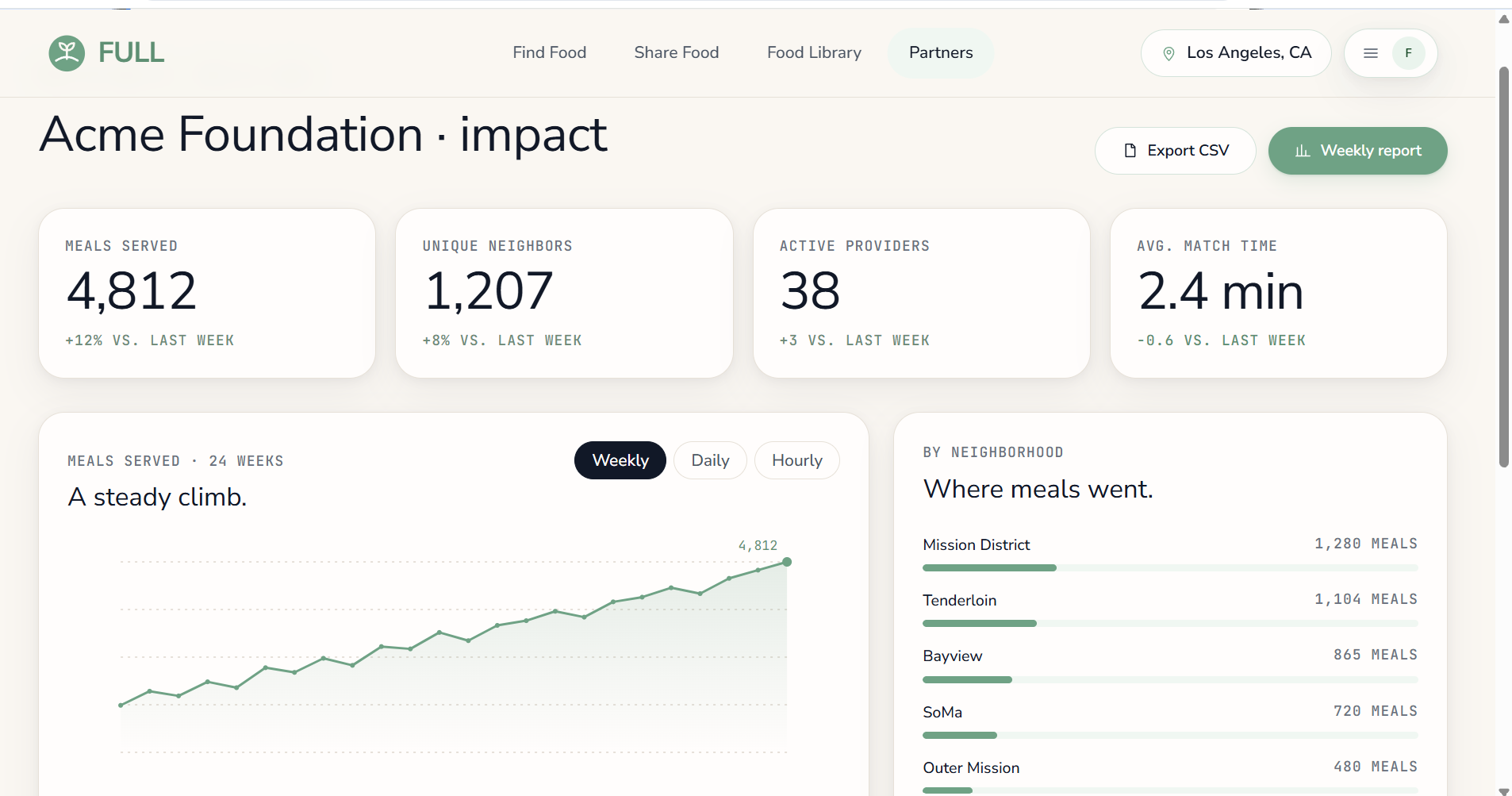
Sponsor Page
Inspiration
Imagine volunteering at a food bank during the post-pandemic years. A mother pulls up, her car packed to the brim with everything she owns, a child in the backseat smiling at you. You hand her a box of food. She looks at you and says: "You don't understand how much this helps me." and drives off. That moment stays with one of our team members. It is our duty to help when we are able, and without questioning. Everyone deserves access to food.
The numbers made that duty impossible to ignore: 47.9 million Americans are food insecure, yet 40% of the U.S. food supply is wasted, 120 billion pounds a year. On college campuses, 1 in 4 undergraduates skips meals, twice the national rate. The food exists. The people exist. The connection doesn't.
We built FULL because that gap is not a supply problem. It is a coordination problem, and it felt like exactly the kind of problem AI could actually solve. To connect people with food insecurity to available resources in an all in one platform so that people have one less thing to word about.
What it does
FULL is a Claude-powered food access platform that reduces food waste amongst communities by connecting people with food to those in need. Importantly, the platform serves food seekers, individual providers, and restaurants through the same simple, conversational interface.
For seekers, FULL works like talking to a friend who already knows what’s available nearby. The user describes what they need in plain language, noting any dietary restrictions, health conditions, or time constraints, and FULL surfaces the best matches ranked by the user’s preferences and location. Furthermore, FULL remembers your preferences across sessions so the second time the user comes back they don’t start with a blank profile.
For providers, the service works similarly. Whether there’s a student with extra rice from dinner, a neighborhood restaurant with surplus end of day stock, or simply a community member wanting to help those in need, they all use the same input. The provider types what they have in their own words, sets the pickup window and location, FULL handles the rest: parsing the message into structured data, running an automatic food-safety check, and posting a clean listing.
Perhaps most importantly, FULL isn’t built for smartphones or computers alone. It loads on any device and is intended to be accessible across campus, whether at the library, on a personal phone, or at a kiosk for dining halls and community centers. Wherever someone happens to be when they need food, FULL is meant to be there too.
How we built it
We built FULL as a focused MVP prioritizing frontend usability and demo clarity. The core experience is a two-panel layout: conversational search on one side, map and listings on the other. We used AI-assisted development to iterate rapidly on layout, storytelling, and UI structure, and used mock data to simulate nearby resources while architecting for real integrations ahead.
Challenges we ran into
Our biggest challenge was scope. The real problem spans live inventory, transit routing, organizational coordination, and constantly shifting availability, which is far larger than a hackathon window. There were many features we could have built, but we stayed focused on the MVP and built the clearest proof of concept first: a simple, usable product that helps people find food quickly and with less friction. We made fast product decisions balancing chat, maps, and listings so the experience felt calm and simple during an urgent moment. Incomplete and inconsistent public food data made every design decision harder. The long-term vision is to scale this far beyond a demo into a platform that could support millions of people by connecting them to timely, reliable food resources when they need them most.
At the same time, there were ethical considerations to consider when building FULL. For one, we wanted to ensure food safety remained a top priority. Therefore, any provider listing goes through an automatic safety check before it's posted.
Additionally, we deliberately avoided requiring accounts to receive food — barriers to access defeat the purpose. Dietary preferences (halal, kosher, vegan) are treated as requirements, not suggestions, because getting that wrong isn't just inconvenient, it can be a religious or medical issue. The UI avoids language that stigmatizes food insecurity; everyone is just "finding food."
Accomplishments that we're proud of
We translated a genuinely complex logistics problem into a clean, human-centered experience. We combined AI with a real-world social use case and built something that feels both impactful and practical. Most of all, FULL is not just a technical concept. It is a product that could meaningfully reduce the effort it takes to find food when it matters most.
What we learned
Many social problems are not simply about supply. They are about coordination and access. We learned to play to our strengths by designing a map-based experience with the user at the center of every decision. From the start, we wanted to remove all friction. No account required, no lengthy setup, no forms asking people to prove they qualify. A user can open FULL and find food immediately, with preferences like dietary needs, culture, and timing handled through a simple conversation. We built it this way to be inclusive, because the people who need help most are often the least able to jump through hoops to get it. The strong UI was not an afterthought. It was the point. We believed that if the experience felt dignified, clean, and easy, people would actually use it. Good design in this context is not about aesthetics, it is about removing every possible reason someone might give up before they find what they need.
What's next for FULL
We want to connect FULL to live food bank, pantry, and transit data so recommendations move beyond mock results. Next, we will improve the intelligence layer with smarter ranking, multilingual support, and personalization. Further out, we want to build tools that help organizations and donors update availability and coordinate food distribution in real time.
Built With
- claude-api
- css
- express.js
- python
- react
- superbase
- vite

Log in or sign up for Devpost to join the conversation.