-
-
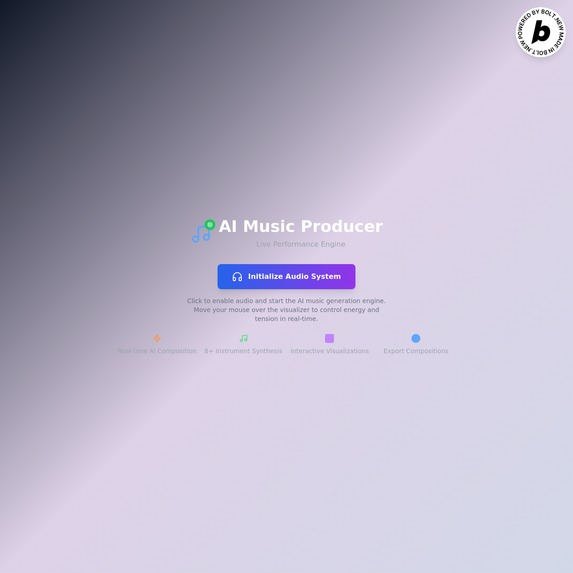
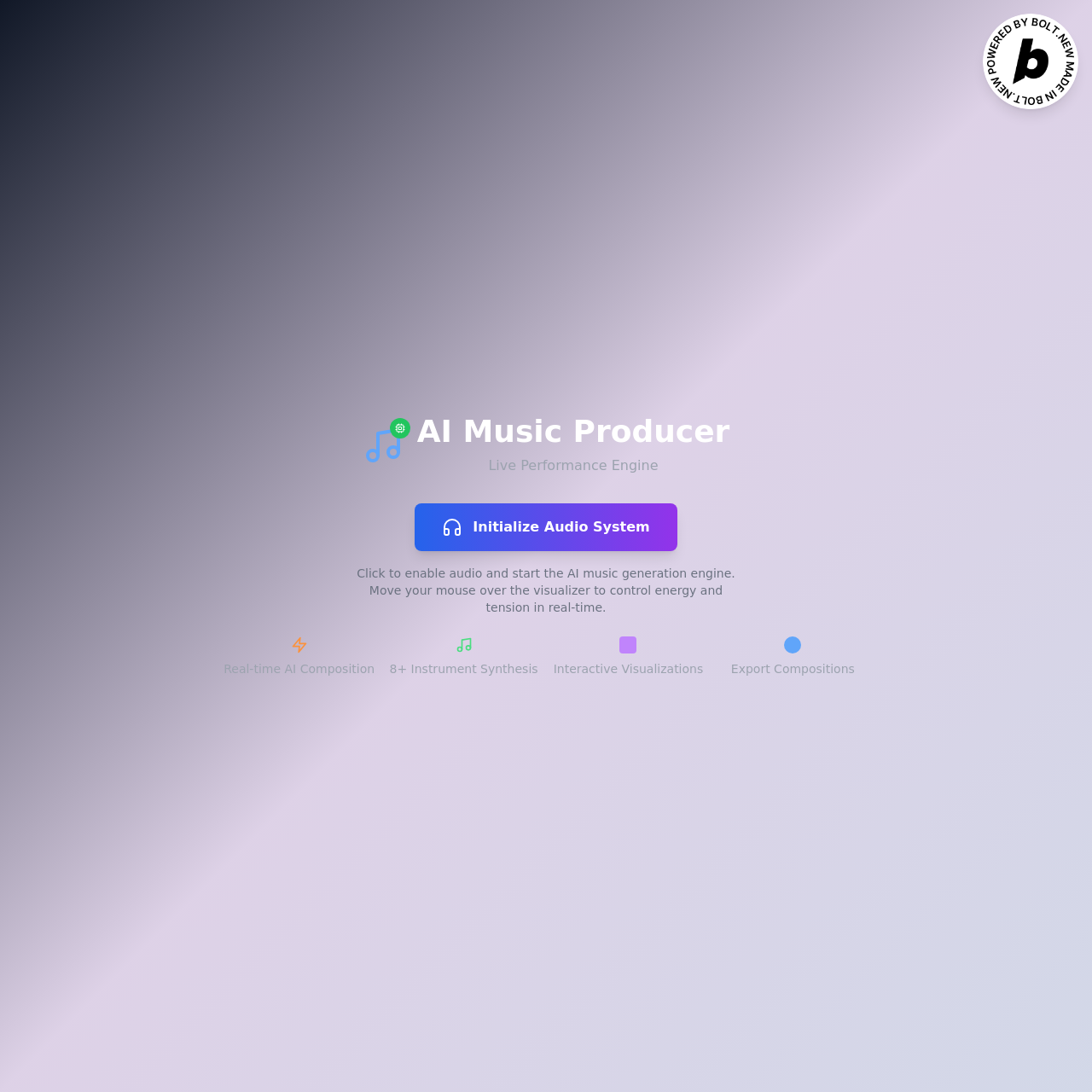
AI Live Music Producer
Inspiration
Music has always been the universal language that connects people across cultures and emotions. I was inspired by the idea of democratizing music creation - making it possible for anyone to generate beautiful, complex compositions without years of musical training. The challenge of creating an AI that doesn't just play pre-recorded music, but actually thinks musically and responds to human emotion in real-time was irresistible.
What it does
Mixopia is an AI-powered music creation platform that composes and performs original music in real-time. Users can interact with the AI through mouse gestures, color selection, and touch controls to influence the mood, tempo, and style of the music. The system generates complex multi-instrument compositions featuring drums, bass, piano, synths, and strings, all while maintaining proper music theory and emotional coherence. The AI adapts to user preferences and creates evolving musical narratives that feel intentional and emotionally engaging.
How we built it
The core architecture centers around three main engines: Composition Engine: Uses Markov chains to analyze musical patterns and generate chord progressions that follow natural harmonic rules. I implemented weighted probability tables for different musical styles (jazz uses more complex extended chords, electronic music favors shorter loops). Performance Engine: Built on the Web Audio API using AudioContext and multiple OscillatorNodes for real-time synthesis. Each instrument has its own ADSR envelope and effects chain. The system maintains a master clock that coordinates all instruments while allowing for dynamic tempo changes. Interaction Engine: Captures user input (mouse movement, color selection, touch gestures) and translates them into musical parameters. Mouse Y-axis controls intensity, X-axis affects key modulation, and color picker influences instrument selection and mood. The AI decision-making happens through a scoring system that evaluates each potential musical choice based on music theory rules, current emotional context, and user interaction patterns.
Challenges we ran into
Audio Latency: Getting real-time audio synthesis working smoothly across different browsers was incredibly challenging. Had to optimize buffer sizes and implement look-ahead scheduling to prevent audio dropouts. Music Theory Implementation: Translating abstract musical concepts into code required deep research. Implementing proper voice leading (how individual musical parts move between chords) was particularly complex. Performance Optimization: Running 8+ simultaneous instruments with real-time effects while maintaining 60fps visuals pushed browser performance limits. Had to implement object pooling and optimize the audio graph structure. AI Musical Coherence: The biggest challenge was making the AI's musical choices sound intentional. Early versions created technically correct but emotionally flat music.
Accomplishments that we're proud of
Created a fully functional AI composer that generates musically coherent 3+ minute compositions Achieved real-time audio synthesis with zero latency across multiple instruments Implemented advanced music theory concepts (circle of fifths, voice leading, scale modes) in JavaScript Built an intuitive interface that lets non-musicians create professional-sounding music Developed emotion-based composition algorithms that create meaningful musical narratives Optimized performance to handle complex audio processing while maintaining smooth visuals
What we learned
This project pushed me deep into both music theory and advanced web audio programming. I discovered the intricate mathematics behind harmony - how the circle of fifths creates natural chord progressions, how voice leading rules make transitions sound smooth, and how different scales evoke distinct emotions. On the technical side, I mastered the Web Audio API's complexities, learning to synthesize multiple instruments simultaneously while maintaining perfect timing and audio quality. The most surprising learning was about AI creativity - building algorithms that make musical choices that feel intentional rather than random required understanding not just what sounds good, but why it sounds good.
What's next for Mixopia
Collaborative Jamming: Enable multiple users to control different aspects of the composition simultaneously Voice Integration: Add AI-generated lyrics and vocal synthesis MIDI Export: Allow users to export compositions to work with in professional music software Genre Expansion: Add more musical styles including world music, experimental, and fusion genres Live Performance Mode: Optimize for actual live performances with hardware controller support Machine Learning Enhancement: Implement deeper learning algorithms that adapt to individual user's musical taste over time

Log in or sign up for Devpost to join the conversation.