-
-

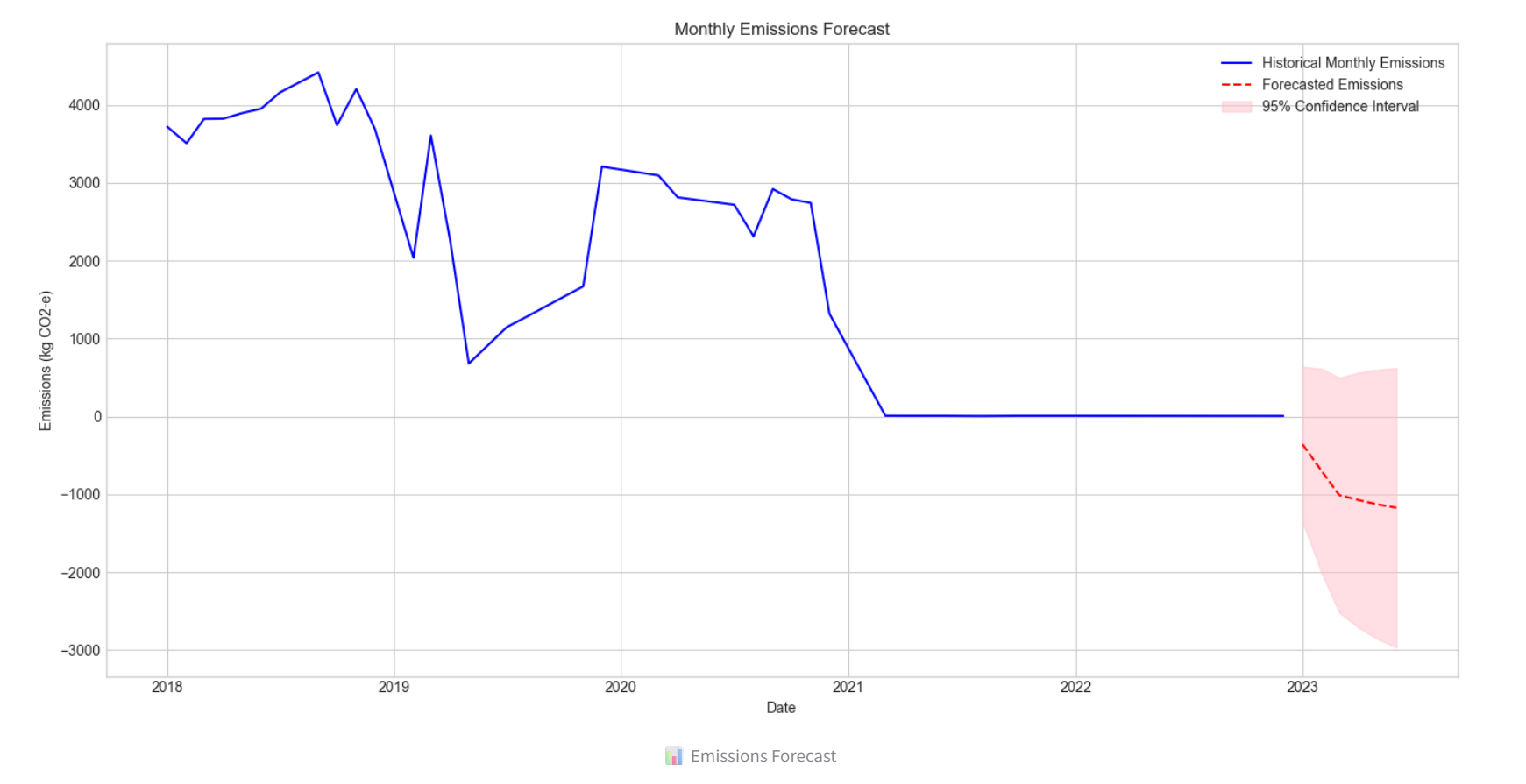
Forecasted Values
-

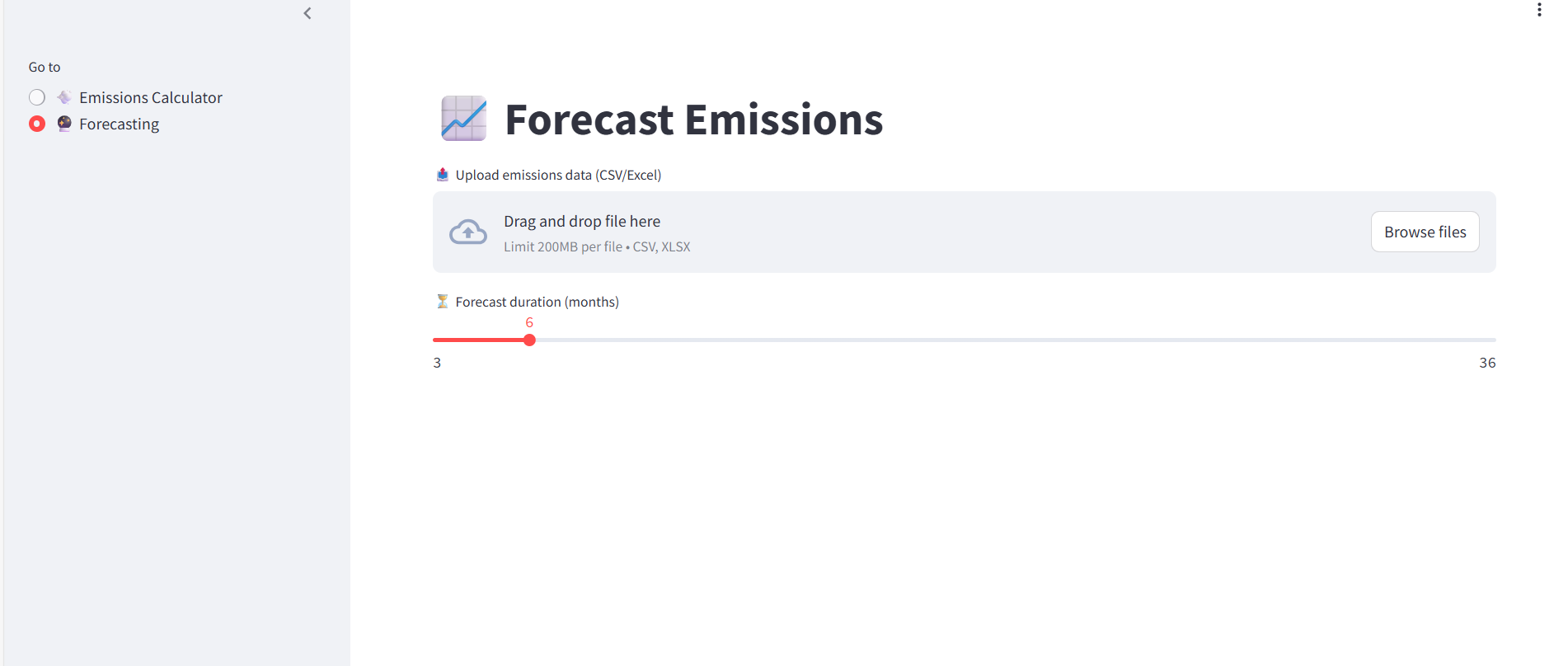
Forecast Emissions
-

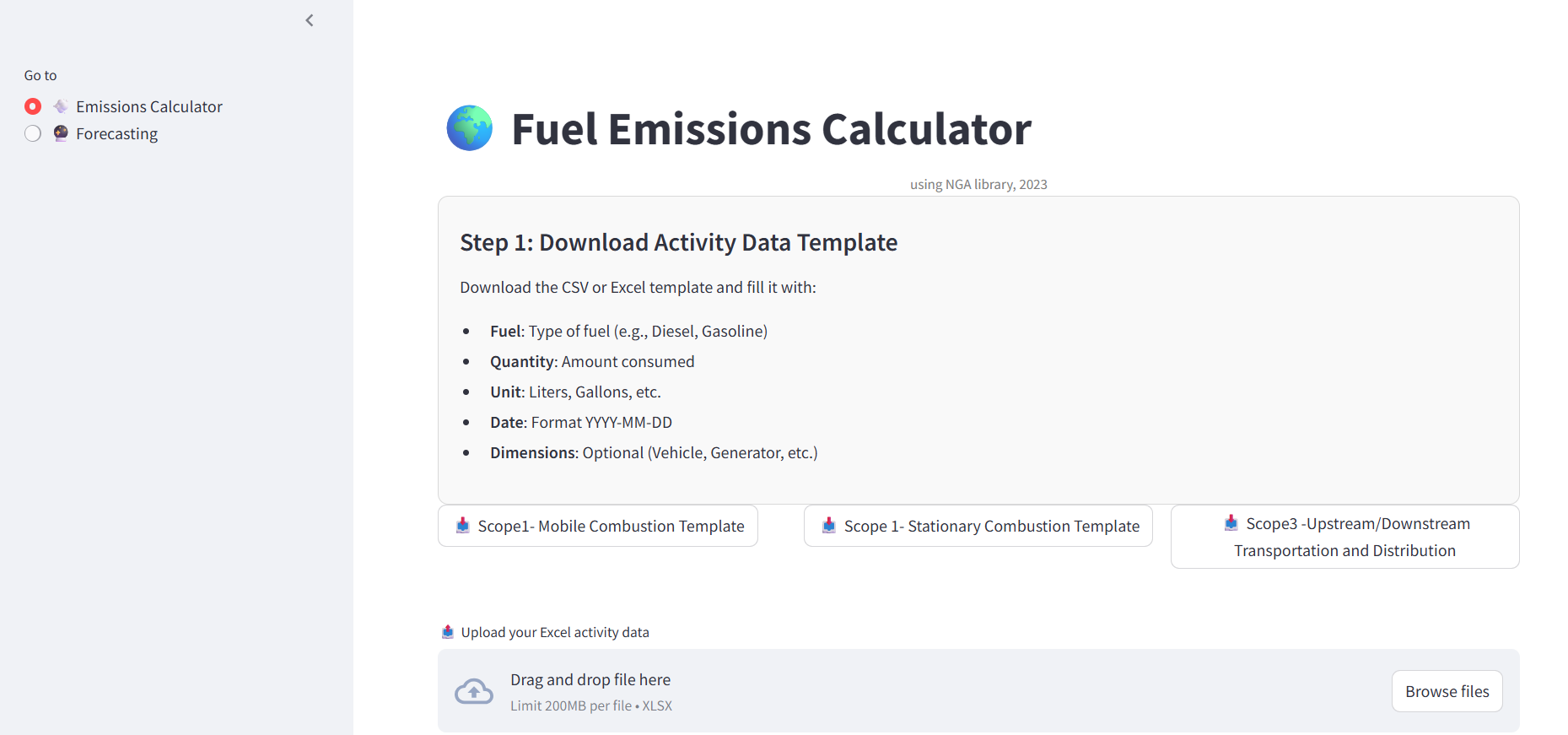
Emissions calculator UI
-

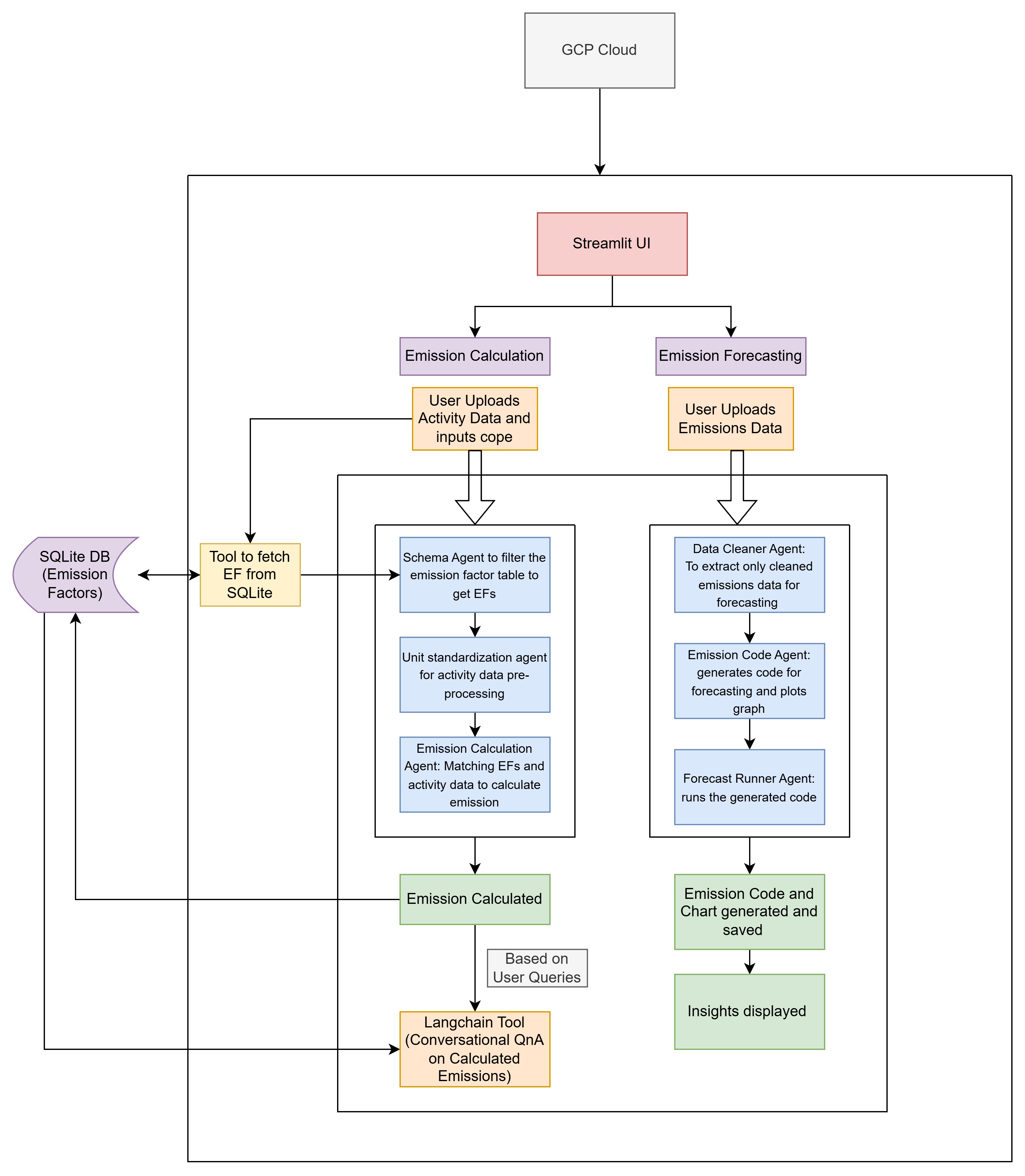
Technical Architecture
What it does-
Enables users to calculate GHG emissions from various fuel types using standardized emission factors from the NGA Library 2023. Allows natural language interaction for querying emissions—lowering the technical barrier for non-experts. Supports upload of activity data (e.g., fuel quantity, units, usage dates) with automatic mapping to emission factors. Provides forecasting capabilities, helping users anticipate future emissions trends based on historical emissions.
Challenges we faced
Mapping activity data accurately to NGA emission factors and ensuring unit consistency and conversions (e.g., liters vs. GJ). Handling diverse and inconsistent user inputs in natural language while maintaining precision in emissions outputs. Ensuring data quality while allowing users to interact through a simplified interface.
Accomplishments We’re Proud Of
Successfully integrated NGA 2023 emission factors into a SQL Database Built a system where non-technical users can get detailed emissions answers just by typing questions (e.g., “What are my diesel emissions for Q2 2024?”). Created a framework for forecasting that allows user to understand to emissions impact in future years. Developed a modular backend that can easily scale to other emission sources (electricity, refrigerants, etc.).
What We Learned
User context is key: Non-expert users want simple answers but still need transparency and the ability to drill down into emissions dimensions Emissions forecasting is most valuable for business to make operational decisions. The importance of unit standardization—small mismatches in input units (liters vs. kL) can lead to large errors if not carefully handled. Natural language processing for sustainability data requires domain-specific tuning for accuracy and usefulness.
What’s next:
Introduce “What-If” Analysis: Let users simulate changes (e.g., switching from diesel to biofuel) and instantly see the emissions impact. Expand to multi-scope emissions (Scope 1, 2, 3) and allow comparisons between fuel emissions and other emission categories.
Built With
- langchain

Log in or sign up for Devpost to join the conversation.