-
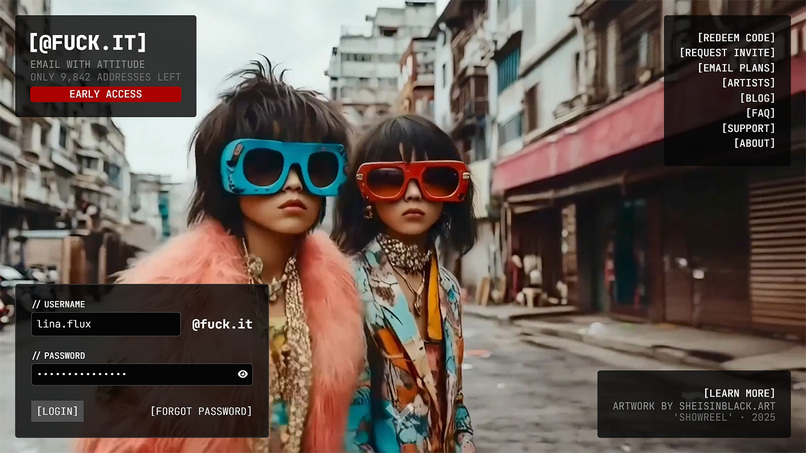
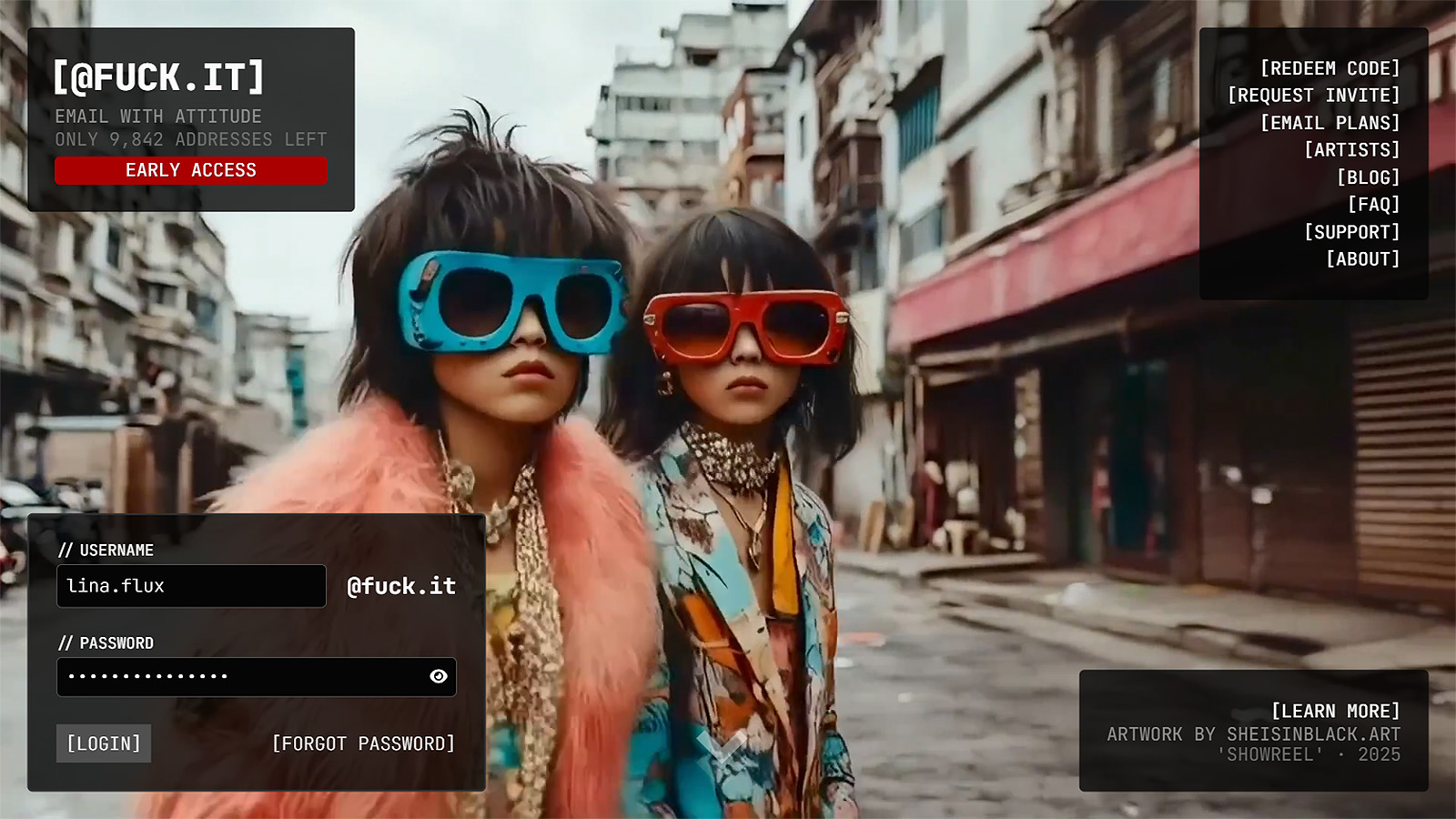
The landing page, featuring our rotating art showcase — real work from artists who use the service.
-
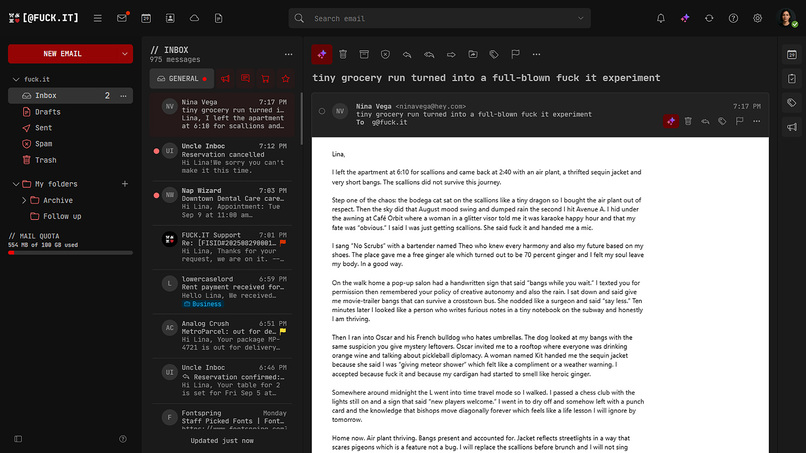
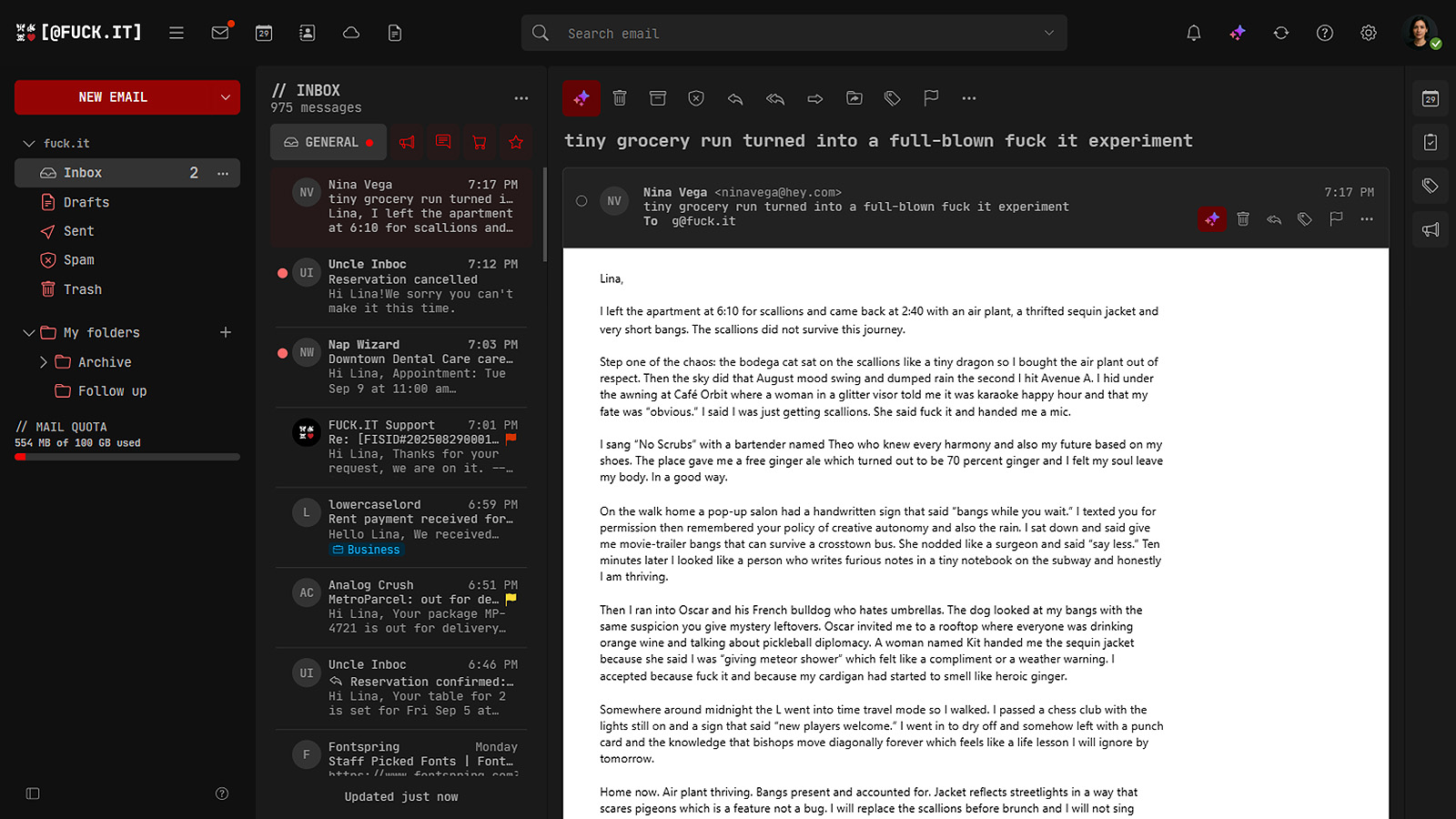
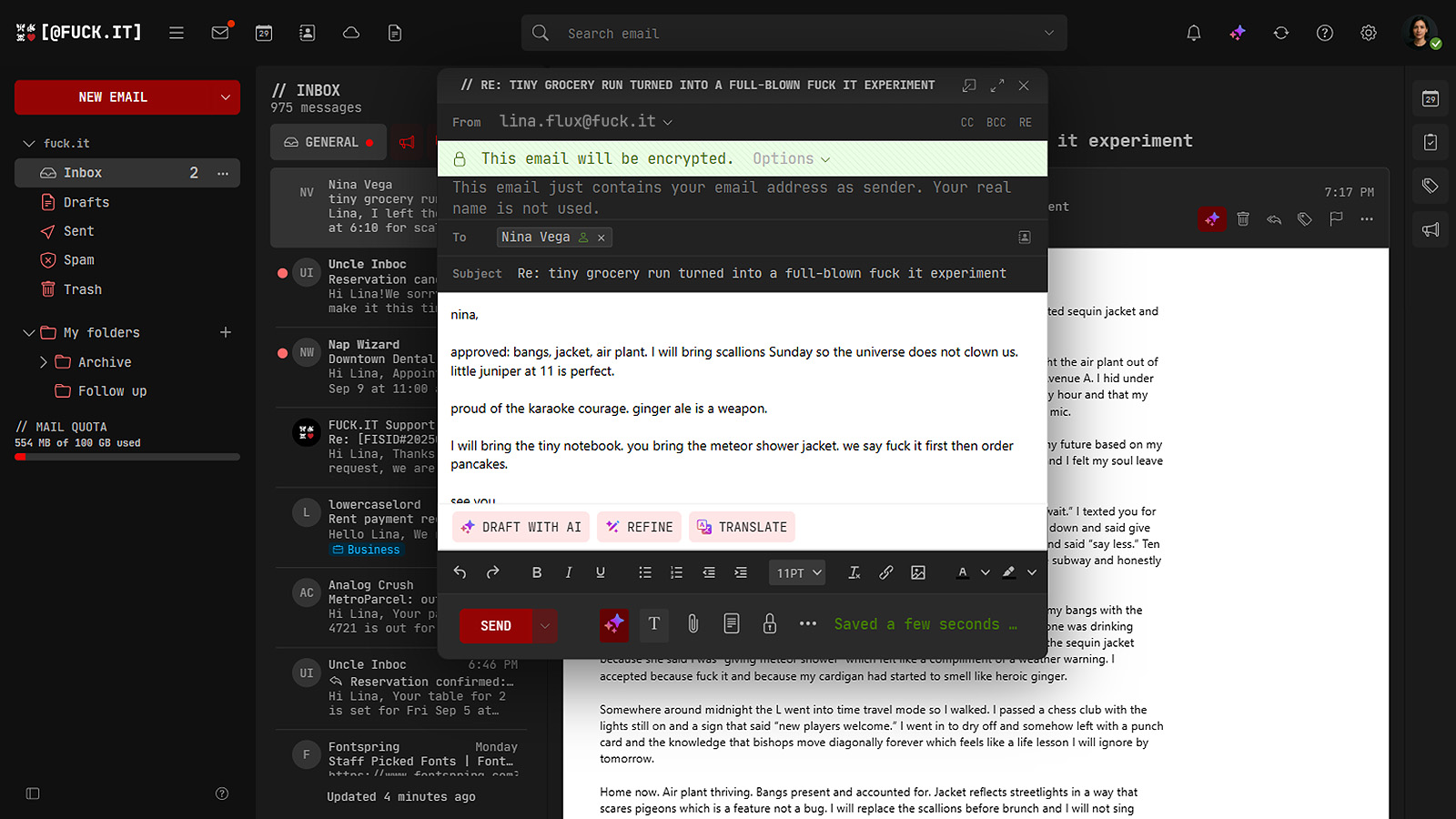
Webmail in dark mode. Full-width reading pane, no ads anywhere in it, because there's nothing to sell you.
-
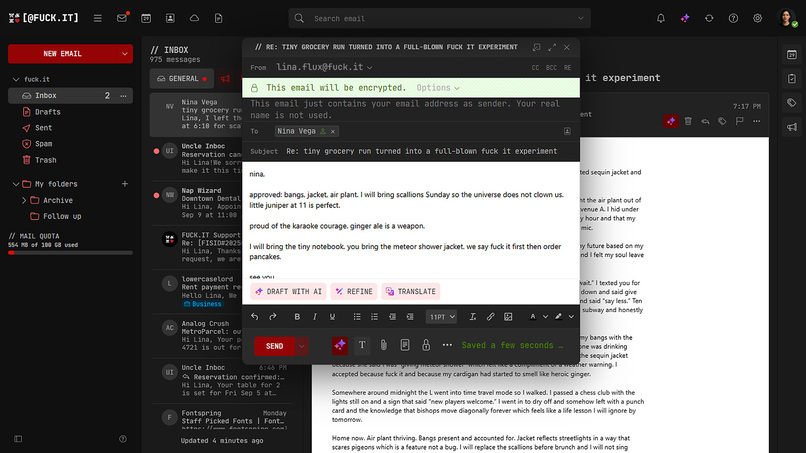
Composing a message. Attachments up to 100 MB, which is four times what the free providers allow.
-
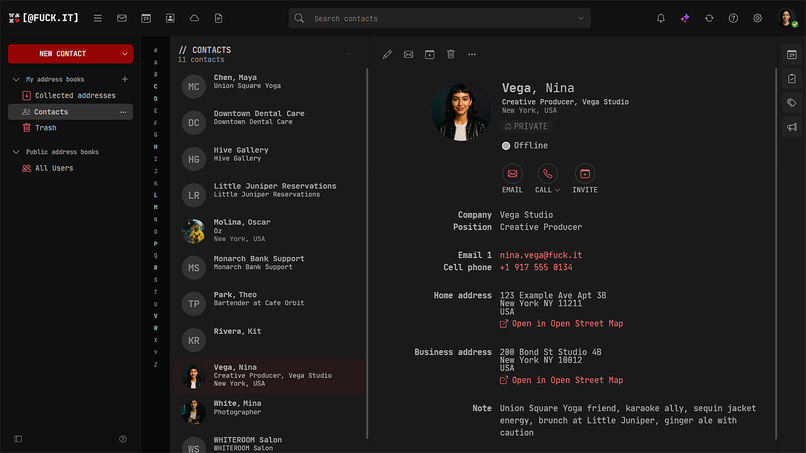
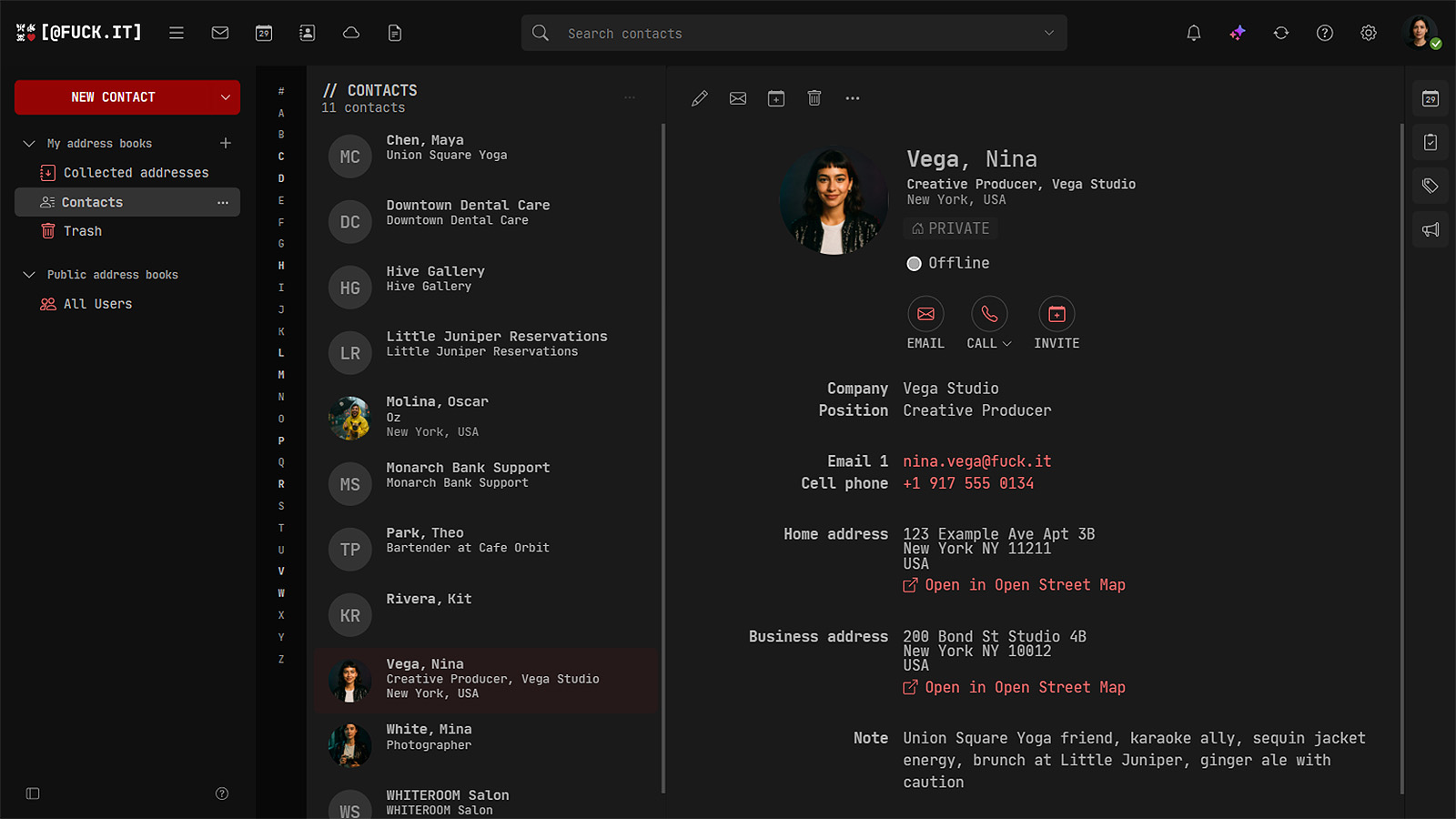
Contacts sync via CardDAV, so they follow you into whichever client you actually use.
-
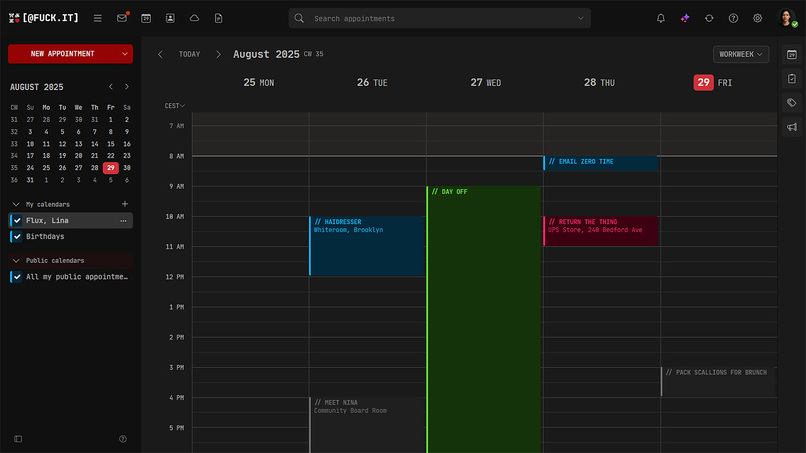
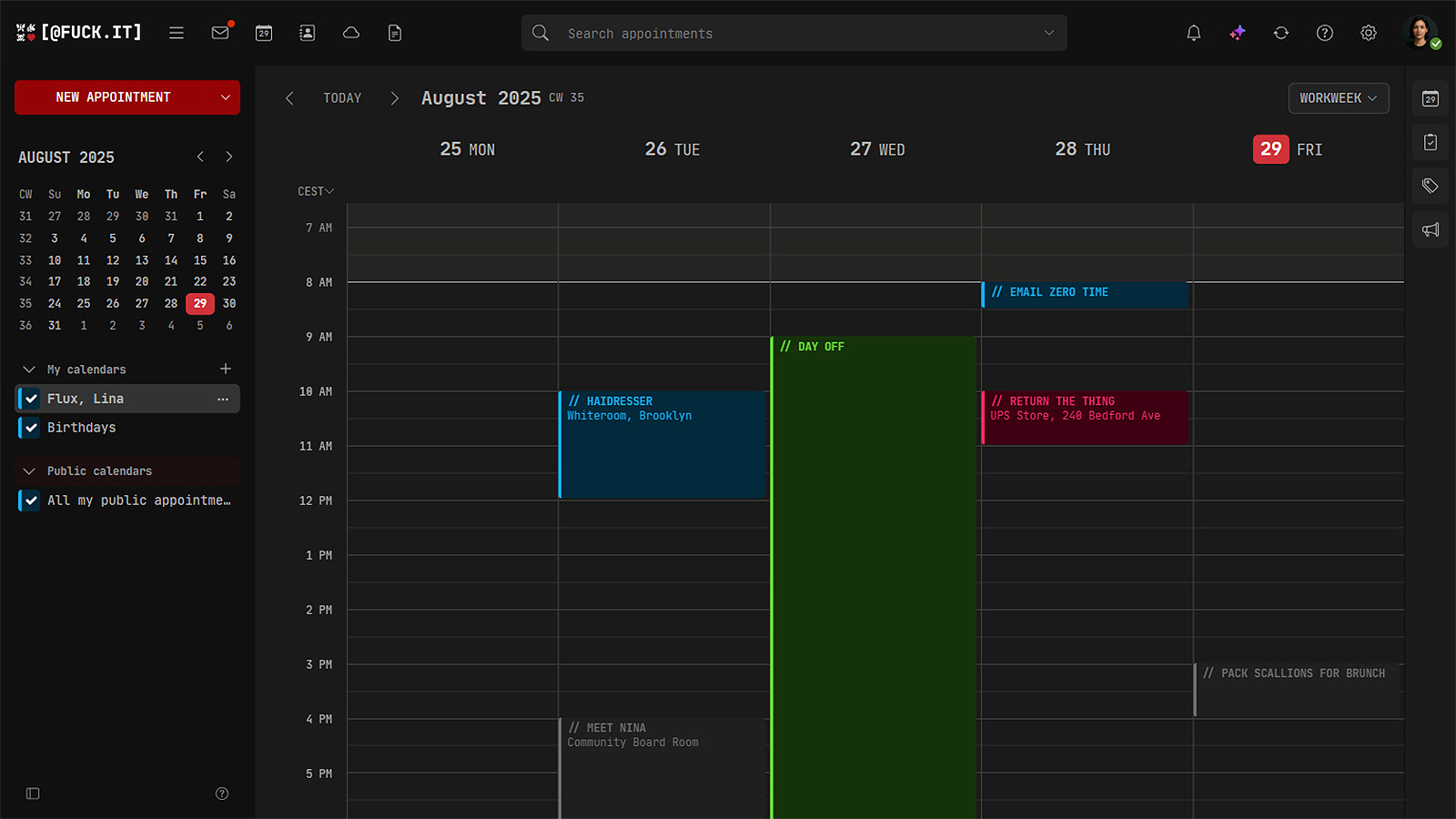
Calendars over CalDAV, with free/busy visibility and shared access for people who work in teams.
-
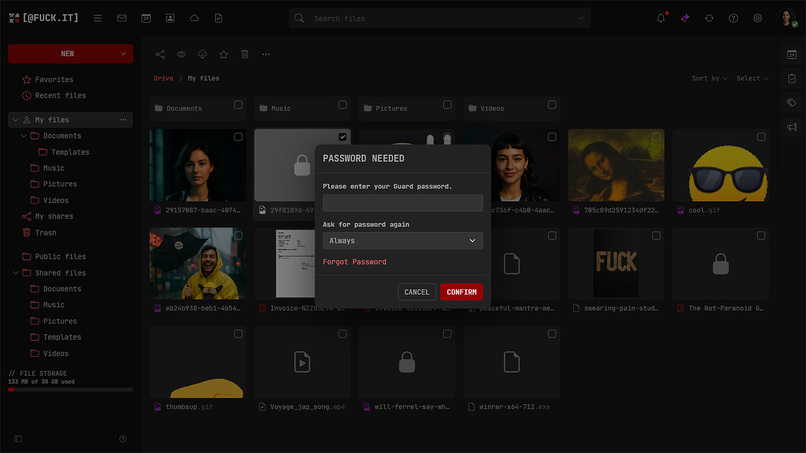
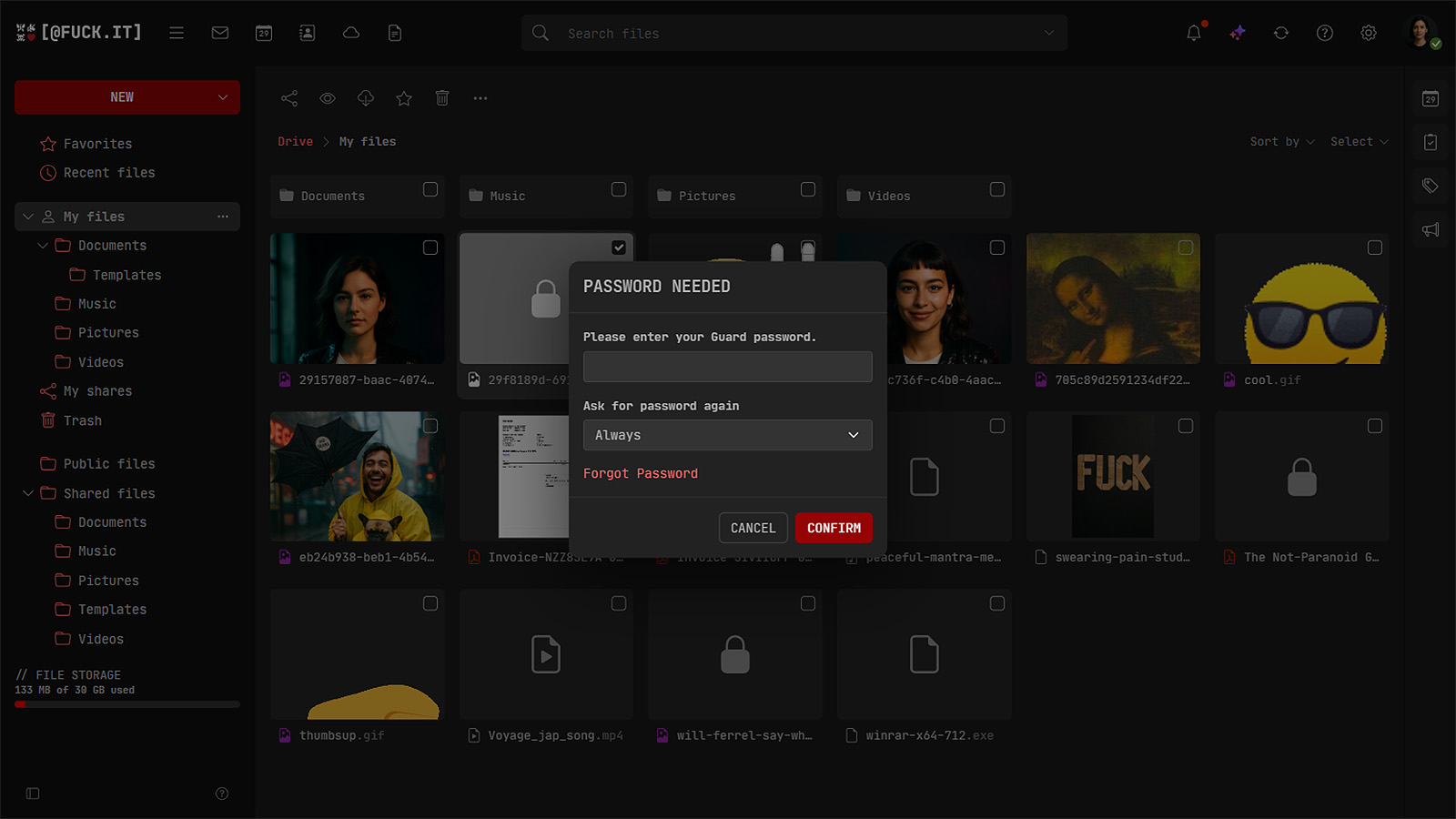
File storage alongside the mailbox, on the same EU infrastructure as everything else.
Inspiration
I've owned fuck.it for over a decade. For most of that time it sat there as a joke domain. Then it became obvious what it actually was: the one email address nobody forgets, on a domain that exists exactly once.
The wider problem was less funny. Free email runs on a trade — you get storage, the provider gets your data — and the people most annoyed by that trade are the ones least served by the alternatives, which are all beige and all sound like they were named by a compliance department.
What it does
A paid, invite-only email service. No ads, no inbox scanning, no data selling. Mail lives on EU servers in Germany on GDPR compliant, ISO 27001 certified infrastructure. Full IMAP, POP3 and SMTP, so your existing client keeps working. Contacts via CardDAV, calendars via CalDAV, tasks and notes that sync everywhere. Attachments up to 100 MB. Every member also gets a public profile page at fuck.it/@username.
How I built it
Open-Xchange as the mail platform, running on German infrastructure. Cloudflare for DNS, Postmark for transactional mail, Stripe for billing, Plausible for analytics. A custom provisioning layer sits between signup and the mail platform, handling invite codes, username reservation and the full account lifecycle.
The username system turned out to be the most interesting piece to build. Short names are the product, so they need price tiering, reservation rules, a reserved list of system addresses that must never be issued to anyone, and a hold period after an account closes so a released name can't be claimed instantly by someone impersonating the previous owner. What looks like a simple text field is really a small registry with its own rules.
Challenges I ran into
Running mail properly is a discipline of its own. Authentication has to be exactly right — DKIM, SPF and DMARC, aligned and maintained — and sender reputation is built slowly and deliberately rather than configured once. We run dedicated IPs, monitor continuously, and treat deliverability as an ongoing operation rather than a setup step. Most of the engineering effort since launch has gone there, and it's the part members never see when it's working.
The second challenge was growth. A product with a name like this doesn't fit neatly into the standard playbook, so acquisition had to be built from scratch around the audience that actually wants it, rather than borrowed from what works for everyone else.
Accomplishments that I'm proud of
Shipping a real email service as a small team. Mail is one of those domains where the barrier to entry looks low and the barrier to doing it properly is enormous — authentication, sync protocols, storage, reputation, lifecycle, billing, all of it has to work before anyone can send a single message.
Also: people pay for it, in a category where free is the default expectation. That only works if the service is worth paying for — storage that isn't rationed, protocols that let you keep your own client, sync that doesn't break, mail that arrives, and an address that's genuinely yours. No free tier means no hidden second business model, and the whole arrangement is simple: members get a service that works, and we get paid to run it properly instead of being paid by someone else to watch them.
What I learned
The name does the targeting. Most paying members arrive with no stated interest in privacy or security — they arrive because the address made them laugh, and they stay for the service underneath it. The attitude gets attention; the infrastructure is what keeps people.
But when people tell us why they're switching, the answer is almost always the same: they want out from under big tech. Getting away from Google, from inboxes that are scanned, from accounts that exist to feed an advertising business. Privacy and independence from the big platforms turn out to be the real motivation behind a sign-up that started as a joke about a domain name. The two things aren't in tension — the audience that finds this funny is the same audience that stopped trusting the free providers years ago.
I also learned that the unglamorous parts carry the product. Nobody signs up for correctly aligned DNS records, but everything depends on them.
What's next for @fuck.it
Temporary aliases, better referral mechanics, and continued work on the mail stack.
Built With
- cloudflare
- dkim
- dmarc
- dns
- hetzner
- imap
- javascript
- open-xchange
- php
- plausible
- postmark
- smtp
- spf
- stripe


Log in or sign up for Devpost to join the conversation.