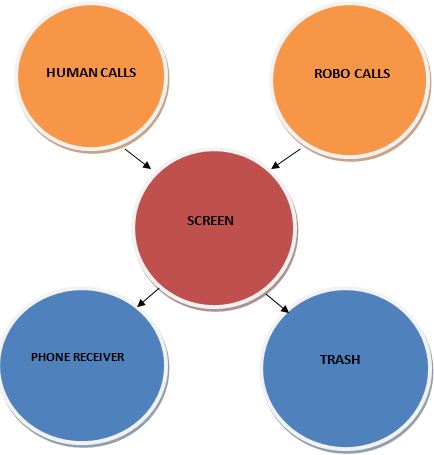
The concept is to put a machine reader before incoming calls go to the receiver.  The objective is to screen  and separate human calls from computer-generated calls.  Two clues worth exploring in the manner calls are dialed:  If they are fast, they are not human; if evenly-paced, they are not human.
Human calls (normal calls) should proceed to the receiver unimpeded.  Computer-generated calls should be directed to a memory storage that could be retrieved later to act on the good ones and delete the bad ones.
The FTC should create national robocalls database or registry, just like DNA and fingerprint databases or sex offender’s registry.  Encourage phone customers to report to the FTC the numbers used in robocalls and trace the computers used by the senders.  The FTC should require phone provider companies to integrate a memory bank of this database to the reader/screener and regularly update it, possibly every month, ideally every day.  The customers may be charged a monthly fee for this service.
The phone numbers in the registry may be removed only when the offending party relinquishes the use of that particular number and returned to the company provider.
The success of this system, if implemented, depends on the degree of cooperative efforts among the FTC, the phone company providers, and the customers.
FTC robocall idea
Updates

Leave feedback in the comments!
Log in or sign up for Devpost to join the conversation.