Inspiration
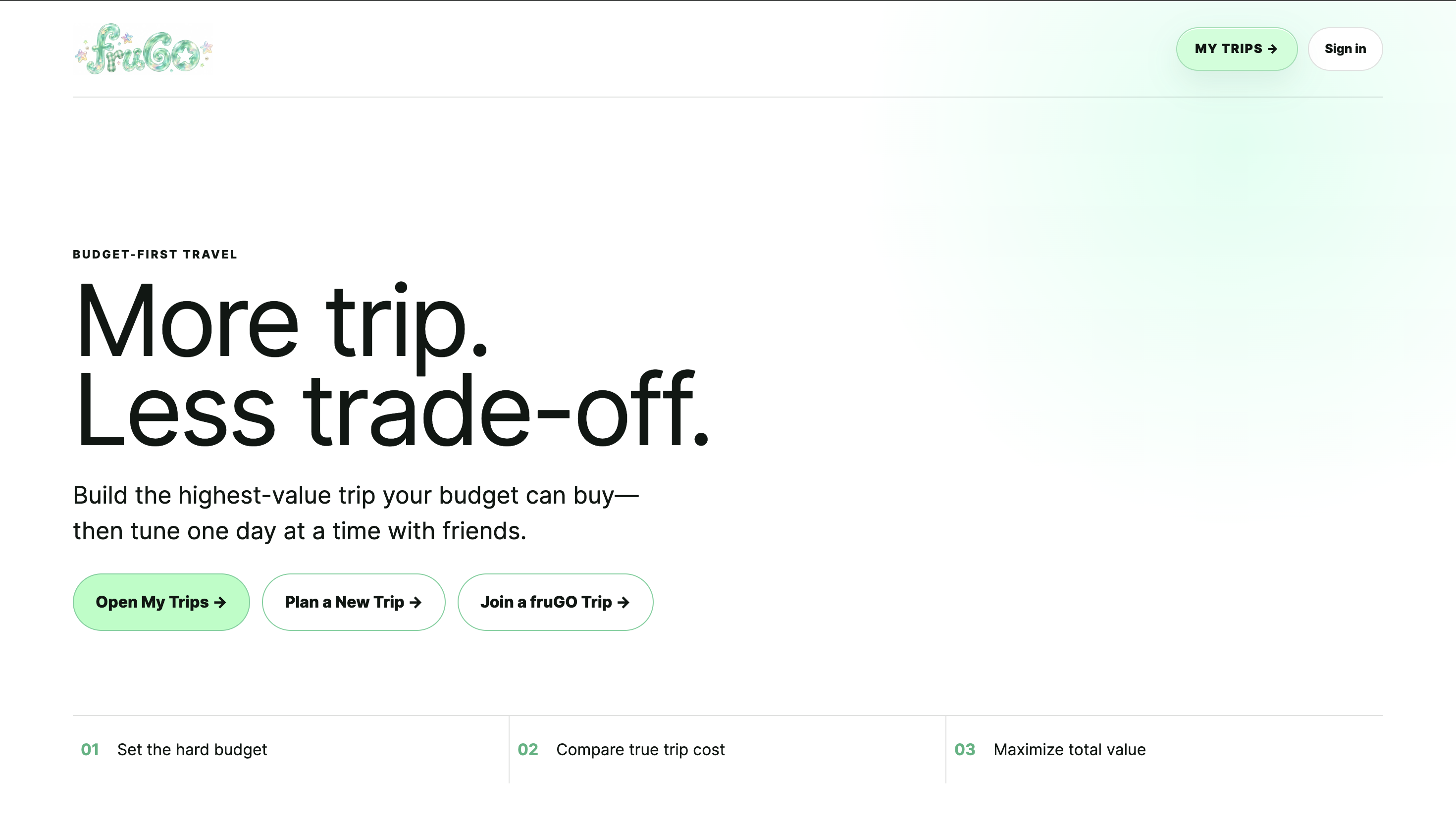
Planning a trip usually means opening many tabs: flights, hotels, maps, ticket platforms, restaurant lists, and a separate spreadsheet for the budget. Even after all that work, travelers still struggle to answer one important question: “What is the best trip I can build with the money I actually have?” We created fruGO to connect financial planning with travel planning. Instead of treating the budget as an afterthought, fruGO uses it as the foundation of the entire itinerary.
What it does
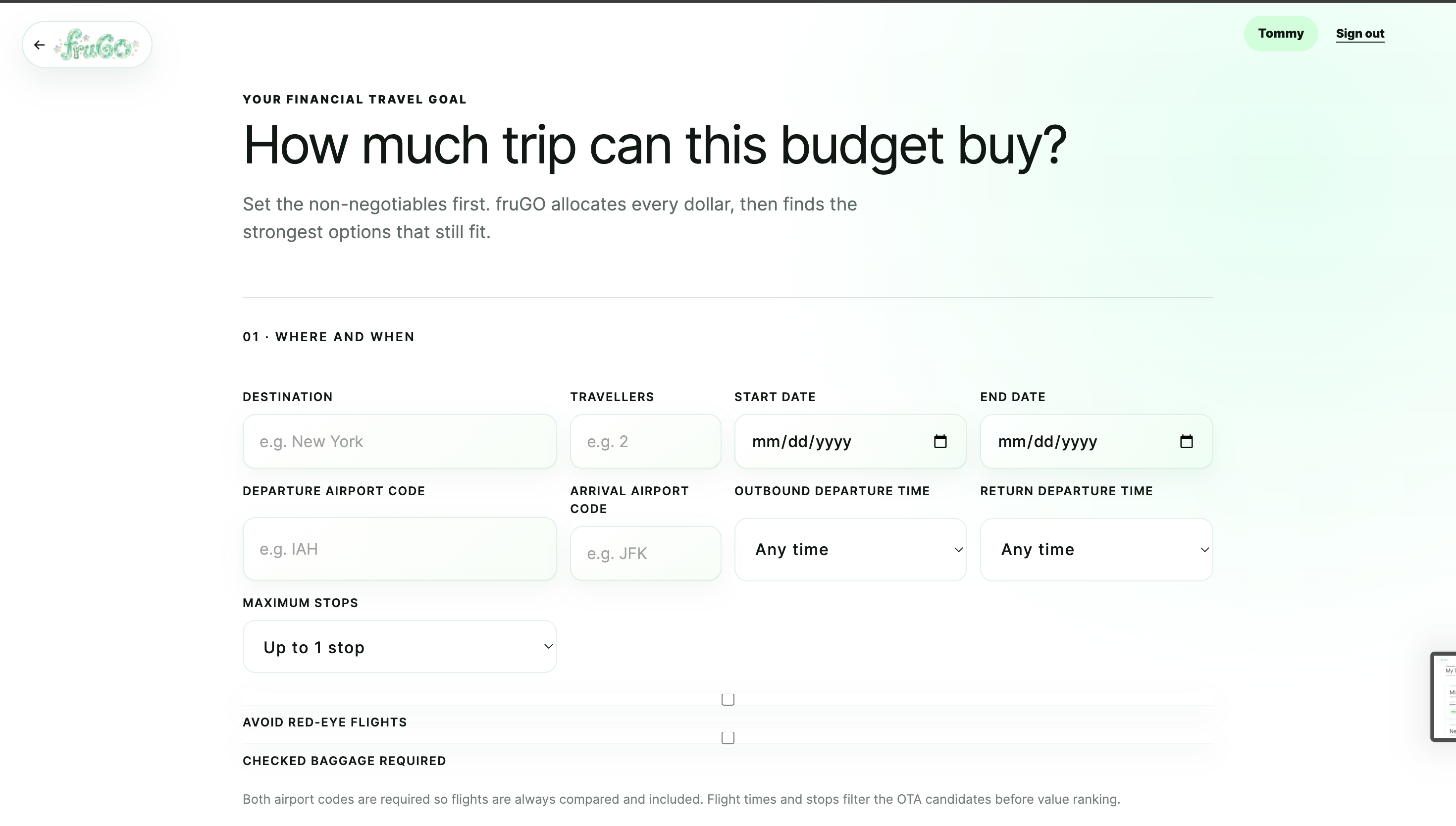
fruGO is a budget-aware, end-to-end travel planning platform. Users provide their destination, travel dates, number of travelers, total budget, required attractions, flight preferences, hotel preferences, and optional YouTube travel references.
fruGO then:
- Analyzes the destination and recommends a personalized spending allocation for transportation, accommodation, food, experiences, shopping, and a safety buffer
- Lets users manually adjust each budget category
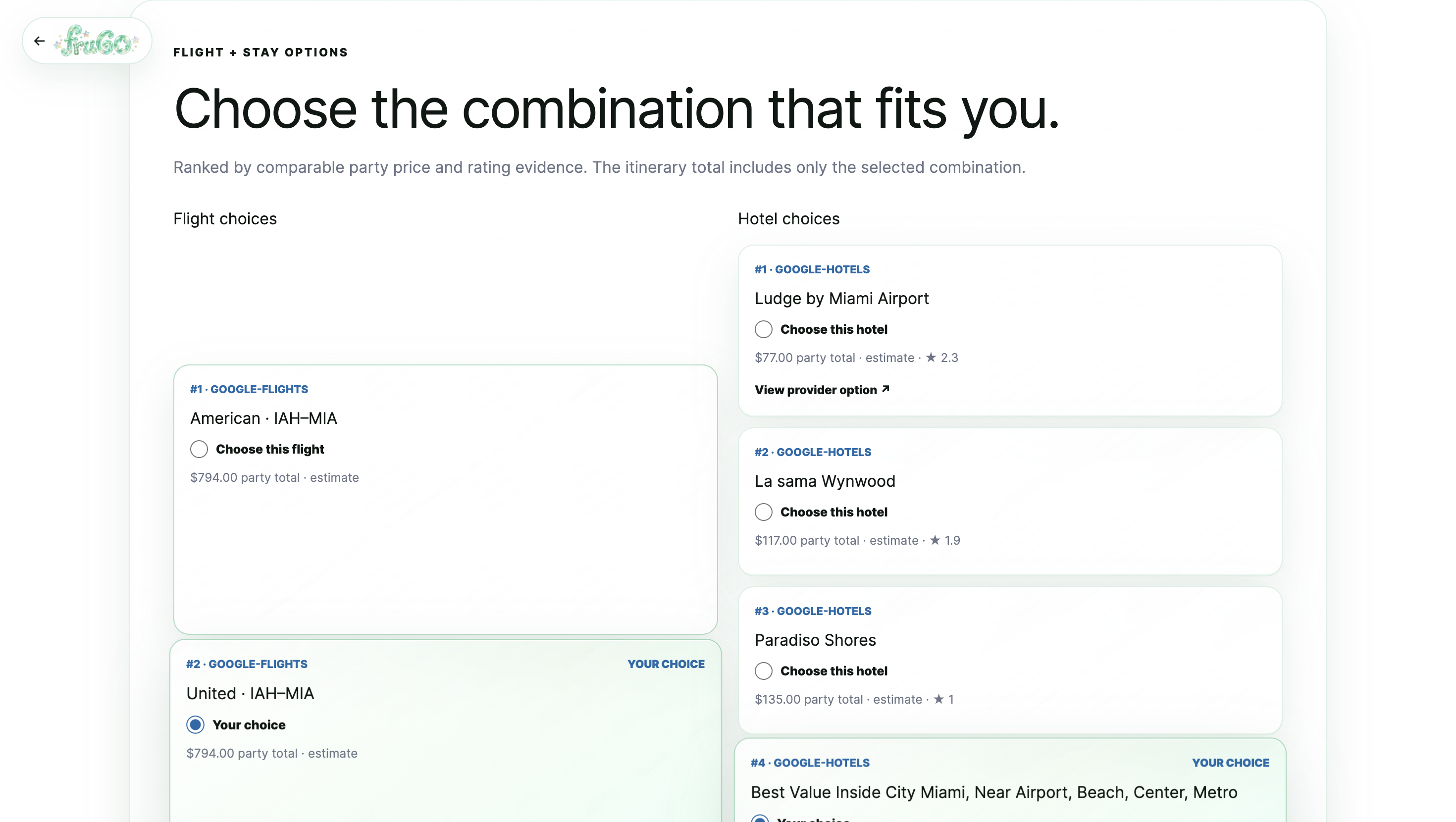
- Searches and ranks flight and hotel options using live travel search data
- Compares options by total cost, convenience, rating, location, and overall value—not price alone
- Extracts places from YouTube travel references and treats them as required planning inputs
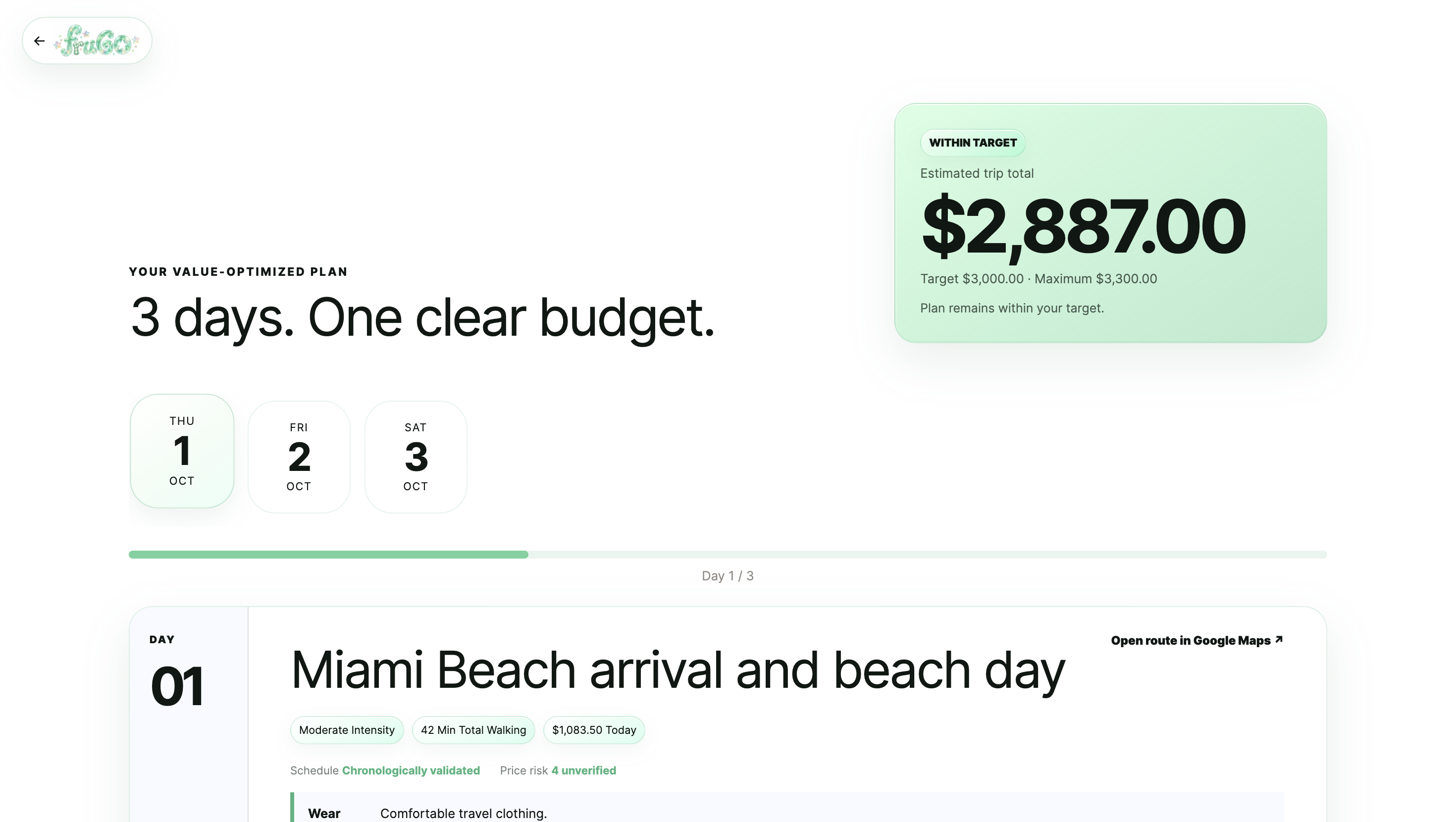
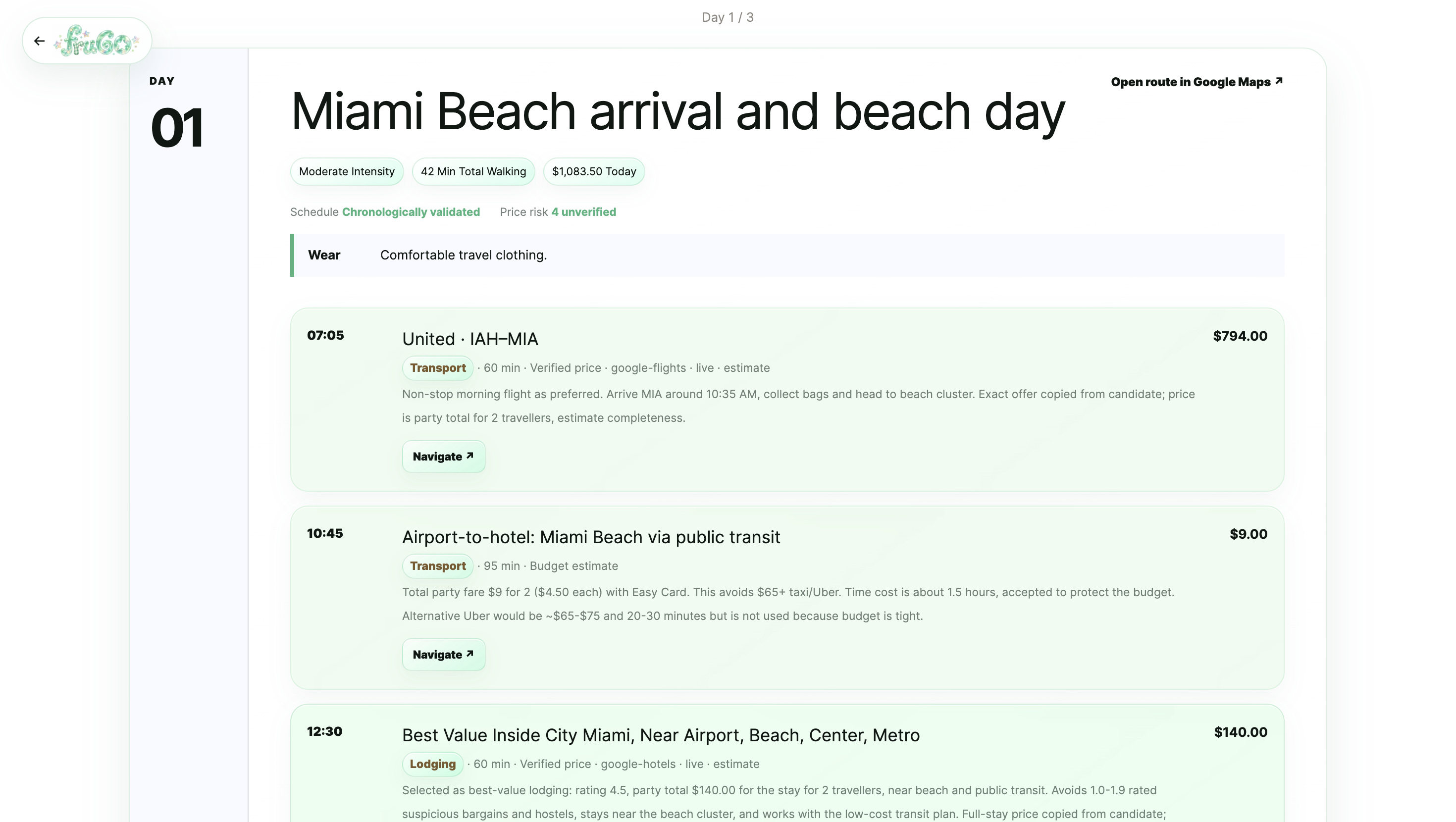
- Generates a complete daily itinerary containing attractions, restaurants, public transportation instructions, estimated costs, navigation links, and ticket links
- Keeps the estimated total close to the user’s target budget while allowing reasonable flexibility
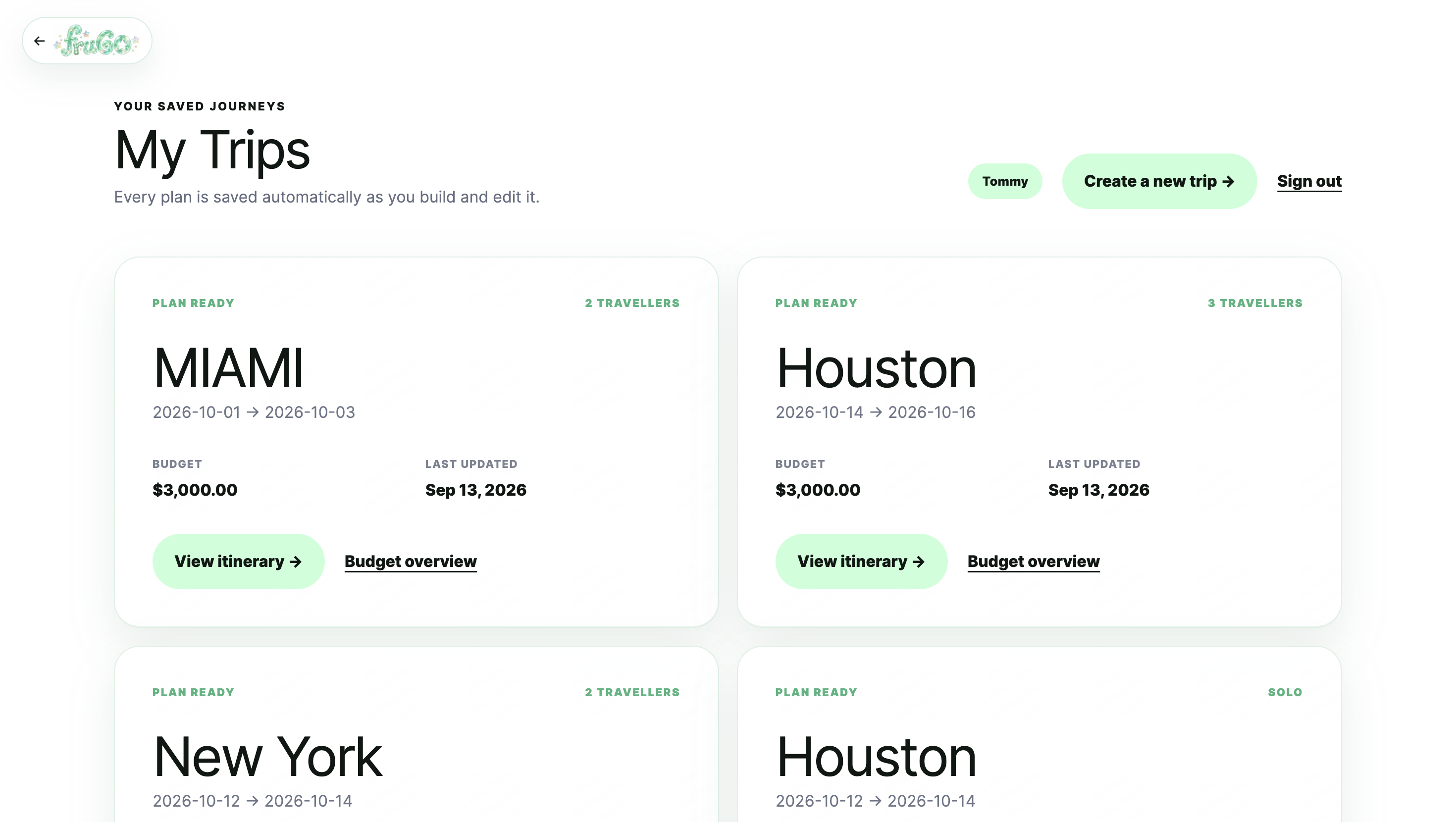
- Saves trips to the user’s account
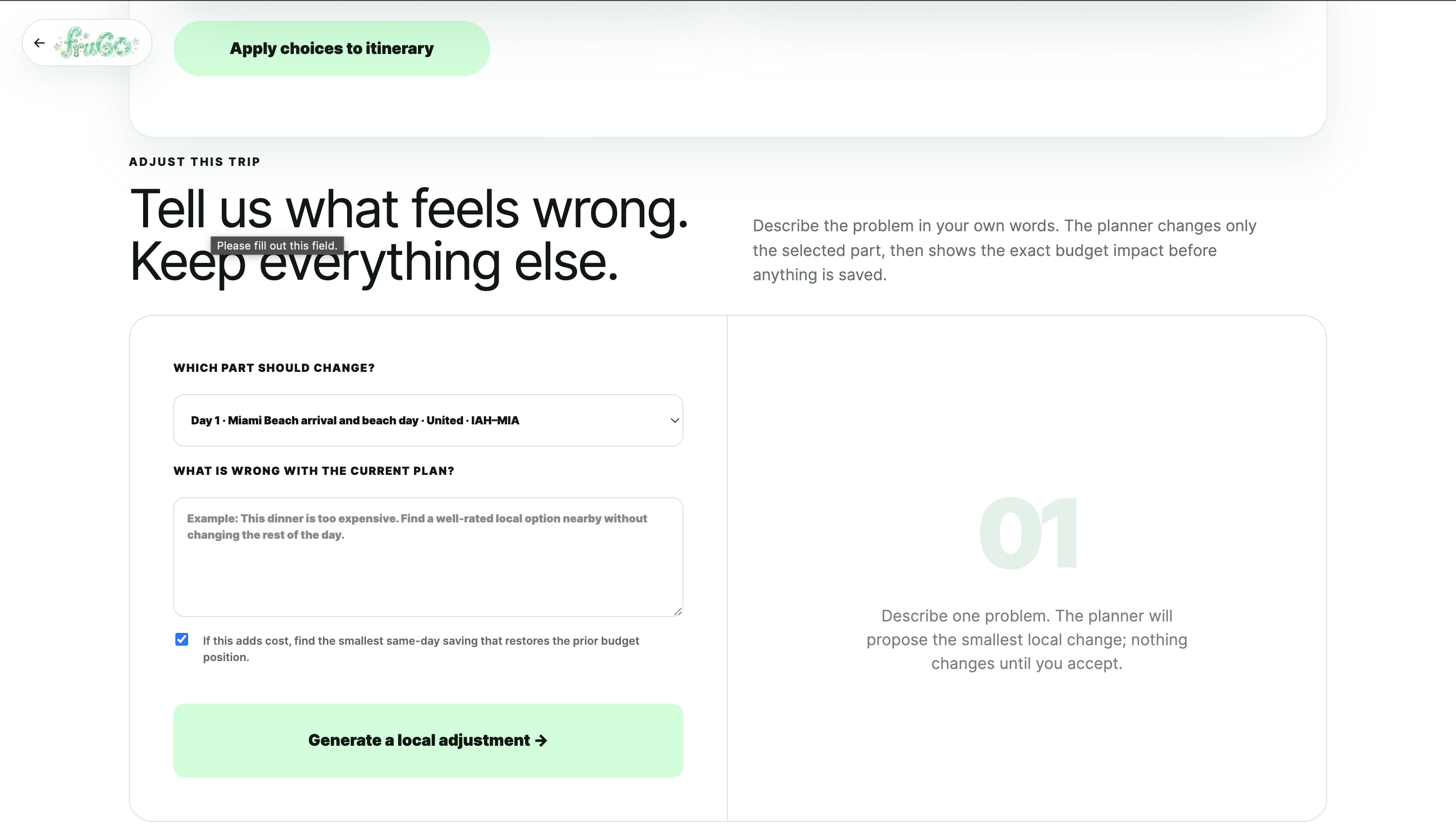
- Supports invitation-based group collaboration and localized itinerary changes
The result is one actionable trip plan that users can follow without switching between multiple travel websites.
How we built it
fruGO is built with Next.js, TypeScript, React, Supabase, and Vercel. Supabase provides authentication, PostgreSQL data storage, saved trips, collaboration permissions, and itinerary persistence.
Our planning pipeline separates live evidence from AI reasoning:
- The user’s requirements and budget are collected.
- Travel and event providers return available offers and pricing evidence.
- The system normalizes those results into comparable total prices.
- A language-model planning layer evaluates the user’s required places, travel preferences, geographic proximity, transportation needs, and available budget.
- The generated itinerary is validated for scheduling conflicts, missing required locations, and cost consistency before it is saved.
List of APIs and things we integrated:
- SerpAPI for Google Flights and Google Hotels search results
- Ticketmaster Discovery API for event and ticket information
- YouTube Data API for extracting travel-reference metadata
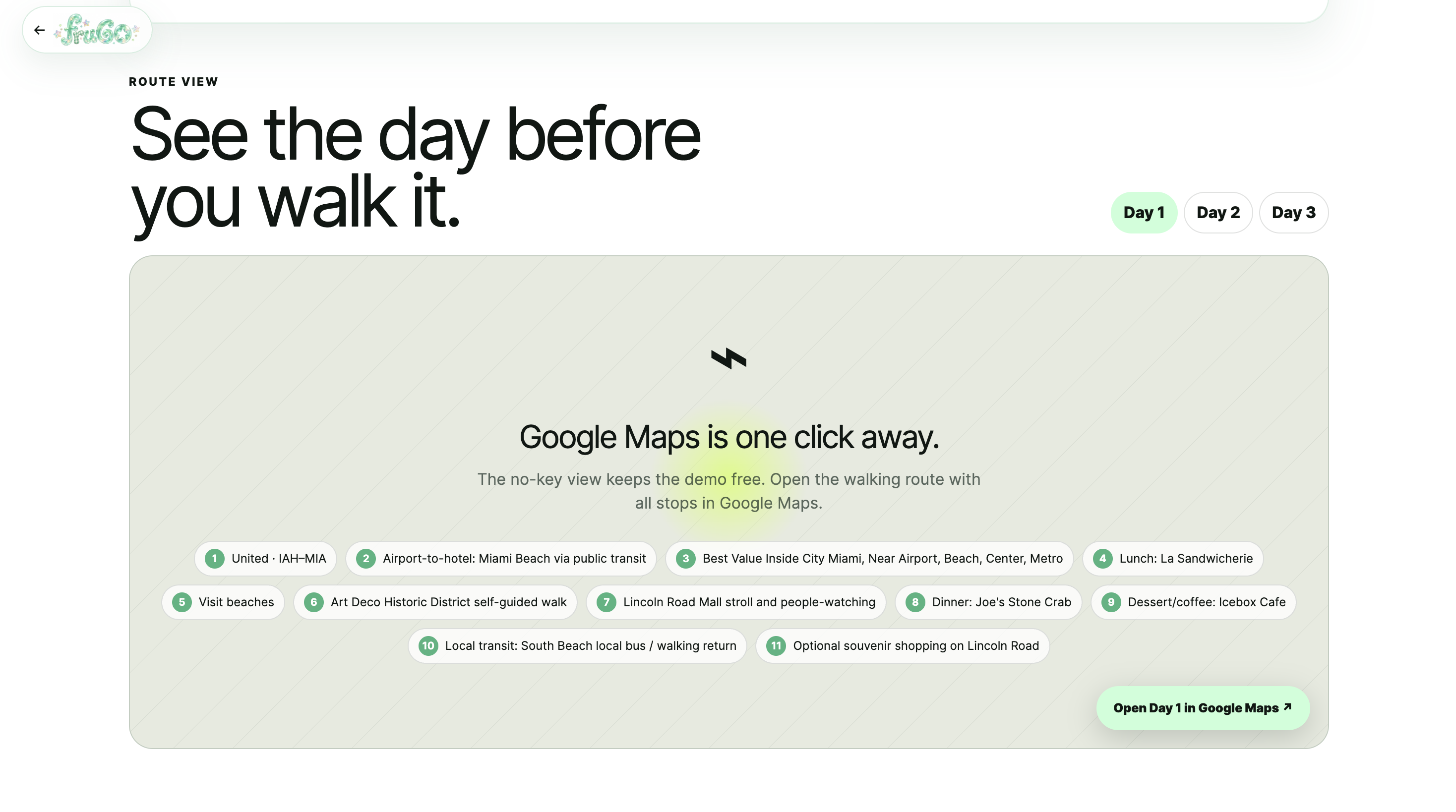
- Google Maps links for place navigation and daily routes
- Supabase for authentication, database storage, and collaboration
- A large-language-model API for budget allocation and itinerary generation
- Vercel for production deployment
Flight and hotel preferences are treated as preferences rather than absolute reasons to cancel a trip. If an exact flight combination is unavailable, fruGO can broaden the search while preserving the route and dates, then clearly present the resulting trade-off.
Challenges we ran into
The largest challenge was combining uncertain external information into one dependable plan. Different providers return prices in different formats: per traveler, per night, or for the complete stay. We created a normalized offer model so users can compare party totals instead of misleading headline prices. AI-generated itineraries can also contain malformed output or overlapping activities. We added structured output validation, schedule checks, repair attempts, longer response windows, and incremental planning to make itinerary generation to be more reliable. Another challenge was balancing financial discipline with real travel behavior. A budget should guide the recommendation, but it should not prevent someone from traveling simply because a flight is slightly more expensive than predicted. We therefore model the budget as a target with visible flexibility rather than an inflexible cutoff.
Accomplishments that we're proud of
We are proud that fruGO connects two experiences that are normally separated: personal budget allocation and detailed travel planning.
Within one website, a user can move from a single budget number to:
- Personalized spending targets
- Selectable flight and hotel recommendations
- A geographically organized daily itinerary
- Restaurant and transportation guidance
- Ticket and navigation links
- A consolidated estimated trip total
We are also proud that users retain control. The system recommends how money could be allocated, but users can modify those allocations and regenerate only the part of the trip they want to change.
What we learned
We learned that an effective AI travel planner needs more than a good prompt. It needs verified external data, normalized pricing, structured outputs, validation, retry and repair logic, and clear communication about estimates. We also learned that “best value” is more meaningful than “cheapest.” A slightly more expensive hotel near public transportation or a tour with included pickup may produce a better overall trip and even reduce secondary costs. Most importantly, we learned that AI recommendations become much more useful when users can understand and control the financial reasoning behind them.
What's next for fruGO
We plan to:
- Add more airline, hotel, rail, bus, tour, and restaurant data providers
- Improve real-time fare and availability verification
- Calculate airport-to-hotel and attraction-to-attraction transportation costs more precisely
- Add richer group voting and collaborative editing
- Support additional social-media travel references
- Learn from users’ previous trips and spending preferences
- Add booking alerts when a selected option changes price
- Expand the financial dashboard with actual spending, currency conversion, and settlement tools
Long-term, fruGO is building a true financial travel copilot: maximizing the value of every dollar so you can focus on richer experiences, not just lower price tags.
Built With
- next.js
- node.js
- postgresql
- react
- supabase
- ticketmaster
- typescript
- vercel


Log in or sign up for Devpost to join the conversation.