Inspiration
As someone who’s always loved cooking but struggled to find structured, accessible culinary education outside of expensive in-person schools, I wanted to create a platform that makes professional-level cooking learning available to everyone. I noticed friends could follow recipes but lacked foundational knowledge—this gap became the spark for CulinarySchool AI, a platform that prioritizes understanding why techniques work, not just how to follow steps.
What it does
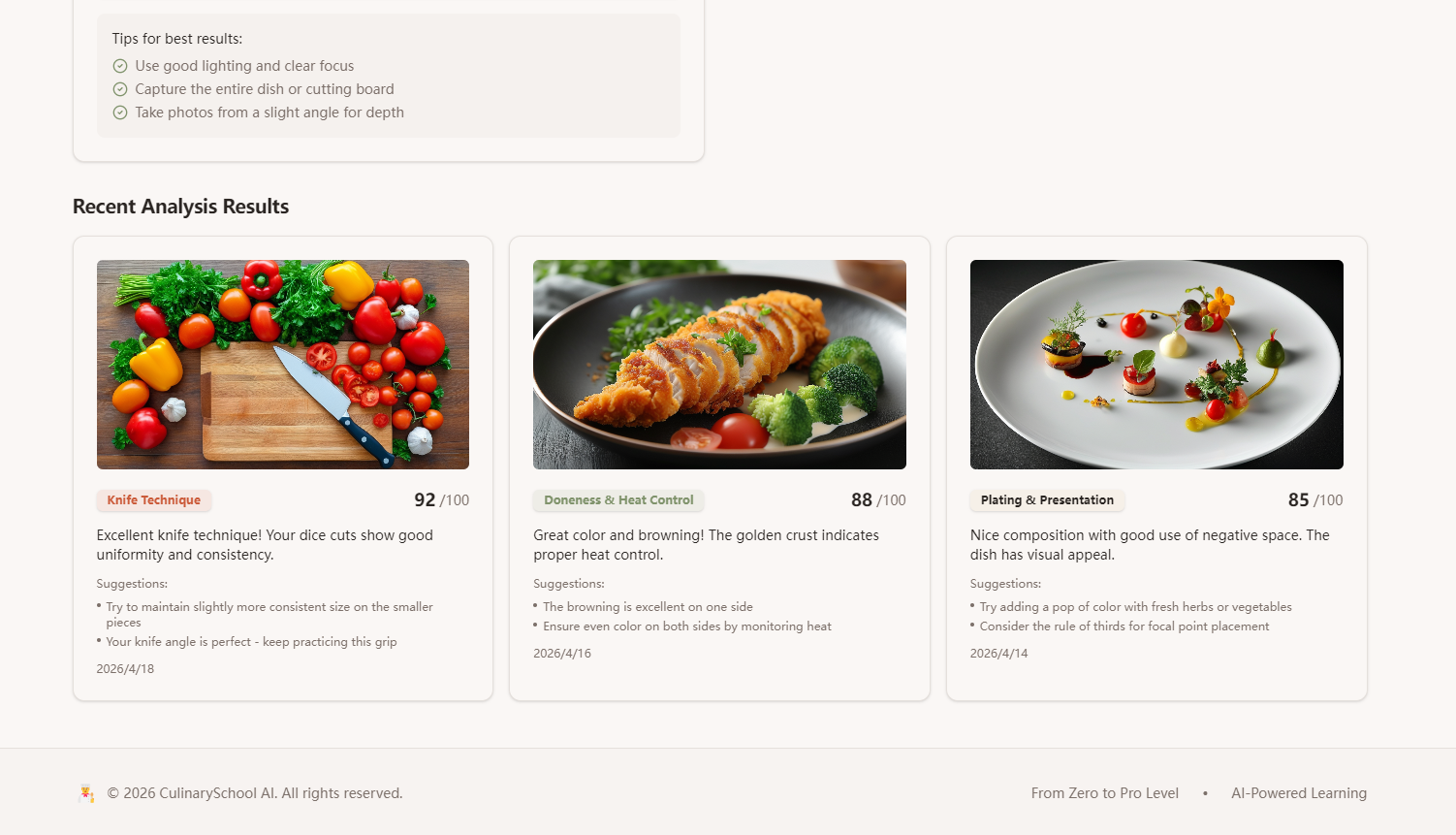
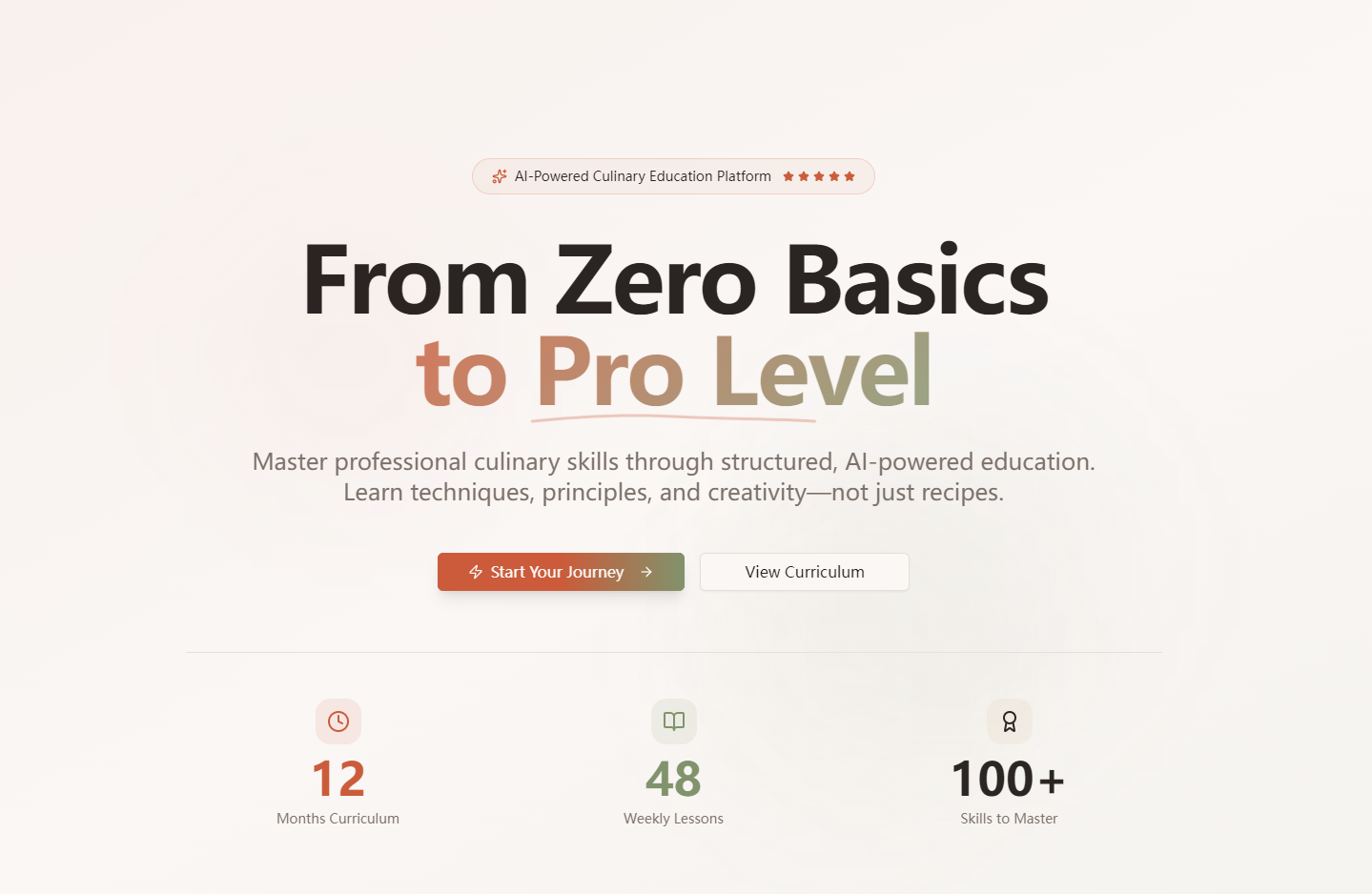
CulinarySchool AI delivers a 12-month progressive culinary curriculum (beginner to advanced) with weekly guided training, an extensive ingredient database with substitution tips, AI-powered feedback on cooking techniques, and a tool to create and save original recipes. It focuses on building practical skills, heat control, knife work, and creativity—all at a self-paced rhythm.
How we built it
We started by mapping the 12-month curriculum to align with real culinary school progression, breaking it into beginner (months 1-4), intermediate (5-8), and advanced (9-12) stages. Using React for the frontend and Node.js for the backend, we built a responsive interface with a warm, professional color palette (cream, charcoal, terracotta) to feel approachable yet authoritative. We structured the ingredient database with MongoDB, integrated image upload tools for the AI analysis feature, and designed intuitive navigation for the course library and dashboard.
Challenges we ran into
The biggest hurdle was balancing depth and accessibility—ensuring the curriculum was comprehensive enough for serious learners but not overwhelming for beginners. We also struggled to design the AI feedback interface to be constructive (not discouraging) while clearly highlighting areas for improvement. Additionally, making the ingredient substitution logic feel natural and contextually relevant required extensive research into regional ingredient availability and flavor profiles.
Accomplishments that we're proud of
We’re proud of creating a cohesive learning journey that mirrors real culinary education, with milestone tracking and skill checkpoints that keep users accountable. The ingredient database became a standout feature—packed with practical details like seasonality, storage, and cost estimates that home cooks actually need. Most importantly, the platform feels intuitive: users can jump from learning a knife technique to uploading a photo for feedback to creating a recipe using that technique, all in a few clicks.
What we learned
Building this project taught me the importance of user-centric design—every feature needed to solve a specific pain point for home cooks. I also learned how to translate complex culinary concepts into digestible, step-by-step content, and how to balance aesthetic design with functional utility (e.g., minimal icons for tools, clear infographics for techniques). Finally, I gained a deeper understanding of how to structure progressive learning paths that build confidence over time.
What's next for this project
Next, we plan to expand the global cuisine modules to include more regional techniques, add interactive tool tutorials, and enhance the recipe creator with more personalized balance suggestions. We also want to refine the skill feedback system to incorporate more nuanced tips for different skill levels and explore partnerships with local grocery providers to link ingredient data to real-time purchasing options.

Log in or sign up for Devpost to join the conversation.