Inspiration
Frogarium began with a simple fascination: frogs have one of the most extraordinary lifecycles in nature, yet they’re rarely explored in a way that feels both cosy and meaningful. I’ve always loved nurturing sims and small, self contained worlds, and I wanted to create something that captured the gentle satisfaction of caring for a creature while also reflecting the real ecological challenges frogs face. Their transformations are magical, their diversity is astonishing, and their conservation story is genuinely important. Frogarium grew from the idea that a game could be soothing, tactile, and quietly purposeful.
What it does
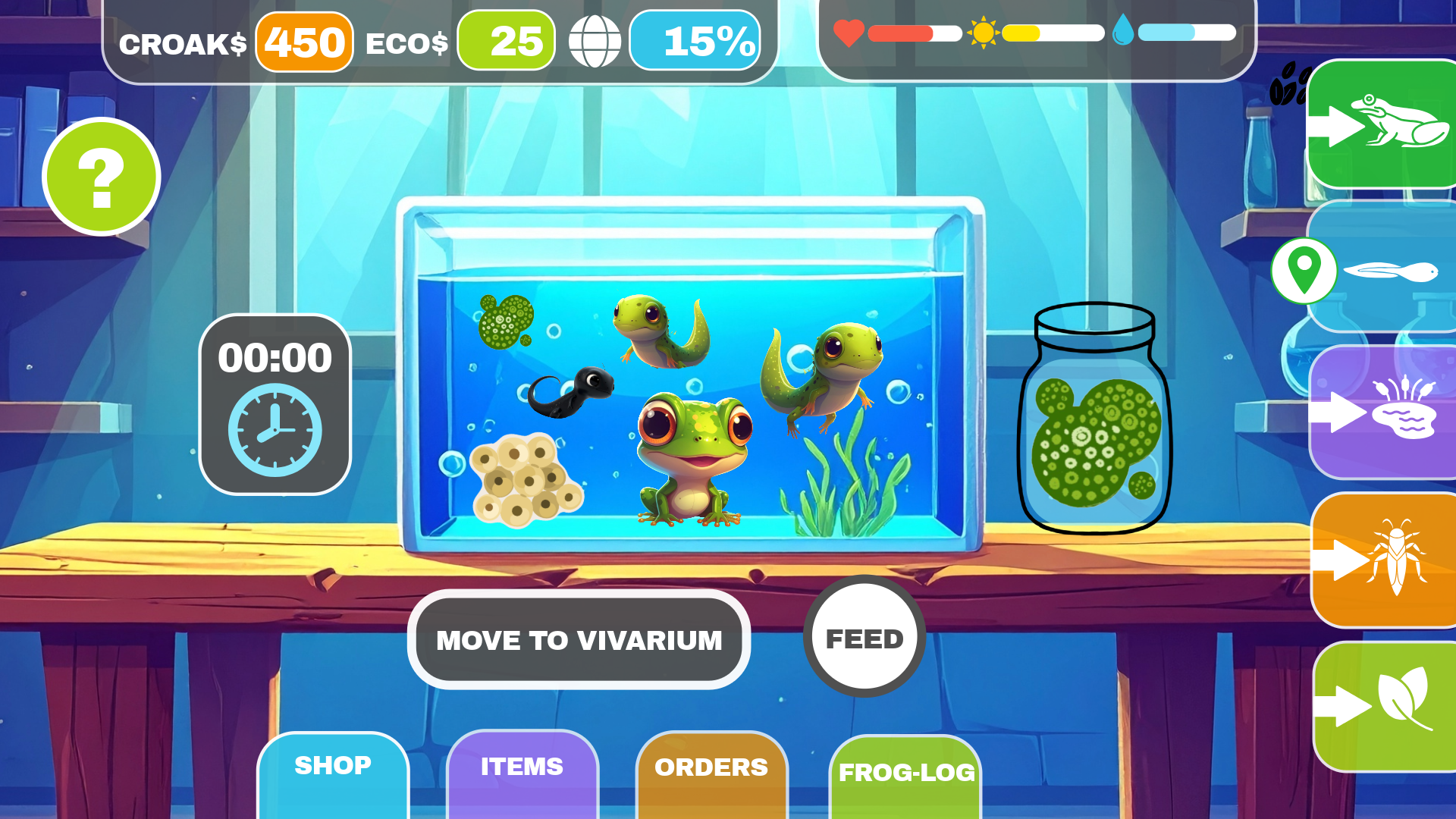
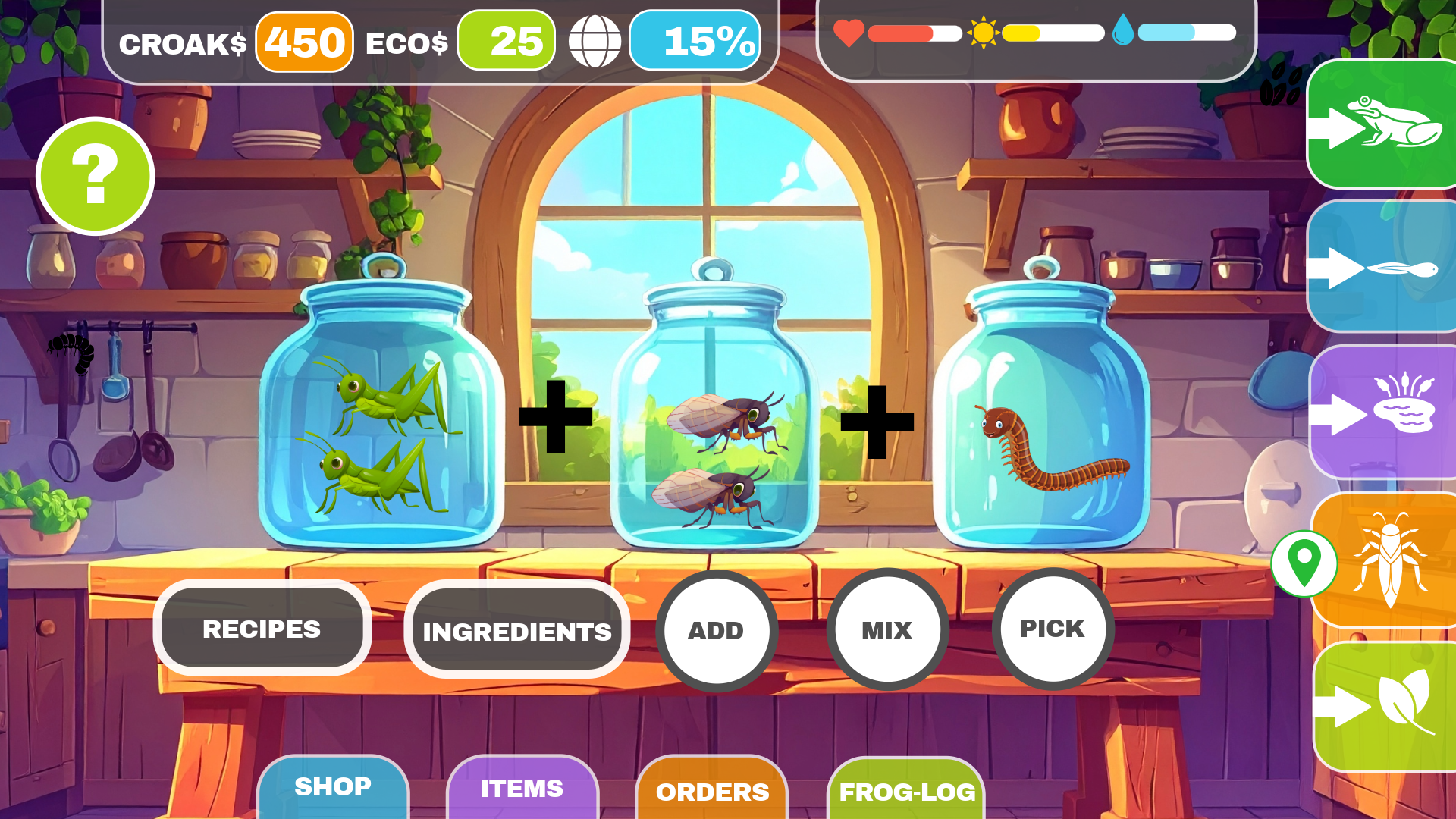
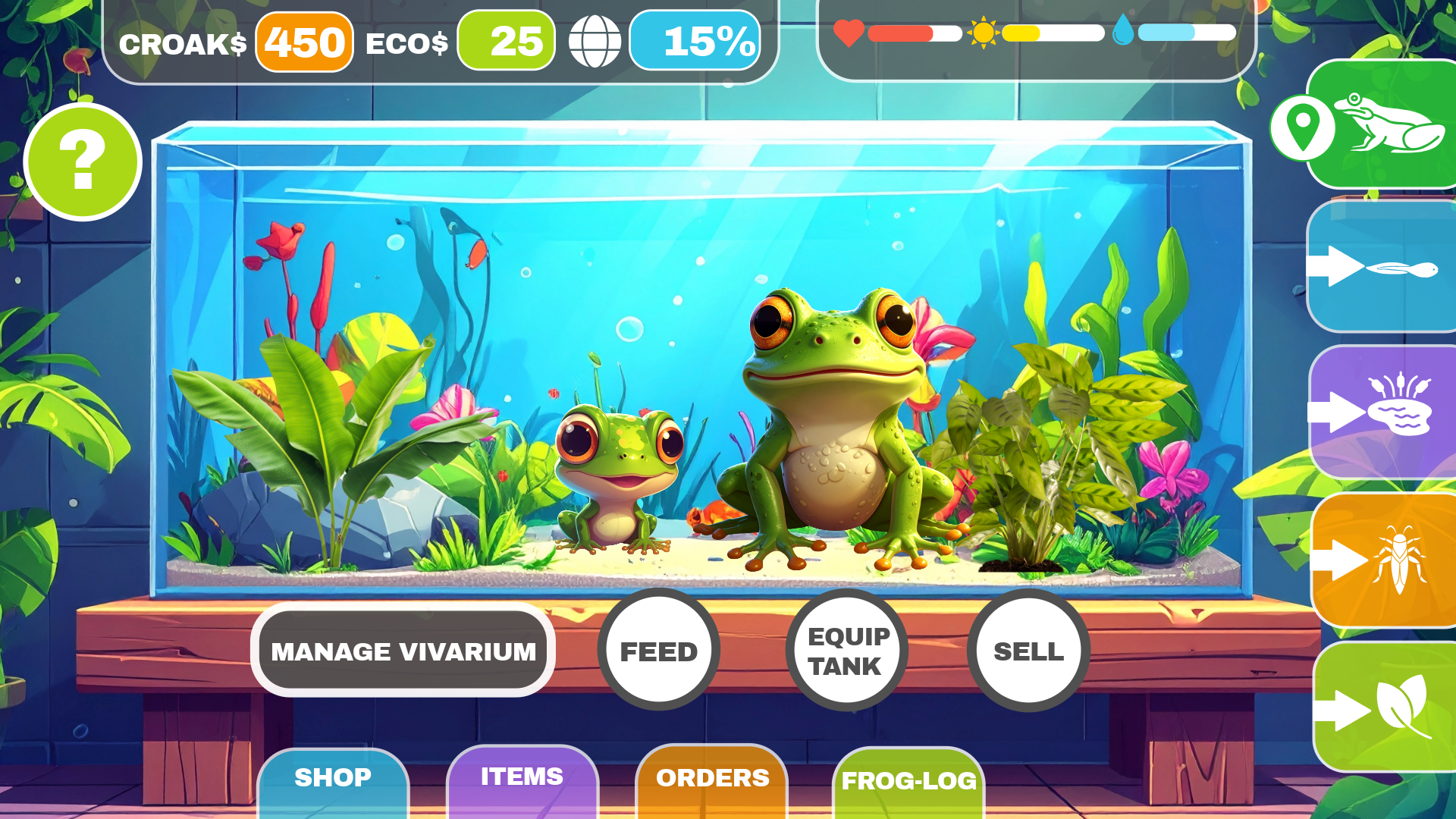
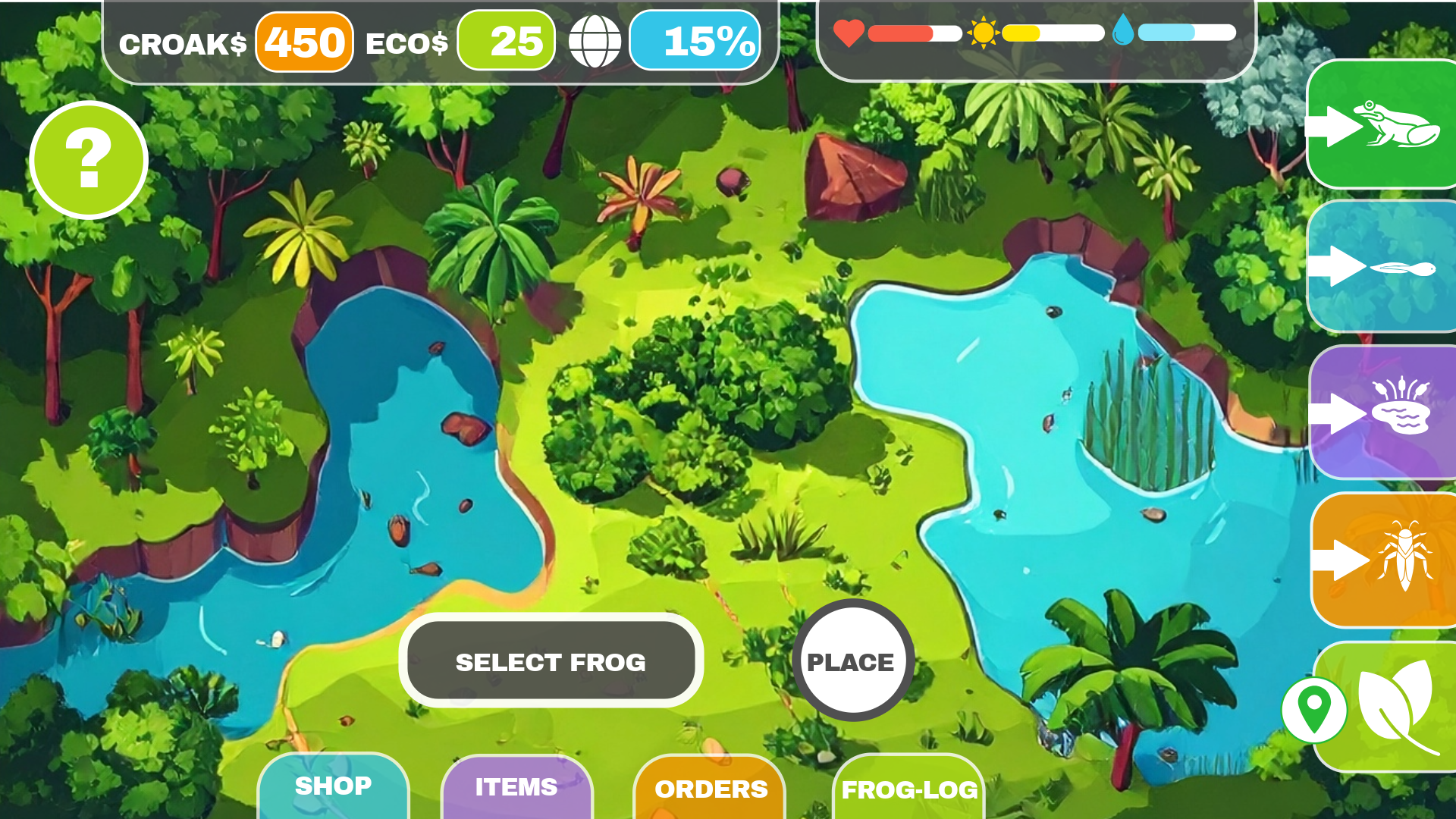
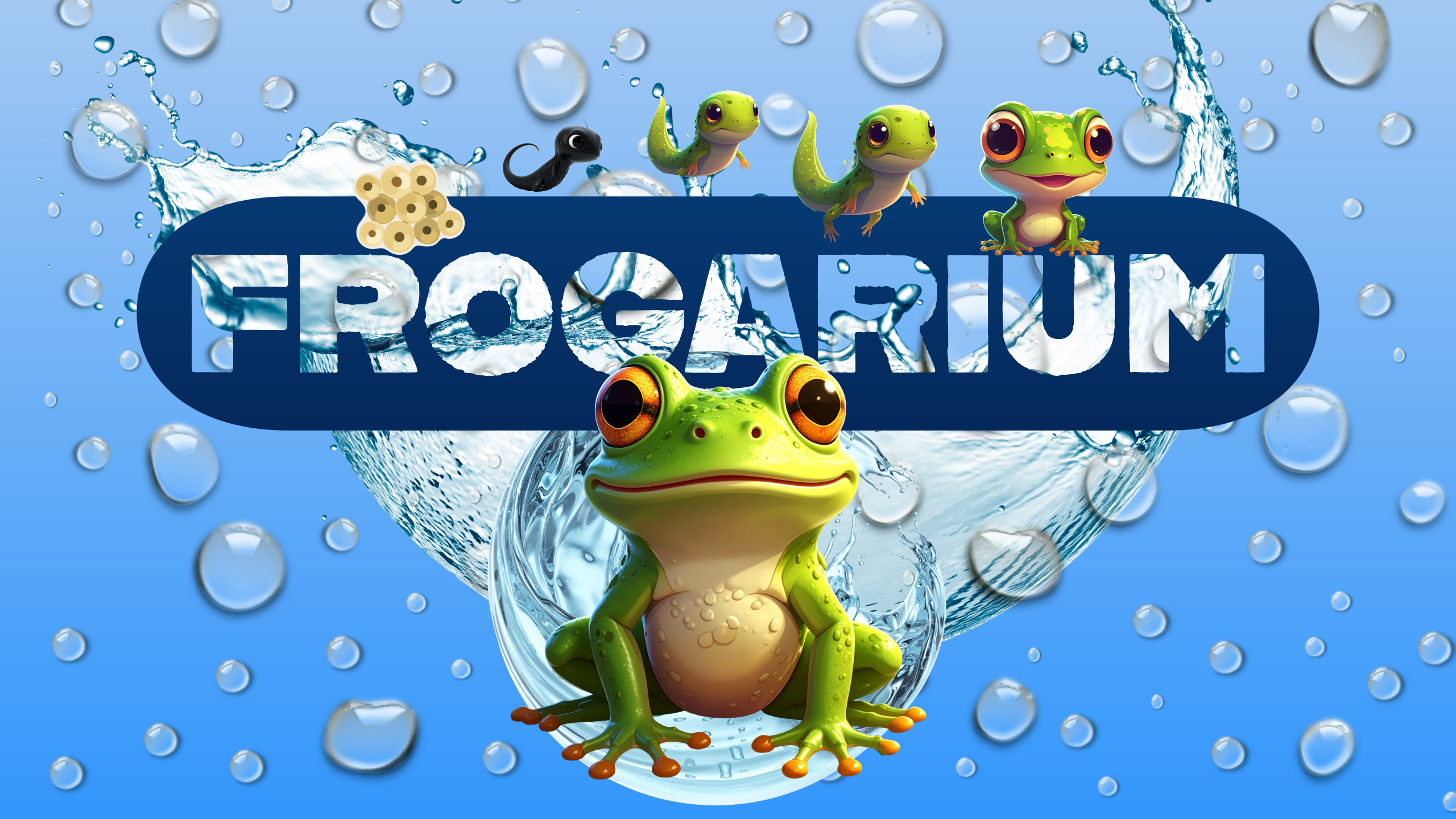
Frogarium turns the magic of frog metamorphosis into a cosy, repeatable loop of care, crafting, and discovery. Players raise frogs from fragile frogspawn to unique adult breeds, forage ingredients, craft foods that influence traits, grow vivarium plants, and choose between selling frogs for CROAK$ or releasing them for EcoPoints to restore global biomes. It’s designed for short, satisfying sessions that still feel meaningful — the kind of game where you check in “just for a minute” and end up staying because your tadpole is about to grow legs.
How we built it
Frogarium was created as a complete design package: a Game Design Document, Visual Concept Package, Player Journey Map, and Production Plan. I approached it like a real pre production phase — defining the core systems, mapping the first 15 minutes of play, designing UI flows, and ensuring the loop is clear, teachable, and repeatable. Even though the game isn’t being coded, the documents are structured so a small team could pick them up and immediately understand the vision, scope, and intended player experience.
Challenges we ran into
The biggest challenge was scope. Frogarium has so many tempting directions — genetics, rare breeds, NPC orders, seasonal events — and it would be very easy for the design to balloon. I had to be disciplined about what belonged in the MVP and what needed to wait for later phases. Another challenge was clarity: making sure the early game teaches itself naturally without overwhelming players. Balancing guidance, freedom, and cosy pacing took careful iteration.
Accomplishments that we're proud of
I’m proud of how cohesive the entire experience feels. The lifecycle loop, the foraging and crafting systems, the dual reward economy, and the emotional beats all support each other in a way that feels intentional and satisfying. I’m also proud of how accessible the design is — simple enough for younger players but layered enough to keep older players engaged. And most of all, I’m proud that Frogarium feels like a world you genuinely want to spend time in.
What we learned
This project taught me the value of scope discipline, emotional pacing, and clear system design. I learned how interconnected even small mechanics can be, and how important it is to think about the player’s emotional journey, not just the mechanical one. Designing Frogarium reinforced how powerful cosy games can be when they blend nurturing, discovery, and gentle strategy.
What's next for FROGARIUM
There’s so much potential for Frogarium’s future. Long term plans include deeper breeding systems, rare frog variants, NPC orders, seasonal events, decorations, and expanded biomes. I’d also love to explore light narrative elements and more dynamic environmental effects. But for now, the focus is on keeping the core loop elegant, cosy, and endlessly playable — a tiny world of frogs that players can return to repeatedly.


Log in or sign up for Devpost to join the conversation.