-
-
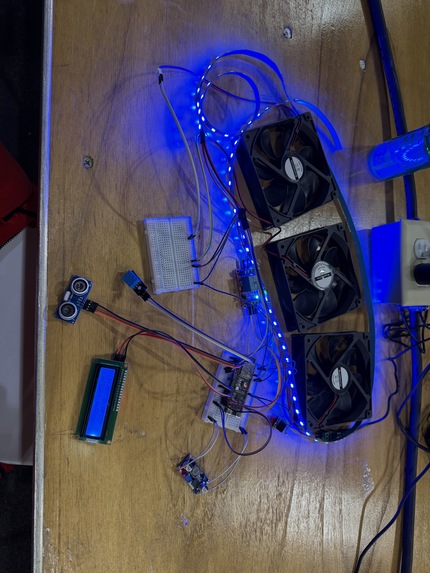
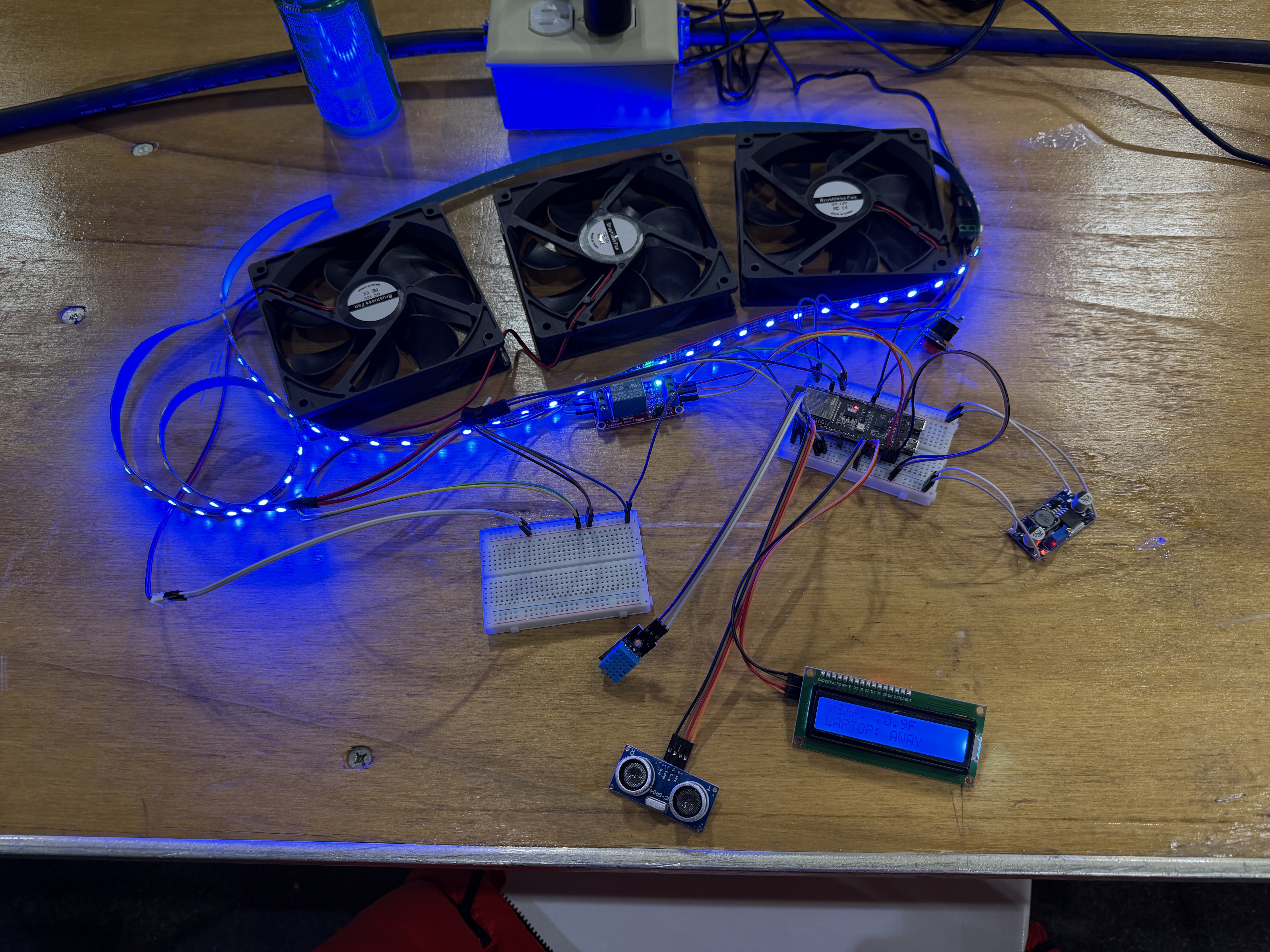
No Laptop Detected
-
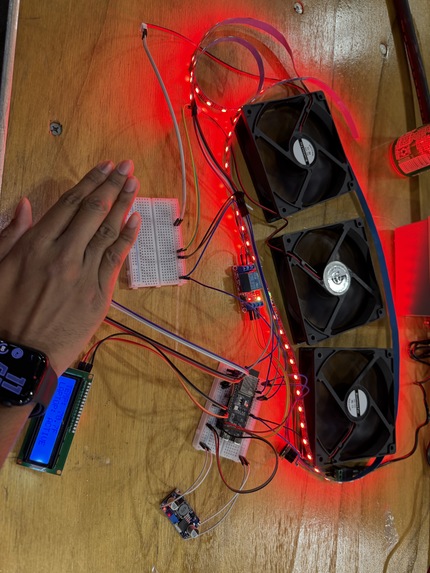
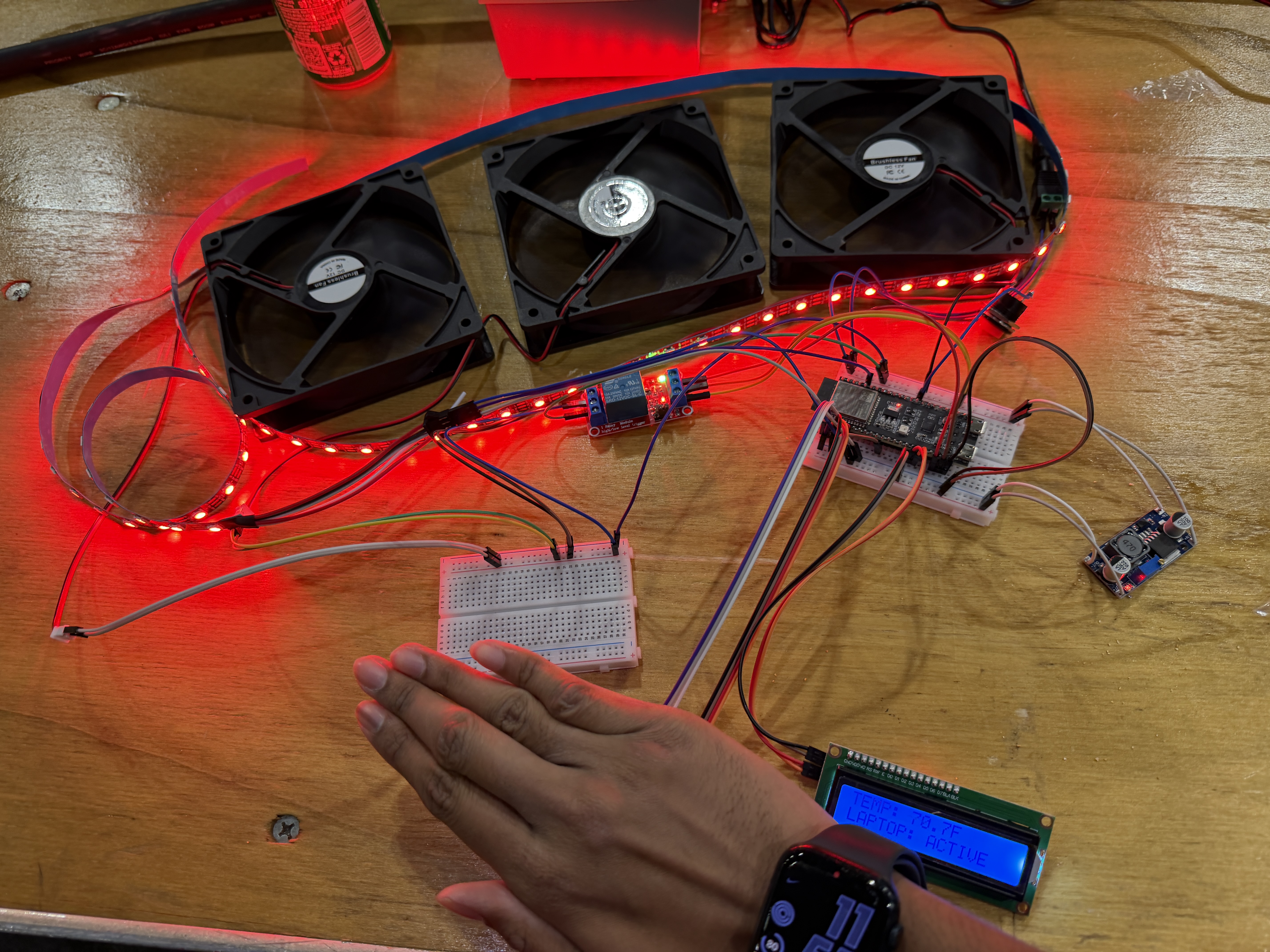
Laptop In Use
-
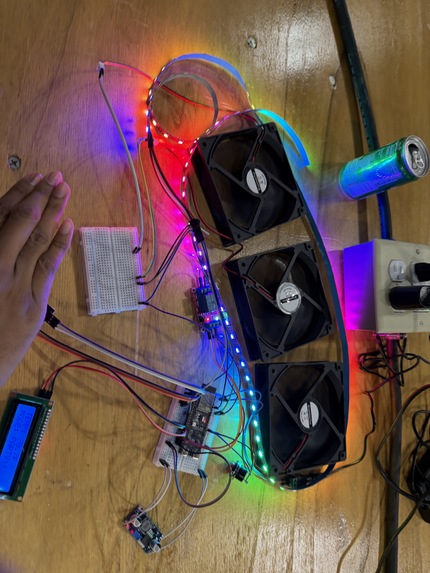
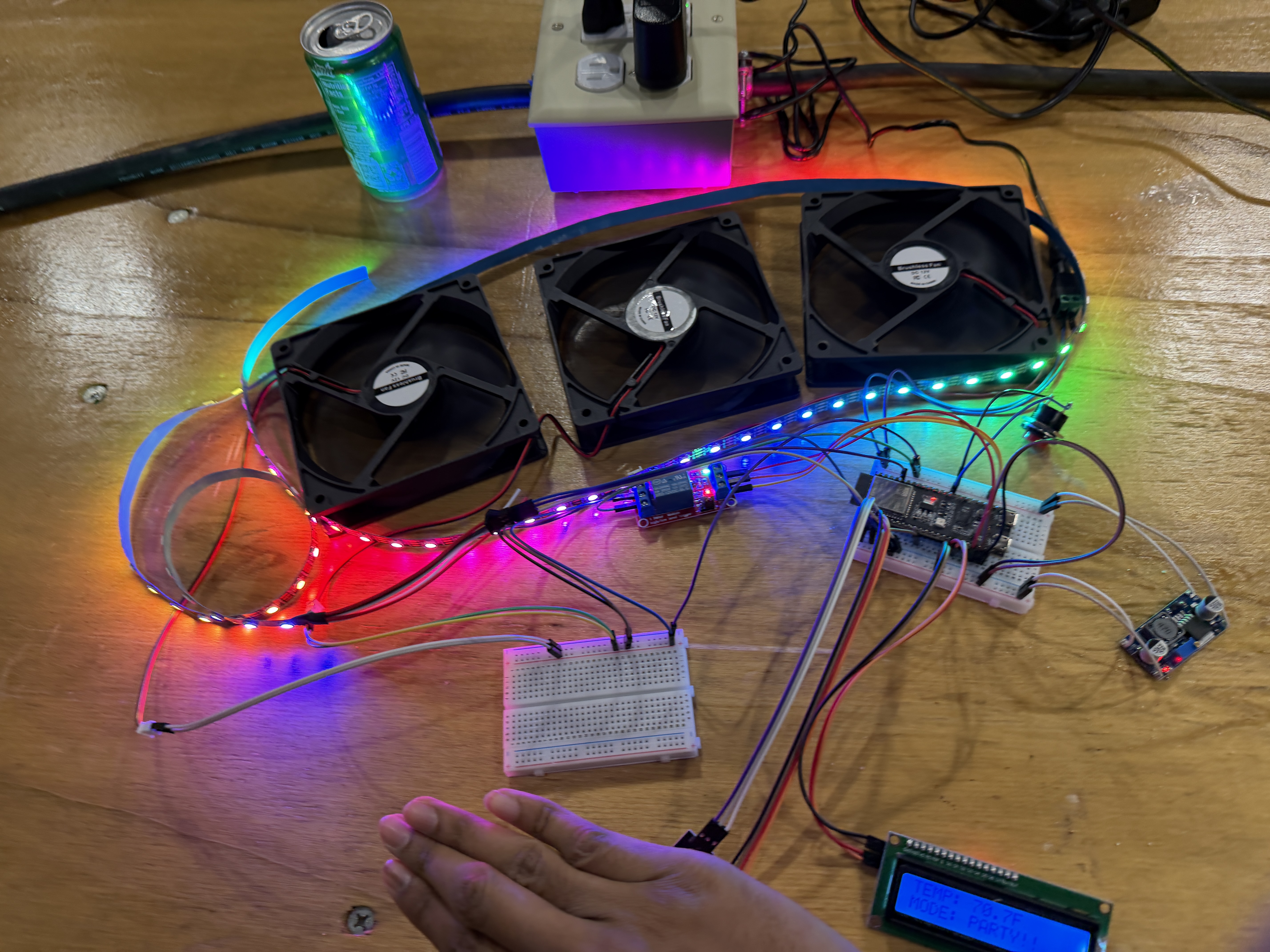
Party Mode!!
-
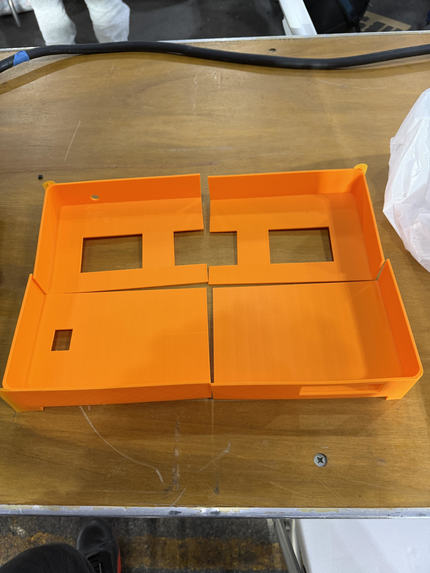
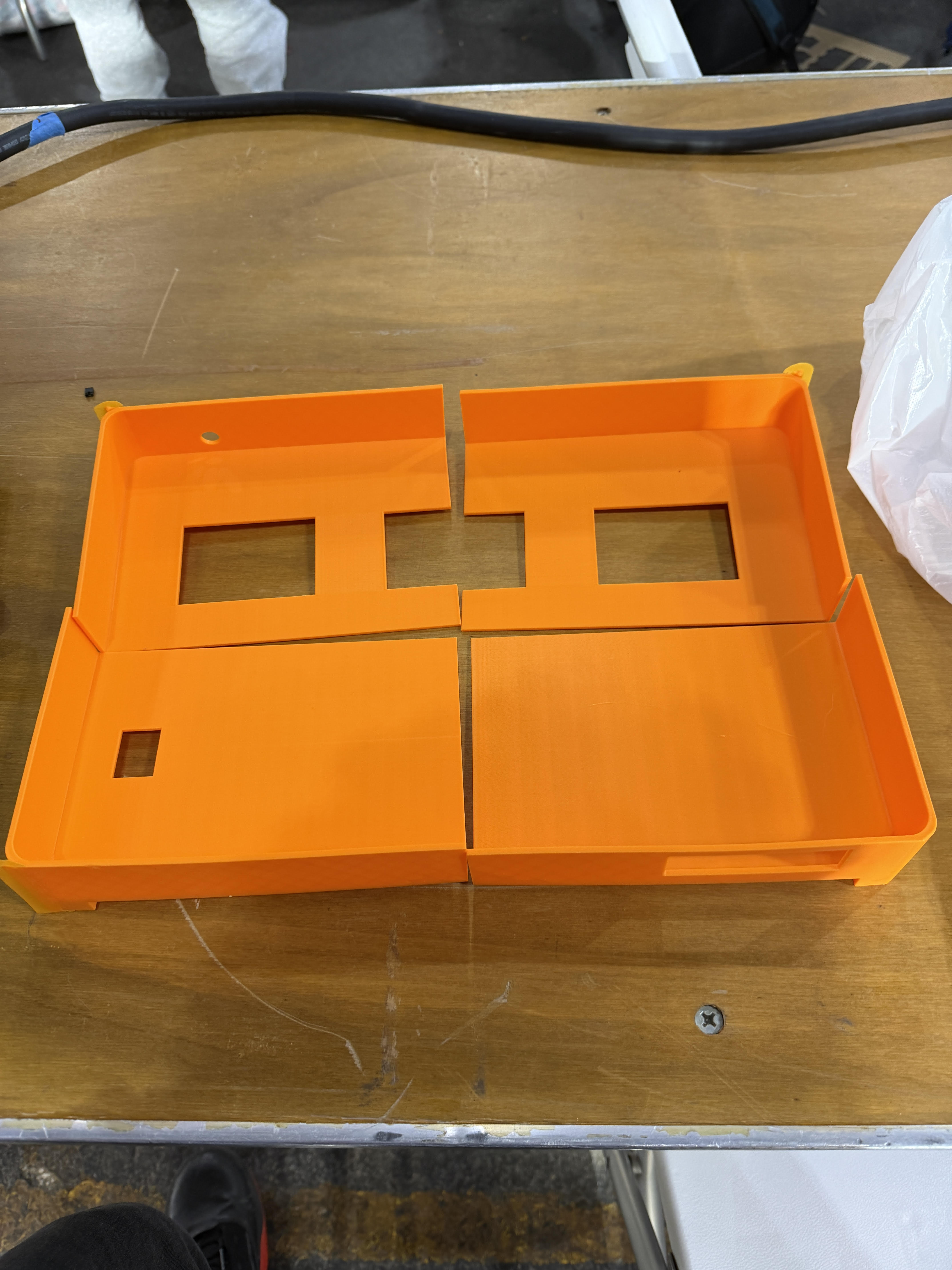
Got some pieces of shell 5 mins before submission was due
-
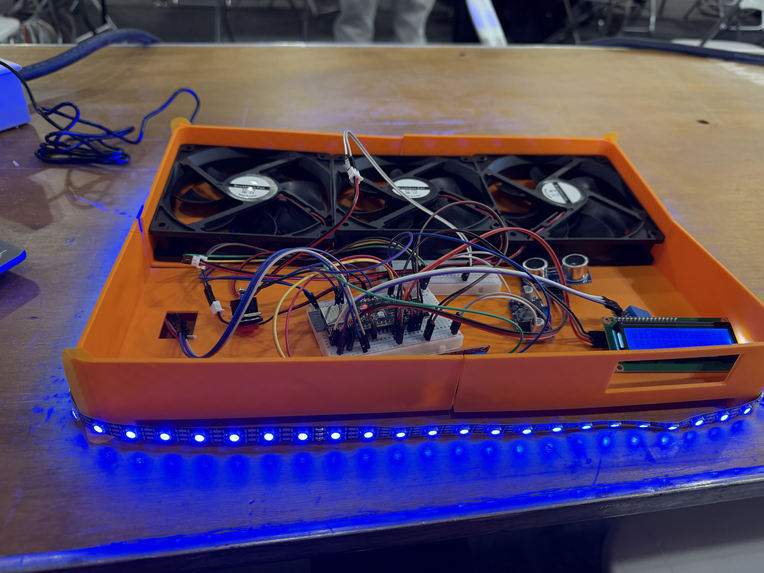
During Judging
Inspiration
Last semester when my roomate and I decided to play some Minecraft, I decided to push the game to the max by turning on shaders and upping the graphics. When doing this, my laptop was running well intially, but after a few minutes my laptop started become very hot to the touch causing the components to underclock themselves and my frame rates to start dropping quickly. During this experience, I noticed that even though my laptop's internals were very powerful, I was not able to use them to their full extent for an extended period of time due to the poor cooling hardware of the laptop. This is most likely due to the limited space inside a laptop, since the manufacturer has to try to make it as portable as possible. However, when playing games in my dorm room, space isn't much of a constraint.
What it does
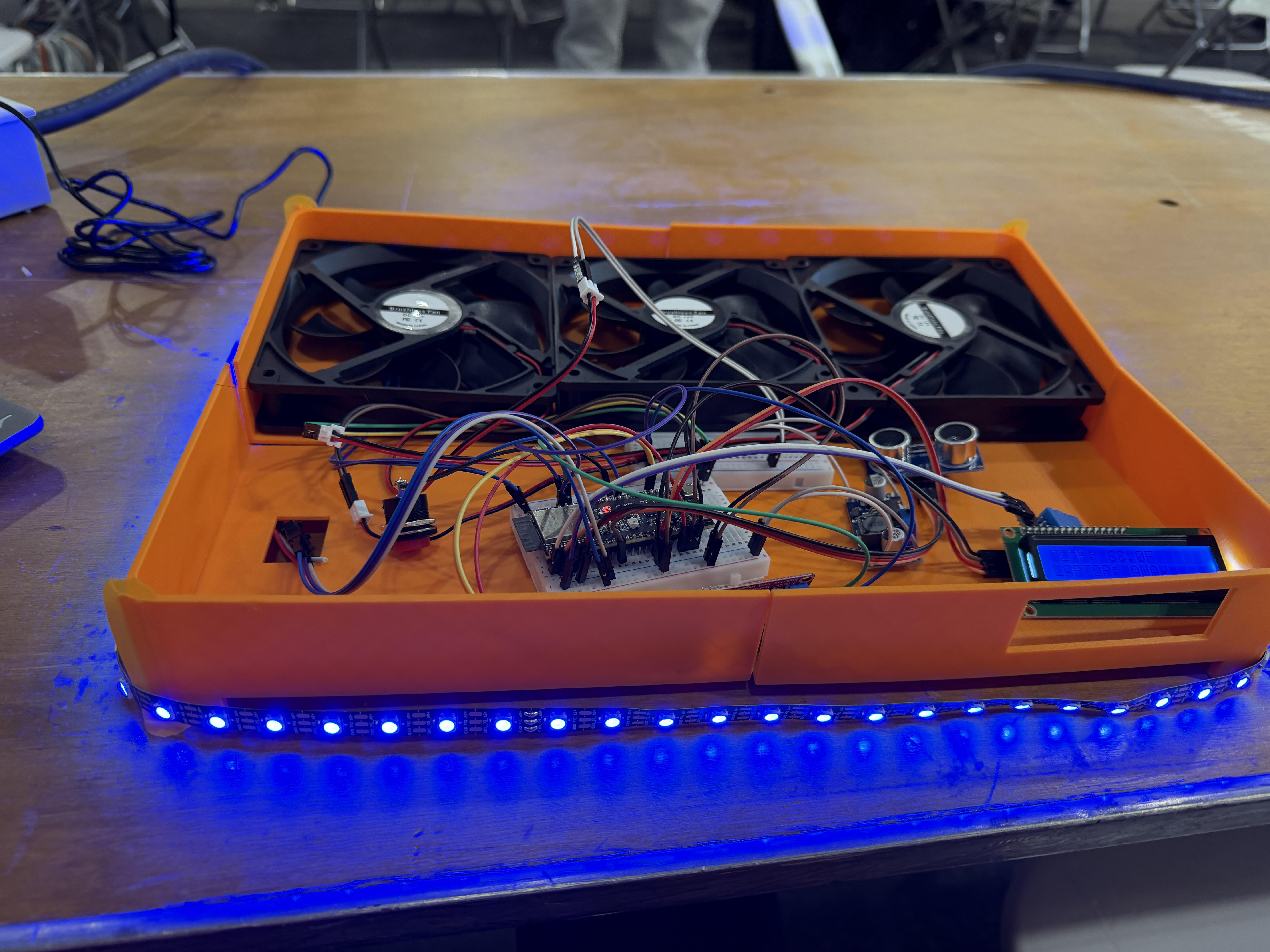
Fro-zone is a smart laptop cooler, which can automatically detect when a laptop is placed on the device and turn on the fans. This allows for the cooling process to be seamless, allowing the user to effortlessly place their laptop on the device whenever they feel like their laptop is too warm or if they are planning on doing an intensive task. When a laptop is detected, the fans start spinning immediately and begin cooling the laptop down. The device also includes a temperature sensor to keep tabs on the internal state of the laptop and a LCD display to show data to the user. Everything is convinently powered by a singular plug into an outlet.
How we built it
I built the project using the many resources graciouslly provided to me by the StarkHacks hackathon. The components include an ESP-32 S3, 3 fans, ultrasonic sensor, temperature sensor, relay, buck converter,
Challenges we ran into
A challenge I ran into was the body of the device being too big to print as a full part because of the 3D printing bed not being as big as my laptop. This caused me to split the design into 8 parts, allowing me to fit everything into 2 3D print jobs. Unfortunately due to the 3D printing backlog, I wasn't able to assemble the electronics into the frame. However, the biggest challenges I ran into was during design week of a hackathon. When I was thinking of ideas, my teammate suddenly decided that he wanted to do the hackathon by himself, leaving me without a team. Initially I thought that this would mean that I wouldn't be able to build anything cool or impactful, due to my limited skillset as this is my first year of college and my first hackathon. I even considered dropping out of the hackathon.
Accomplishments that we're proud of
I feel very accomplished in being able to finish the hackathon with a working protoype. Even if my project doesn't feel as impressive as some of the other projects that I have seen at neighboring tables, I was able to learn a lot about the hardware in general and I feel very accomplished.
What we learned
I learned a lot about electronics, CAD, and microcontrollers + sensors during this hackathon. I was intially going to wire everything together with dupont wires, but when I was bouncing my idea off of my roomate, he suggested that I should try using a breadboard. The problem with that was that I didn't even know what a breadboard was. They were luckily in stock at the hardware station, so I was able to check out two and research/experiment around with them to learn how to use them. My final design ended up using both breadboards and made the wiring process much more organizable compared to the intial vision in my head. This was also my first time using a microcontroller, allowing me to learn a lot about how they function by using the Arduino IDE and pushing some code to the ESP to controller the sensors and the display. Finally, I also honed my CAD skills, learning new functions like splitting bodies when I had to fit my design onto the 3D printing bed.
What's next for Fro-Zone
This hackathon has gotten me really interested in the idea of laptop coolers, so I definetly want to continue working on this project. I had some ideas like having voice commands through a mic and speaker system inside the device, which I wasn't able to get to due to the time constraints of the hackathon. I feel like I would actually use this device in the real world, which makes the project more exciting and makes me believe that there are also others that Fro-Zone could benefit too if it was to become a real-life product.


Log in or sign up for Devpost to join the conversation.