About Frimz
The idea for Frimz came from a simple frustration with using AI: you can spend a long time thinking through an idea with an AI, make decisions, reject different approaches, and discover something important — then start a new conversation and have to explain everything again.
We wanted to explore a different kind of AI relationship.
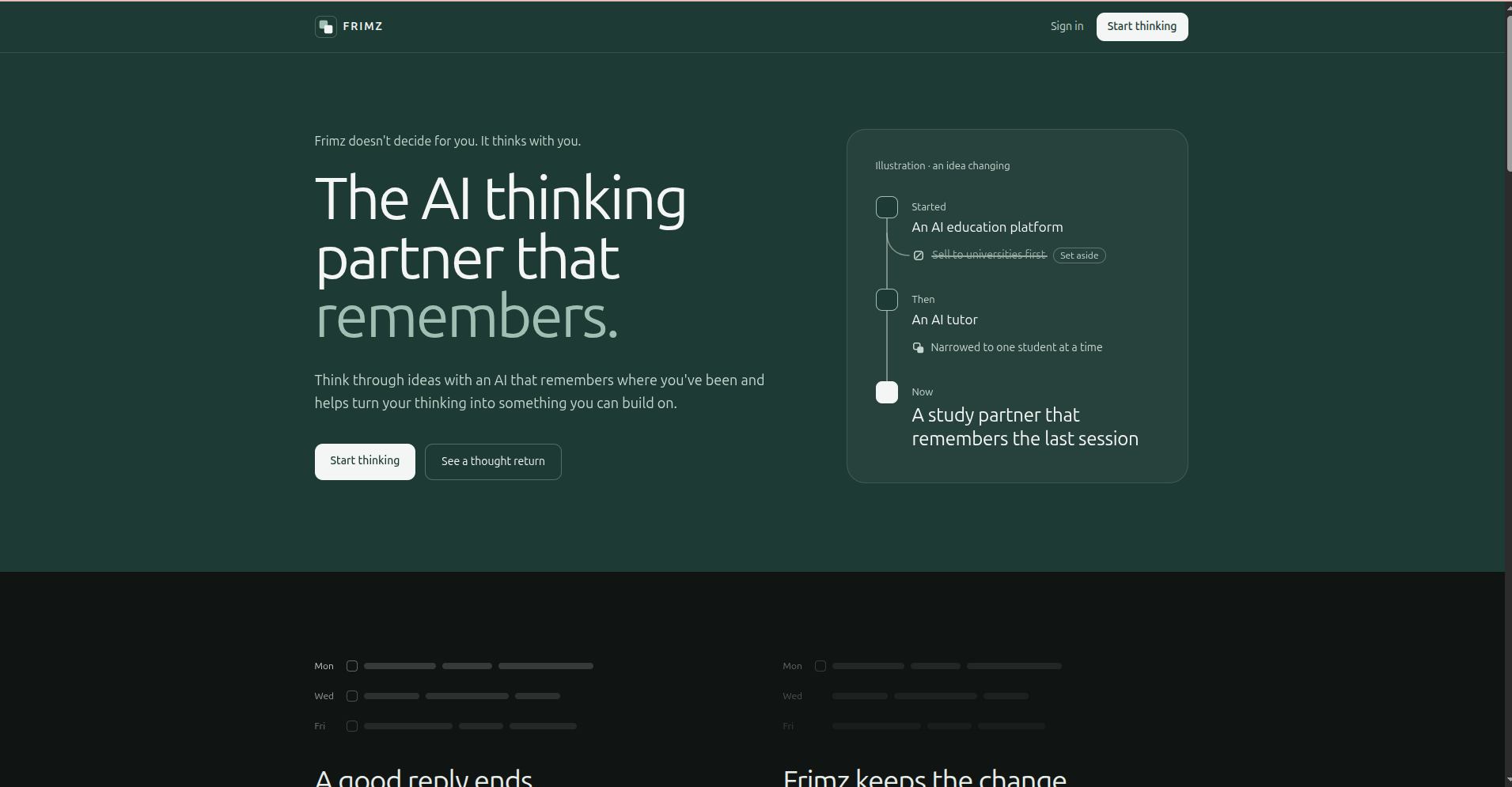
Instead of building another chatbot that simply answers questions, we built Frimz — an AI thinking partner that remembers.
Frimz is designed for people who use AI to think through ideas, projects, products, businesses, research, and problems. You don't have to arrive with a perfectly formed prompt or a clear plan. You can start with a rough thought and develop it through conversation.
The important part is that the conversation can continue over time.
Why Walrus Memory?
The *Walrus Memory * gave us the opportunity to explore what persistent memory could actually mean for an AI conversation.
We didn't want Frimz to simply store every message and replay old conversations. We wanted it to remember the parts of the thinking that matter.
During conversations, Frimz can identify things such as:
- decisions
- rejected directions
- preferences
- insights
- open questions
- ideas
- changes in direction
These are stored using Walrus Memory and recalled when they are relevant to a future conversation.
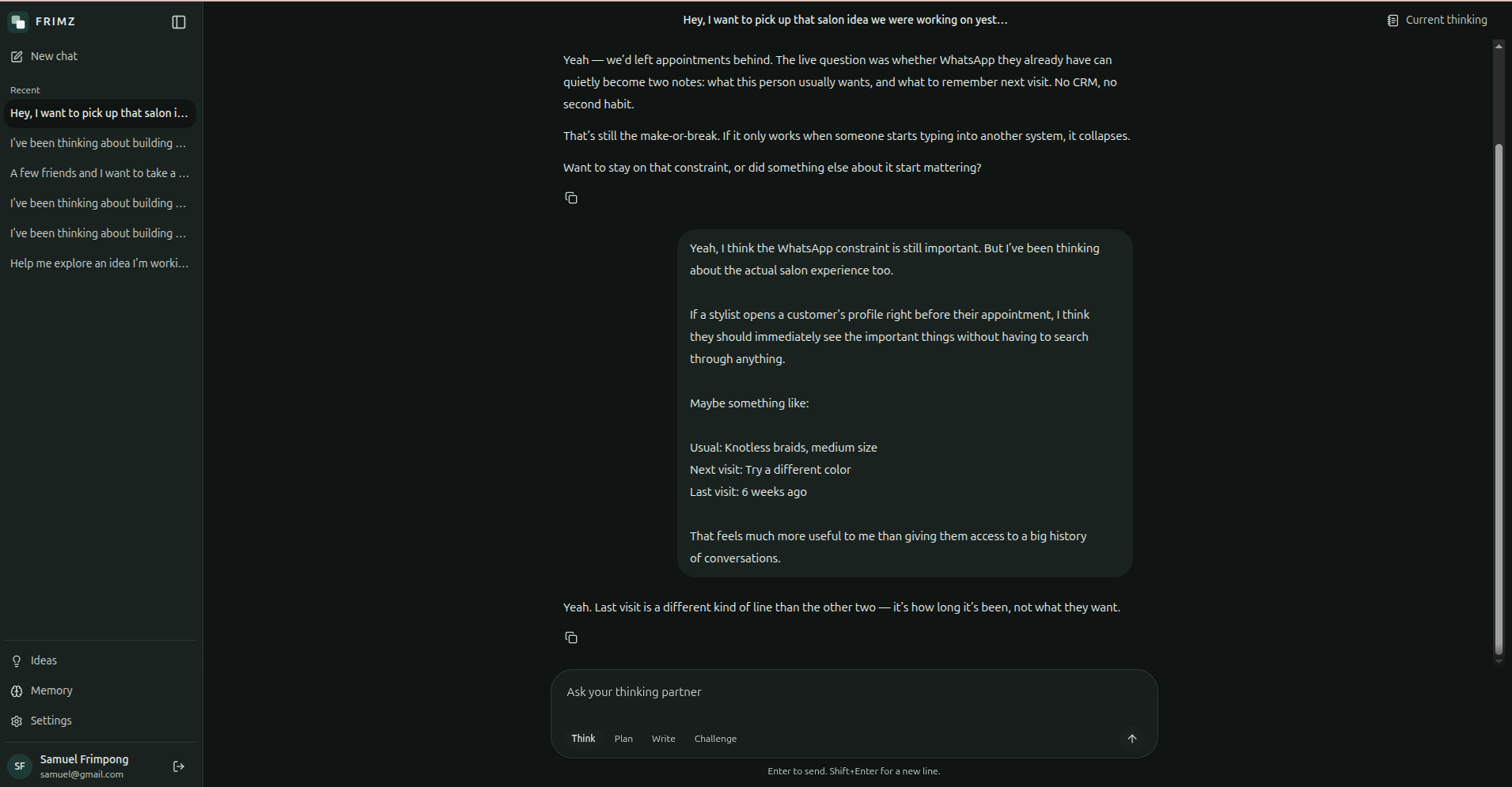
This means memory can actually change how Frimz responds.
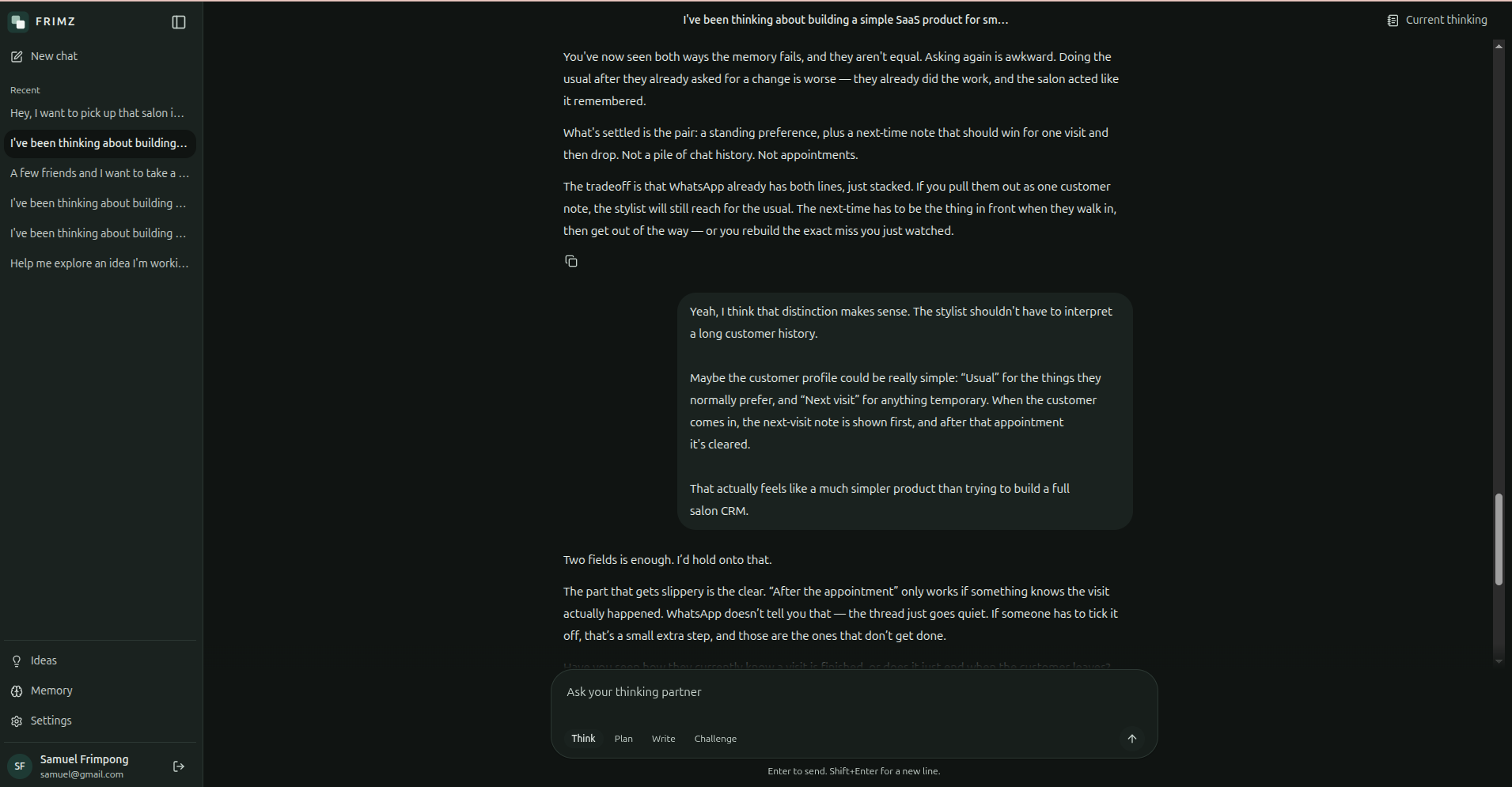
For example, if a user previously rejected an approach, Frimz can understand that history instead of suggesting the same thing again. If the user later changes their mind, the new direction takes priority.
That became one of the most important principles of the project:
Memory should provide continuity without taking control away from the user.
How We Built It
Frimz is built with Next.js, TypeScript, PostgreSQL, Drizzle ORM, and the Cursor SDK, with Walrus Memory providing the persistent memory layer.
The basic flow is:
User
  ↓
Frimz Chat
  ↓
Recall relevant memories
  ↓
Build current context
  ↓
Cursor-powered reasoning
  ↓
Response
  ↓
Extract meaningful memories
  ↓
Walrus Memory
We also built a Context Brief on top of the memory system.
While Walrus Memory stores durable pieces of information, the Context Brief represents the current state of an idea or project — what we currently understand, what has been decided, what has been rejected, what remains unresolved, and where the user wants to go next.
This helped us distinguish between remembering information and understanding the current state of someone's thinking.
What We Learned
One of the biggest things we learned was that building a memory-enabled chatbot is not primarily about storing more information.
It's about deciding what is worth remembering and when that memory should influence the conversation.
Early in development, it was tempting to make Frimz remember as much as possible. But that quickly creates another problem: too much memory can become noise.
We therefore focused on meaningful memories rather than complete conversation history.
We also learned that persistent memory needs to respect change.
A user's decision from yesterday shouldn't become a permanent command. People change their minds. Ideas evolve. Something that was rejected previously may become useful later.
So Frimz treats memories as context rather than instructions. The user's current intent always has priority.
The Biggest Challenge
The hardest part wasn't getting an AI to remember something.
The harder problem was getting Frimz to converse naturally while using that memory.
We didn't want Frimz to feel like a startup coach constantly asking questions, forcing the user through a framework, or turning every unfinished idea into a structured exercise.
We wanted it to feel more like a thoughtful collaborator.
If the user is uncertain, Frimz should be comfortable exploring with them.
If the user wants to challenge an idea, it should challenge it.
If the user changes direction, it should follow.
If the user simply asks a question, it should answer instead of forcing the conversation into an ideation workflow.
Getting this balance right required us to think carefully about conversation state, user intent, memory relevance, and response strategy.
What We Would Like to Explore Next
Frimz is still an exploration of what persistent AI relationships can become.
The next step is to make the memory and Context Brief even better at capturing the evolution of complex ideas over longer periods of time.
Ultimately, we want Frimz to feel less like a chatbot you open for an answer and more like a thinking partner you can return to whenever an idea is still evolving.
You bring the idea.
You decide the direction.
Frimz remembers the journey.
Built With
- next.js
- postgresql
- typescript
- walrus

Log in or sign up for Devpost to join the conversation.