-
-
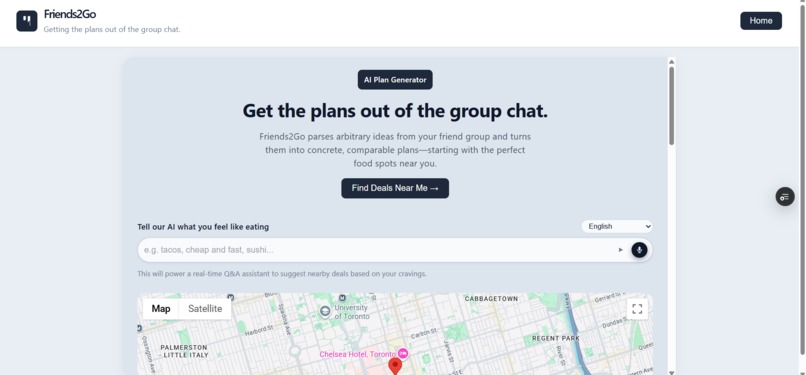
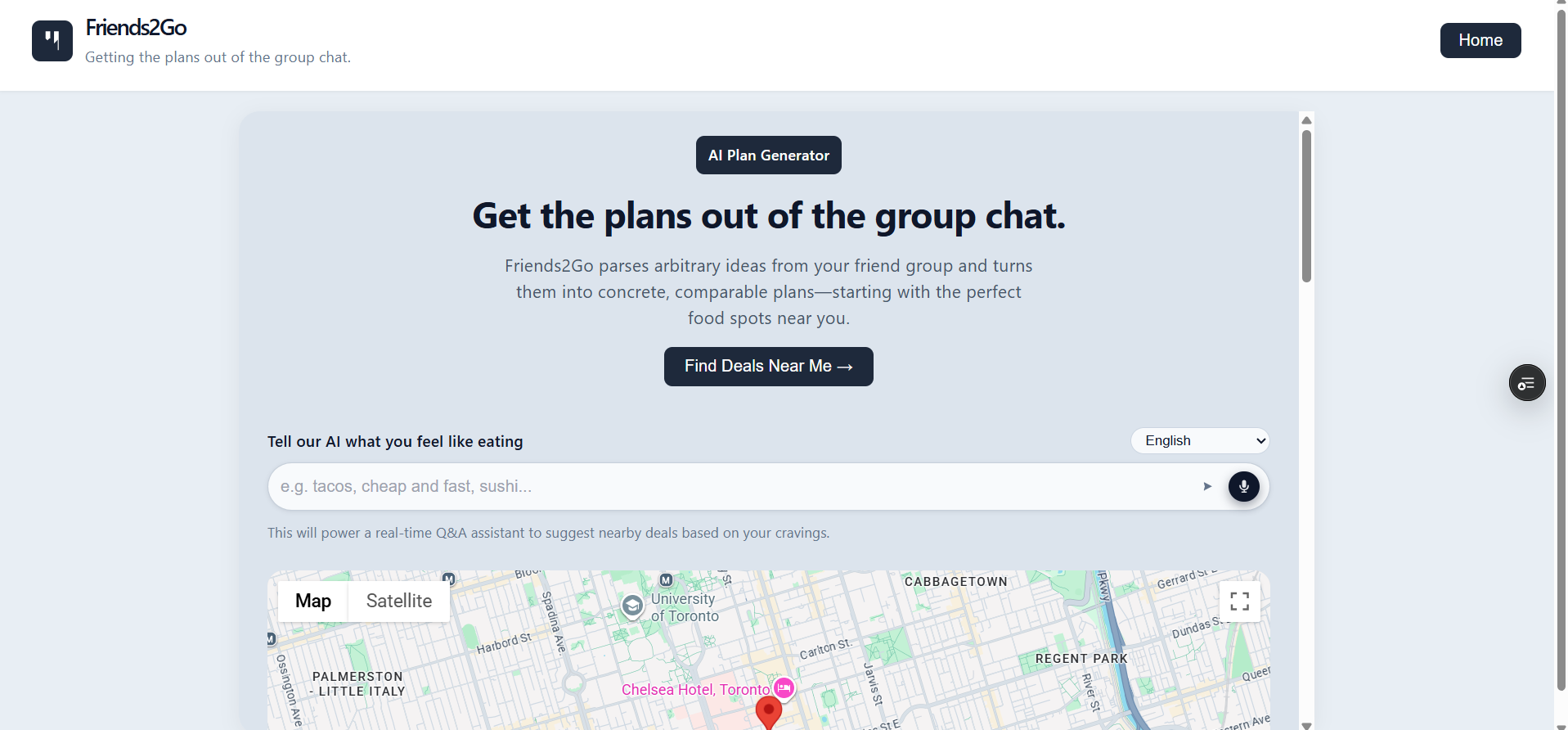
The front page with the AI chatbar
-
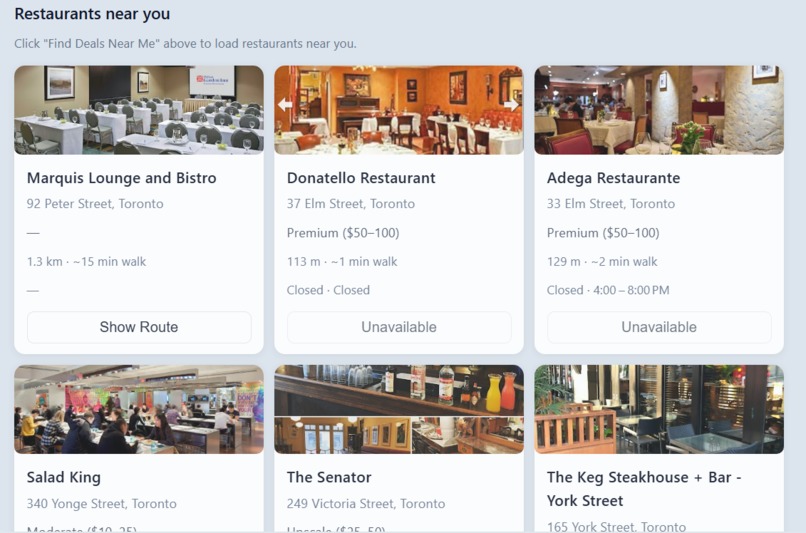
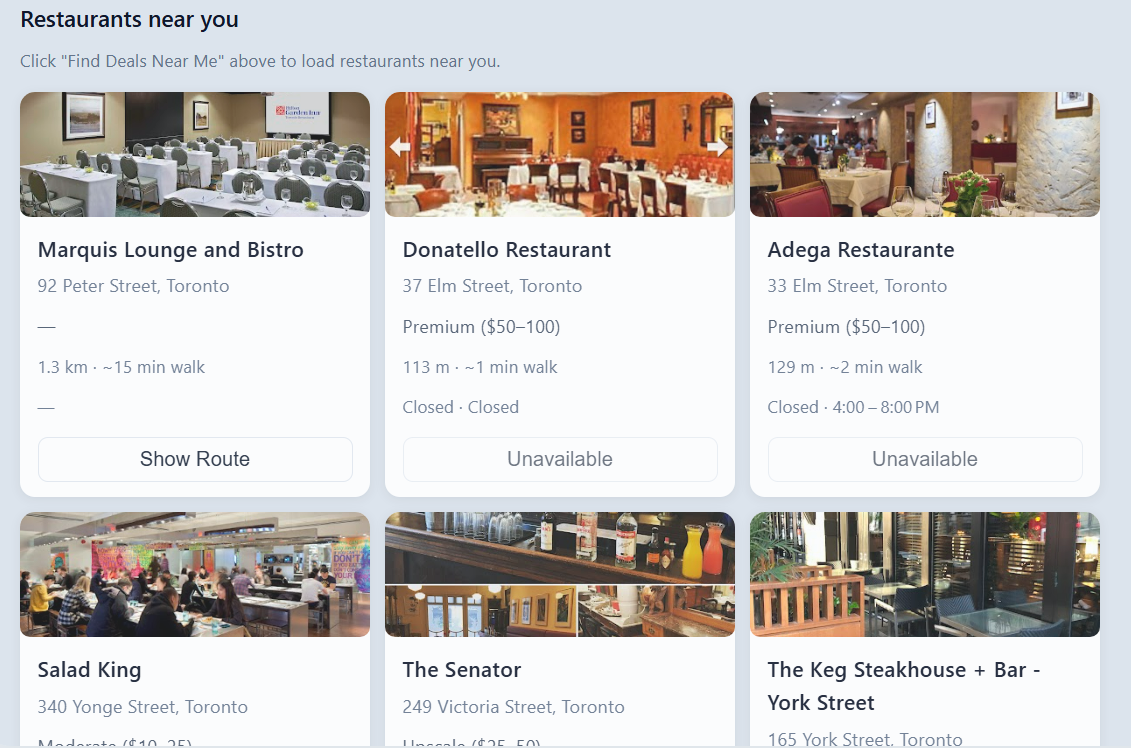
General Restaurants near me
-
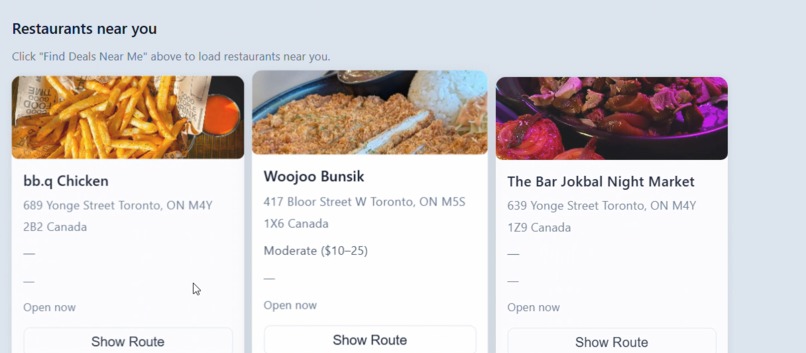
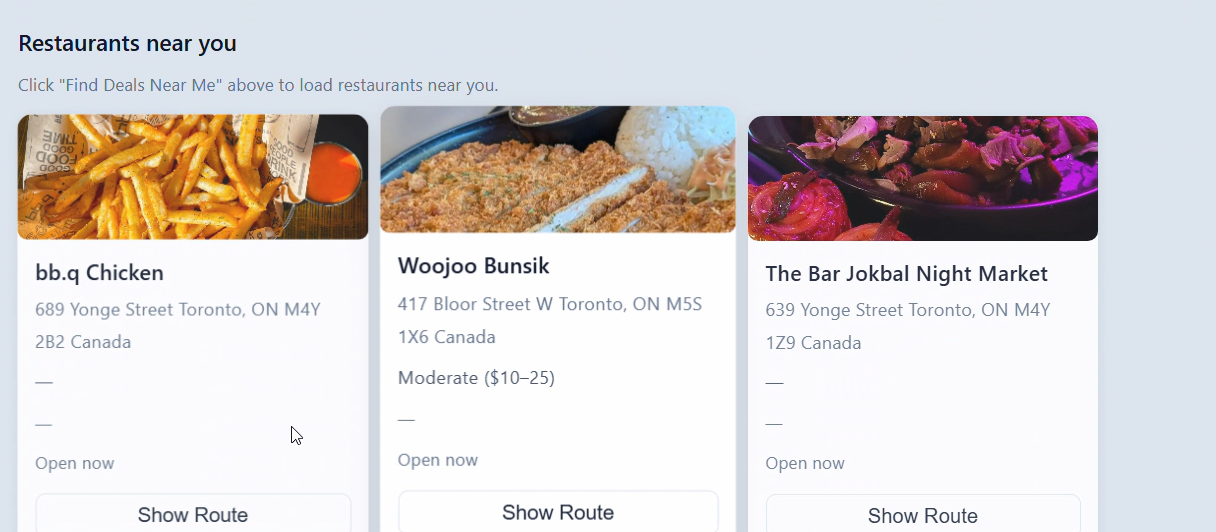
Categorized Restaurants near me
-
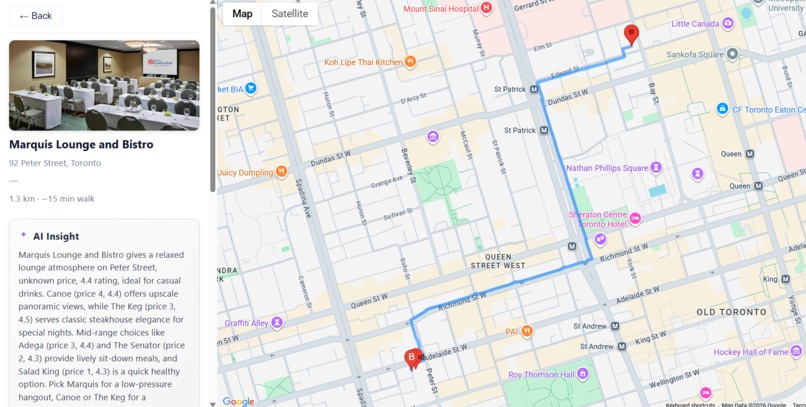
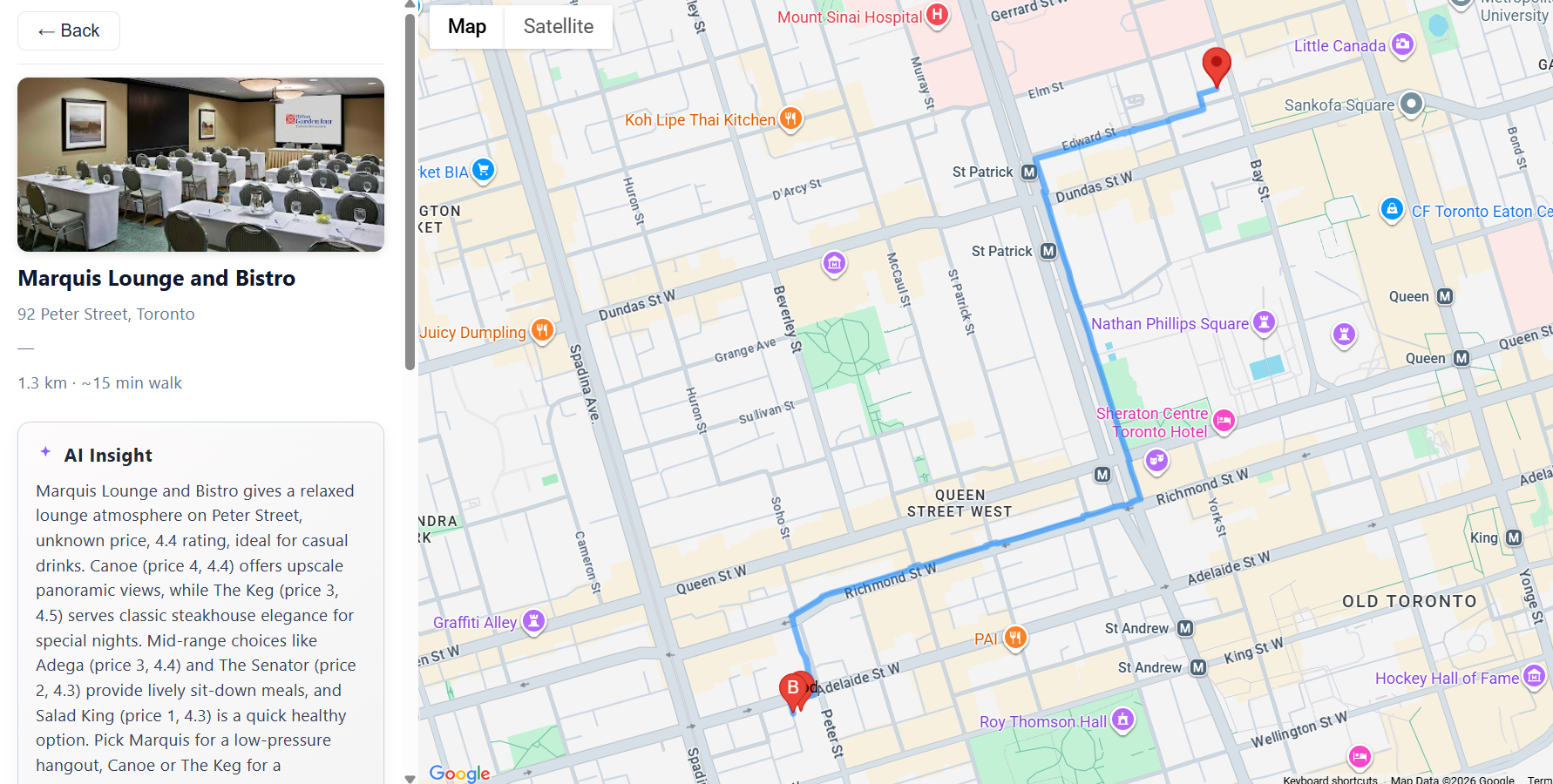
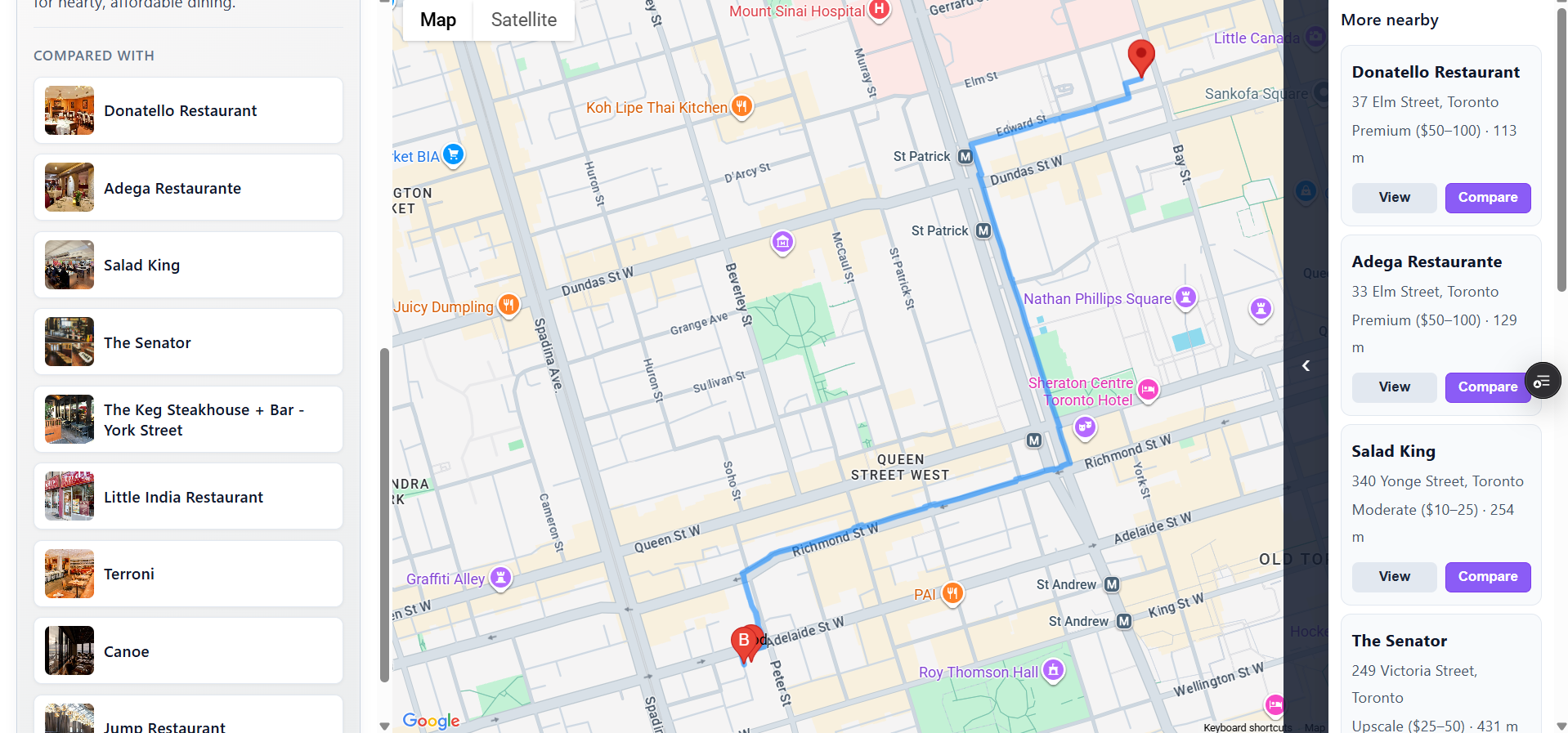
AI comparison to help the groupchat pick the best food option
-
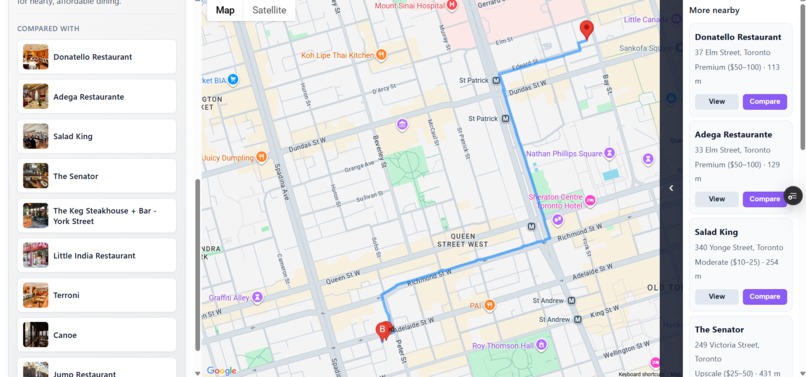
More ways to compare restaurant A with restaurant B
Inspiration
Some of the best memories with friends start with a simple idea in a group chat: “We should hang out.” But turning that idea into an actual plan is often harder than it should be. Conversations quickly become messy—people suggest different places, budgets vary, preferences clash, and messages pile up. More often than not, the plan never leaves the group chat.
Our team wanted to solve the problem behind the phrase “when the plans finally make it out of the group chat.” Those moments—when friends actually meet up and share experiences—are the ones that matter most. We wanted to build something that helps people move past indecision and turn scattered ideas into real plans.
Friends2Go was designed to organize those messy conversations and help friends make decisions faster. Instead of forcing users to search through apps and filters manually, we use AI to interpret natural human language and convert it into structured information that a computer can act on.
What it does
Friends2Go helps groups decide where to eat by translating natural language into actionable search queries.
A user can type something like:
“I want cheap fried chicken near me.”
Our AI interprets that request and extracts structured information such as cuisine type, price range, and location. This information is then used to search restaurant databases and return relevant results.
The recommendations are displayed both as:
- Pins on an interactive map
- A list of restaurants to explore
By organizing vague human input into clear search parameters, Friends2Go helps users quickly discover options and move from discussion to decision.
For the scope of this 36-hour hackathon, we focused on food planning, since deciding where to eat is one of the most common decisions friends struggle with.
How we built it
Friends2Go combines natural language processing with location-based search tools.
Frontend
- React
- HTML
- CSS
- JavaScript
Backend
- Python
- JavaScript
AI & APIs
- OpenAI for natural language understanding
- Yelp Fusion API for restaurant data
- Google Maps API for location visualization and map integration
The workflow of the system looks like this:
- A user enters a natural language request in the web interface.
- The request is processed using AI to extract structured parameters such as cuisine type, budget, and location.
- These parameters are used to query restaurant data through external APIs.
- Results are displayed on a map and in a list format for easy exploration.
This pipeline allows the system to transform vague human thoughts into structured search queries.
Challenges we ran into
One of the biggest challenges was working with natural language input, which can be unpredictable and unstructured. People describe their preferences in many different ways, so ensuring the AI consistently extracted useful parameters required experimentation and iteration.
Another challenge was integrating multiple APIs together within the limited 36-hour hackathon timeframe. Connecting AI output to external search services and displaying results on an interactive map required coordinating several systems working together.
As beginner developers exploring AI integration, we also spent significant time learning how different tools communicate with each other and troubleshooting unexpected errors.
Accomplishments that we're proud of
What we learned
This project taught us a lot about building systems that combine AI with real-world applications.
We learned how to:
- Use natural language processing to interpret human input
- Connect AI-generated outputs to external APIs
- Integrate mapping services into a web interface
- Coordinate frontend and backend components in a short timeframe
More importantly, we learned how AI can act as a bridge between human thinking and structured digital systems. People naturally express ideas in vague or conversational ways, and AI can help translate those ideas into something computers can process
What's next for Friends2Go
The hackathon version of Friends2Go focuses on food recommendations, but the broader vision goes much further.
Planning a hangout involves more than just choosing a restaurant. Groups also have to consider availability, transportation, budget differences, and activity preferences. Our long-term goal is to expand Friends2Go into a platform that helps friends coordinate all aspects of planning activities together.
Future features could include:
- AI that helps groups decide on activities beyond food
- Shared group planning tools for scheduling and transportation
- A social memory system where friends can document experiences together
Inspired by apps like Beli, we also imagine a feature where users can record and revisit places they've been with friends—sharing photos, ratings, and memories.
Another idea is a fun recap feature similar to Spotify Wrapped, where friend groups can look back at their favorite restaurants, adventures, and moments from the past year.
Ultimately, our goal is simple: help more plans escape the group chat and turn into real memories.


Log in or sign up for Devpost to join the conversation.