-
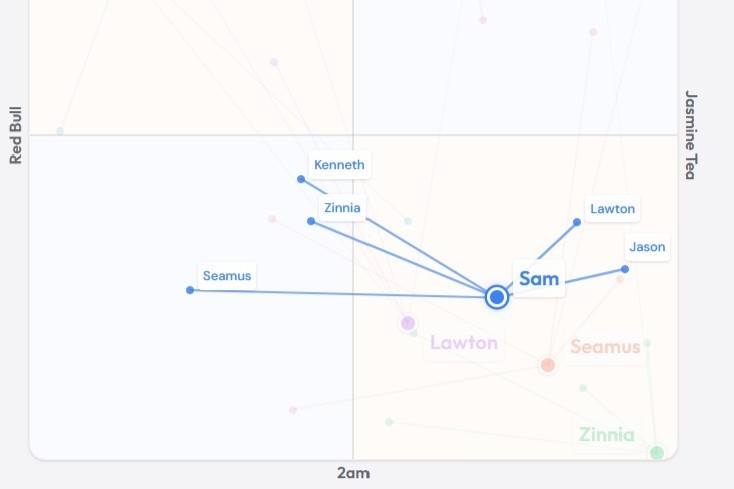
Learn how your friends see you.
-
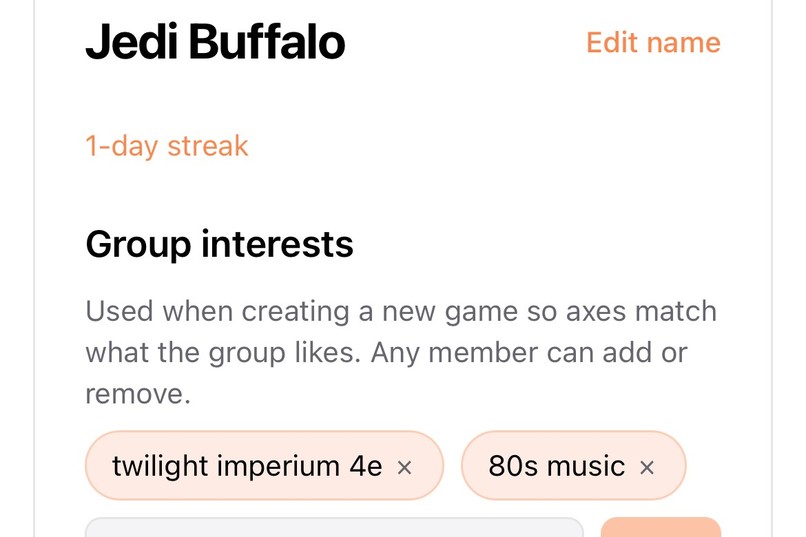
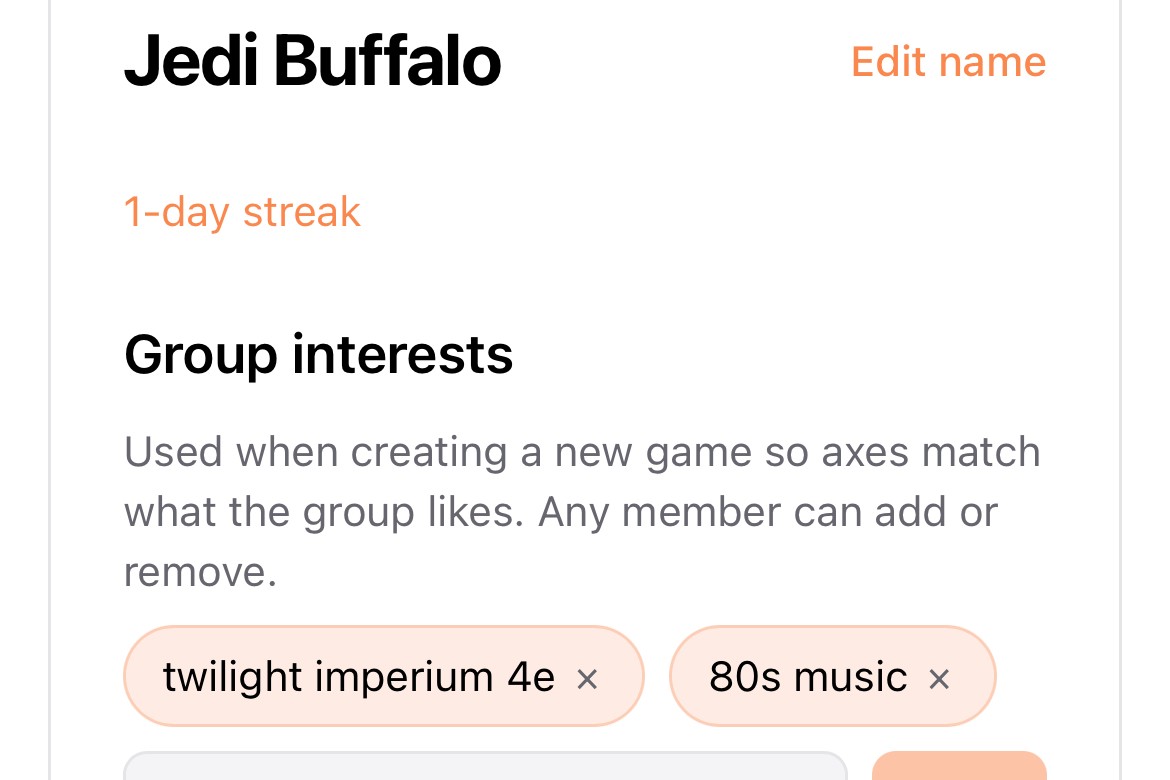
Form groups with custom interests.
-
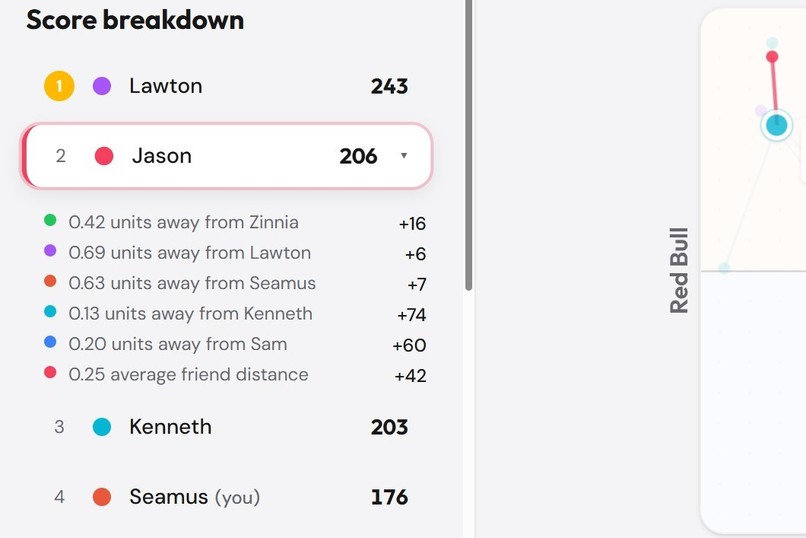
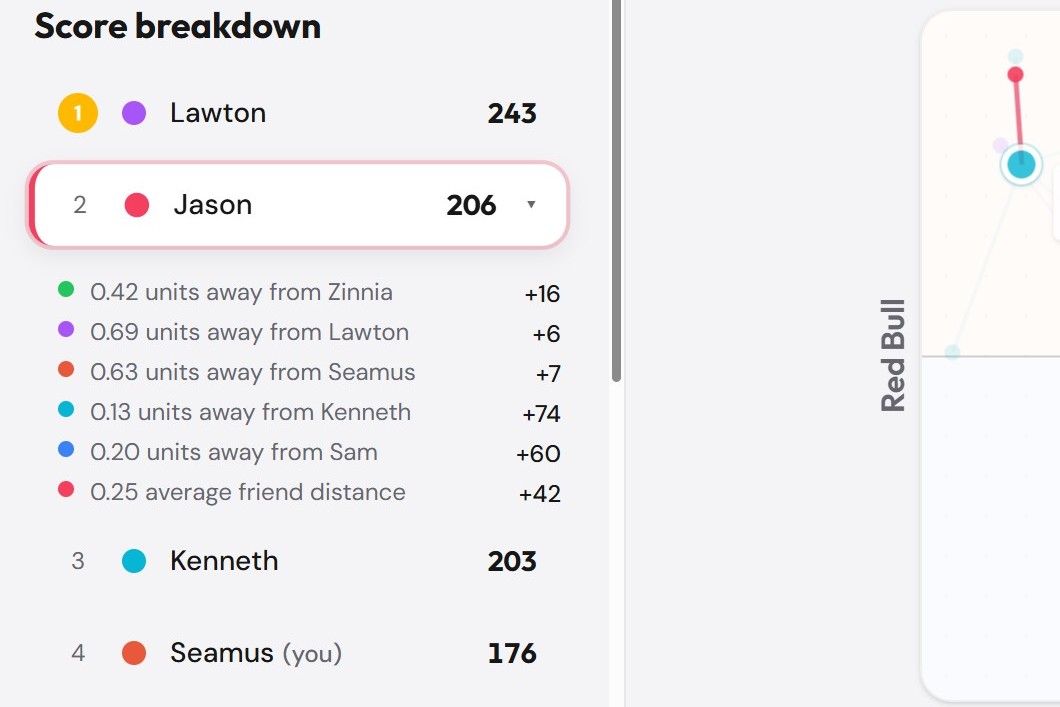
Earn points for knowing and being known.
-
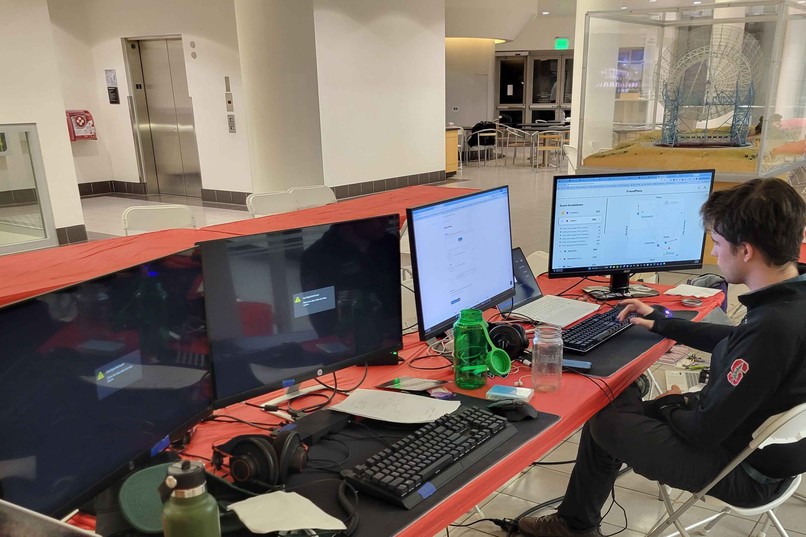
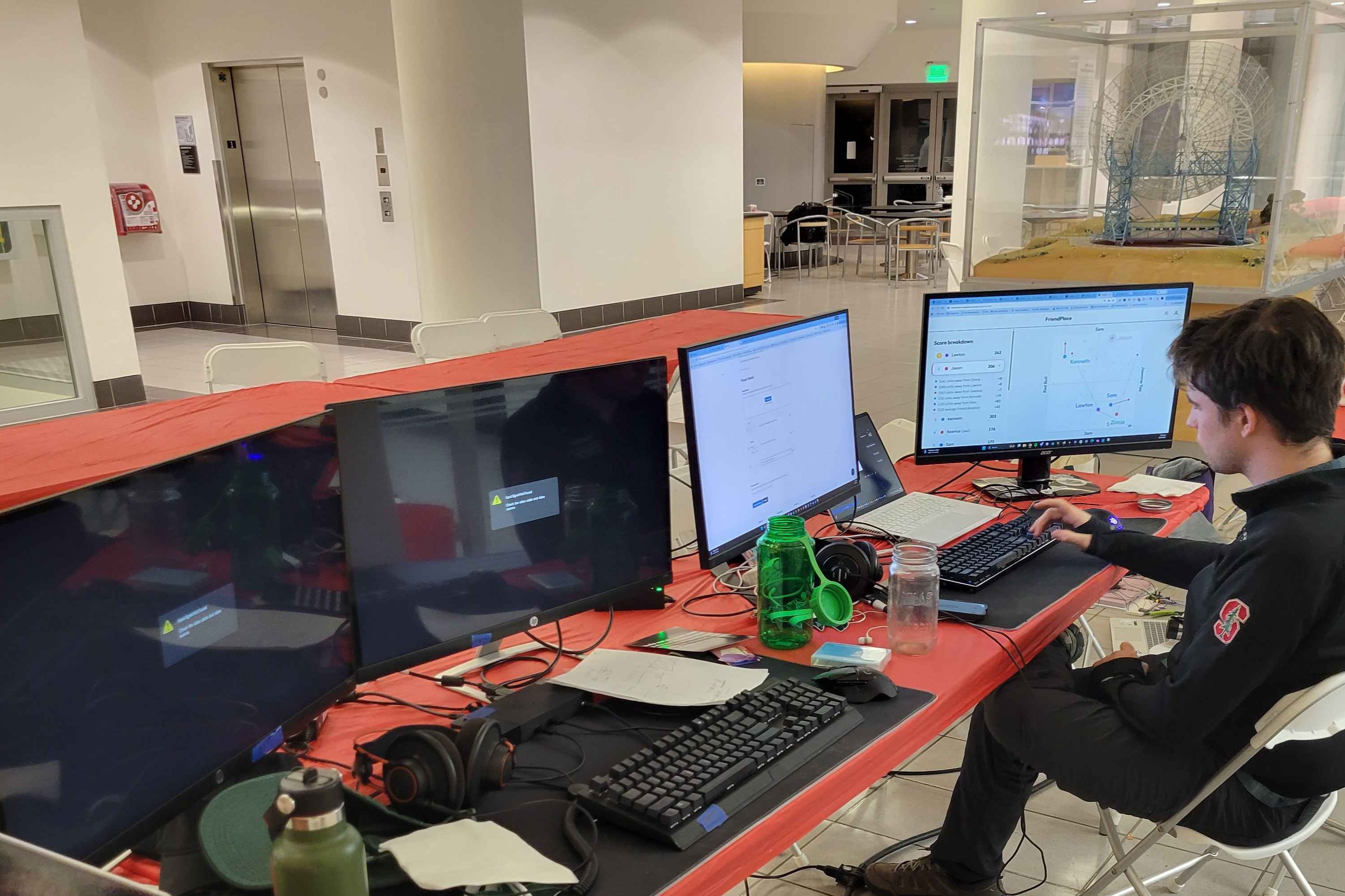
Our only regret was not bringing a fifth monitor.
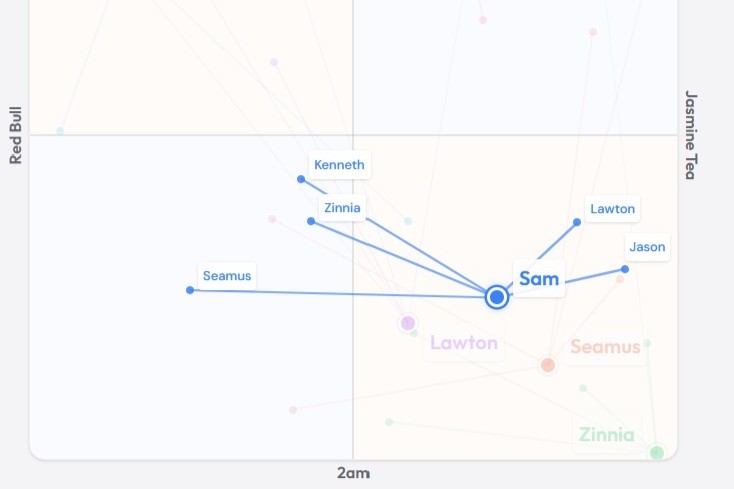
Would you say you're more of a Legolas or more of a Gimli? And do you think your friends see you the same way?
In FriendPlace, you place yourself on a wacky alignment chart and guess where your friends will place themselves. (Do you think your personality has a certain… muffinish je ne sais quoi?) The better you know your friends—and the better they know you—the more points you earn. Each day brings a new chart and a new chance to win.
Inspiration
The Grand Enshittification of the Internet has taken the most powerful force for human connection ever devised and turned it into a source of untrammeled loneliness and atomization. It doesn’t have to be that way.
Sam and I became best friends over Setters of Catan. We envision FriendPlace as a game that can do the same for countless more. Beneath the simple, approachable exterior of humorous comparisons lie deep questions. Playing the game well requires reflecting on how your friends perceive themselves, how your friends perceive you, and maybe even how you want to be seen or who you want to be.
Throughout our playtesting at Treehacks, we found that the game continually sparked these magical moments of self-reflection and emotional intimacy.
“I guess I didn’t place myself on the Gandalf side of the spectrum because I don’t really see myself as wise?”
This is what makes FriendPlace special. It isn’t just something to do with your friends. It is a fun, low-stakes way to get to know them—and yourself—better.
Features
Just start playing
All you need to start is to add your friends’ names and send the room link to the group chat. You can form accounts, earn custom profile badges, and track your history of victories down the road, but when you just want to start playing, nothing stands in your way.
Group-customized axis generation
Is your friend group a huge fan of the culinary arts? 1980s sitcoms? American Presidents? Specify your shared interests on your groups’ page and Claude will serve up some new alignment charts hot-off-the-presses just for you and your friends.
RAG-enhanced interaction reminders
Is one of your friends lollygagging around, not yet filling in their guesses for the day? We’ve recruited Claude to entice them to join in the fun by hinting at how things are going in chart land.
Smooth, responsive gamefeel
Games shouldn’t just be fun to think about, they should feel great to play. We spent hours and hours tuning the UI, so just the act of dragging your friend to the Oatmeal/Grinch quadrant where they belong feels satisfying. Oh, and the player list and game state sync live for everyone, in case you feel like playing in the same room.
How we built it
Stack: Next.js, React, Supabase (Postgres, Auth, Realtime), deployed on Vercel. Anonymous-first auth: Supabase anonymous sign-in so anyone can play from a link; optional link to email/Google later with a secure merge API so we never merge two real accounts. 2D graph UX: CSS transform pan/zoom with @use-gesture/react, Framer Motion draggable tokens with scale compensation so dragging feels correct at any zoom. Backend: Most reads/writes go client → Supabase with Row Level Security; API routes only for privileged work (scoring, phase transitions, merge) using the service role. AI (Anthropic Claude): Daily axis suggestion (one shared pair per day), plus “suggest axes” and “regenerate an axis” when creating a game; prompts enforce format and avoid repetition using seasonal context, recent axes, and user-provided information about group interests. Our approach to AI was not to treat it as an end in itself, but rather to look for the ways that it can integrate seamlessly into the user experience, improving the product with on-demand intelligence and customization.
Built With
- claude
- next.js
- supabase
- vercel

Log in or sign up for Devpost to join the conversation.