-
-
-
-
-
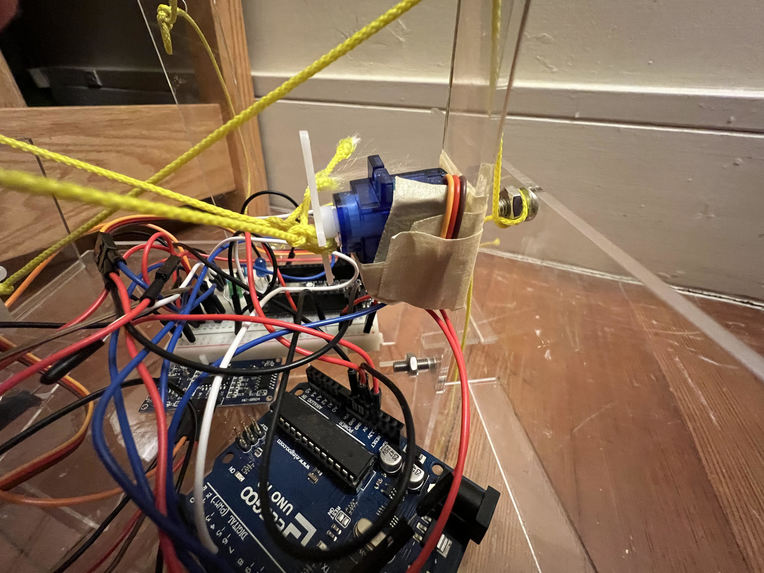
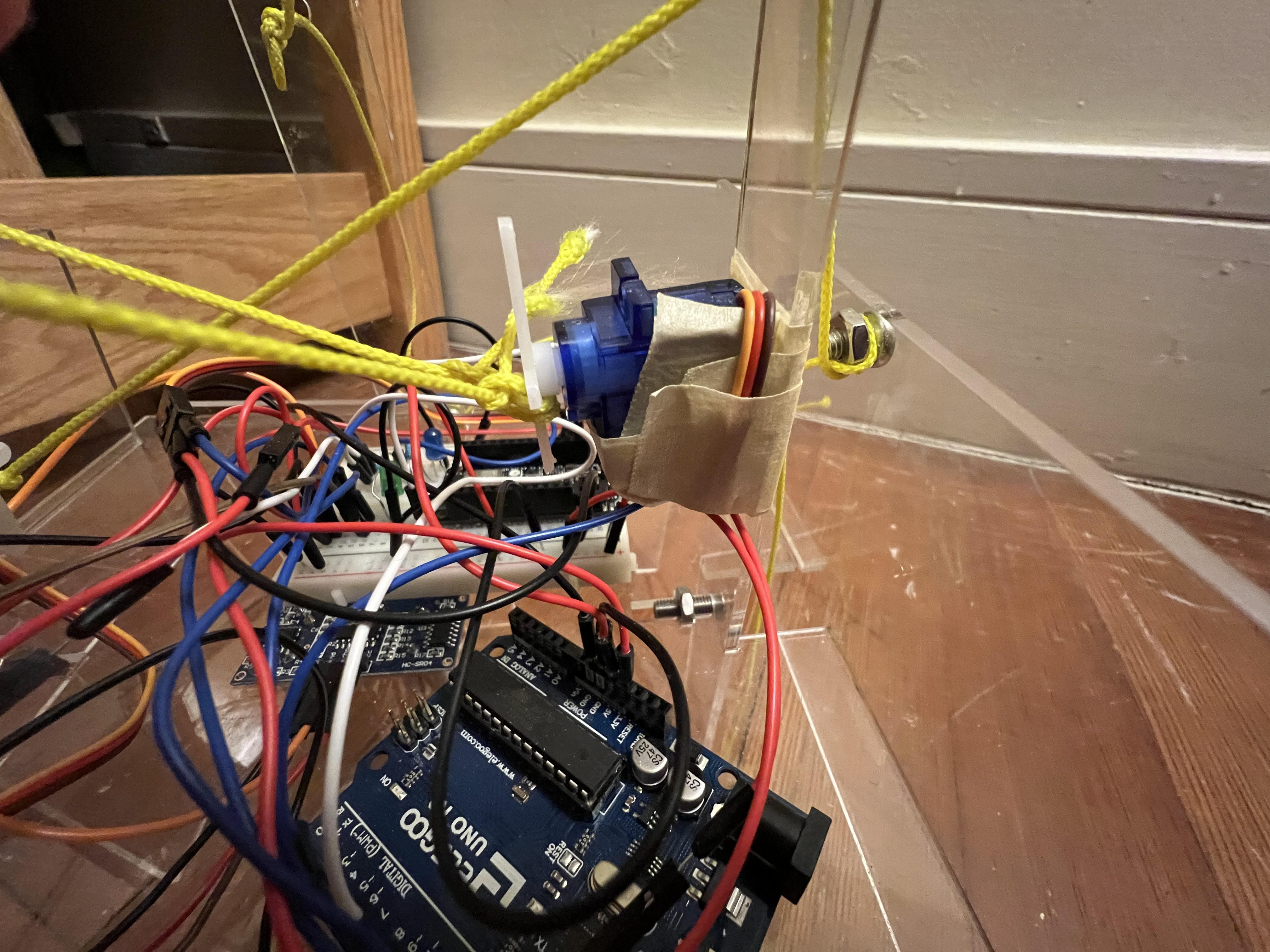
Servo Motor
-
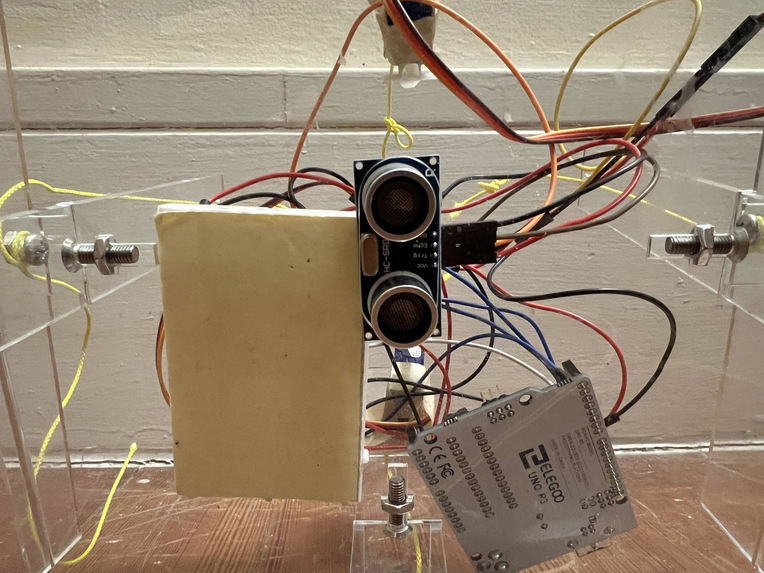
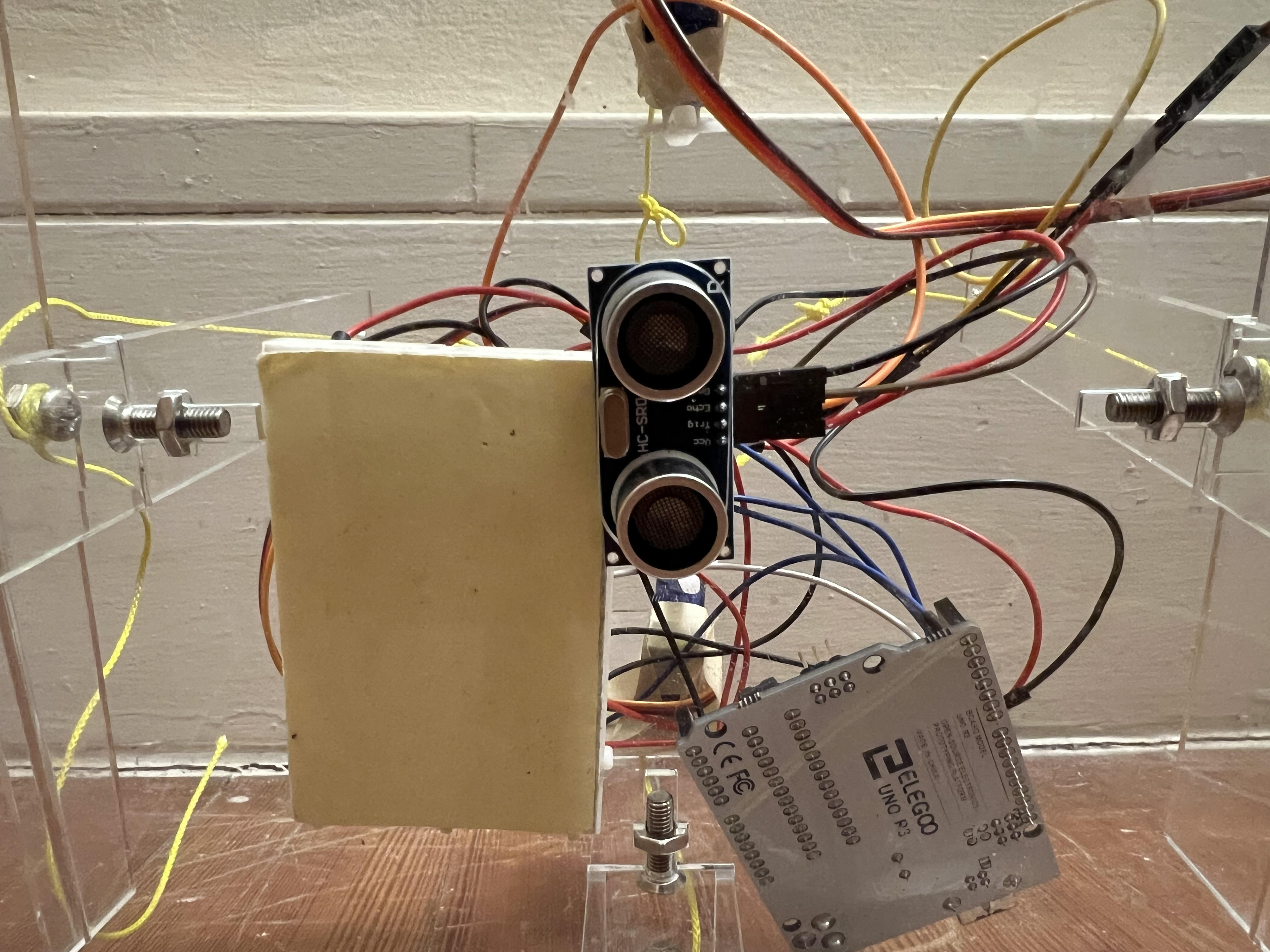
Ultrasonic Sensor
Inspiration
What inspired us to create an IoT mouse trap was to provide a friendly way to get rid of rodents and avoid the cruelty of traps such as sticky pads and poison boxes. Even when using less harmful traps such as mechanically-activated cages, the user may not realize they captured a mouse especially if the trap is in less inhabited areas such as an attic or a basement, leaving the little mammal without food for days. A friendly electronic trap that does not harm the rodents and notifies the user could solve this issue.
What it does
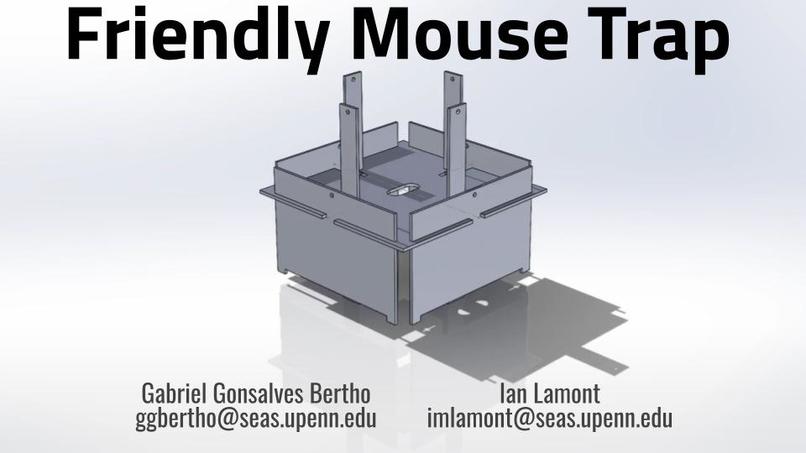
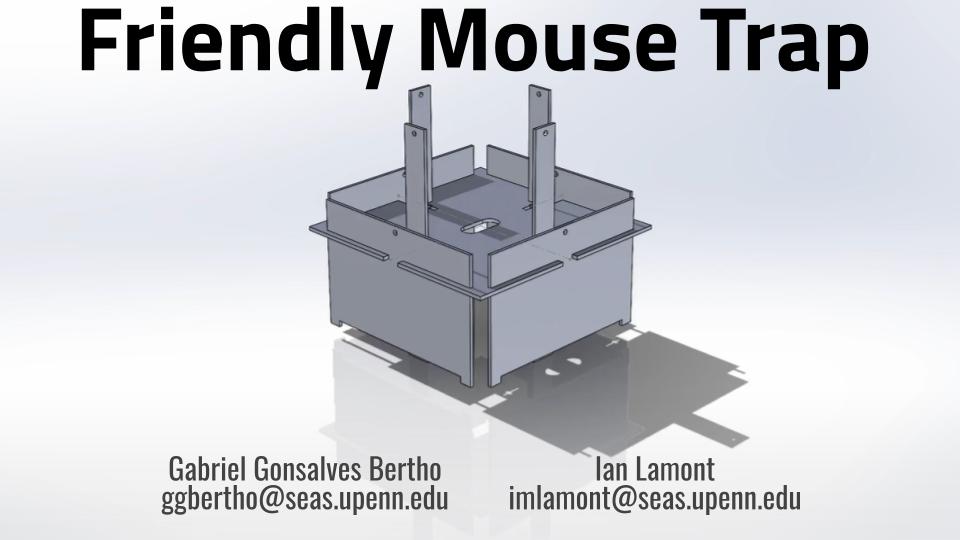
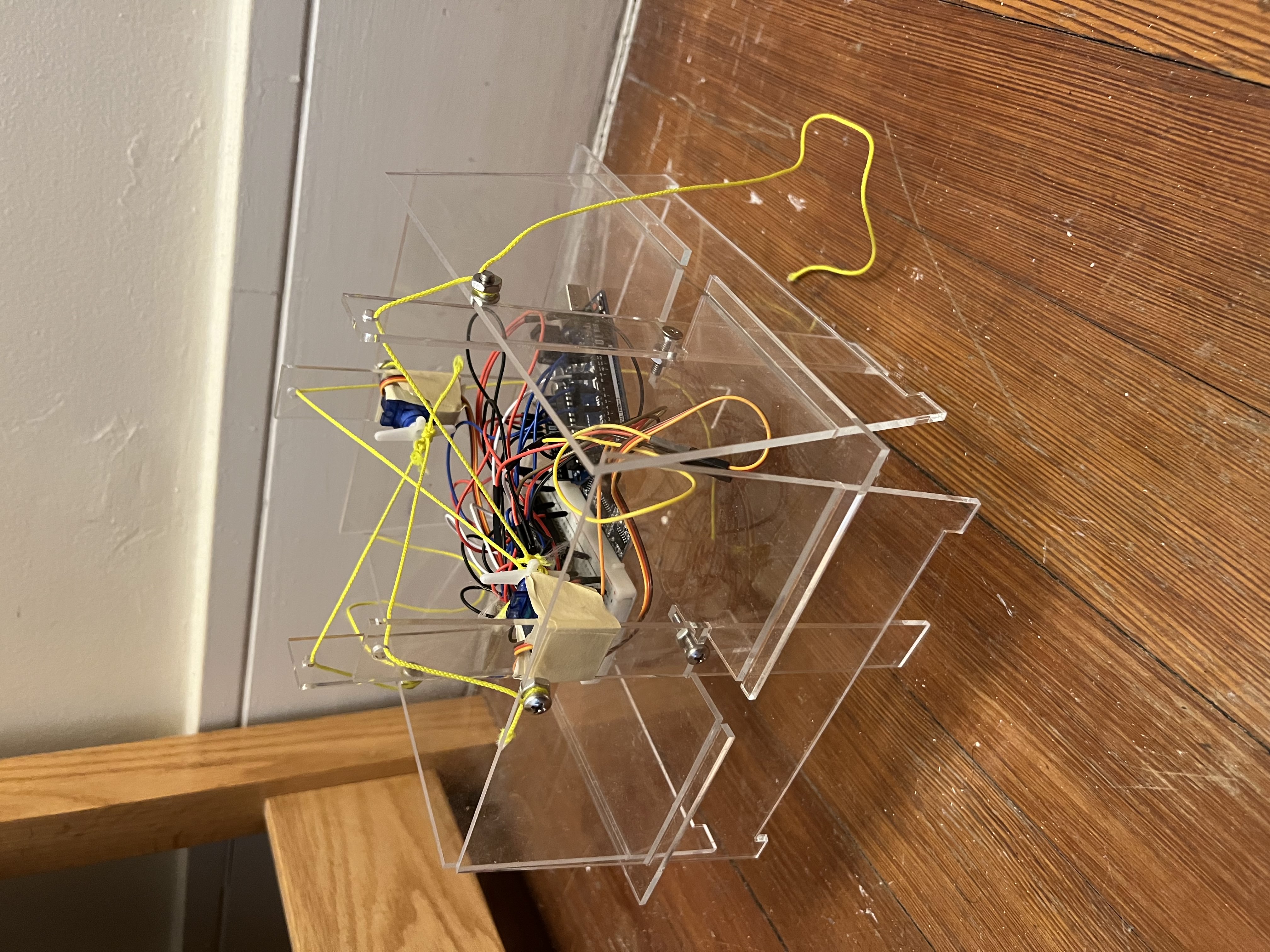
It is a mouse trap that uses an ultrasound sensor to detect rodents and two servo motors to trigger the four walls to fall, trapping anything inside. The device detects the presence of rodents or any other small animal, waits to confirm that it is still there, then triggers the trap, simultaneously notifying the user through Blynk that the trap captured something.
How we built it
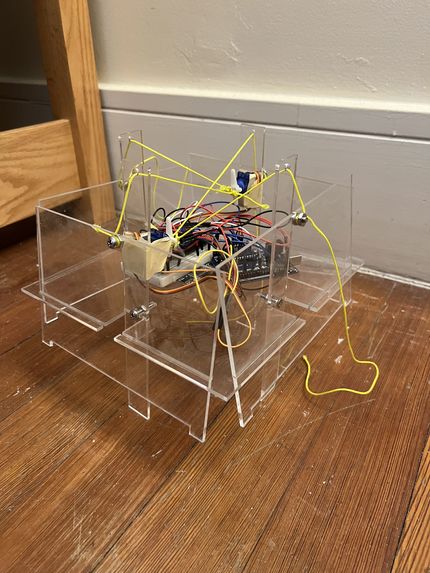
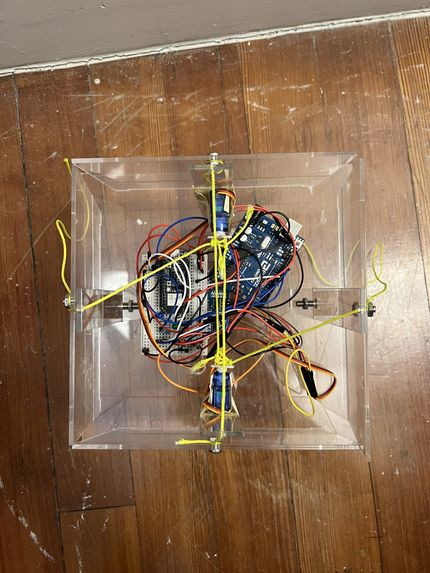
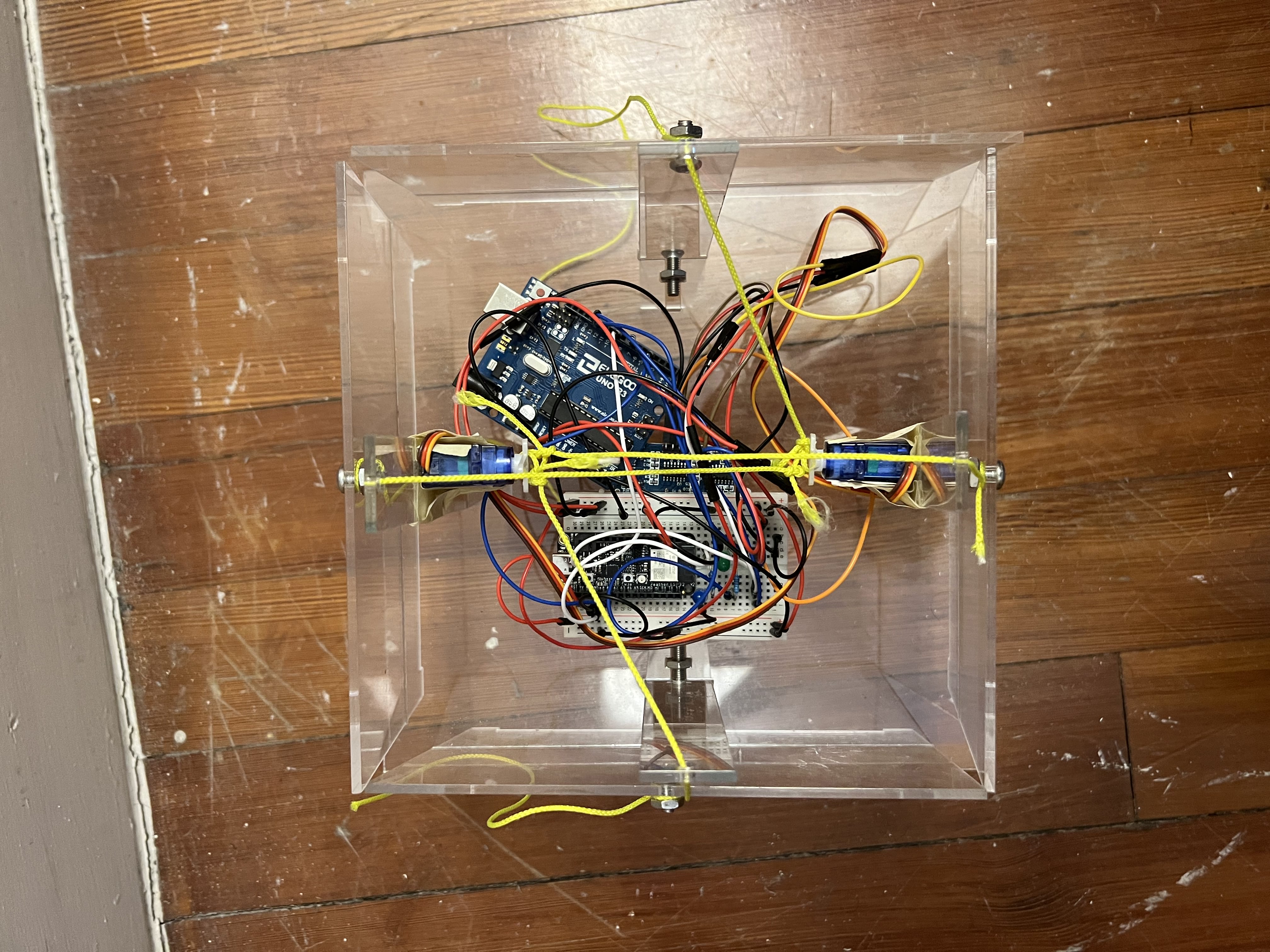
Our circuit uses an Arduino Uno to receive input from an ultrasonic sensor and control two servo motors that hold 4 small plastic walls up with strings. When the ultrasonic sensor detects something, the Arduino waits 5 seconds to confirm it is still there, then it rotates the servo motors, releasing the walls and trapping anything inside the box. When the trap is triggered, the Arduino then sends a High signal to an ESP32 feather microcontroller that notifies the user that the trap was triggered.
Challenges we ran into
As we used more wires to connect our circuit, the wires started to entangle with the strings that hold the plastic walls. Therefore, when the servo motors rotated, either wire got disconnected or the walls were not released due to the entanglements. It took us a significant amount of time to fix this problem.
Accomplishments that we're proud of
We are proud of making a fully functional laser-cut prototype that successfully senses, traps objects inside, and notifies the users. Having all the functionalities that we hoped for.
What we learned
We learned the difficulties of integrating a CAD design with electronic circuits while ensuring all the parts work correctly. We also learned how to integrate Arduino with ESP32 to take advantage of the features of both microcontrollers.
What's next for Friendly Mouse Trap
We hope to develop a better design that avoids contact between the strings that hold the trap walls and the wire, thus greatly improving the functionality of the project. We also hope to use explore other microcontrollers that provide more functionalities to notify the user.

Log in or sign up for Devpost to join the conversation.