-
-
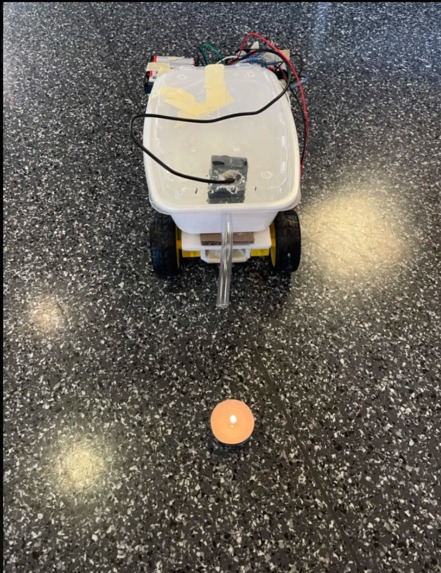
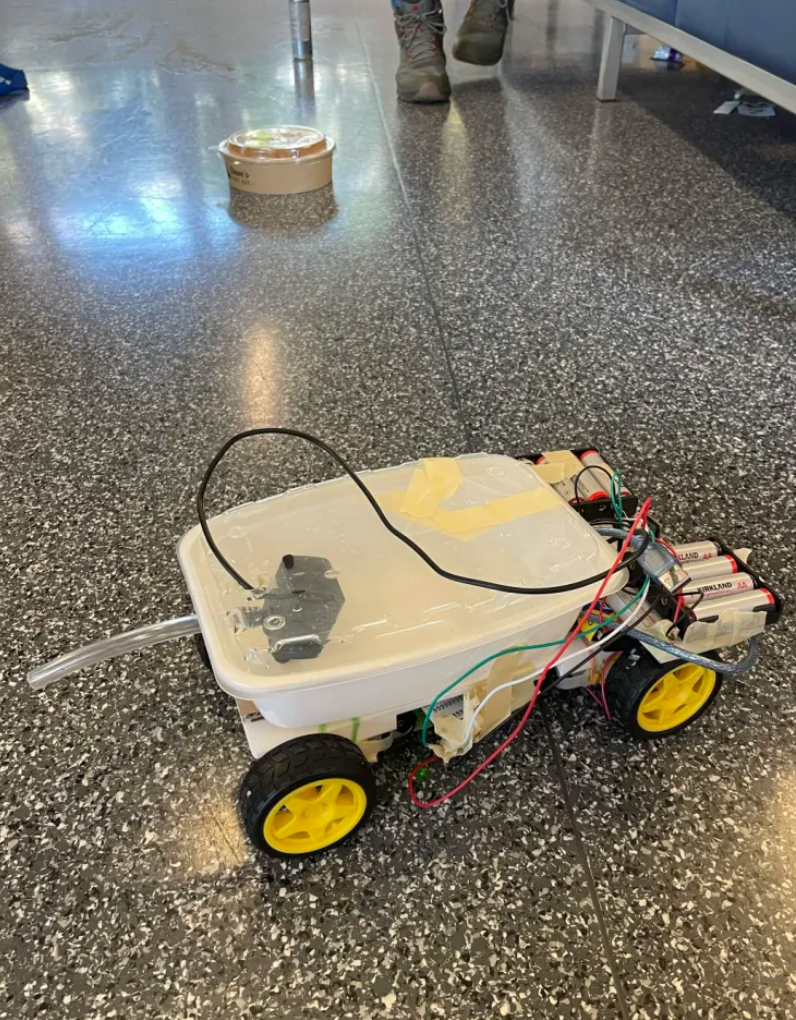
Facing the fire
-
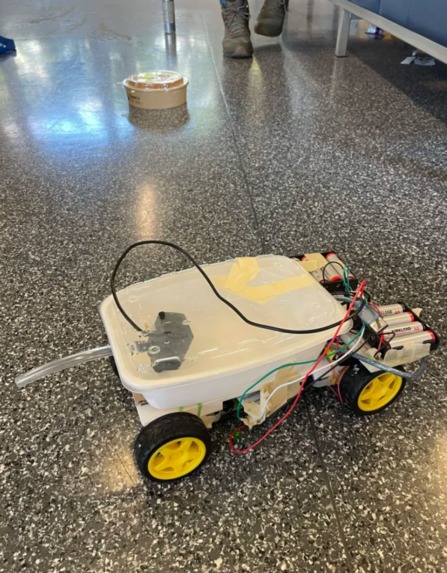
Side
-
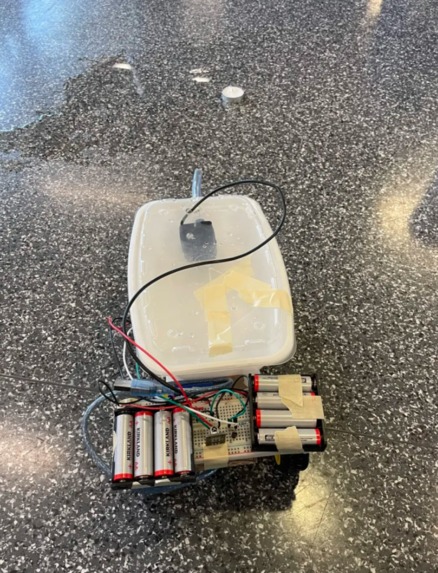
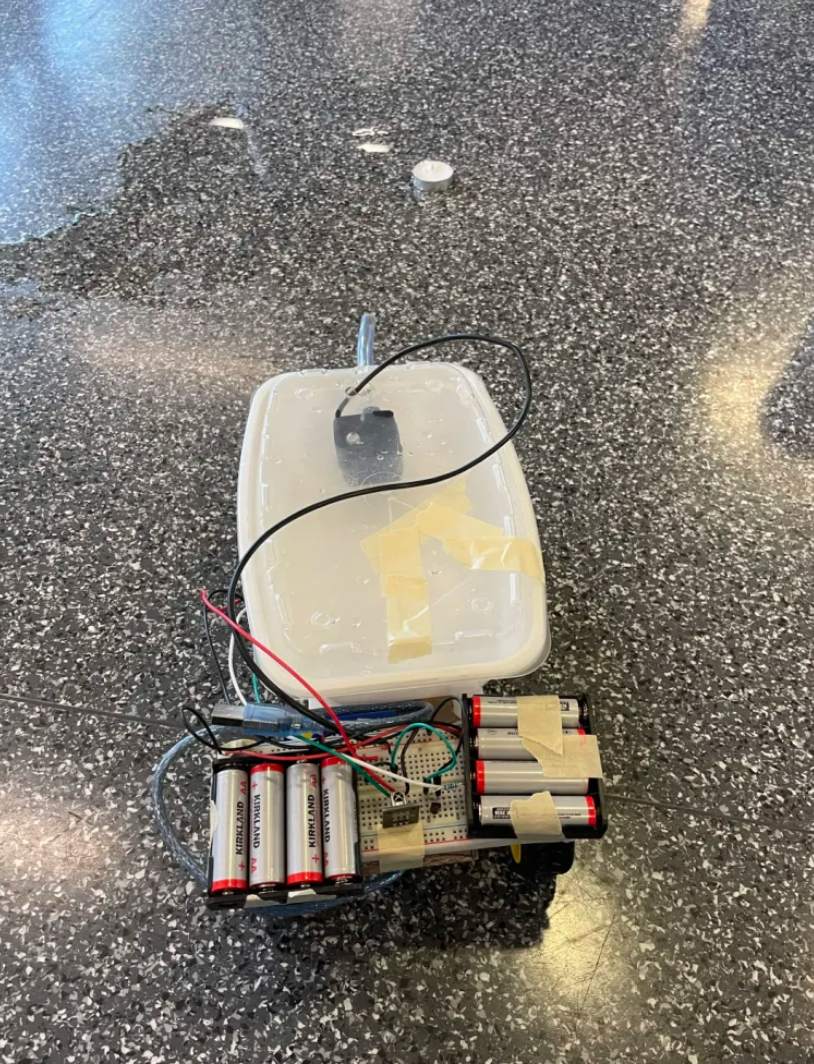
Top and Back
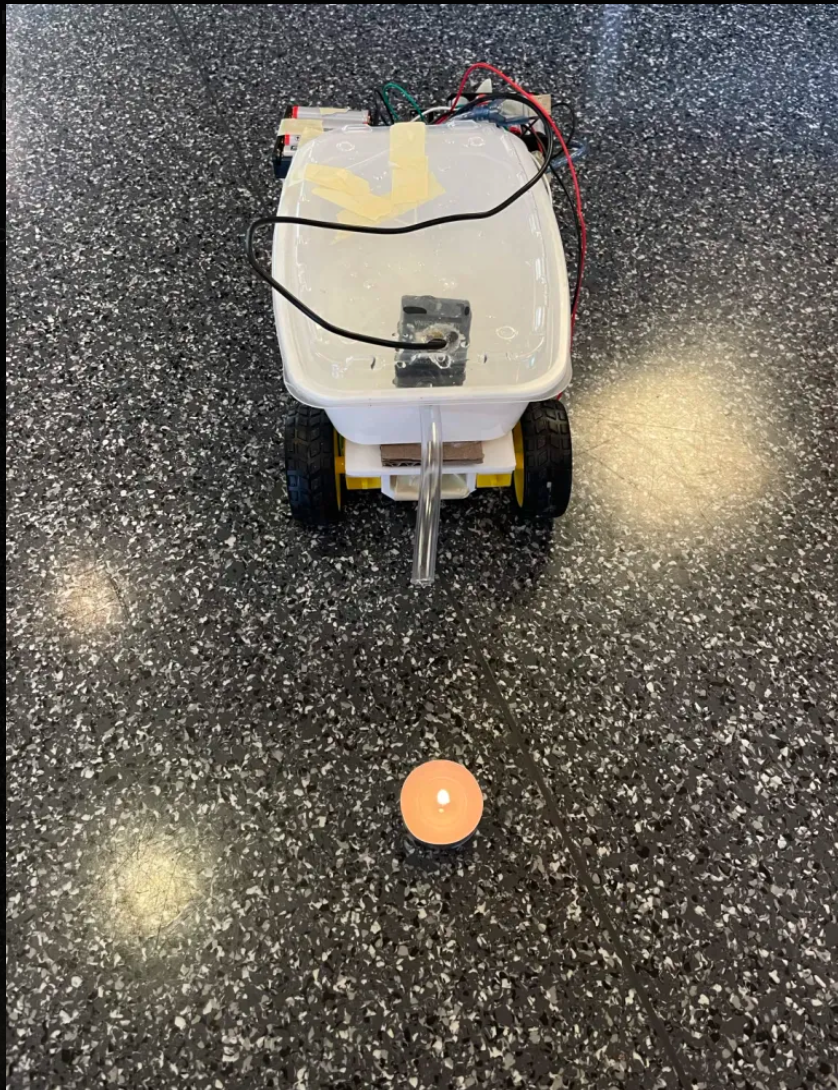
Inspiration
Our project was inspired by the idea of using robotics to aid with fire safety and response. We wanted to explore how a mobile robot could assist with small fires by bringing automation into a situation where a fast response can be important.
Our long-term goal was to create a robot capable of automatically detecting a fire, warning people nearby, navigating toward it, and eventually assisting with extinguishing it. While we were not able to implement the full autonomous system within the hackathon, the project allowed us to explore the foundations needed to make that idea possible.
How We Built It
We built our robot around a car-like chassis, using wheels, motors, an Arduino Uno, sensors, and components from basic electronics kits. We used our 3D printer to create some of the structural components, while much of the chassis required improvisation and modification based on the materials available to us.
We designed the robot in a modular way, building and testing different components before integrating them together. Our original plan included using a camera for automated fire detection, along with light sensing and other sensors. Due to the time constraints and difficulties integrating the camera, we ultimately transitioned the robot to remote control (RC) for the final prototype.
Although this meant we did not achieve our original level of automation, the RC system allowed us to demonstrate the robot's mobility and provided a foundation for future autonomous features.
What We Learned
One of our biggest takeaways was realizing how ambitious it is to build and integrate a complete robot within 24 hours. We had to work with the hardware and materials available to us, which meant frequently improvising and changing our original plans.
We learned that individual components can work well on their own but become much more challenging to integrate into a complete system. We also learned the importance of prioritizing a functional prototype and adapting our scope when certain features, such as the camera system, proved too difficult to implement within the available time.
Most importantly, we learned that automation is a much larger challenge than simply making a robot move. Reliable autonomous fire detection and response would require multiple sensors, robust decision-making, navigation, and extensive testing.
Challenges
Our biggest challenge was balancing our original vision with the limitations of a 24-hour hackathon. The camera integration was more difficult than expected, and we were ultimately unable to implement it into the final prototype.
We also had to improvise heavily with the chassis and mechanical components. Some parts were 3D printed, while others had to be adapted from the materials we had available. As we ran into these challenges, we decided to simplify the system and use RC control so that we could still produce a functional physical prototype.
While we did not achieve full automation, the prototype represents the first step toward our larger goal: developing an autonomous mobile system that can assist with detecting and responding to small fires. Future versions could build on our current platform by adding reliable fire detection, autonomous navigation, and automated response mechanisms.


Log in or sign up for Devpost to join the conversation.