-
-
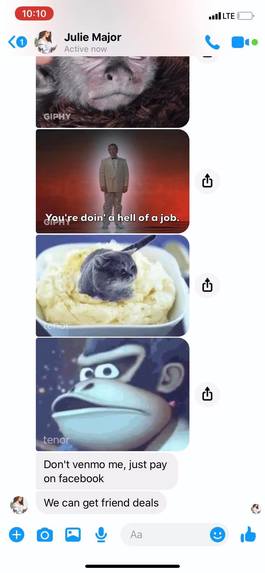
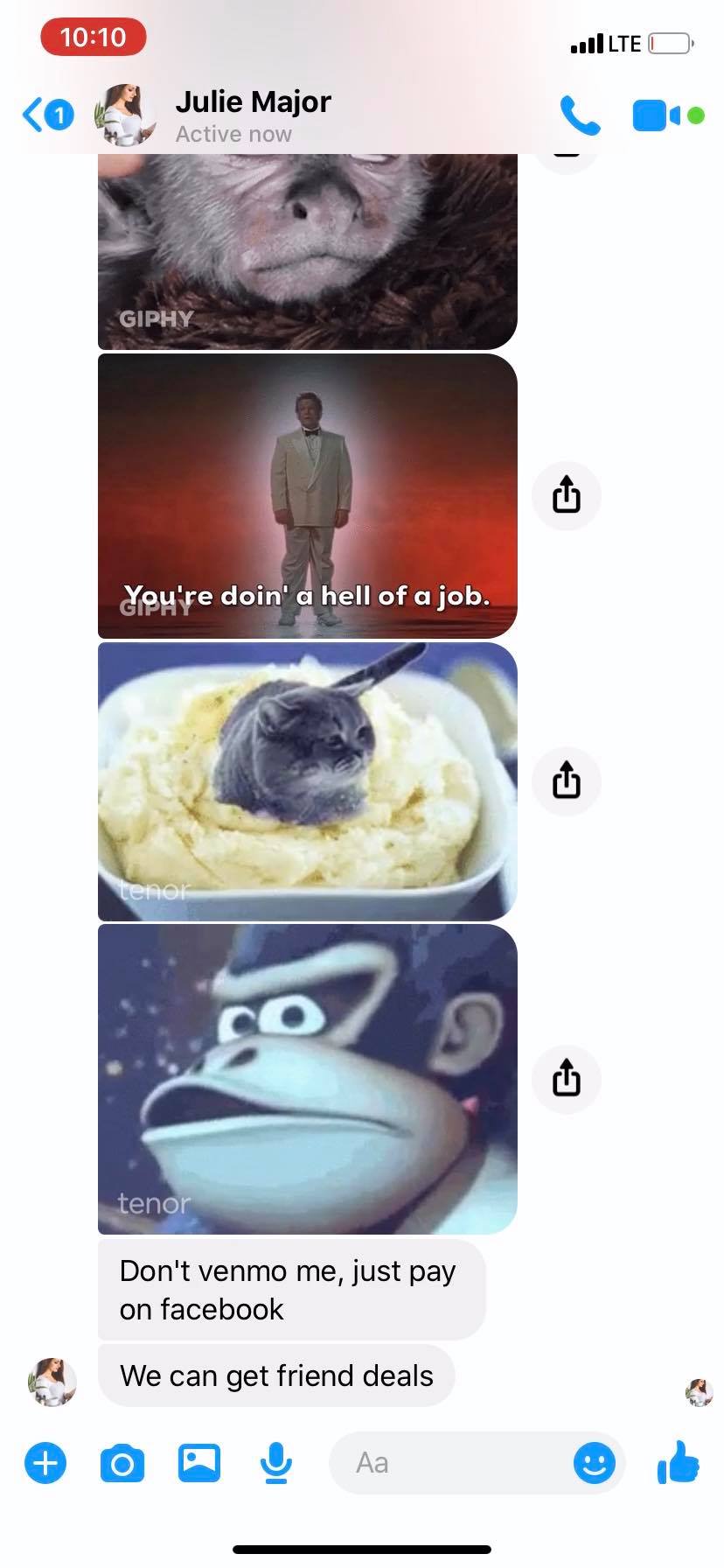
don't venmo, paying on FriendDeals is easier
-
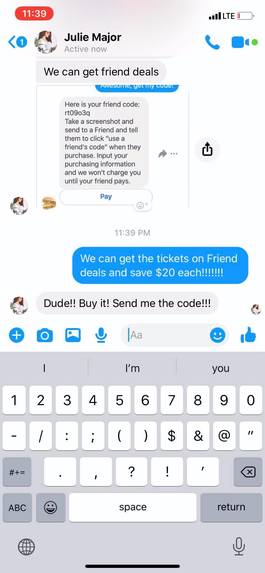
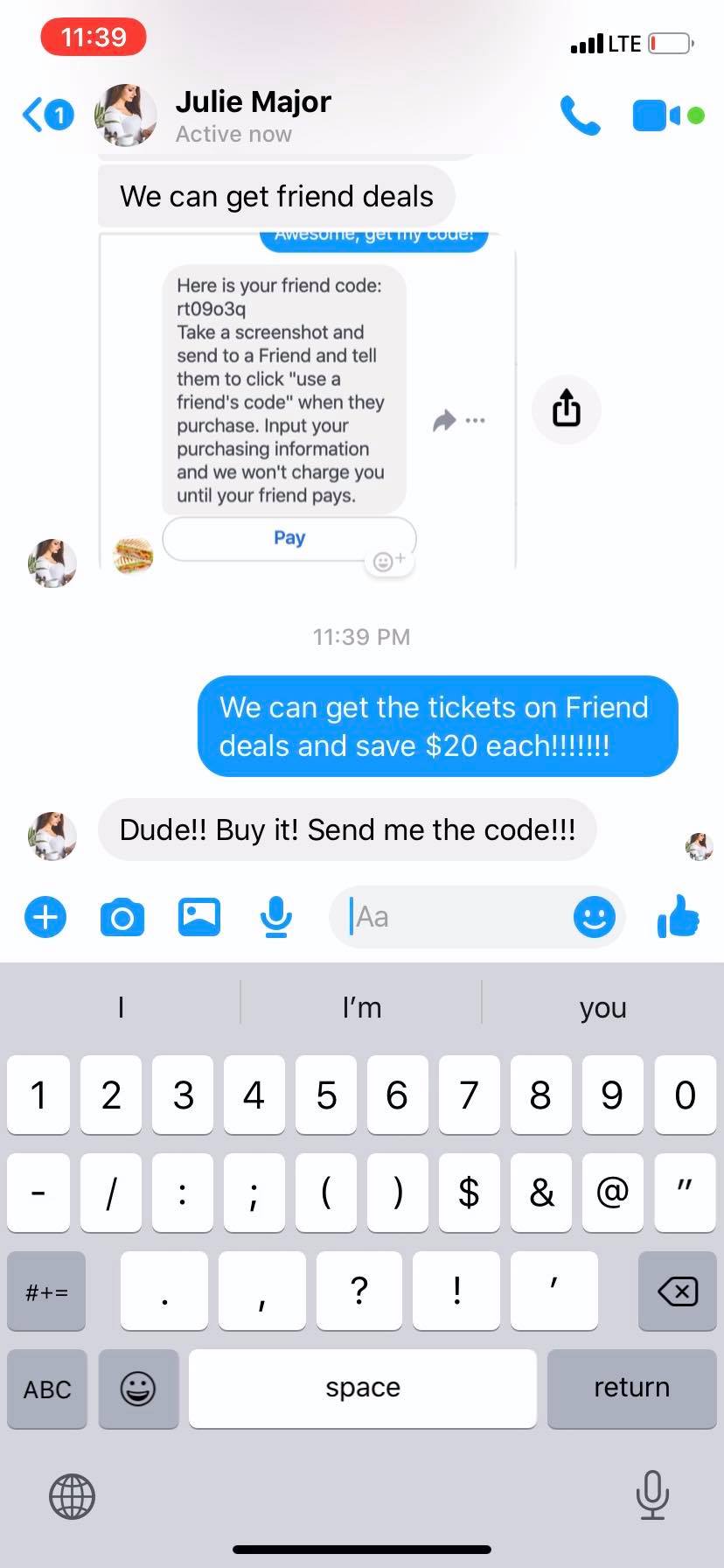
"hey guess what, we can get the tickets on FriendDeals"
-
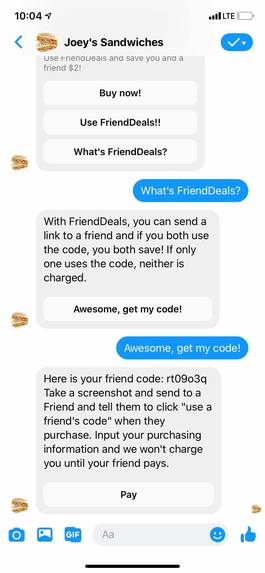
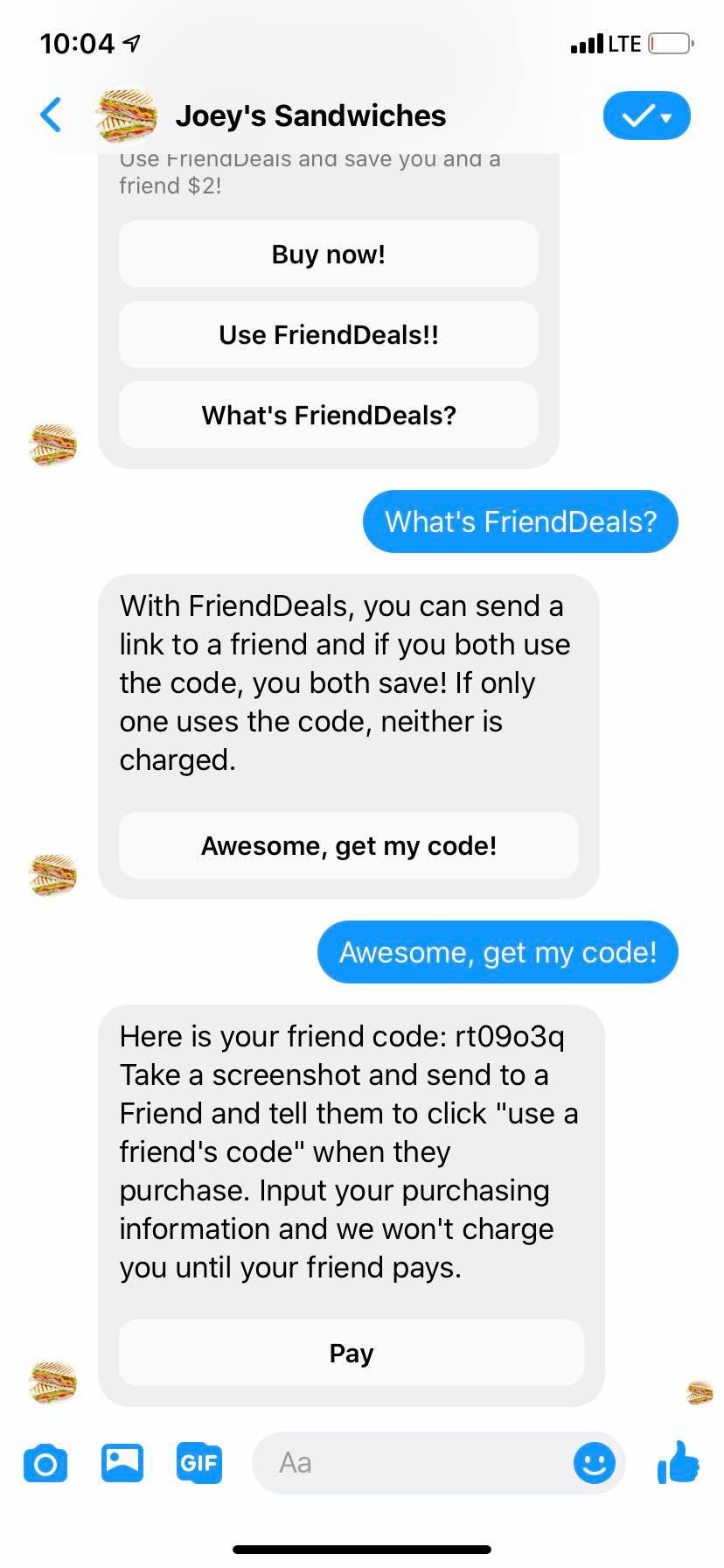
food delivery using FriendDeals
-
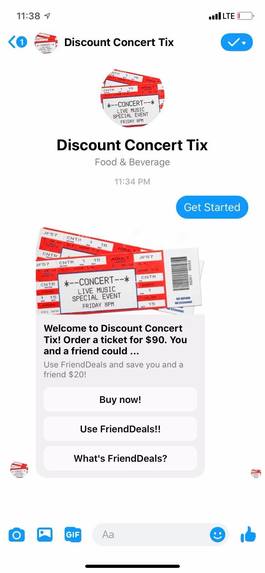
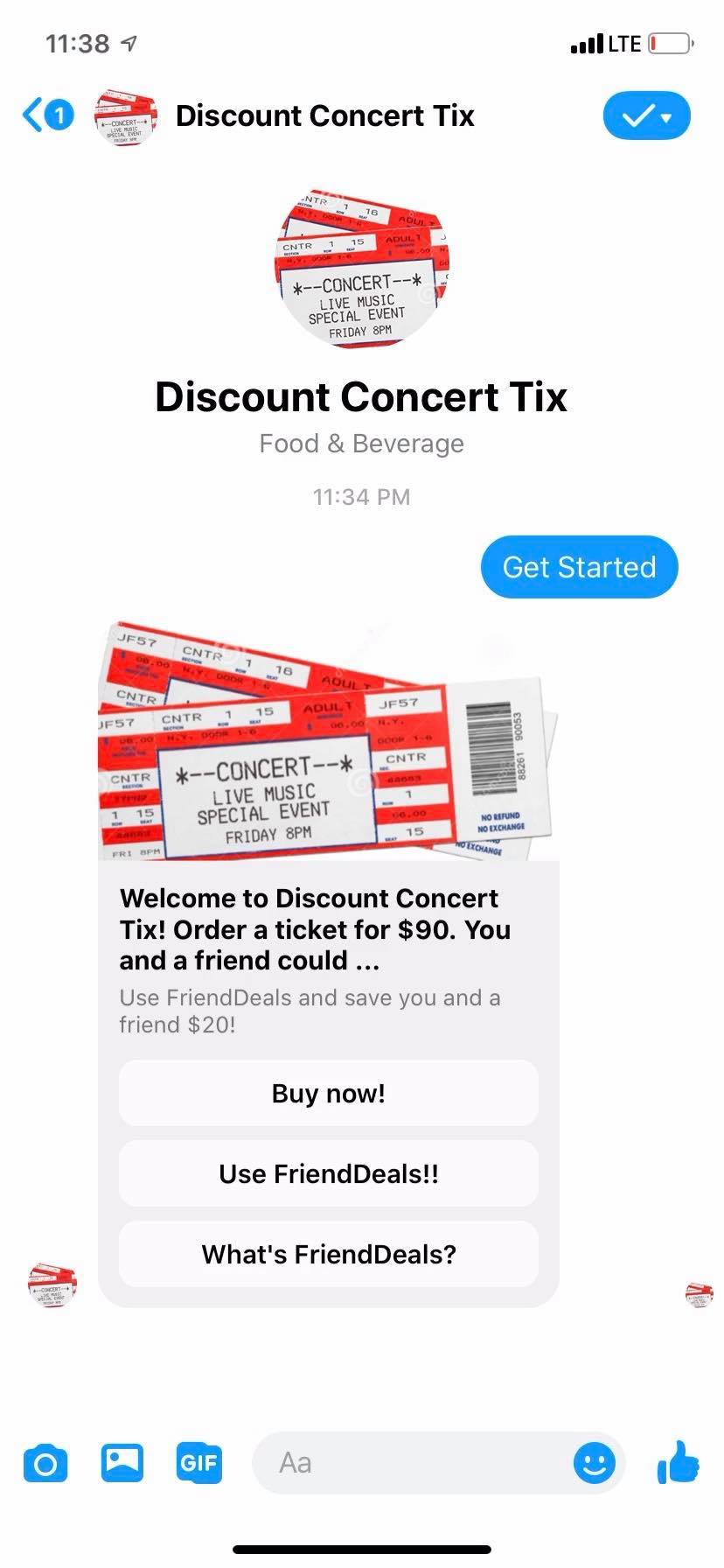
ticket vendor using FriendDeals
Inspiration
Currently, the go-to platform for consumers to purchase a product when they know what they want is Amazon. If a consumer wants to order a t-shirt for example, they will either buy directly from their favorite brand or search for the product on amazon. This is because Amazon provides benefits such as a large collection of sellers and offers such as 2 day delivery. Facebook on the other hand succeeds in selling products through organic discovery; a user will see an ad and purchase the product then and there, even though they never had the intention of buying the product. In order to capture consumers that already know what they want, Facebook must provide something on their platform that is more attractive to those users than Amazon's large collection of sellers and two-day delivery.
Enter FriendDeals.
FriendDeals utilizes the social infrastructure already intrinsic to Facebook in order to attract both businesses and also consumers that know what they want when they use the platform.
Incentive for consumers to use FriendDeals: save money Incentive for businesses to use FriendDeals: products that survive mainly on marketability have a platform to sell their products where consumers are incentivized to do their marketing for them Incentive for Facebook to use FriendDeals: they can provide a platform for selling products that can only be achieved with a massive social infrastructure that is already intrinsic to Facebook. They can also mine more user data on both successful and unsuccessful product recommendations between friends.
What it does
FriendDeals is a framework for building messenger chat bots. It provides users with option to obtain a FriendCode. If both you and a friend use the code and pay, both are charged and you both save. If either friend does not use the code and pay, neither is charged. 1) User 1 obtains FriendCode 2) User 2 messages FriendCode to a friend that they think would be interested in the product as well 3) User 1 enters credit information and the FriendCode 4) User 2 enters credit information and the same FriendCode 5) Both users are charged once both pay and use the FriendCode
How we built it
We used Facebook's webhooks using nodejs with generic messages. The app is hosted on heroku and heroku is hooked up to a MongoDB database. This database has unique FriendCodes and empty attributes for the userID's and the credit information for both parties as well as the time of access. When a user gets a friend code, their information is saved in the mongoDB document as well as the time of access. Once another person enters the same code with their own information, then the purchase would be executed and both users are sent a confirmation message.
Challenges we ran into
We wanted to use the broadcast feature to share codes, but it was deprecated so we switched to method of screenshoting/message code. We really struggled to only provide features that were absolutely necessary to illustrate the idea rather than building a full fledged "perfect" product.
Accomplishments that we're proud of
We are proud of the illustration of the idea in the video. We had also never hosted anything or used git, so there was a big learning curve as we got started.
What we learned
We learned about working with SDK's, hosting, the internal workings of Facebook messenger, and git.
What's next for FriendDeals
If we were to go further, we would add security to our saving of credit information. Also, we would do frequent scans of the database to remove expired codes (ie those that were accessed and never executed).
Log in or sign up for Devpost to join the conversation.