-
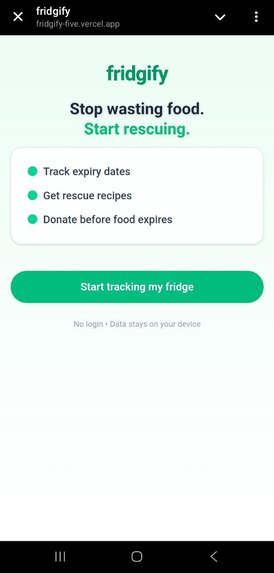
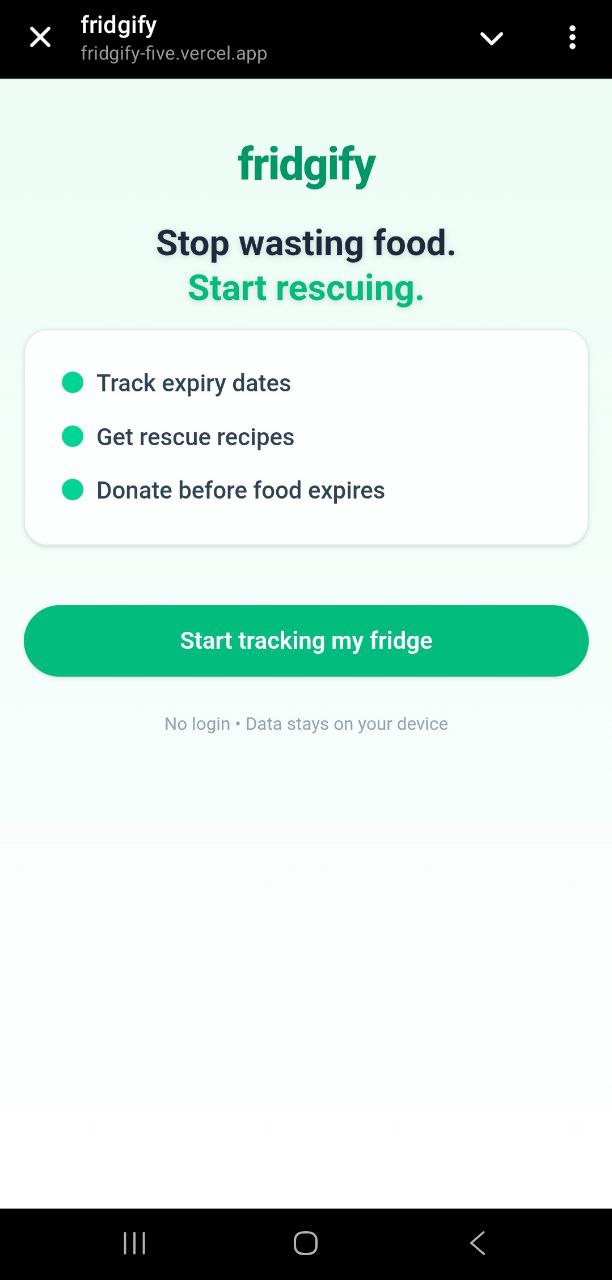
Landing Page
-
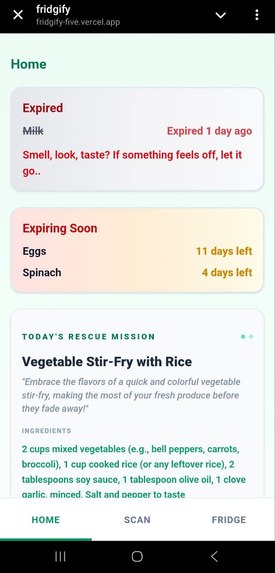
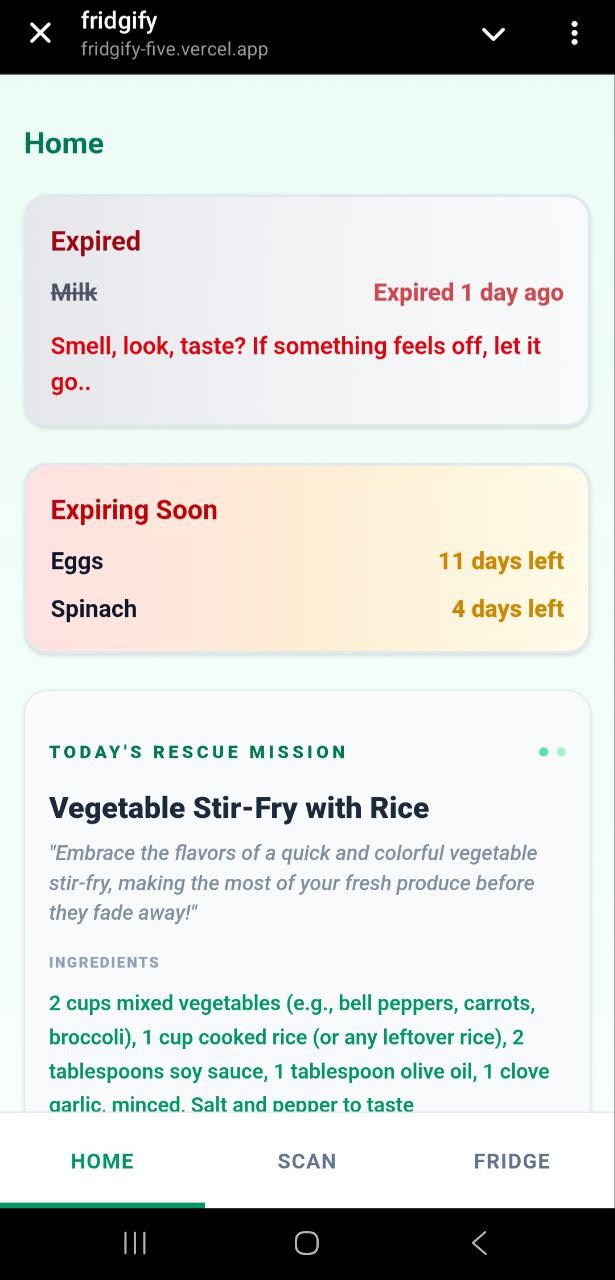
Home Page (Top half)
-
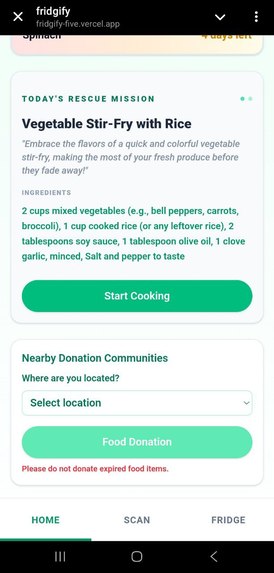
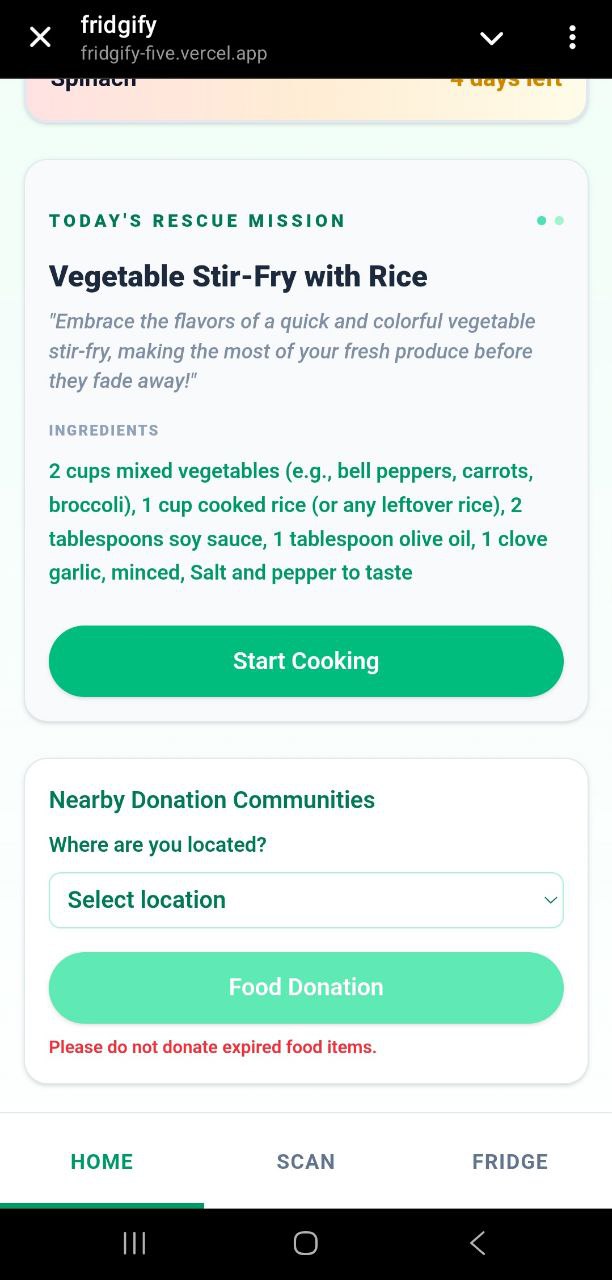
Home Page (Bottom Half)
-
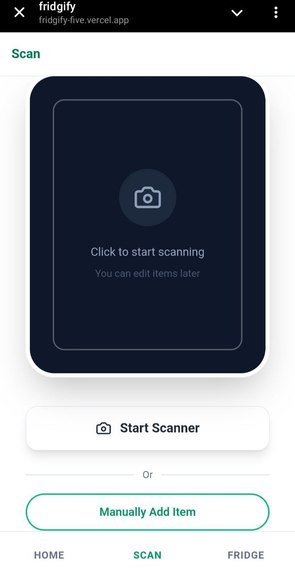
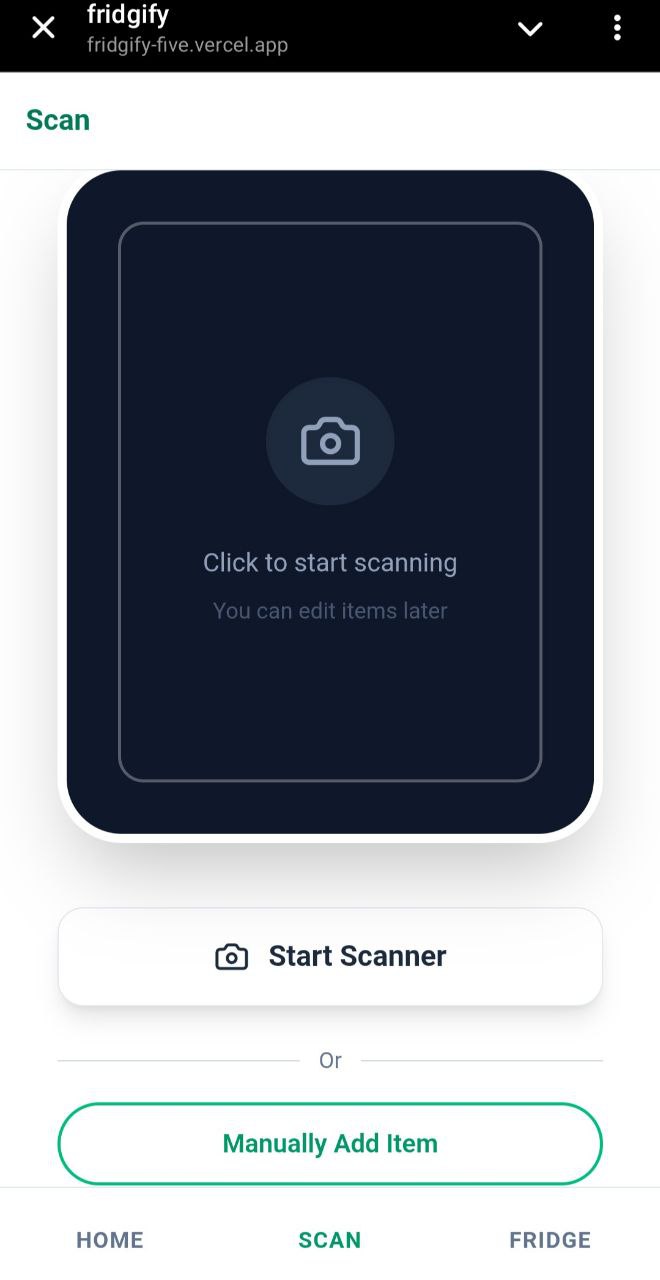
Scanner Page
-
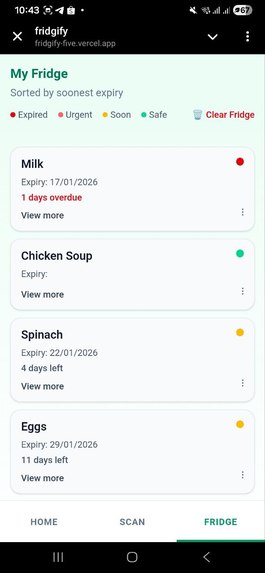
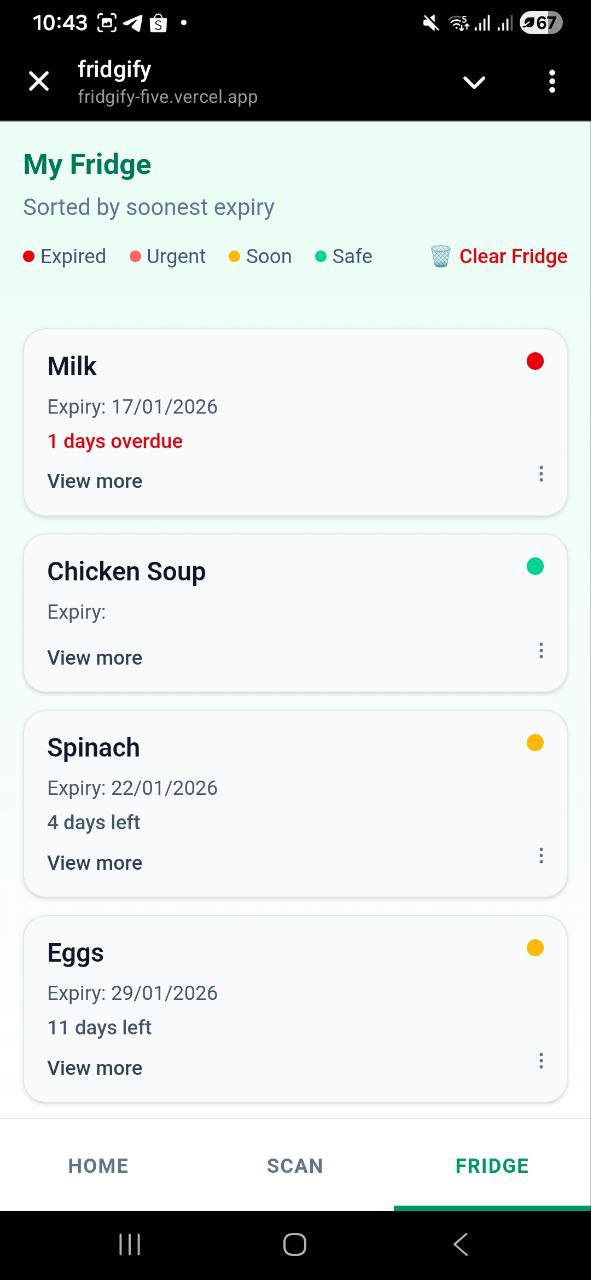
Fridge Page
Inspiration
Food waste is a critical yet overlooked issue in Singapore. According to the National Environment Agency, Singapore generates over 763,000 tonnes of food waste annually, with households accounting for a significant portion. As students living in hostels, we witnessed this problem firsthand — items hidden behind others in communal fridges, forgotten produce accumulating, and lingering hygiene concerns. Beyond the inconvenience, we realised this everyday oversight has real consequences: wasted money from spoiled groceries, unnecessary environmental impact, and potential health risks in shared spaces.
We wanted to solve a problem that felt trivial on the surface but had deeper personal and social implications. The idea of Fridgify emerged from asking: What if managing your fridge was as simple as scanning a receipt? What if you never had to worry about forgotten items again? We saw an opportunity to transform a mundane household task into a tool that could help Singaporeans be more mindful, responsible, and sustainable in their daily lives, contributing to Singapore's sustainability goals.
What it does
Fridgify is a smart fridge management webapp designed to eliminate food waste and simplify household grocery tracking. Users can add groceries in two ways: scan receipts to instantly log items, or manually enter them by providing name, quantity, and expiry date. All items are automatically tracked with real-time expiry date monitoring. Each item is assigned an urgency status — Expired, Urgent, Soon, or Safe — based on days remaining, ensuring nothing gets forgotten. The app displays items sorted by earliest expiry for quick prioritization.
Fridgify provides detailed item information including expiry dates, quantities, and AI-powered food safety guidance with storage tips and consumption recommendations. A recipe suggestion feature helps users discover creative ways to use ingredients before they expire. Users can easily edit or delete items as they consume them, and a "Clear Fridge" function removes all items at once.
For users with excess food, Fridgify connects them to nearby food donation communities, enabling responsible food sharing and addressing local food insecurity. By combining practical convenience with community-focused features, Fridgify empowers users to reduce household food waste while contributing to Singapore's sustainability goals and supporting those facing food insecurity.
How we built it
We built our web application using React (Vite) and Tailwind CSS with a mobile-first layout, optimised for on-the-go use. We integrated Tesseract.js for client-side OCR and OpenAI (GPT-4o-mini) for high-precision text parsing. We also developed custom AI endpoints to generate dynamic expiry guidance (e.g. post-expiry tolerance windows and safety checks) as well as a "Rescue Recipe" generator that transforms urgently expiring ingredients into quick, hassle-free, actionable meals.
Challenges we ran into
We initially debated deploying a full-scale database with user authentication. However, we made the strategic decision to utilize Local Storage for our MVP. This prioritized user privacy and instant performance, allowing us to focus our limited time on perfecting interface design, OCR and AI functionalities rather than managing backend overhead.
As a beginner team, we took some time to define the scope of our project as we were tempted by strong features like push notifications and shared fridges. the technical and time constraints of focus on the "Core Loop: Scan → Track → Rescue. By deferring heavy server-side features to future iterations, we were able to ensure that our MVP was polished, stable, and well-positioned to target the primary problem of food waste.
As a team new to integrating OCR and AI APIs, it was a challenge to manage the flow of data from a live webcam to a structured database. We had to work on complex React state management to handle the various 'toggling' states of the scanner page, switching between live camera feeds, processing overlays, and interactive confirmation modals. Synchronizing these moving parts while learning the nuances of API response handling was our greatest technical hurdle, but it ultimately resulted in a much deeper understanding of full-stack integration.
Accomplishments We’re Proud Of
We’re proud of successfully integrating an AI-powered recipe generator into Fridgify, enabling users to receive tailored recipe suggestions based on expiring food items in their fridge. In addition, we implemented a camera-based receipt scanning feature, where users can scan their receipts and have the AI automatically extract food items and add them to the app. Together, these features significantly reduce manual input and enhance the overall user experience.
What We Learned
Through this project, we deepened our understanding of collaborative software development using GitHub, becoming more familiar with key concepts such as branching, merging, and pull requests. We also learned to leverage development tools more effectively, particularly VS Code and GitHub Copilot, which helped improve our productivity and code quality under tight time constraints.
What’s Next for Fridgify
Next, we plan to deploy Fridgify to people within our immediate living environments, such as families and hostel communities, and conduct a one-week pilot test. We will gather user feedback during this phase to identify areas for improvement before refining the app and gradually rolling it out to a wider audience. We also hope to introduce more features like user authentication, push notifications and collaborative tracking.

Log in or sign up for Devpost to join the conversation.