-
-
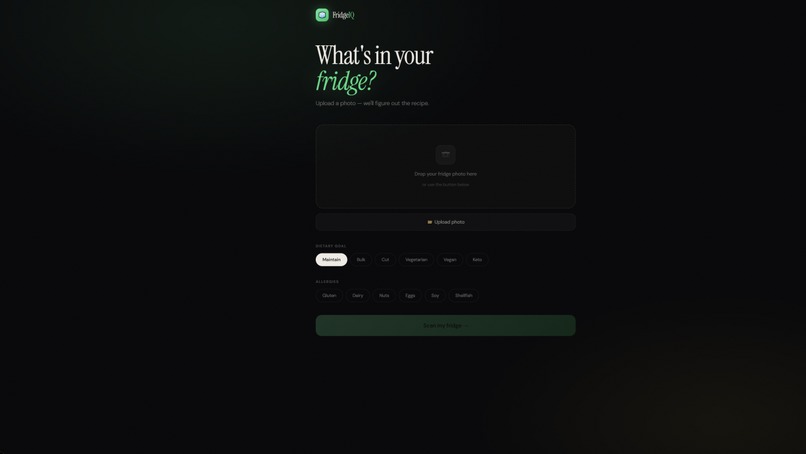
Main page
-
-
-
-
-
-
-
-
-
Inspiration
We've all opened the fridge, stared at random ingredients, and had no idea what to make. Most recipe apps still make you type everything in manually, which is tedious and means you often miss things. We wanted to build something that is simple: point your camera, get recipes, start cooking.
What it does
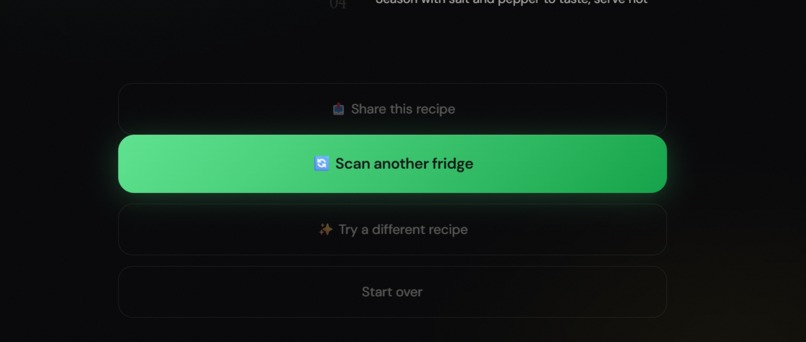
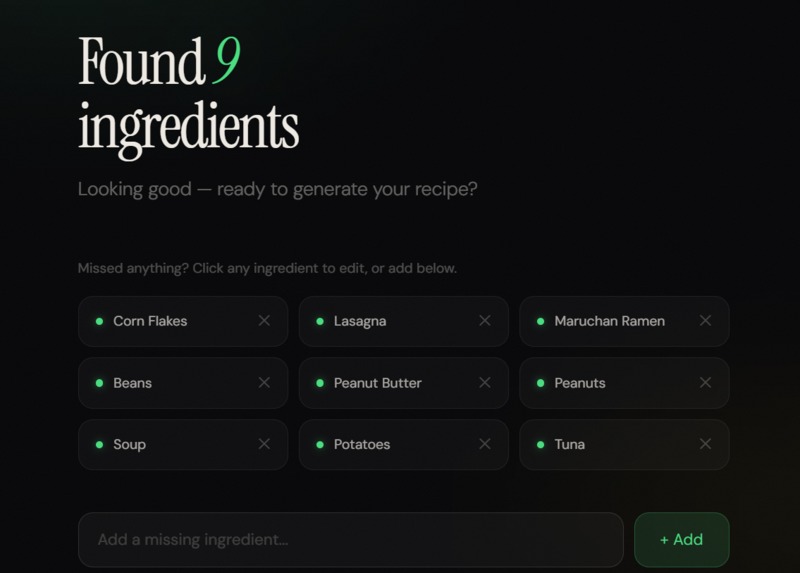
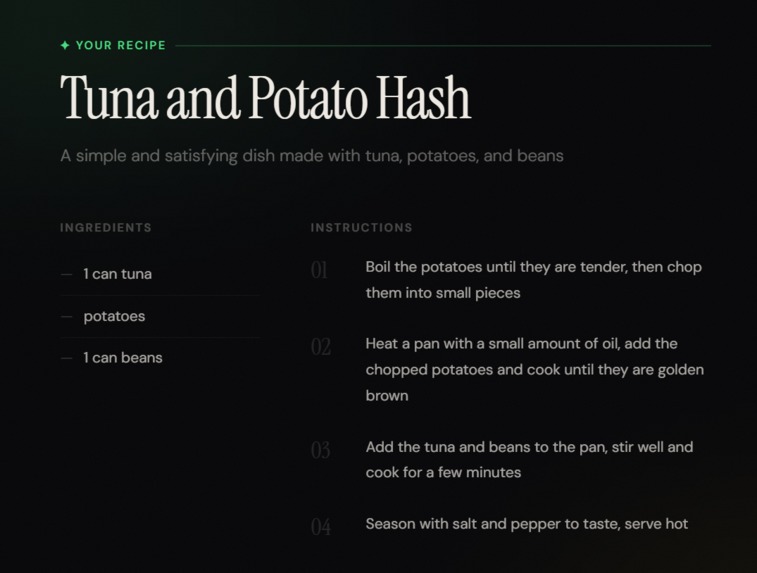
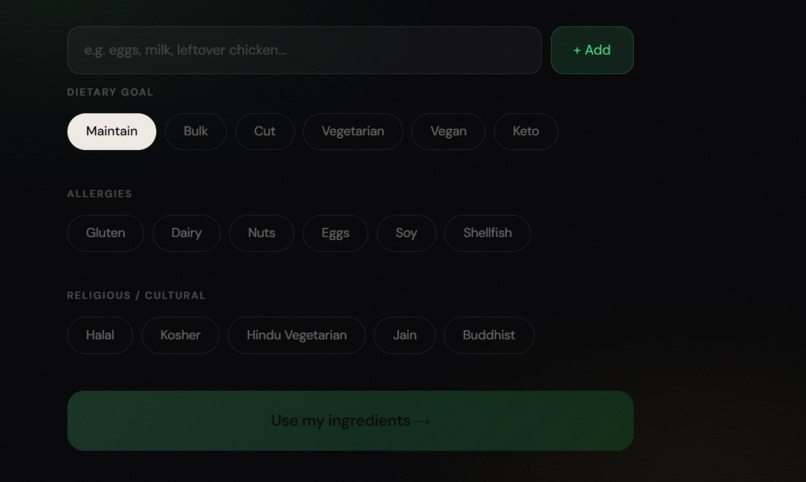
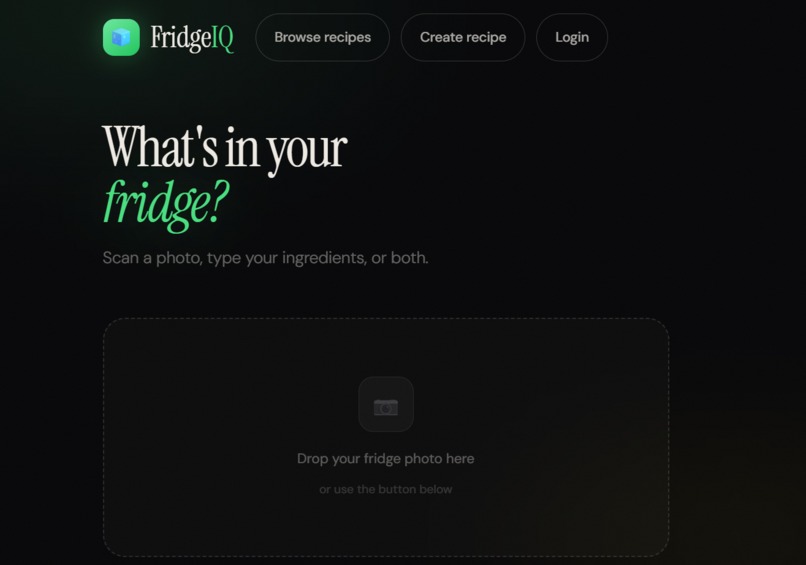
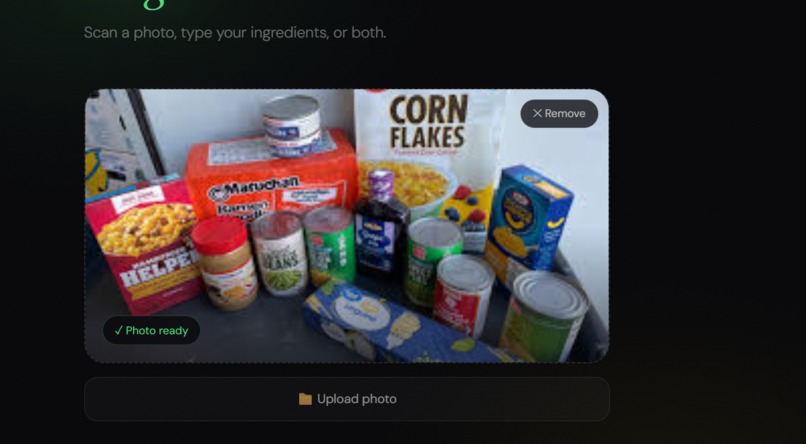
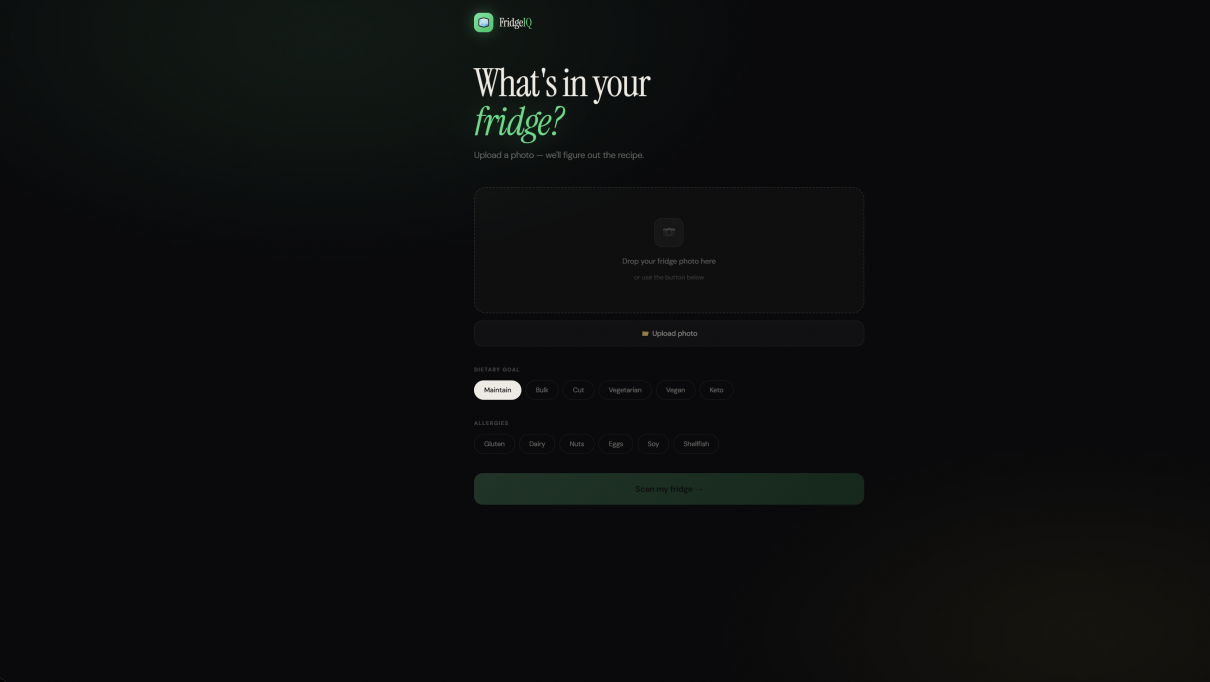
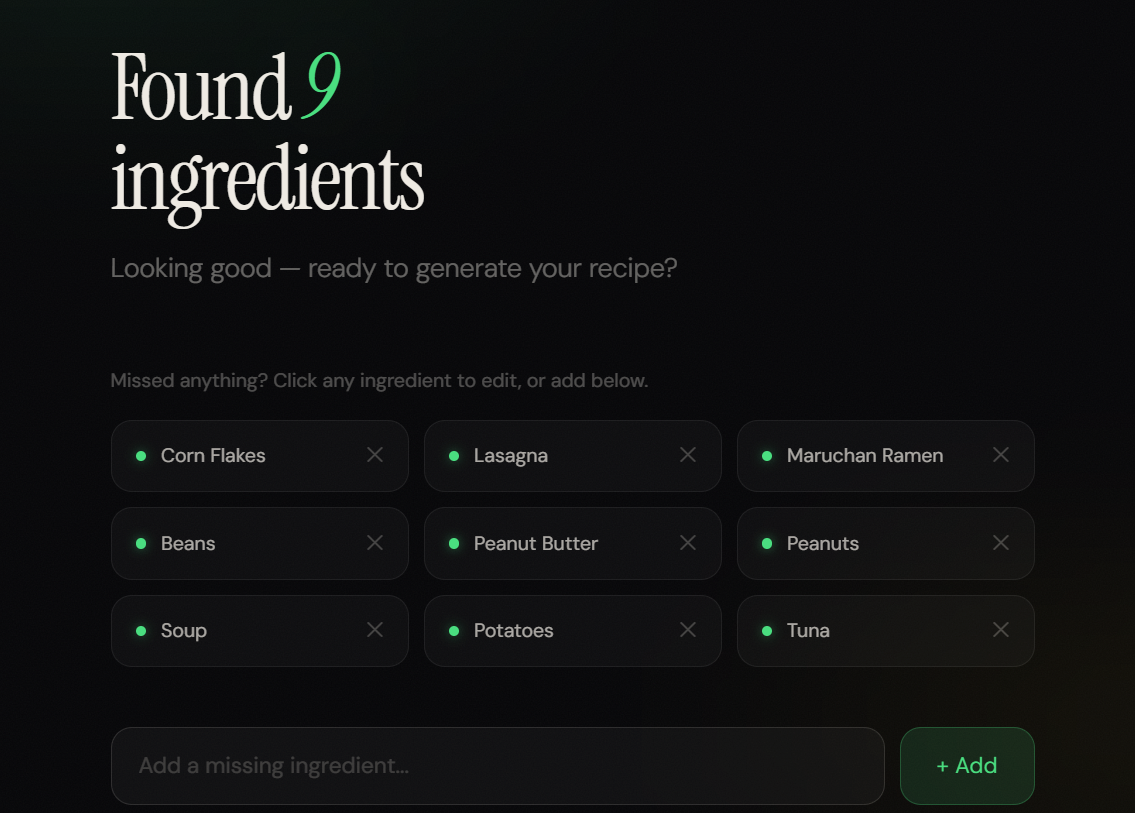
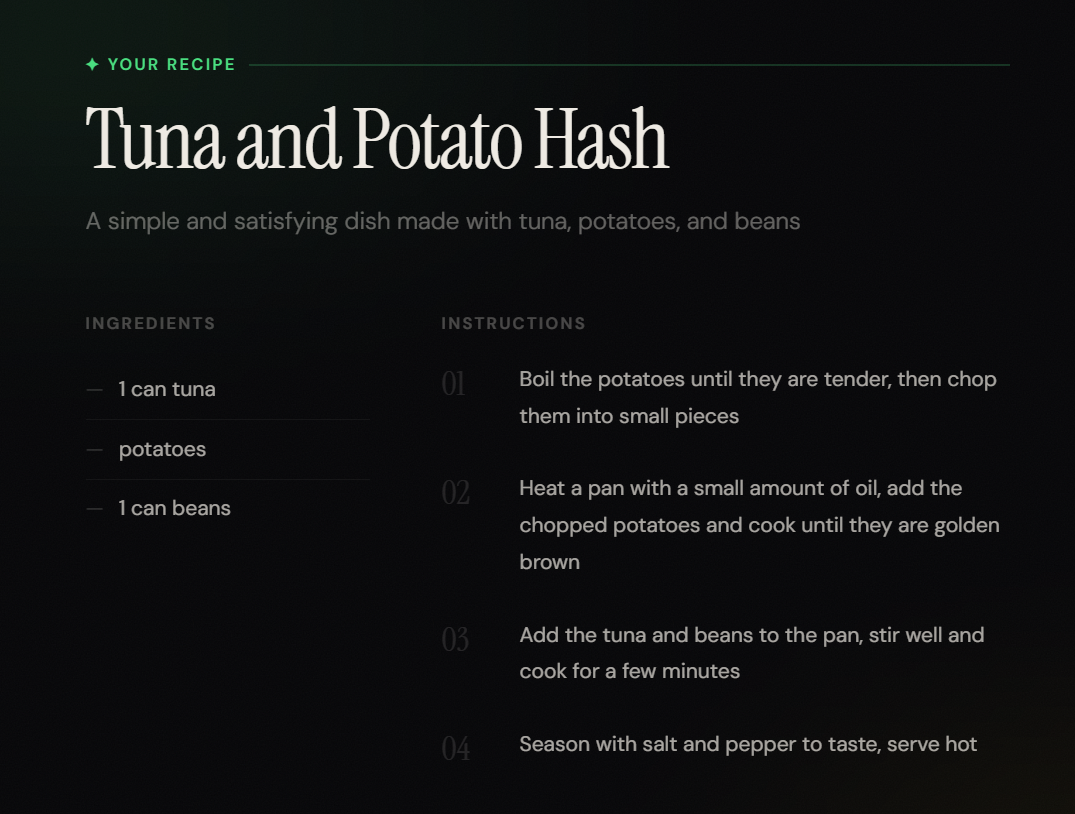
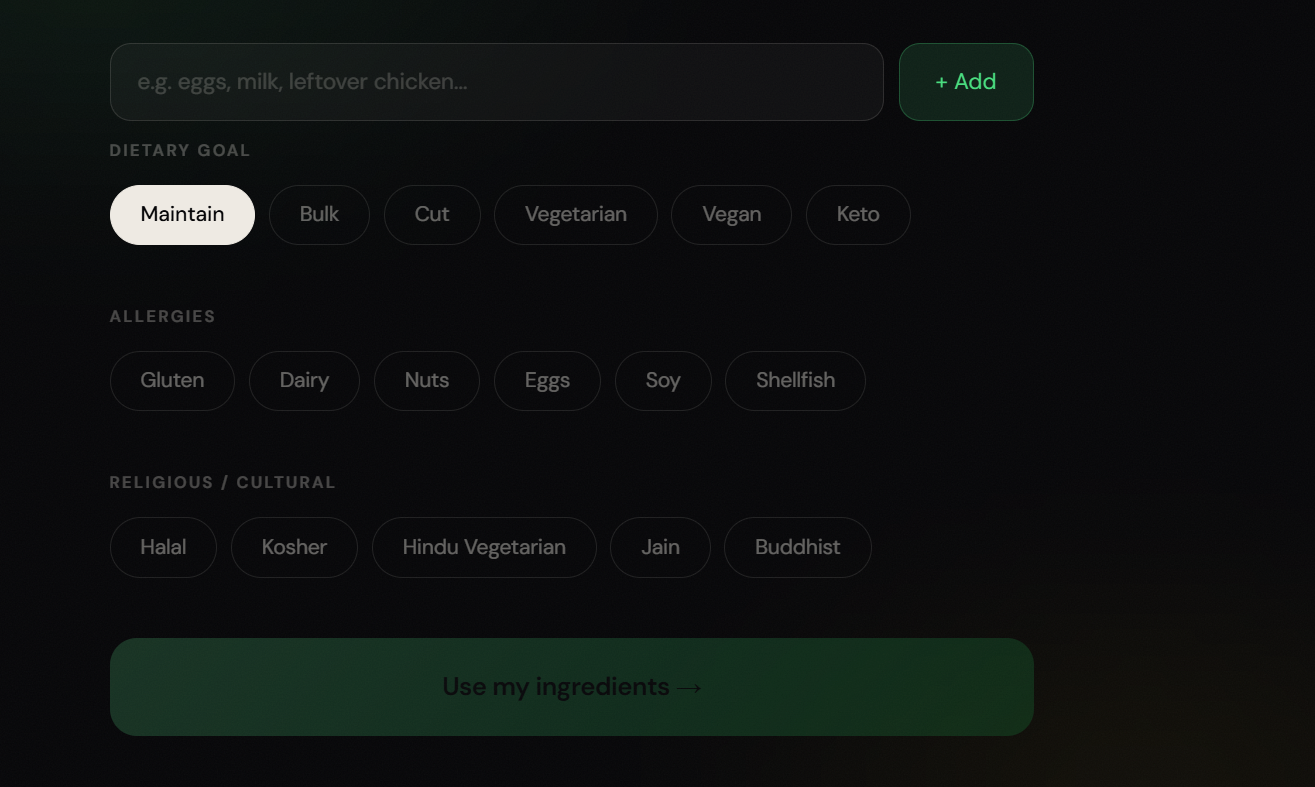
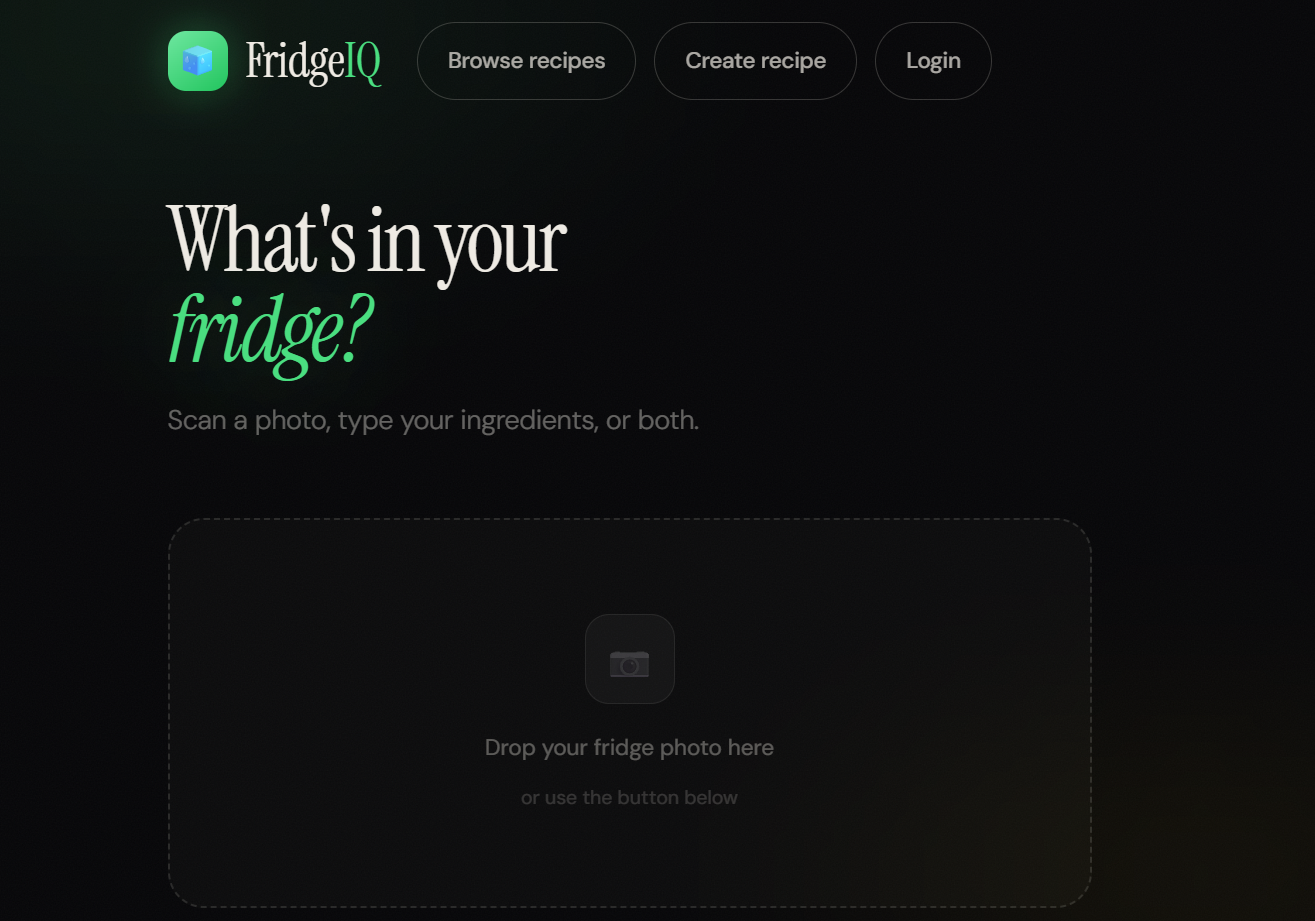
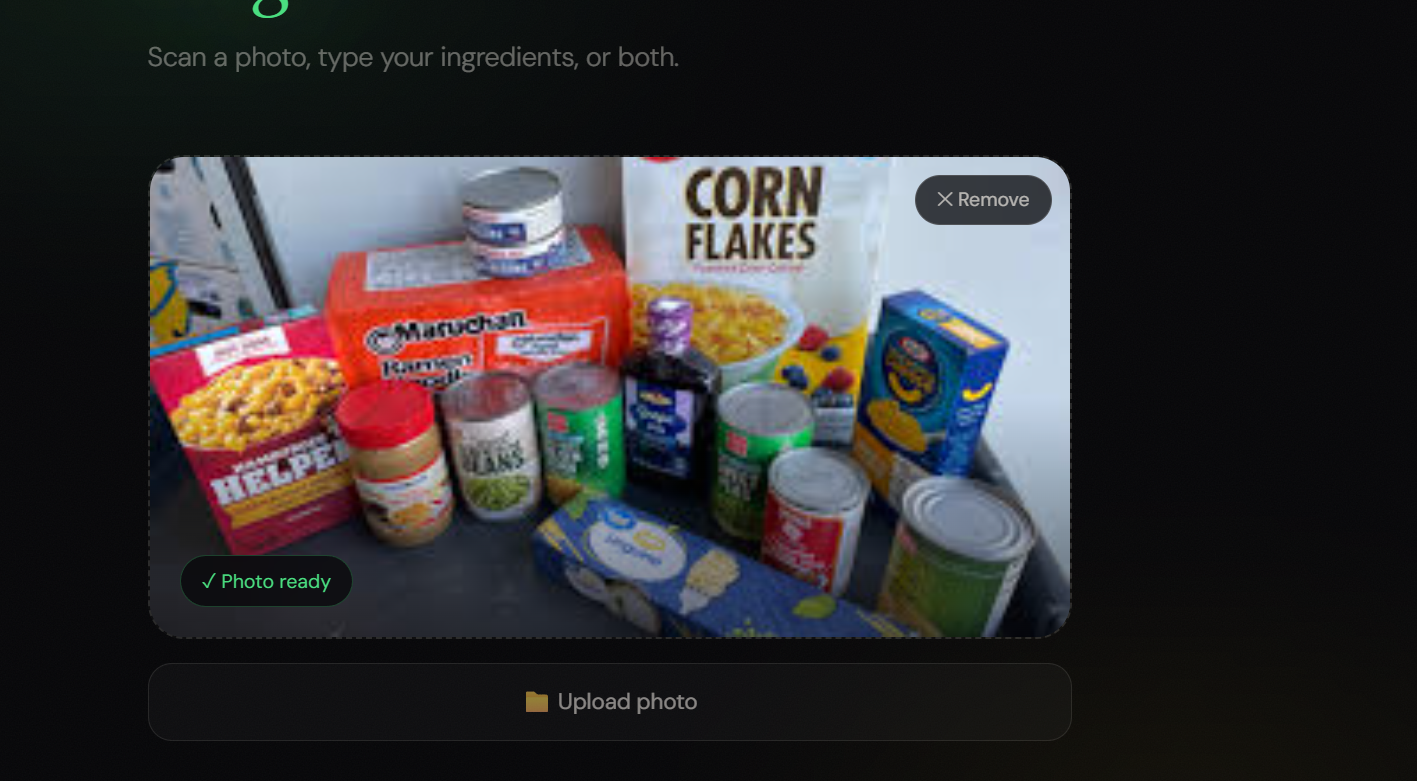
FridgeIQ lets you take a photo of your dridge, conating ingredients and get recipe suggestions based on what's actually in front of you. Point your camera at your fridge or bench, and the app identifies what it sees and suggests meals you can make right now. Each recipe comes with step-by-step instructions, dedicated to your dietary goals and restrictions on food. You can also filter by dietary and relgious preferences ensuring that all your meals adhere to a plan that you are satisifed with.
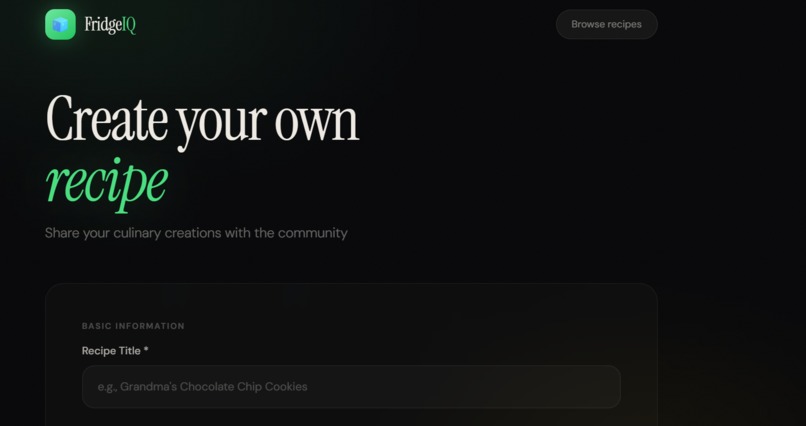
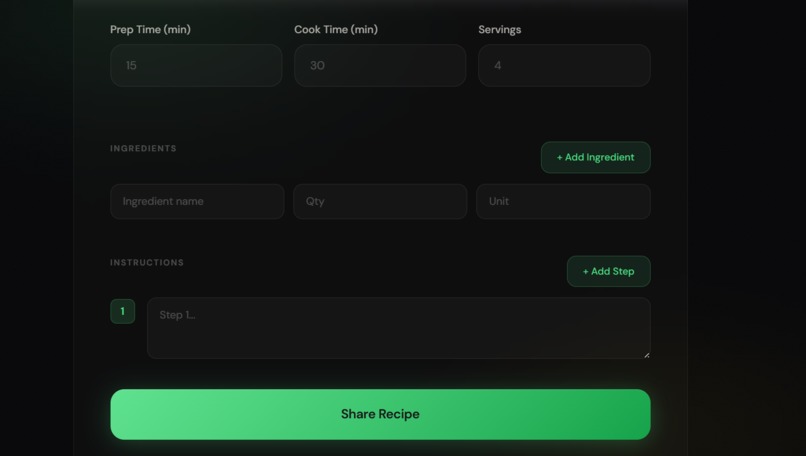
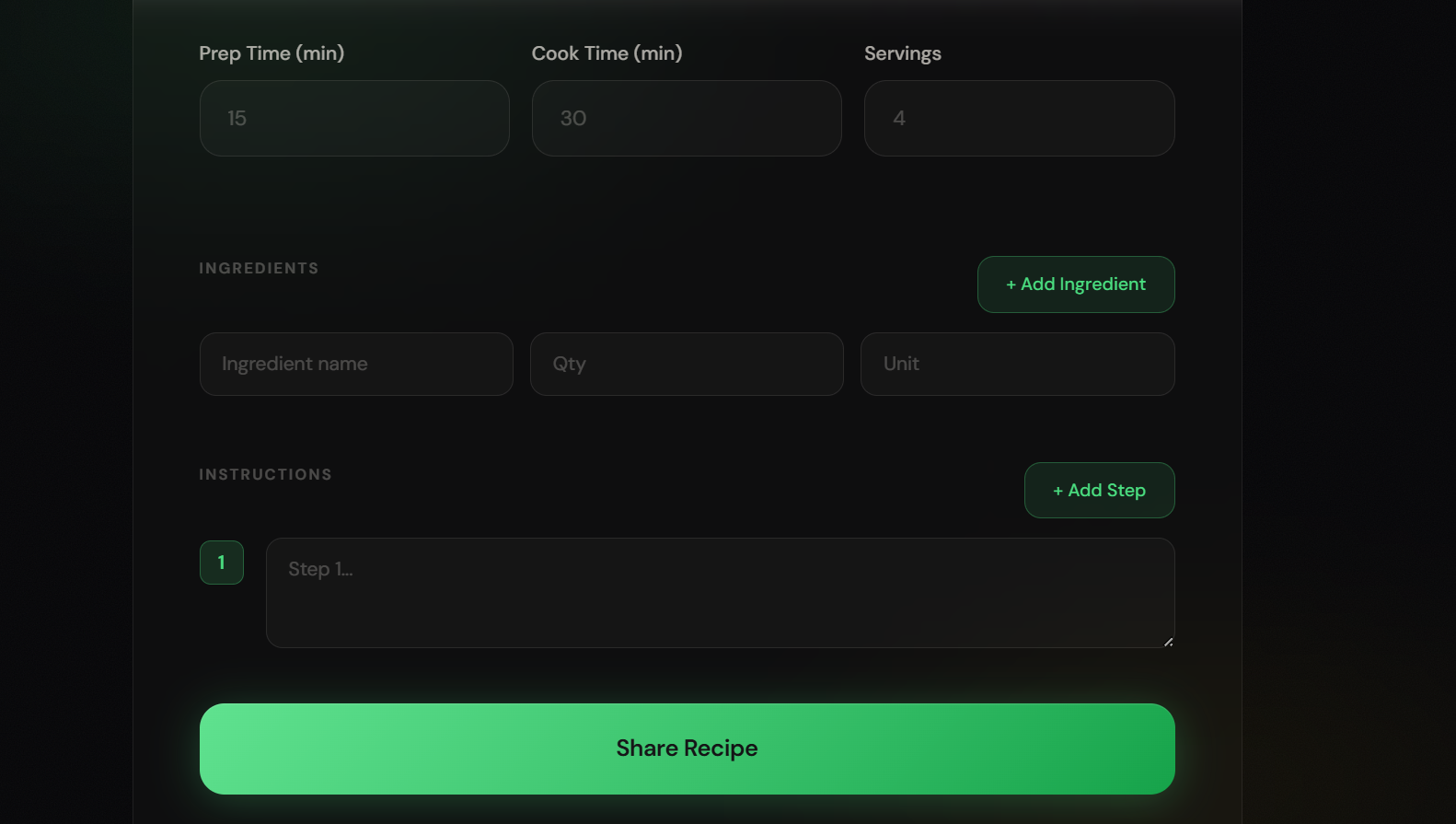
For extra functionality, we added a manula input functonality where if food is hidden or not contained, it is a possibility for you to add your own recipe with specifc ingredients.
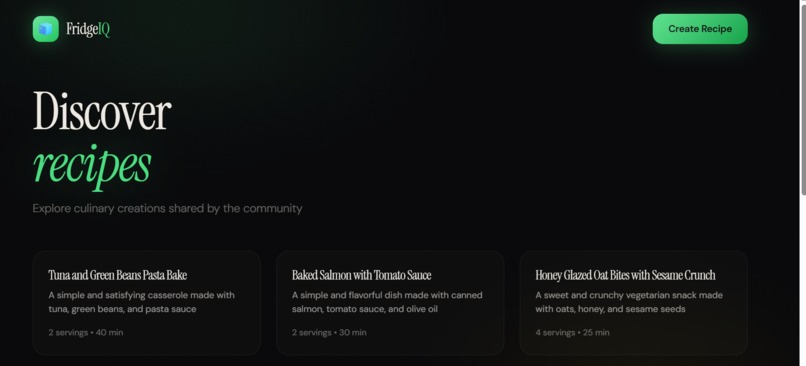
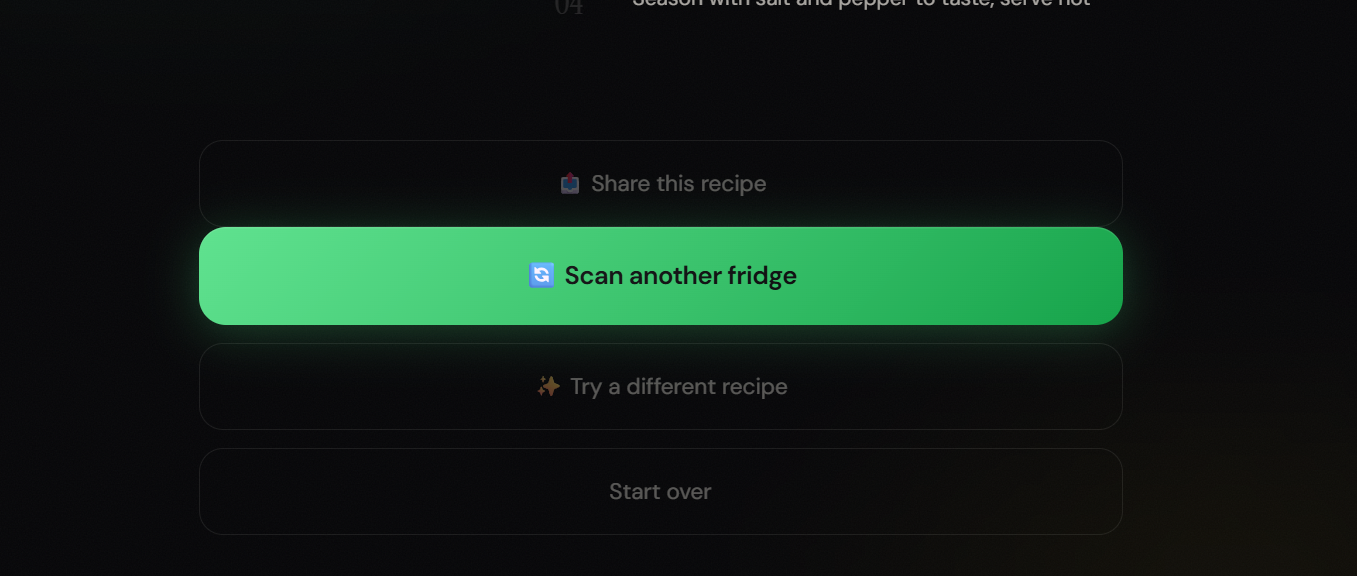
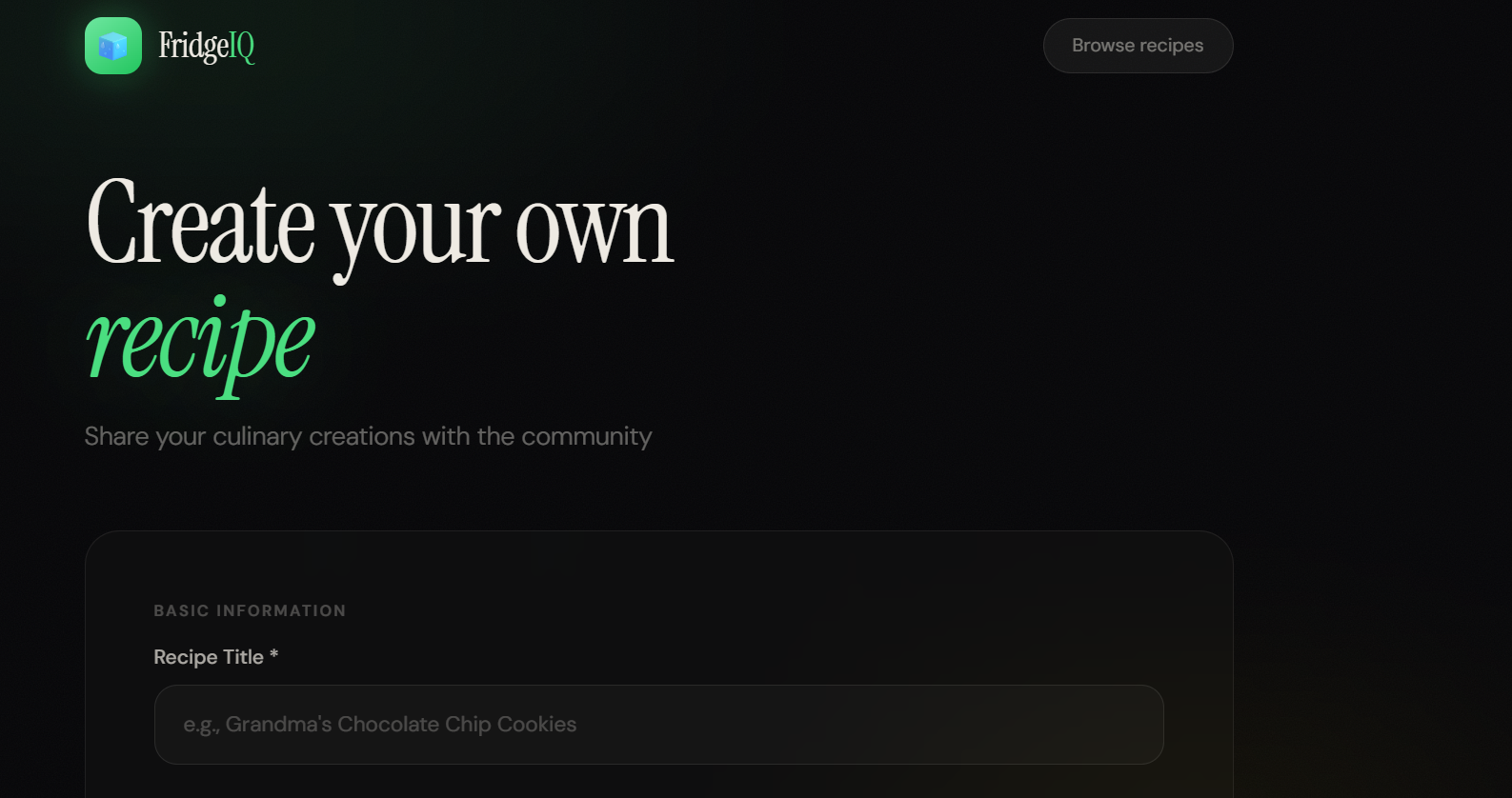
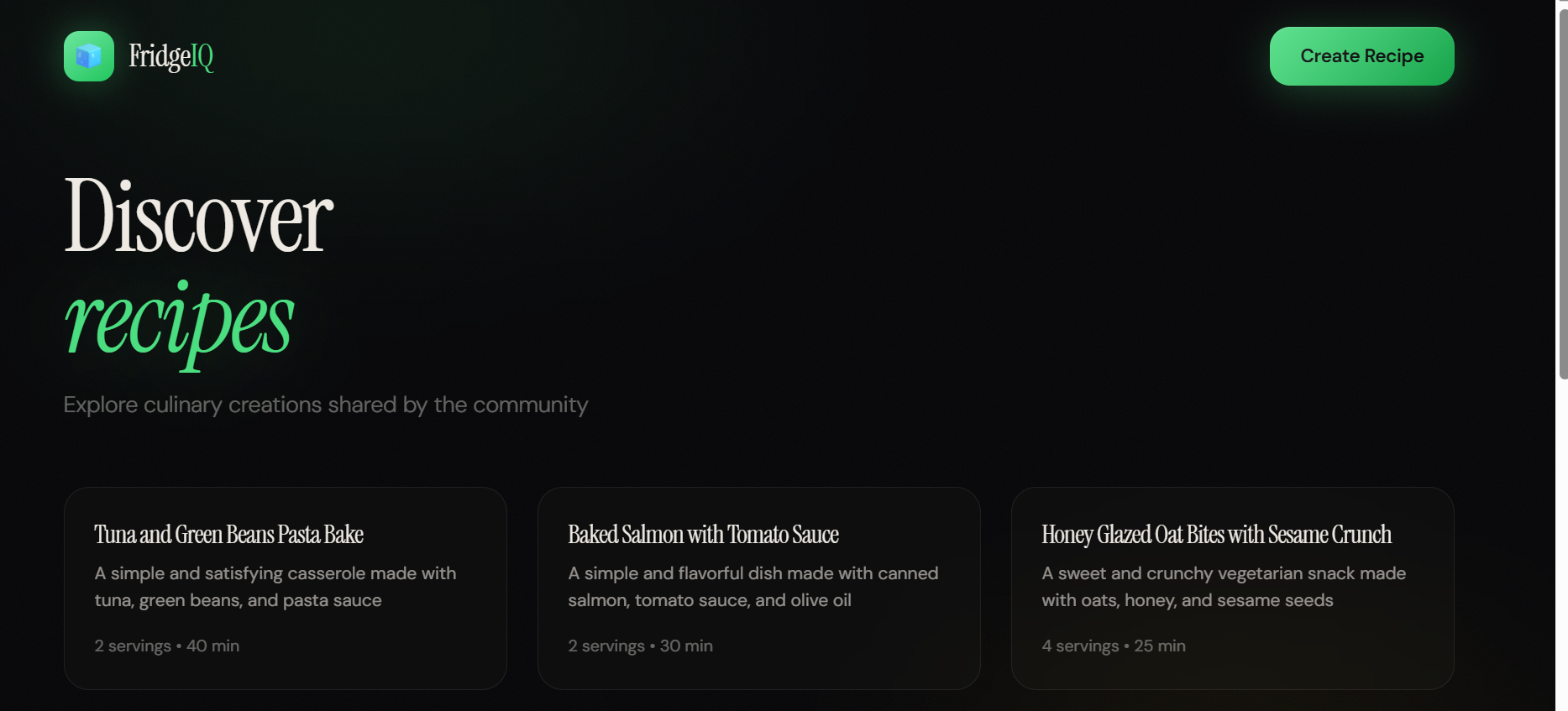
The app also features a social aspect which allows users to share their own recipies, view their recipies and comment on other recipie ideas.
How we built it
We built FridgeIQ using Next.js and Tailwind CSS for the frontend, giving us a fast and responsive interface that works across both mobile and desktop. For the AI layer we used Groq with Llama 3.3 to process ingredient recognition and generate recipe suggestions at low latency, and Groq with Llama 4.0 vision for multimodal image understanding . This allows the app to analyse photos of ingredients directly. The combination of both models let us balance speed and accuracy across the vision and language tasks, while not piling on the API calls for a singular model, potentially leading to app exhaustion.
Challenges we ran into
Like any hackathon, we faced our fair share of hurdles throughout the 24 hours. One of the first obstacles was simply coordinating as a group. With everyone's different schedules and commitments, finding overlapping windows of time to meet, collaborate, and make key decisions was harder than anticipated, and it cost us some valuable early momentum. On the technical side, tracking down the right scanner took more effort than expected, and getting the API endpoint properly configured and set up proved to be a significant time sink that required a lot of troubleshooting and patience. Adding to this, we went into the project without a fully formed vision for the UI, which led to some back-and-forth early on as we tried to align on the design direction and overall look and feel of the final product. Without a clear visual idea, it was difficult to divide up work efficiently and know exactly what we were building toward. Despite all of this, we leaned on each other's strengths, kept communicating, and managed to bring everything together into a product we're proud of.
Accomplishments that we're proud of
We're proud of how seamlessly the photo-to-recipe pipeline works end to end. A user can take a photo and have personalised recipe suggestions in just a few seconds. Getting two different AI models to work together reliably within a hackathon timeframe was a real achievement, and the UI came together cleaner and faster than we expected thanks to Tailwind.
What we learned
We learned a lot about prompt engineering for structured outputs. We also gained a much better understanding of how to combine vision and language models effectively, and when to use each one based on the nature of the task. We learned how to make a visually appealing but also a functional frontend, where the individual ideas of the whole team could be integrated.
What's next for FridgeIQ
Looking ahead, we have a lot of exciting ideas planned for FridgeIQ. We want to deepen the nutrition side by letting users set daily macro targets and using prompt engineering to generate recipes that hit within 10% of their goals, complete with a live animated macro breakdown. We also plan to introduce personalisation memory, where rating recipes trains a preference model that steers future suggestions toward flavours you love and away from ones you don't. Another feature on our roadmap is an expiry urgency mode that scans your fridge, flags items close to going bad, and prioritises them in recipe generation to help cut down on food waste. Finally, we want to build out a full step-by-step cook mode with voice guidance, built-in timers, and a mobile-friendly UI so the app supports users all the way through the cooking process, not just the planning stage.
Built With
- gemini1.5flash
- gemini2.0
- groq
- llama3.3
- next.js
- tailwind

Log in or sign up for Devpost to join the conversation.