Inspiration
Food waste is a problem that starts inside the home. Many people buy groceries with good intentions, then forget what is already in the fridge until it expires. At the same time, deciding what to cook every day takes effort, especially when someone is busy, tired, or trying to follow a health goal.
FridgeFlow was built around one simple idea: your fridge should tell you what to cook before your food goes to waste.
What it does
FridgeFlow helps users turn the food they already have into practical meal ideas.
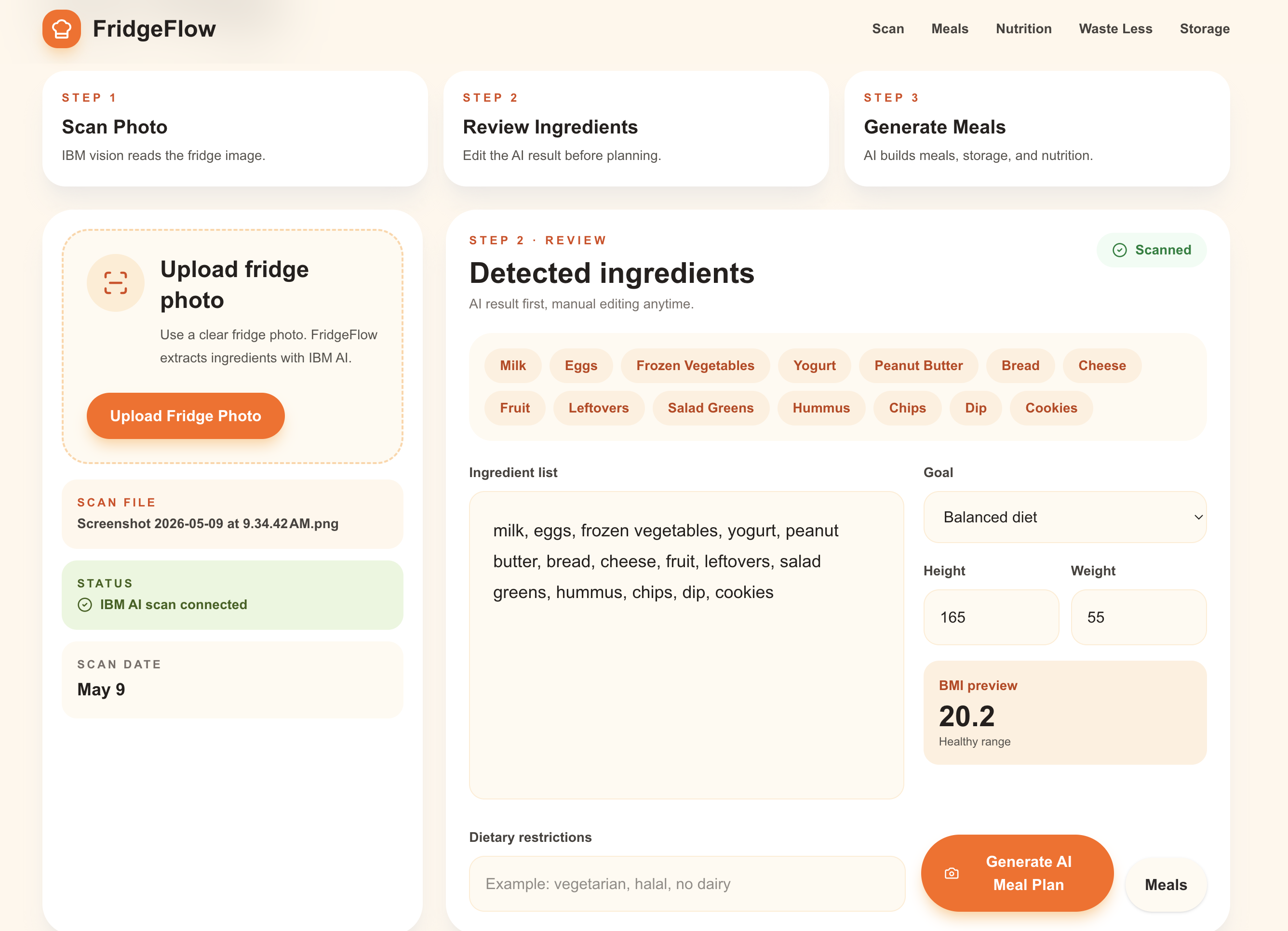
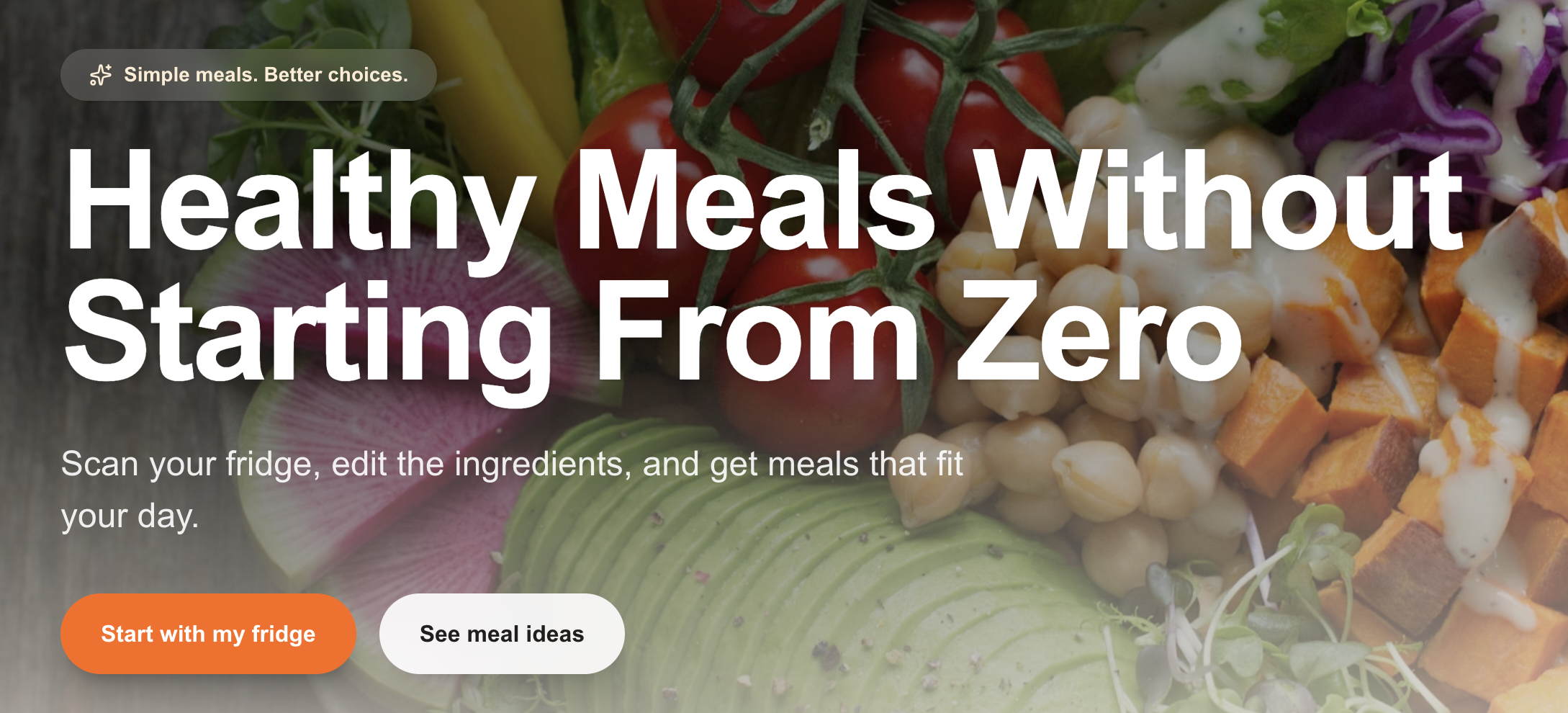
Users can upload a fridge photo or manually enter ingredients. The app detects or reviews the available food items, estimates which foods should be used first, and generates meal recommendations. Users can also enter their health goal, such as balanced diet, weight loss, weight gain, or maintenance.
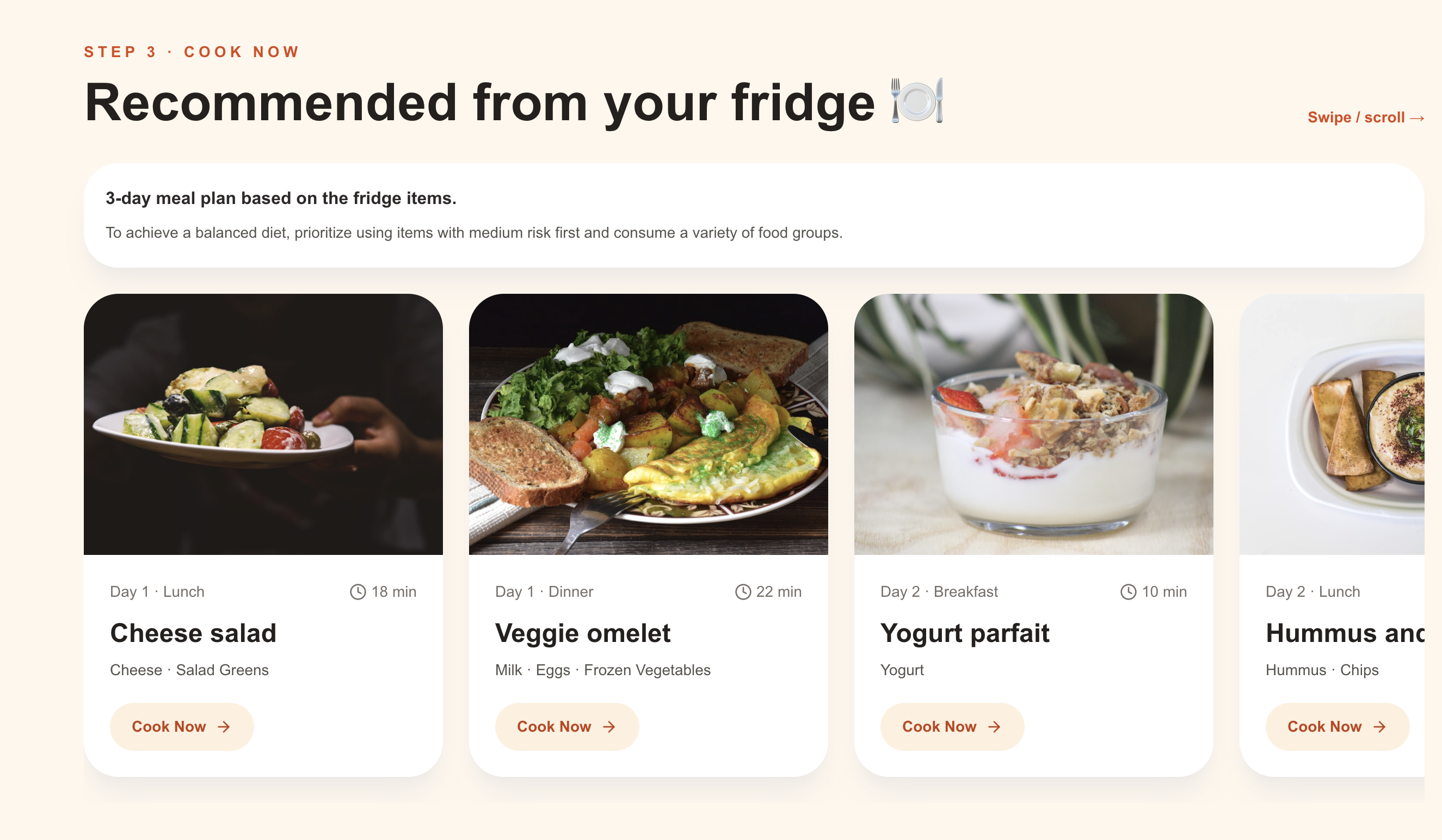
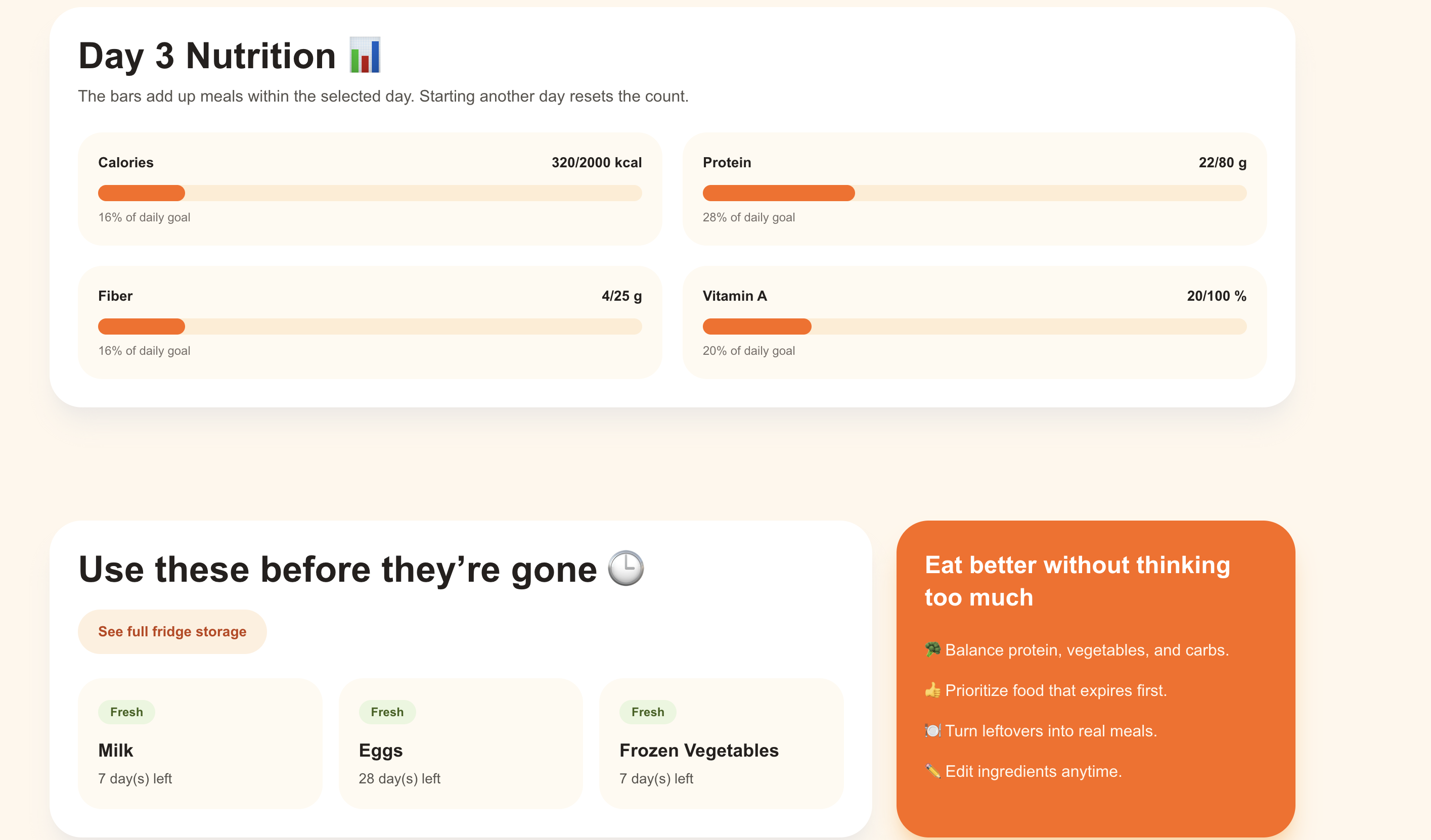
The app then recommends meals, provides recipe instructions, estimates nutrition, updates a daily nutrition tracker, and suggests grocery items that are missing. It also includes a fridge storage section to help users see what they have and what should be used soon.
How we built it
We built FridgeFlow as a web app using Next.js, TypeScript, Tailwind CSS, and watsonx.ai.
The frontend allows users to upload a fridge image, review detected ingredients, select a nutrition goal, enter dietary restrictions, and view recipe cards. The backend uses API routes to process fridge items, generate meal plans, and return recipe details.
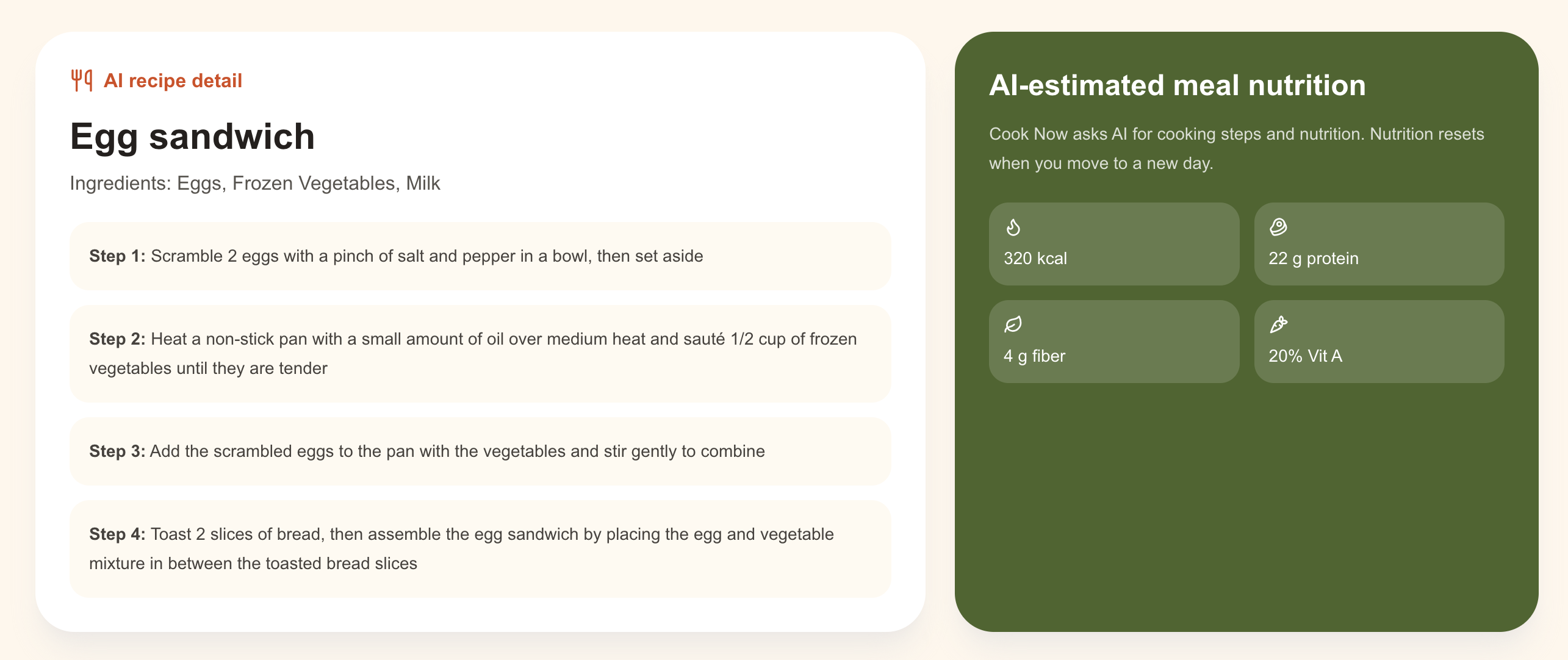
For AI, we integrated IBM watsonx.ai for recipe generation, meal planning, and recipe-detail generation. The system takes the detected or manually entered ingredients and sends them to the AI model with the user’s goal and dietary restrictions. The app also uses AI-generated recipe instructions and estimated nutrition values when the user chooses a meal.
We also designed fallback logic so the app still works even when an AI request fails. This means the user can still manually enter ingredients and generate useful meal ideas.
Challenges we ran into
One challenge was working with vision models. Some models were unstable, slow, or returned incomplete responses. We solved this by separating the app into clear steps: image detection first, then recipe generation afterward.
Another challenge was getting AI responses into a reliable format. The model sometimes returned plain text instead of structured JSON, so we added parsing and fallback logic.
We also had to balance speed and detail. Asking AI to generate full recipe instructions for every meal at once caused slow responses. We improved this by generating the meal plan first, then generating detailed recipe instructions only when the user clicks “Cook Now.”
Another challenge was nutrition tracking. The first version used hardcoded nutrition values. We improved this by letting AI estimate nutrition for the selected recipe, while keeping the UI clear that the values are estimates.
Accomplishments that we're proud of
We are proud that we successfully integrated AI into FridgeFlow, making it feel like a product rather than a prototype.
It combines fridge scanning, ingredient review, meal planning, recipe generation, expiry awareness, nutrition tracking, and shopping suggestions into one workflow.
We are also proud of the fallback system. Even when AI image detection is imperfect, the app remains usable because users can edit the ingredient list manually.
The project also connects to real-world impact. It helps reduce food waste, supports healthier eating, and gives users a practical way to save money by using what they already have.
What we learned
We learned that AI apps work best when the workflow is broken into smaller, reliable steps.
Instead of asking one model to do everything at once, FridgeFlow separates the job into stages: detect ingredients, generate meal ideas, create recipe instructions, estimate nutrition, and update the shopping list.
We also learned the importance of fallback design. AI can fail, timeout, or return unexpected formats, so a good app needs graceful recovery.
Finally, we learned that user experience and making the product intuitive to use matter as much as the AI model. The app needs to be fast, editable, and understandable for normal users.
What's next for FridgeFlow
Next, we want to improve image recognition so fridge scanning becomes more accurate and reliable.
We also want to add better nutrition calculations using serving sizes and verified food databases. Another future feature is persistent fridge tracking, where users can upload daily fridge photos and FridgeFlow automatically detects what was added, used, or close to expiry.
Other planned features include smart notifications, family fridge sharing, grocery delivery integration, meal prep mode, and personalized dietary recommendations.
Long term, FridgeFlow could become a complete AI food management assistant that helps households eat better, waste less, and make smarter grocery decisions.
Built With
- nextjs
- tailwind
- typescript
- unsplash
- watsonx.ai


Log in or sign up for Devpost to join the conversation.