Inspiration
Most productivity systems assume poor time management is the core issue. Direct observation of students, creators, and early-stage builders revealed a different constraint: initiation failure. People understand their priorities yet repeatedly delay starting. The gap between intention and action is psychological resistance. Frictionless Focus was built to address that invisible barrier — not to optimize calendars, but to optimize starting behavior.
What it does
Frictionless Focus is a behavioral productivity web application that adapts work sessions based on perceived task resistance.
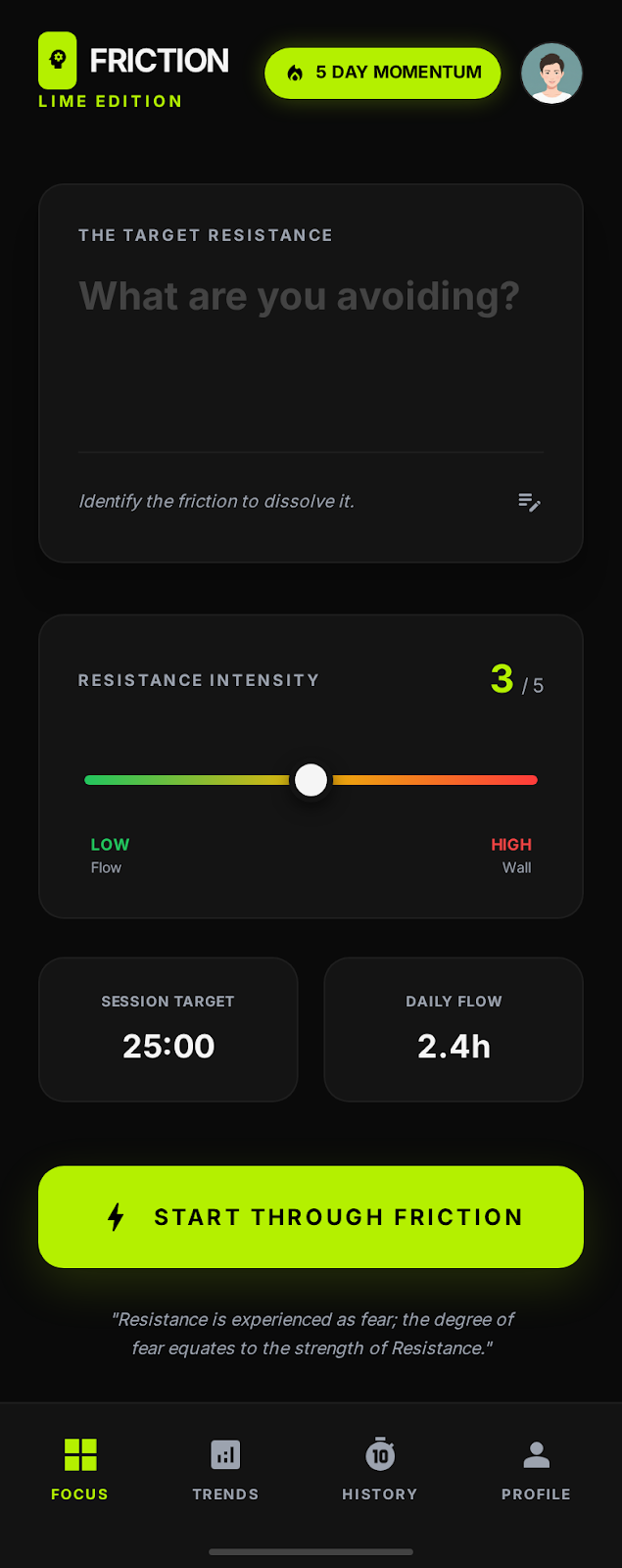
Before each session, users rate how heavy the task feels on a 1–5 scale. The system converts that resistance score into a dynamically assigned micro-session:
Resistance 5 → 5 minutes Resistance 4 → 8 minutes Resistance 3 → 12 minutes Resistance 2 → 18 minutes Resistance 1 → 25 minutes
Higher resistance reduces entry commitment. Lower resistance enables deeper focus.
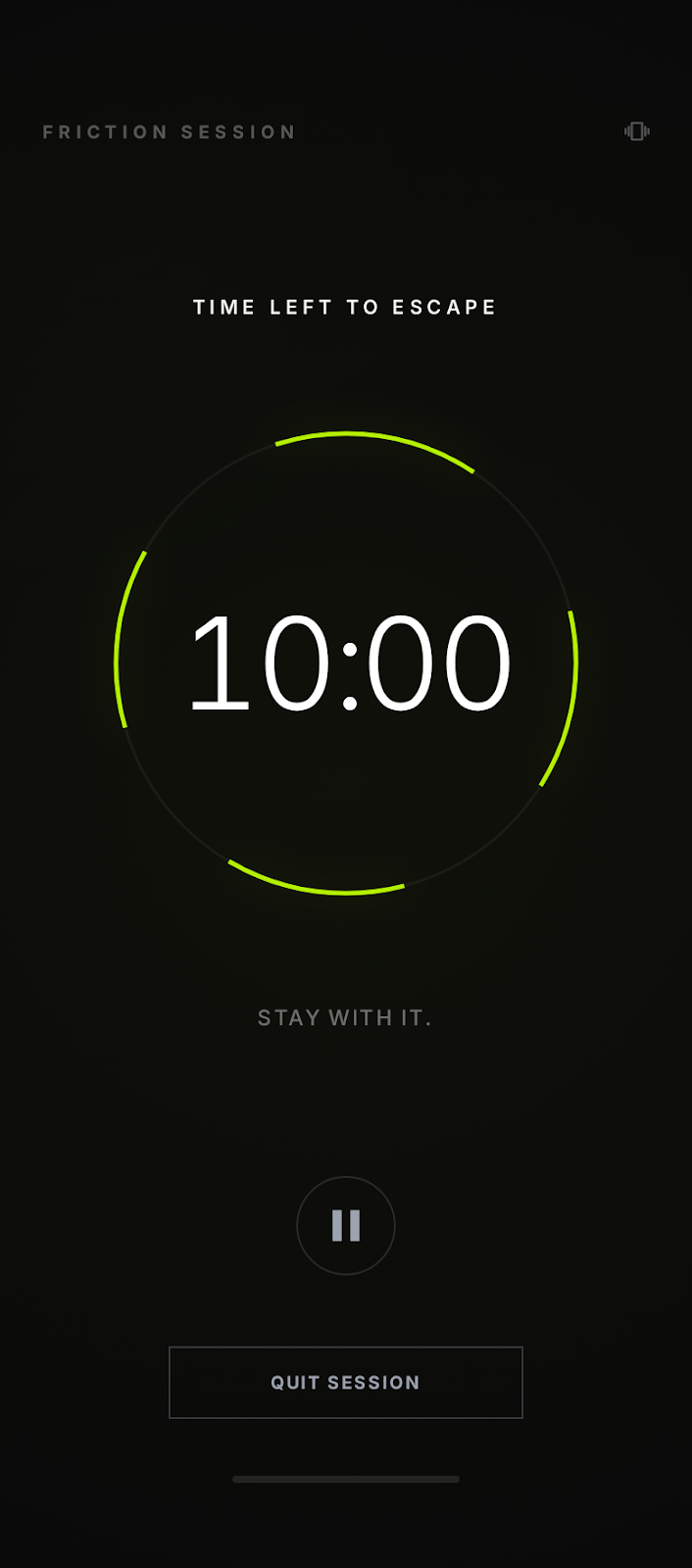
The timer runs as a reverse countdown to increase urgency perception.
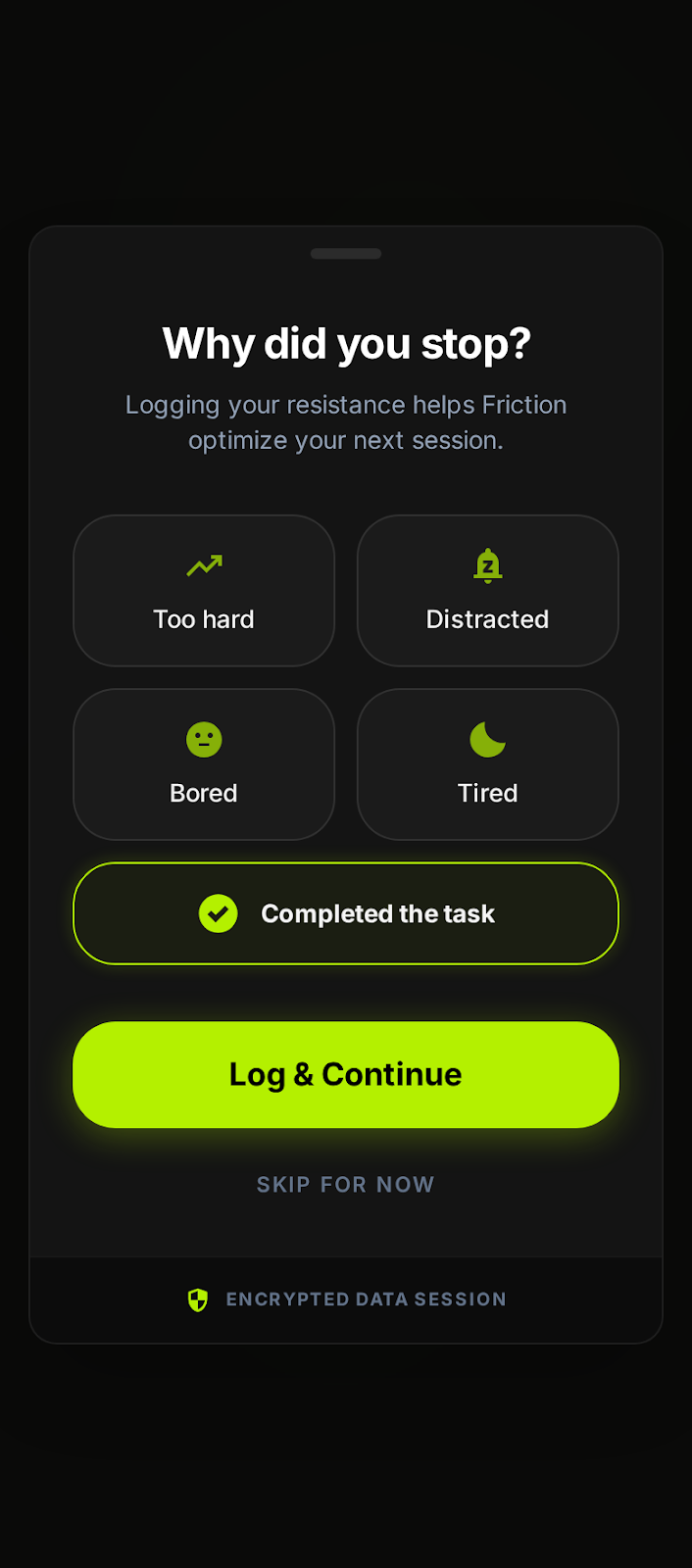
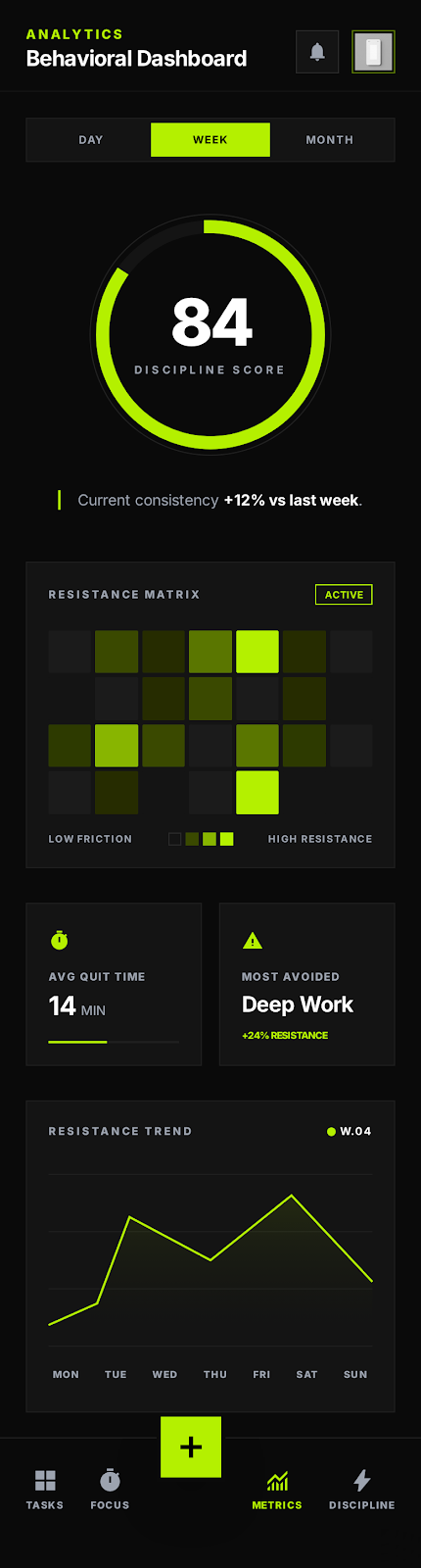
The system tracks behavioral metrics including resistance trends, completion rate, quit timing, avoidance patterns, and streak consistency. Procrastination becomes structured data rather than a vague feeling.
Core behavioral model:
Action = f (Motivation − Resistance)
The product directly intervenes on the resistance variable.
How we built it
Frictionless Focus is built as a lightweight web application with modular architecture. Frontend stack: HTML5 TypeScript React Tailwind CSS Vite
System components: • Adaptive session logic engine • Modular countdown timer system • Behavioral analytics layer • Local storage persistence • Component-based UI architecture
Data is structured around task objects containing resistance levels, session duration, and historical session data. The system is optimized for low latency, clarity, and scalability for future behavioral intelligence features.
Challenges we ran into
Designing adaptive logic without increasing cognitive load. Ensuring the system felt supportive rather than punitive. Balancing urgency-based countdown mechanics with calm visual design. Extracting meaningful behavioral insights from minimal user input. Preventing the product from feeling like another generic timer tool.
The core challenge was maintaining behavioral depth while keeping the experience frictionless.
Accomplishments that we're proud of
Creating a resistance-based productivity model rather than a time-based one. Designing a dynamic micro-commitment system grounded in behavioral science. Building a measurable discipline framework from simple user inputs. Maintaining a minimal interface while embedding adaptive intelligence. Transforming procrastination from a vague emotion into structured behavioral data.
What we learned
Starting is a psychological event, not a scheduling problem. Reducing activation energy increases action probability. Small commitments outperform large intentions. Behavior becomes controllable once it becomes measurable. Adaptive systems are more effective than rigid productivity rules.
What's next for Frictionless Focus
Cloud-based behavioral analytics for cross-device tracking. AI-driven resistance prediction based on historical patterns. Personalized session calibration using machine learning. Integration with academic and task management platforms. Expanded behavioral dashboards for deeper self-regulation insights.
The long-term direction is to build a resistance-aware productivity system that continuously adapts to the user’s behavioral patterns rather than forcing static productivity structures.## Inspiration
Built With
- css
- html5
- react
- tailwind
- typescript

Log in or sign up for Devpost to join the conversation.