-
-
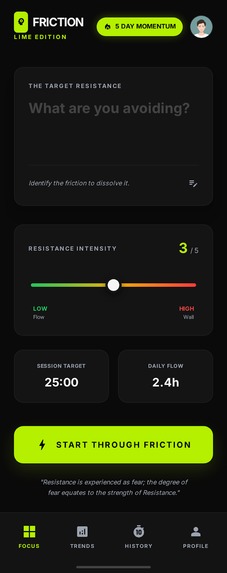
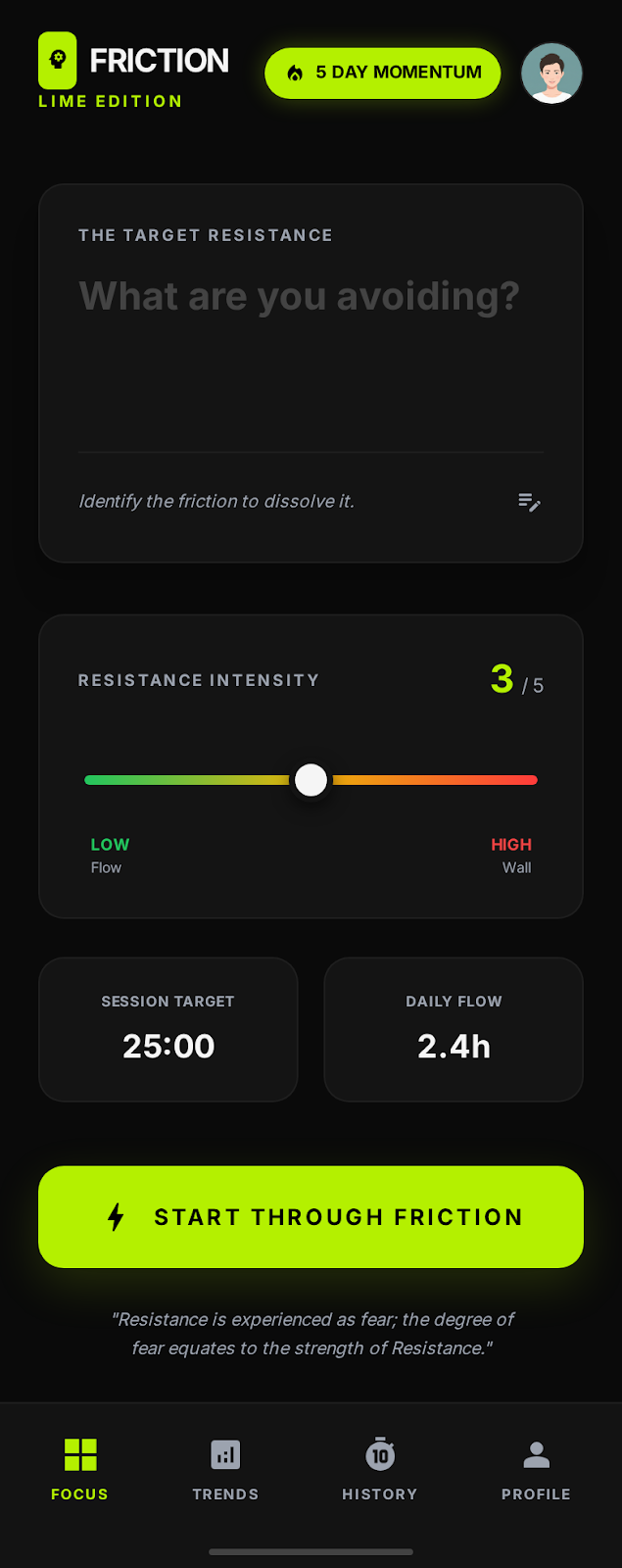
Home page
-
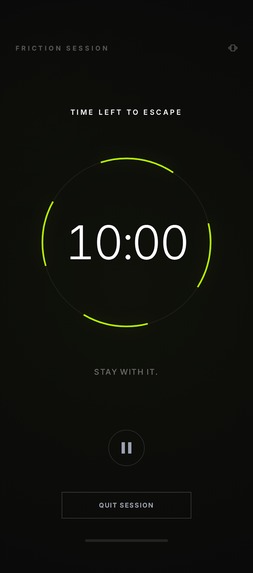
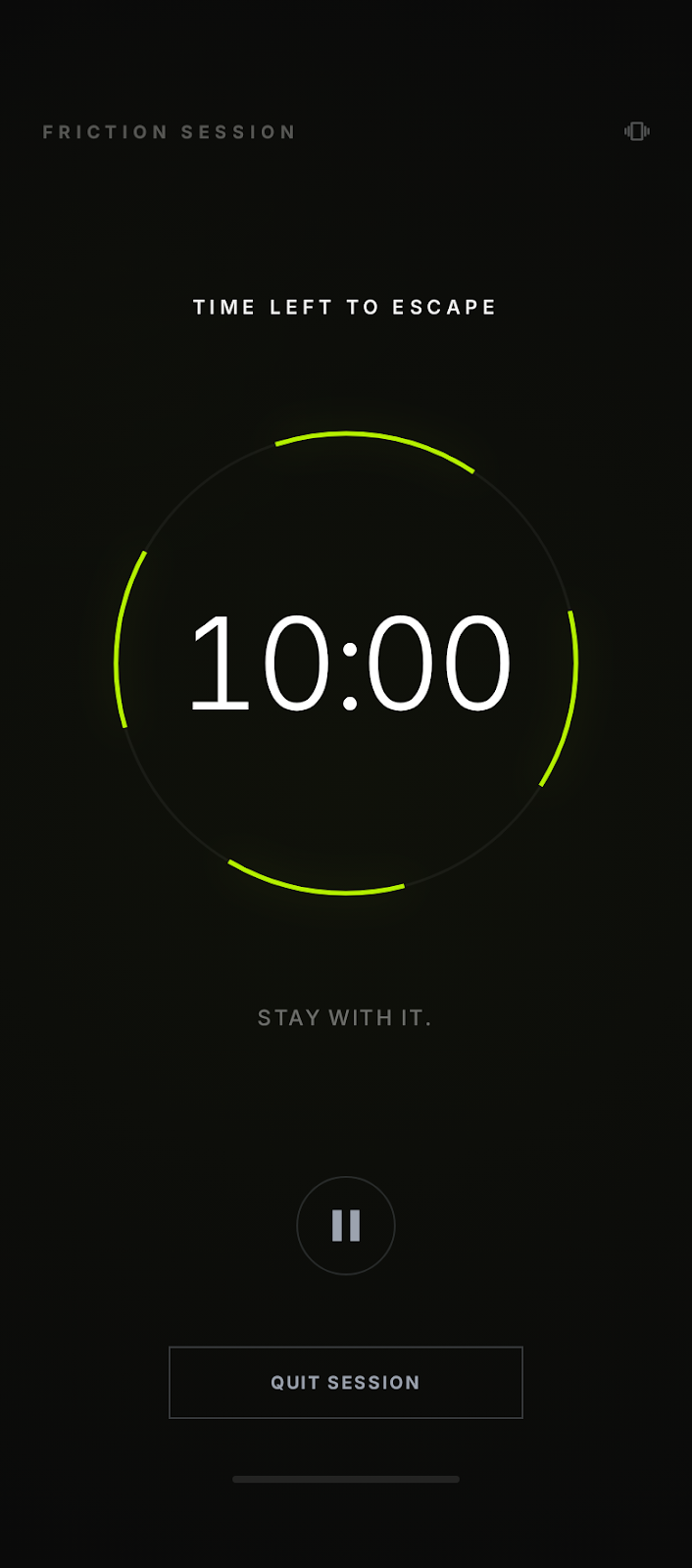
Timer page
-
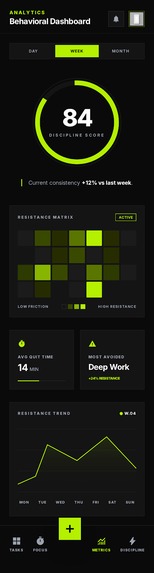
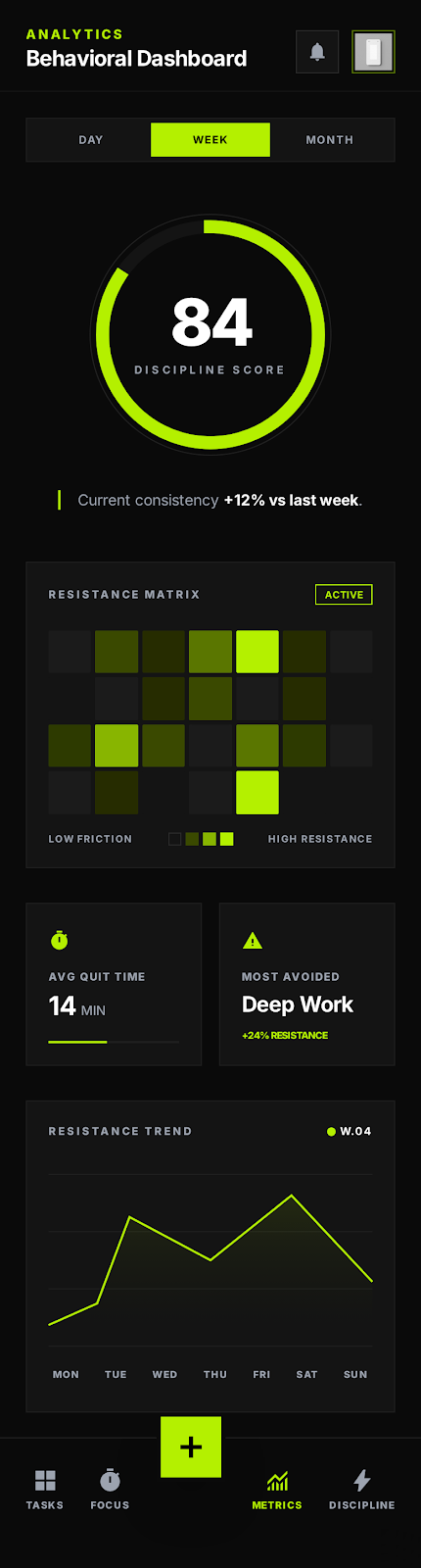
Record page
-
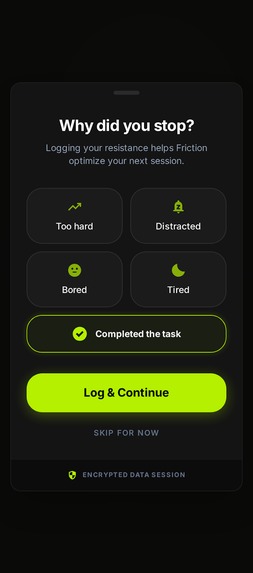
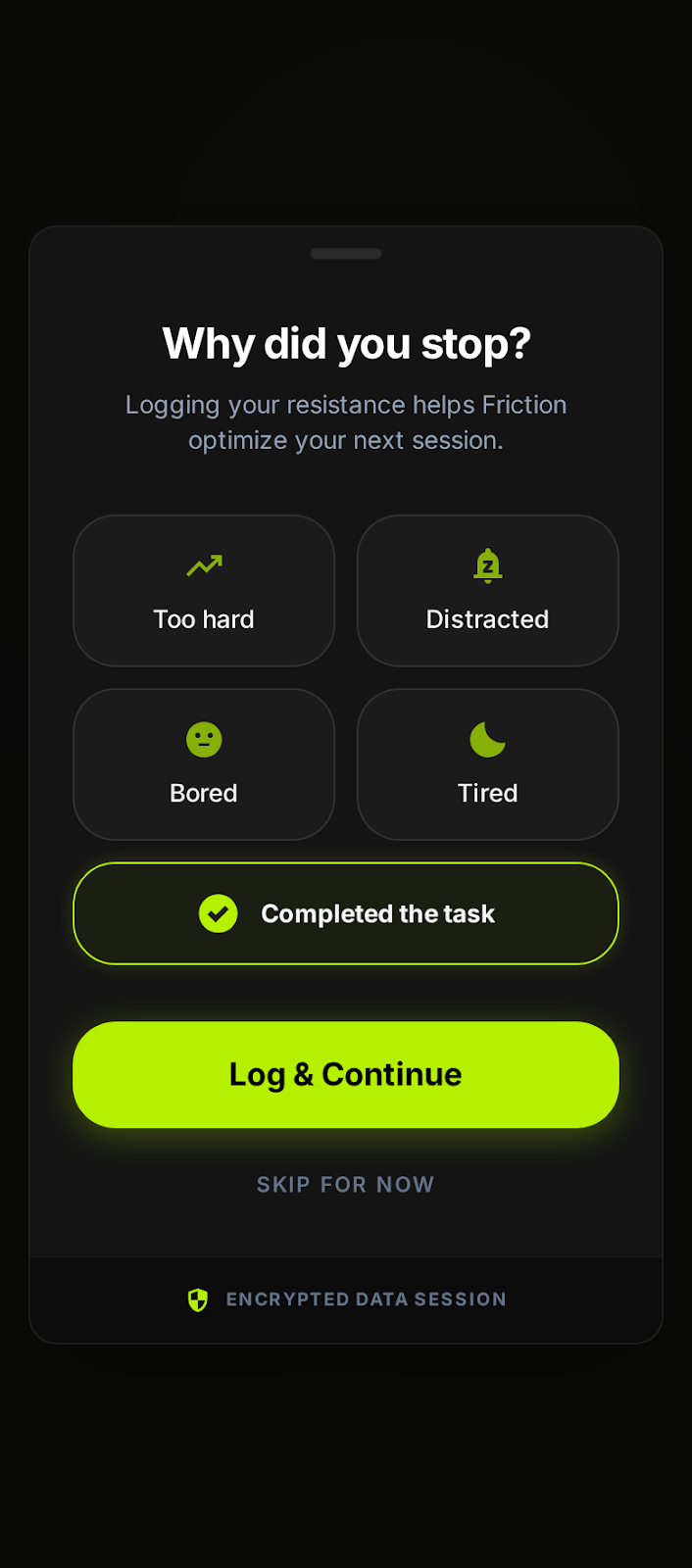
Quit page
Frictionless Focus The Science of Starting. 🚩 The Problem
Productivity tools assume people struggle with time.
Students, creators, and professionals repeatedly report something deeper:
They know what to do. They just don’t start.
The real barrier is psychological resistance — the invisible mental force between intention and action.
Before studying. Before working out. Before building. There is hesitation.
We call this friction.
🧠 The Core Insight
Starting a task requires mental activation energy.
In behavioral terms:
𝐴 𝑐 𝑡 𝑖 𝑜
𝑛
𝑓 ( 𝑀 𝑜 𝑡 𝑖 𝑣 𝑎 𝑡 𝑖 𝑜 𝑛 − 𝑅 𝑒 𝑠 𝑖 𝑠 𝑡 𝑎 𝑛 𝑐 𝑒 ) Action=f(Motivation−Resistance)
When resistance is high, action probability drops.
Traditional timers ignore this variable. Frictionless Focus measures it.
💡 Our Solution
Frictionless Focus is a behavioral productivity web app that adapts work sessions based on how heavy a task feels.
Instead of asking:
“How long will you work?”
We ask:
“How heavy does this feel?”
Before every session, users rate resistance from 1–5.
The system dynamically assigns a session duration:
Resistance 5 → 5 minutes
Resistance 4 → 8 minutes
Resistance 3 → 12 minutes
Resistance 2 → 18 minutes
Resistance 1 → 25 minutes
High resistance → smaller entry barrier. Low resistance → deeper focus.
⏳ Reverse Countdown System
Instead of counting up, the timer counts down:
“Time left to escape.”
This leverages urgency psychology and loss aversion.
Humans respond more strongly to loss than gain.
𝑃 𝑒 𝑟 𝑐 𝑒 𝑖 𝑣 𝑒 𝑑
𝑈 𝑟 𝑔 𝑒 𝑛 𝑐 𝑦 ∝ 1 𝑇 𝑖 𝑚 𝑒
𝑅 𝑒 𝑚 𝑎 𝑖 𝑛 𝑖 𝑛 𝑔 Perceived Urgency∝ Time Remaining 1
As time decreases, focus intensity increases.
📊 Behavioral Intelligence
Frictionless Focus tracks:
Quit reasons
Average quit time
Most avoided tasks
Resistance trends
Completion rate
Discipline score
Streak consistency
Procrastination becomes measurable.
🧬 Psychological Design
Frictionless Focus is built on behavioral science principles:
- Activation Energy Reduction
Large tasks increase cognitive load. We shrink the starting commitment.
- Micro-Commitment Strategy
Small starts bypass avoidance loops.
- Zeigarnik Effect
Unfinished tasks create internal tension, increasing continuation probability.
- Adaptive Reinforcement
Session length adjusts based on performance.
- Self-Awareness Through Data
When avoidance becomes visible, it becomes controllable.
🔧 How We Built It
Web-based architecture
Modular timer engine
Adaptive logic module
Local storage persistence
Analytics engine for behavioral insights
Dark theme with high-contrast neon system for focus intensity
Core system structure:
{ "task": { "title": "Example Task", "resistanceLevel": 4, "sessionHistory": [], "currentSessionDuration": 8 } }
🧪 Challenges We Faced
Designing adaptive logic without overcomplicating UX
Preventing the app from feeling punitive
Balancing urgency with calm design
Creating meaningful analytics from simple data
The hardest part was ensuring it felt like a behavioral system — not just another timer.
📈 What We Learned
Starting is a psychological event, not a scheduling problem.
Small commitments outperform large intentions.
Measuring avoidance is more powerful than measuring time.
Discipline can be trained progressively.
🌍 Impact
Frictionless Focus is not limited to studying.
It applies to:
Academic work
Fitness
Creative projects
Coding
Cleaning
Skill building
If you can control the first minute, you control the outcome.
🎯 Vision
Most tools manage hours.
Frictionless Focus manages resistance.
Reduce friction. Increase action. Build identity.
Built With
- html5
- javascript
- react
- tailwind
- typescript
- vite


Log in or sign up for Devpost to join the conversation.