🎸 About the Project — FretCoach
FretCoach is a real-time, AI-powered guitar practice system that delivers feedback while you play, not after the session ends.
Traditional practice relies on delayed feedback — from teachers, recordings, or self-review — by which time mistakes have already turned into muscle memory. FretCoach closes this gap by delivering immediate, multi-sensory feedback that helps players correct technique before bad habits form.
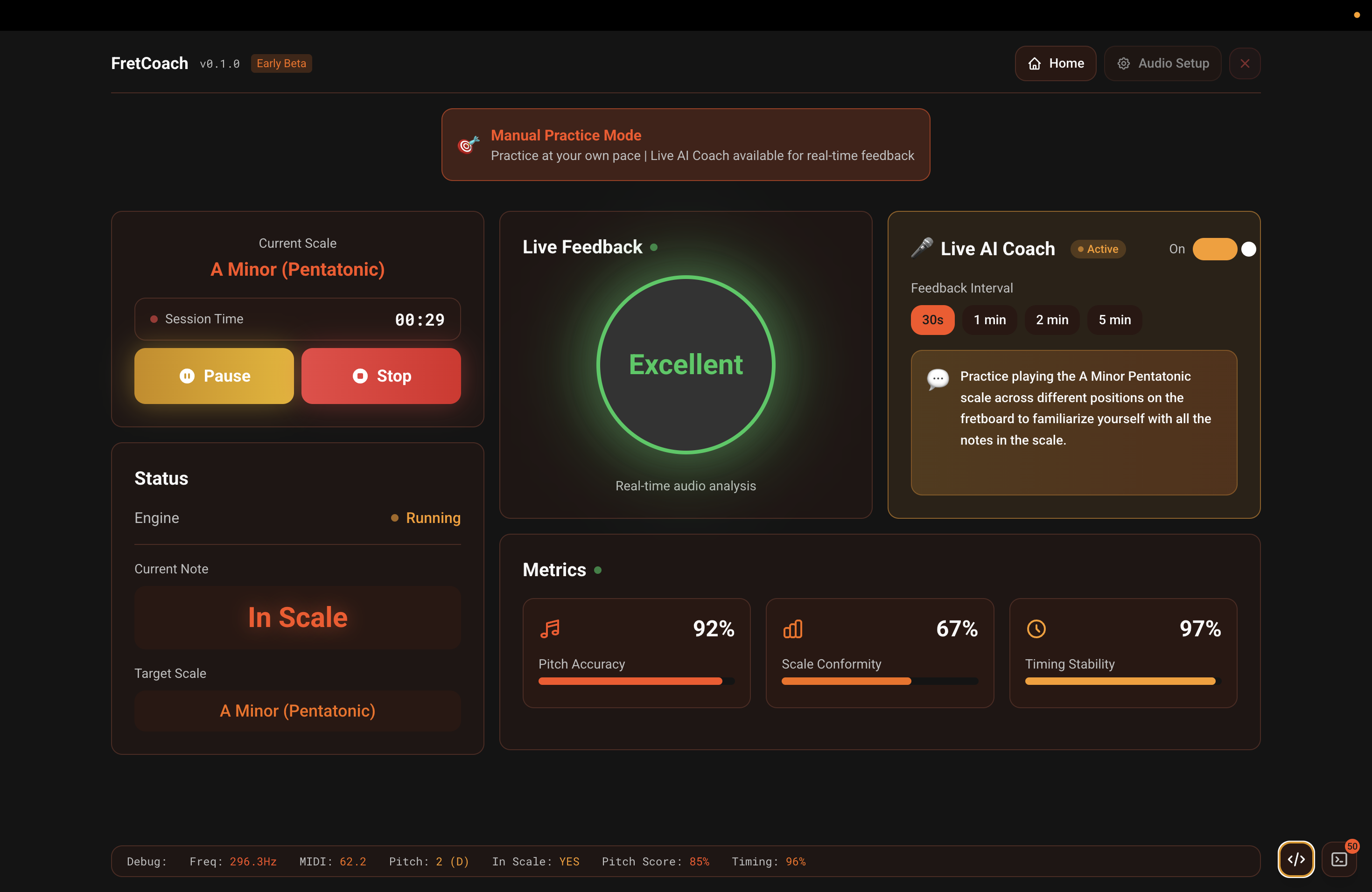
The system is built around a dual-loop feedback architecture that combines digital audio signal processing with AI-powered reasoning. A fast, deterministic loop runs locally, analyzing live audio with low latency and delivering instant feedback via visual indicators, subtle ambient lighting, and vocal cues — without interrupting practice flow.

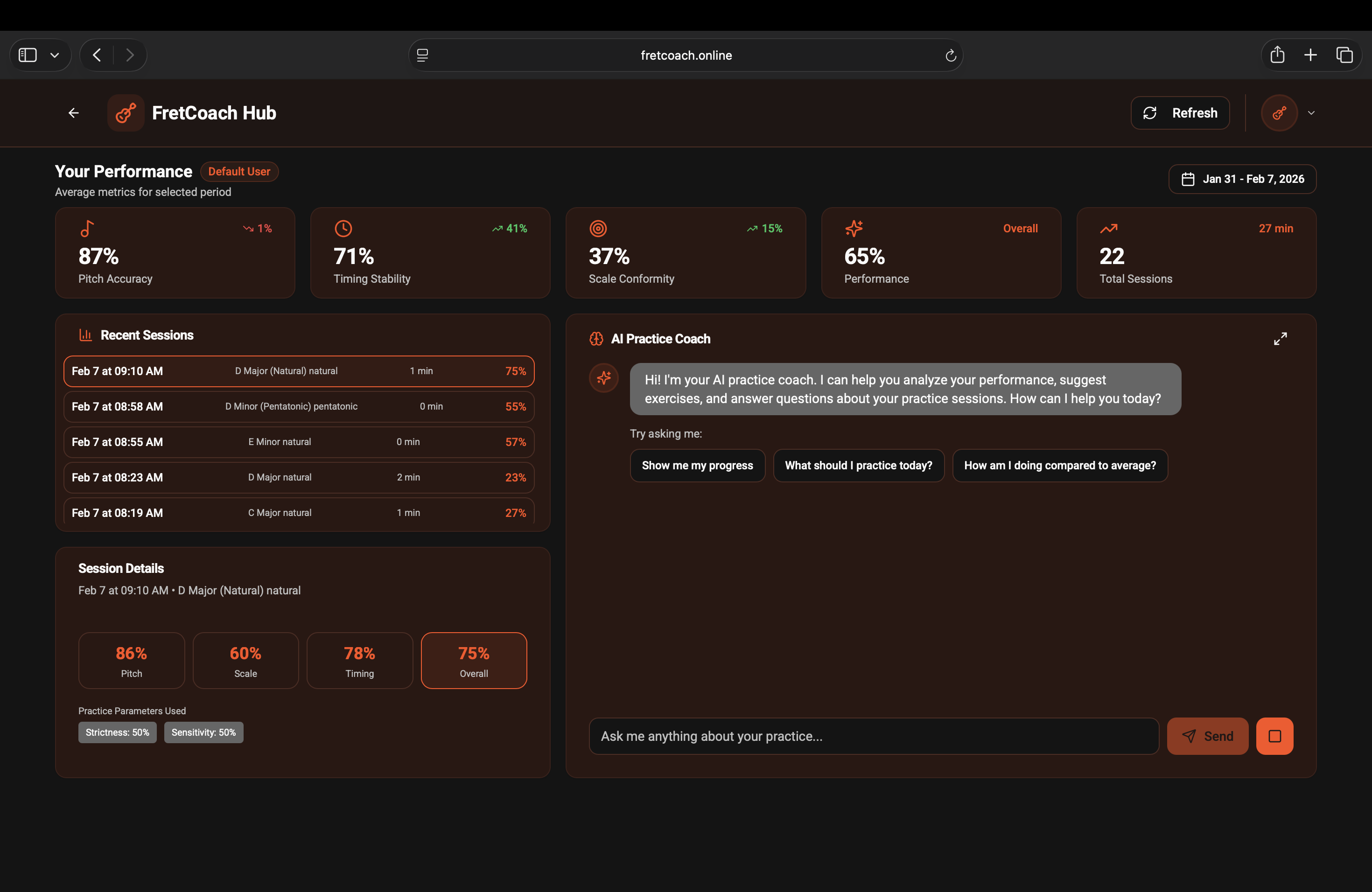
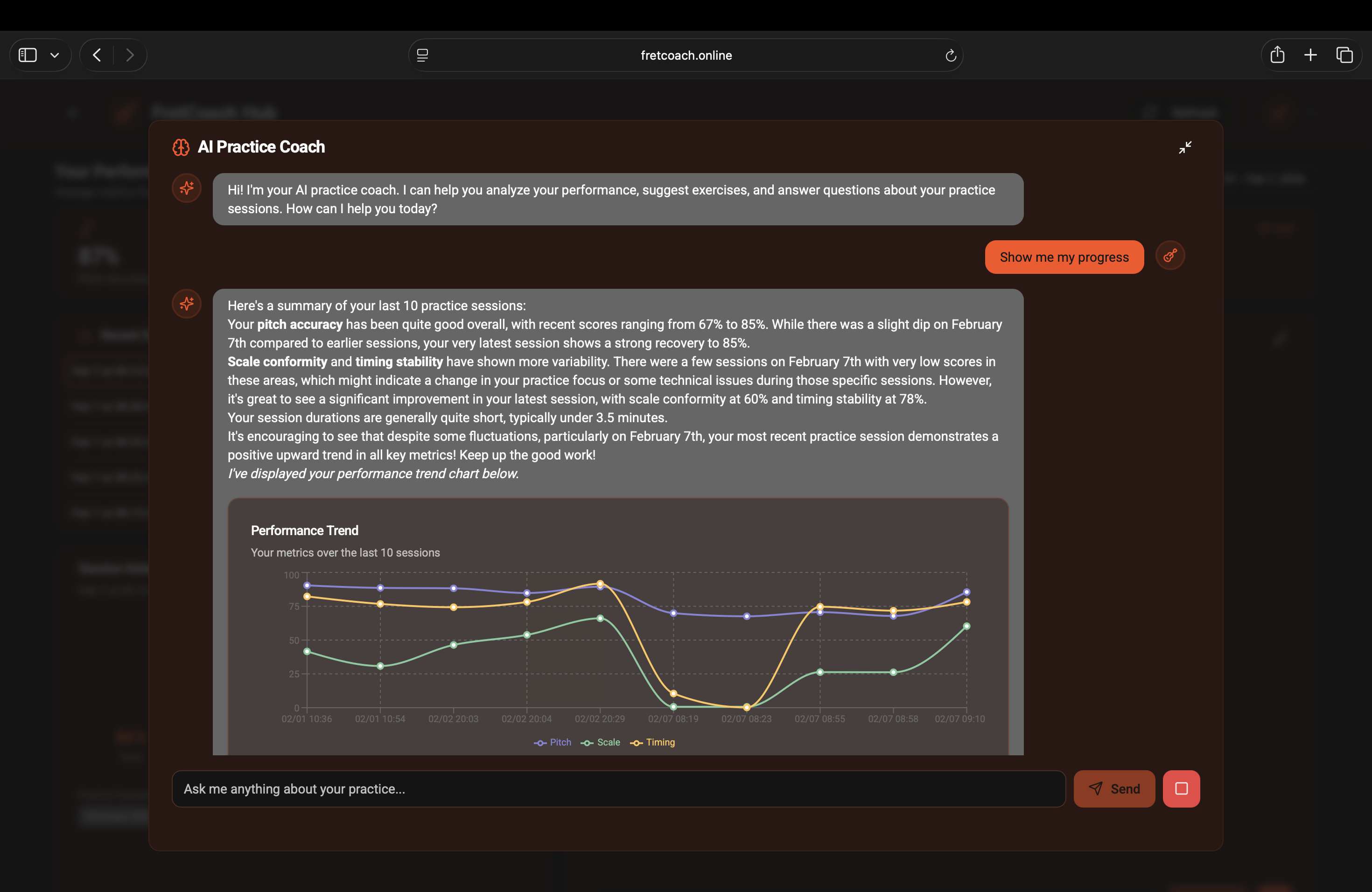
A slower reflective loop aggregates session metrics over time to analyze trends, generate targeted practice recommendations, and provide conversational coaching grounded strictly in measured performance data.
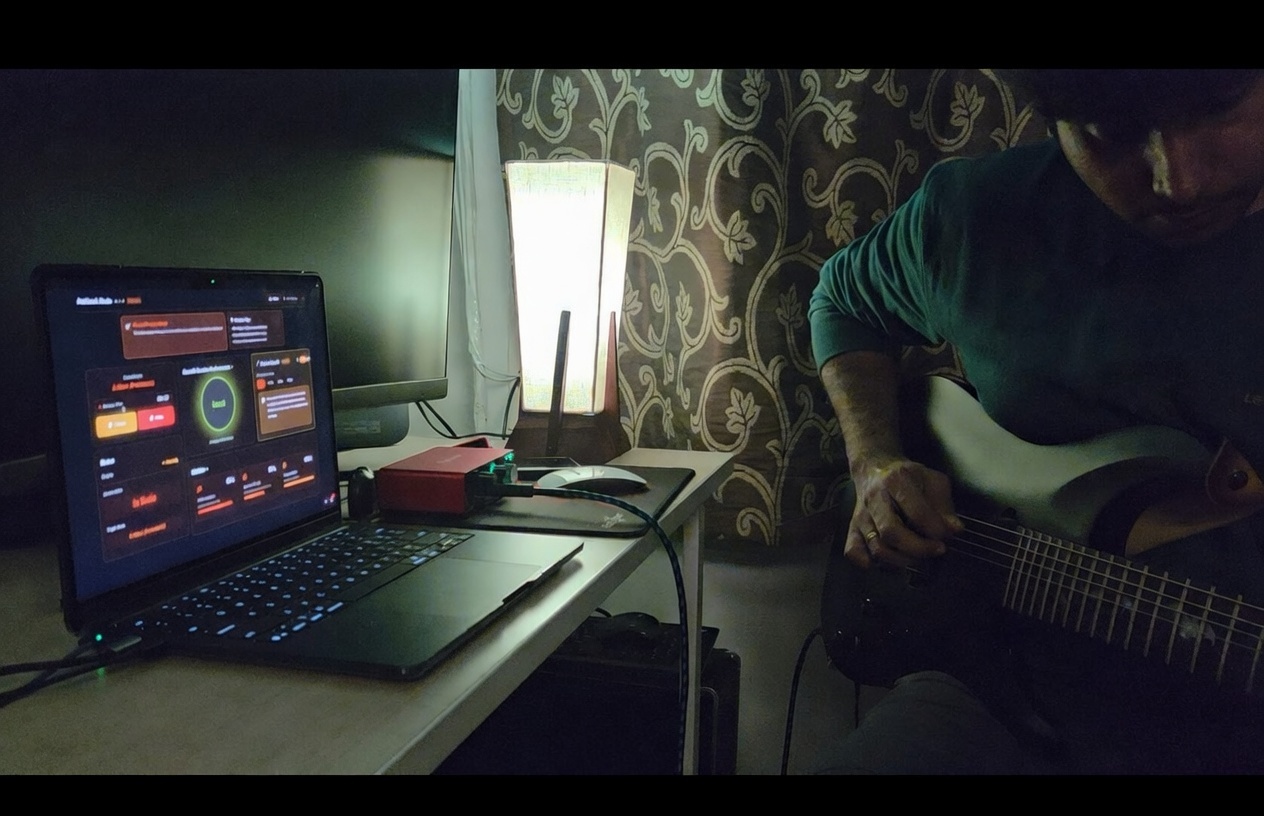
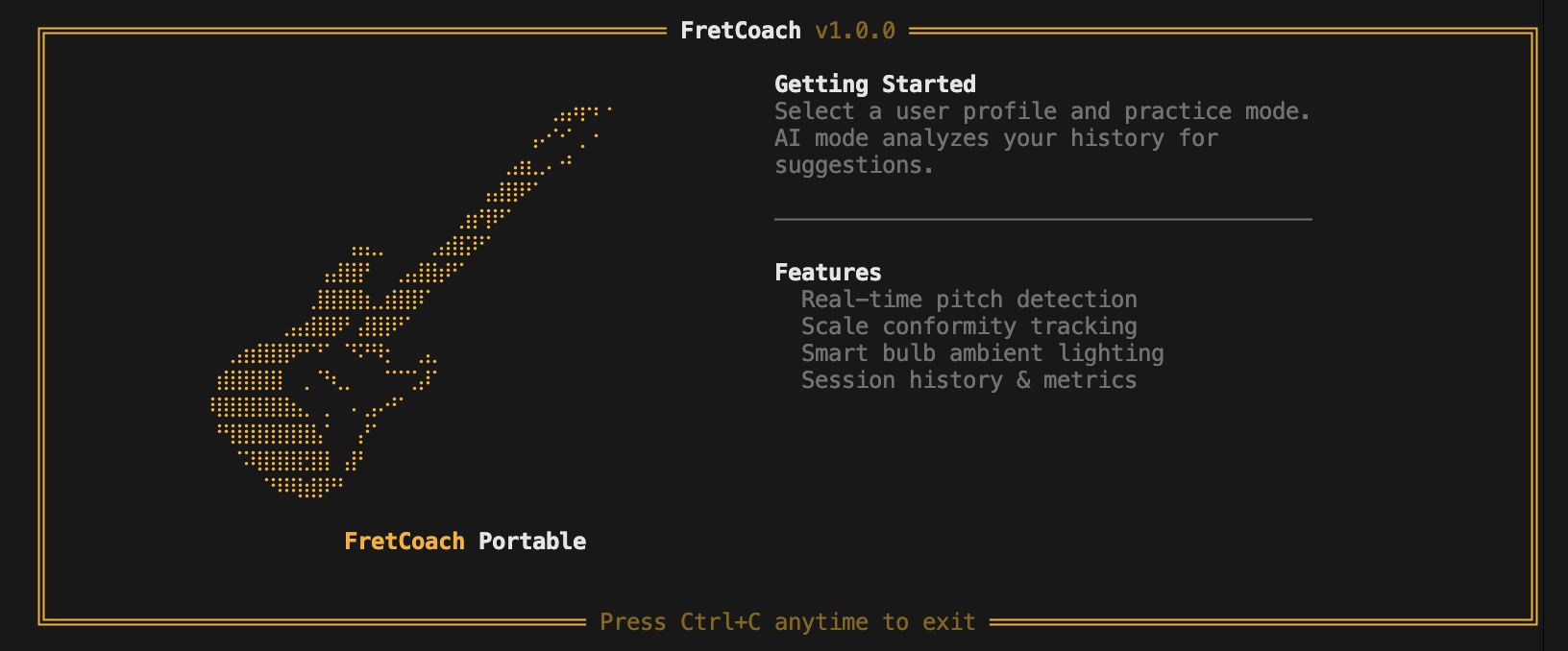
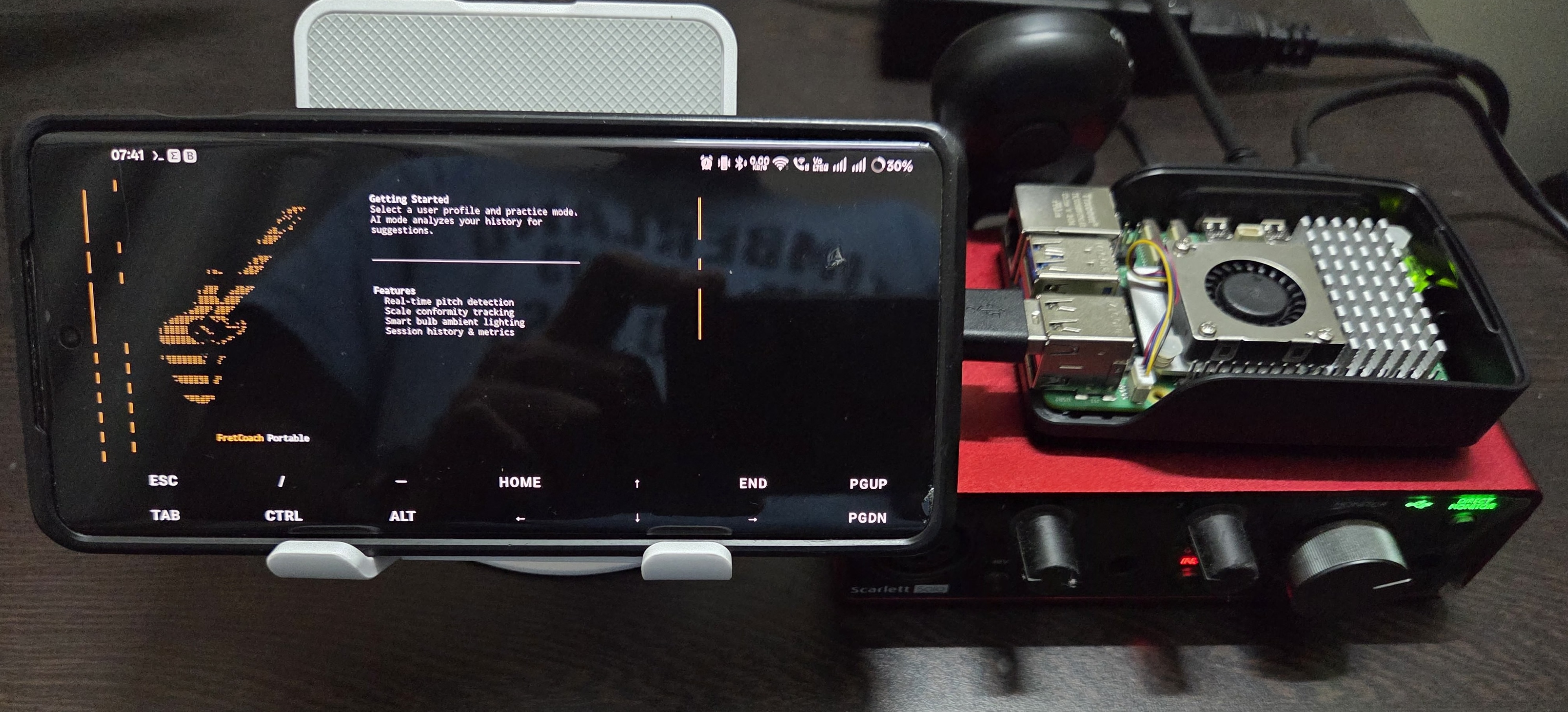
FretCoach is implemented as a connected ecosystem consisting of a desktop practice application, a portable edge device, and a web dashboard for analytics and AI-driven practice planning.

While designed for guitar, the core idea of an AI-powered real-time feedback system is instrument-agnostic and can extend to vocals, piano, sports training, and other skill-learning domains where timing, accuracy, and repetition matter.
Most tools tell you what you did wrong later. FretCoach helps you stop doing it again.
How It Works
- Audio is captured and analyzed locally using sliding windows
- Performance metrics are computed continuously
- Immediate feedback is delivered while playing
- Session summaries are logged for later analysis
- Coaching insights are generated based on measured performance
The longer a mistake goes uncorrected, the more it drifts into default behavior. Reducing feedback latency reduces long-term drift in technique.

Challenges Faced
Latency vs intelligence trade-offs Real-time feedback requires deterministic, low-latency systems, while higher-level analysis benefits from more flexible reasoning.
Grounding feedback in real signals All coaching is based strictly on measured performance metrics to avoid misleading or subjective feedback.
Designing non-intrusive feedback Visual and ambient cues were favored over constant verbal interruption to maintain focus and flow state.
Building something measurable, not just demoable The system logs structured metrics so improvement can be tracked and evaluated over time.
Technologies Used
- Audio Processing: librosa, NumPy, SciPy, sounddevice
- Backend: Python 3.12, FastAPI, LangChain, LangGraph
- Desktop: Electron 28, React 18, Vite, Tailwind CSS
- Web Frontend: React 18, TypeScript, shadcn/ui, Recharts
- Database: PostgreSQL via Supabase
- Observability: Comet Opik
- Hardware: Raspberry Pi 5, Focusrite Scarlett Solo, Tuya Smart Bulb
- Deployment: Vercel (frontend), Railway (backend)
Team
| Name | Role |
|---|---|
| Padmanabhan Rajendrakumar | Primary Developer |
| Sharmila Raghu | Supporting Developer |
Built With
- electron
- fastapi
- gemini
- javascript
- langchain
- langgraph
- librosa
- minimax
- numpy
- openai
- opik
- postgresql
- pydantic
- python
- radix
- railway
- raspberry
- react
- recharts
- scipy
- shadcn/ui
- sounddevice
- sql
- sqlalchemy
- supabase
- tailwind
- typescript
- vercel
- vite


Log in or sign up for Devpost to join the conversation.