Inspiration
What it does
How we built it
Challenges we ran into
Accomplishments that we're proud of
What we learned
What's next for FreshLoop
Inspiration
FreshLoop was inspired by a common retail problem: near-expiry food often becomes waste because pricing, inventory, customer consent, and dietary constraints are handled in separate systems.
I wanted to explore whether an AI agent could help generate timely retail offers without giving the language model unrestricted authority over pricing or customer-facing actions.
What it does
FreshLoop is a policy-enforced AI retail operations prototype for near-expiry inventory.
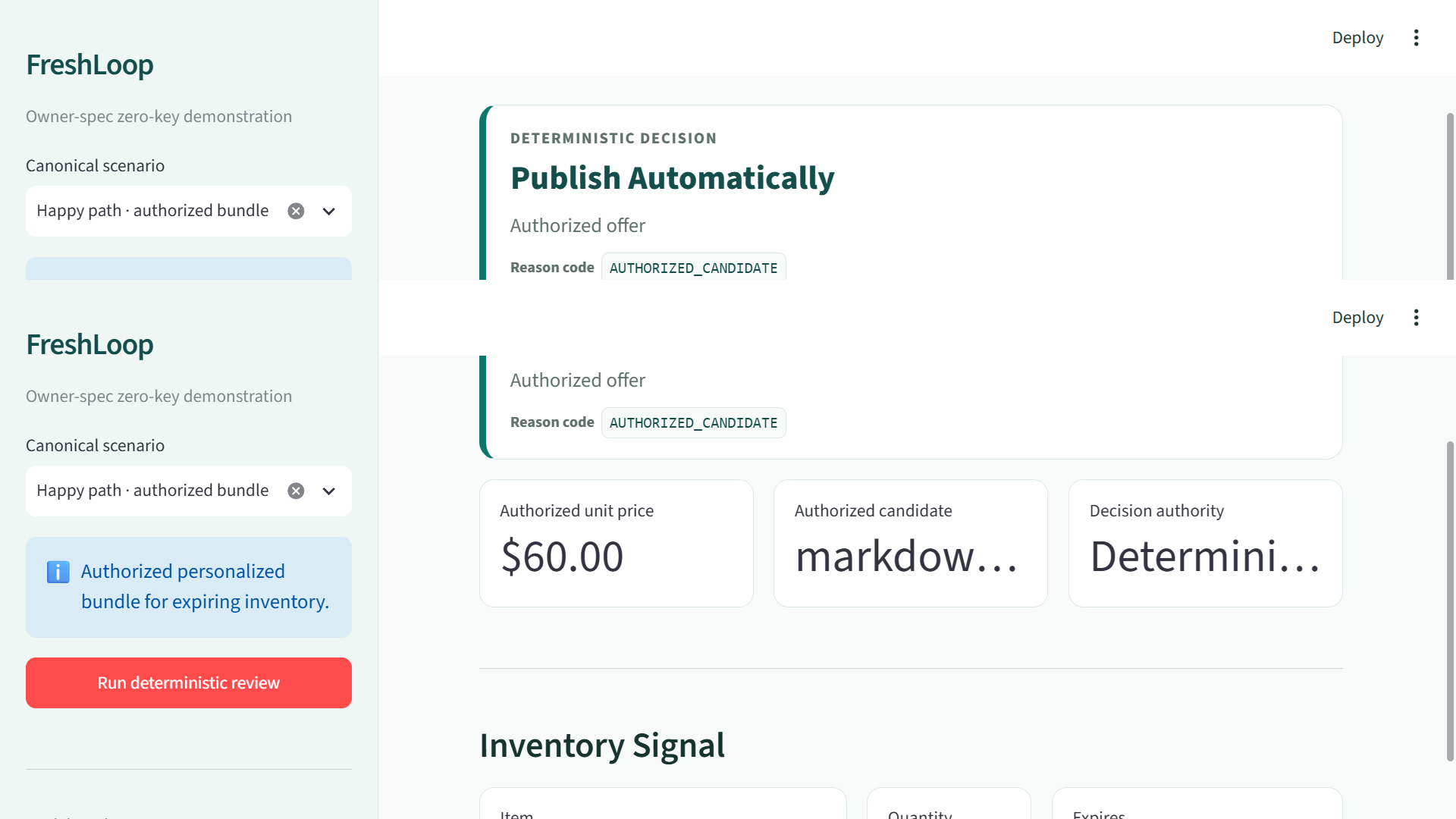
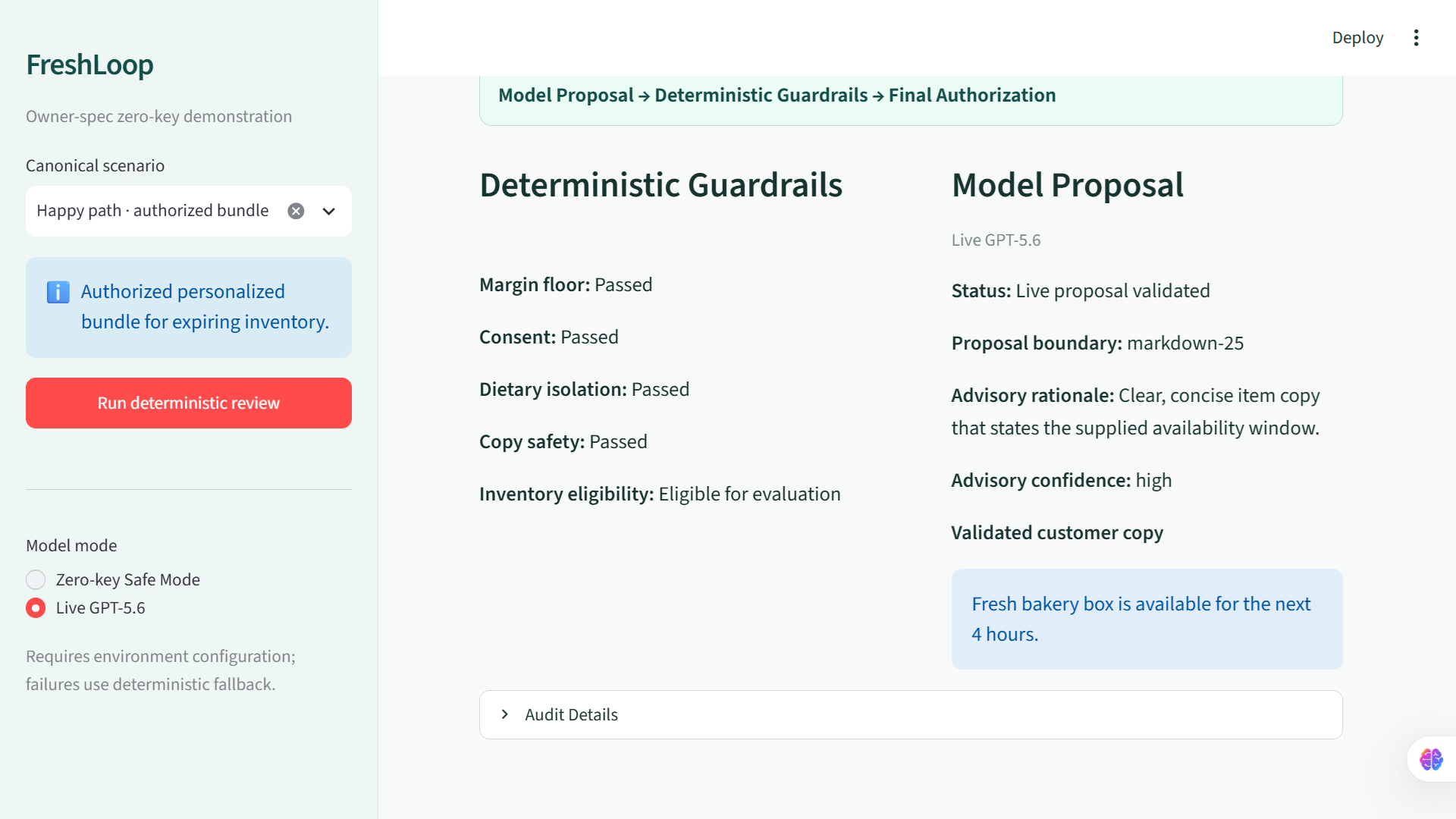
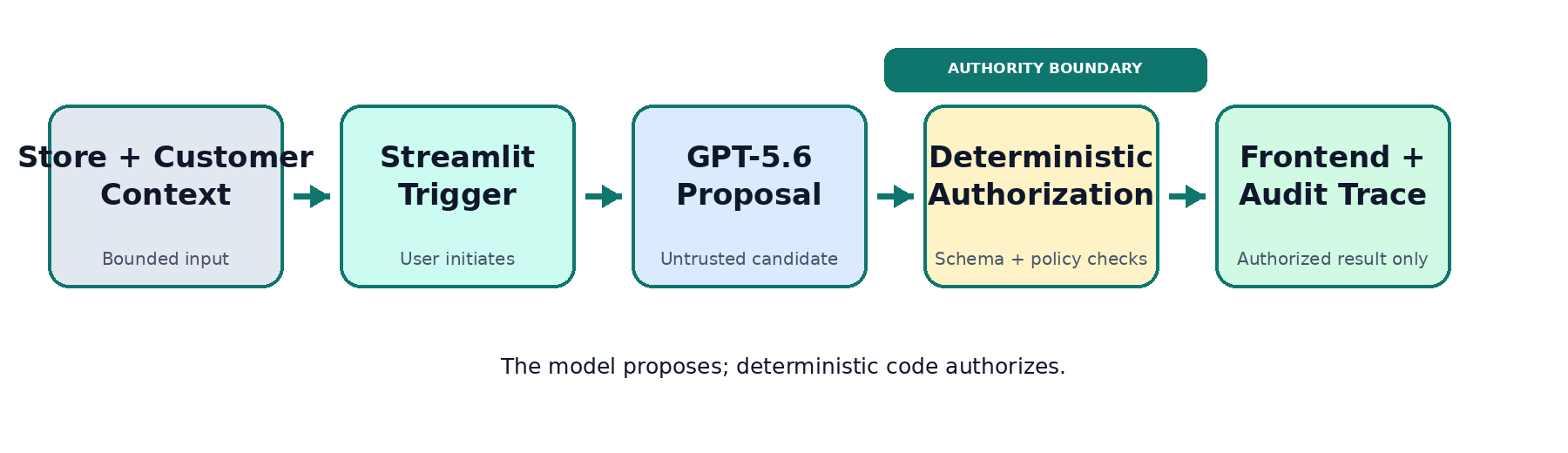
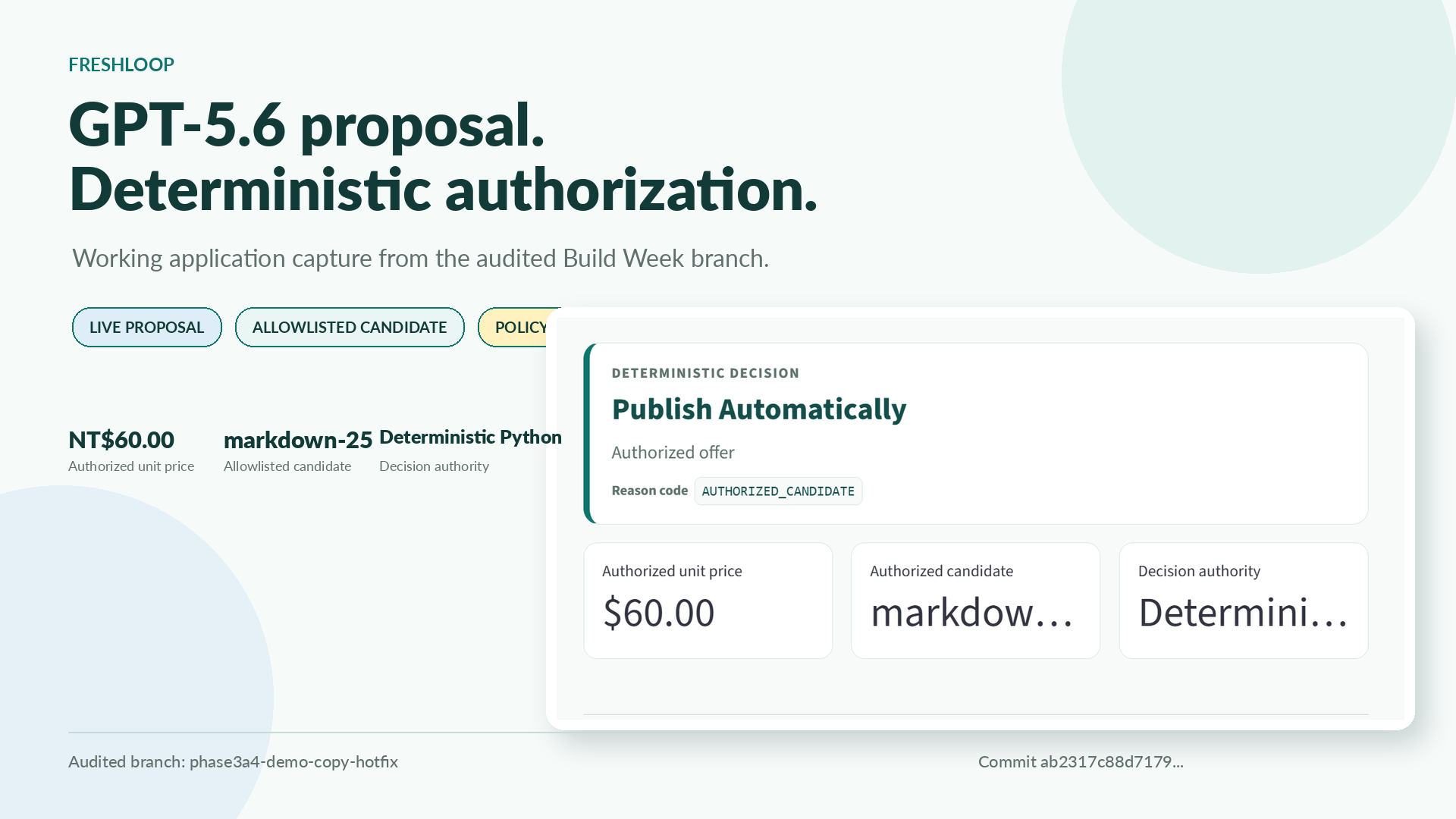
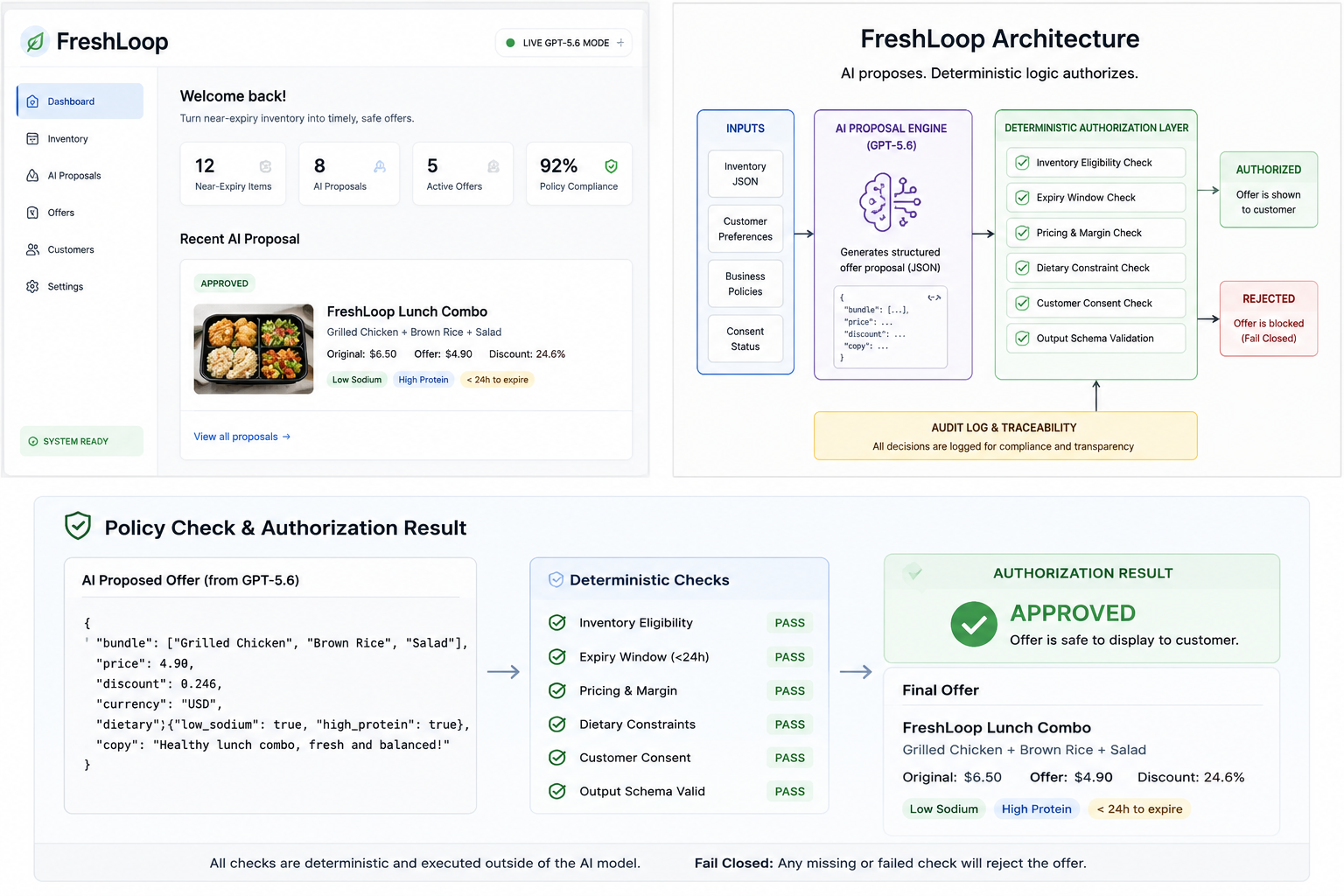
The system uses GPT-5.6 to generate a structured offer proposal. That proposal is then evaluated by deterministic application logic before it can be shown to a customer.
The authorization layer checks:
- inventory eligibility
- expiry conditions
- pricing and margin rules
- dietary constraints
- customer consent
- output schema validity
This creates a clear boundary between probabilistic AI generation and deterministic business authorization.
How I built it
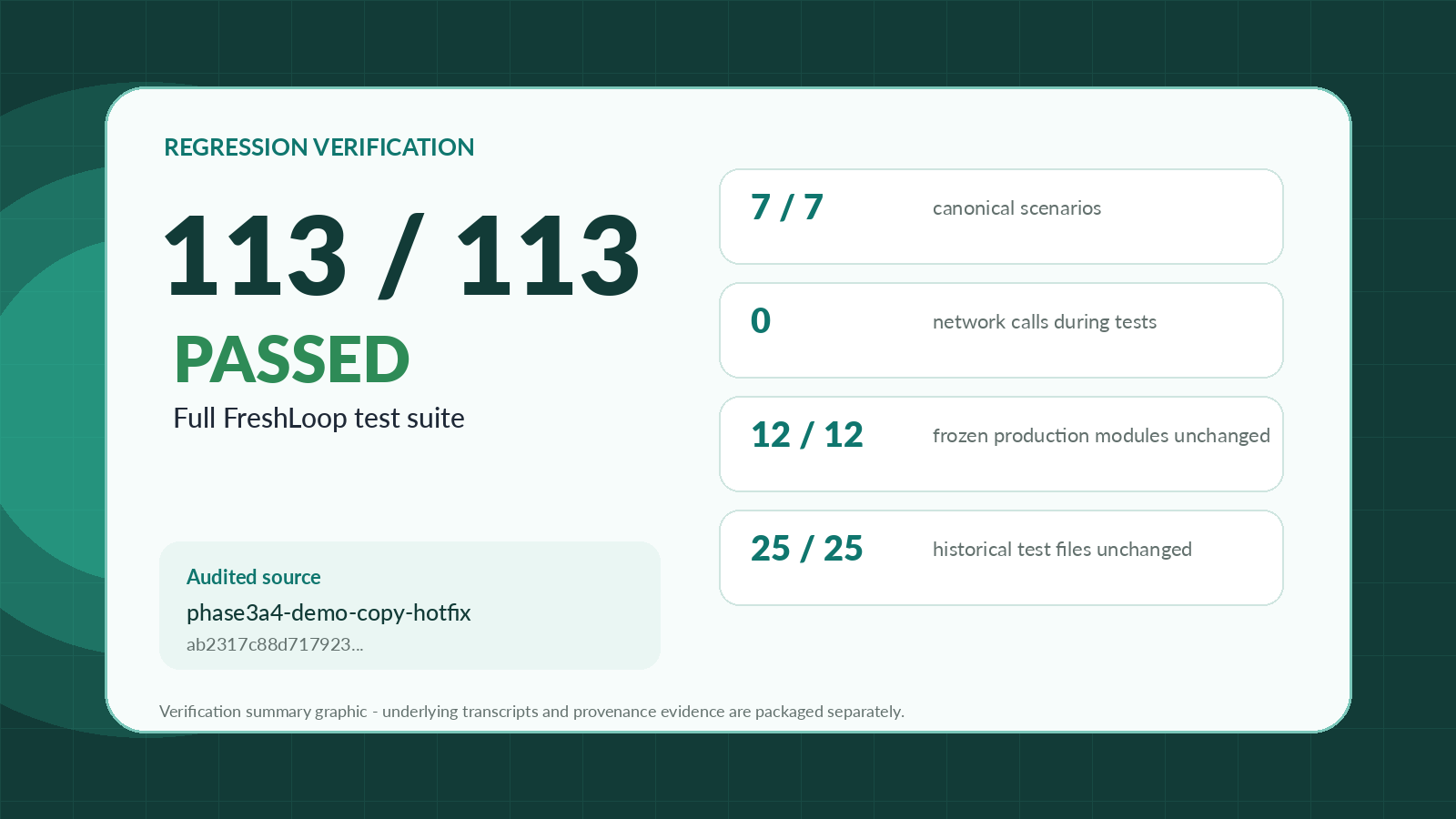
I built FreshLoop with Python, Streamlit, the OpenAI API, GPT-5.6, Codex, JSON-based data contracts, Git, GitHub, and pytest.
The workflow is:
- Retail inventory and customer context are loaded as structured data.
- GPT-5.6 proposes a bounded offer in JSON format.
- Deterministic Python rules independently validate the proposal.
- Unauthorized or invalid outputs fail closed.
- Approved offers are displayed through the demo interface.
Codex was used to support implementation, repository analysis, testing, documentation, and engineering review.
The project also includes a zero-key safe mode so the core workflow can be evaluated without exposing an API key.
Challenges
The main challenge was preventing the AI model from becoming the final decision-maker.
A realistic retail system cannot rely only on prompt instructions. Pricing, consent, dietary restrictions, and margin limits must be enforced outside the model.
Another challenge was keeping the demo simple enough for judges to understand while preserving a meaningful enterprise architecture.
I also had to design the system so malformed, incomplete, or non-compliant model outputs are rejected rather than silently accepted.
What I learned
I learned that reliable AI products need more than strong model outputs. They need explicit authority boundaries, structured interfaces, deterministic validation, and auditable failure behavior.
The project reinforced an important design principle:
The model may propose, but the application must authorize.
What's next
Future development could include:
- live point-of-sale integration
- automated inventory synchronization
- multi-store policy management
- demand forecasting
- explainable authorization logs
- controlled pilot testing with convenience-store operators

Log in or sign up for Devpost to join the conversation.