-
-
inventory-check
-
-
map-locator
-
homepage
NutriNav
Inspiration
75,000 DC residents in Wards 7 & 8 live in federally designated food deserts. They have SNAP benefits, corner stores stock fresh produce through DCCK's Healthy Corners program — but no tool connects what a resident needs to what's actually on the shelf.
This is for people who:
- Don't know which nearby store had collard greens today
- Want plantains for a traditional recipe but didn't ask twice
- Had $20 for a family of four and no guidance on how to stretch it
The supply exists. The demand exists. The missing piece is this software that bridges the gap.
What It Does
For Residents:
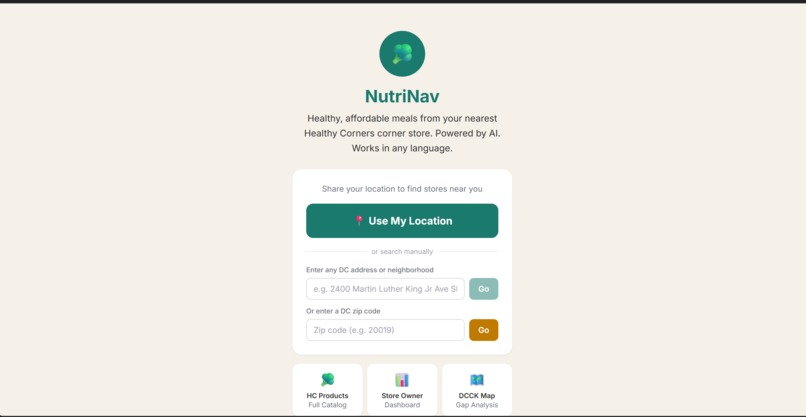
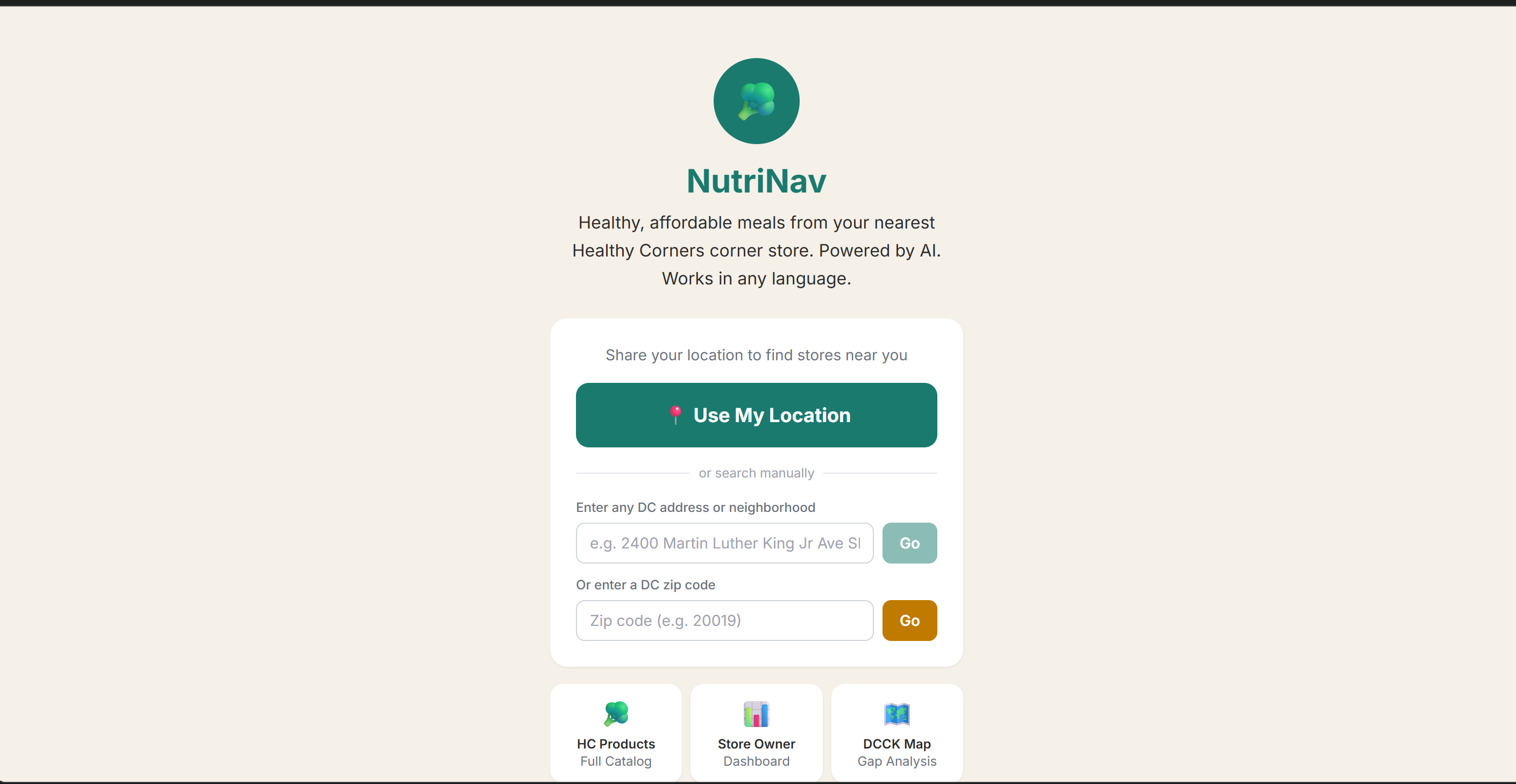
- Find nearest Healthy Corners store via GPS or address
- AI meal planner builds shopping lists from actual store inventory within budget
- Voice input/output in 99+ languages — Whisper auto-detects, Llama responds in kind
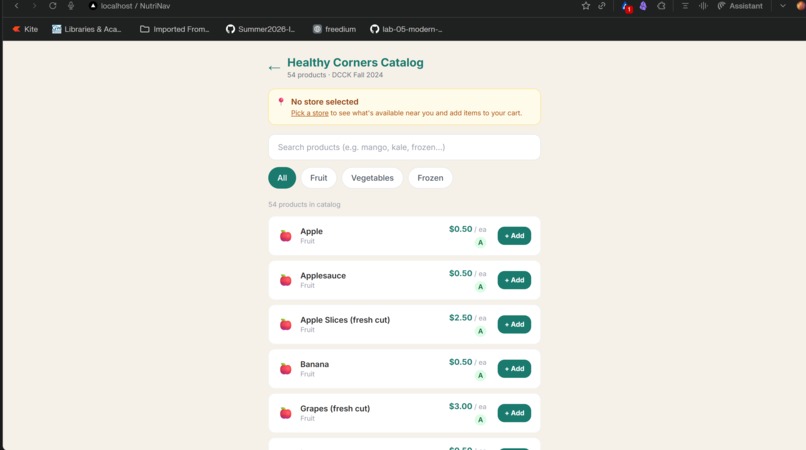
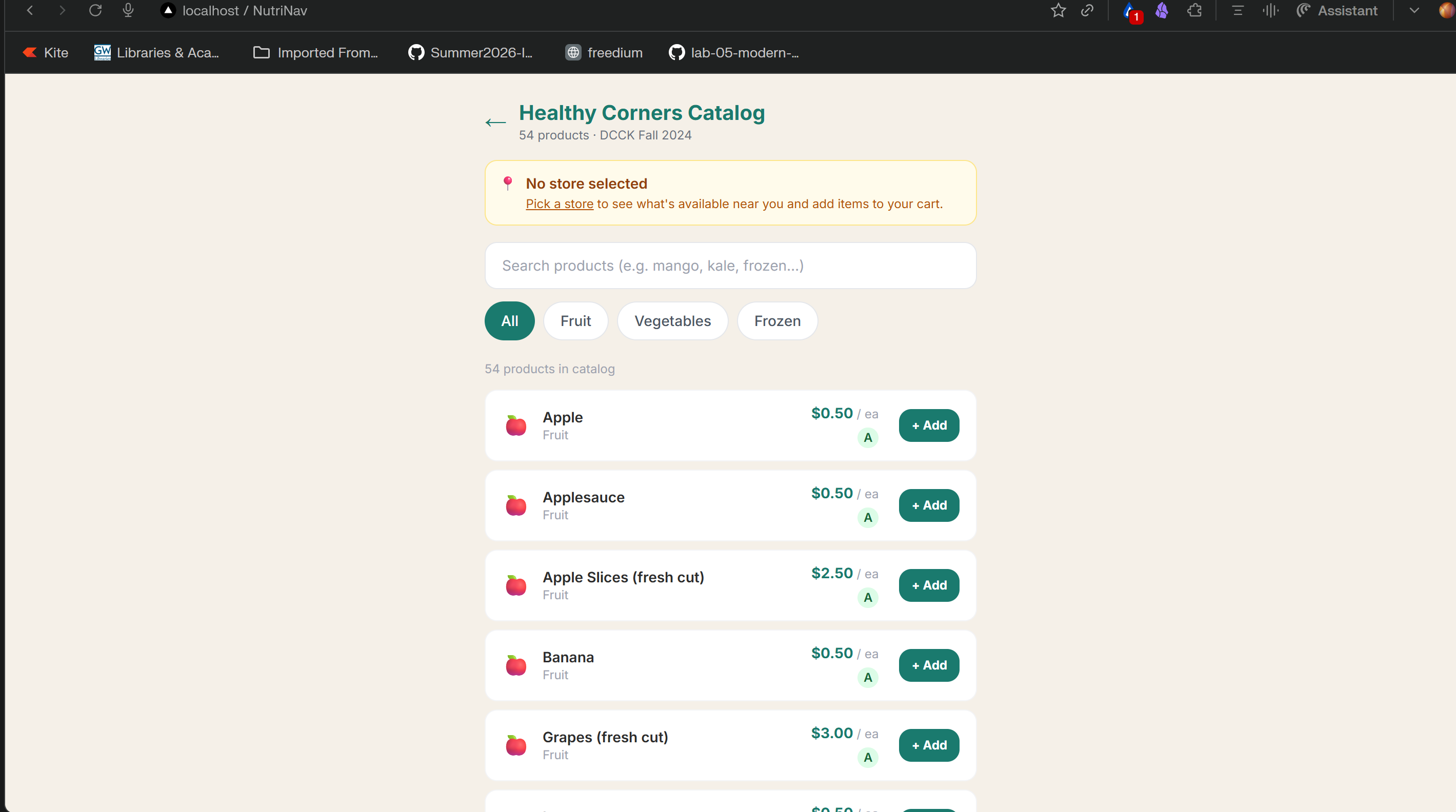
- Browse full HC product catalog with USDA nutrition data
- One-tap "missing item" reporting
For Store Owners:
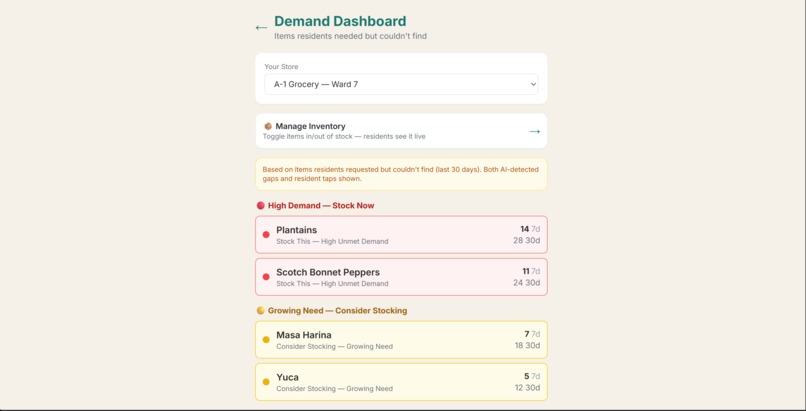
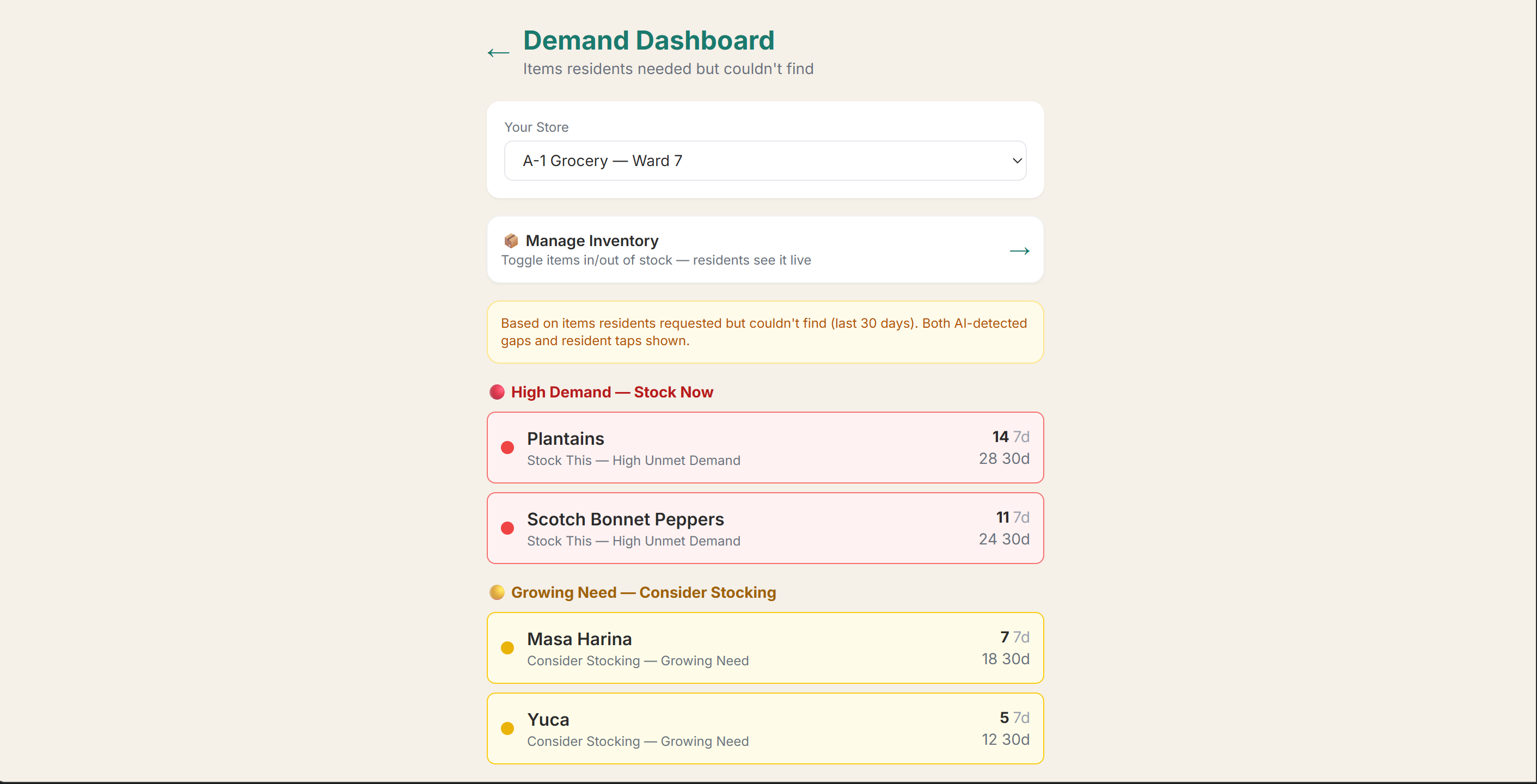
- Demand dashboard shows what residents requested but couldn't find
- Real-time inventory management
- Two demand signals: AI-detected gaps + resident-reported gaps
For DCCK Leadership:
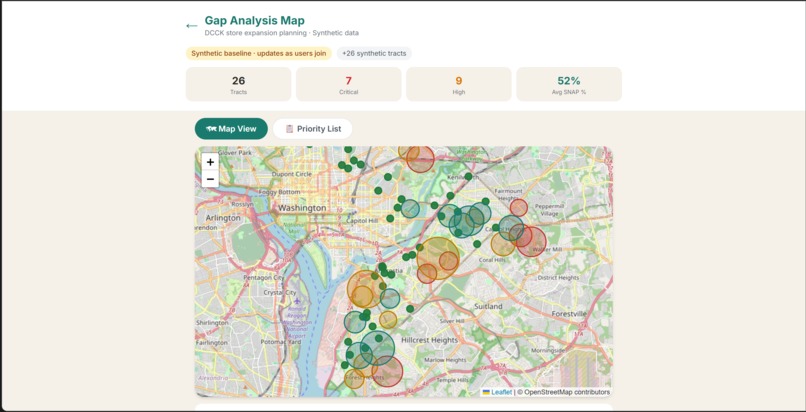
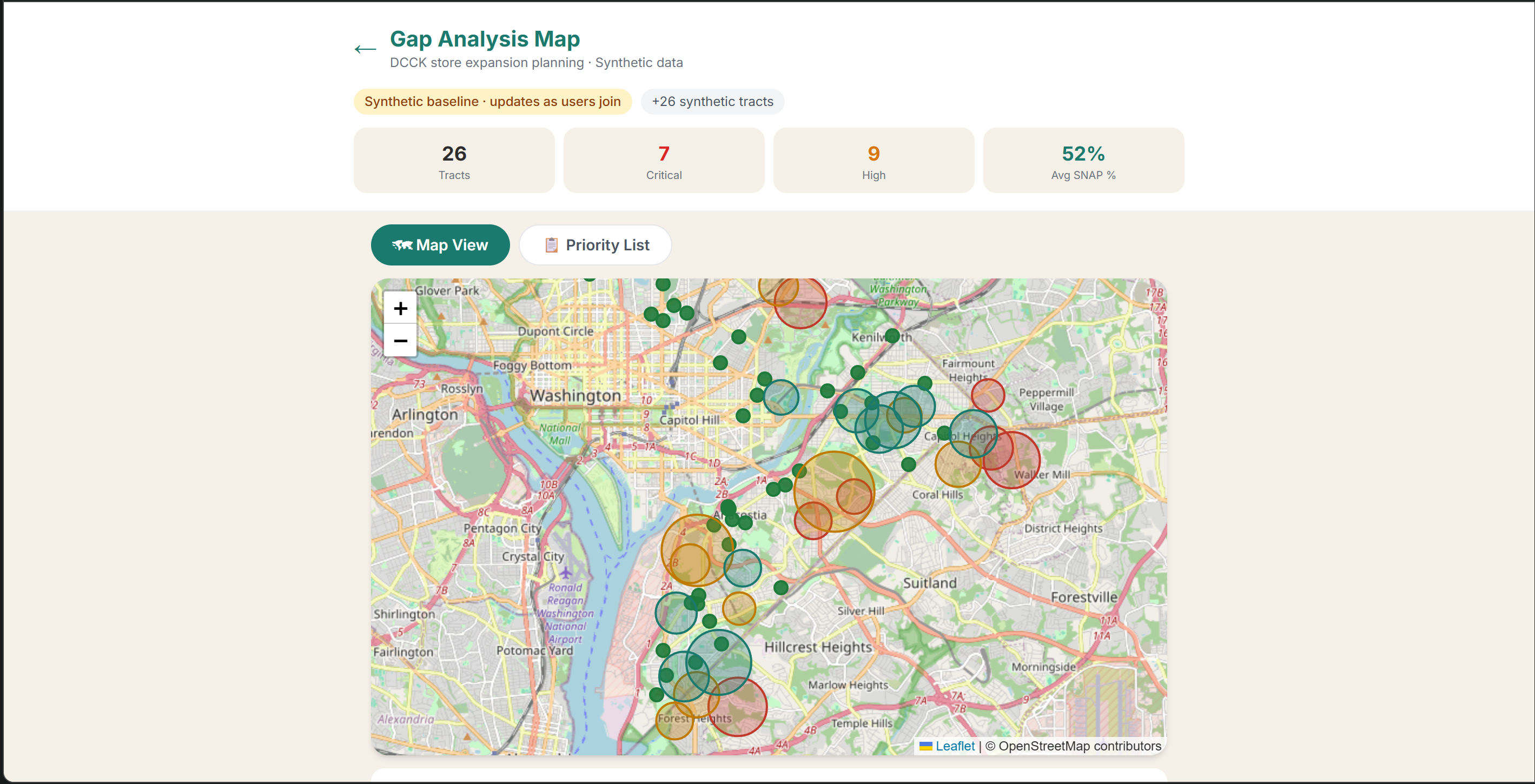
- Gap Analysis Map reveals census tracts with no walking-distance store access
- Ranked priority list for expansion planning
- Automatically scales from synthetic baseline to real data as users grow
How We Built It
| Layer | Tech |
|---|---|
| Frontend | Next.js 14 App Router + Tailwind CSS |
| Database | Supabase (PostgreSQL) — real-time, row-level security |
| AI Chat | Groq → Llama 3.3 70B (free tier, 128k context) |
| Voice | Groq Whisper large-v3 → Web Speech API TTS |
| Maps | Leaflet + OpenStreetMap (fully open source) |
| Geocoding | Nominatim + US Census Geocoder (no API keys) |
| Nutrition | USDA FoodData Central (embedded) |
Total cost at prototype scale: $0/month
Challenges We Ran Into
- No real inventory data — HC Shopper App is store-owner-only, no public API. Solution: synthetic inventory seeded from DCCK's published product catalog, with real-time replacement path once store owners adopt the dashboard.
- Privacy vs. analytics — we needed location insights without storing GPS. Solution: fire-and-forget session logging that converts GPS to census tract GEOID before storage. No coordinates, no user IDs.
- Voice language detection — residents speak English, Spanish, Amharic, Vietnamese. Solution: Groq Whisper auto-detects language with no parameter needed; Llama responds in the same language.
- Hallucinated nutrition facts — LLMs invent values. Solution: system prompt forbids generating nutrition data; USDA values embedded in inventory payload sent to model.
Accomplishments We're Proud Of
- Zero proprietary lock-in — every layer is open source or free-tier
- Privacy by design — no GPS stored, no accounts, no PII
- Multilingual from day one — tested in English, Spanish, Amharic
- Real demand signal — unmet events logged from first user tap, not hypothetical
- Synthetic-to-real pipeline — gap map automatically improves as users grow
- Deployable in 5 minutes —
vercel --prodwith 3 environment variables
What We Learned
- The gap isn't supply — it's information. DCCK already delivers to 75+ stores. Residents just don't know what's there.
- Voice matters more than we thought. For residents with low literacy or limited English, text input is a barrier. Auto-language detection removes friction.
- Store owners want demand data, not AI recommendations. They don't need us to tell them what to stock — they need to know what the community is already asking for.
- Census tract is the right granularity. Ward-level masks inequality; block-level is too granular for privacy. Tract-level balances both.
What's Next for NutriNav
Phase 1 (complete): Prototype with AI chat, voice, multilingual, synthetic inventory, real demand logging
Phase 2: DCCK introduces dashboard to partner stores → real inventory replaces synthetic
Phase 3: Session volume → gap map becomes fully real → demand flywheel closes stocking gaps
Phase 4:
- HC Shopper App API integration for real-time inventory sync
- SNAP EBT integration (requires USDA partnership)
- National expansion to other DCCK-style programs
- Guidance to maximize tax refund for donating excess food
Built for George Hacks × UN Reboot the Earth Hackathon — Track 2: GW Global Food Institute
Built With
- google-maps
- groq
- nominatim
- supabase
- usda-nutrition-data
- webspeech

Log in or sign up for Devpost to join the conversation.