Inspiration
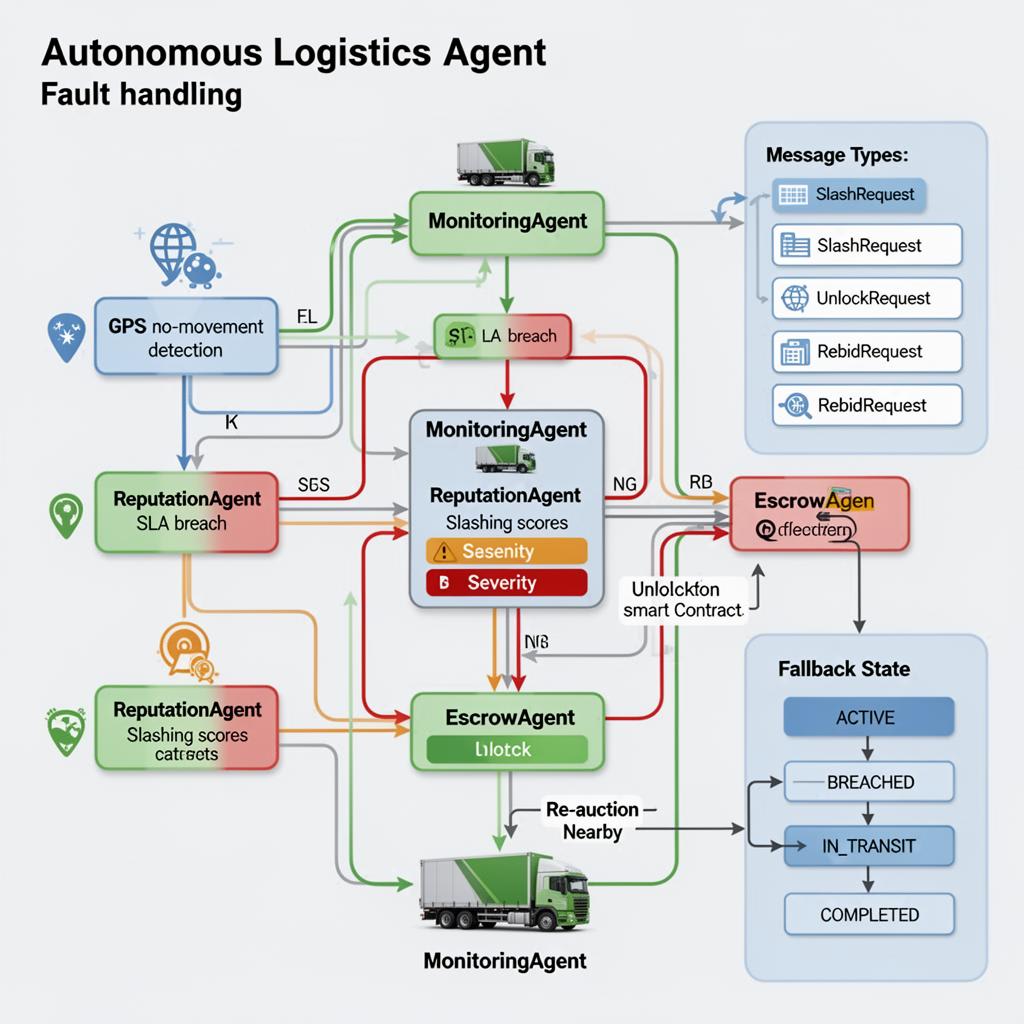
Every single year, commercial trucks in the US drive 30 percent of their miles completely empty. We are talking about 45 billion miles of wasted driving. This translates to 68 billion dollars in lost revenue and millions of tons of unnecessary carbon emissions. For decades, the logistics industry has relied on human dispatchers and clunky load boards to find freight for the trip back home. But human beings simply hit a cognitive wall. They prioritize safe and known routes instead of the absolute best match because they cannot mentally calculate detours, live traffic, and dynamic pricing for thousands of trucks all at once. We realized that fixing this massive problem did not mean building a prettier dashboard for dispatchers. It meant stepping back and removing humans from the minute by minute negotiations entirely. ##What it does Freight Sync is a decentralized and autonomous freight negotiation network. We essentially replace human dispatchers with intelligent AI agents that negotiate for themselves in milliseconds. Autonomous Negotiation: Truck Agents broadcast their availability, location, and unique price sensitivity. Broker Agents then calculate route detours and submit dynamic bids. The Truck Agent evaluates these bids using a mathematical formula that balances the pay rate against the detour time, automatically accepting the most profitable load. The Fallback Mechanism: This is our secret weapon. If a truck breaks down or stops moving, our Monitoring Agent detects the delay via GPS feeds. Without any human intervention, the system lowers the truck's on chain reputation, unlocks the escrow to penalize the driver, and instantly triggers an emergency auction to nearby trucks. It secures a new driver in under 3 minutes.
How we built it
We built the core architecture using the Fetch.ai uAgents framework to create a truly decentralized multi agent system. Agent Topography: We spun up specific micro agents like Truck Agents, Broker Agents, Monitoring Agents, and Reputation Agents. These communicate asynchronously using predefined message structures. The Brain: We wrote the core logic in Python. We utilized custom mathematical scoring models that normalize both the revenue and the detour time into a scale from zero to one. This helps us find the absolute mathematical optimum for every single load. Escrow and State: We simulated a smart contract escrow environment to lock settlement funds and security deposits, ensuring that all participants act honestly. ##Challenges we ran into Moving from traditional linear web apps to a decentralized and asynchronous agent environment was a huge learning curve. Making sure a Truck Agent did not accidentally accept two bids at the exact same time required strict state locking mechanisms. Tuning the price sensitivity variable took heavy simulation. If the sensitivity was too low, trucks would accept terrible rates just to avoid a short ten minute detour. We had to calibrate the math perfectly to ensure the agents negotiated aggressively but logically. Building the happy path where everything works perfectly was easy. Engineering the Fallback Mechanism to gracefully handle simulated GPS failures, unlock the escrow securely, and trigger a recursive emergency auction without crashing the network was a massive architectural hurdle. ## Accomplishments that we are proud of We successfully built a system that fails gracefully and actually heals itself. Most hackathon projects assume everything will work perfectly in the real world. We are incredibly proud of our autonomous Fallback and Penalty mechanism. Watching the terminal output as the Monitoring Agent detects a stalled truck, lowers its reputation score, and successfully matches the load to a secondary truck in a matter of seconds completely on its own proved to us that autonomous logistics is actually viable today.
## What we learned We learned that the future of B2B software is not about building better dashboards for humans to click. It is about building autonomous workflows. Using the Fetch.ai uAgents framework taught us how to design software that acts as an independent economic actor. We also learned how to architect zero trust systems using escrow and on chain reputation to force good behavior from decentralized participants. What is next for Freight Sync Hardware IoT Integration: We want to transition from simulated GPS data to real world ELD (Electronic Logging Device) data streams. Multi Modal Expansion: We plan to expand the Agent schemas to include freight trains and cargo ships for end to end global supply chain autonomy. Enterprise Pilot: We are getting ready to pitch the prototype to mid sized logistics companies to run a shadow test against their actual human dispatchers

Log in or sign up for Devpost to join the conversation.