-
-
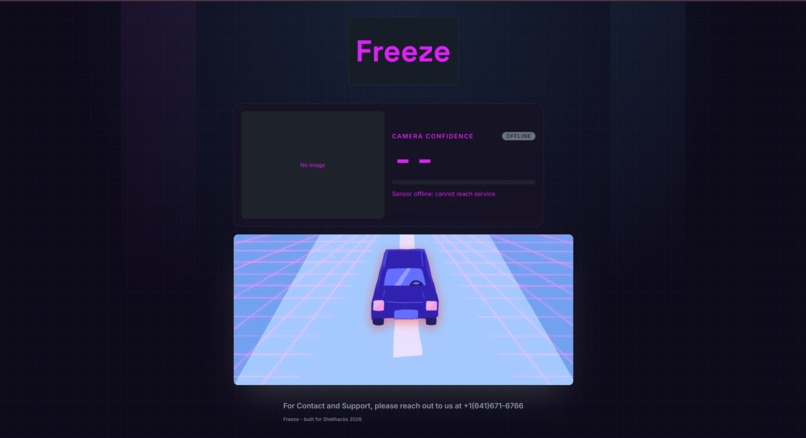
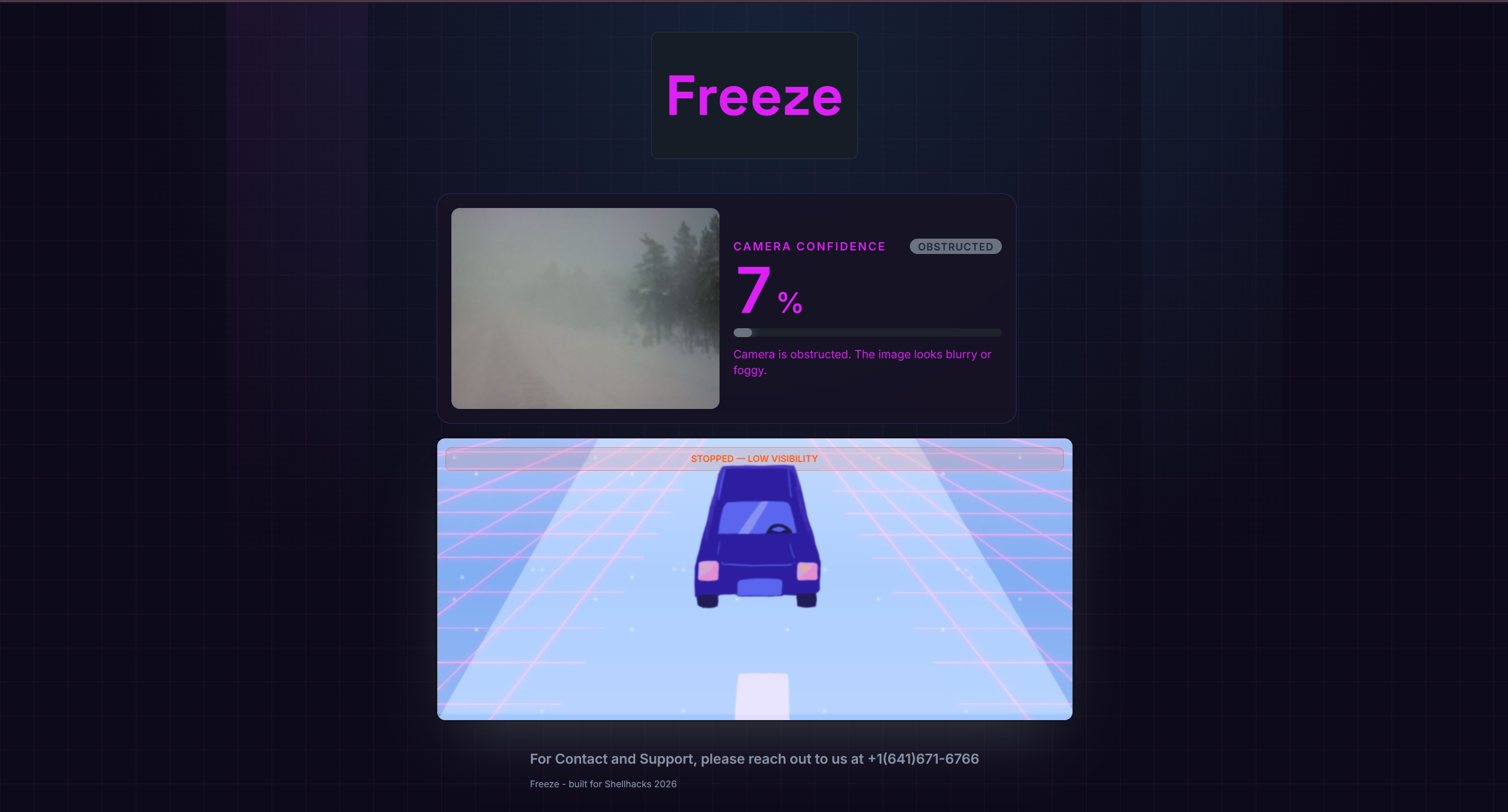
Freeze UI
-
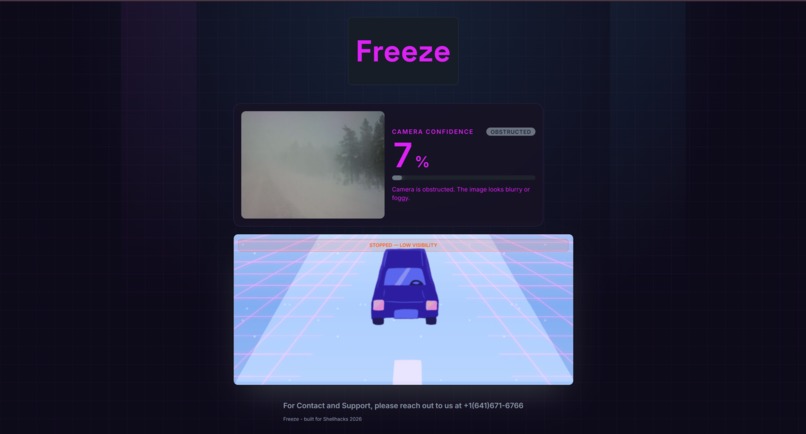
Blizzard Conditions
-
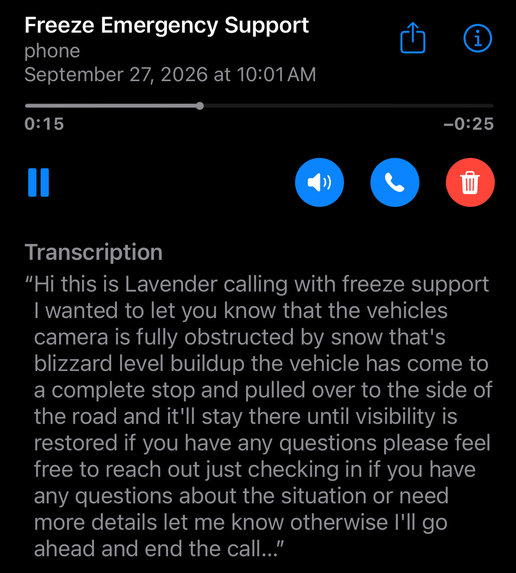
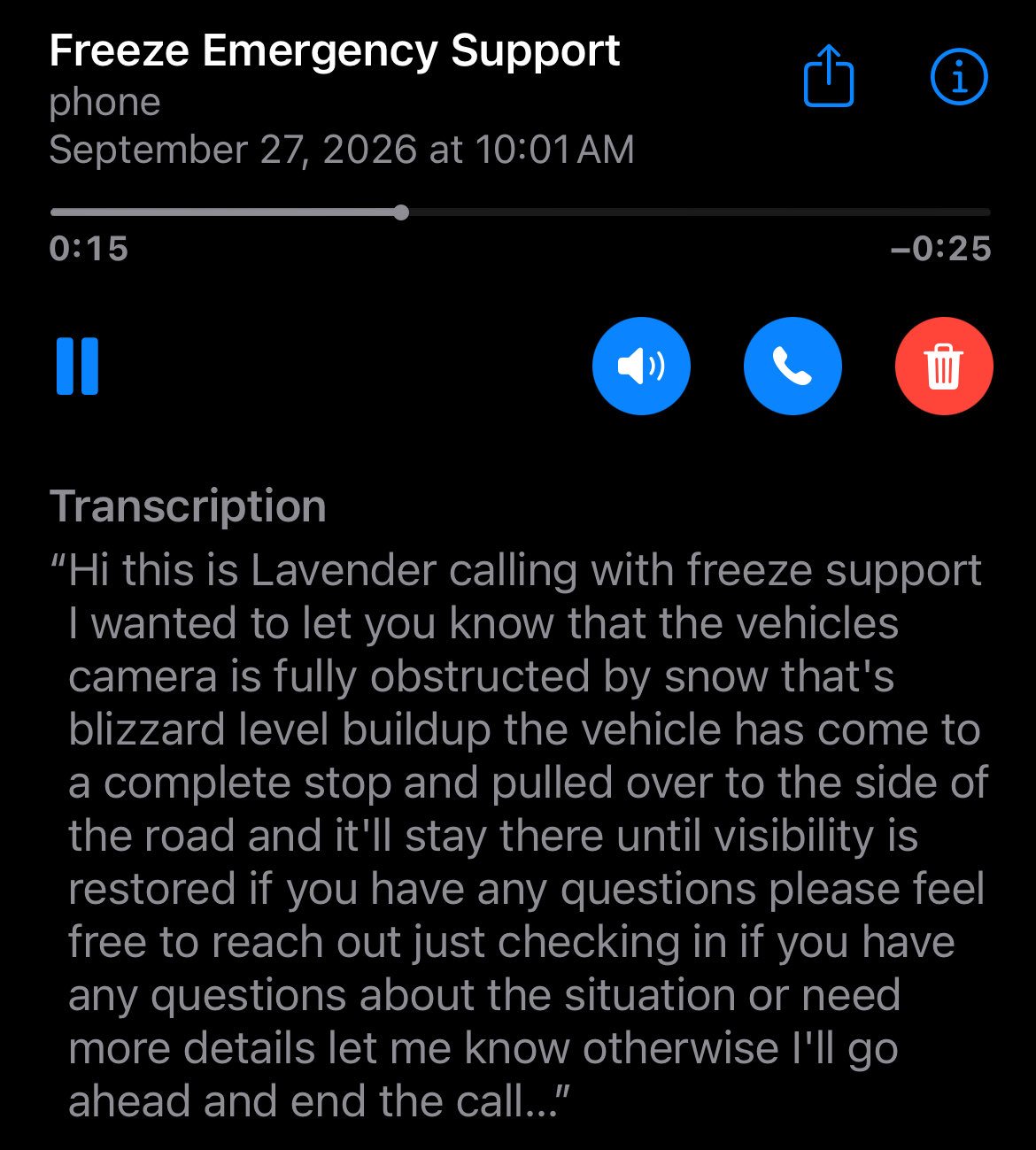
Freeze Emergency Support Voicemail
Inspiration
In hearing the Waymo team express their wishes for projects to implement real-world data to improve transportation, we soon got the idea to target an area of autonomous vehicle research that is still needing refinement: severe snowy weather handling and obscured camera detection. Even as of March of this year, there has been a report of an autonomous driving feature leaving a passenger stuck in a mound of snow (Tucker, 2026). Most sensors in place for autonomous driving are optimized for clear and rainy weather, and we hope that the inclusion of Freeze will help implement more accurate safety precautions, in order to keep passengers safe. Our hopes for using both hardware and (uncharted territory for us) machine learning also landed us with this project.
What it does
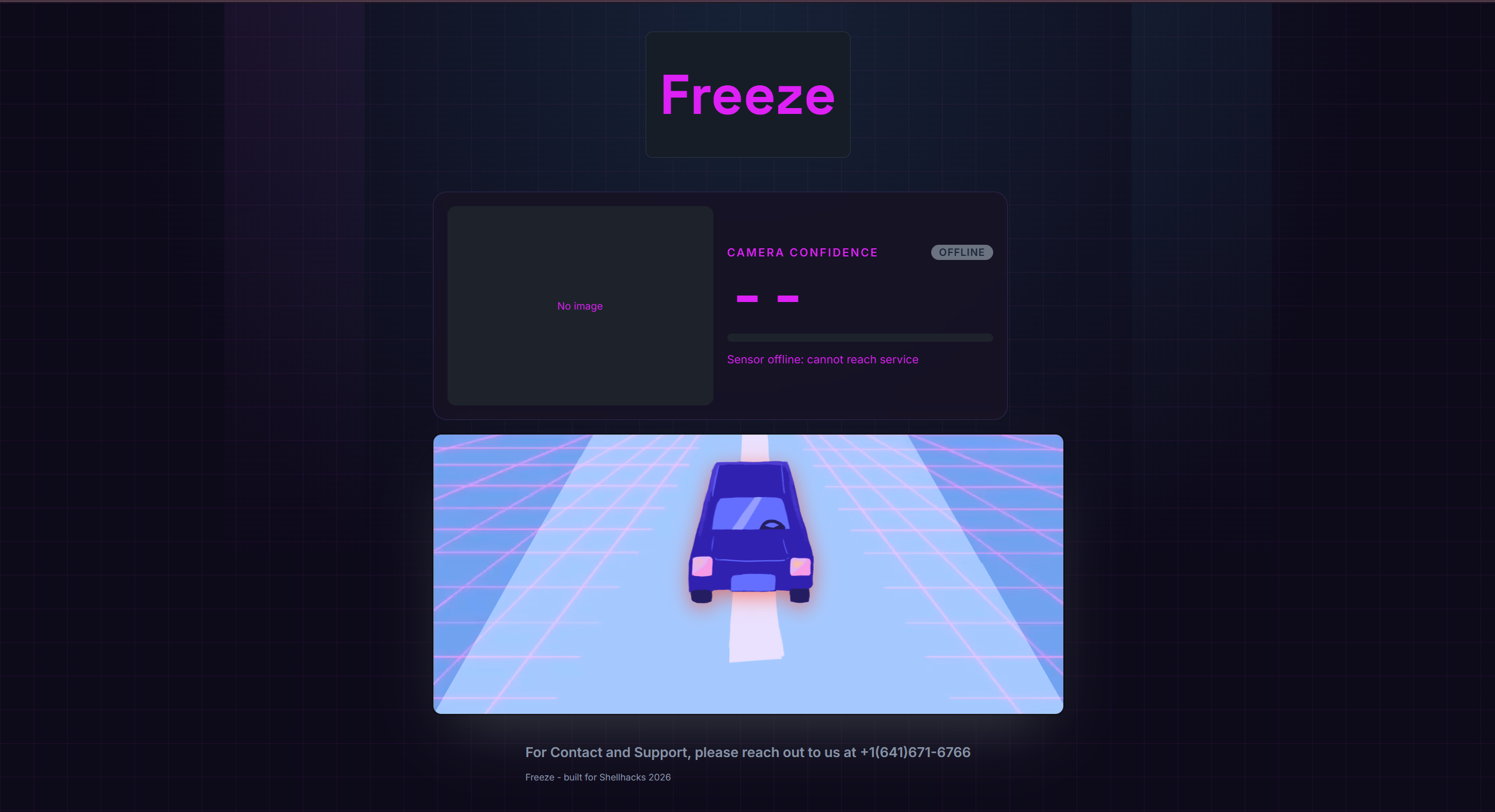
Freeze essentially functions entirely through the Raspberry Pi 3B+ and its connected Camera Module 3. Installed on it is our Tensorflow Lite Weather Model, that has been trained off of several YouTube videos depicting varying levels of snowy weather, from clear skies to blizzard conditions. The model chooses one of the three weather states alongside a camera confidence rating and gives an instruction to our simulated vehicle to do one of the following: proceed as normal for clear weather, slow down and turn on hazards for snowy weather, and pull over and suggest next steps to the passenger for blizzard like conditions. The last two, snowy and blizzard, also trigger an AI Emergency Support call, which will alert the passenger on what is happening with the autonomous vehicle and why Freeze has decided to act. Without an autonomous vehicle to integrate Freeze with, we have developed a site to display just what is going on, for the sake of demo-ing.
How we built it
Our three team members split the work like so: Lenny Wandeto working primarily on initial OpenCv functionality and the AI Emergency Support System. Arantxa Marquez (our team's first time hacker!) working primarily on configuring the Raspberry Pi and UI design. Naila Desgrottes working primarily on the data collection and model training.
Challenges we ran into
Our biggest challenges this hackathon consisted of acquiring hardware in a timely manner, being able to collect the data off of these YouTube videos, and avoiding feature creep. None of us had prior experience with a Raspberry Pi or Machine Learning/Discriminative AI either, and these posed as additional hurdles.
Accomplishments that we're proud of
We are proud of finding one project that encompassed both our hardware and software utilization goals, and proud for learning more new things this hackathon.
What we learned
Throughout the development of Freeze, we learned a lot of new fundamentals, and as always learned more about the beauty (and pain) of GitHub.
What's next for Freeze
The future looks bright for Freeze and we are looking to continue training its AI model so it can achieve it's goal with more clarity and precison. We have plans for augmenting it's ability to gauge for danger in snowy weather and blizzards, using location and weather reports to discern if taking a trip is safe or in the case of needing to stop due to a blizzard, being able to contact and list emergency services for the user.
Citation: Tucker, J. (2026, March 2). When snowflakes fall, are Self-Driving cars on slippery ground? Maryland Today. https://today.umd.edu/when-snowflakes-fall-are-self-driving-cars-on-slippery-ground
Built With
- colab
- elevenlabs
- html
- javascript
- openai
- opencv
- python
- raspberry-pi
- tensorflow
- tullio


Log in or sign up for Devpost to join the conversation.