-
-
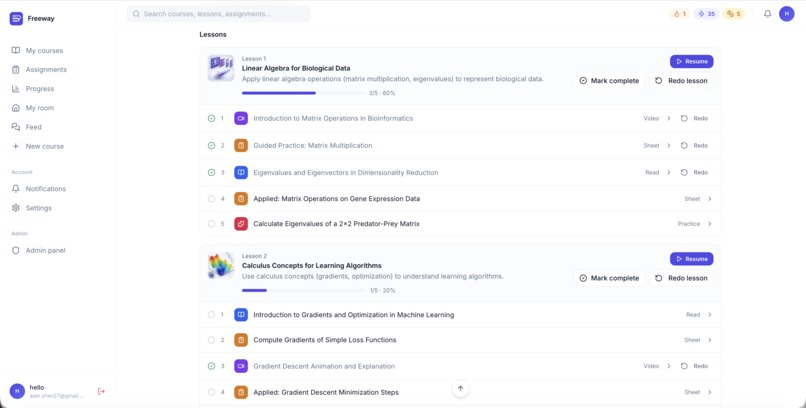
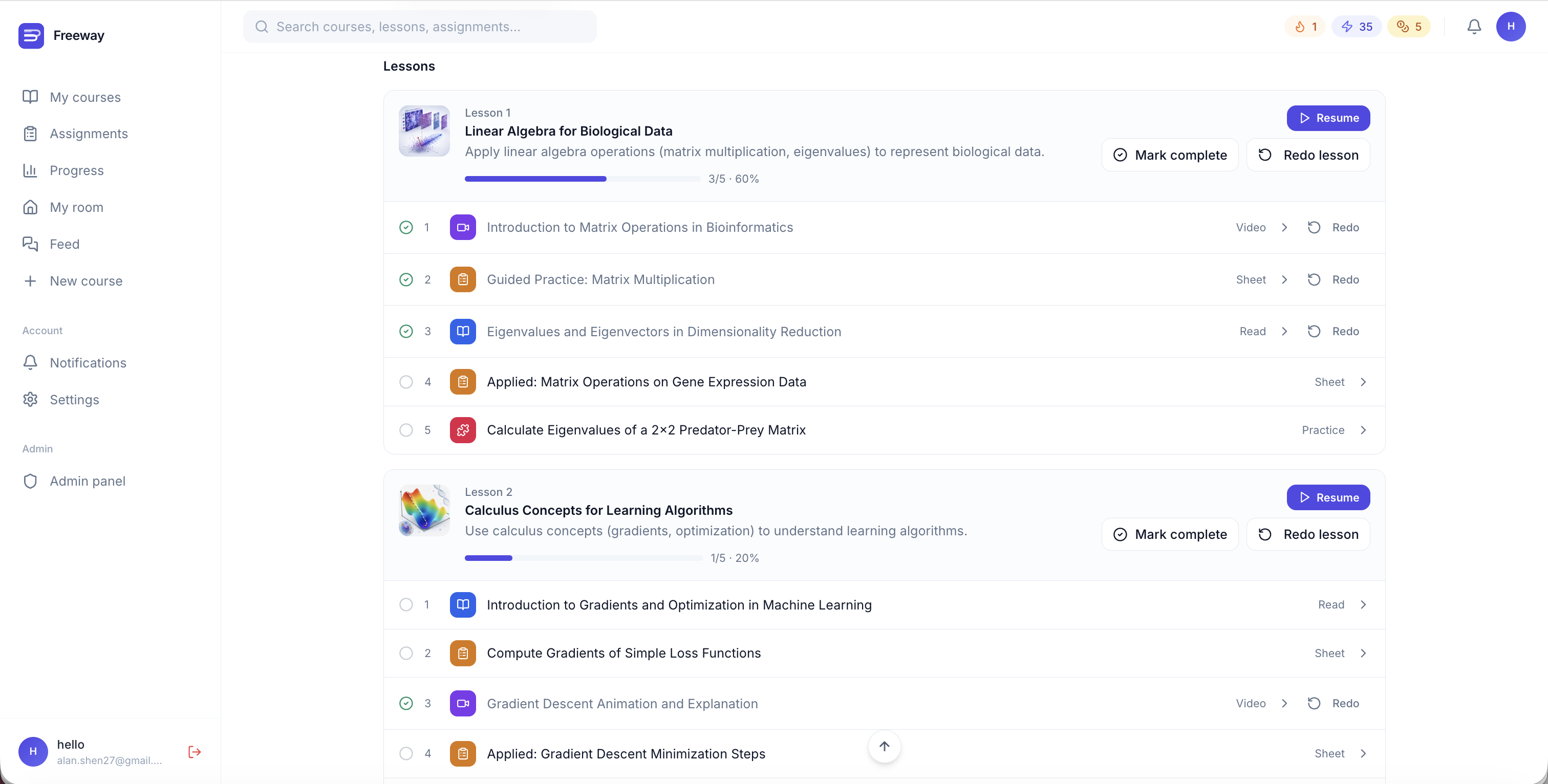
Course progress
-
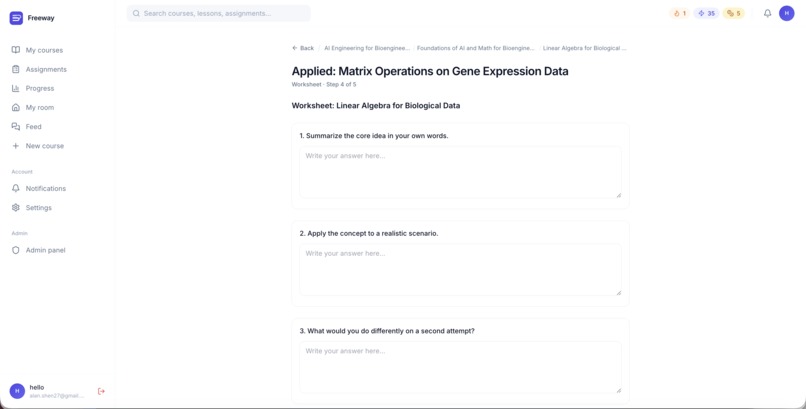
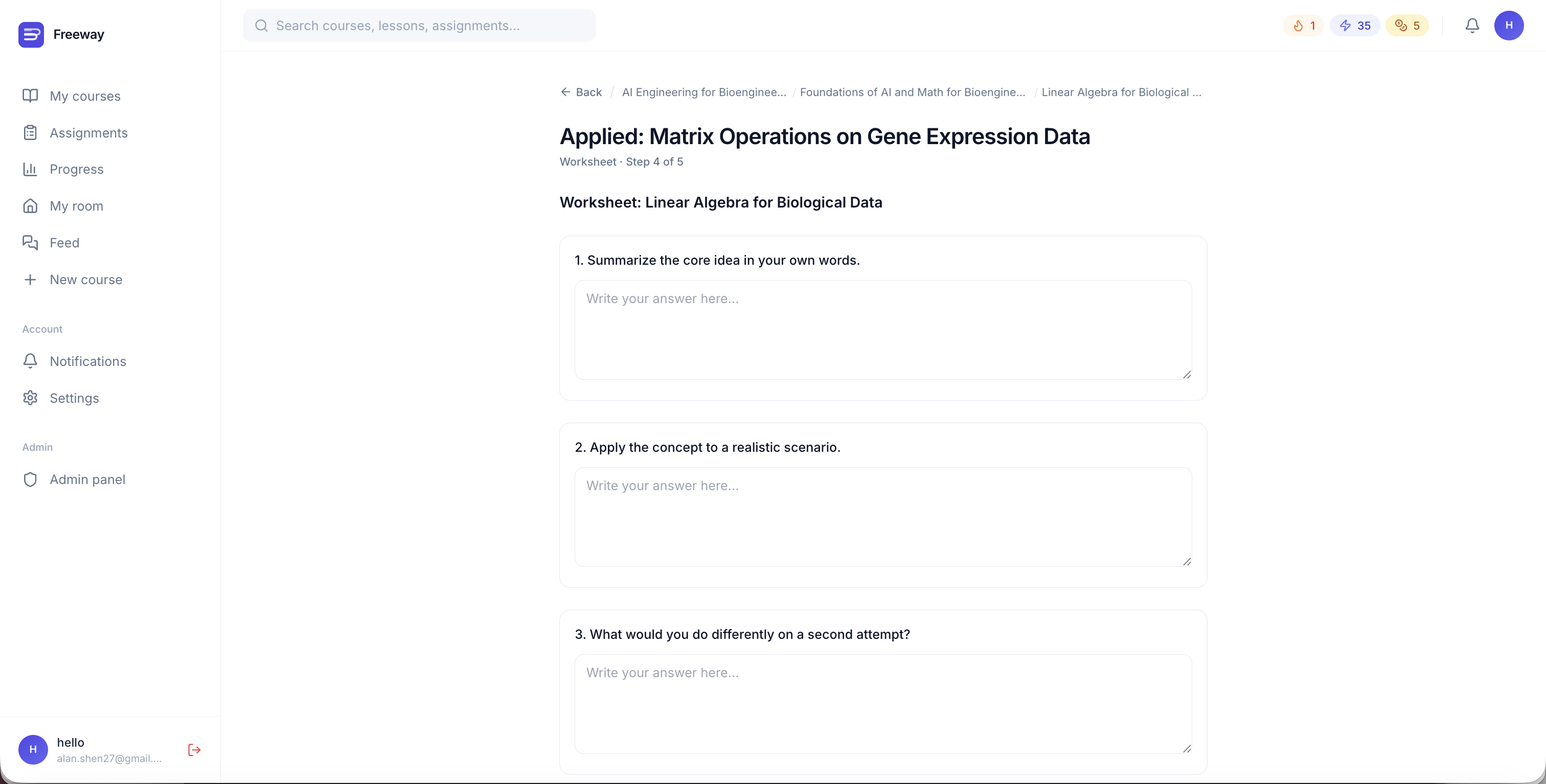
Worksheet
-
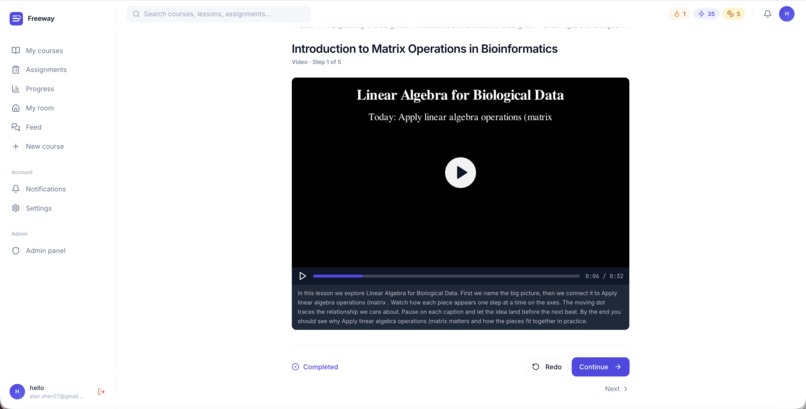
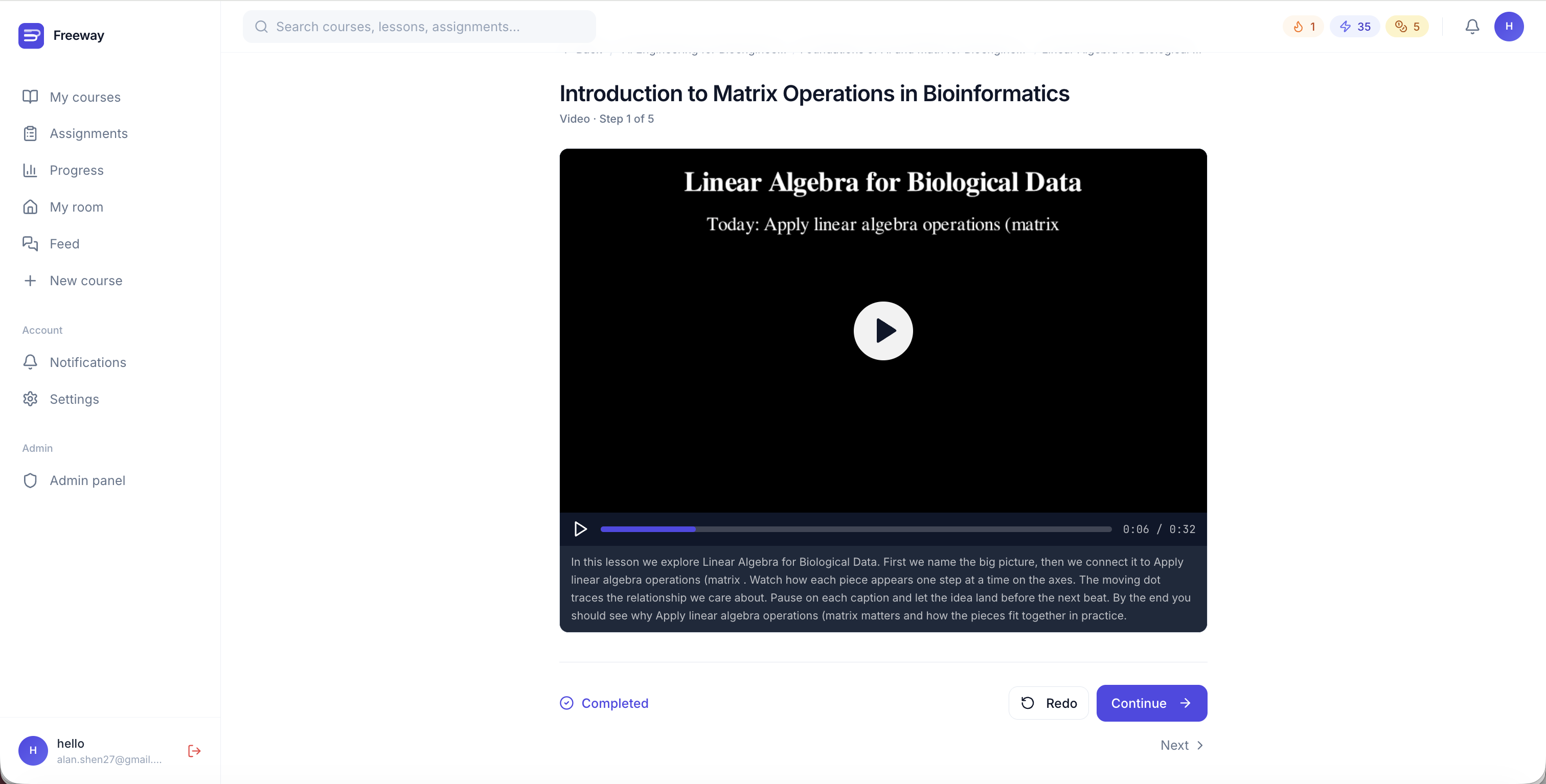
Instructional video
-
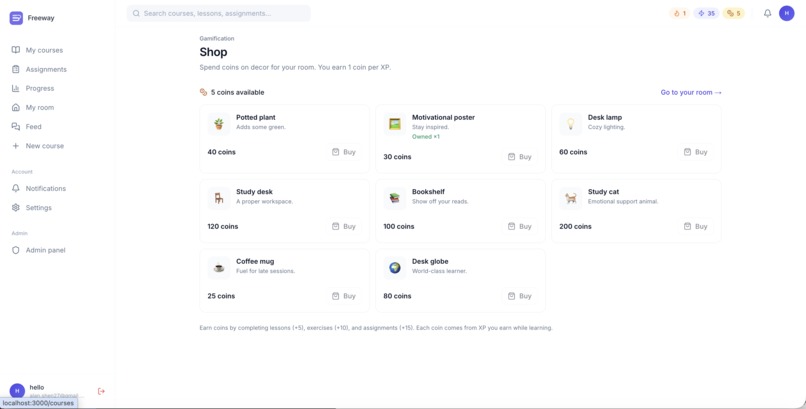
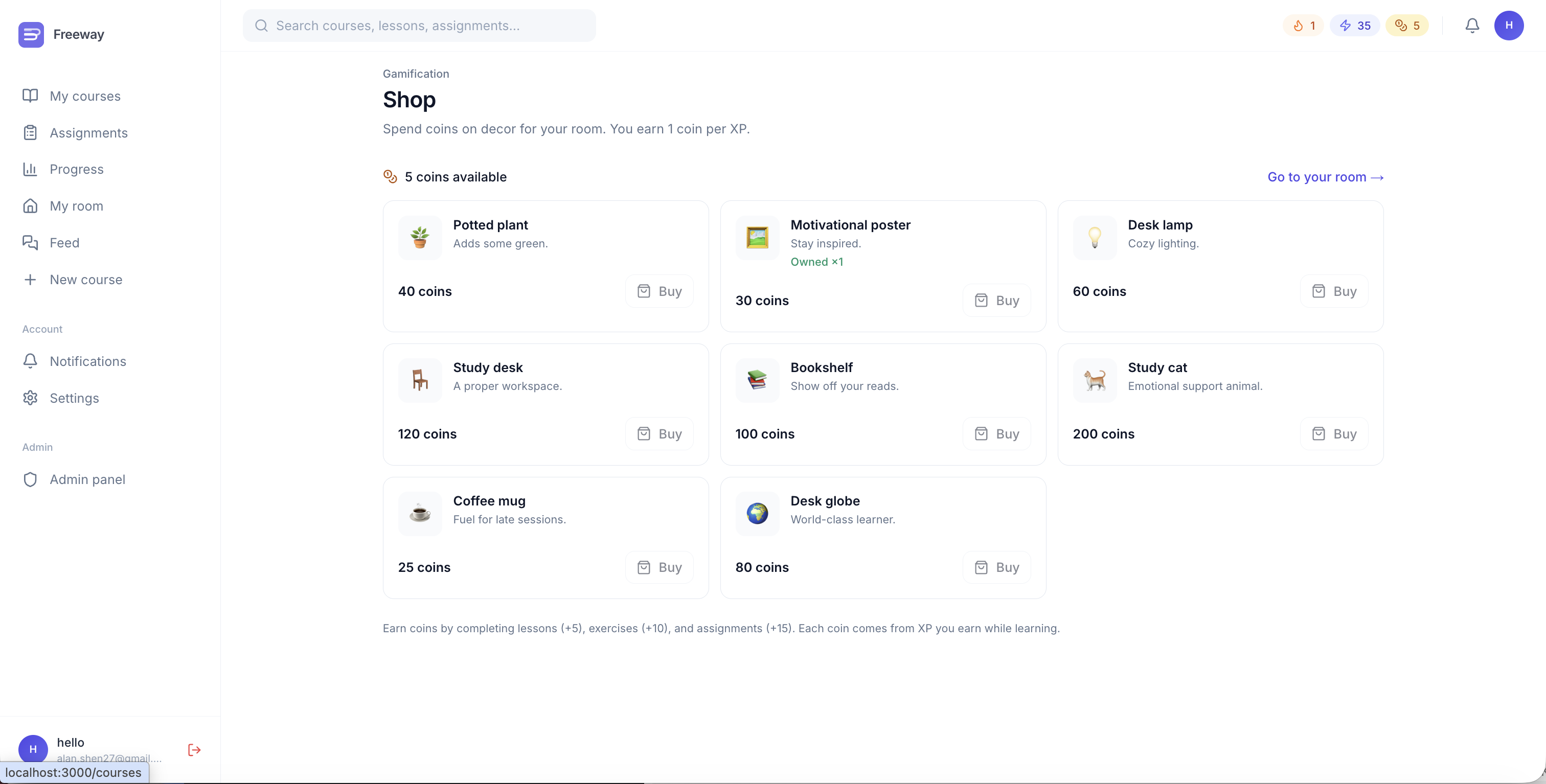
Shop
-
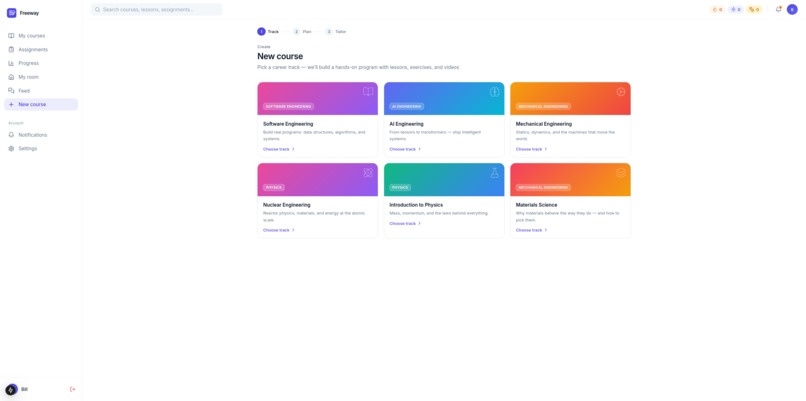
Course creation, step 1
-
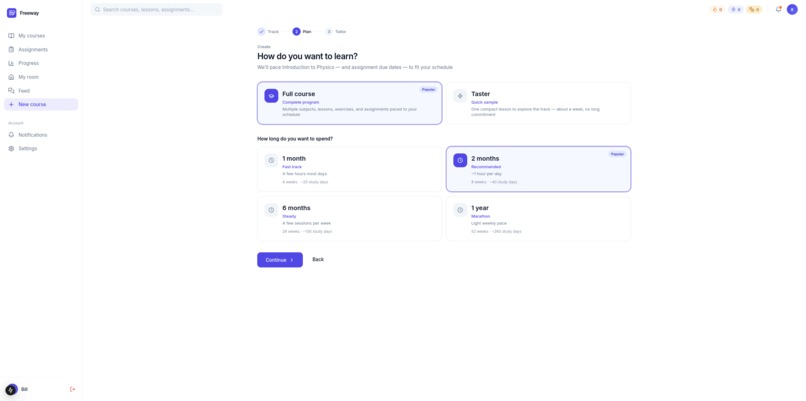
Course creation, step 2
-
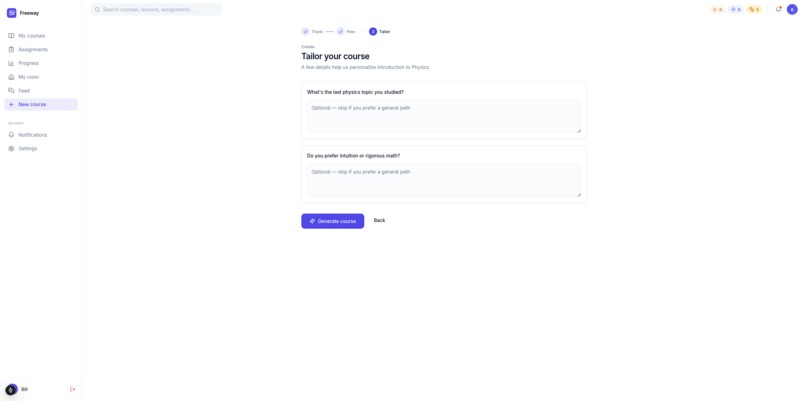
Course creation, step 3
-
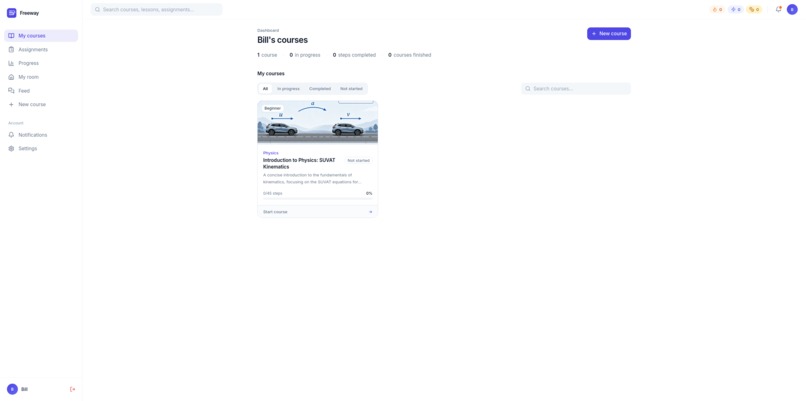
Courses
-
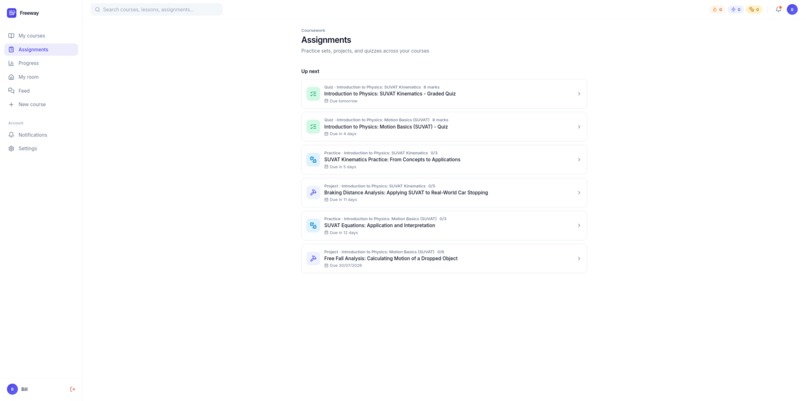
Assignments
-
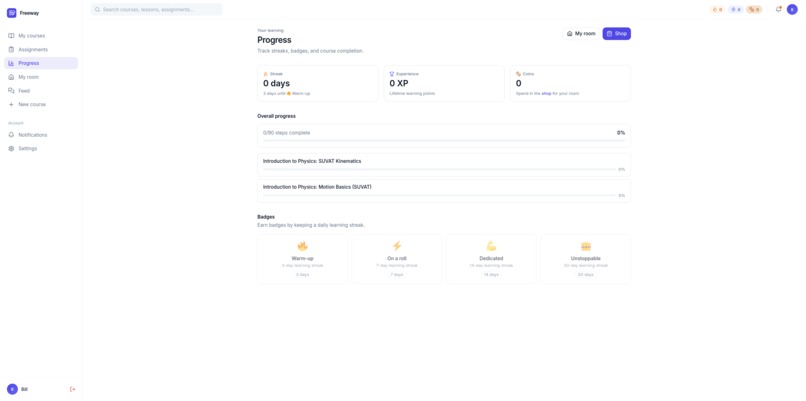
Progress
-
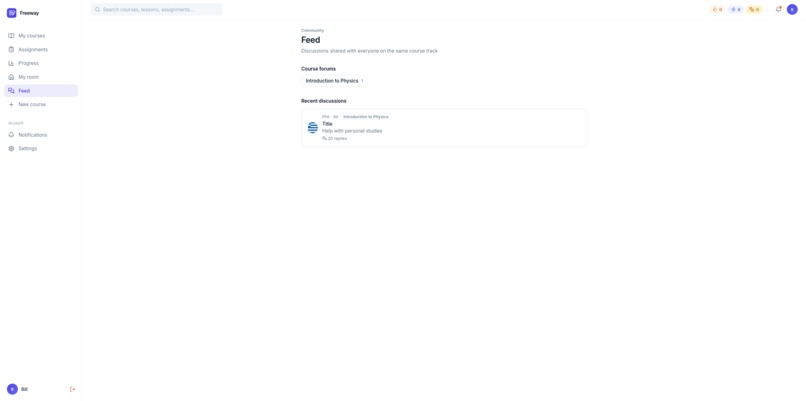
Feed / Forums
-
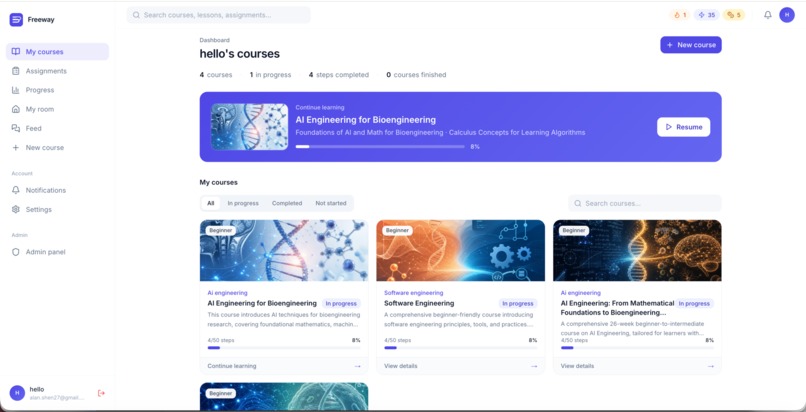
Courses
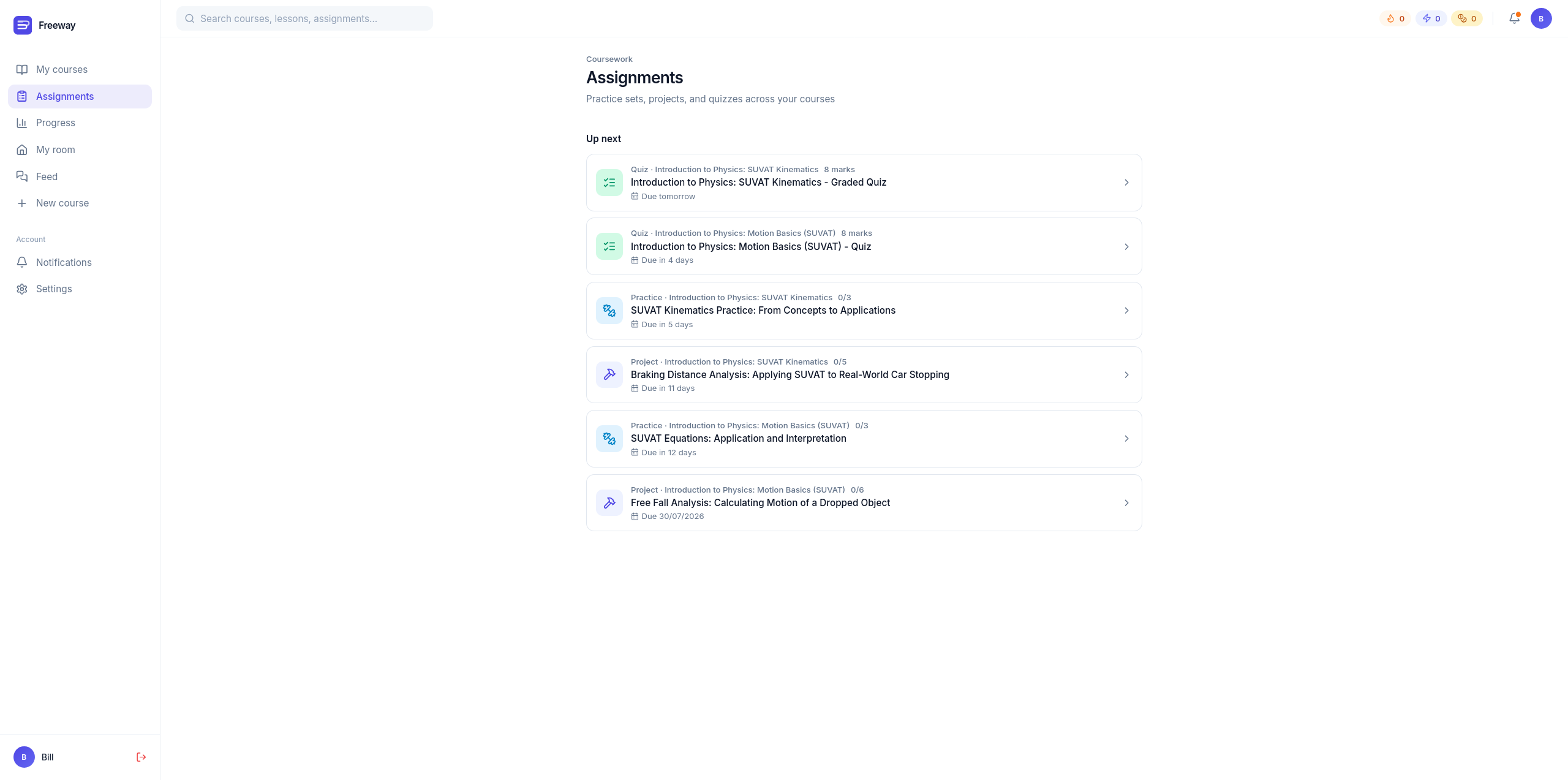
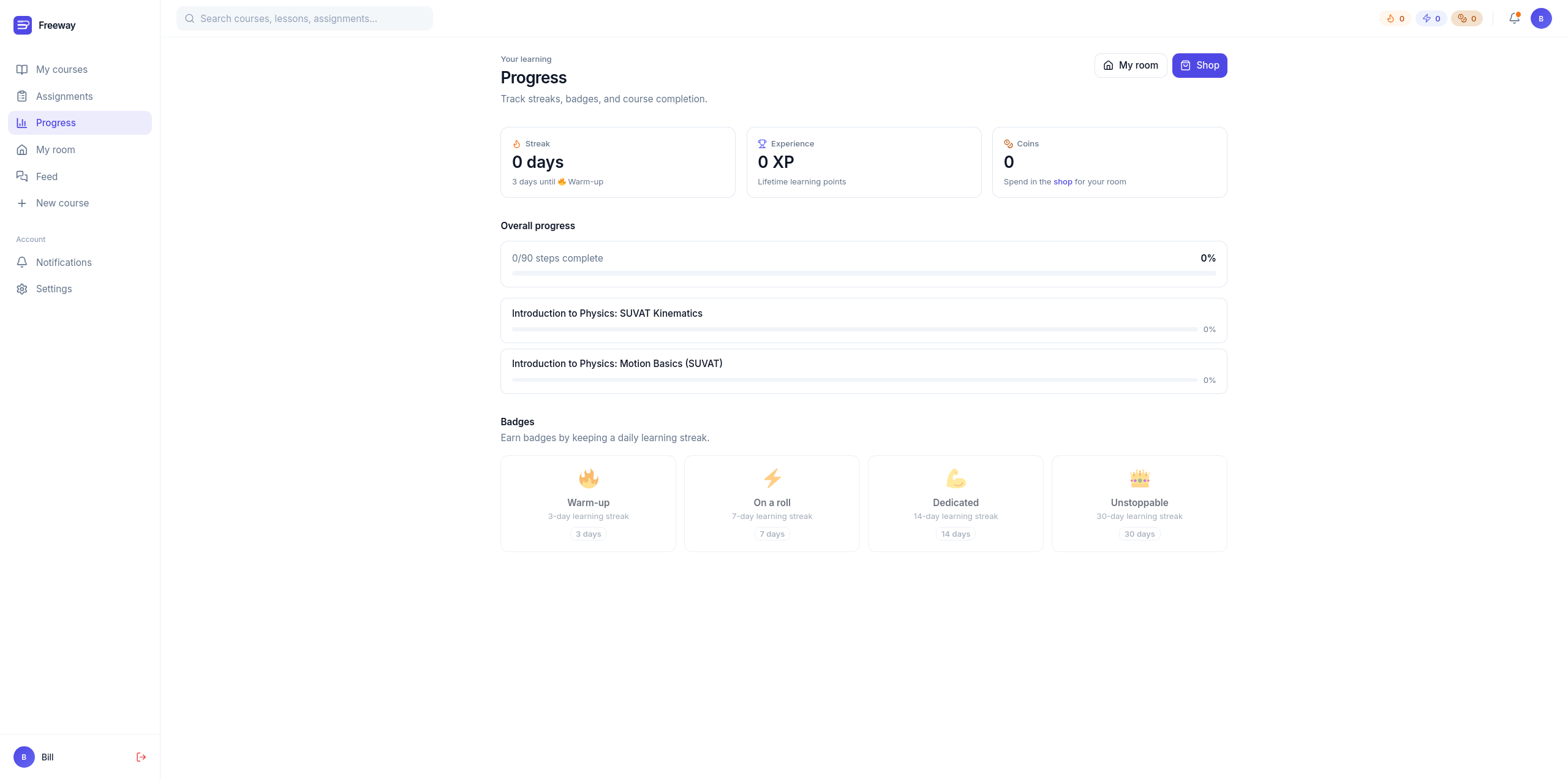
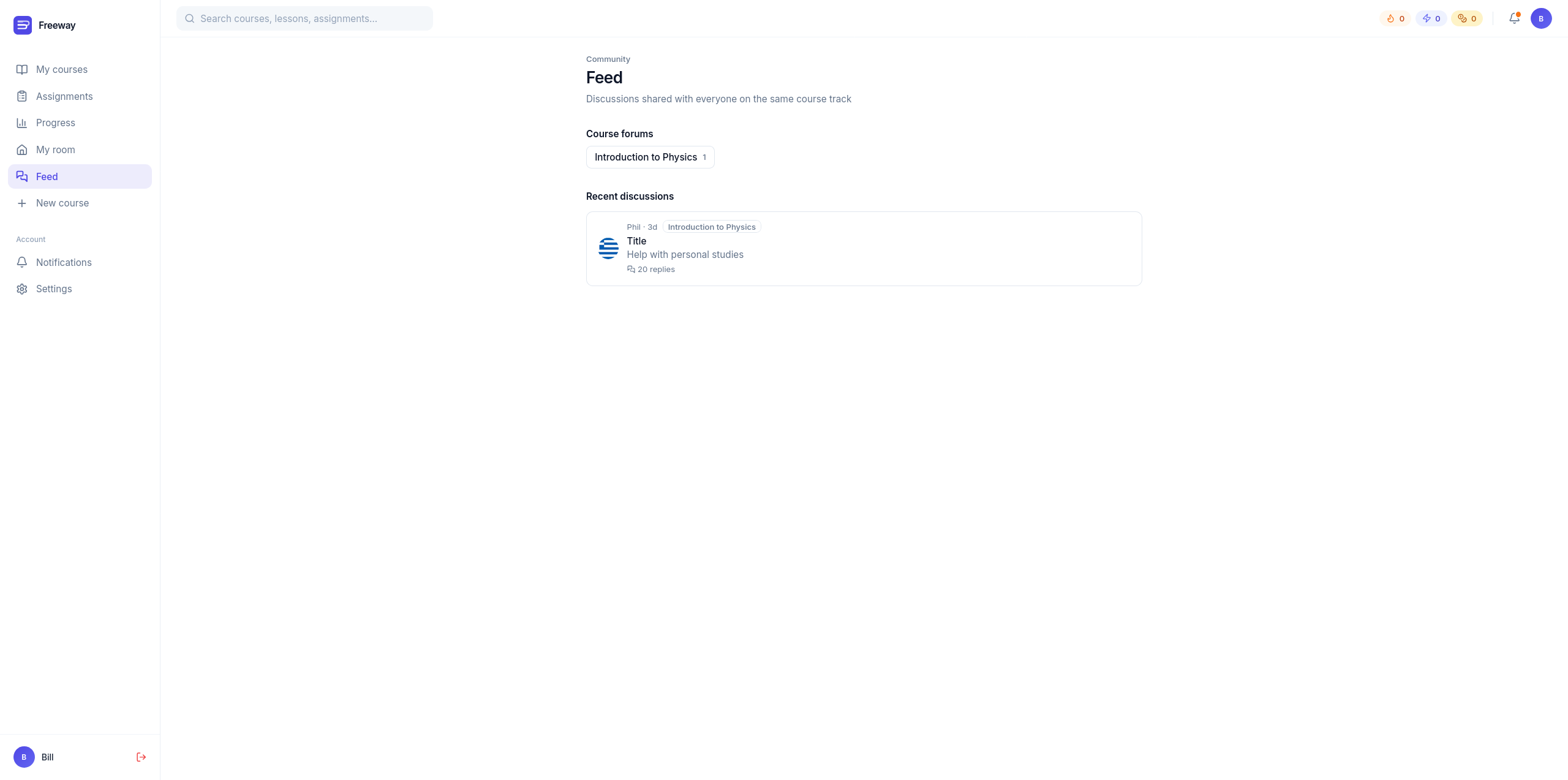
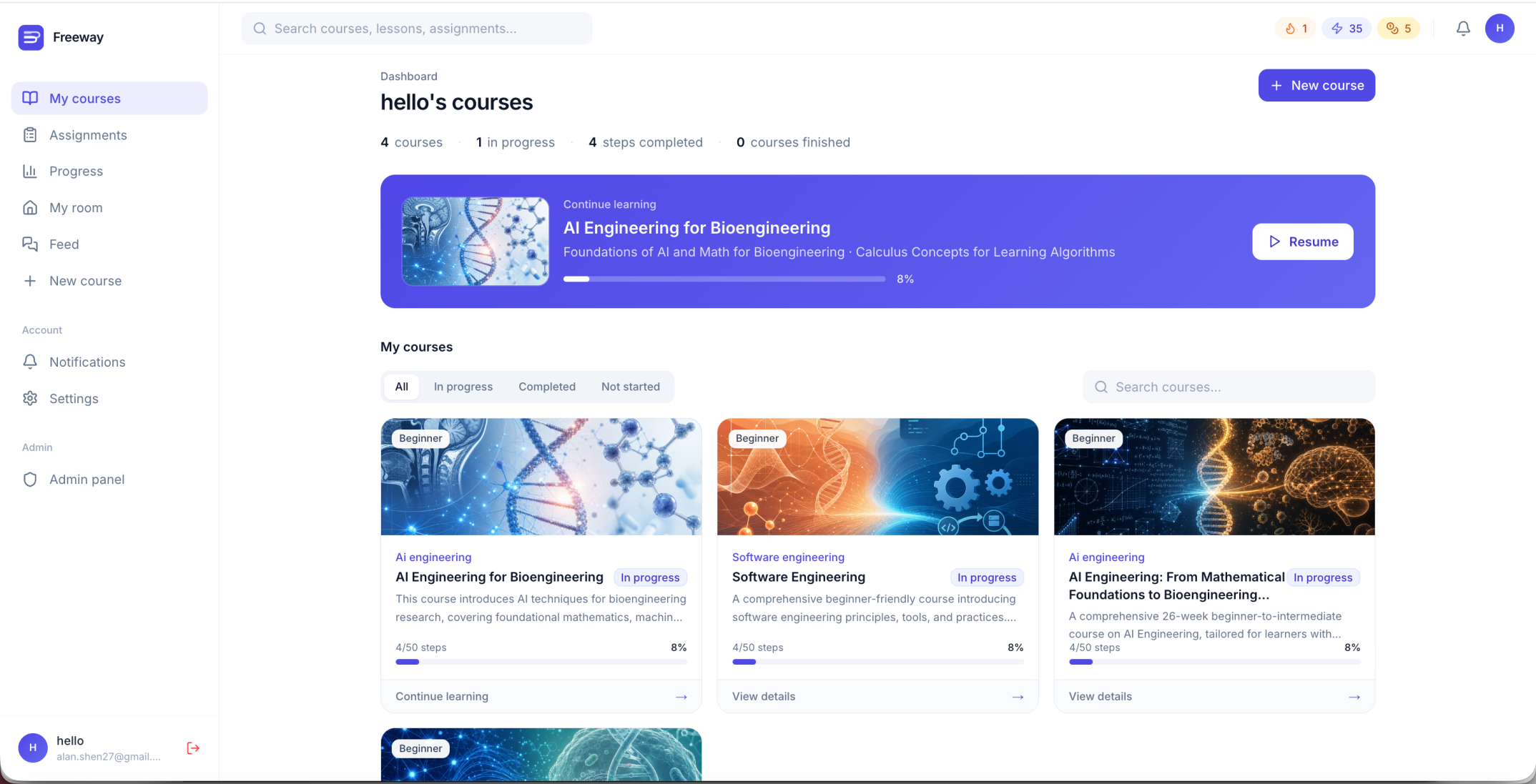
Tracks: Education AI, with AI Agents and Automation and Generative AI.
Where the idea came from
What if learning something new was as easy as pressing a button?
That question started as a joke between us and slowly stopped being one. If you've ever tried to pick up an engineering skill on your own, you know the drill: a YouTube playlist here, a half-finished tutorial there, a problem set from some university course you found on page three of Google. None of it fits together. The people who get real structure — a mentor, a curriculum, someone checking their work — usually paid a lot for it.
We also kept coming back to something every good teacher already knows: you don't really learn a concept by reading about it once. You read it, you see it, you watch it move, and then you try it yourself and get it wrong a few times. That loop is where retention comes from. So we built Freeway to generate that whole loop, not just a wall of text.
What Freeway does
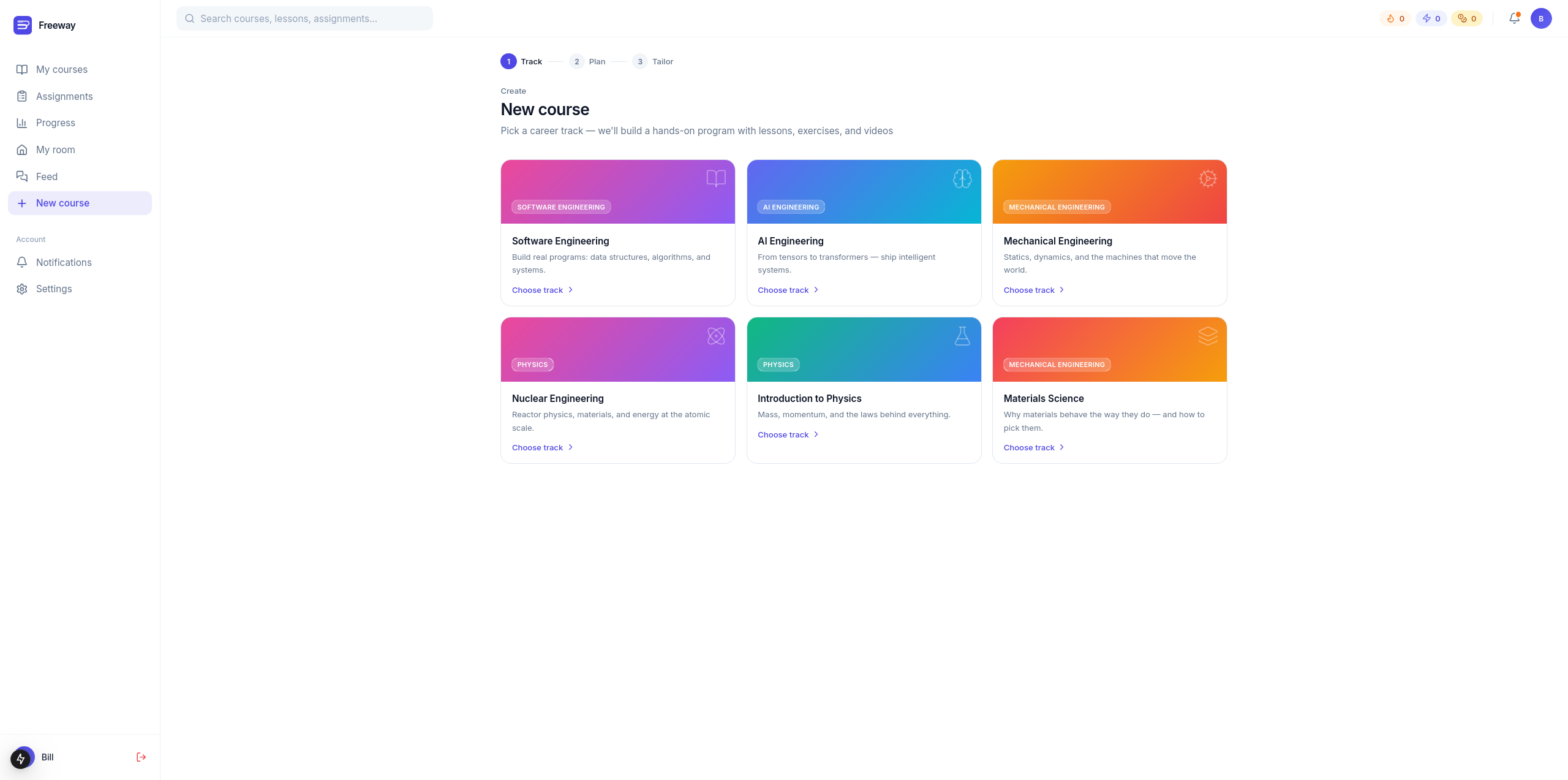
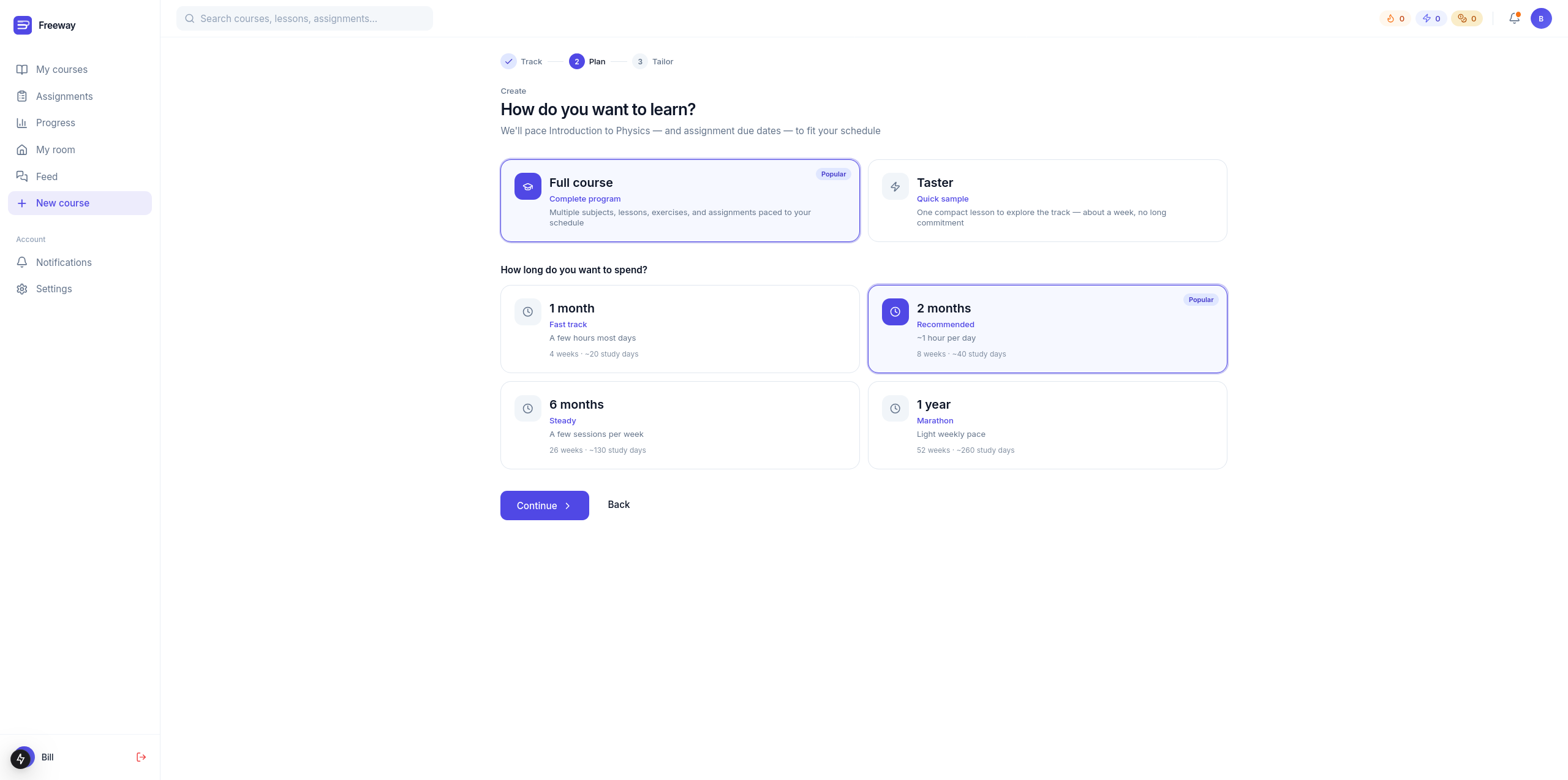
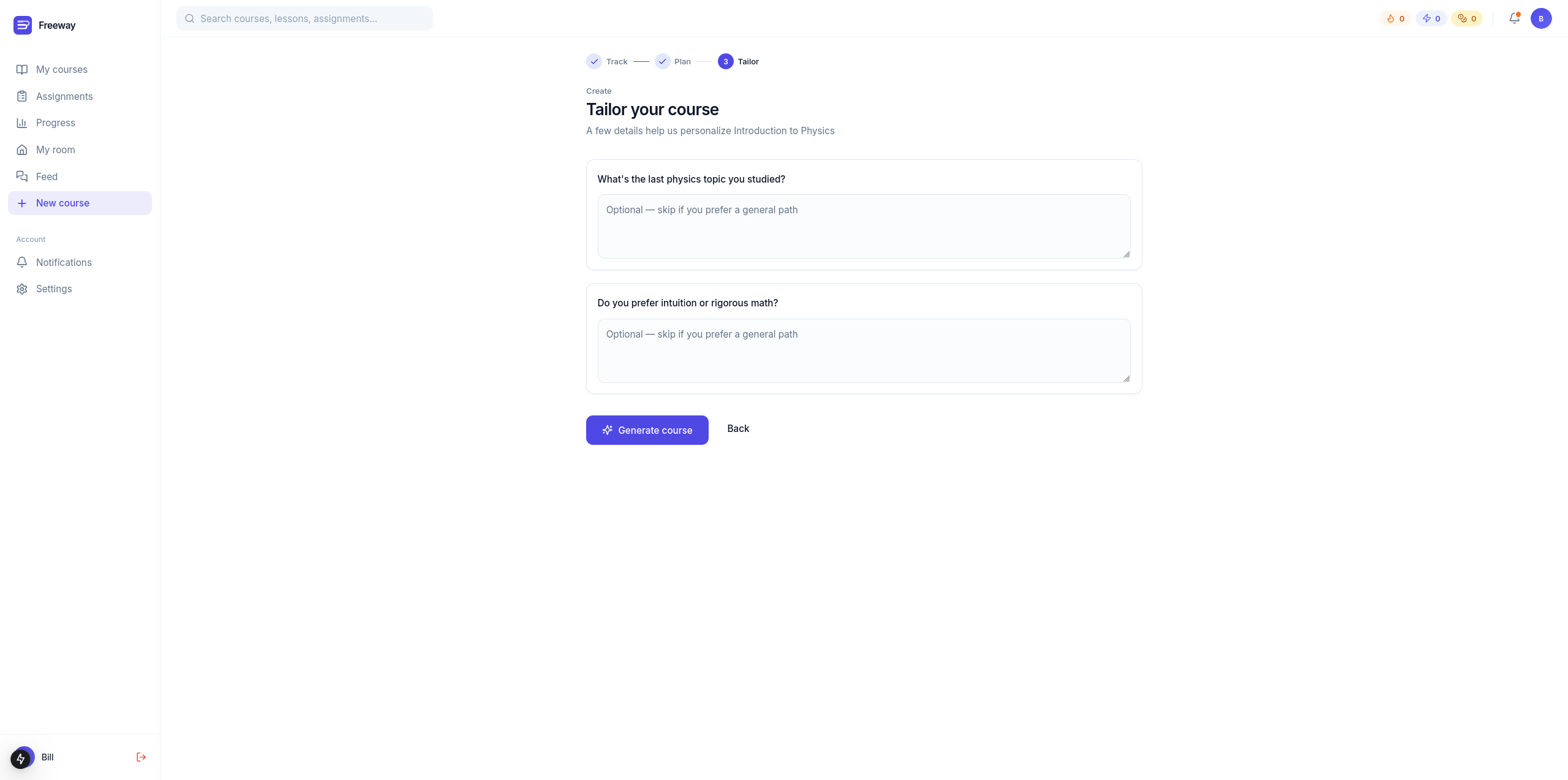
Pick a career path, answer a few onboarding questions, and Freeway builds you a personalized course. Not eventually — you watch it happen, with the pipeline streaming its progress while units and lessons appear one by one.
Each concept comes at you in several forms. There's proper lesson text with rendered math. There's imagery for context. Some lessons get an explainer video with comprehension questions pinned to specific timestamps, so you can't let it play in the background and call it studying. And every lesson ends with something you have to actually do.
That last part is the core of the whole product. Depending on the concept, you might be writing and running code, wiring up a circuit, drawing a free-body diagram, tuning a projectile or gear simulation, or answering a free-response question that gets graded against a rubric. There are quizzes, ordering problems, fill-in-the-blank, and matching too. Grading happens on the server, every time. You pass, you get XP, the lesson is marked complete. You can't skim your way through.
And when you get stuck, each course has a forum where a thread can point at the exact exercise you're fighting with. Replies can bring in an AI tutor that works Socratically — it asks you the question that gets you unstuck instead of just posting the answer, because posting the answer would defeat the point.
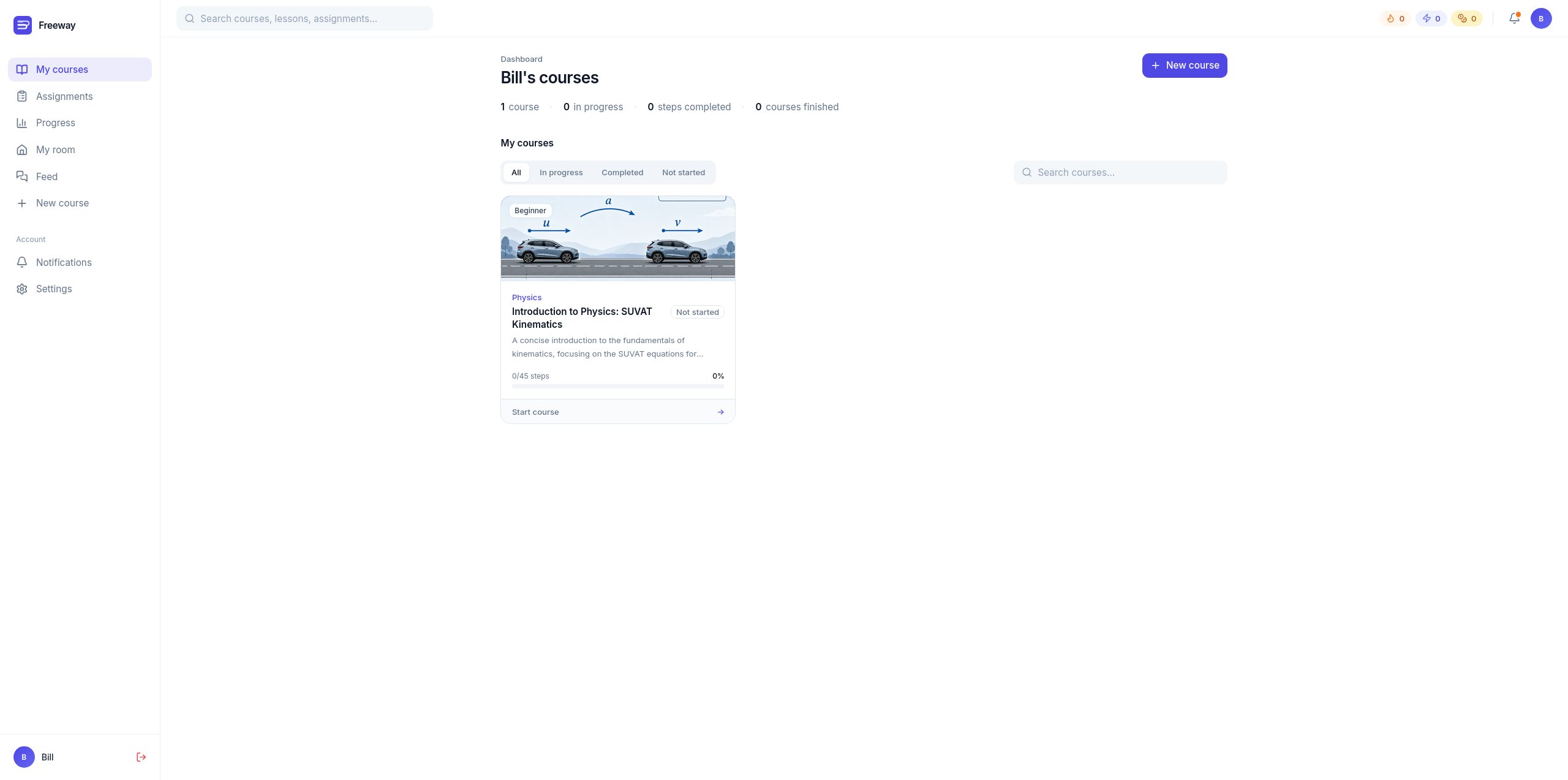
It all lives in a clean dashboard UI, with a bottom nav on phones and a sidebar on desktop. For this MVP we scoped to software, mechanical, and AI engineering, plus the physics and materials science that support them.
How Freeway uses AI
We use several models across the pipeline, picked per task rather than one model for everything.
The orchestrator does the planning. It reads your interests and answers, then maps the curriculum: units, concepts, lessons, and — importantly — which format each concept deserves. Some things need a video. Some need a simulation. Some are fine as text. It makes that call, then hands each piece to a small subagent that does one job: write this lesson, script this video, design these exercises.
Grading is its own AI task. Written answers get checked against a rubric server-side, so open-ended questions get real feedback instead of keyword matching. And the forum tutor is a separate prompt entirely, tuned to hint rather than solve.
Keeping each model on one narrow job is what makes a fully generated course feel coherent. When one giant prompt tries to do everything, quality gets muddy fast. We learned that the hard way in the first day.
How we put it together
A course request creates a job. It runs on a background worker through BullMQ, or inline if there's no queue available. The orchestrator decides the structure, dispatches to subagents, and writes progress into the job log as it goes. The generation screen polls that log, which is how you get the effect of watching your course assemble itself. It's a small thing, but it's the moment in the demo where people lean in.
Technologies used
- Framework and UI: Next.js 15 (App Router, React Server Components), React 19, TypeScript, Tailwind, shadcn/ui, Framer Motion
- AI: DeepSeek V4 Flash for the orchestrator, subagents, grading, and the tutor, with V4 Pro as a planning fallback; Z.AI GLM-4.6V for vision QA; OpenAI
gpt-image-1for image generation; ElevenLabs for video narration — all wired through the OpenAI SDK - Data and auth: Supabase (Postgres, Auth via
@supabase/ssr, Storage), with Prisma - Background jobs: BullMQ and Redis, with an inline fallback
- Media and content: Manim for explainer videos, SERP API for imagery, KaTeX for math, Monaco for the code editor
- Development: We used AI-driven development workflows with human review, with Cursor AI (Composer 2.5, Fable 4, Opus 4.8) for fast prototyping and reiteration with human review; QA was completely done without AI.
The hard parts
Keeping content coherent across formats was harder than generating any single format. The lesson text, the video script, and the exercises all need to teach the same concept the same way, and early on they'd drift — the video would explain a term the text never introduced. The orchestrator-and-subagents structure is what fixed that, since the plan travels with every piece.
The exercises took the most raw effort. "Interactive" is easy to say and slow to build: each type needed a format the AI could generate reliably, a renderer, and a server-side grader. Circuits and the physics simulations were the worst offenders and also the ones we're happiest with.
Manim was its own adventure. Generated scenes lean on LaTeX for equations, and rendering fails in all sorts of creative ways, so we built a themed in-app player as a backstop to keep generation from breaking on a video section.
What we're proud of
The pipeline itself — a few onboarding answers in, a full structured course out, taught through text, visuals, video, and exercises you have to pass. The sheer range of exercise types, all server-graded. The forum tutor that refuses to just give you the answer. And honestly, the fact that the UI feels like a finished product on both a phone and a laptop.
What we took away
Multimodality earns its keep. Concepts stuck for us when we hit them three or four ways, and the exercises did more for retention than any amount of well-written text.
Small, focused AI agents beat one big one. Every time we merged responsibilities into a single prompt, quality dropped and debugging got miserable.
And the moment you let people submit arbitrary text and code, server-side grading and sandboxing stop being nice-to-haves.
Where Freeway goes next
More hands-on, more visual. We want deeper circuit building, mechanical assemblies you put together piece by piece, and simulations with more knobs to turn — the goal is for most of a course to be something you do, not something you read. Beyond that: expanding past the MVP fields, generating related courses on demand instead of leaving them as drafts, and hardening the coding sandbox for fully untrusted users.
Built With
- katex
- manim
- nextjs
- node.js
- openai
- postgresql
- prisma
- react
- supabase
- tailwind
- typescript


Log in or sign up for Devpost to join the conversation.