FreeMed-AI — Making Health Guidance Easier to Understand
FreeMed-AI is an AI-powered health guidance platform designed to help people better understand their symptoms, health concerns, and when they may need professional medical care.
Health information can be difficult to navigate. People may not know how to interpret symptoms, how concerning a situation might be, or what their next step should be. At the same time, unrestricted AI health advice can create serious risks when responses are overly confident, unsupported, or unclear about their limitations.
We built FreeMed-AI to explore a more structured and safety-conscious approach.
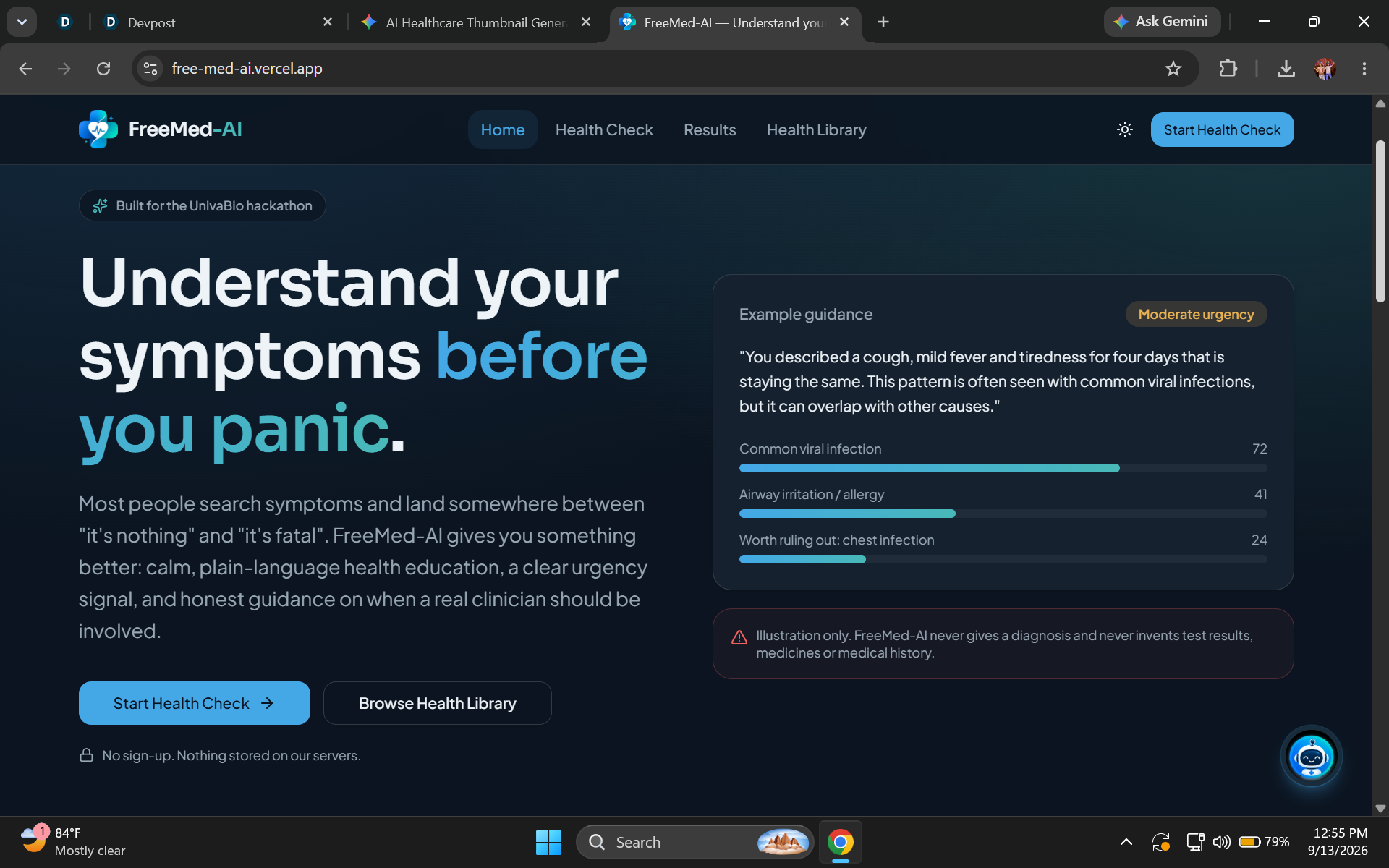
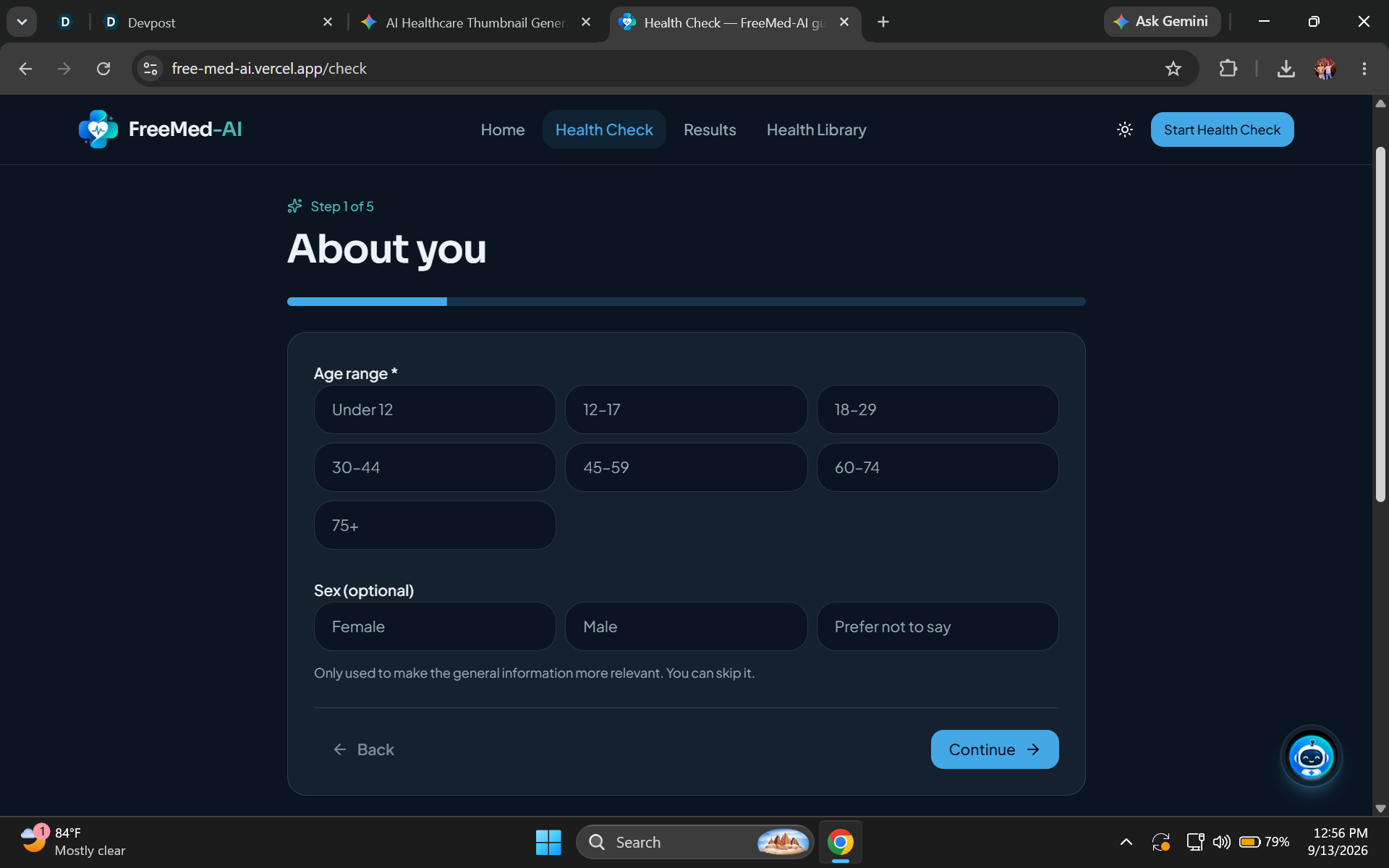
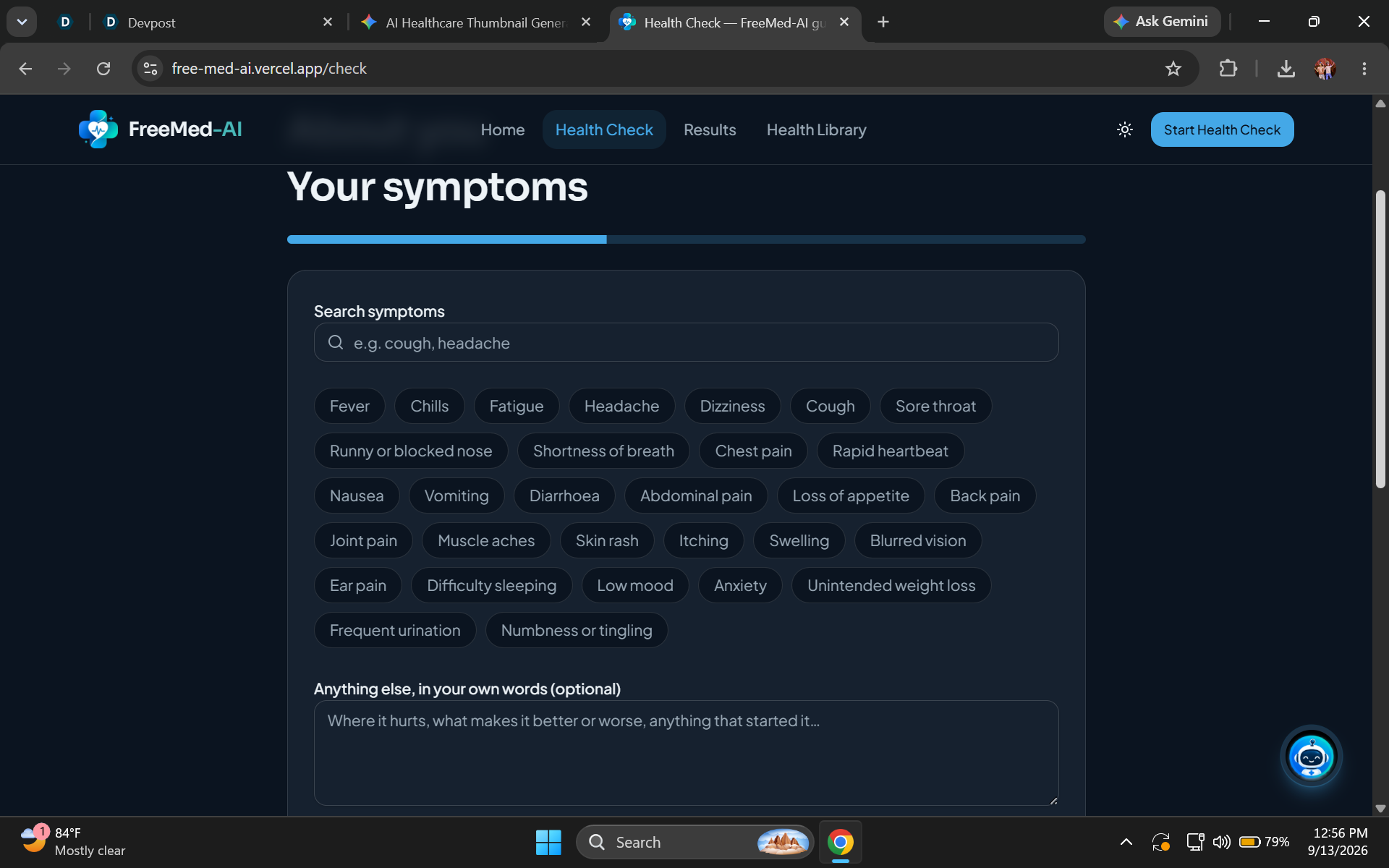
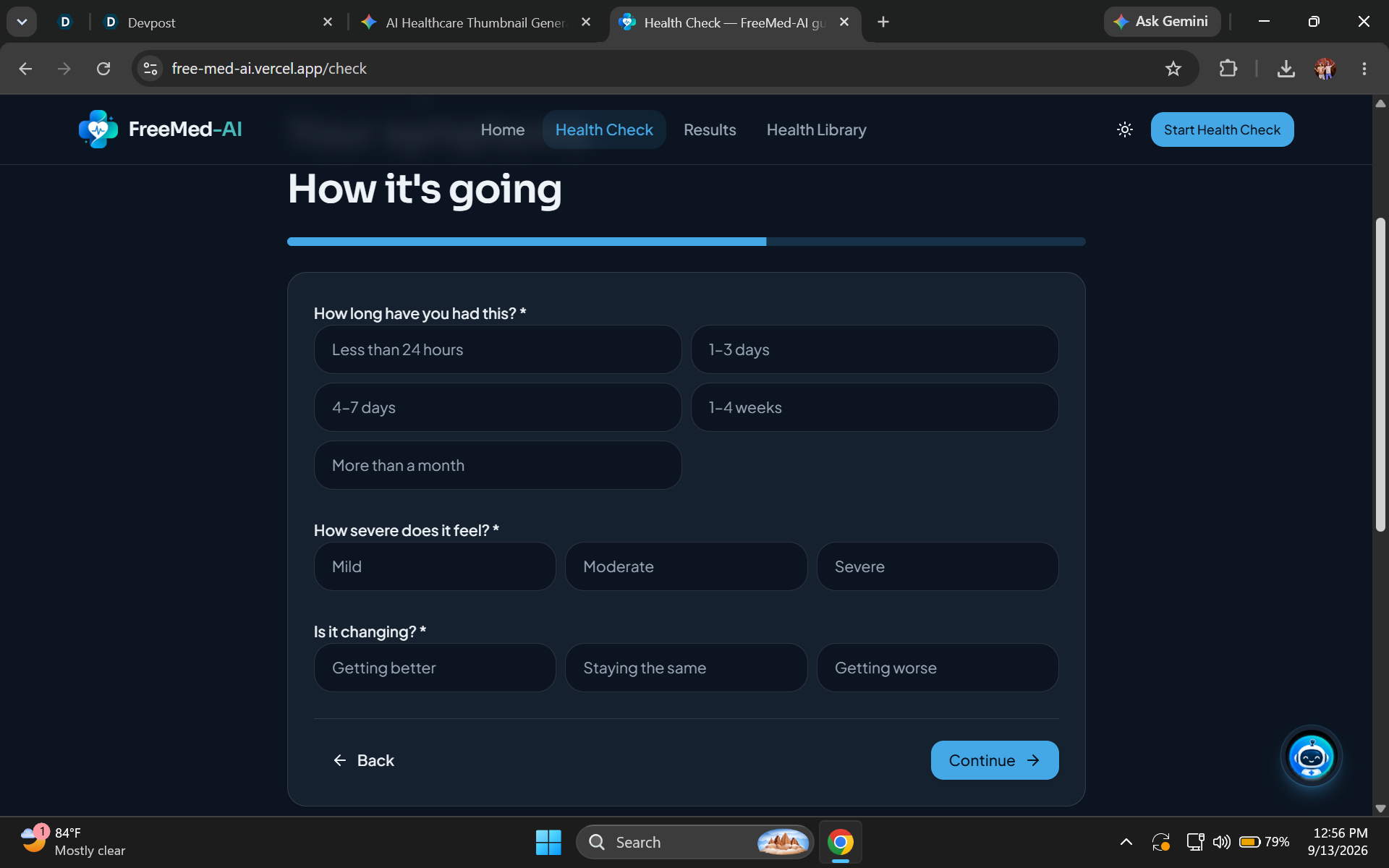
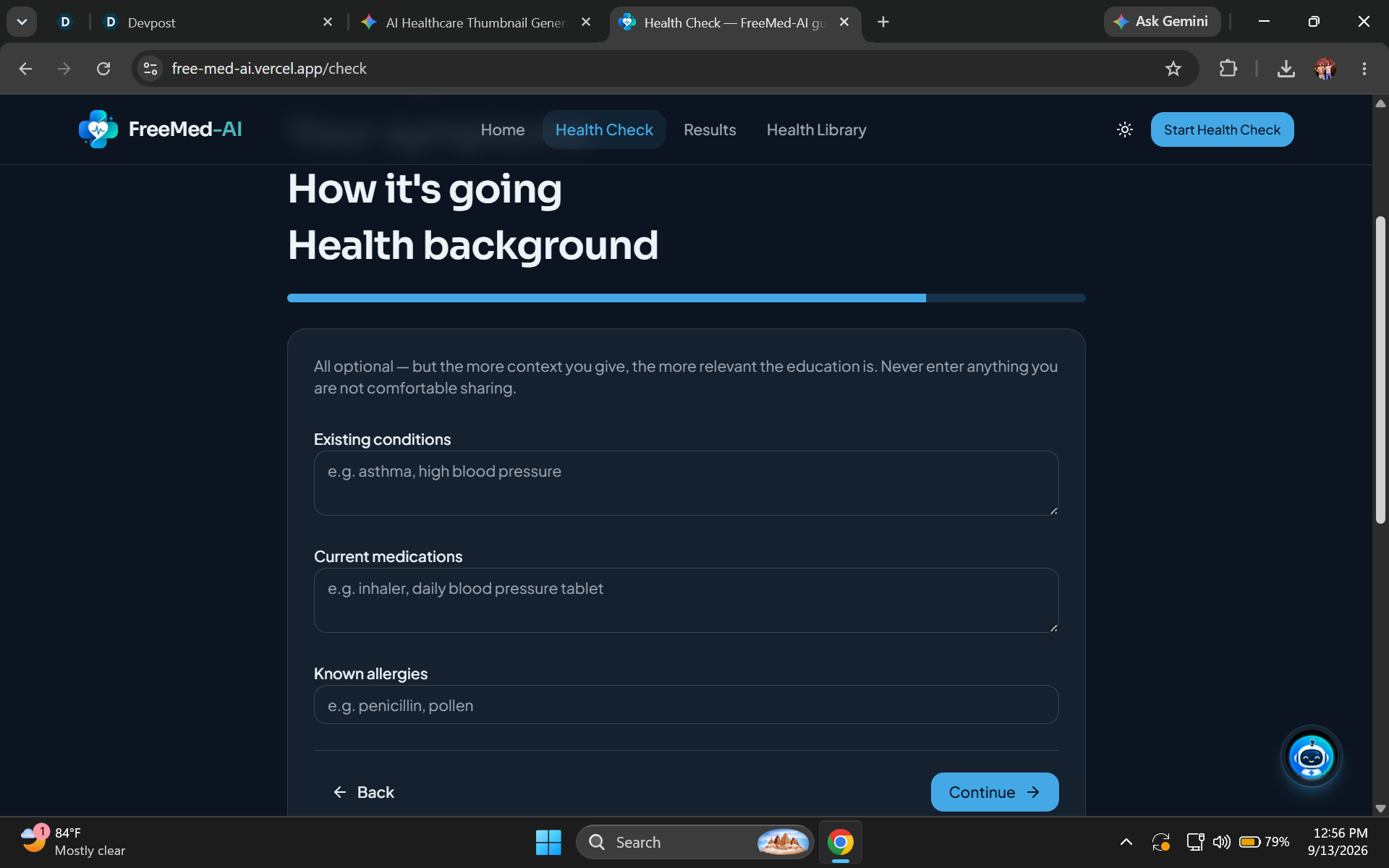
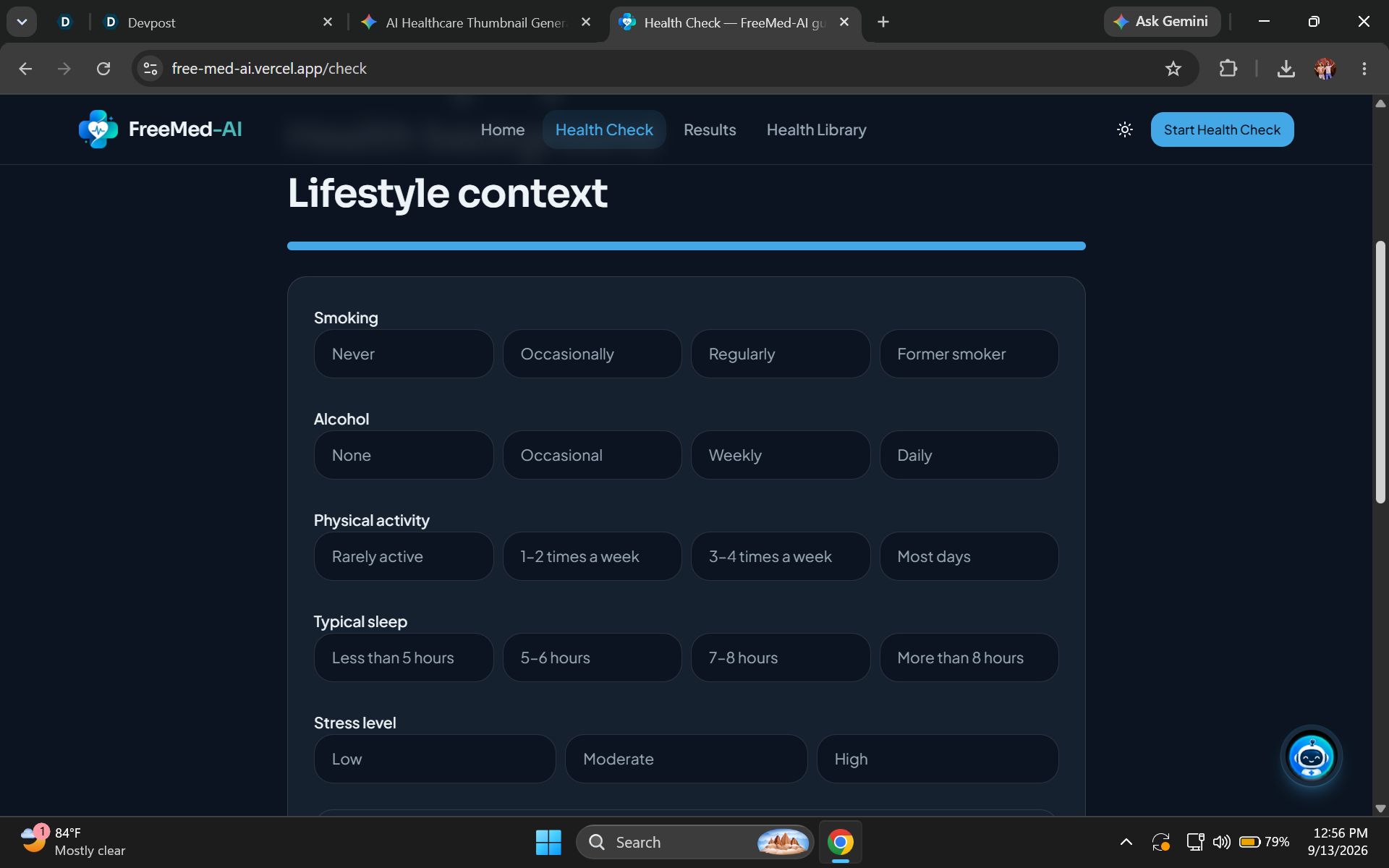
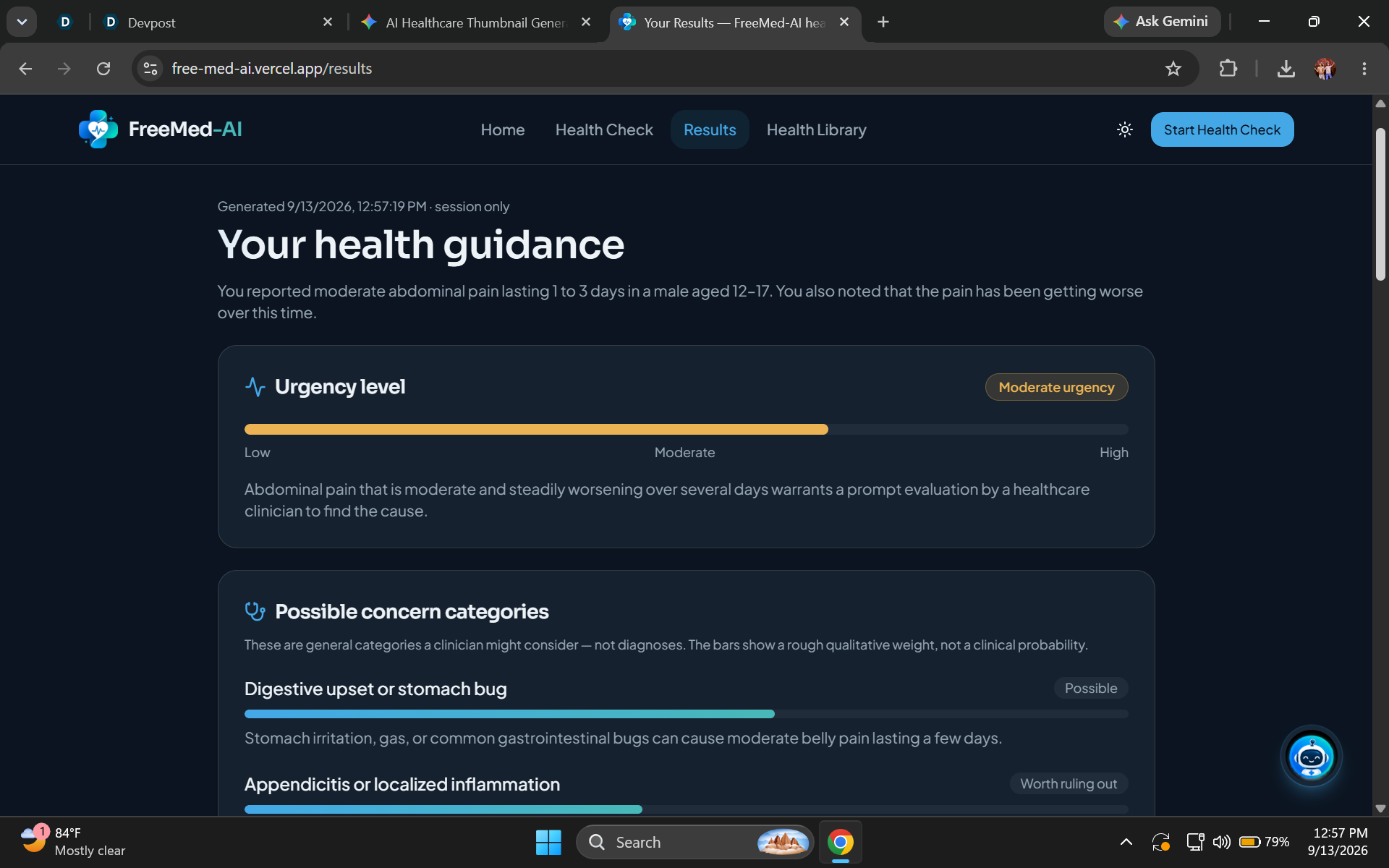
Instead of simply providing a chatbot response, FreeMed-AI guides users through a structured health check. Users can enter their symptoms, how long they have been experiencing them, severity, and optional health context. Gemini then analyzes the submitted information and returns structured educational guidance, including possible concern categories, urgency information, suggested next steps, and warning signs to watch for.
The goal is not to replace a doctor or provide a diagnosis. The goal is to help users better understand their situation and make more informed decisions about seeking appropriate professional care.
What FreeMed-AI Does
FreeMed-AI provides a guided workflow for understanding health concerns:
Describe → Analyze → Understand → Assess Urgency → Take the Next Step
Users provide relevant information about what they are experiencing. The AI processes that information and presents the response in a structured format rather than an unstructured block of generated text.
The platform can provide:
- Educational explanations of submitted symptoms and health concerns
- Possible concern categories rather than definitive diagnoses
- Information about potential urgency
- Suggested next steps
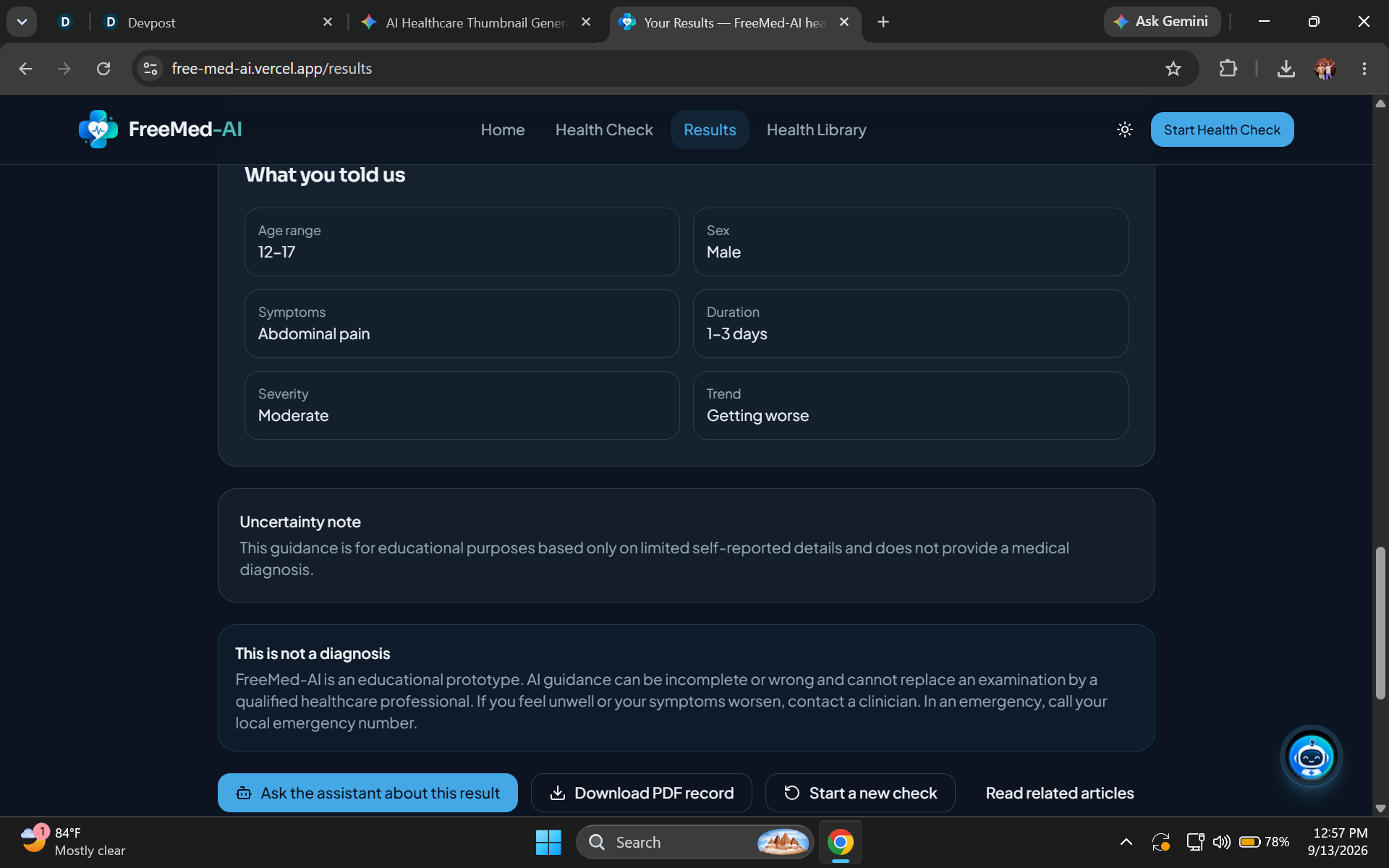
- Warning signs that may require prompt professional attention
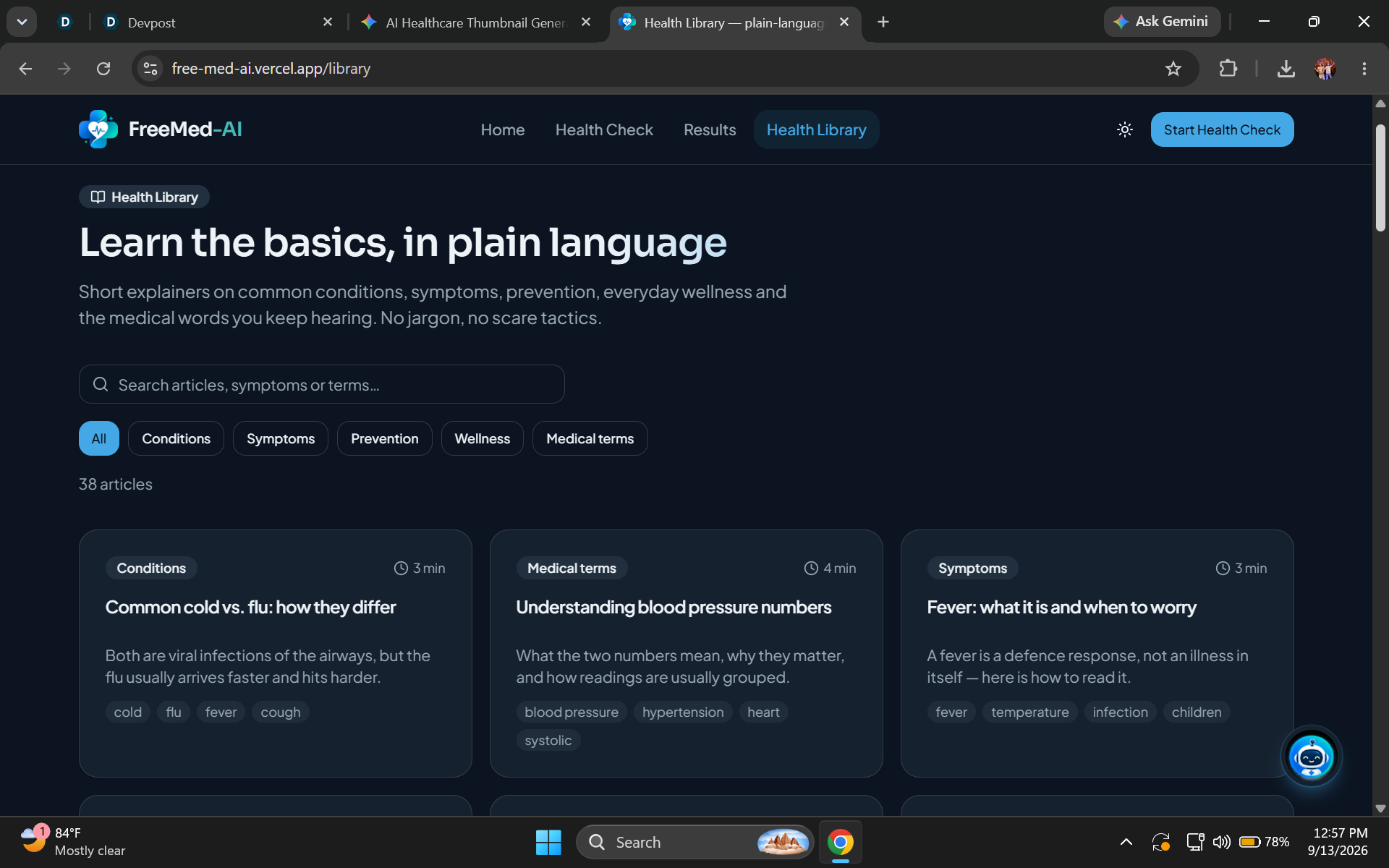
- A health library for additional educational information
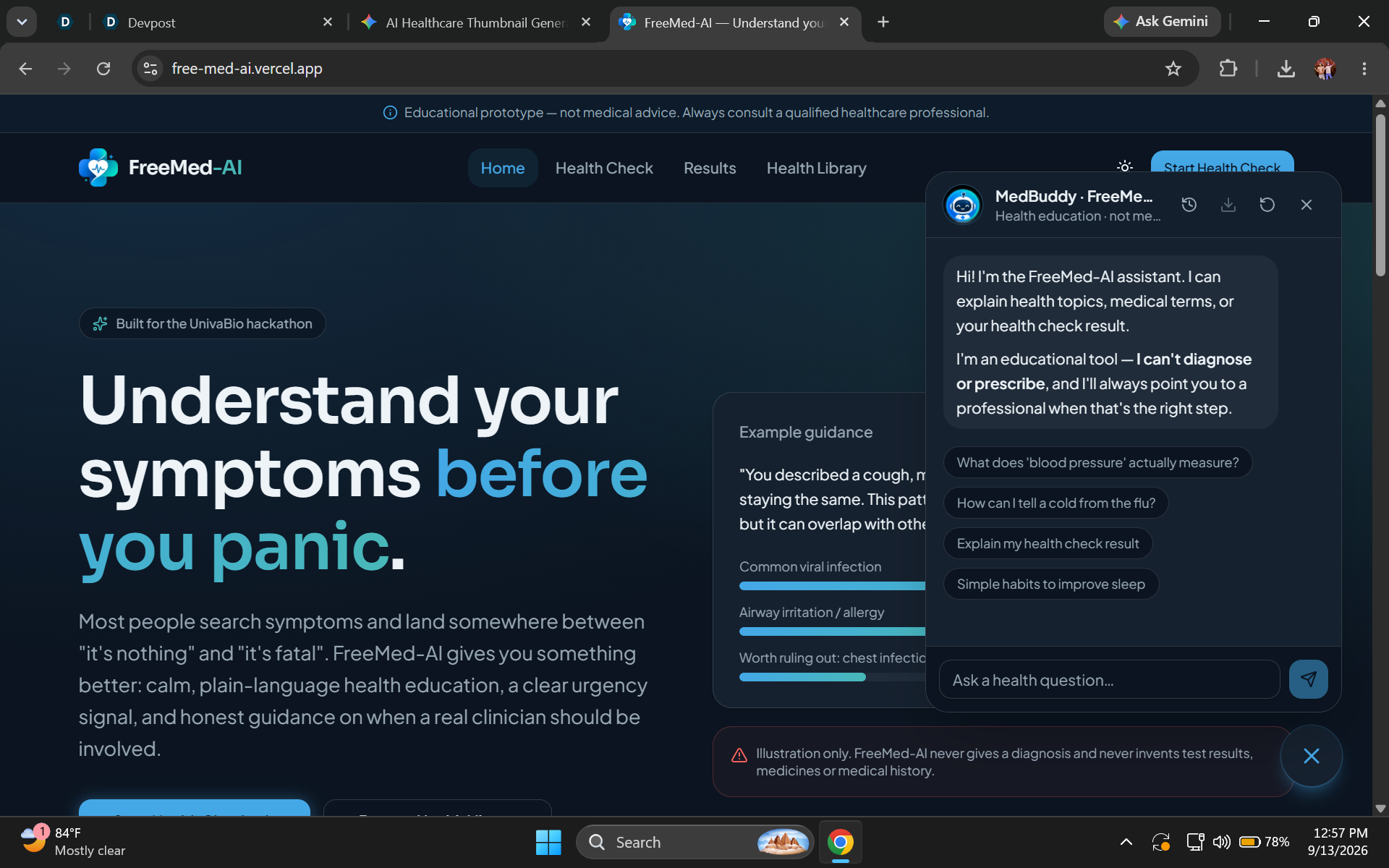
- A global AI assistant for explaining medical terms and helping users understand their results
This creates a more useful experience than simply asking an AI, “What is wrong with me?”
The Problem
Finding understandable health information is harder than it should be.
People often encounter medical terminology they do not understand, conflicting information across different websites, or uncertainty about whether a symptom is something they can monitor or something that deserves professional attention.
At the same time, AI makes health information much more accessible—but accessibility alone is not enough. In a sensitive domain such as healthcare, an AI system also needs to communicate uncertainty and recognize situations where professional or emergency care may be appropriate.
FreeMed-AI was built around this problem:
How can AI make health information easier to understand while being transparent about what it cannot safely determine?
Our Approach
The key idea behind FreeMed-AI is structured guidance instead of unrestricted AI answers.
The system does not simply ask Gemini to generate a paragraph about a user's symptoms.
Health-check responses are generated using a structured format and validated with Zod, helping the application consistently handle important fields such as guidance, urgency information, next steps, and warning signs.
This gives the product a predictable interface while allowing Gemini to provide the intelligence behind the experience.
We also designed the system to emphasize uncertainty and educational framing rather than presenting AI output as medical certainty.
Safety Was a Core Design Challenge
Building an AI product for healthcare is fundamentally different from building a general-purpose AI application.
One of our biggest challenges was making the AI useful without encouraging unsupported medical claims or giving users a false sense of certainty.
We therefore focused on several safety-oriented principles:
- Structured AI responses
- Schema validation with Zod
- Clear uncertainty language
- Warning-sign detection
- Urgency guidance
- Explicit safety messaging
- Educational rather than diagnostic framing
- Temporary browser-based session data rather than a database
FreeMed-AI is an educational prototype, not a diagnostic or treatment tool. It does not replace a qualified healthcare professional.
How We Built It
FreeMed-AI is a responsive web application built with:
- React
- TypeScript
- Tailwind CSS
- TanStack Start
- Google Gemini
- Zod
Google Gemini provides the core AI capabilities for analyzing submitted health information and generating educational guidance.
The application uses structured JSON responses that are validated with Zod before being used by the interface. This helps bridge the gap between flexible generative AI and the predictable data structures required by a real application.
Session information is kept temporarily in the browser rather than being stored in a database.
Why This Is More Than an AI Demo
The AI model itself is only one part of FreeMed-AI.
The product combines:
Structured user input + AI analysis + validated responses + urgency guidance + warning signs + next steps + educational resources
into a single workflow.
That is important because the real problem is not simply generating medical text. The real problem is helping a person make sense of health information responsibly.
FreeMed-AI turns general-purpose AI capabilities into a focused product designed around a real-world need.
What We Learned
Building FreeMed-AI taught us that applying AI to sensitive domains requires more than getting impressive model outputs.
The hardest part was designing the system around the model's limitations.
We learned the importance of:
- Structuring AI outputs
- Validating generated data
- Communicating uncertainty
- Designing for safety
- Giving users useful next steps
- Clearly defining what the product should and should not do
This shifted our thinking from “Can AI answer this?” to “How can AI help while remaining responsible about what it cannot know?”
What's Next
FreeMed-AI is currently an educational prototype, but there is significant room to improve it.
Future versions could include:
- More evidence-based educational resources
- Stronger medical-domain evaluation
- Multilingual health guidance
- More comprehensive safety-focused features
- Improved warning-sign detection
- Better transparency around supporting information
- Expanded health education content
Our long-term goal is to build a health-information experience where AI makes complex information easier to understand without pretending to replace professional medical care.
Our Vision
Healthcare information should be understandable, accessible, and responsible.
FreeMed-AI uses AI to help people understand their health concerns, recognize when professional care may be important, and find clearer next steps—while staying honest about the limits of AI.
Built With
- ai
- gemini
- query
- react
- tailwing-css
- tanstack-start
- typescript
- zod


Log in or sign up for Devpost to join the conversation.