Inspiration
This app was inspired by observing friends explore dance and the challenges many beginners face when stepping into the art form. While dance is often described as freeing and joyful, there can be significant pressure to “get it right,” which becomes the biggest barrier to entry for new dancers.
Watching friends challenge themselves by taking dance classes revealed how transformative movement can be, not only as a skill but also as a way to build confidence and express emotion. At the same time, early dancers are often told to “get out of your head” and simply feel the music, yet that advice can feel abstract and difficult to apply. Even when the steps are technically correct, the movement can still feel off—lacking a natural flow or appearing stiff when viewed in recorded dance videos.
These moments raise an important question: if dancers can learn the choreography, why doesn’t the movement always feel right? This curiosity led to a deeper interest in how the body experiences movement and in the idea that dance progress may not only be about visual perfection but also about internal awareness—how the body feels, responds, and eventually finds its rhythm.
What it does
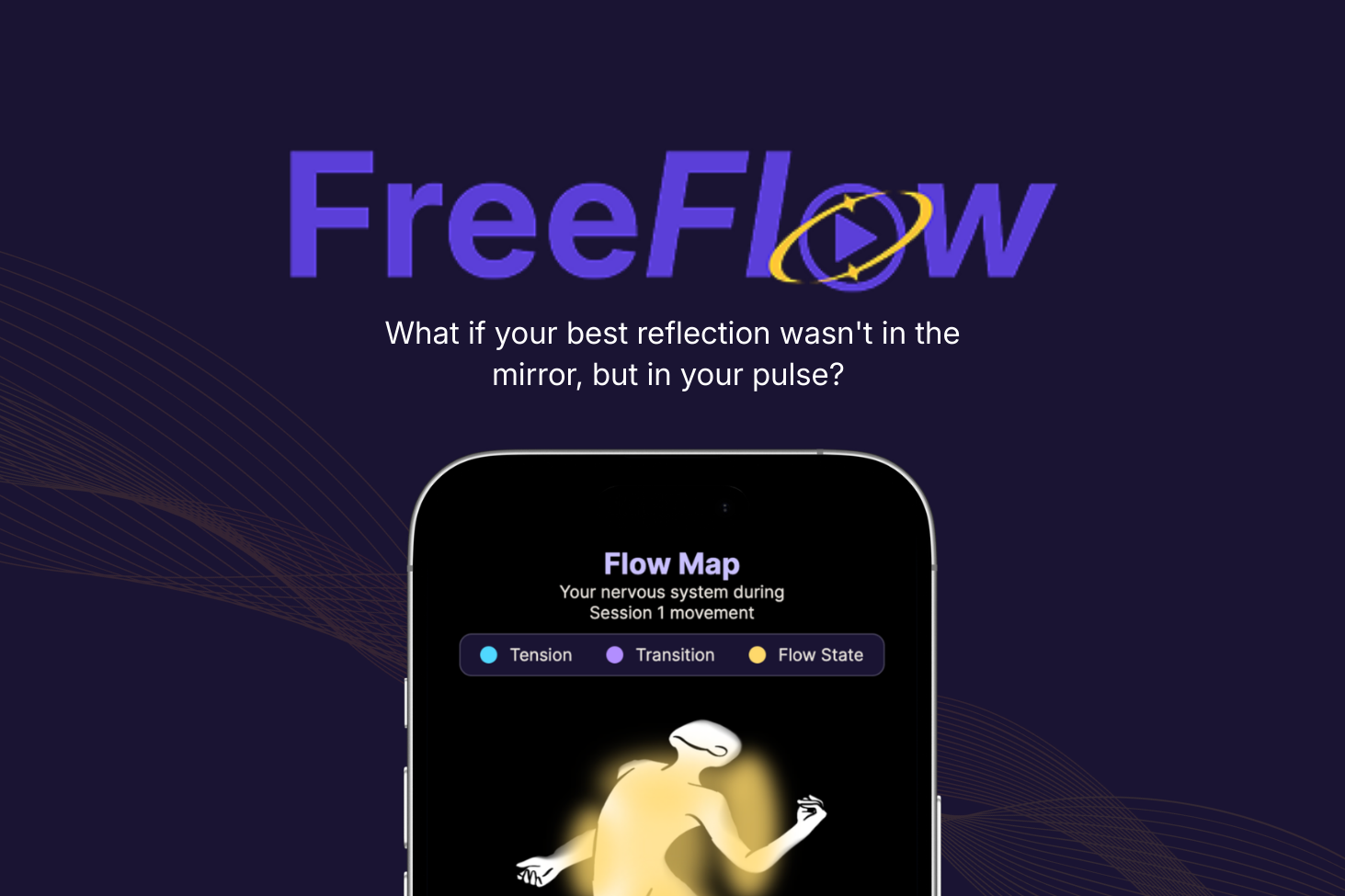
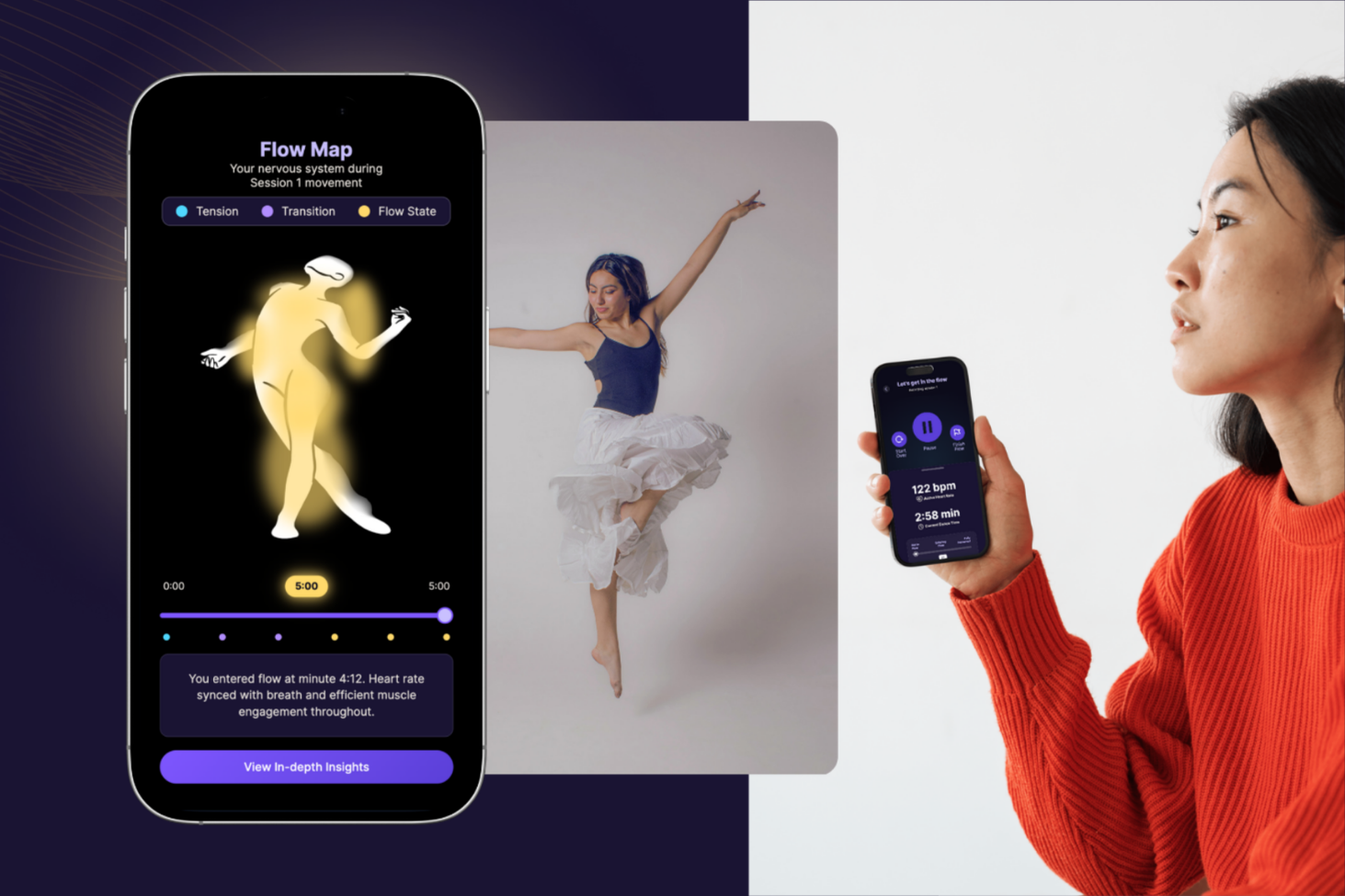
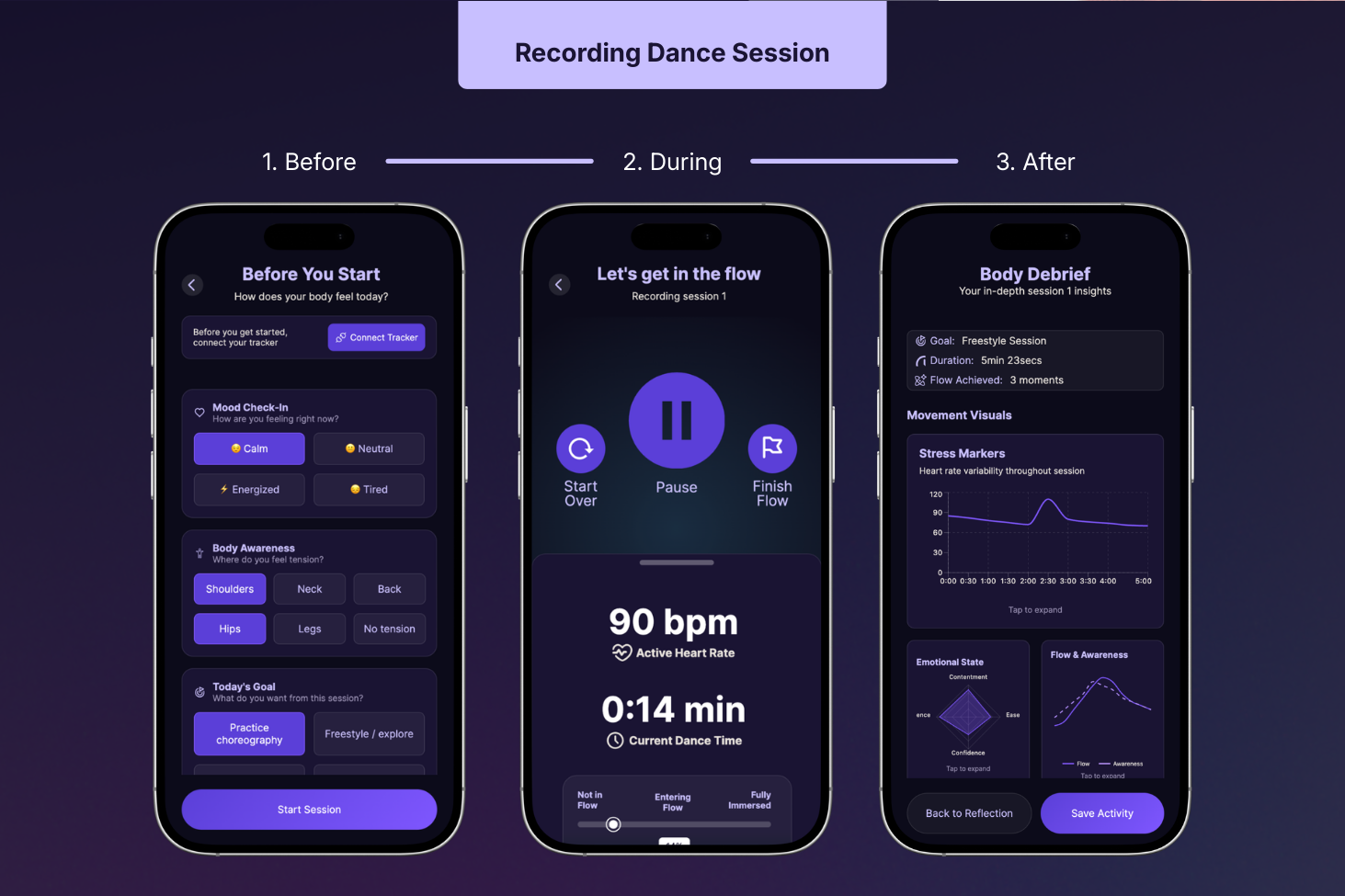
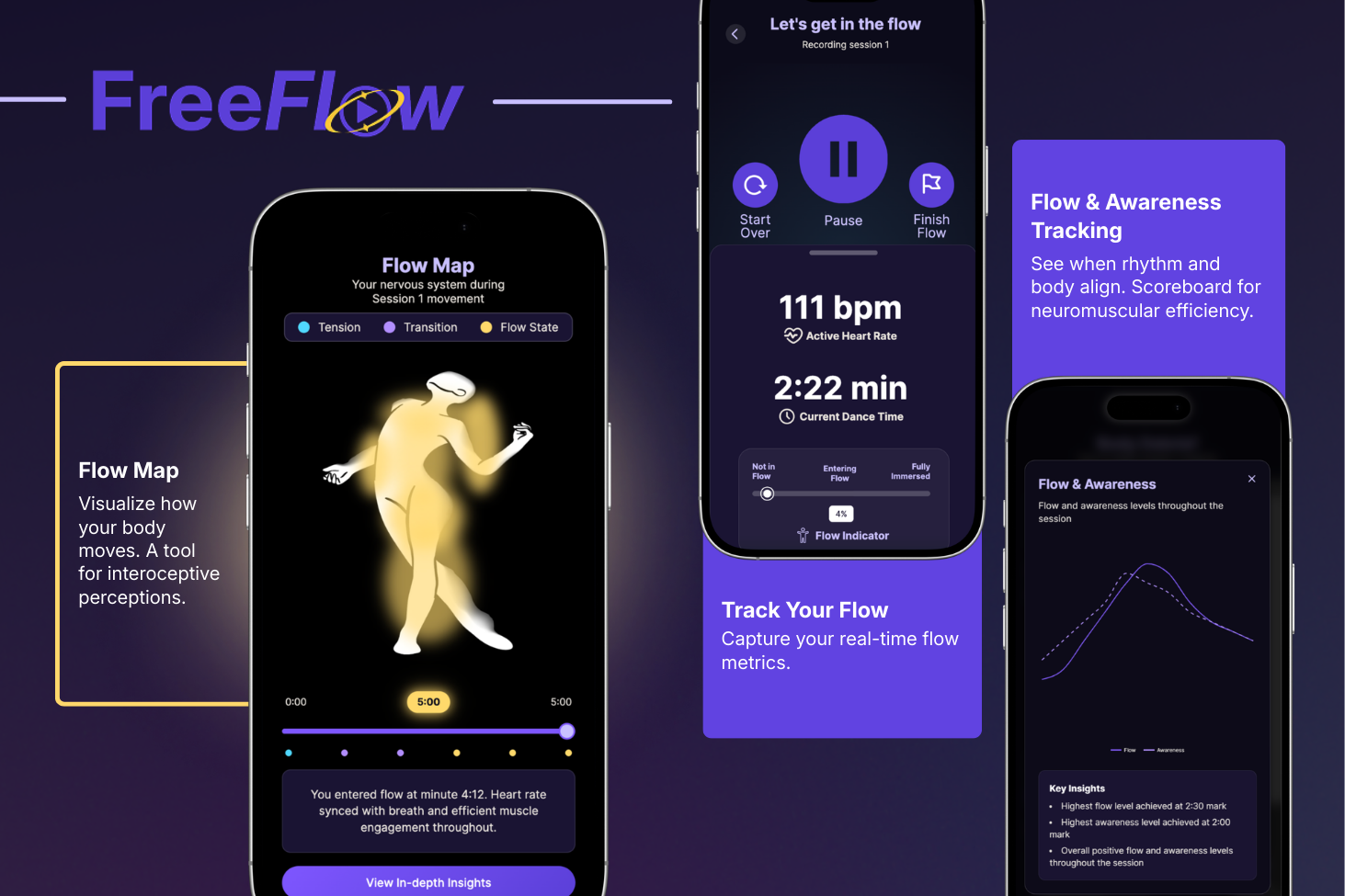
We designed FreeFlow—a biometric “internal mirror”—to solve the cycle of visual self-criticism and overthinking for dancers of all levels. This tool makes progress visible by tracking not just how you move, but how you feel about moving. FreeFlow’s features include:
- Measurement of kinesthetic flow state and proprioception.
- Capture of health metrics and sensory receptors beyond our five senses.
- Personalized and optimized feedback to reach a “flow state”.
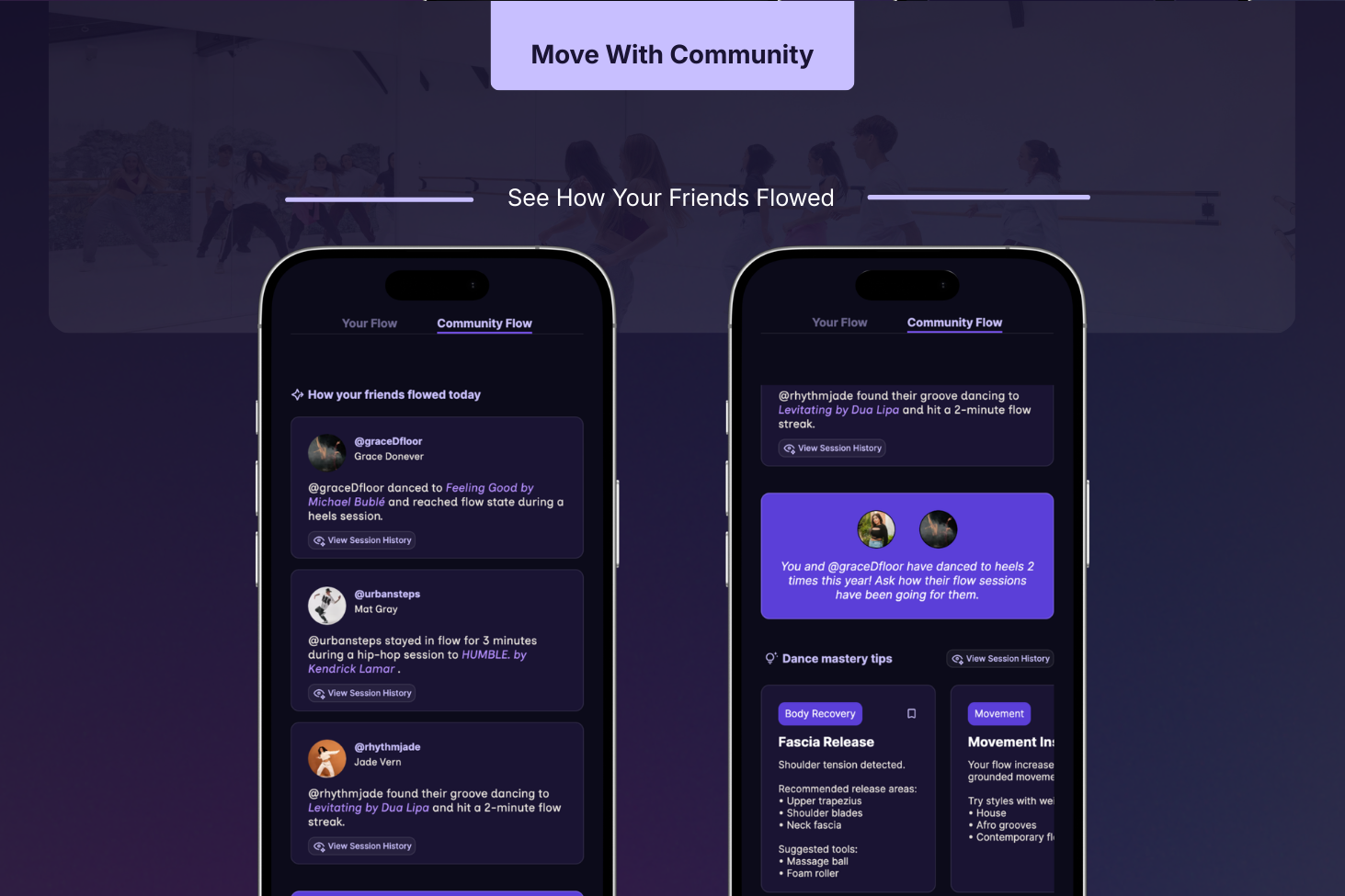
- Community Flow functionality.
All you need is to wear the external FreeFlow tracker and connect it to the app. The data output is personalized to each individual, giving users a deeper understanding of how their nervous system actually responds to movement stimuli. This information is further used to provide optimized how-tos, such as:
- Pre-Session Rituals
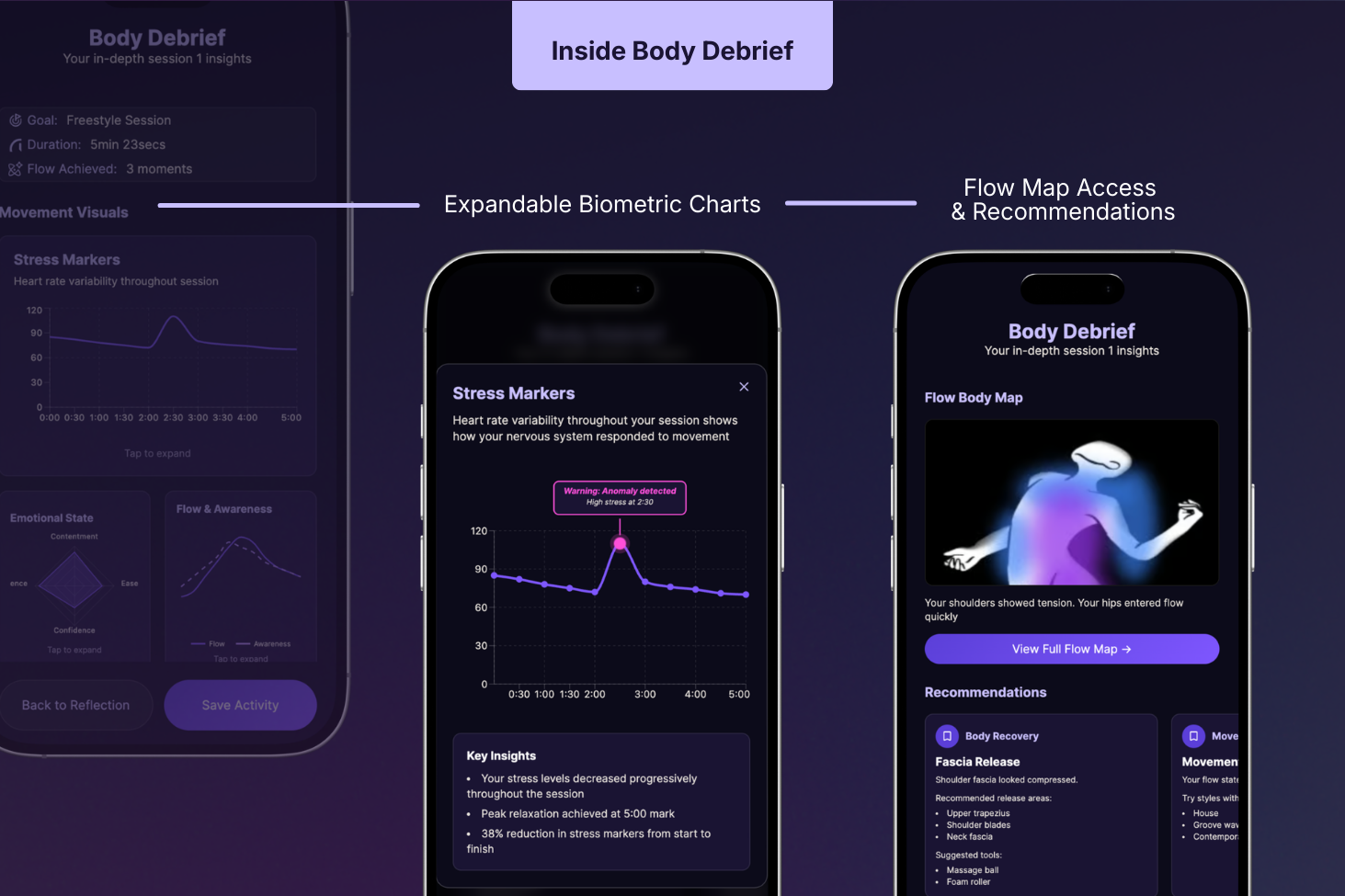
- Dance Recovery Tips
Beyond the data, we ensured a space for community, an essential element of dance. As you watch your friends reach flow state in their sessions, you’ll naturally gain inspiration to follow suit.
How we built it
- FigJam: For ideation and brainstorming.
- Figma Design: For Lo-Fi wireframes and the design system.
- Gemini: For the research plan.
- Google Forms: For user surveys.
- ChatGPT Auto: For translating human prompts to Figma Make AI-ready prompts.
- Canva: For body elements, the FreeFlow logo, and favicon.
Challenges we ran into
- Body heatmap glow: The interface initially struggled to recognize specific body parts.
- Lo-Fi design layout: Experienced integration issues when moving designs into Figma Make.
- Code Warnings: Encountered errors while building the interactive charts.
Accomplishments that we're proud of
- Flow body heatmap: Successfully visualizing internal energy.
- Biometric charts: Developing expanded features like the scrubbable timeline.
- Stress Marker chart: Including a warning anomaly highlight.
- Team efficiency: Designing a high-fidelity app with only 2 members under tight constraints.
- Influence: Feeling like we built a tool that can truly change a dancer's mindset.
What we learned
We would love to use FreeFlow in real life! We also discovered that while Figma Make is a powerful learning tool, it carries a significant learning curve.
What's next for FreeFlow: Ready. Set. Flow.
- Create the physical tracker and pair it seamlessly to the app.
- Conduct more user research with dancers of all levels to refine our biometric algorithms.
Built With
- canva
- chatgpt
- figma
- figmamake
- gemini


Log in or sign up for Devpost to join the conversation.