-
-
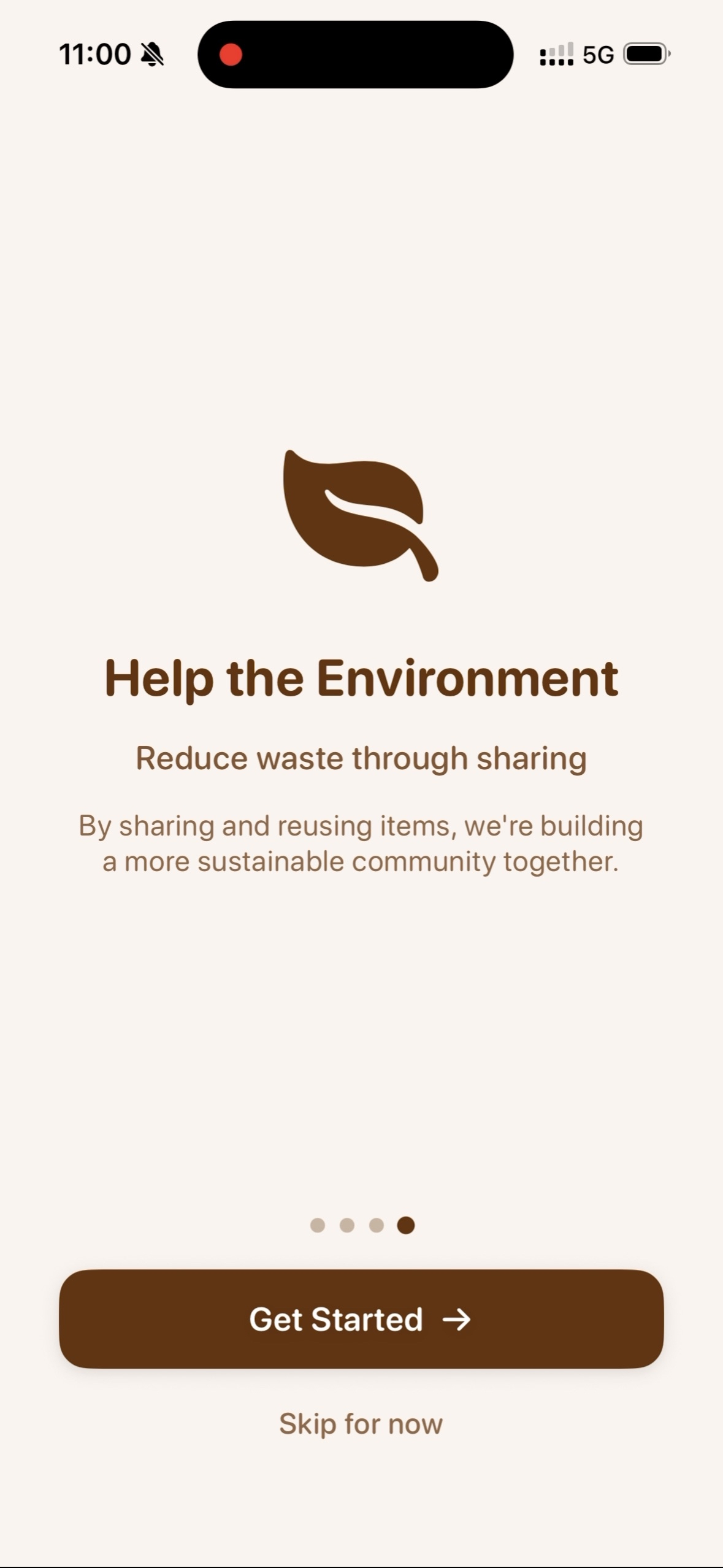
Onboarding Page 1
-
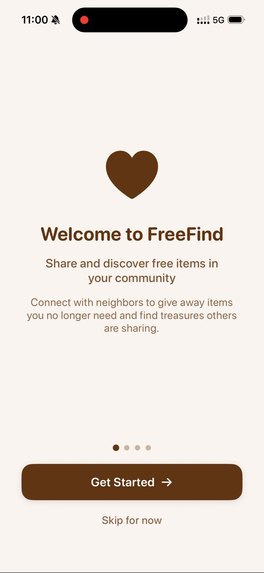
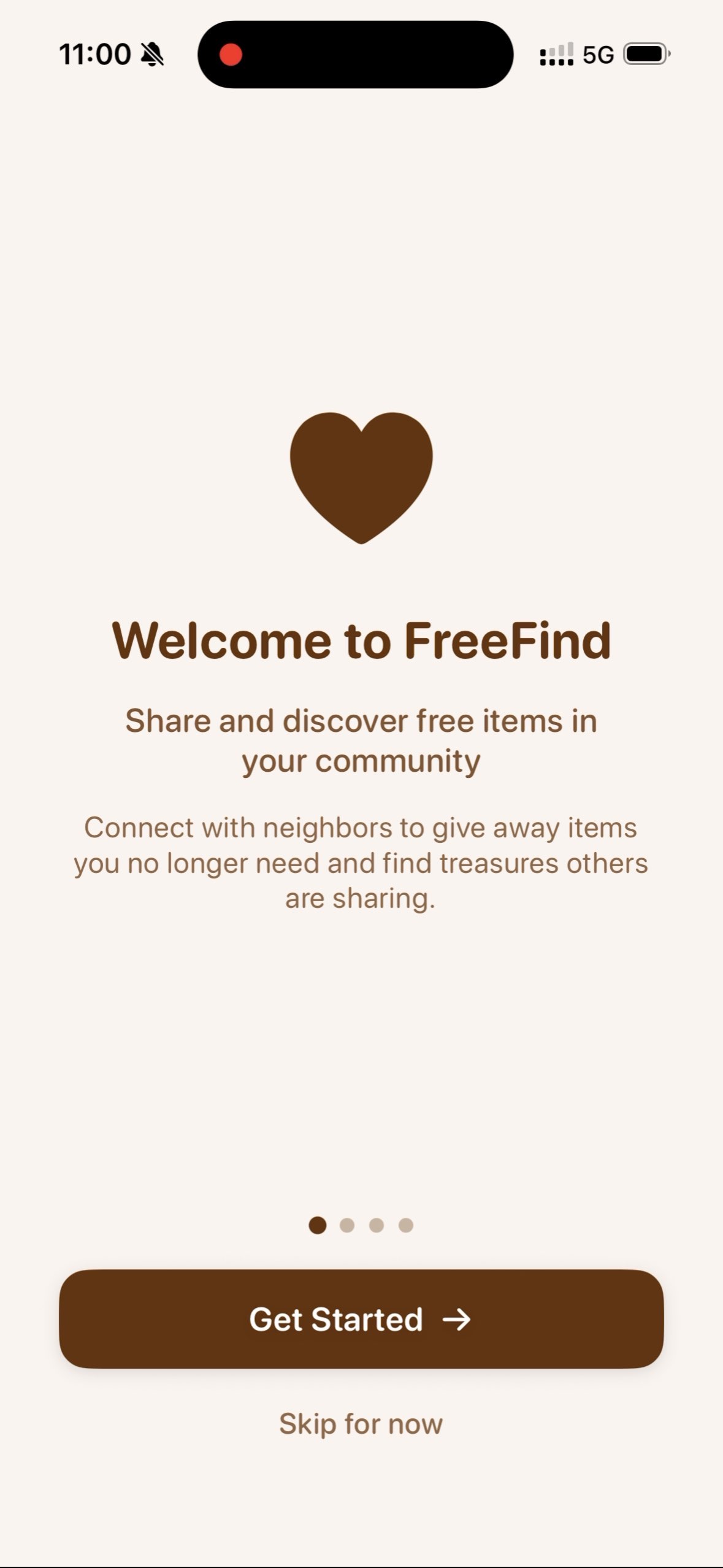
Onboarding Page 2
-
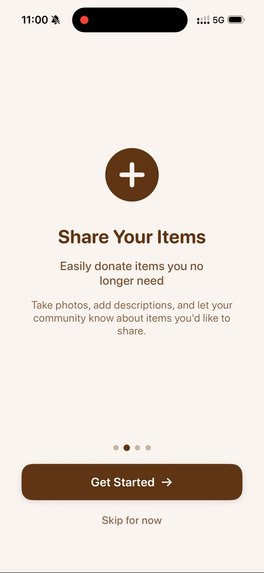
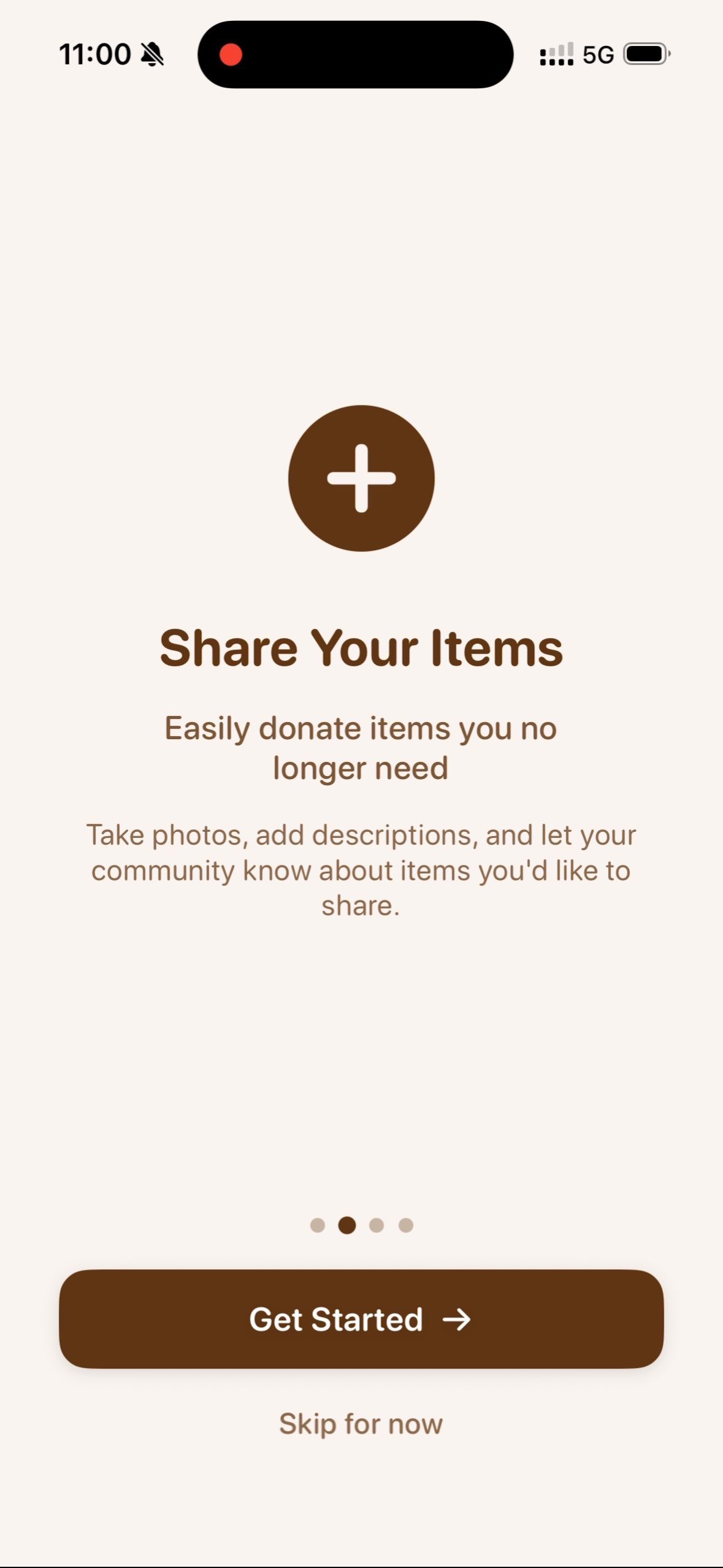
Onboarding Page 3
-
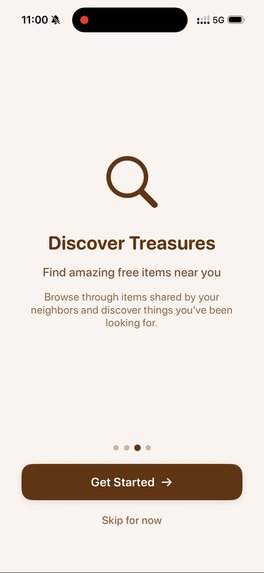
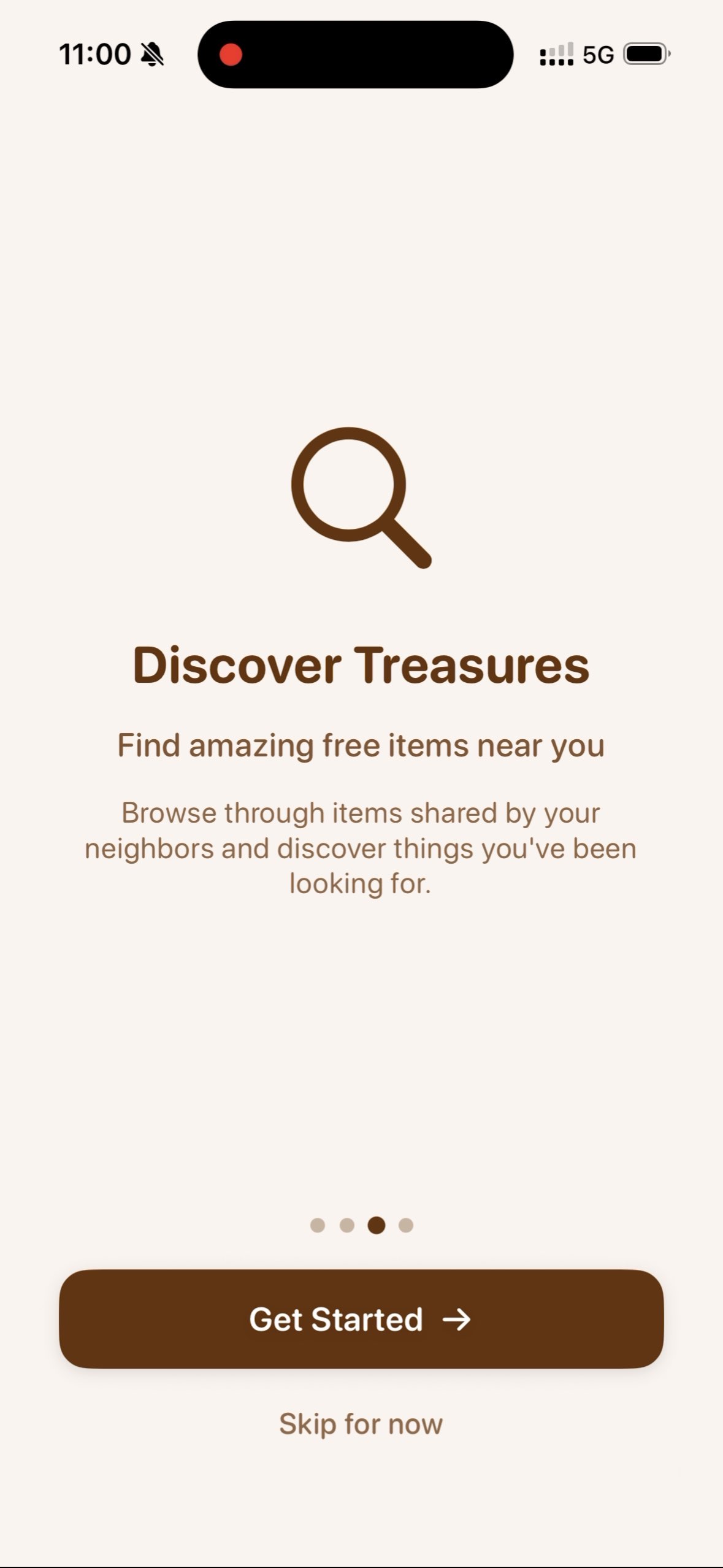
Onboarding Page 4
-
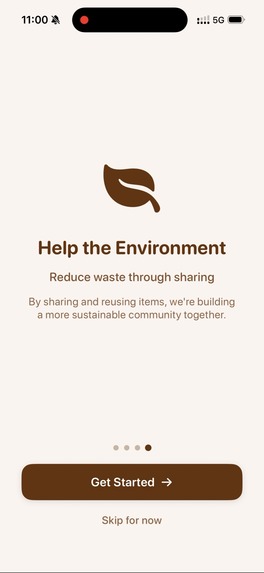
Onboarding Page 5
-
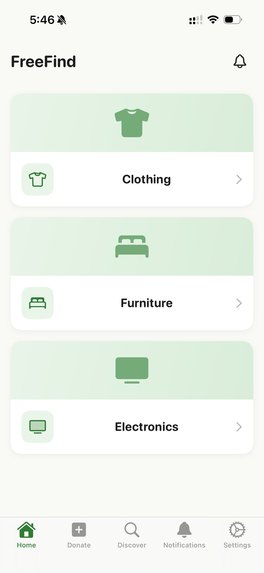
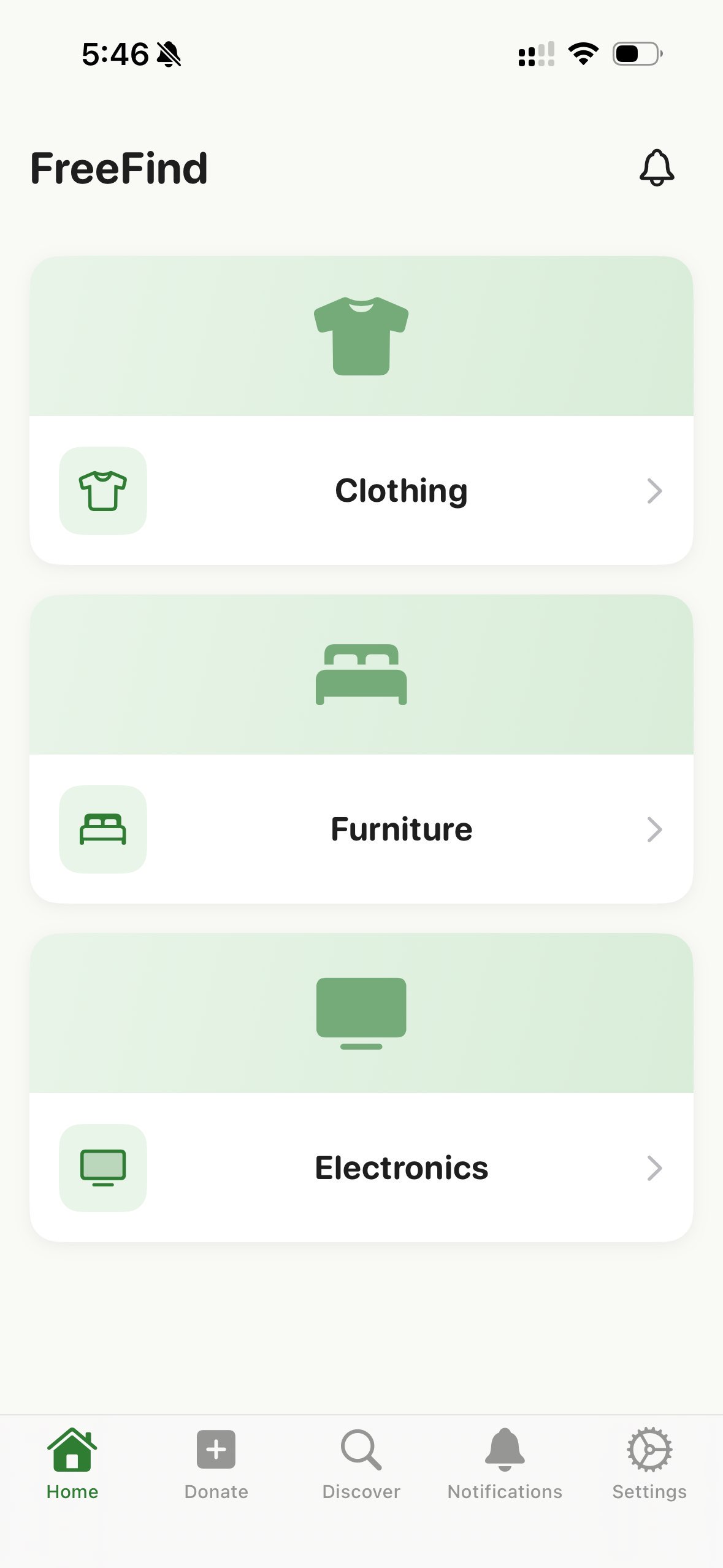
Home Page
-
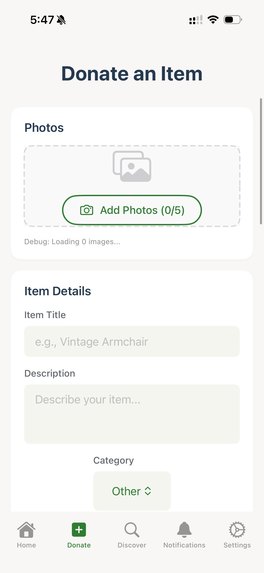
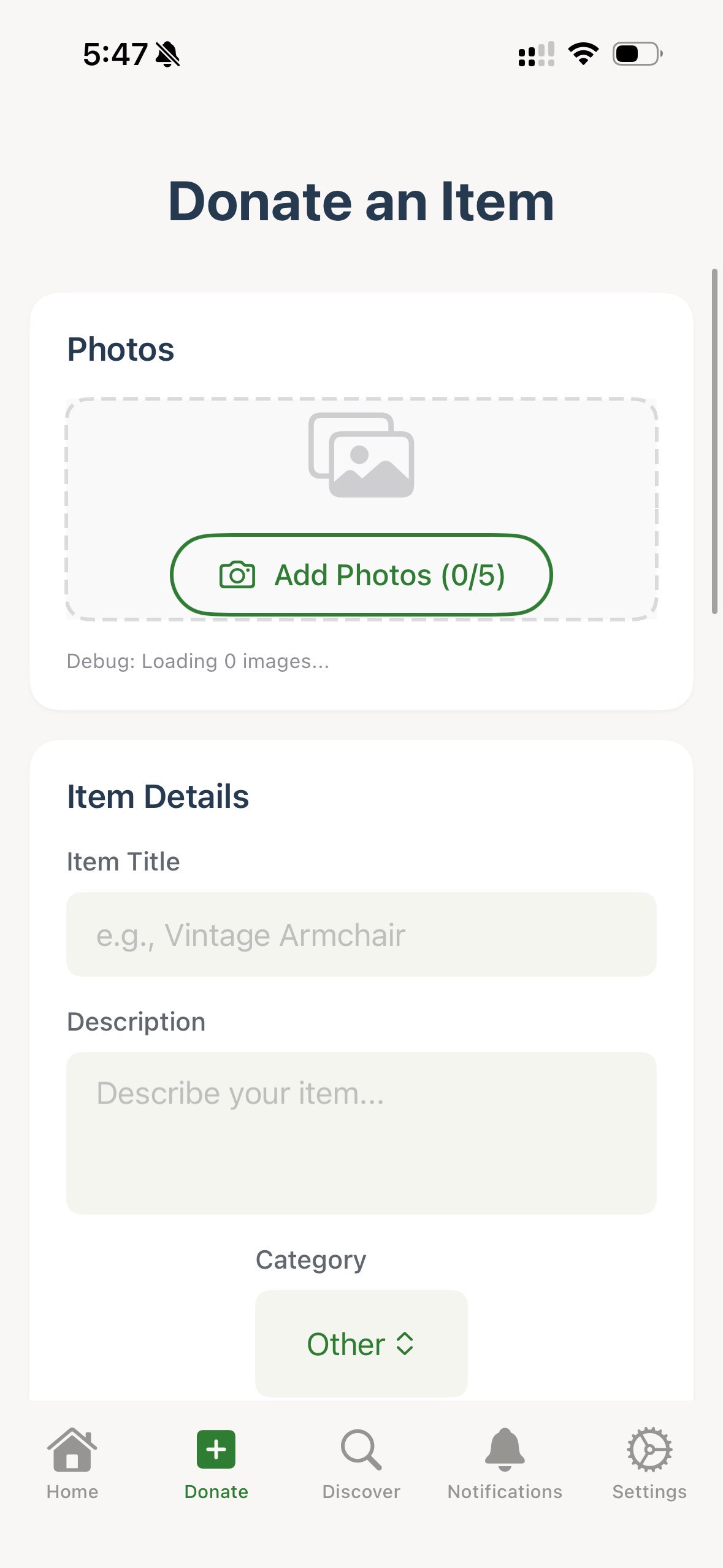
Donation Page
-
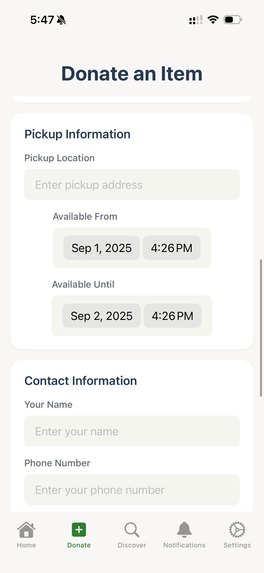
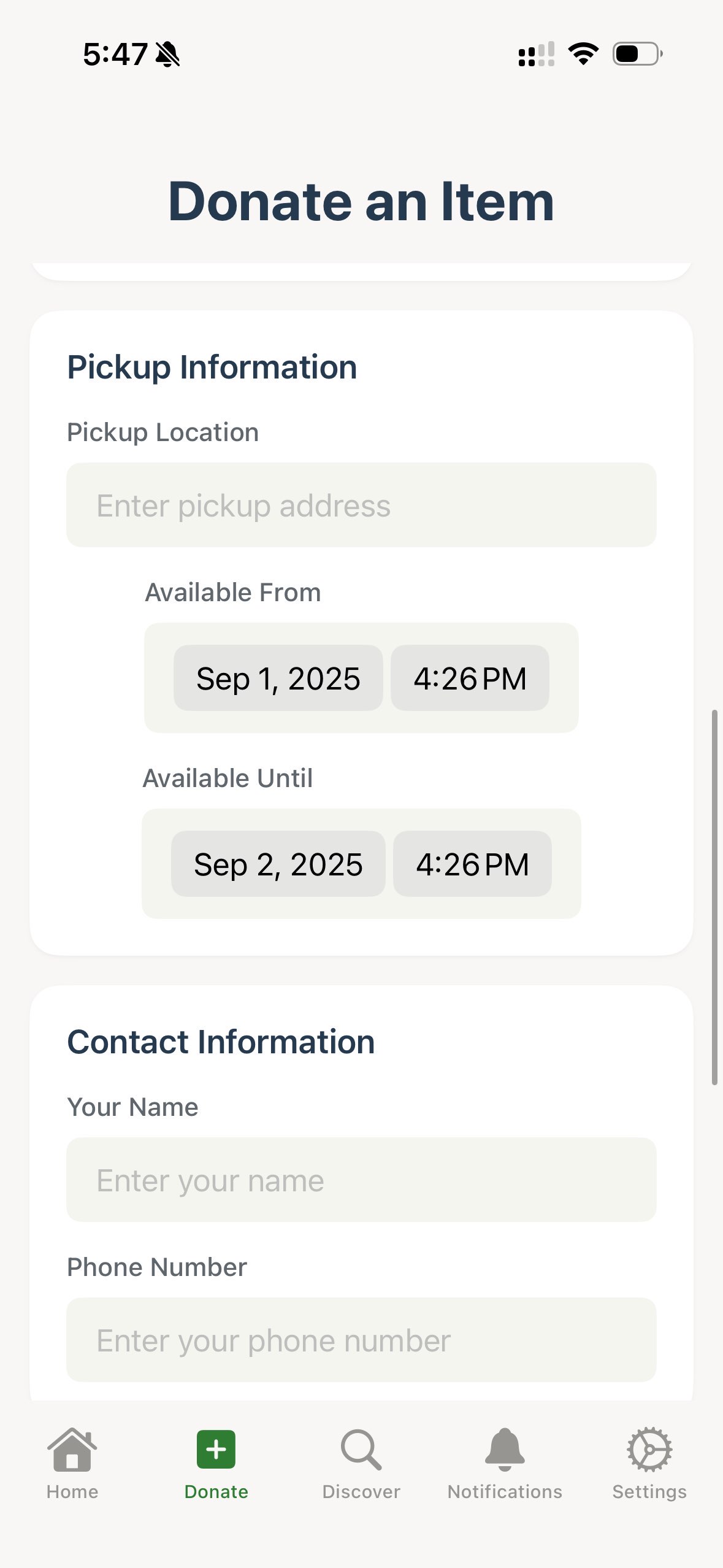
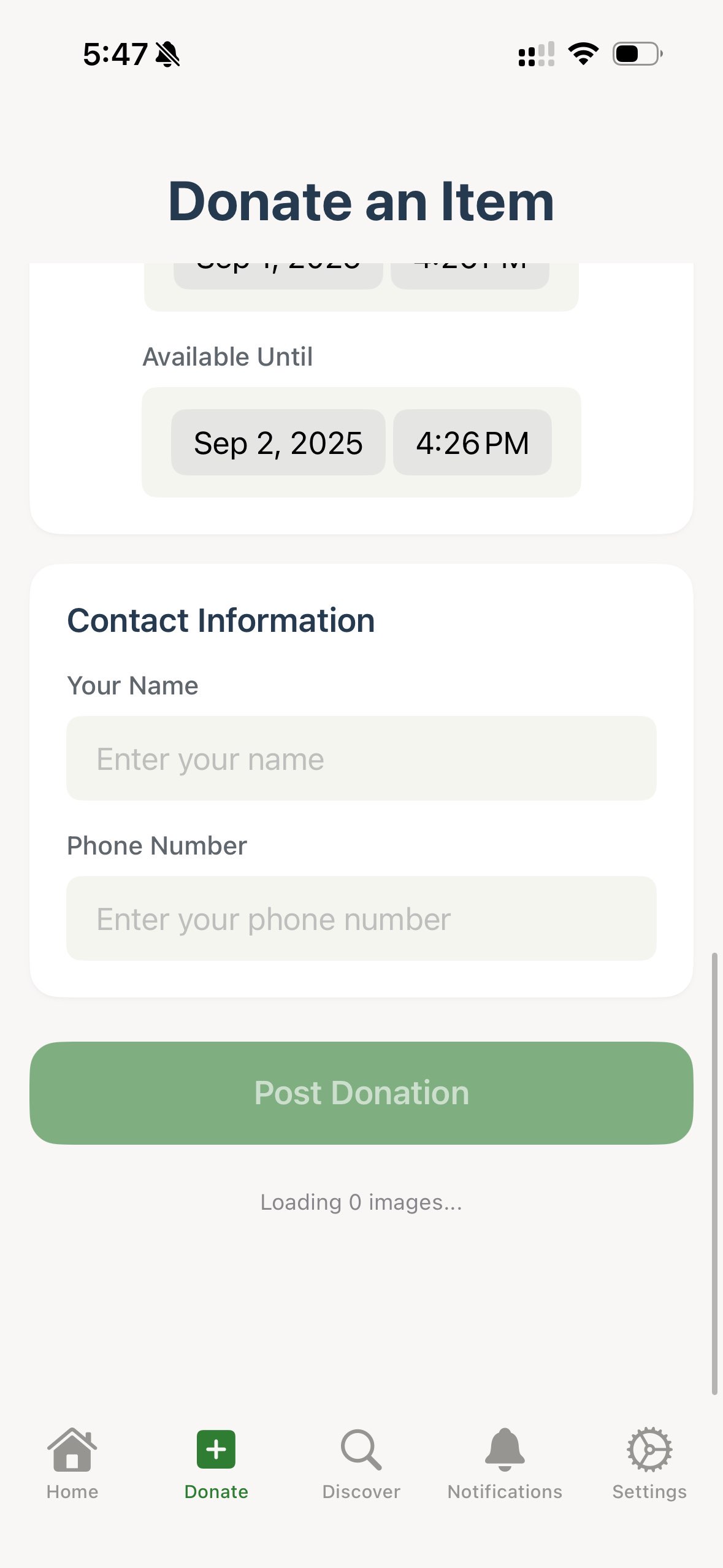
Donator Information
-
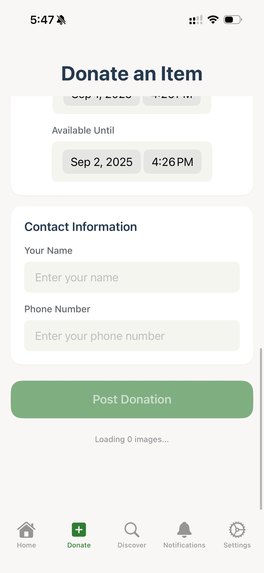
Donation Upload
-
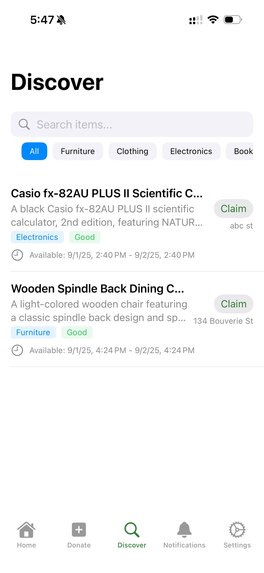
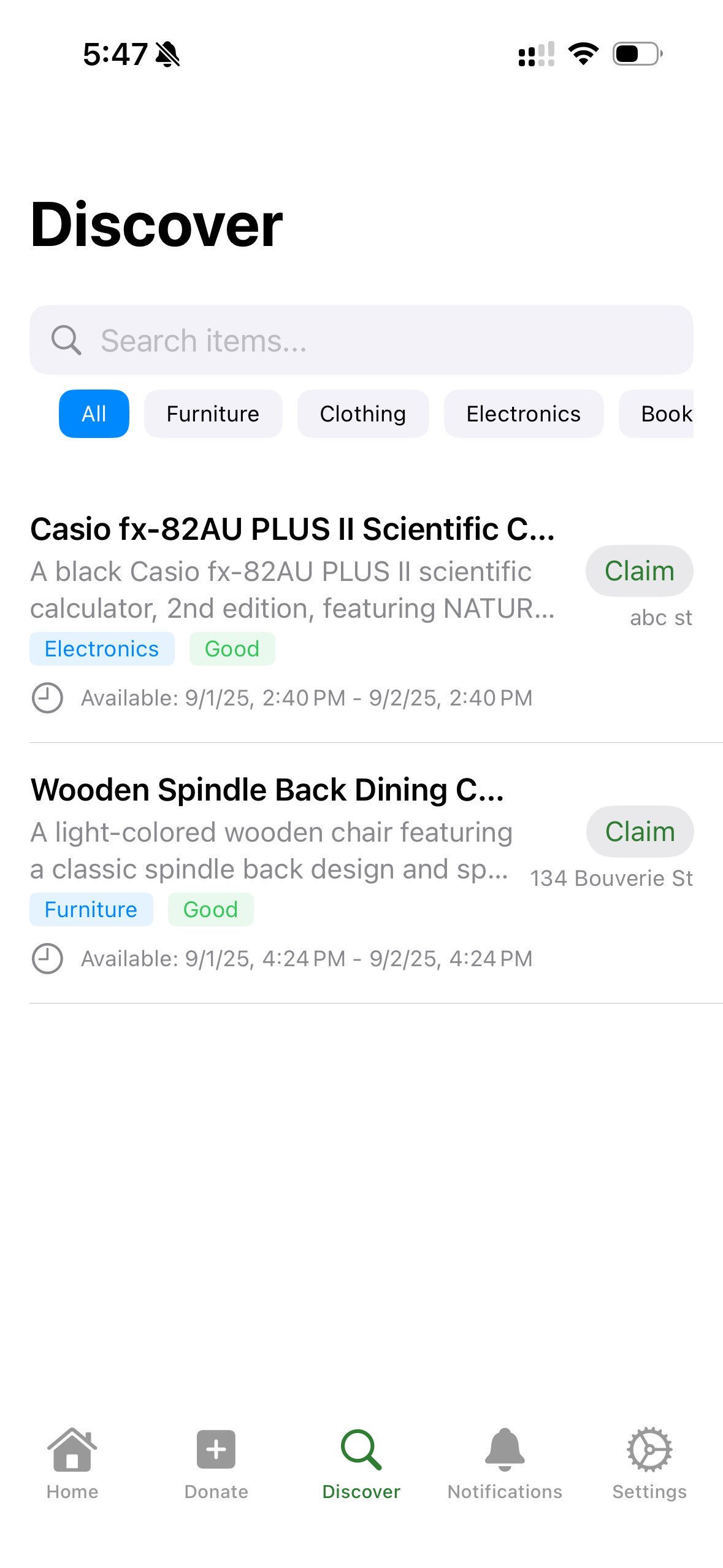
Items Donated List
-
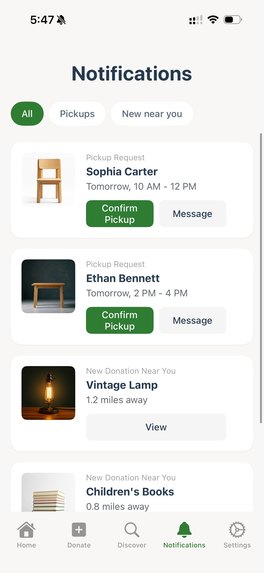
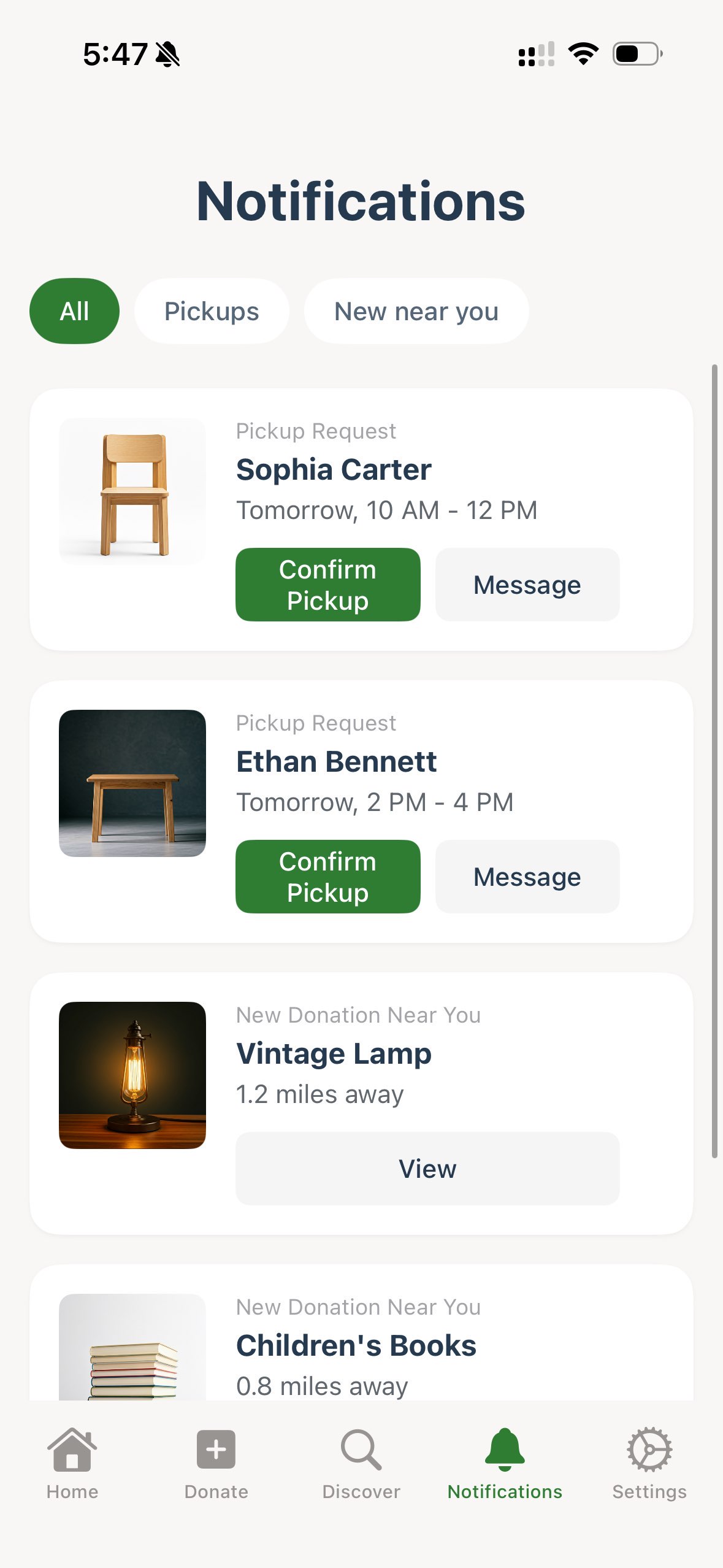
Notifications
-
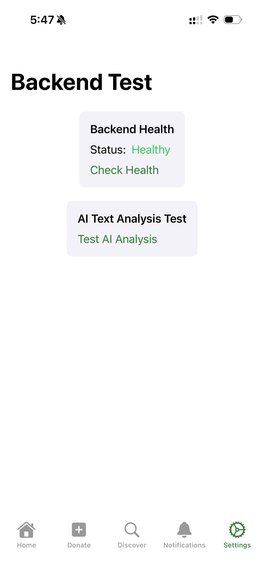
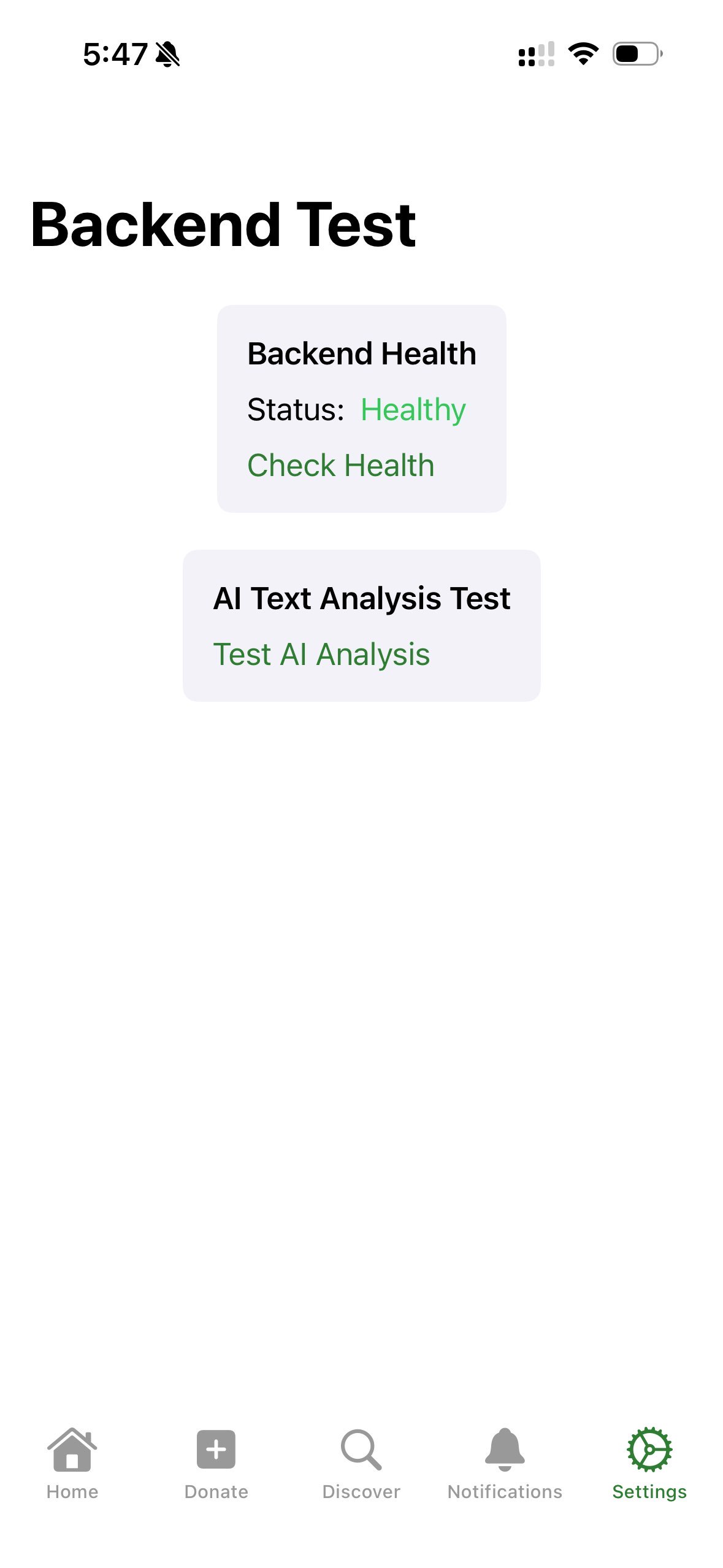
Backend Testing
Inspiration
As students who frequently move in and out of housing, we’ve often faced the frustration of having to buy new furniture and essentials, while noticing perfectly good items left out for council pick-ups in our neighborhoods. Unfortunately, most of these items end up crushed and sent to landfill—or occasionally resold by the council—despite residents already paying for the collection service. Seeing this waste and inefficiency inspired us to create a solution that gives these items a second life, saves people money, and reduces unnecessary landfill.
What it does
Our app makes it effortless for users to give away the things they no longer need. With just a single click, users can upload an image of an item, and our AI takes care of the rest—automatically generating the description, tags, and categories. The item is then listed on the platform, making it instantly discoverable to others who may need it. For security and privacy, our geolocation feature only reveals the approximate location radius of where the item was left out, ensuring users can share freely without revealing personal details.
How we built it
We used Swift for Front-End Development and Python Flash App for Back-End Development. We also used Stitch.AI to experiment with multiple drafts of the app layout and design. It helps us to conceptualize what the UI for our app would look like in a short time, hence improving efficiency. To facilitate the AI image recognition we used Gemini 2.5 Flash via Vertex AI and for our app’s geolocation features we use the Google Maps API.
As for the video, we used a camera to film and DaVinci Resolve, along with CapCut to edit the video. We have decided to showcase exactly how the app could work in real life from the user's perspective in an entertaining way. The furniture on the ground in the video represents the reality where used goods are often left on the side of streets until they eventually go to waste.
Challenges we ran into
One of the biggest challenges we faced was deploying our backend server through Google Cloud Platform using a Virtual Machine. On the development side, we integrated Xcode to simulate the exact UI and tested it on our iPhones to replicate the real user experience. Another challenge was deciding how we wanted our video pitch to look, since we wanted it to clearly reflect both the problem and our solution.
Additionally, we chose to build an iOS app instead of a web app to ensure strong usability and a focused user base. While this decision gave us a clearer direction, it also came with its own technical considerations. Primarily that we had to quickly decide what features we wanted to be fully functional and what we could let go of by the time of submission.
Accomplishments that we're proud of
When developing this idea, we started with some market research. We drew inspiration from one of our teammates, who personally understands and empathises with the problem we are trying to solve. From the outset, we recognised a clear gap that needed to be addressed, and we’re proud to be working toward filling it.
Another accomplishment we’re proud of is that we managed to complete about 90% of the programming work in just one day. This gave us plenty of time to refine our approach, plan in detail, and carefully design what our video pitch looked like.
What we learned
We learned how to collaborate effectively as a team to agree on and refine our idea. Along the way, we gained valuable experience in marketing research—understanding user needs and figuring out how to position our app for the right audience. We learned that the right ideas and the right intentions make a huge difference when it comes to making a valuable product for users. On the technical side, we developed skills in using cloud services, working with development tools, and handling iOS deployment processes. Overall, we learned how to take an idea from concept to a working prototype.
What's next for FreeFind - Sustainability Stream
We want to continue developing our app, polish its features, test it with smaller test cases and eventually publish the app on the Apple App Store as a real product for Australians to use. We aim to build trust among communities ranging from local individuals and op-shops by connecting with real charities so that used goods are never left unwanted. We hope to solidify our app as a trusted and go-to platform for people to donate and find items that are looking for a new life and home.
Built With
- gemini-2.5-flash
- google-maps
- google-virtual-machine
- python
- swift
- xcode


Log in or sign up for Devpost to join the conversation.