-
-
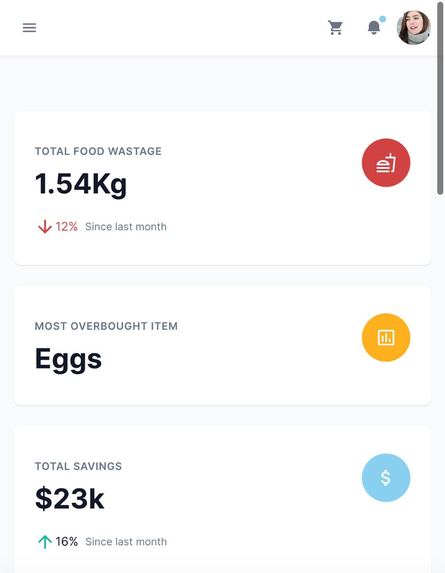
Track one's progress in reducing household food wastage
-
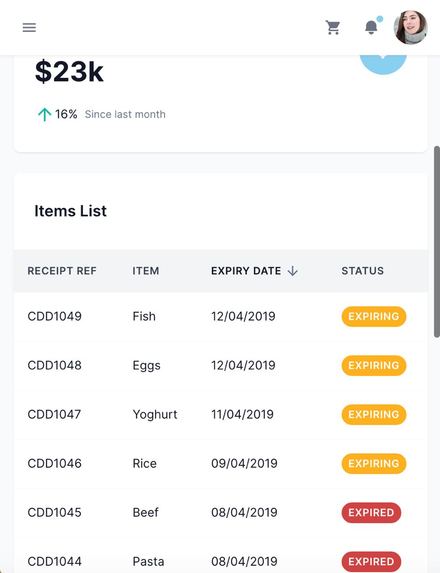
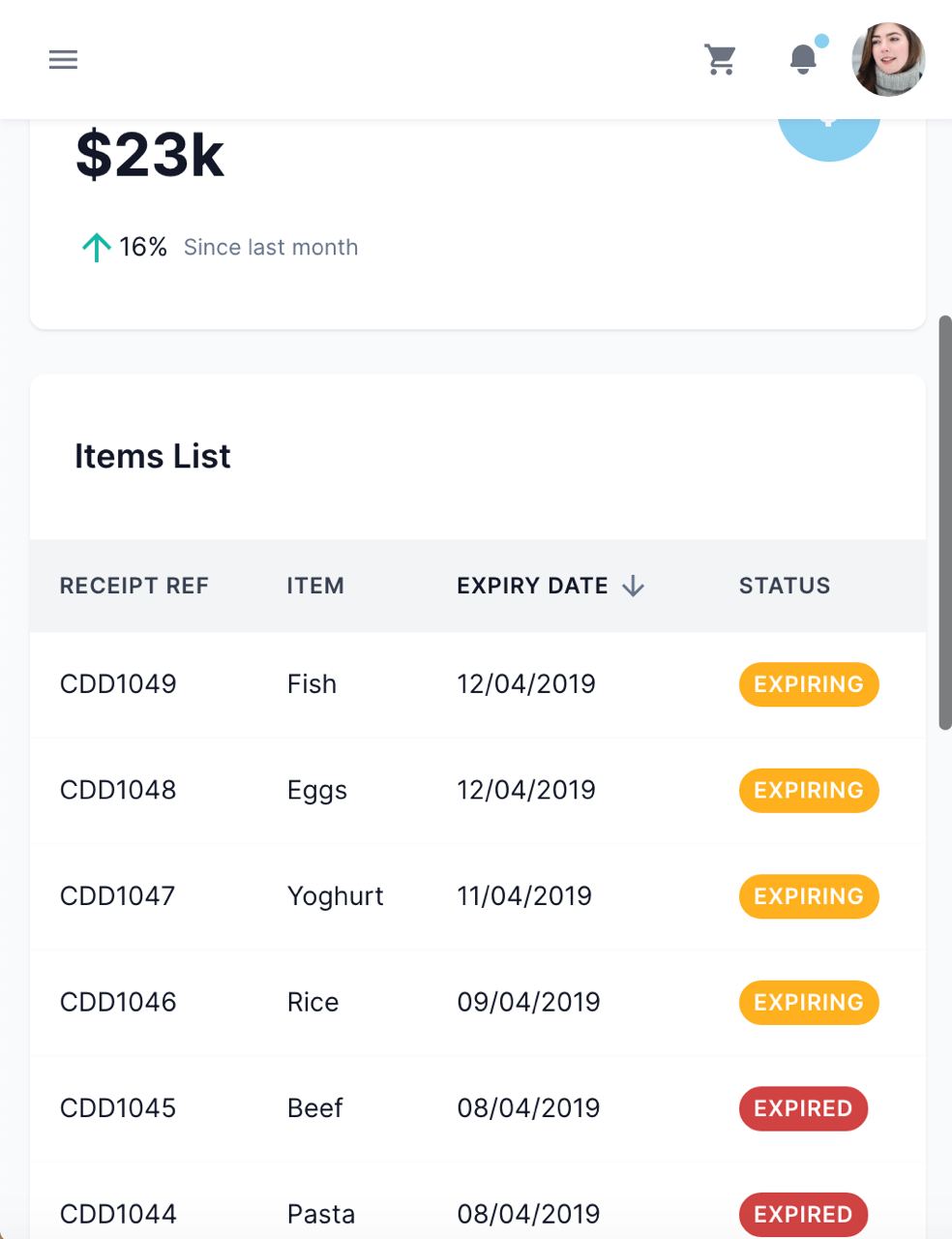
Track status of one's purchased groceries
-
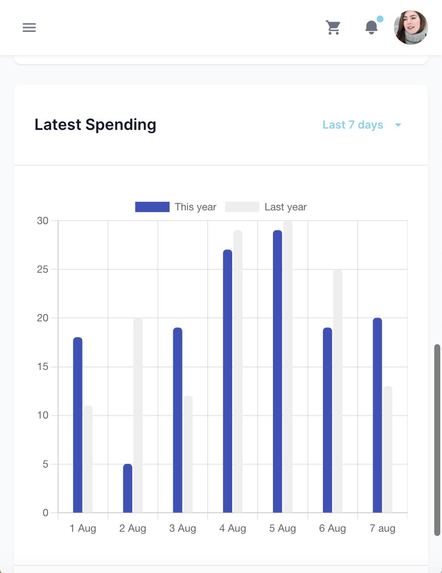
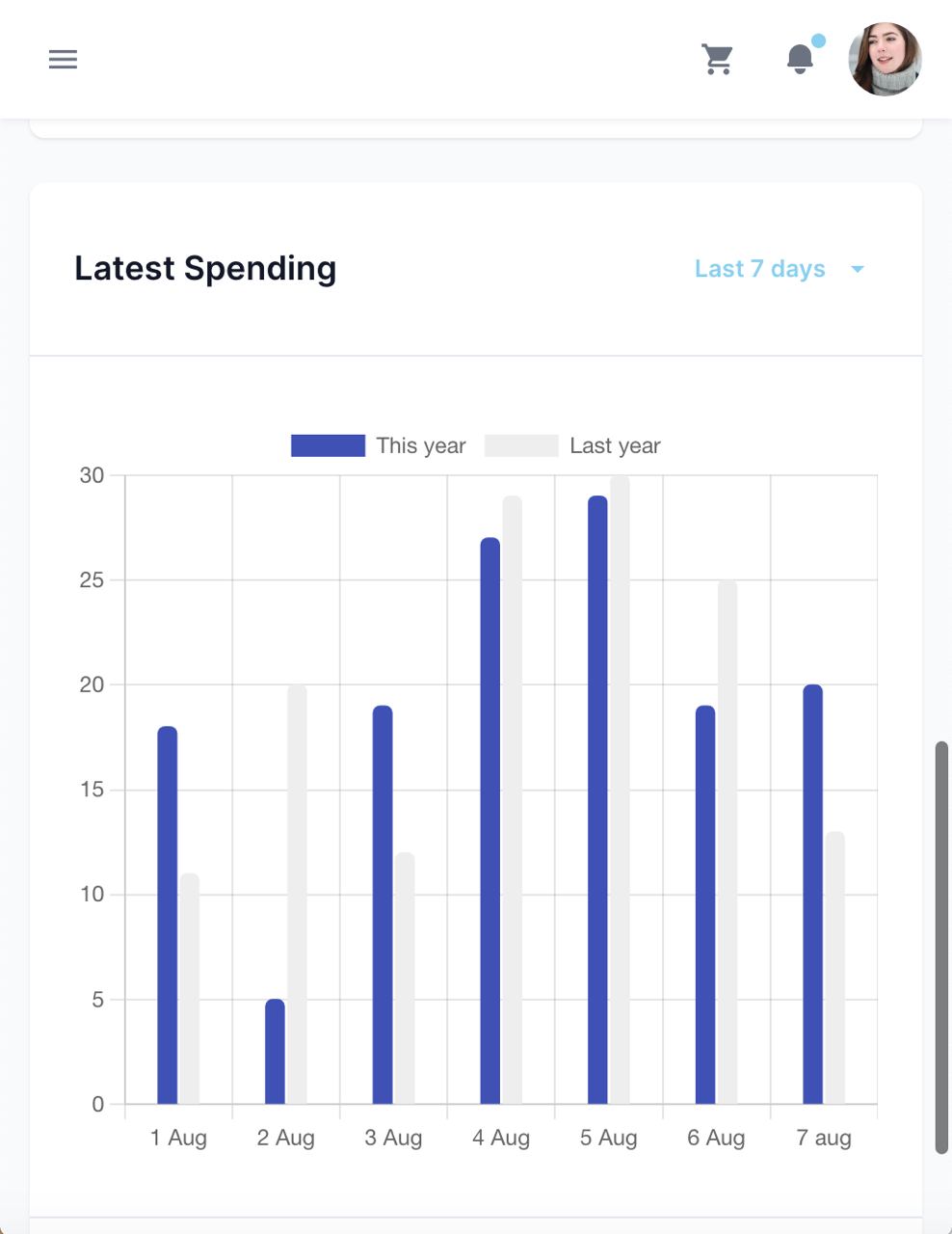
Track one's expenses monthly
What is your chosen theme and problem statement?
Theme: Environment
Problem Statement: In 2019, Singapore generated around 744 million kg of food waste. How can we tackle this growing problem and encourage Singaporeans to cut down on unnecessary food waste?
What does your hack do?
Looking into the statistics for food wastage in Singapore, we realised that 24% of households threw away rotten food because they either bought too much or forgot that they already have the item in their fridge.
We then delved deeper into the reasons and broke it down into 3 main causes:
1. Forgetting expiry dates
Given their busy lifestyles, consumers in Singapore do not have the headspace to remember the expiry dates of food products in their home. Hence, many food products tend to expire before being opened or finished, contributing to food waste.
2. Double-Buying
In the same vein, consumers tend to forget what products they've purchased previously as well – this leads to many instances where multiple of the same food product is purchased. The consumer is then unable to finish the product and has to discard it when it expires, contributing to food waste.
3. Over-Buying
Studies show that 1 in 4 Singaporeans purchase more food products than necessary. Unable to finish them, the food products either expire or spoil and have to be discarded, contributing to food waste.
Thus, our team decided to create Freedge, a mobile application that helps consumers better track their food inventory while encouraging more responsible food purchasing decisions.
Below are the key features of our application:
Fridge
The Fridge feature acts as a food stocklist for the user, encapsulating information such as Quantity, Purchased Date, Expiry Date and more.
We realised that despite there being applications with a similar feature in the market, adoption rates of such applications are low as it may be too time-consuming for the users to key in their purchased products manually. Thus, our goal was to make the recording process as fuss-free as possible.
This can be achieved through partnering with recognised Supermarkets such as NTUC Fairprice, Cold Storage, Sheng Shiong etc to implement a system that allows the application to directly retrieve the list of purchased items from their database using the user's receipt number.
Use Case:
- User purchases food products from NTUC Fairprice and selects the "New Purchase" option in the "Fridge" function.
- User selects "NTUC Fairprice" from a dropdown menu of supermarket partners and keys in the receipt number into our application.
- Our application communicates with NTUC Fairprice to retrieve the list of food products purchased by the user on this shopping trip.
- With the list of food products, our application then communicates with NTUC Fairprice again to obtain the optimal shelf life for the products purchased (opened and unopened durations).
- Our application calculates the estimated expiry date for the products purchased and logs all relevant information in the user's "Fridge".
- The user can then periodically update whether the product has been "Opened", how many units have been "Consumed" and how many units have been "Discarded".
- These data will be used in other features of the application.
Understandably, this feature is dependent on our ability to communicate with the Supermarkets' databases to retrieve the data related to our user's receipt. However, we are highly confident of securing syngergistic partnerships with large Supermarket chains due to the following reasons:
Governmental Support From government sites and reports, we see the government pushing for Supermarkets to collaborate with tech players in order to tackle the food wastage issue in Singapore.
Corporate Social Responsiblity Supermarket chains have the opportunity to present the partnership as an act of CSR, boosting their chain's reputation and improving public sentiment of their brand.
Targeted Consumer Marketing Given that our application can track the purchases and consumption of our users, we can collaborate with Supermarkets by providing the user's consumption data, allowing them to create targeted promotions and offers for our users, boosting the Supermarket's sales and improving our user's purchasing journey, thus benefiting both parties.
Statistics
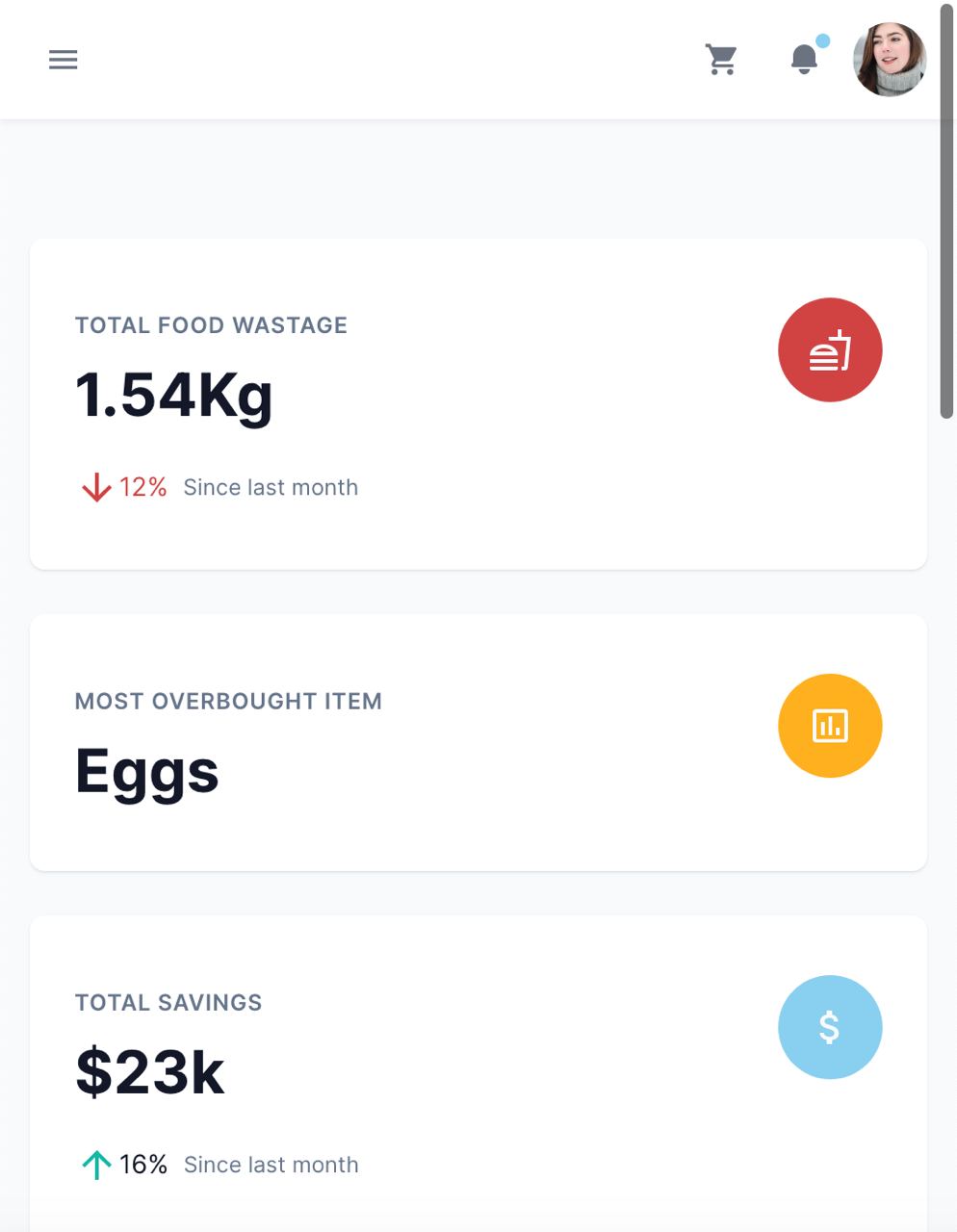
The Statistics feature is essentially a dashboard with multiple views that inform the user of food products nearing expiration, their current consumption patterns and more.
Use Case:
- User updates the "Beef Cup Noodle" item on their "Fridge" page, they consumed 2 units and discarded 1 unit.
- User checks the "Statistics" page. The expiry view shows that the "Lays Chip" item is about to expire in 1 day.
- User also sees the "Over-bought" view. "Beef Cup Noodle" item is listed on the ranking as it was discarded 1 time.
Shopping List
Shopping List, as its name suggests, allows users to plan their grocery trips beforehand. In order to prevent the user from over-buying, the feature will suggest recommended purchase quantities when the user keys in the shopping list item.
Use Case:
- User keys in "Beef"
- Application auto-suggests previously purchased item "Beef Cup Noodle"
- User selects "Beef Cup Noodle"
- Application analyses information on the user's consumption of "Beef Cup Noodle" (Previously purchased quantity, Number of units finished/expired)
- Application recommends the user to purchase 2 units. (The user had previously purchased 3 units, but 1 unit had expired. )
- User selects the recommended quantity of 2 units.
How does your hack answer the problem statement?
Our hack tackles the 3 key causes of household food wastage.
Forgetting Expiry Dates
With our "Fridge" system and expiry dates view in "Statistics", users will have easy access to the expiry dates of different food products, mitigating the issue of them forgetting expiry dates. Additionally, with the extra notification function in "Statistics", users will be proactively reminded to finish any food products that are nearing expiry.
Double-Buying
The "Fridge" system is a user-friendly feature that users can use to check what food products they currently have in stock, hence mitigating the issue of double-buying.
Over-Buying
Given the "Shopping List" feature, our application is able to recommend the right amounts of purchases for the user, plugging the information gap that many users face. By showing them the recommended amount, users are more informed and can make holistic decisions. Additionally, the "Over-bought" view under "Statistics" reminds the user about their over-consumption habits, making them more aware and conscious of their food purchases.
How did you built your hack?
Our react application is built using reusable UI components that can interact with each other. By using DOM-specific methods, we created App.js that follows a hierarchical structure of importing child components, ensuring that our code is organised, efficient and reusable.
Due to time constraint, we did not manage to get started on the backend. Hence, we have replaced the API calls with pre-populated data so that our web app will still render the necessary components.
What are some difficulties you overcame?
Working under a 24-hour intensive period, following a project from its ideation to its execution was an uphill task. Additionally, with a topic as universally concerning as food wastage and environmental sustainability, we found it challenging to distinguish our project from countless other initiatives taken to curb our excessive habits.
However, we're proud to have been able to draw upon our own experiences as amateur home cooks to better empathize with and visualize the user's own inertia in tracking their expenditure. By allowing us to anticipating their human behavior, this helped us conceive functionalities that appropriately simplified the troublesome yet necessary process of recording one's food expenses.
What was your biggest learning point from LifeHack 2022?
Because of LifeHack 2022, our team has learned to honor the human-centric nature of the app development process. We realized that effective solutions are built around understanding human behavior and lowering the barriers for humans to complete mundane but necessary tasks.
What's next?
Due to the time constraints, our team was unable to implement the following features, but will be looking into implementing them in the near future.
Push Notifications Due to the lack of an external server, we didn’t manage to implement push notifications along with the rest of our mobile application. However, it remains a key priority in our future plans for Freedge, given its potential keep the issue of food wastage at the top of our users’ minds even when the application is not open.
Past Receipts Instead of presenting a mere aggregate of inventory items, we believe that tracking the date and time of previous purchases can allow our app more data on the user’s consumption habits. Interpreting factors like amount of food wasted as a percentage of food purchased each month, the app can draw trends on the user’s progress in reducing food wastage, rewarding commendable habits while highlighting deteriorating ones.
Recipe Suggestions With a variety of food items nearing their expiry date, users may be lost on what dishes they can cook up with the ingredients. Hence, our application may also expand to recommend suitable recipes based on expiring ingredients. Through AI and machine learning of the user's cultural preferences, personal tastes and recipes online, the recipes suggested will be curated to our user’s needs, helping to maximize their food product usage and mitigating food wastage. We could also look at recipes that repurpose leftover cooked dishes as well.
Community Engagement & Rewards To further incentivize our users, a community-related feature such as a “User Ranking” page could be beneficial. On the page, users can see the ranking of users who waste the least food. Apart from that, users can also contribute their recipes to help support the “Recipe Suggestions” feature, with the users of the best voted recipes receiving points. In order to motivate users further, our application’s membership tier system can be further developed to include special food rewards (e.g. supermarket discount vouchers) for users who contribute the least to food wastage.
Targeted Marketing (Supermarket) As mentioned previously, consumption data from users can be provided to supermarkets to aid them in curating targeted marketing campaigns and promotions for our users. This will likely be an internal feature that involves communicating with supermarkets’ databases to send encrypted user data. Additional security measures will also be implemented to ensure the safe transfer of data – blockchain (distributed ledger technology) may also be a viable option to ensure that data is not compromised.


Log in or sign up for Devpost to join the conversation.