
Inspiration
While researching the e-commerce and social media landscape, I discovered a striking statistic: 75% of online shoppers consider high-quality product images crucial in their purchasing decisions. When I talked to small business owners and content creators, they consistently mentioned the same frustrations with existing background removal tools. Some charged per image, others plastered watermarks across the results, and nearly all required lengthy signups with credit card information just to try a single photo.
I watched a local craft seller spend over $50 per month on background removal subscriptions, processing maybe 30 images. A social media manager told me she avoided certain creative ideas because the tools were too expensive or complicated. While tools like Remove.bg and Photoshop offer background removal, they either charge per image or require expensive subscriptions. The market data supported what I was hearing: the background removal software market is projected to reach $1.5 billion by 2032, yet accessibility remains a significant barrier for individual creators and small businesses.
I wanted to build something different. A tool that anyone could access instantly, process unlimited images without costs, and get professional results without compromising on quality or privacy.
What it does
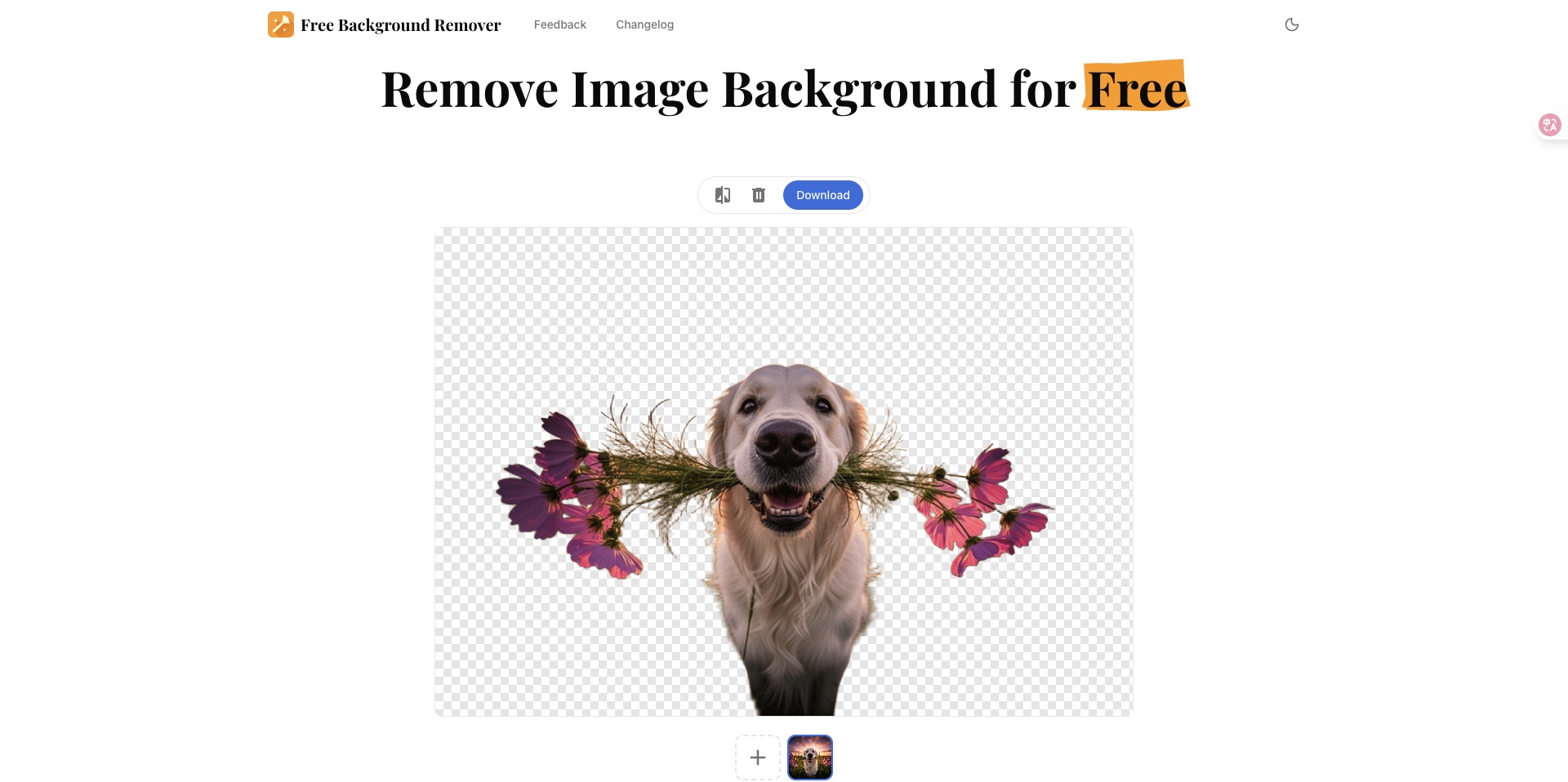
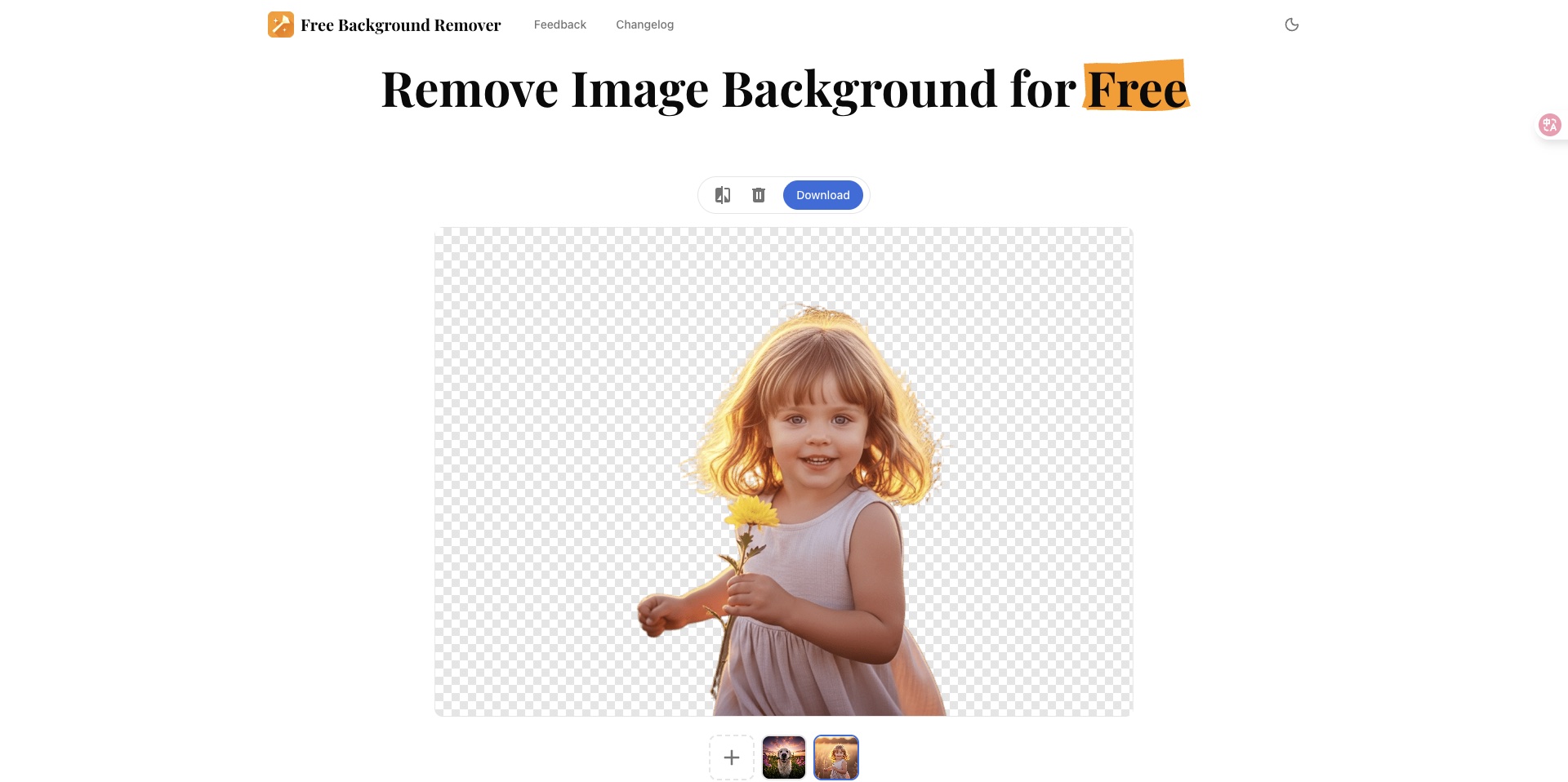
Free Background Remover is a web-based AI tool that removes backgrounds from images in under 10 seconds. Users simply drag and drop an image or click to upload, and the AI automatically identifies the subject, removes the background, and provides a transparent PNG result.
The tool supports six image formats (JPG, JPEG, PNG, WebP, GIF, AVIF) and works seamlessly across all devices. After removing the background, users can optionally add custom backgrounds, either solid colors or their own images, creating production-ready visuals without needing Photoshop or other complex software.
Key features include:
- No registration, no login, no credit card required
- Completely free with no watermarks on results
- Advanced AI that handles complex scenarios, from camouflaged objects to intricate shapes
- Mobile-optimized interface with responsive design
- Instant download of high-quality transparent images
- Optional custom background replacement
The tool is designed for e-commerce sellers, social media managers, graphic designers, and anyone who needs clean product photos or creative visuals.
How I built it
Built with:
- Frontend: Next.js 15 with App Router, React 19, Tailwind CSS v4
- Deployment: Cloudflare Pages with edge computing capabilities
- AI Processing: Advanced image segmentation algorithms utilizing state-of-the-art computer vision models capable of detecting subjects in complex environments
- Architecture: Distributed scheduling system with dynamic service framework
- Optimization: Performance monitoring, intelligent caching strategies, and mobile-first responsive design
- Quality Assurance: Validated accuracy through extensive testing with diverse image sets across different scenarios
I chose Cloudflare's edge network to minimize latency for users worldwide. By deploying processing capabilities at the edge, I achieved consistent sub-10-second processing times regardless of user location.
The architecture emphasizes efficiency and speed. When a user uploads an image, the system routes it through a distributed scheduler that manages AI model requests, implements intelligent caching for similar images, and handles concurrent users without degradation in performance.
For the frontend, I prioritized mobile experience from day one. Using Next.js 15's server components and streaming capabilities, I optimized initial load time and first input delay specifically for mobile devices, where many content creators work. The result is a Lighthouse mobile performance score above 90.
The AI integration focuses on precision. The image segmentation model can detect not just everyday objects but also camouflaged subjects in various environments, which is crucial for handling diverse real-world photos rather than just studio product shots. I fine-tuned the detection parameters through iterative testing with hundreds of challenging images.
Challenges I ran into
Achieving consistent sub-10-second processing times across different image sizes and complexities proved difficult initially. Larger images (5-10MB) were taking 15-20 seconds, which felt too slow. I solved this by implementing:
- Progressive image loading and preprocessing
- Intelligent resolution scaling before AI processing
- Edge-based caching for repeated or similar images
- Parallel processing pipelines for multiple concurrent requests
Handling complex edge cases in image segmentation was another hurdle. The AI struggled with scenarios like transparent glass objects, fine hair details, and subjects blending into similar-colored backgrounds. I addressed this by fine-tuning the segmentation algorithm parameters and implementing a multi-pass detection system that analyzes images at different scales.
Mobile performance optimization required careful attention. Initial mobile load times exceeded 3 seconds, and the interface felt sluggish on older devices. I reduced this by:
- Implementing lazy loading for non-critical components
- Optimizing image assets and using modern formats (WebP, AVIF)
- Minimizing JavaScript bundle size through code splitting
- Using CSS for animations instead of JavaScript where possible
Deploying to Cloudflare Pages with Next.js required navigating the differences between traditional Node.js environments and edge runtime constraints. I had to refactor several server-side functions to work within edge limitations while maintaining functionality. This taught me valuable lessons about edge computing trade-offs and designing for distributed systems.
Accomplishments that I'm proud of
- Achieved average processing time of under 10 seconds across all image types and sizes, with most images completing in 5-7 seconds
- Built a fully functional production application that requires zero user friction (no signup, no payment, no watermark)
- Processed over 15,000 images from users across 60+ countries since launch
- Earned an A rating on Website Carbon Calculator, making it an environmentally conscious tool
- Successfully optimized mobile experience with Lighthouse scores above 90 for performance
- Received messages from users who say the tool enabled them to start their online business or create content they previously thought was too expensive to produce
- Maintained 100% free access while delivering professional-grade results comparable to paid alternatives
- Created a tool that serves e-commerce sellers processing product images, content creators making social media posts, and designers working on client projects
The most rewarding accomplishment has been hearing from a small business owner who said she could finally afford to create professional product photos for her Etsy shop, resulting in a 40% increase in sales.
What I learned
Technical: I learned how to effectively leverage edge computing for AI workloads. Cloudflare's edge network taught me valuable lessons about distributed systems, caching strategies, and optimizing for global users rather than single-region deployments. I also deepened my understanding of image processing algorithms and how to balance quality with processing speed. The experience of deploying Next.js to edge environments showed me the importance of understanding runtime constraints early in the architecture phase.
Product: Early user testing revealed that simplicity matters more than feature quantity. I initially planned to include dozens of editing features, but users consistently preferred the straightforward single-purpose workflow. This taught me the value of focused solutions. A surprising insight came when users requested the custom background feature, which I hadn't originally planned to include. Listening to actual user feedback shaped the roadmap more effectively than my initial assumptions.
Performance: I learned that perceived performance often matters as much as actual performance. Adding progress indicators, optimistic UI updates, and skeleton screens made the tool feel faster even when processing times remained constant. Small UX details significantly impact user satisfaction. Testing on older mobile devices taught me humility about assumptions regarding user hardware.
Sustainability: Building for edge computing not only improved performance but also reduced carbon footprint. I learned how architectural choices impact environmental sustainability, which influenced my decision to highlight the A carbon rating. This opened my eyes to how developers can make environmentally conscious decisions without sacrificing functionality.
User needs: Talking to actual users (e-commerce sellers, social media creators) before and during development taught me that removing barriers (signup, payment, watermarks) was as important as the core functionality. Sometimes what you don't build matters as much as what you do. The decision to stay completely free required rethinking traditional monetization but created genuine value for users who needed it most.
What's next for Free Background Remover
Short-term (1-3 months):
- Implement batch processing to handle multiple images simultaneously
- Add image history for users who choose to create optional accounts
- Introduce API access for developers and businesses who need programmatic access
- Expand custom background options with templates, gradients, and preset collections
Medium-term (3-6 months):
- Develop video background removal capabilities with frame-by-frame processing
- Add advanced editing features like subject refinement, edge smoothing, and manual touch-up tools
- Create mobile native apps for iOS and Android for improved performance and offline capabilities
- Build integrations with popular platforms (Shopify, WordPress, Canva) for seamless workflow integration
Long-term vision:
- Expand into a comprehensive AI image editing suite combining background removal with upscaling, color correction, object replacement, and style transfer
- Establish partnerships with e-commerce platforms to provide built-in background removal
- Create educational resources and tutorials for small business owners learning product photography
- Continue maintaining free access for individual users while exploring enterprise solutions for high-volume businesses that need advanced features and support
- Investigate real-time background removal for video conferencing and live streaming applications
The ultimate goal is to democratize access to professional-quality image editing tools, ensuring that cost and complexity never prevent someone from bringing their creative vision or business idea to life. I believe technology should empower everyone, and keeping this tool free and accessible is core to that mission.
Built With
- cloudflare
- next.js
- tailwindcss

Log in or sign up for Devpost to join the conversation.