Inspiration
Elle Hacks gave us the prompt of 4 seasons and instantaneously we had a dozen ideas. What specifically inspired Freddo is when we were doing research on which concern to tackle, we saw the fatality number of children who had heat strokes and were in cars. When I read that it was a solvable issue but no one was willing to take on the task that inspired us to design a solution that prevented mortality rates amongst children.
What it does
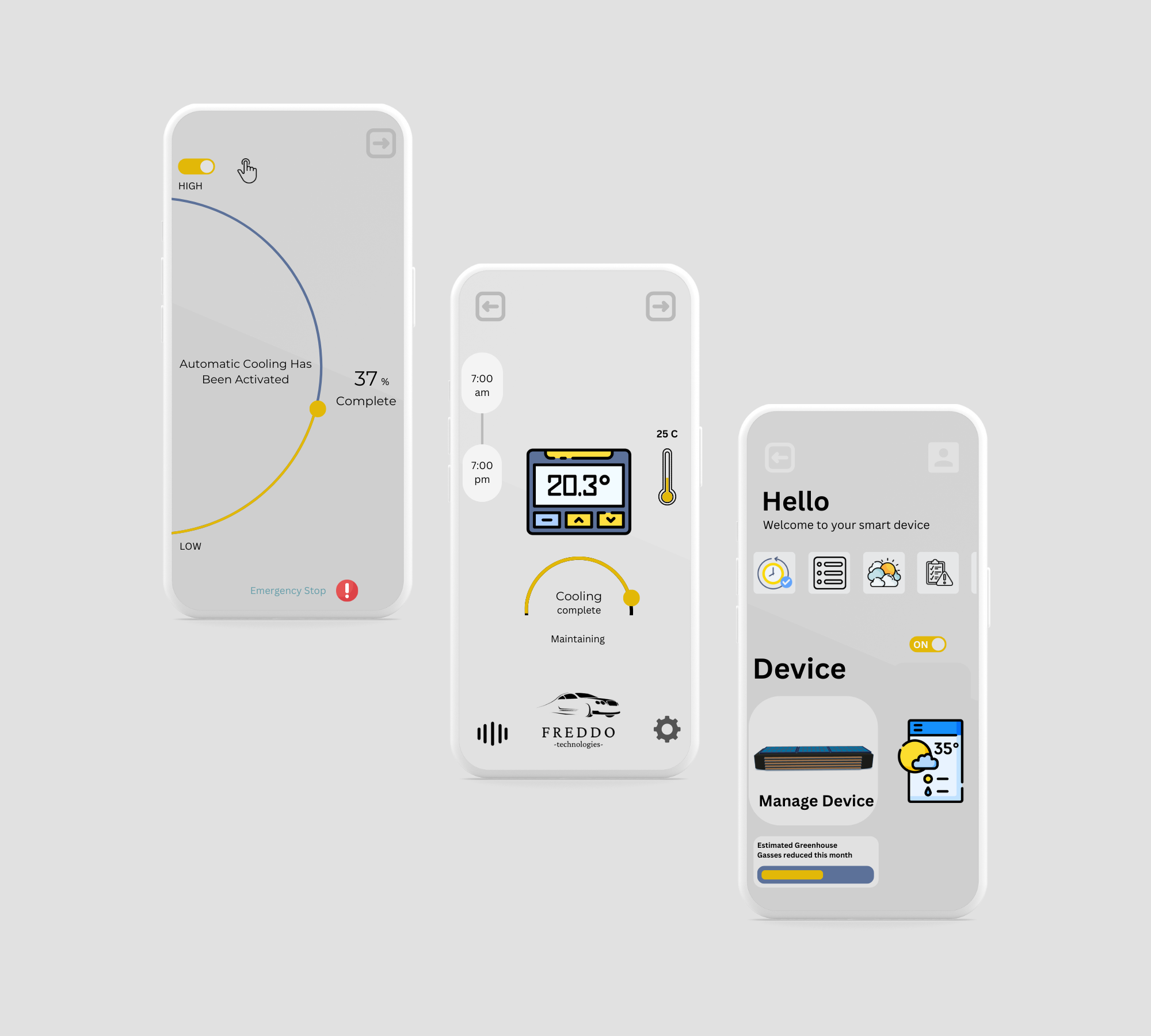
The 21st century is often commended for our technological innovations, for our solutions on niche subject matters, and for our determination to amend existing conflicts in our communities. Let’s take a look at a widely used technology, transportation. On summer days, cars are subject to the sun’s heat and the temperature within the vehicle rises to extreme levels. The traditional resolution to this problem is air conditioning, yet, air conditioning consumes a lot of energy and is often not utilized by users of the car to preserve that energy. Our solution is to improve and modify air conditioning in cars to autonomously regulate the interior temperature of a car, even when the engine is not running. Freddo will also be connected to an app that users can install on their devices and they can turn on and off the A.C from their phones. Think similar to starting the engine of the car in the winter. The app will also monitor the temperature in the car so that the user can determine whether or not it is beneficial to use Freddo. Our solution is also more sustainable as there will be a solar panel component a part of the device that will use the sun’s rays to produce the energy required to power Freddo. Freddo is not limited to cars, but trucks, buses, and other transportation systems can use it as well. The end goal of Freddo is to reduce heat strokes and heat-related harm to citizens, but more than that, prevent child deaths from overheating in vehicles.
How we built it
We built this using tinkercad, and programming languages such as html, css, and javascript. Drawing softwares were also used, as well as figma to design the vision we had for our project.
Challenges we ran into
The most predictable challenge that we ran into was lack of time. Secondly, including all the features we wanted was difficult as some of the components break down we have never seen before. Despite this, we managed to maneuver our approach and discovered design elements we could incorporate that were under the scope of what we could accomplish.
Accomplishments that we're proud of
It was our first time using softwares such as tinkercad and figma, and we are proud of how much we learned through them in so little time. It was also our first time coding in html, css, and javascript. Although we had help from the internet, we are still proud of what we learned and how we can use this knowledge to build our skills for future projects.
What we learned
We learned that there are many aspects of design and many resources out there to execute our ideas. For example, we learned about TinkerCad and how to design circuits in a basic manner.
What's next for Freddo
We're undecided, we can share our idea with a company that can make it happen or take the project upon ourselves more seriously. We are hoping to learn more skills in our program or outside school that can help us fully develop all the aspects in Freddo.


Log in or sign up for Devpost to join the conversation.