Inspiration
Most DAOs and crypto-native startups have six to twelve months of runway sitting passively on a single chain and in a single risk posture. Treasury management is usually a mix of spreadsheets, manual bridges, and “vibes” about the macro environment. At the same time, prediction markets and native USDC infrastructure exist but are rarely combined into a real decision tool.
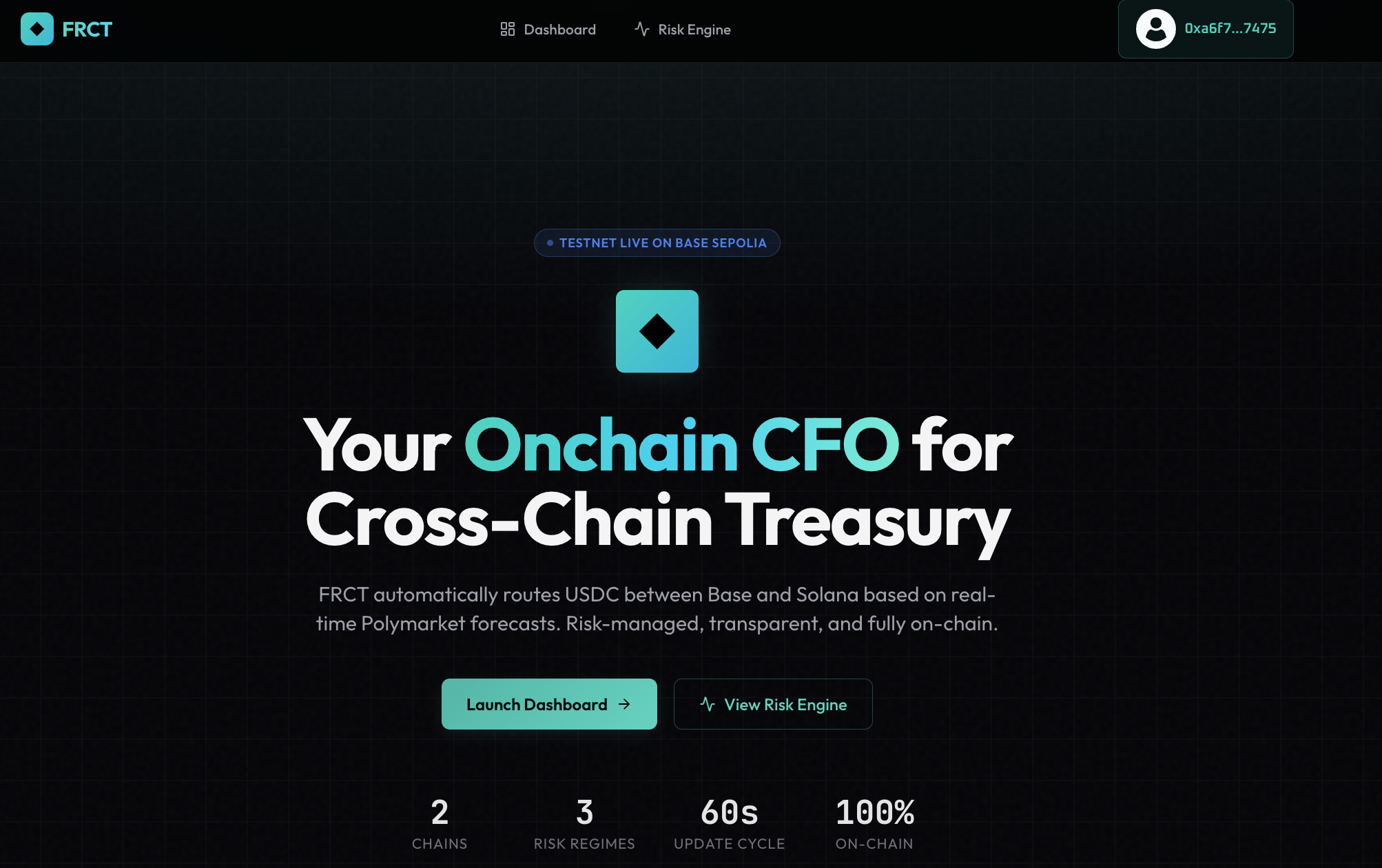
FRCT (“Forecast-Routed Cross-Chain Treasury”) was born from a simple question: what would an onchain CFO look like if it actually used prediction markets as a brain and USDC as the bloodstream?
What FRCT does
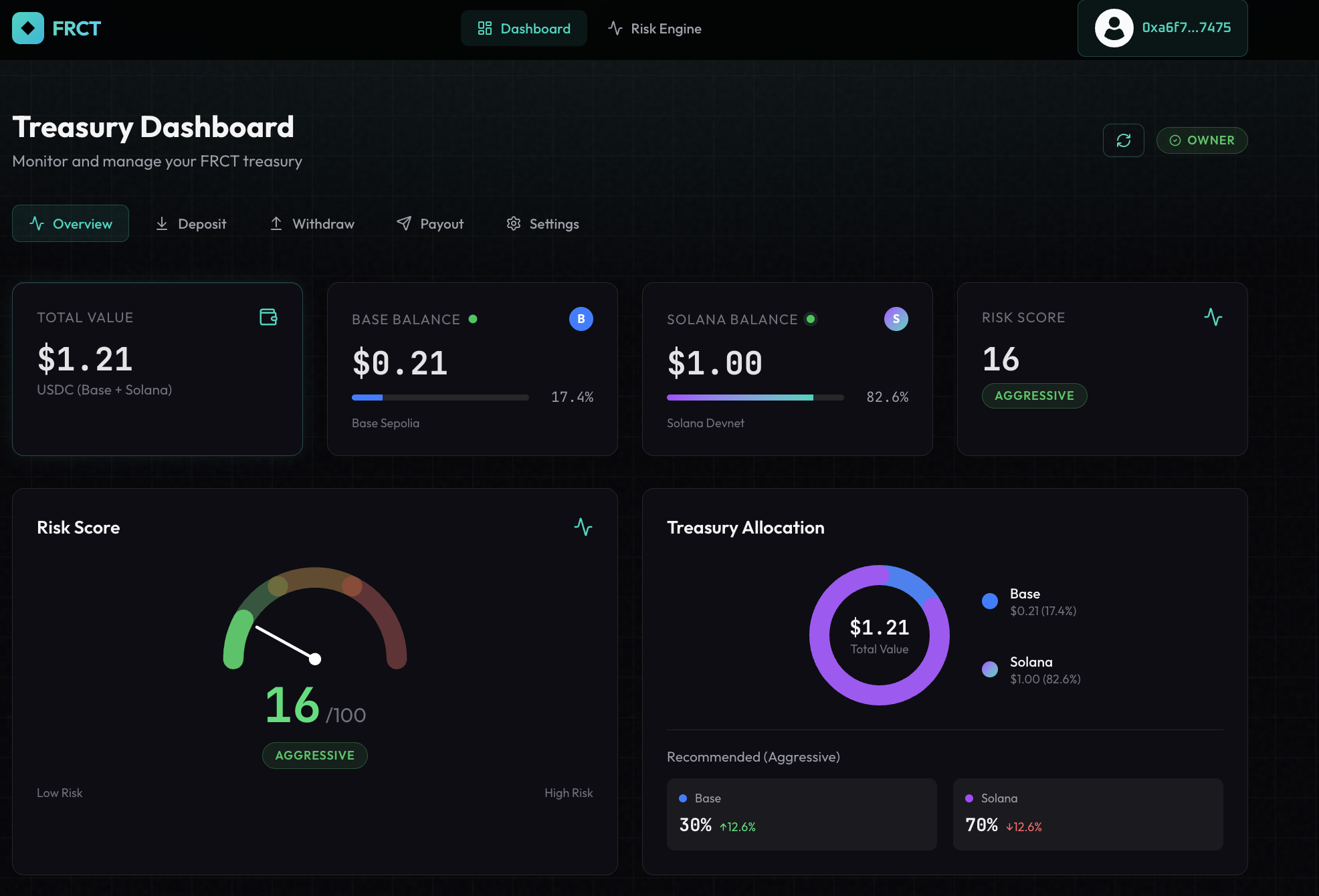
FRCT is an onchain treasury cockpit for DAOs and startups. It:
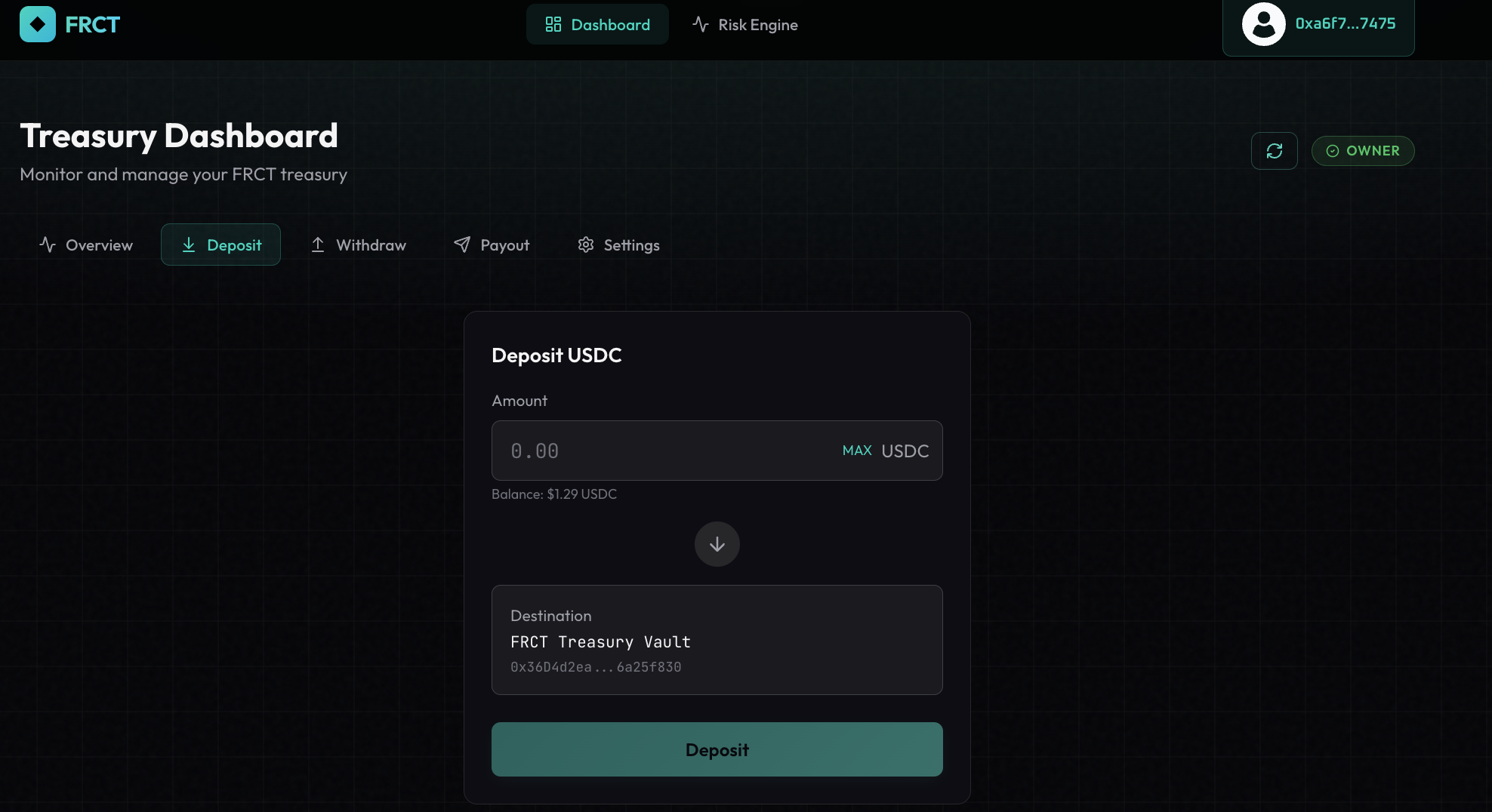
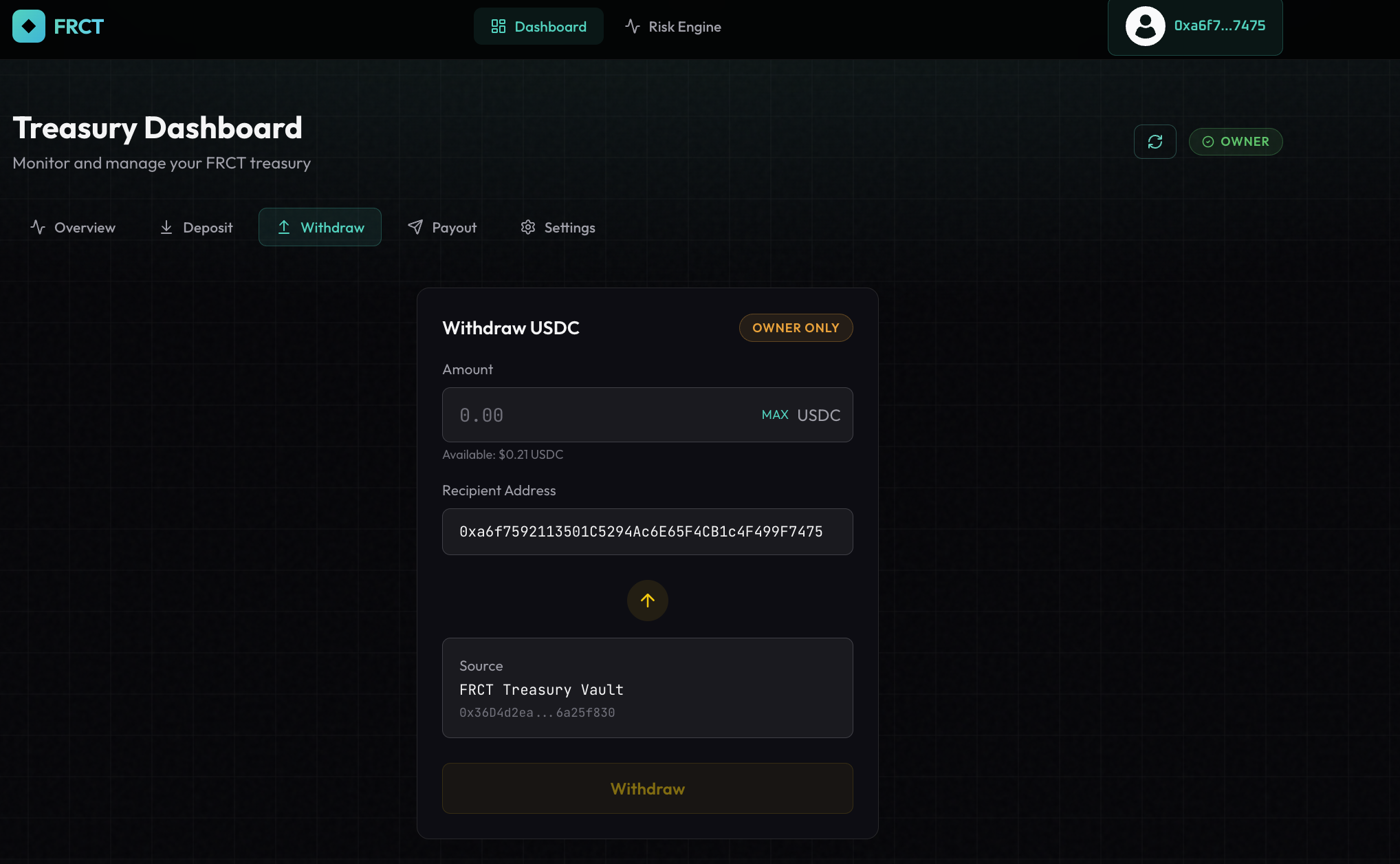
- Holds USDC on Base and Solana as two vaults.
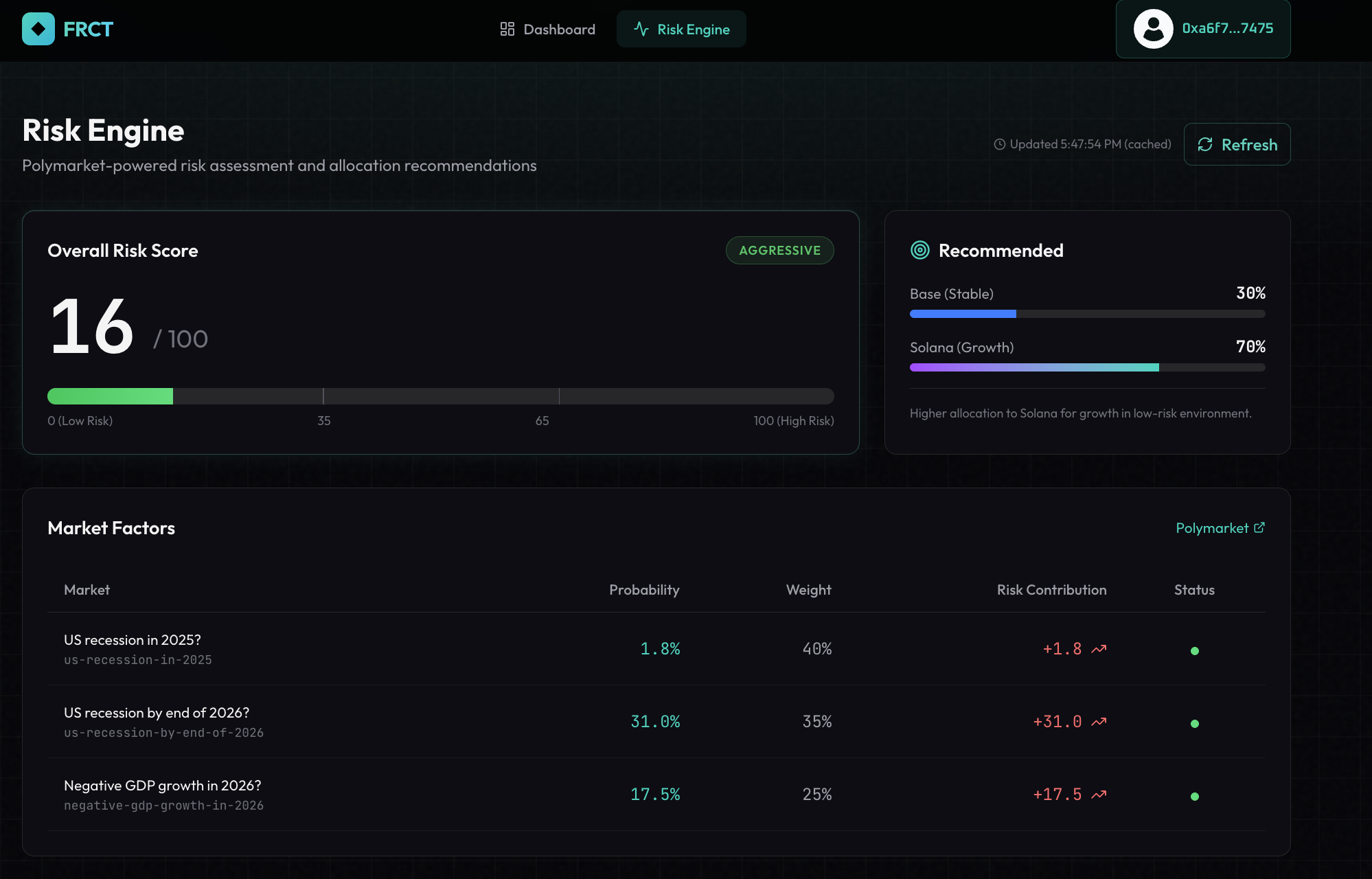
- Continuously pulls Polymarket forecasts for curated macro and crypto markets.
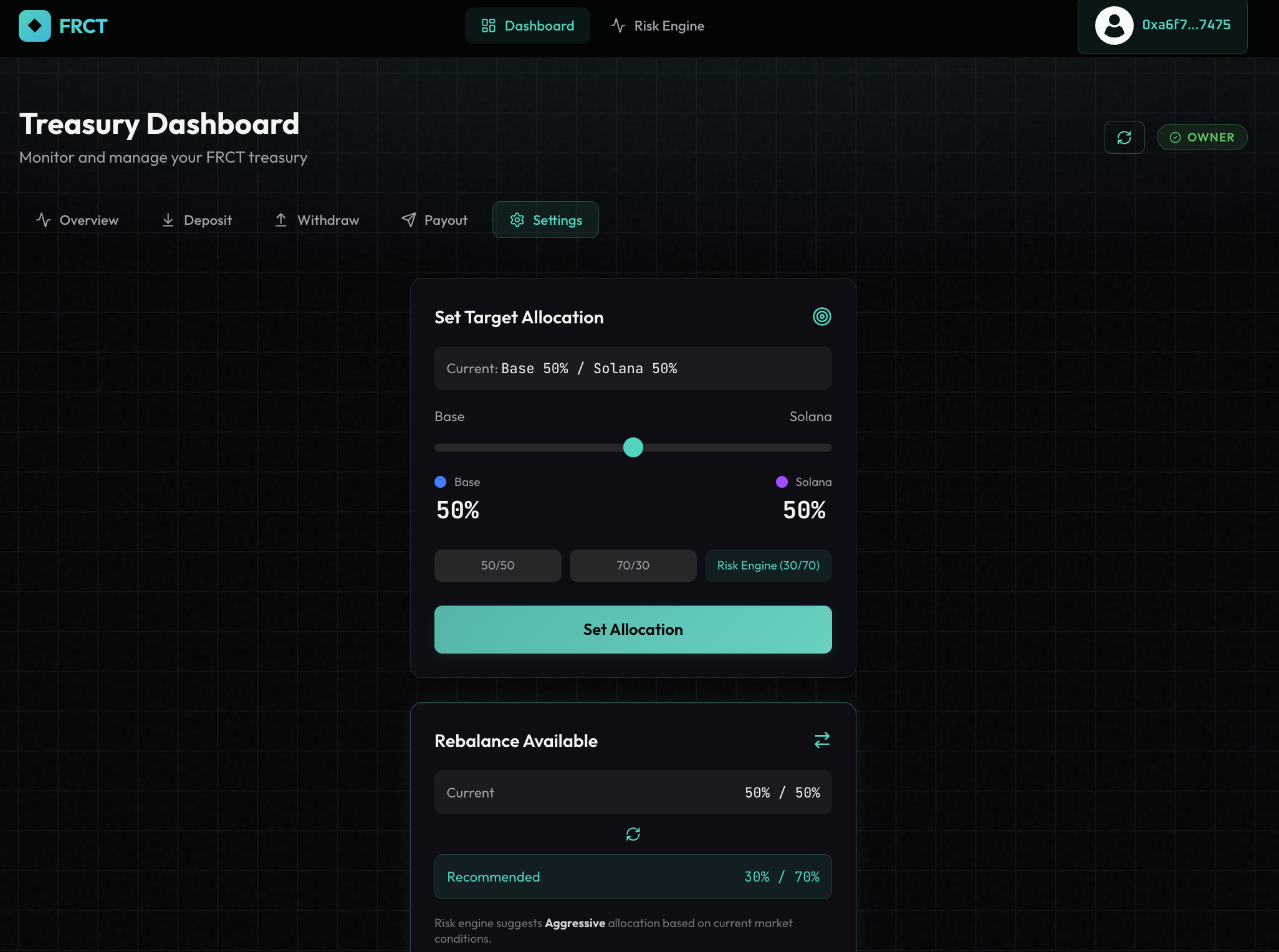
- Converts those probabilities into a simple risk score and regime (Defensive / Neutral / Aggressive).
- Suggests and executes rebalancing of USDC between Base and Solana using Circle’s CCTP.
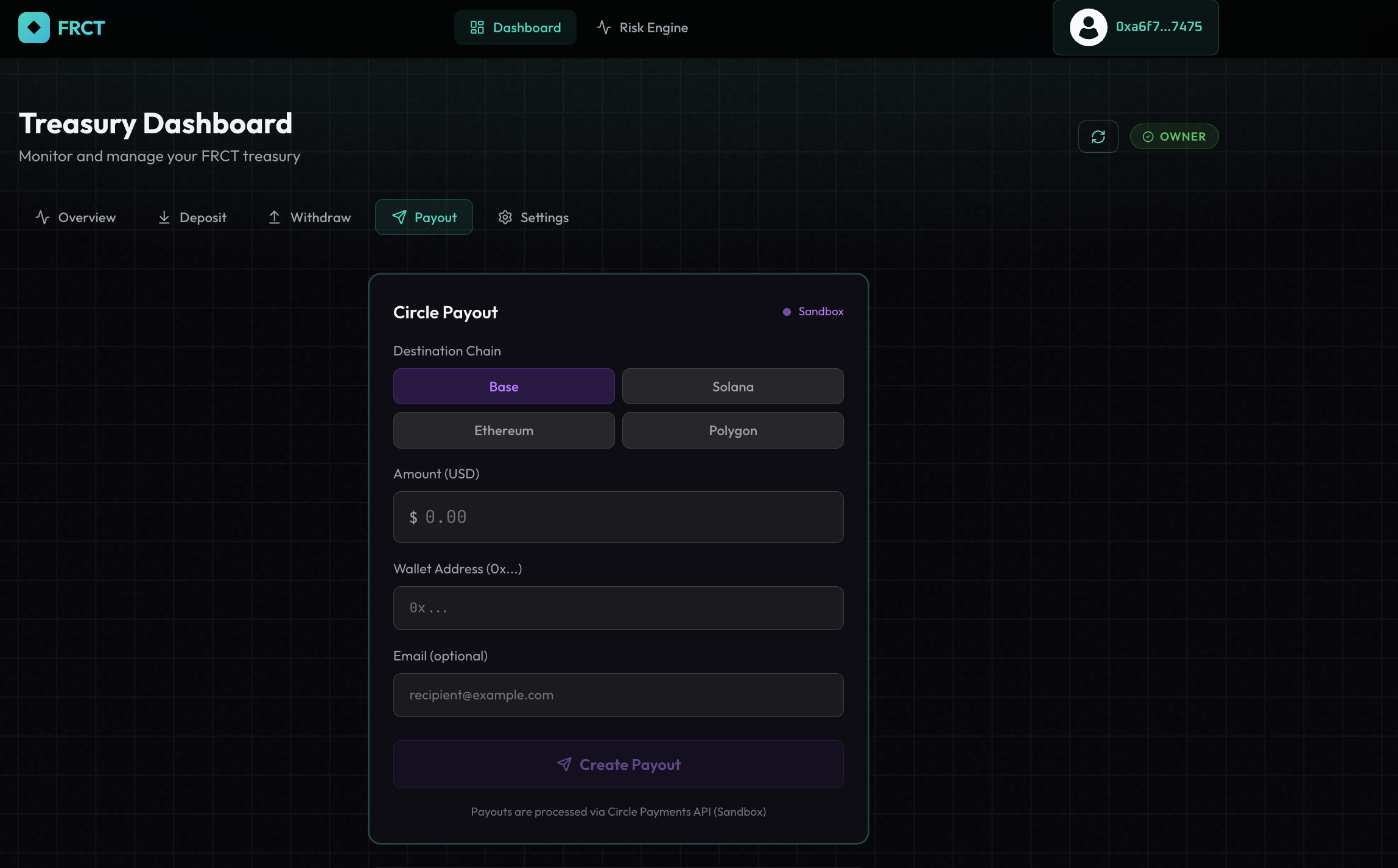
- Exposes a path to pay real-world expenses via Circle payments APIs.
The treasurer sees the full cross-chain position in one dashboard and can update their risk posture in a single click.
How we built it
- A Solidity vault contract on Base holds USDC.e and stores allocation targets.
- A simple Anchor program on Solana owns an SPL USDC vault account.
- The risk engine is a Node/TypeScript service (Next.js API route) that calls the Polymarket Gamma API, computes a risk score from multiple markets, and returns recommended Base/Solana percentages.
- Circle CCTP and Bridge Kit are used to move USDC between Base and Solana, burning on the source chain and minting on the destination.
- The front end is built with Next.js, React, TypeScript, OnchainKit, Wagmi and Viem, showing balances, risk gauges, and one-click rebalancing flows.
Challenges
- Designing a risk model that is simple enough for a 3-minute demo but still grounded in real Polymarket probabilities.
- Orchestrating cross-chain UX so that Base and Solana balances feel like one treasury instead of two separate apps.
- Integrating multiple moving parts (Polymarket, Circle, Base, Solana) under tight time constraints without over-engineering.
What we learned
- Prediction markets are an excellent primitive for treasury policy, not just speculation.
- Circle’s CCTP plus USDC on Base and Solana make “native” cross-chain treasury surprisingly feasible.
- Good UX for treasurers is not about fancy charts, but about clear regimes (“You are currently Defensive”) and safe, explainable actions (“Move 20% of USDC from Solana to Base”).
What’s next
- Make the risk model configurable per organization (different risk appetites).
- Add real automation (scheduled checks and suggested rebalances).
- Plug into real DAOs and onchain teams to use FRCT as their primary treasury cockpit.
Built With
- anchor
- base
- circle-cctp
- circle-payments-api
- next.js
- node.js
- onchainkit
- polymarket-gamma-api
- postgresql
- react
- rust
- solana
- solidity
- typescript
- usdc
- viem
- wagmi

Log in or sign up for Devpost to join the conversation.