Inspiration
Digital payment fraud is becoming more contextual. A transaction may look completely normal on its own, while the surrounding context, such as a new device, unfamiliar recipient, unusual amount, or high transaction velocity, may indicate elevated risk.
We wanted to build a system that does not look at a payment in isolation, but instead asks: "Does this transaction make sense in the context of this user?"
That idea led us to build FraudShield, an explainable real-time fraud risk engine for digital payments and social-engineering scenarios.
What it does
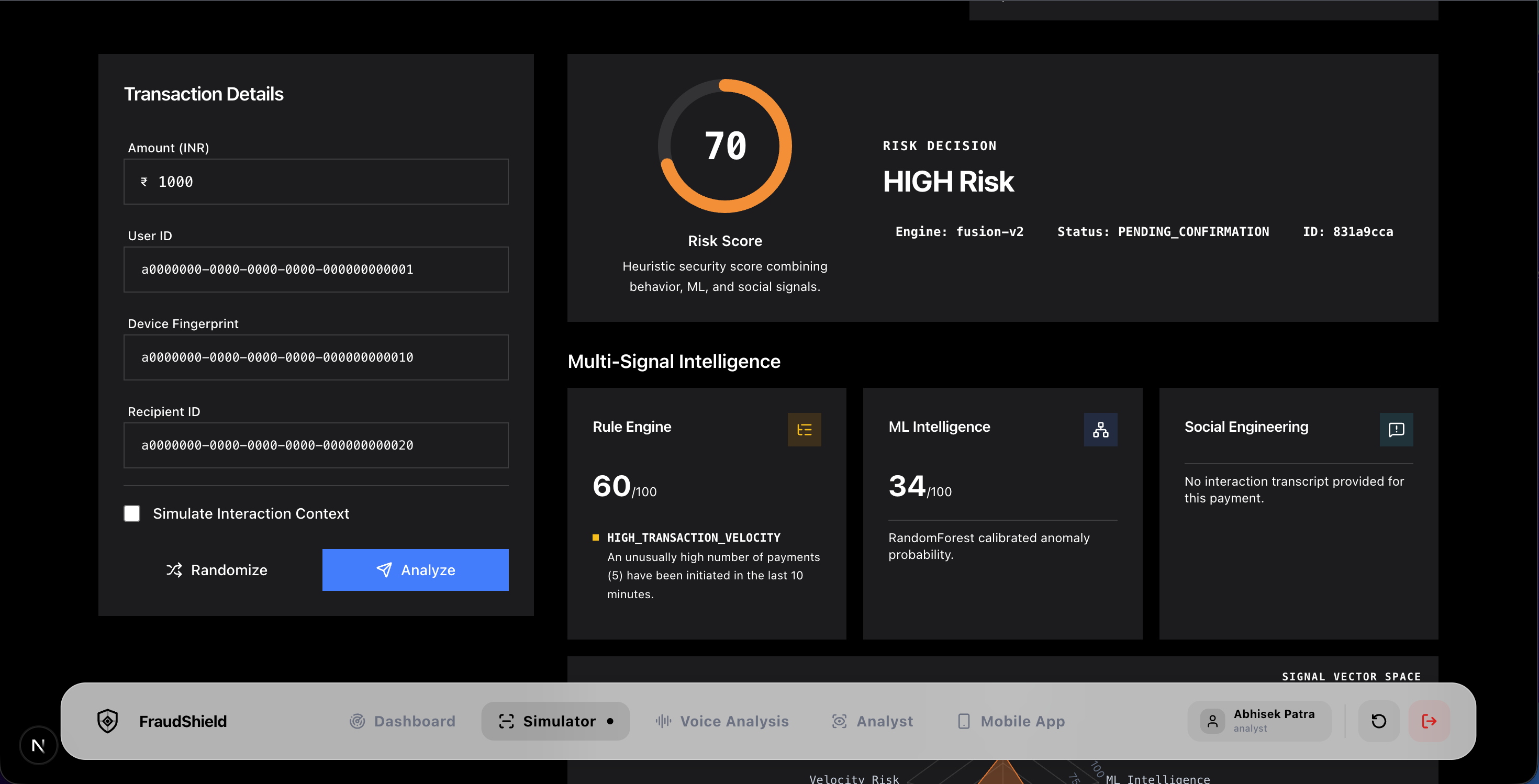
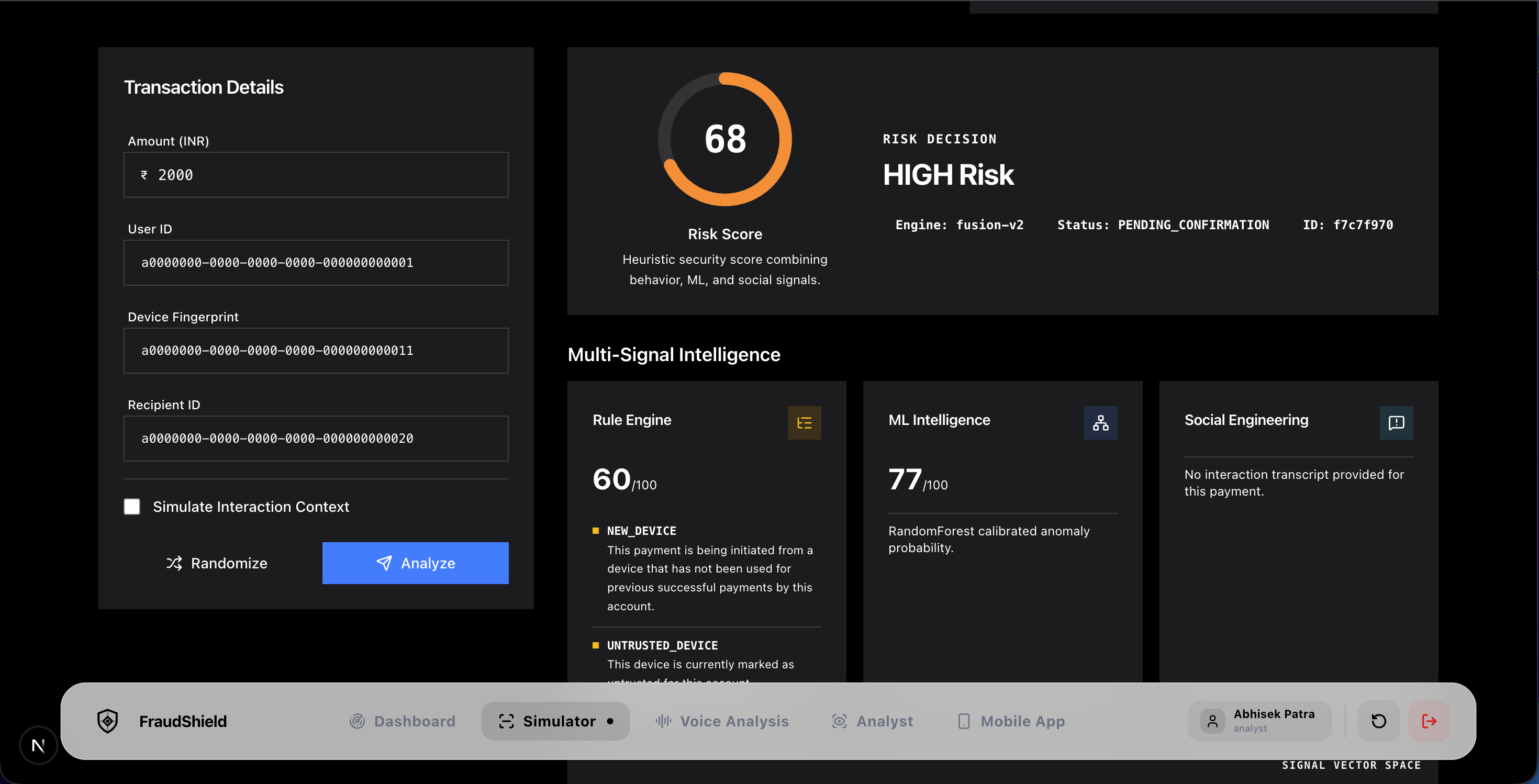
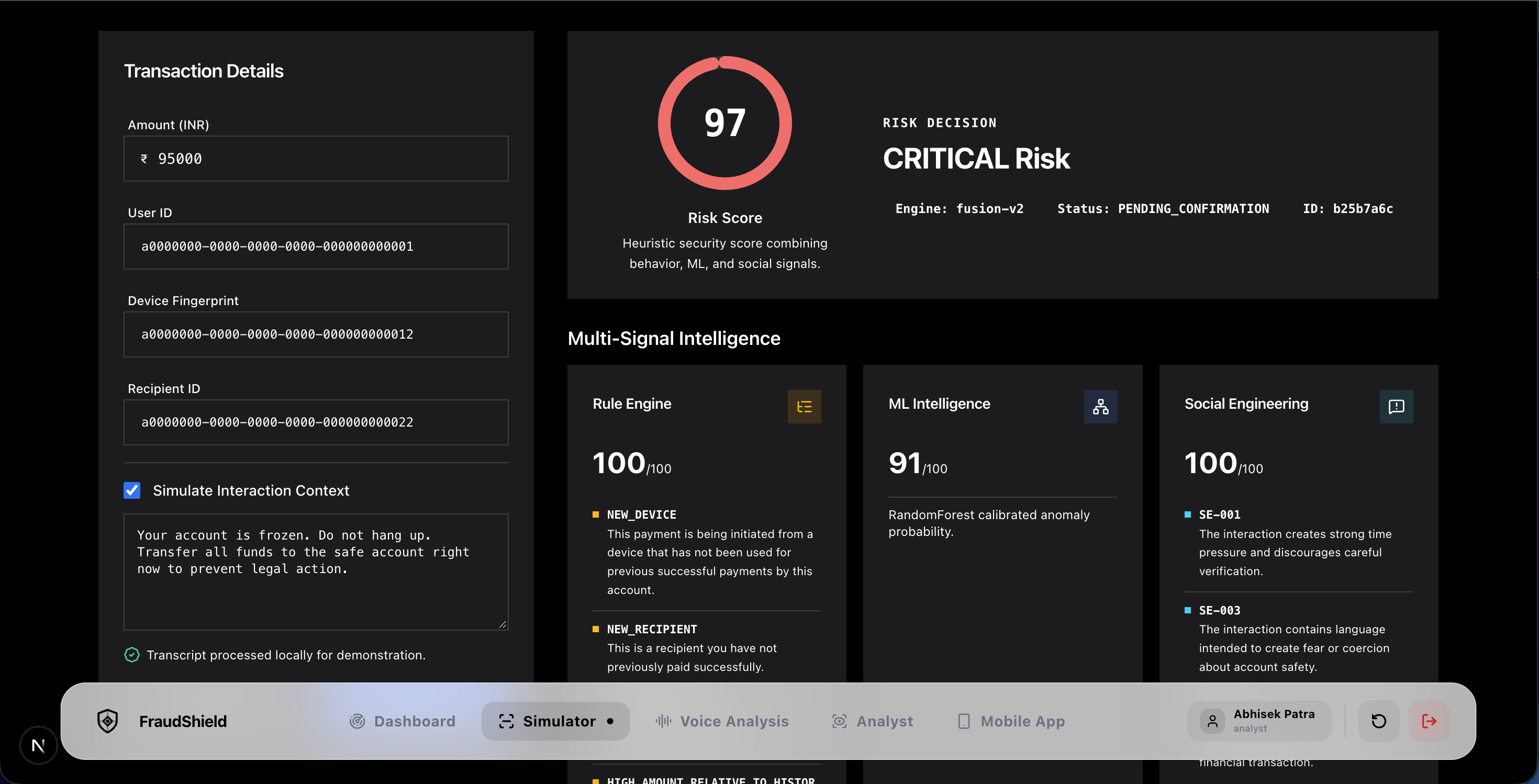
FraudShield analyzes multiple signals surrounding a payment, including:
- Transaction amount and behavioral deviation
- Device trust and changes
- Recipient familiarity
- Transaction velocity
- Historical user behavior
- Relevant interaction-risk signals
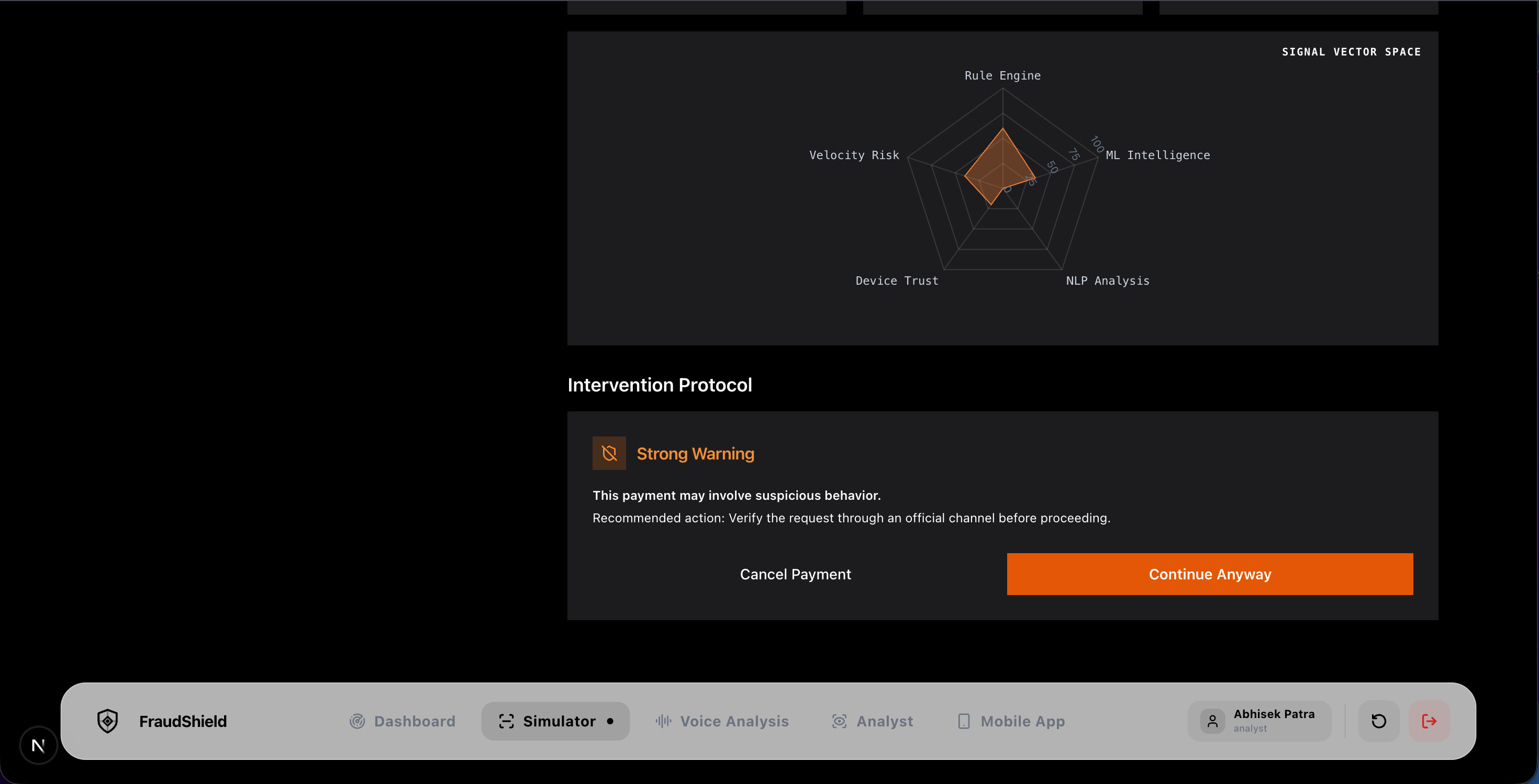
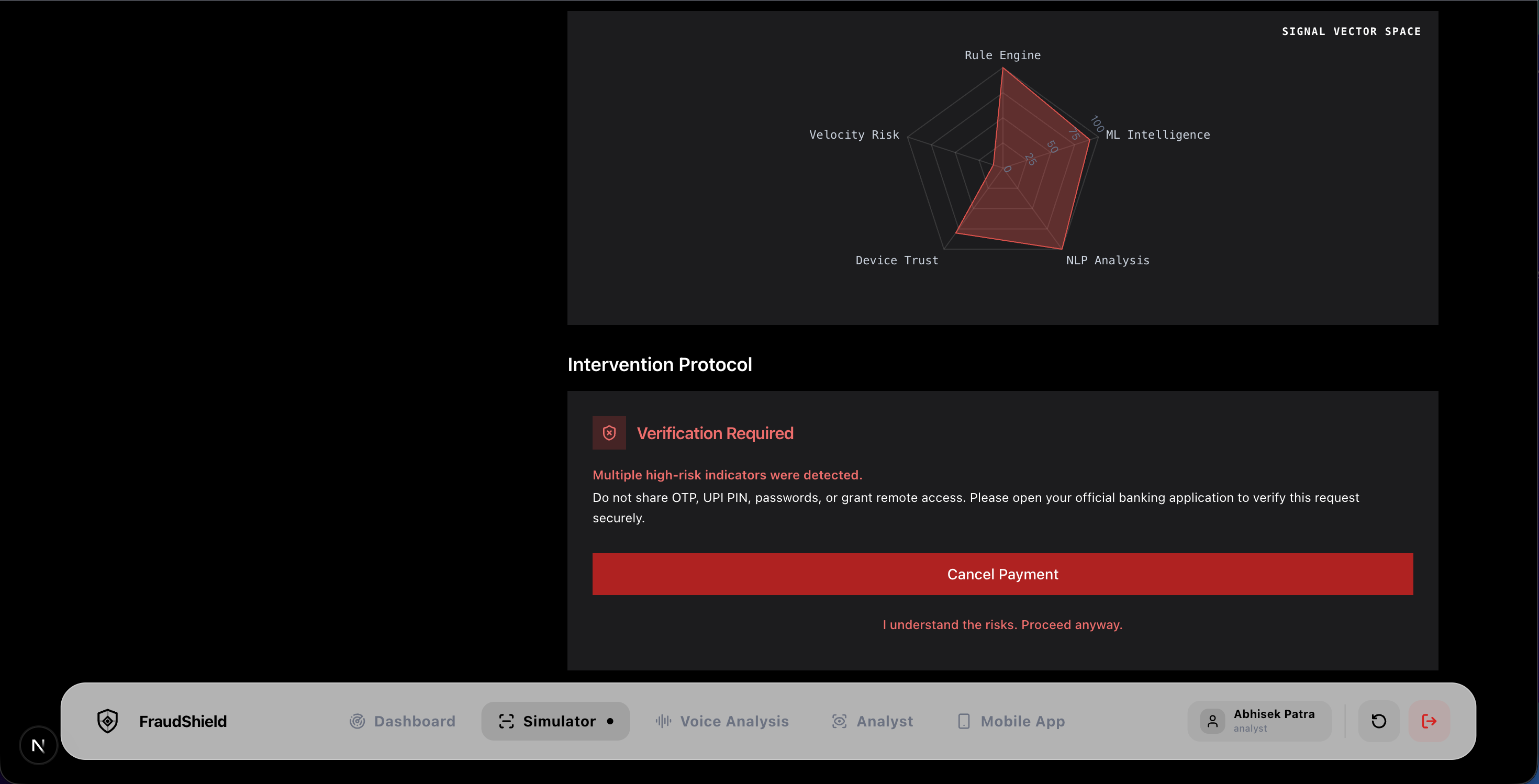
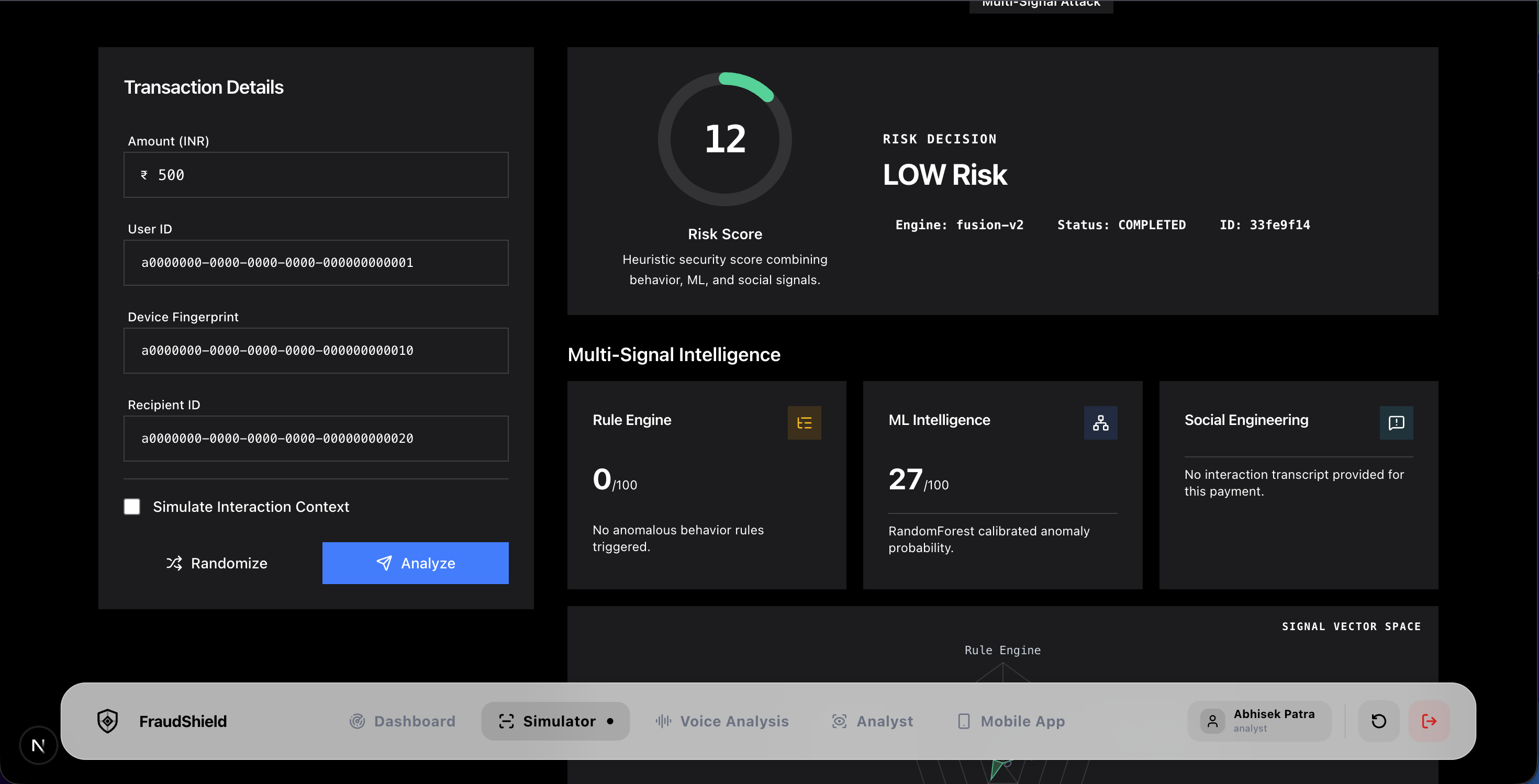
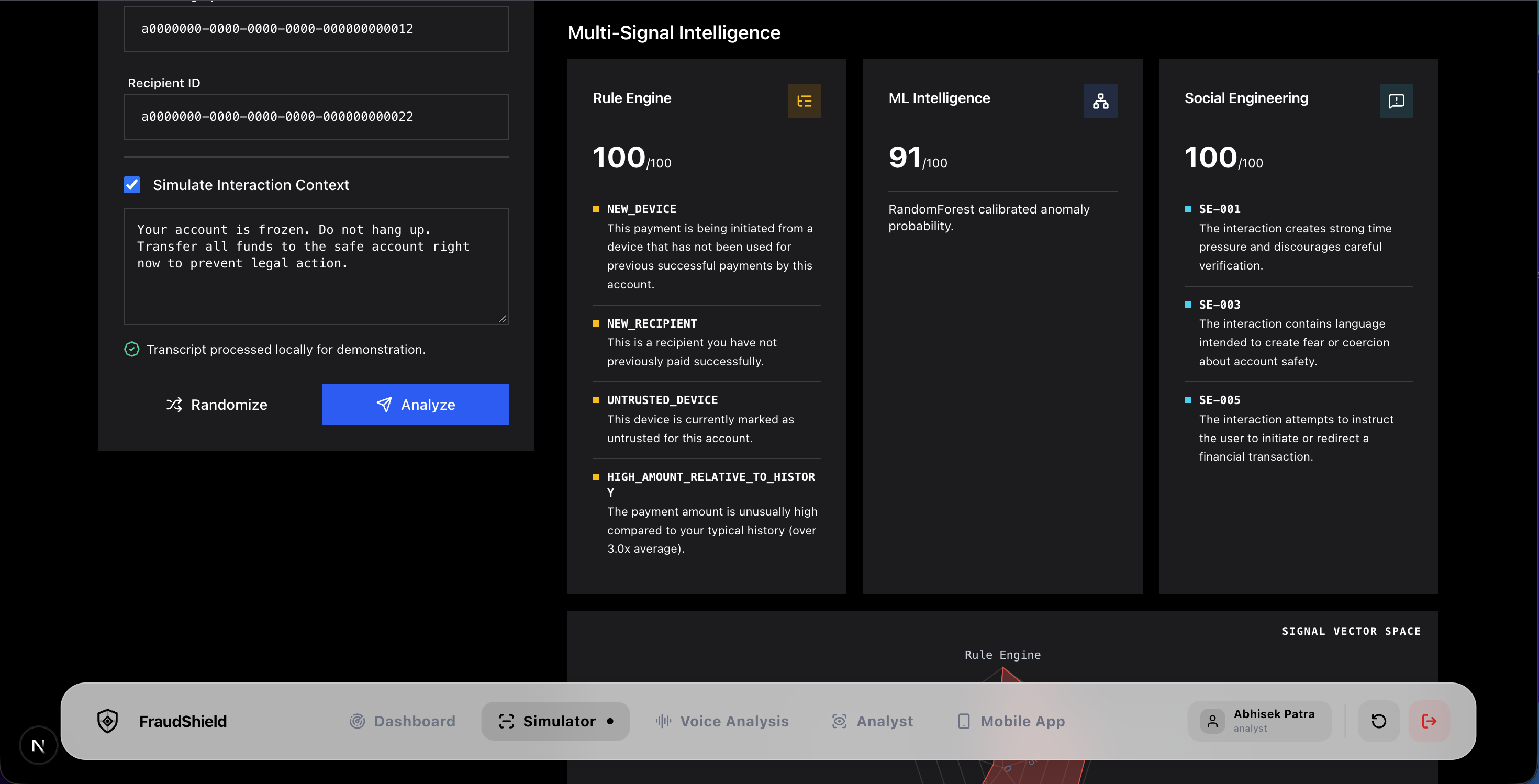
These signals are evaluated through multiple intelligence layers and combined by a risk-fusion engine to produce an explainable risk level: LOW, MEDIUM, HIGH, or CRITICAL.
Instead of only returning a risk level, FraudShield also identifies the factors contributing to the decision, making the result easier for users and analysts to understand.
How we built it
We built FraudShield as a full-stack risk analysis platform.
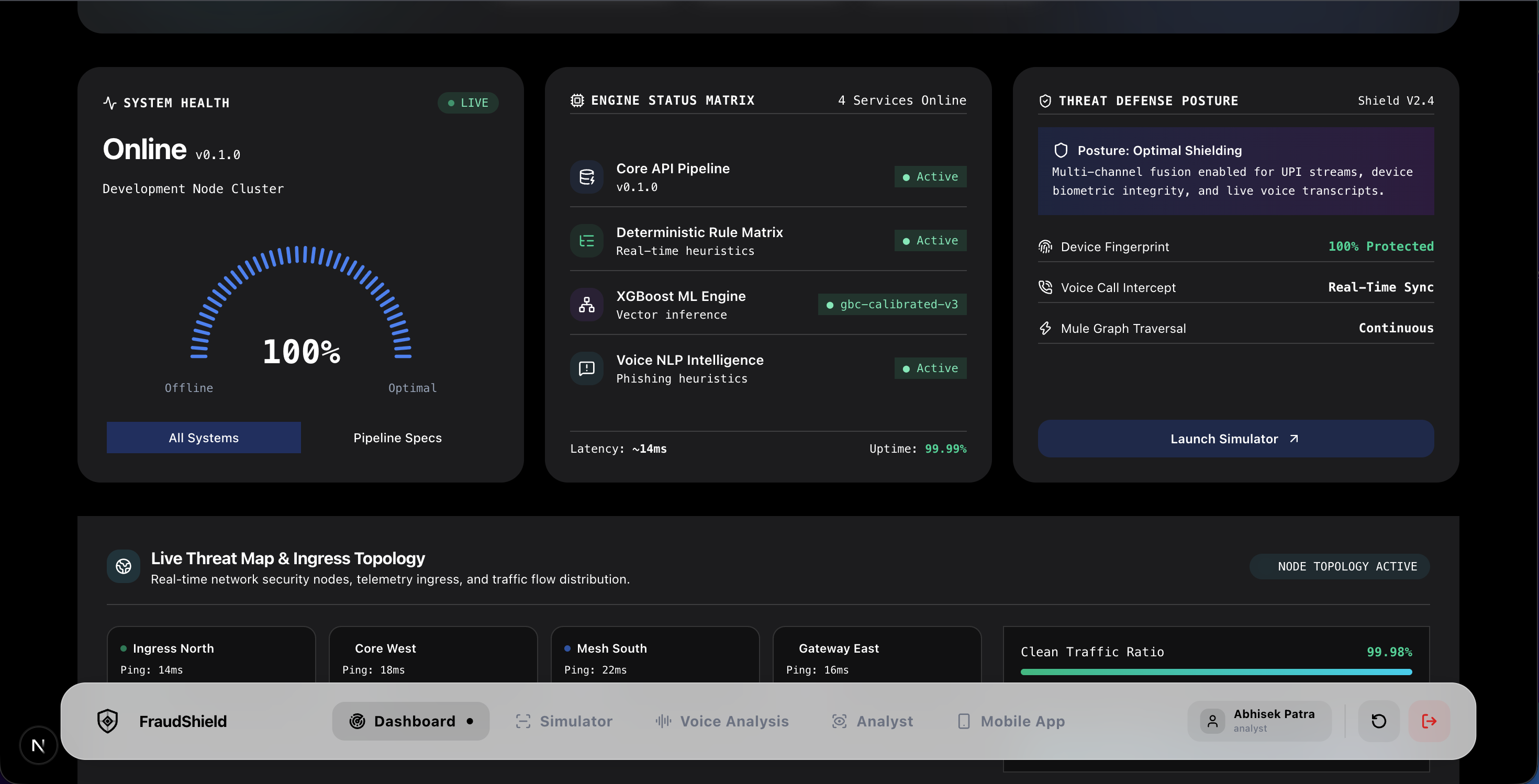
The backend is powered by FastAPI and PostgreSQL, with a modular pipeline consisting of contextual feature extraction, deterministic rules, ML-based behavioral analysis, NLP interaction analysis, and risk fusion.
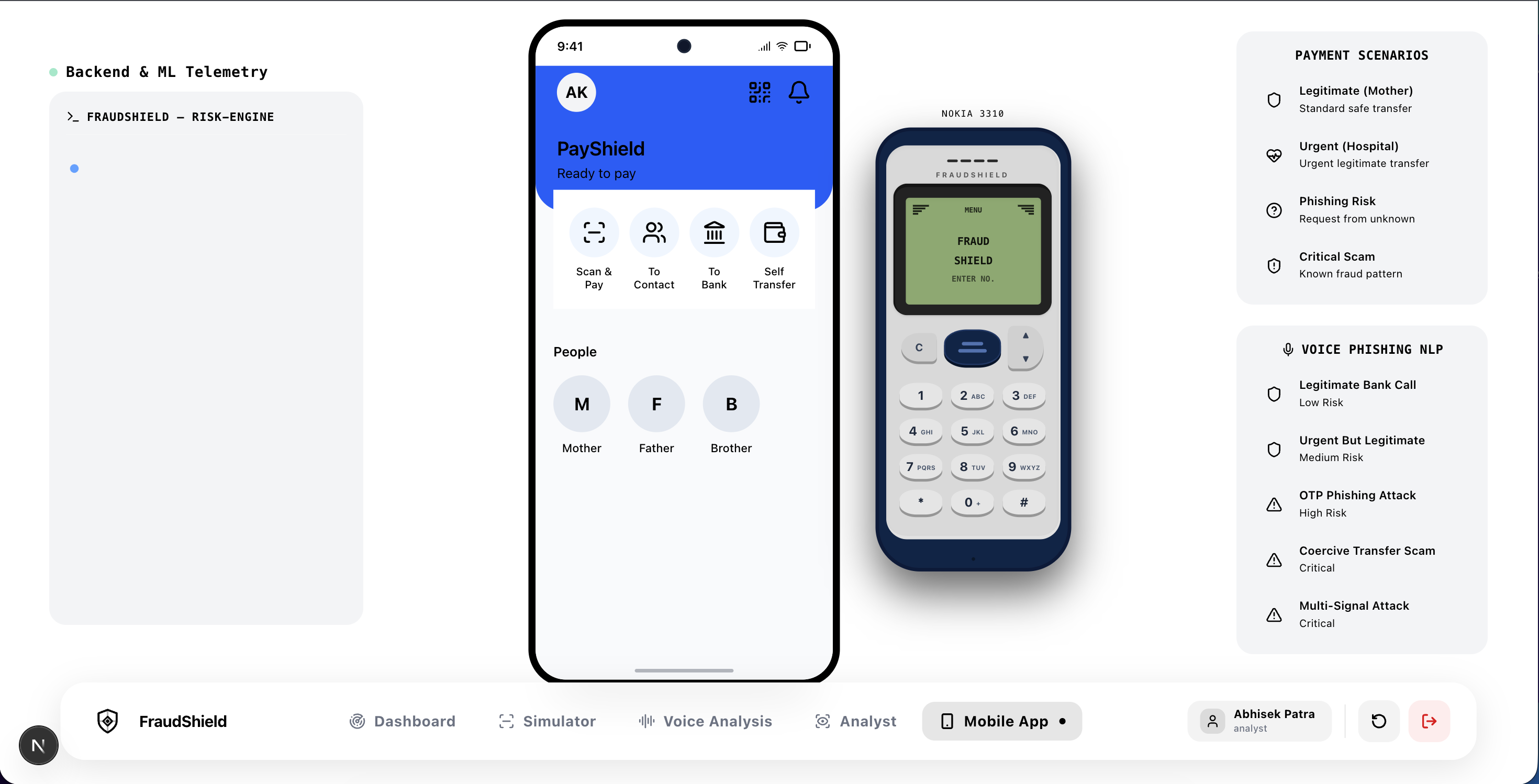
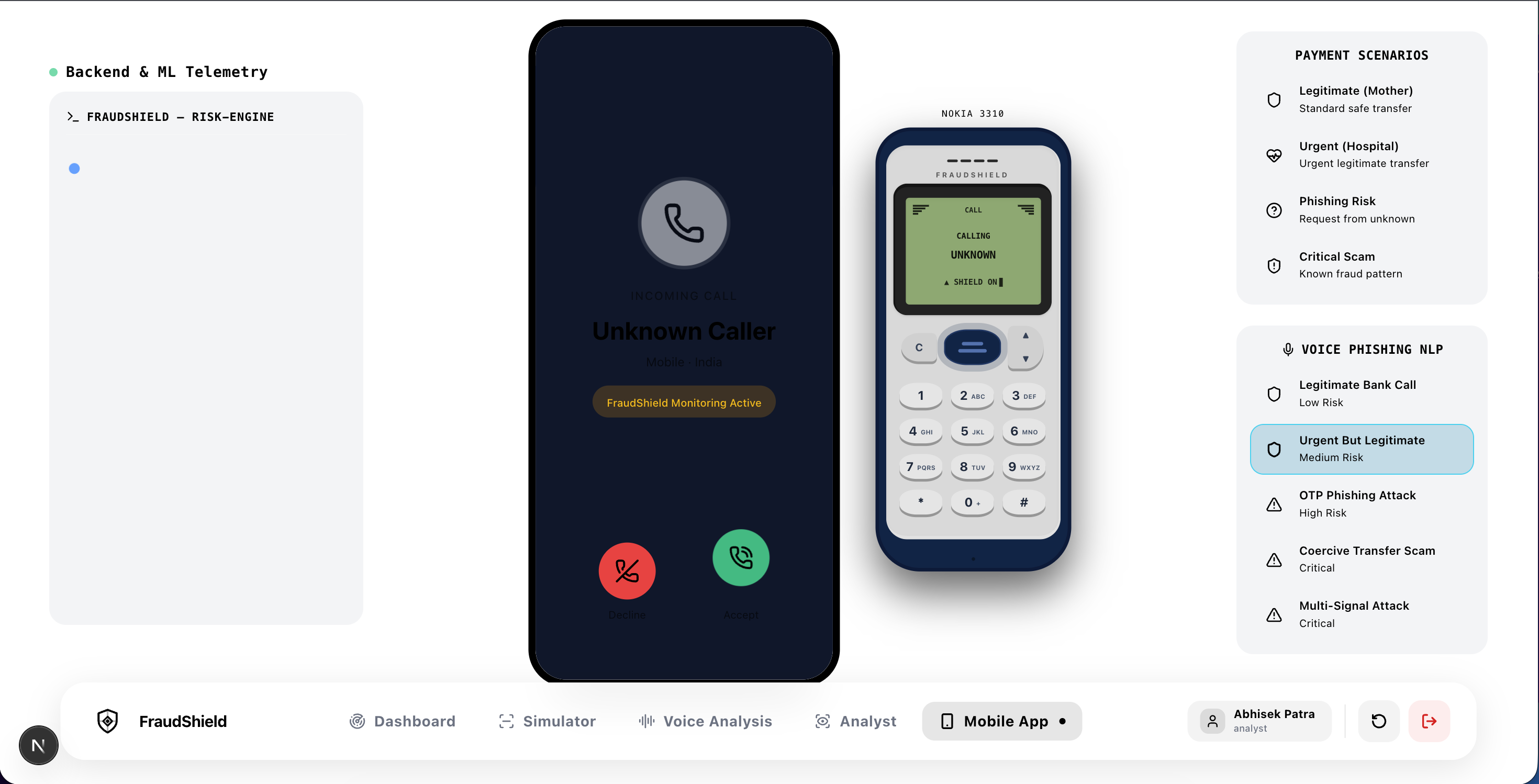
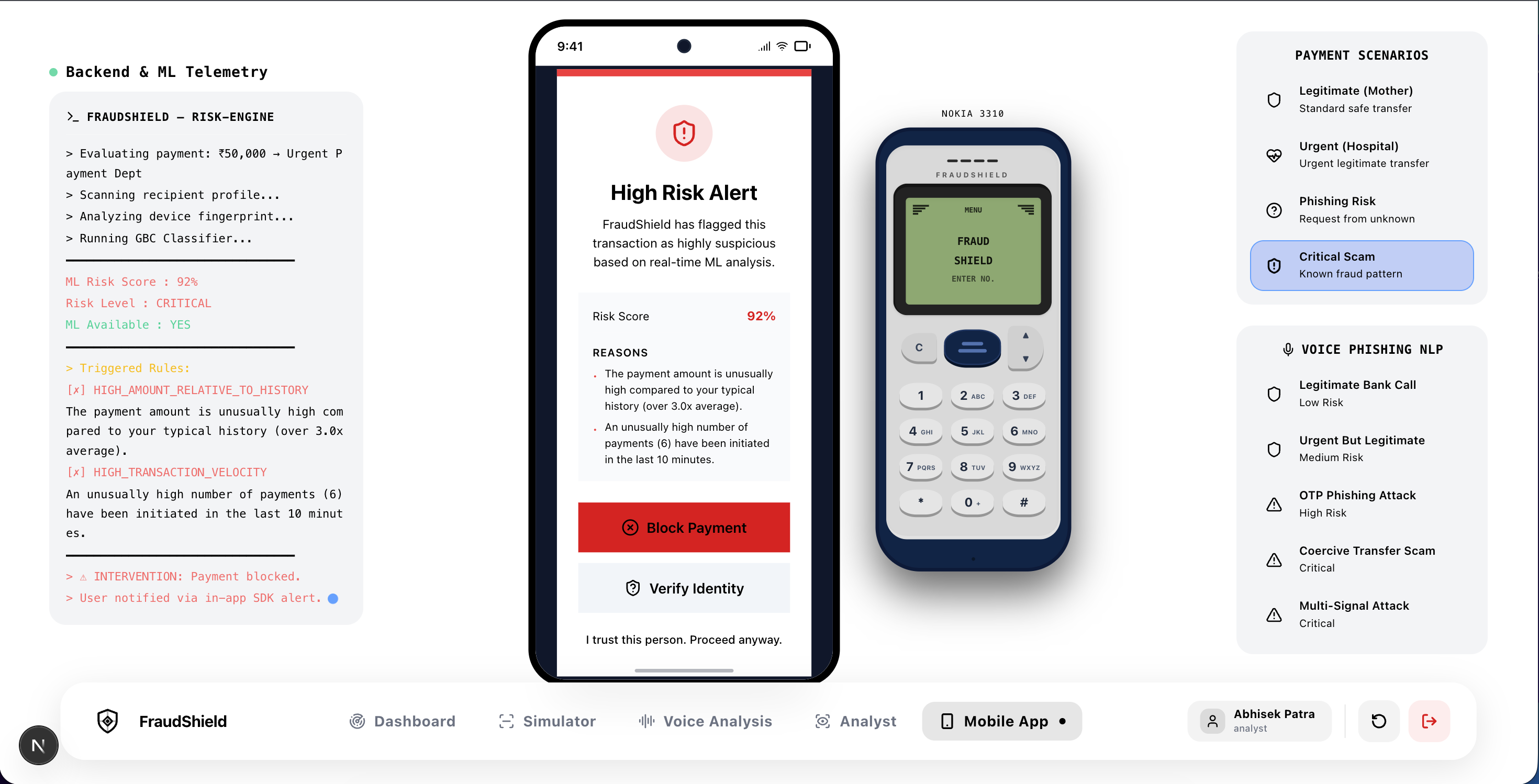
The frontend provides interfaces for payment simulation, interaction analysis, risk visualization, and analyst review.
Our core flow is:
Payment Request → Context Extraction → Feature Extraction → Rule Engine + ML + NLP → Risk Fusion → Explainable Risk Decision → Analyst Review
We also implemented risk-event persistence and analyst feedback workflows so that suspicious cases can be reviewed rather than treated as unexplained automated decisions.
Challenges we ran into
One of our biggest challenges was designing the system so that multiple risk signals could work together without treating every unusual behavior as fraud.
We also had to integrate rule-based detection, ML-based analysis, NLP signals, database persistence, and the frontend into one consistent real-time pipeline.
Another challenge was explainability. It was not enough for the system to produce a risk level. We needed to retain and surface the reasoning behind that decision.
Accomplishments that we're proud of
We built a working end-to-end prototype rather than just a conceptual fraud-detection model.
We are particularly proud of:
- A complete real-time risk evaluation pipeline
- Multi-signal contextual fraud analysis
- Explainable LOW to CRITICAL risk decisions
- Rule-based, ML, and NLP intelligence working together
- Device, recipient, behavioral, and velocity analysis
- Persistent risk events and analyst review
- A functional full-stack interface for demonstrating the system
Most importantly, we turned the idea of context-aware fraud detection into a working system that can be demonstrated through realistic payment scenarios.
What we learned
We learned that building a fraud detection system is not simply about creating a model that predicts fraud.
The difficult part is combining different types of signals, handling context, designing reliable decision logic, and making the output understandable.
We also learned how important system architecture is when integrating backend services, databases, ML and NLP components, APIs, and frontend interfaces into one product.
What's next for FraudShield
FraudShield is designed as a foundation that can evolve beyond the current prototype.
Our next steps include richer behavioral models, advanced voice-phishing intelligence, continuous learning from analyst feedback, additional multimodal signals, and deeper integration with financial ecosystems.
Our long-term goal is to move from isolated transaction detection toward continuous, contextual risk intelligence, where the system understands not just what a transaction is, but why it may be risky in its surrounding context.
Built With
- cybersecurity
- fastapi
- javascript
- machine-learning
- natural-language-processing
- nextjs
- postgresql
- python
- react
- restapi
- sqlalchemy
- typescript


Log in or sign up for Devpost to join the conversation.